









- bhavya gada
- No Comments
If I want a paver patio in Maryland to last, I need to check it in every season. Freeze-thaw weather, summer humidity, and heavy rain can wash out joint sand, leave algae on the surface, and cause puddles or shifted pavers.
Here’s the short version:
- Spring: I clean off winter dirt, check for heaving, joint loss, and low spots.
- Summer: I deal with grease, weeds, algae, and storm runoff.
- Fall: I remove leaves, refill joints, check edges, and get drainage ready for freezing weather.
- Winter: I watch where water sits, note loose edges, and plan repairs for spring.
The same jobs come up all year:
- Cleaning
- Joint sand checks
- Resanding
- Sealing during dry weather
- Drainage checks
- Repair checks
A few facts help explain why this matters. Water expands by about 9% when it freezes, which is why small joint gaps can turn into shifted pavers after winter. Also, slippery algae tends to grow faster in warm, humid, shaded areas, which makes summer upkeep more than just a looks issue.
If I keep seeing standing water, loose pavers, or repeat washout, routine care is no longer enough. That usually points to a drainage or base problem.
| Season | Main problem | What I check first |
|---|---|---|
| Spring | Winter movement | Joint sand, lifted pavers, drainage |
| Summer | Algae, stains, storms | Surface stains, slick spots, runoff |
| Fall | Winter prep | Leaves, low joints, edge movement |
| Winter | Meltwater and freeze damage | Puddles, loose edges, repeat wet spots |
This guide lays out a simple year-round plan so I can spot small issues early and know when it’s time to bring in a pro.
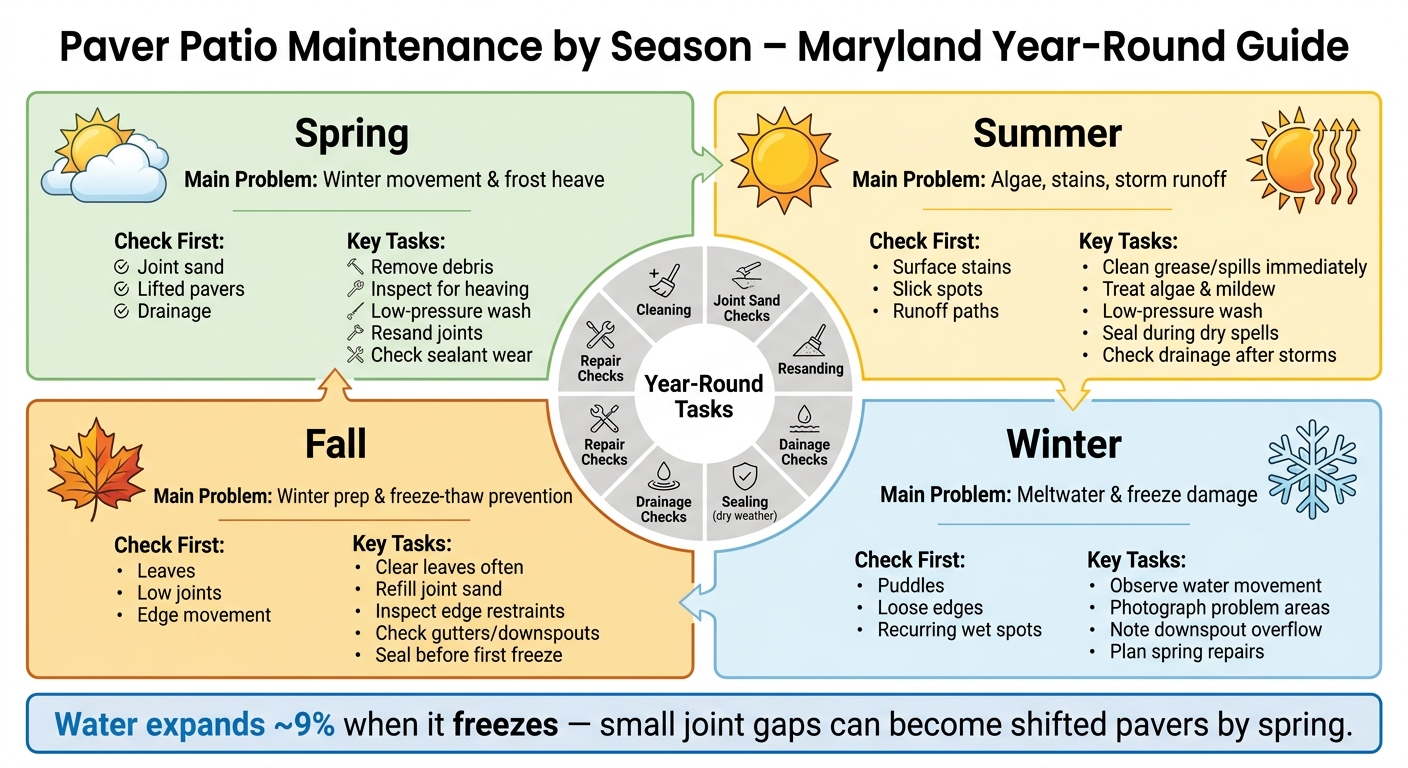
Paver Patio Maintenance by Season: Maryland Year-Round Checklist
Easy Maintenance For Your Paver Walkway or Patio – Re-applying Polymeric Sand
sbb-itb-843f8be
Spring: Clear Winter Damage and Get the Patio Ready for the Year
Spring is one of the best times to work on a Maryland paver patio. Winter tends to leave behind dirt, joint loss, and small surface shifts. If you deal with those early, the patio is in much better shape before heavy summer use.
Clean, Check Joints, and Look for Frost Heave
Start by removing debris like leaves and twigs. With the surface cleared, walk the patio slowly before you wash anything. Check for shifting pavers, lifted edges, or low spots where water sits instead of draining off. Those are common signs of frost heave or settlement.
Pay close attention to lifted pavers and widened gaps. Those usually show that the patio moved during winter.
Then check the joints. Look for sand that has washed out or gaps that have opened up. Also scan for green film or dark blotches, which can point to organic growth. If shaded areas feel slick, active algae may be the cause. It’s smart to handle that early because a slippery patio can become a safety issue fast.
Wash the patio in early spring, before grime and pollen have time to settle in. Use a controlled, low-pressure method. If you use a narrow spray pattern too close to the pavers, you can etch the surface and leave marks that are hard to miss. Move furniture off the patio first so you can inspect the full surface and all the joints without anything in the way.
Check Drainage and Decide on Spring Resanding or Sealing
After cleaning, watch how the patio drains during rain. Look for runoff streaks and low spots that stay wet. If water lingers after a storm, that usually points to settling or a drainage problem.
If the joint sand is low or missing in some sections, spring is a good time to resand those spots. This is also when wear in the sealant often starts to show.
Once spring cleanup is done, summer maintenance usually turns to stain control, weed growth, and storm cleanup.
Summer: Protect the Surface During Peak Use and Storm Season
Summer brings heavy foot traffic, sticky humidity, and sudden storms. That mix can be rough on a patio. Focus on stains, water runoff, and small fixes before they turn into bigger problems. First up: clean stains fast.
Keep Up With Dirt, Grease, Weeds, and Algae
Grill grease and food spills can stain fast in hot weather, so clean them up right away. In Maryland, humid air and shady spots make it easy for algae, mildew, and grime to build up, especially on north-facing sections or parts of the patio that stay shaded most of the day.
Watch for signs like:
- Green film on the surface
- Dark stains that come back after rain
- A slick feel underfoot
If you pressure wash, stick with low pressure and keep the nozzle moving. That helps you avoid etching the pavers. A good late-summer cleaning also makes fall leaf cleanup a lot easier.
Once the patio is clean, the next heavy rain can tell you a lot about how water moves across the surface.
Use Dry Weather for Sealing, Drainage Checks, and Repairs
Use a dry spell for sealing, but only after the patio is fully clean and dry. During a heavy downpour, or right after one, walk the patio and check for standing water, low spots, dark runoff streaks, or gutters dumping water onto the surface.
Repeated wet areas can point to drainage problems or spots that need releveling. If any pavers feel soft or unstable after rain, the base may need work. Pro Landscapes MD handles patio repair and drainage work across central Maryland.
Late-summer cleanup also makes fall debris control easier.
Fall: Prep Joints, Drainage, and Surface Conditions Before Winter
Fall is your last good window to deal with paver patio issues before cold weather makes everything tougher. In Maryland, freeze-thaw cycles can turn small trouble spots into bigger ones by spring. Tiny cracks can open up, low areas can sink more, and poor drainage can get worse fast.
Remove Leaves, Refill Joints, and Check Edge Restraints
Clear leaves and debris often in early fall. If they sit too long, they can hold moisture, stain the surface, and cover up the joints.
Once the patio is clean, check the joints for low or missing sand. If the sand looks washed out after rain, add more. Take a close look at shaded areas too. Algae or mildew tends to show up there first, especially in spots that feel slick when you walk across them.
Then inspect the outer edges of the patio. Loose pavers or gaps along the border often point to failing edge restraints. It may seem small now, but winter movement can spread that problem across a larger section.
Finish Sealing and Schedule Repairs Before Freezing Temperatures Arrive
After clearing the surface, turn your attention to drainage and sealing.
Check gutters, downspouts, and the patio slope to make sure water flows away from the surface. Freeze-thaw cycles tend to widen cracks and open up joint gaps that are already there. If sealing is on your list, get it done during dry weather before freezing temperatures arrive.
If you spot loose pavers, sunken sections, or settling, schedule repairs before a hard freeze sets in. Pro Landscapes MD handles patio repair, drainage correction, and grading across central Maryland.
Winter and Conclusion: Protect the Patio and Plan Spring Repairs Early
Once fall prep is done, winter becomes your watch-and-note season. In Maryland, snowmelt and winter rain can show you exactly how water moves across your patio – and where things start going wrong.
Safe Snow Removal Practices and Watching for Water Problems
Pay close attention after snow starts to melt or after a cold rain. Trouble usually shows up in the same places:
- Low spots where water sits
- Loose edges
- Recurring puddles
- Green film or algae staining after snowmelt
- Slick areas in shaded zones
Those signs usually mean moisture is sticking around too long, which can point to drainage or settling problems [1].
Take photos of any problem areas. It also helps to note downspout overflow during winter rains and thaws so you have a clear record when it’s time to plan spring work.
If water runs toward the foundation or pools against edge restraints during a thaw, that’s a sign the patio slope or drainage path is failing [1].
Key Takeaways for a Year-Round Maryland Patio Maintenance Plan
Use what you see in winter to decide what should be fixed before spring cleaning begins. The main habit that links winter to spring is simple: observation. Loose pavers, repeat wet spots, and settling edges are signs that it’s time to plan repairs instead of putting them off.
Your winter notes can guide your spring cleaning, resanding, sealing, and repair work. Spring is the main window for clearing away winter grime and pollen film before it bonds to the surface [1].
When settling shows up across large sections or drainage issues keep coming back, schedule a professional evaluation. Cleaning will not fix a drainage problem. Pro Landscapes MD handles patio repair, drainage correction, and grading across central Maryland, including Howard County and Montgomery County.
FAQs
How often should I resand patio joints?
Inspect patio joints on a regular basis, especially after storms or heavy leaf buildup. If the joint sand has sunk 1/8 to 1/4 inch below the right level, add more sand.
If you have permeable pavers, deep-clean the joints every three months to help water drain the way it should. Spring and fall are the best times to give these areas extra attention.
When should I seal a paver patio in Maryland?
In Maryland, seal a paver patio based on its condition and the weather. Spring is usually the best time to do it, before summer heat softens the materials and can lead to more shifting.
Sealing makes sense for minor cracks under 1/2 inch because it helps limit water from getting in during freeze-thaw cycles. Penetrating silane or siloxane sealants are a good fit since they let the pavers breathe and help reduce trapped moisture in cold weather.
How do I know if drainage problems need repair?
Inspect your patio after it rains. If water sits in low spots or near your foundation for more than 24 to 48 hours, your drainage or grading is probably off.
A few other red flags can show up too: soil washing away, sediment piling up, water seeping through walls, or pavers that feel loose, bulge, or start to sink. The ground near your foundation should slope away from the house by at least 6 inches over 10 feet.
Chat with Us