









- bhavya gada
- No Comments
Permeable driveways are a smart way to manage rainwater while protecting your property. Unlike standard driveways that send water into storm drains, permeable systems allow rain to soak into the ground. This reduces runoff, filters pollutants, and helps prevent flooding and erosion. They also recharge groundwater, improve water quality, and can even reduce snow and ice hazards in winter.
Key benefits of permeable driveways:
- Reduces runoff by 70% to 90% compared to solid surfaces.
- Filters pollutants like oil, sediment, and chemicals before they reach waterways.
- Slows water flow, minimizing erosion and protecting your landscaping.
- Helps recharge groundwater, supporting ecosystems and reducing flooding.
Common materials include pervious concrete, porous asphalt, permeable pavers, and grass grids, each with its own durability and cost. Proper installation and routine maintenance, like clearing debris and annual vacuuming, ensure their effectiveness. For Maryland homeowners, these driveways are a practical solution for managing stormwater and protecting local water resources.
Installing a Permeable Paver Driveway
sbb-itb-843f8be
How Permeable Driveways Reduce Stormwater Runoff
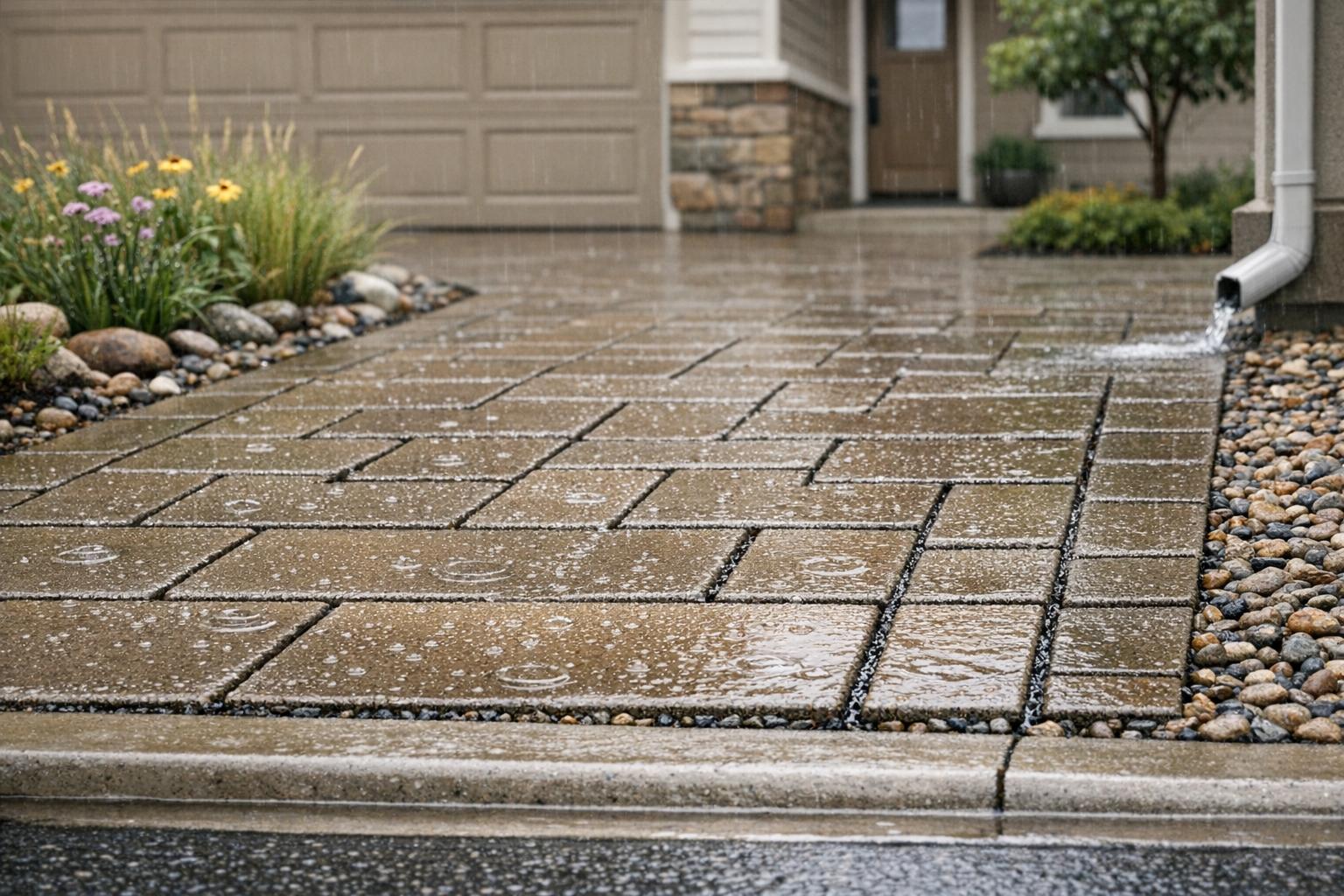
Traditional driveways often send rainwater rushing into storm drains, but permeable driveways take a different approach. They allow rain to soak directly into the ground, managing stormwater right where it falls.
Water Infiltration and Absorption Process
When rain hits a permeable driveway, it flows through the porous surface into an underlying stone reservoir. This reservoir temporarily holds the water and gradually releases it into the soil below [2][3]. Materials like pervious concrete, porous asphalt, and permeable interlocking concrete pavers (PICP) achieve infiltration rates ranging from 120 to 1,200 inches per hour, cutting runoff by as much as 90% [1].
This process not only reduces the amount of water running off the surface but also slows its movement. By doing so, it helps prevent flooding and erosion.
Impact on Flooding and Erosion
By capturing water at the source, permeable driveways stop heavy water flows from overwhelming storm drains [2]. Instead of water rushing across your property, it’s absorbed into the ground, lowering the risk of localized flooding around your home.
This slower, controlled release of water also protects the soil. Fast-moving runoff can erode soil and disrupt stream channels [1][2]. Permeable driveways, on the other hand, reduce both the speed and volume of surface water. For properties with gentle slopes (up to 5%), this means less soil loss and better landscaping preservation. Essentially, these systems mimic how undeveloped land naturally absorbs and filters rainwater, restoring a balanced hydrologic cycle [2].
In Maryland, permeable driveways even help with snow management. Air pockets within the surface retain heat, speeding up snowmelt and ensuring effective stormwater control year-round [2]. Studies also reveal that permeable asphalt requires significantly less deicing salt – anywhere from 0% to 25% of what traditional asphalt needs [2].
Environmental Benefits of Permeable Driveways
Permeable driveways help safeguard Maryland’s water resources by filtering pollutants and replenishing groundwater. By mimicking natural processes, these systems effectively manage contaminants and sustain essential groundwater reserves.
Improved Water Quality
When rainwater flows through a permeable driveway, it undergoes a natural filtration process. The water is guided through layers of gravel and stone, which trap pollutants like sediment, motor oils, heavy metals, road salt, and other chemicals before they can enter local waterways [1]. After passing through this aggregate base, the water infiltrates the underlying soil, where biological and chemical reactions break down any remaining contaminants.
Some advanced permeable pavements even use photocatalytic materials to neutralize nitrogen oxides from vehicle exhaust, contributing to cleaner air alongside water purification [1]. This layered filtration not only protects local streams and rivers but also ensures groundwater supplies are replenished with cleaner water.
Groundwater Recharge
Unlike traditional driveways, which channel most rainwater into storm sewers, permeable systems allow water to soak into the soil, directly recharging local aquifers and supporting Maryland’s ecosystems [1]. The Alliance for the Chesapeake Bay highlights this benefit:
"By keeping polluted stormwater out of the sewer drains… and instead capturing rain water where it falls on pervious pavers, streams, rivers, and ultimately the Chesapeake Bay can remain clean, clear and healthy." [5]
This infiltration process also reduces thermal pollution. Water absorbed by permeable surfaces stays cooler compared to runoff from heated asphalt, protecting cold-water streams from temperature spikes that can harm aquatic life. A practical example comes from Los Angeles County’s Elmer Avenue Retrofit Project, which showed that permeable pavements and green infrastructure could increase groundwater recharge by over 50 acre-feet annually while mitigating neighborhood flooding [1]. These benefits make permeable driveways an appealing choice for homeowners seeking both functionality and ecological responsibility.
Choosing Materials for Permeable Driveways
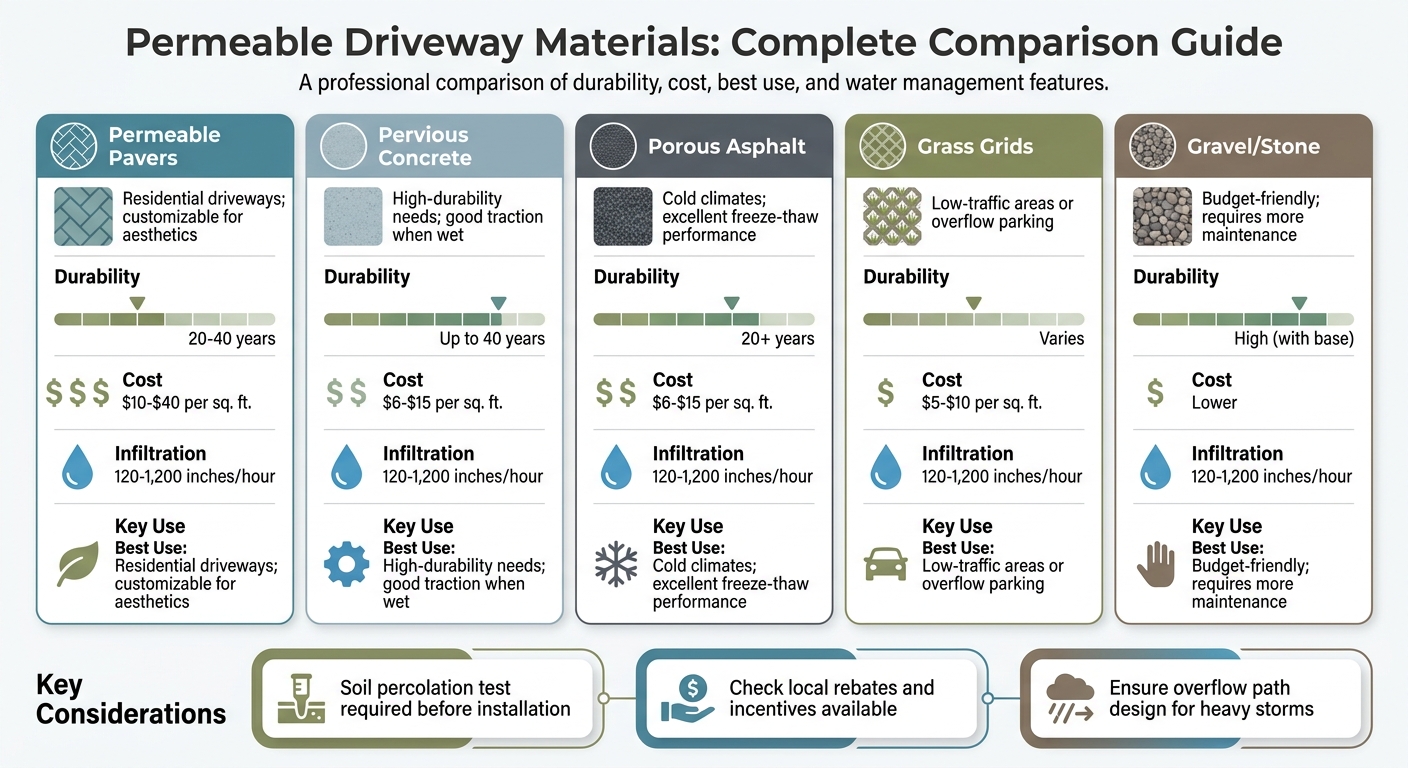
Permeable Driveway Materials Comparison: Costs, Durability and Best Uses
Permeable driveways are a smart solution for reducing water runoff and managing stormwater. To make the most of this option, it’s important to choose materials that not only perform well but also suit Maryland’s unique soil and climate conditions. Homeowners in Maryland have several choices, each offering specific benefits for the region’s weather and environmental challenges.
Material Comparison
In Maryland, the three main types of permeable pavement are porous bituminous asphalt, pervious concrete, and permeable interlocking concrete pavements [4]. These materials share a common design: a porous surface layer placed over an open-graded stone base. This setup helps capture and channel water into the soil below [4].
| Material | Durability | Cost (per sq. ft.) | Best Use Case |
|---|---|---|---|
| Permeable Pavers | 20–40 years | $10–$40 | Residential driveways; customizable for aesthetics |
| Pervious Concrete | Up to 40 years | $6–$15 | High-durability needs; good traction when wet |
| Porous Asphalt | 20+ years | $6–$15 | Cold climates; excellent freeze-thaw performance |
| Grass Grids | Varies | $5–$10 | Low-traffic areas or overflow parking |
| Gravel/Stone | High (with base) | Lower | Budget-friendly; requires more maintenance |
Before installation, it’s crucial to test the soil’s absorption capacity, especially in areas with clay-heavy soils. A percolation test at the planned installation depth will help confirm whether the ground can handle water infiltration [6]. Additionally, ensure the design includes an overflow path to direct excess water away from your foundation during heavy storms [6]. Homeowners in Maryland may also qualify for rebates or incentives when replacing impervious surfaces with permeable paving, so it’s worth checking with local programs [6].
While performance and cost are key factors, don’t overlook how the material’s appearance and upkeep fit with your home’s overall style.
Balancing Appearance and Function
Interlocking pavers are a versatile choice, offering a wide range of design options to match your home’s patio design [7]. Sharon Kong Perring highlights this advantage:
"Permeable paving is emerging as a solution for balancing high-end curb appeal, with environmental responsibility and practical use" [7].
If hiding oil stains and tire marks is a priority, darker materials like porous asphalt are a better choice than lighter-colored options [7]. On the other hand, grass pavers add greenery and help reduce heat buildup, but they do require regular mowing and watering [7].
Don’t forget to consider how easy the surface is to walk on. Some decorative options, like open concrete units or cobblestones, can be challenging to navigate in thin-soled shoes due to uneven surfaces or wide gaps [7]. For loose materials like gravel or shells, using a grid stabilization system can help keep everything in place while maintaining a polished look [7][8]. Plastic grid systems are particularly useful for keeping decorative stones, such as white marble chips, stable and visually appealing [7][8].
Another practical advantage of interlocking pavers is their repairability. Unlike pervious concrete, where damage can be harder to fix, individual pavers can be removed and replaced as needed [7]. However, all permeable systems face the risk of sediment buildup. If water starts pooling on the surface, it’s a sign that the system may need significant maintenance [6].
Installation and Maintenance for Maryland Properties
Site Assessment and Preparation
Before starting any installation, it’s crucial to evaluate the site. Begin by conducting a percolation test to check soil drainage capacity before excavation [9]. This step is especially important in Maryland, where clay-heavy soils often limit water absorption. Understanding the soil’s infiltration ability helps you determine if the site can handle the expected water volume. Additionally, assess the slope of the property to identify water flow patterns and avoid future drainage problems [4][9].
The installation process begins with excavation to the required depth. Once the area is prepared, lay down geotextile fabric to prevent soil from migrating into the system and causing clogs [9]. After that, add a 6-inch compacted layer of No. 57 angular gravel. This gravel layer not only supports water infiltration but also helps distribute loads evenly [9]. For the surface layer, Maryland properties often use materials like porous bituminous asphalt, pervious concrete, or permeable interlocking concrete pavements [4]. Always check local building codes and stormwater management guidelines, such as Harford County‘s Permeable Pavement Design Guidelines, to ensure compliance [4][9].
Routine Maintenance and Seasonal Care
Proper maintenance is key to keeping permeable pavement systems functioning effectively. Maryland homeowners should remove debris monthly, using a leaf blower to clear the surface after rainfall [10]. This prevents clogs and ensures water doesn’t pool for more than three days, which could attract mosquitoes [10].
During winter, limit the use of deicing materials, and avoid chemicals such as magnesium chloride, calcium magnesium acetate, or potassium acetate. Additionally, refrain from piling snow onto the permeable surface, as this can damage the system [10]. For weeds, remove them manually rather than using herbicides. If moss starts to grow, sprinkle baking soda over the affected area and dry-vacuum it after two weeks [10].
Annual vacuum sweeping is essential for maintaining the system’s functionality [10]. If water pooling continues after sweeping, use a stronger vacuum or pressure washing as recommended by the manufacturer [10]. During yearly inspections, look for cracks, broken pavers, or uneven settling. Addressing these issues early can help you avoid costly repairs down the line [9][10].
Conclusion
Permeable driveways offer Maryland homeowners a practical way to manage stormwater while increasing property value and supporting environmental health. These systems can cut surface runoff by over 80% [1], helping to minimize flooding and erosion while filtering out pollutants before they reach local waterways. By allowing water to soak into the ground instead of pooling, they also recharge aquifers and eliminate standing water, which can otherwise lead to ice hazards and attract mosquitoes.
With a lifespan of 20 to 40 years, cooler surfaces during summer, and lower need for deicing salts, permeable driveways are a long-term solution [11]. Whether you opt for permeable pavers, pervious concrete, or porous asphalt, each type effectively enhances stormwater management and improves curb appeal.
To succeed, these systems require thoughtful design, careful site evaluation, and collaboration with certified professionals to address Maryland’s clay-heavy soils [11]. Once installed, regular maintenance ensures the system continues to work efficiently, preventing problems like pooling or ice buildup.
For Maryland homeowners tackling drainage issues, reducing environmental impact, or creating functional outdoor spaces, permeable driveways are a smart choice. They deliver benefits like improved water quality, reduced flood risks, and a more resilient property.
FAQs
Can a permeable driveway work in Maryland’s clay soil?
Yes, a permeable driveway can function effectively in Maryland’s clay soil – provided it’s designed correctly. These driveways allow stormwater to flow through the surface into an underlying stone reservoir. From there, the water gradually infiltrates the soil. However, the success of this system hinges on the specific properties of the clay soil and the design of the driveway, ensuring proper drainage and effective stormwater management.
How much maintenance does a permeable driveway need to avoid clogging?
Permeable driveways need to be inspected and cleaned twice a year to keep them functioning properly. Removing sediment and debris seasonally is essential, and regular vacuum sweeping ensures the drainage system stays clear and effective.
Do permeable driveways freeze or ice over more in winter?
Permeable driveways can be more prone to freezing or icing during winter months. However, with the right approach, this risk can be managed. Using proper insulation and staying on top of regular maintenance are key steps. Additionally, ensuring the driveway has good drainage and promptly addressing any problems that arise can help reduce freezing and keep it functioning effectively.
Chat with Us