









- bhavya gada
- No Comments
Flooding is a common problem for Maryland homeowners, especially with heavy rains and clay-rich soils. Permeable paver systems offer an effective way to manage stormwater by allowing rain to seep into the ground instead of running off into streets and foundations. These systems reduce runoff by 60–90% and lower peak flow rates by up to 80–90%, helping prevent water pooling and property damage.
Key Points:
- How It Works: Rainwater passes through pavers into a stone reservoir, where it either infiltrates the soil or drains gradually.
- Main Types: Permeable Interlocking Concrete Pavement (PICP), porous asphalt, and pervious concrete.
- Benefits: Reduces flooding, improves water quality, and lessens strain on stormwater systems.
- Challenges: Effectiveness depends on soil type, slope, and proper installation.
- Maintenance: Regular sweeping and vacuuming prevent clogging and ensure long-term performance.
For Maryland homes prone to flooding, permeable paver systems are a practical solution when combined with proper design and maintenance.
Why Permeable Pavement Is Key to Flood-Resilient Cities
sbb-itb-843f8be
How Permeable Paver Systems Work
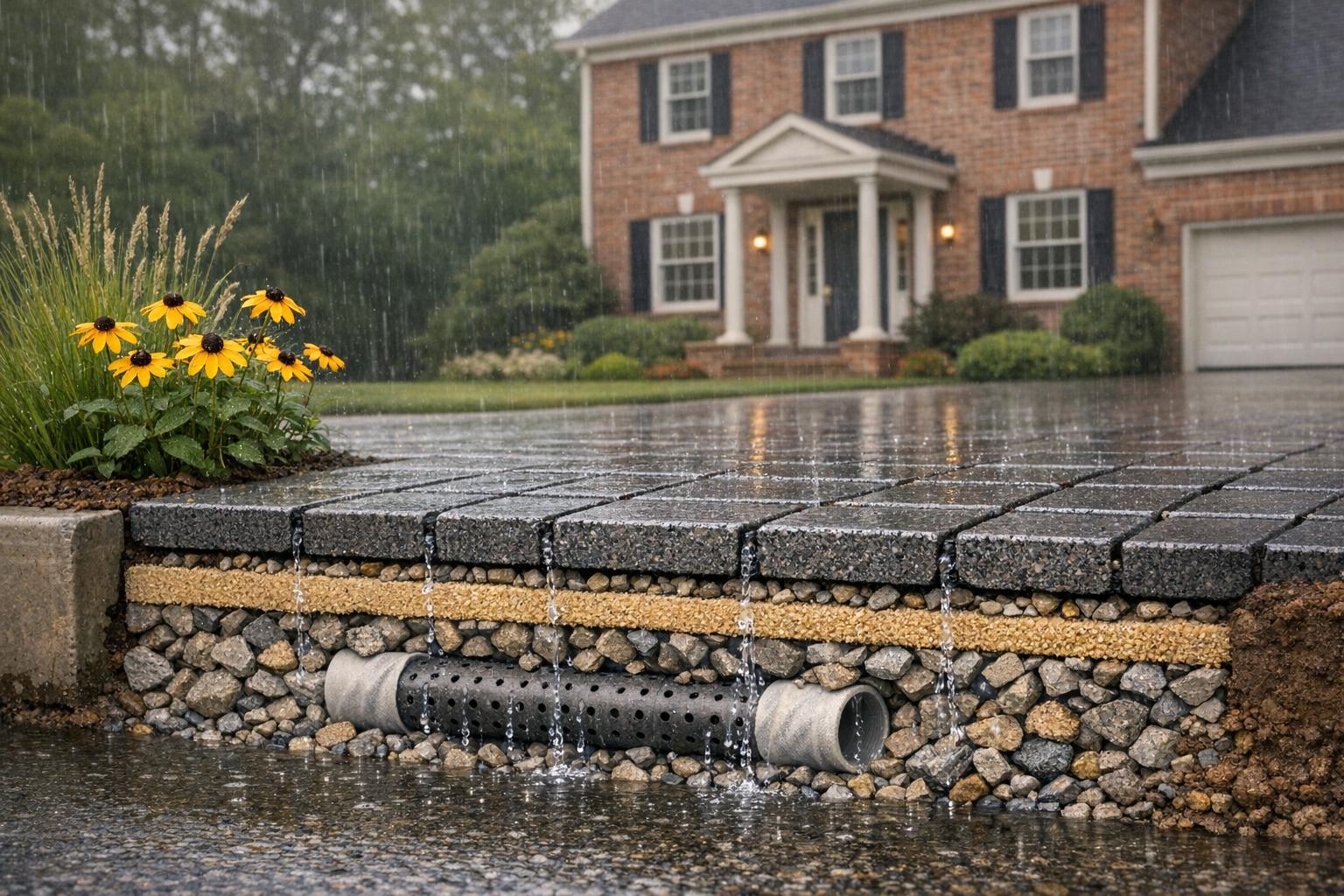
Permeable paver systems are designed to manage water by allowing it to soak into the ground vertically instead of running off laterally. Instead of pushing rainwater toward streets or foundations, these systems direct it into a storage layer. From there, the water is either absorbed by the soil or, in areas with slow-draining ground, released gradually through a perforated underdrain. This approach helps reduce the harmful effects of rapid runoff. Below, we break down the key components and benefits that make these systems effective.
Key Components of Permeable Paver Systems
Each layer in the system plays a specific role in managing and filtering water:
- Surface layer: This top layer uses materials like permeable interlocking concrete pavers (PICP), porous asphalt, or pervious concrete. These materials allow rainwater to pass through either aggregate-filled joints or built-in pores.
- Bedding layer: Made from ASTM No. 8 washed stone, this layer helps level the pavers and acts as an initial buffer for water storage.
- Aggregate base and subbase: Constructed with larger open-graded stones (e.g., ASTM No. 57 over No. 2 or No. 3 stone), this layer serves as the primary water reservoir. These stones have about 30–40% void space, meaning a 12-inch-thick layer can hold around 3.5–4.8 inches of water.
- Geotextile fabric: This material, when used, prevents fine particles from Maryland’s silty or clay-heavy soils from clogging the stone layers.
- Native soil subgrade: The soil beneath the system is left loose enough to absorb water. For slow-draining clay soils, a perforated underdrain is added to safely release excess water. This design is particularly well-suited for Maryland’s frequent heavy rainstorms and clay-rich landscapes.
The Interlocking Concrete Pavement Institute (ICPI) states that properly built PICP surfaces can achieve initial infiltration rates of 200–500 inches per hour.
Stormwater Management Benefits
These systems excel at controlling stormwater. For example, during a 2-inch, 1-hour storm – common in areas like Howard, Montgomery, and Baltimore counties – traditional driveways shed nearly all water immediately. In contrast, a permeable paver system captures, stores, and slowly releases most of the stormwater. This reduces both the volume of runoff and the peak flow, as confirmed by EPA data. In flood-prone parts of Maryland, such controlled release can protect properties and reduce strain on municipal drainage systems, which is especially beneficial in older neighborhoods built before modern stormwater regulations.
Beyond managing water flow, these systems also improve water quality. As water passes through the aggregate and soil layers, it gets filtered, removing 65–90% of total suspended solids (TSS), along with metals and nutrients. This helps protect Chesapeake Bay tributaries. For areas with slow-draining soils or shallow groundwater – common in central Maryland – a hybrid design that combines infiltration with an underdrain offers even more flexibility. It captures storm surges and releases the water gradually, helping to prevent downstream flash flooding.
Types of Permeable Paver Systems and Their Uses
When it comes to managing residential flooding in Maryland, there are three main types of permeable paver systems to consider. Each offers a unique structure and is suited for specific needs, making it essential to pick the right one based on location, functionality, and aesthetics. The primary options are Permeable Interlocking Concrete Pavement (PICP), porous asphalt, and pervious concrete. Here’s how they differ and where they work best.
Permeable Interlocking Concrete Pavement
PICP consists of solid concrete pavers with widened joints filled with open-graded aggregate, allowing water to flow through to a reservoir beneath. One of its standout features is modularity – sections can be removed and replaced without disturbing the entire surface. This is especially handy in Maryland’s freeze–thaw climate, where ground movement can cause isolated settling.
On top of functionality, PICP scores high on visual appeal. You can find options in various colors, shapes, and patterns, making it ideal for front walkways, patios, and driveways where aesthetics matter. For areas like Ellicott City or Annapolis, which often face heavy summer storms, a well-designed PICP driveway minimizes surface water buildup. Plus, water drains through the joints, reducing the risk of icy patches during winter – a practical benefit for Maryland homeowners.
While PICP is a versatile option, other systems may better suit specific needs or budgets.
Porous Asphalt and Pervious Concrete
Porous asphalt is made with fewer fine aggregates, creating connected voids that allow water to pass through into the stone base below. It looks like traditional asphalt but has a more textured surface. This option is typically the most budget-friendly for larger areas, making it a smart choice for shared driveways, rear-lane access roads, or small parking courts where appearance is less of a priority. However, it does require regular maintenance, such as vacuum sweeping, to prevent clogging from debris like leaves and sediment – common in Maryland’s tree-lined neighborhoods.
On the other hand, pervious concrete offers a smooth, consistent look and higher water infiltration rates. Its gap-graded concrete mix contains 15–25% voids, allowing water to seep through the slab itself. It’s a durable option for front driveways and parking pads, especially in urban areas like Montgomery and Howard counties, where its lighter color helps reduce heat buildup. However, installing pervious concrete requires precise mixing, placement, and curing, so finding experienced contractors can be a challenge for homeowners.
| System | Best Residential Use | Advantage | Main Limitation |
|---|---|---|---|
| PICP | Driveways, patios, walkways | Easy repairs, attractive designs | Higher cost per sq. ft. |
| Porous Asphalt | Shared drives, parking courts | Affordable for large areas | Prone to clogging |
| Pervious Concrete | Driveways, parking pads | Sleek look, high water absorption | Requires expert installation |
Design Factors for Maryland Flood-Prone Areas
The success of flood management systems in Maryland heavily depends on subsurface conditions like soil type, slope, and groundwater depth. Maryland’s landscape is incredibly diverse – ranging from sandy Coastal Plain soils in places like Prince George’s County to dense Piedmont clays in Howard and Carroll counties. This variability means there’s no one-size-fits-all approach to design. Let’s dive into how soil and drainage factors influence these strategies.
Soil Infiltration Rates and Slope Requirements
Soil infiltration rates play a crucial role in designing permeable paver systems. These rates determine how quickly water moves from the stone reservoir into the native soil below. According to the Interlocking Concrete Pavement Institute (ICPI) and national design guidelines, soils with infiltration rates of 0.5 in/hr or higher can handle a full-infiltration system. However, if rates fall below 0.3–0.5 in/hr, you’ll likely need an underdrain or a hybrid drainage solution. Maryland’s urban soils, often clay-heavy and compacted, tend to fall into this lower range, making soil testing an essential first step.
To measure infiltration rates, tools like a double-ring infiltrometer or a test pit are effective. Skipping this step is risky – knowing your soil’s capacity upfront can save time and money later.
Slope is another critical factor. Surface slopes exceeding 5% can cause water to run off before it has a chance to soak in, and over time, steep grades can shift the paver base. For residential areas, keeping slopes at or below 5% ensures proper water absorption and stability. If your property has steeper grades, consider terracing or adding small retaining walls to create manageable, flatter sections.
But soil and slope aren’t the only considerations – groundwater conditions also play a big role.
Groundwater Depth and Drainage Design
Groundwater depth determines whether the stone reservoir can adequately drain between storms. If the seasonal high water table is too close to the base layer, the reservoir can remain saturated, reducing its storage capacity when it’s needed most. Maryland’s design guidelines, along with national standards, require at least 2–3 feet of vertical separation between the bottom of the stone reservoir and the seasonal high water table or bedrock. This separation must be confirmed through test pits or soil borings.
When achieving this separation isn’t possible, the system design needs to shift. A lined system with underdrains becomes necessary. Elevated underdrains allow for some infiltration while ensuring reliable drainage, whereas bottom underdrains prioritize fast drainage but limit groundwater recharge. Regardless of the setup, the system must fully drain within 48 hours to avoid long-term saturation.
To handle heavy storms, pairing permeable pavers with overflow solutions like yard swales, dry riverbeds, or storm drain connections is essential. For instance, Pro Landscapes MD frequently incorporates these features into residential projects. They tailor the size of the stone base and underdrain configuration to match each site’s unique soil and groundwater conditions, ensuring both functionality and durability in flood-prone areas.
Installation and Maintenance for Residential Properties
Installation Steps for Flood Mitigation
The first step in flood mitigation installation is a professional site assessment. This includes evaluating drainage, flood history, slope, and utilities. In Maryland, stormwater regulations require minimum setbacks from building foundations – usually 5–10 feet, depending on local codes and soil conditions. Identifying these boundaries early helps avoid expensive corrections later in the process.
Once the assessment is complete, excavation begins to create the necessary reservoir depth, typically between 12 and 36 inches. The subgrade is then graded to a gentle slope of 0.5–2% toward underdrains. This ensures water infiltrates efficiently without compacting the soil too much. Next, open-graded, washed aggregate, such as ASTM No. 2 or No. 3 stone, is placed in layers and compacted to form the storage layer. A finer layer of No. 57 stone, about 2 inches thick, is then spread evenly to prepare for the pavers.
After laying the pavers with appropriate edge restraints, clean, washed aggregate is brushed into the joints and compacted until the surface locks in place. A final hose test over small sections ensures water infiltrates quickly and identifies any potential drainage issues before the system is put to regular use. Companies like Pro Landscapes MD often combine these steps with additional measures, such as French drains or overflow routing, to handle Maryland’s heavy summer storms effectively.
While proper installation is crucial, ongoing maintenance is what keeps the system functioning over time.
Maintenance to Prevent Clogging and Damage
Once installed, consistent maintenance is key to keeping the system effective. Without regular care, even the best-built systems can lose efficiency. Surface clogging is the most common issue, with studies showing that infiltration rates in neglected systems can drop by 50–90% within 3–5 years. However, regular upkeep can restore much of the lost capacity – often recovering 50–80% of it.
To prevent clogging, routine sweeping is essential. Periodic vacuum sweeping, especially for larger areas, should be done every 1–3 years. During fall and spring, leaf-blowing or sweeping the surface helps clear debris. It’s also important to stabilize any bare soil or eroding edges nearby, as sediment washing into the paver joints can quickly block them.
Winter maintenance requires some extra care. Avoid using sand or cinder-based traction products, as they clog the system’s voids. When plowing, keep the blade slightly raised or use a rubber edge to avoid damaging the pavers. Never pile dirty snow containing street grit directly on the permeable surface; instead, direct it to a designated landscape area. For de-icing, opt for calcium magnesium acetate or other products recommended by the system manufacturer to protect the concrete.
Permeable Paver Systems Compared: Performance and Fit
Permeable Paver Systems Compared: Performance, Cost & Best Use
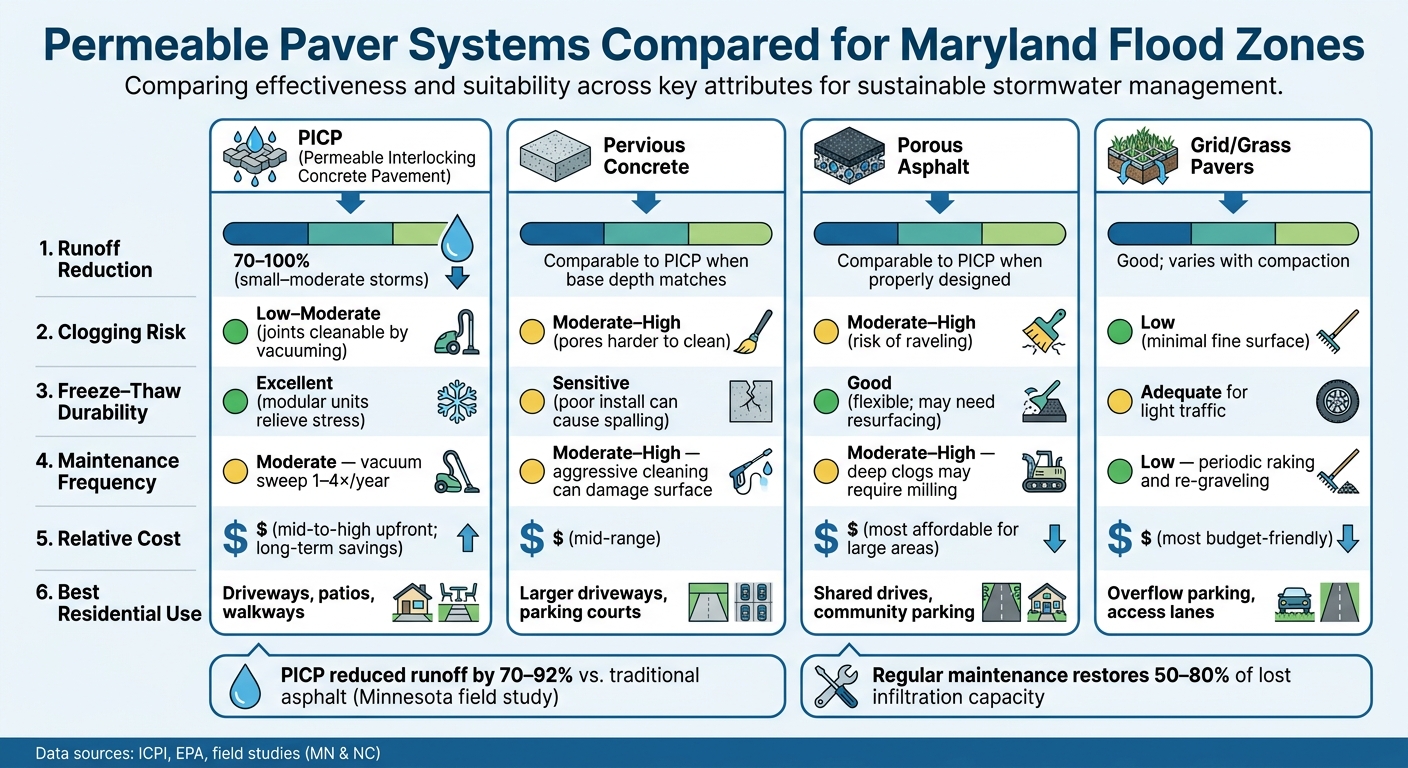
Not all permeable systems perform equally, and selecting the wrong one can lead to higher expenses and poor flood management. For Maryland homeowners, the primary options include permeable interlocking concrete pavement (PICP), pervious concrete, porous asphalt, and grid/grass pavers. Each system balances stormwater performance, maintenance requirements, durability in freeze–thaw cycles, and cost differently.
Here’s a breakdown of these systems based on critical factors for flood-prone Maryland residential properties:
| System | Runoff Reduction | Clogging Risk | Durability (Freeze–Thaw) | Maintenance | Relative Cost | Best Residential Use |
|---|---|---|---|---|---|---|
| PICP | 70–100% for small–moderate storms | Low–Moderate; joints cleanable by vacuuming | Excellent; modular units relieve freeze–thaw stress | Moderate; vacuum sweep 1–4×/year | $–$$ | Driveways, patios, walkways |
| Pervious Concrete | Comparable to PICP when base depth matches | Moderate–High; pores harder to clean | Sensitive to mix design; poor installation can lead to spalling | Moderate–High; aggressive cleaning can damage surface | $ | Larger driveways, parking courts |
| Porous Asphalt | Comparable to PICP when properly designed | Moderate–High; risk of raveling if mix is off | Good flexibility; may need periodic resurfacing | Moderate–High; deep clogs may require milling | $ | Shared drives, community parking |
| Grid/Grass Pavers | Good infiltration; performance varies with compaction | Low; minimal fine surface to clog | Adequate for light traffic | Low; periodic raking and re-graveling needed | $ | Overflow parking, access lanes |
This table highlights the distinct strengths and weaknesses of each system, offering a clearer picture of how they perform and fit into residential settings.
Why PICP Stands Out
PICP consistently ranks as a top choice for flood control. For example, a Minnesota field study showed PICP reduced runoff volumes by 70–92% compared to traditional asphalt. Another study in North Carolina found that PICP and pervious concrete driveways cut peak stormwater flow by over 70% during small to moderate storms, while also removing more than 80% of total suspended solids (TSS).
One of PICP’s standout features is its ease of repair. Individual pavers can be removed, cleaned, and replaced without needing to redo the entire surface – saving time and money in the long run.
Aesthetic and Practical Benefits
For homeowners prioritizing both functionality and curb appeal, PICP offers a variety of colors, textures, and patterns that elevate the look of patios, walkways, and outdoor seating areas. In contrast, pervious concrete and porous asphalt are more utilitarian in appearance, making them better suited for larger shared spaces like community parking lots. Grid/grass pavers, while cost-effective, are ideal for overflow parking or low-traffic areas due to their simpler design.
Balancing Costs and Longevity
Upfront costs vary across systems. Porous asphalt is the least expensive initially, followed by pervious concrete. PICP, while more labor-intensive and pricier upfront, offers long-term savings through its durability and ease of repair. Over a 15–20 year lifespan, PICP’s ability to reduce the need for additional stormwater detention infrastructure makes it a smart investment for Maryland homes, especially on smaller lots where space is limited.
Pro Landscapes MD experts frequently recommend PICP for residential projects, citing its effective flood mitigation, visual appeal, and adaptability to Maryland’s climate. Their experience with environmental paver installations and stormwater systems further reinforces PICP as a reliable choice for homeowners seeking both performance and style.
Key Takeaways and Research Limitations
What Maryland Homeowners Should Know
Permeable paver systems can make a big difference in reducing surface runoff and improving water infiltration – if the site conditions are right and the system is well-maintained [1][2]. However, it’s important to understand that these systems don’t completely eliminate flooding. Homeowners dealing with frequent water issues, high groundwater levels, or heavy clay soils might need additional solutions like French drains or grading adjustments [3].
A proper site evaluation is a must. This includes checking the soil’s infiltration rate, the seasonal high groundwater level, slope, and the drainage area. Maryland guidelines recommend using permeable pavements for smaller drainage areas. They also caution against directing large volumes of runoff onto these systems without adding extra storage or overflow options.
To keep these systems working effectively, regular maintenance is crucial. Biannual sweeping or vacuuming can restore 50–90% of the system’s original infiltration capacity [1][2]. As mentioned earlier in this article, installation quality and upkeep play a huge role in how well these systems perform. That said, results can vary widely from property to property, and there are still some uncertainties to consider, which are outlined below.
Research Gaps and Performance Variability
While the benefits of permeable pavement are well-documented, there’s a lack of research focused specifically on residential settings. Most studies have been conducted in parking lots or controlled environments, which don’t fully reflect the challenges of residential driveways or patios. Factors like leaf litter, landscaping, and uneven traffic patterns in neighborhoods can introduce complexities that these studies might not address [2][3]. This means that applying research findings to a specific Maryland neighborhood requires careful consideration.
Short-term studies show another limitation: systems that perform well in the first few years may lose effectiveness over time as sediment builds up, especially without consistent maintenance [2][3]. Additionally, there are gaps in research on how these systems handle repeated large storms, snow and ice management specific to the Mid-Atlantic, and long-term performance under heavy traffic or poor maintenance. For instance, two Maryland homes could install the same permeable pavement, but their results might differ dramatically. One home on sandy, well-drained soil could see great results, while another on compacted clay with shallow groundwater might struggle [1][2]. This variability highlights the importance of evaluating whether these systems are a good fit for your property.
Conclusion: Building Flood Resilience with Permeable Pavers
Permeable paver systems are an effective way to manage residential stormwater in Maryland. When designed and installed correctly, these systems can infiltrate between 70% and 100% of stormwater while reducing peak flows by 50% to 90% [2]. This is especially helpful in areas like Ellicott City, Columbia, and parts of Baltimore County, where heavy storms have caused repeated flooding issues.
Of course, no single solution can completely eliminate flood risks. Permeable pavers work best when combined with other stormwater management measures, such as grading adjustments, French drains, or dry riverbeds. These additions help manage overflow during severe weather. The best combination of solutions depends on factors like your property’s soil, slope, groundwater depth, and existing drainage. A well-thought-out, integrated plan ensures better performance and long-term savings.
Partnering with a skilled contractor, such as Pro Landscapes MD, can make all the difference. They can incorporate permeable pavers into a broader drainage system, ensuring your installation isn’t just a standalone feature but part of a cohesive plan.
Regular maintenance is key to keeping these systems working effectively. By vacuuming or sweeping the surface one to two times a year, you can maintain strong infiltration for 15–20 years or more [2]. Plus, with stormwater fee credits available in many Maryland areas, these systems can be a smart, long-term investment for properties prone to flooding.
FAQs
Will permeable pavers work on Maryland clay soil?
Permeable pavers work well even in Maryland’s clay-heavy soils, offering a smart solution for managing stormwater, reducing standing water, and filtering out pollutants. That said, clay soil does present challenges that make professional installation crucial for ensuring long-term durability and proper functionality. Pro Landscapes MD specializes in expert assessments and installations tailored to your property, helping keep your outdoor space efficient and protected from water-related problems.
Do I need an underdrain for my driveway or patio?
Whether or not you need an underdrain comes down to key factors like your soil type and how well it handles water. While permeable paver systems are designed to let water seep into the ground, soils with heavy clay or poor infiltration might struggle to manage excess water. In such cases, an underdrain can help prevent water buildup. At Pro Landscapes MD, they assess your site’s layout and soil conditions to decide if a tailored drainage solution is needed to safeguard your landscape.
How much maintenance do permeable pavers need?
Keeping your permeable paver system in good shape is essential for effective stormwater management. Regular upkeep includes:
- Routine sweeping: Clear away debris to prevent clogging and ensure proper water flow.
- Periodic inspections: Check for any settling, cracks, or damage that could impact performance.
- Refilling paver joints: Occasionally add joint material to maintain both structural stability and water infiltration.
Pro Landscapes MD specializes in designing and installing these systems, ensuring they remain a long-lasting and efficient solution for your property.
Chat with Us