









- bhavya gada
- No Comments
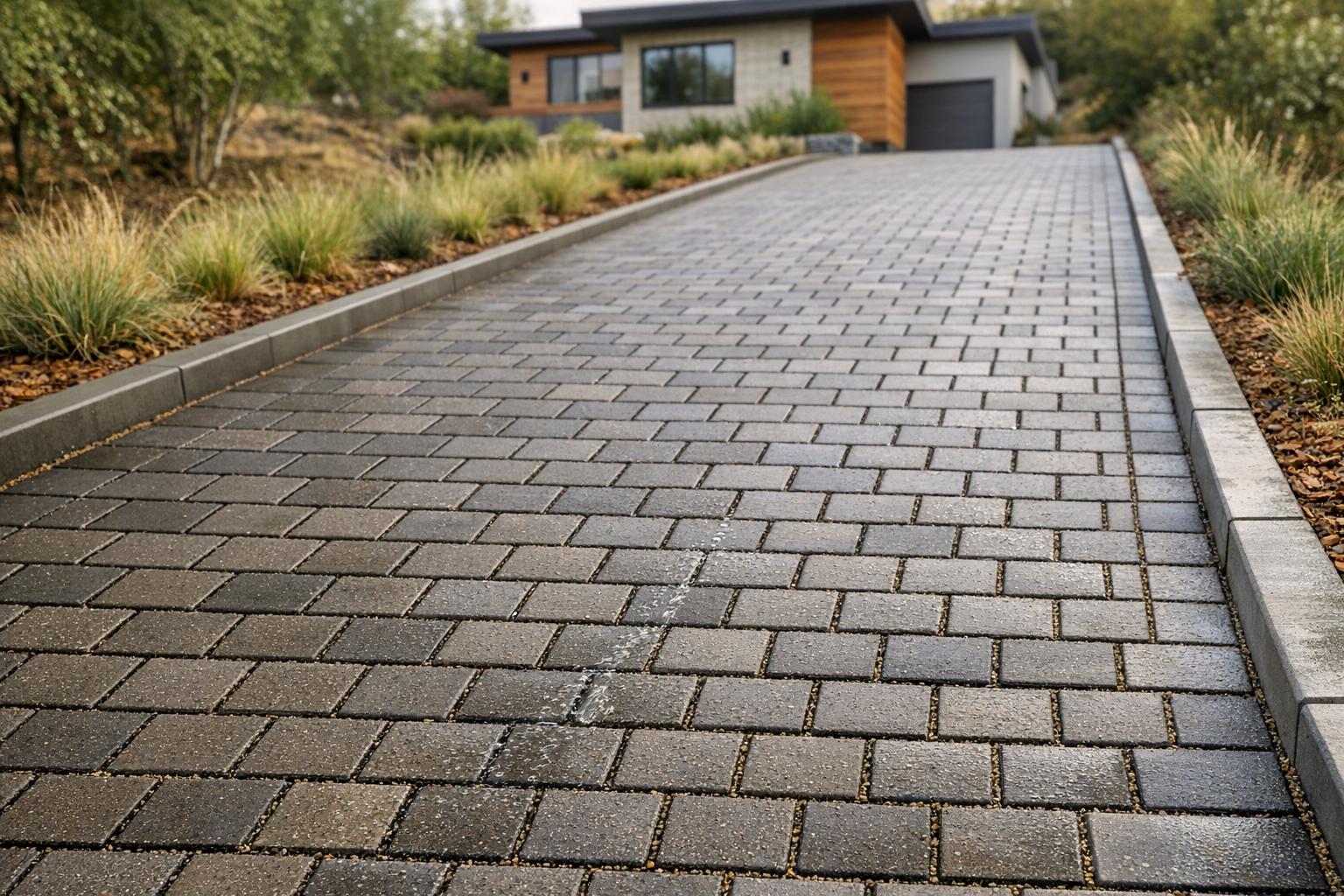
Permeable pavers are a smart choice for sloped driveways, helping manage water runoff, reduce erosion, and improve safety during winter by minimizing ice formation. Unlike traditional driveways, these systems allow water to pass through gaps into the ground, reducing strain on municipal drainage and filtering pollutants. They also offer aesthetic flexibility with various designs and colors.
Key points to consider:
- Water Management: Prevents pooling and runoff by directing water into the ground.
- Durability: Resists cracking from freeze-thaw cycles and supports heavy loads.
- Environmental Impact: Reduces stormwater runoff and supports groundwater recharge.
- Installation Requirements: Proper grading, soil testing, and base preparation are essential.
- Cost: Initial installation ranges from $20 to $35 per square foot but saves on long-term maintenance.
Proper installation and maintenance ensure long-term performance, making permeable pavers a practical and visually appealing solution for sloped driveways.
Permeable Paver Installation Process for Sloped Driveways
Evaluating Your Sloped Driveway Site
Measuring Slope and Water Flow Patterns
Before installing permeable pavers, it’s crucial to understand how water moves across your sloped driveway. The gradient of the slope determines how quickly water flows downhill and where it tends to collect. As Matt Lee from TRUEGRID explains, "Sloped sites need directional grading to avoid overloading specific cells" [4]. This means you’ll need to plan your installation to manage the increased water speed on steeper sections.
One way to assess water movement is by observing your driveway during a rainstorm or after heavy irrigation. Look for areas where water pools or creates channels – these spots will experience the most stress on your permeable system. Water naturally accelerates as it flows downhill, concentrating more heavily at the lower sections. To ensure stability, your paver layout should include grading techniques that evenly distribute water into the permeable grid.
Once you’ve mapped out water flow patterns, the next step is understanding your soil’s drainage capabilities.
Understanding Soil Type and Drainage
Soil type is a key factor in determining how well permeable pavers will perform. Conduct an infiltration test to measure how quickly water absorbs into the ground [4]. Sandy soils, which drain quickly, are ideal for permeable systems. On the other hand, silt or clay-heavy soils may require additional measures, such as underdrains or pipe systems, to handle water effectively [4].
If your property has areas of standing water after rain, it’s a sign of poor drainage that needs addressing before installation. Clay-heavy soils, in particular, can clog the stone aggregate base over time. To prevent this, consider using geotextile fabric over these subsoils. This fabric helps stop fine particles from contaminating the aggregate, preserving the system’s permeability [4]. As Matt Lee points out, "soil maps and infiltration tests should inform not only material selection but also layout strategy and long-term drainage planning" [4].
Proper soil testing sets the foundation for a successful installation.
Permits and Local Building Codes
Before starting your project, check with your local building department to ensure you meet all regulations. Many municipalities offer incentives, such as stormwater management credits, for installing permeable paving systems [4], which can help reduce your overall costs. In some areas, especially urban ones, you may need to conduct specific infiltration tests or create detention models to comply with runoff management rules.
If you live in a colder climate, building codes often require excavation below the frost line to prevent damage from freeze-thaw cycles. The depth of your excavation should account for the height of the pavers, the stormwater detention volume, and the aggregate base beneath them [4]. Planning for these requirements early is critical, as they can significantly impact both the scope and cost of your project. Additionally, if your site has a steep slope, some jurisdictions may require engineering approval for your drainage plan.
sbb-itb-843f8be
Preparing the Subgrade and Stabilizing the Slope
Excavation and Grading
Before you start digging, make sure to check local regulations. Once you’re ready, mark the driveway’s perimeter using stakes placed just outside the excavation zone and connect them with string lines. This will help maintain accurate grading throughout the process. The excavation depth should account for the height of the pavers, the aggregate base, and stormwater detention. In colder areas, you’ll need to dig deeper to get below the frost line.
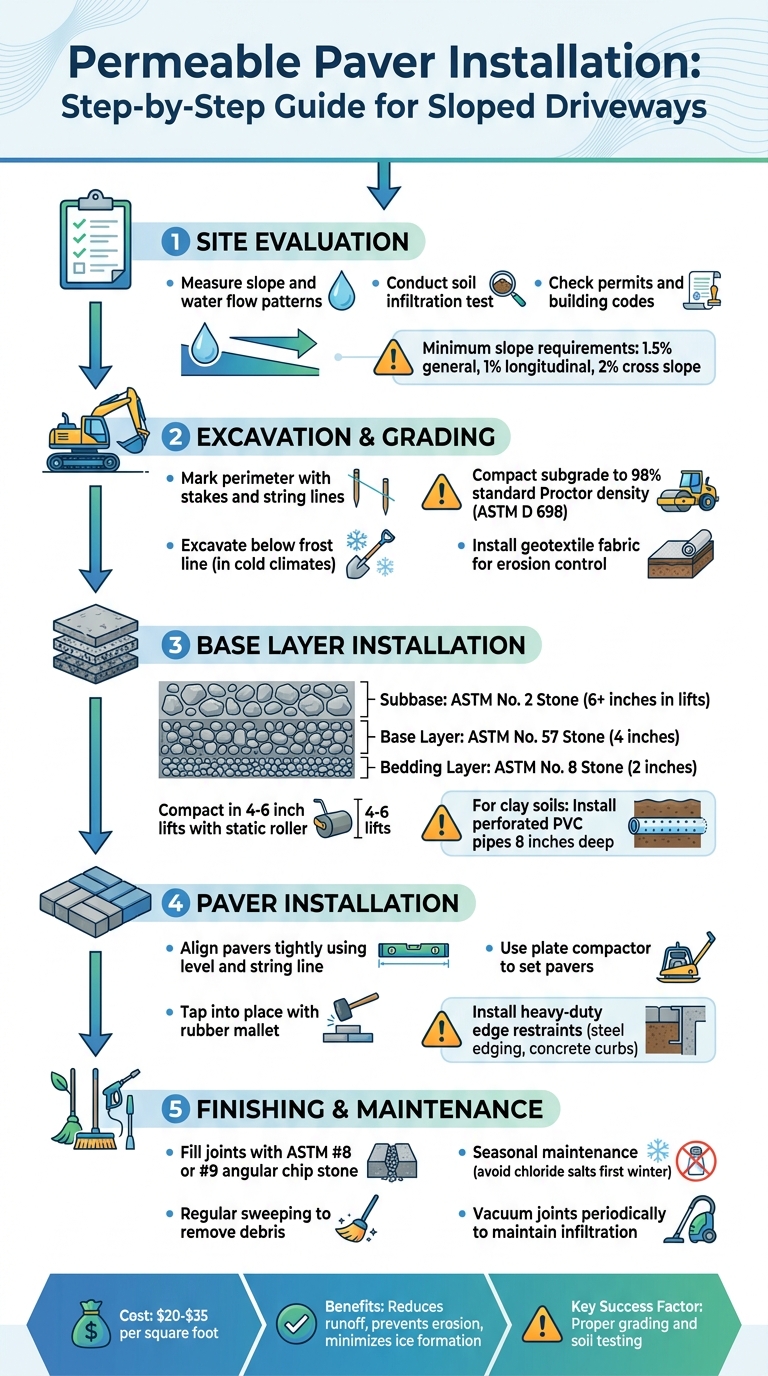
For sloped driveways, proper grading is essential. Stick to a minimum slope of 1.5% for general areas, with a longitudinal slope of at least 1% and a cross slope of 2% for vehicle driveways. After excavation, level and compact the subgrade thoroughly. If you encounter water pooling or wet soil, address it immediately with stabilization or drainage solutions before moving forward. According to the Interlocking Concrete Pavement Institute, "Compaction of the soil subgrade is critical to the performance of interlocking concrete pavements. Adequate compaction will minimize settlement" [5]. Ensure the subgrade reaches 98% of standard Proctor density, as outlined in ASTM D 698, and take steps to prevent erosion after compaction.
Preventing Erosion During Installation
Slopes are especially prone to erosion during construction due to exposed soil. To combat this, start by installing geotextile fabric. Place it over the subgrade and up the side walls to keep fine soil from infiltrating the stone base. If you’re working with wet clay, opt for woven geotextile to stop large aggregate from mixing with the soil, which helps maintain the base’s strength and prevents internal erosion [6].
For steeper slopes (over 12%), additional precautions are necessary. Use terraced bays or check curbs to keep the bedding layer stable and prevent joint stone from washing away [6]. Heavy-duty edge restraints, such as concrete curbs, steel edging, or cast-in-place ribbons, are vital to keep the stone reservoir from shifting downhill under load. Avoid relying on lightweight plastic edgers, as they can easily drift on sloped installations [6]. Also, limit the use of heavy machinery on exposed clay subgrades during excavation. Too much traffic can compact the soil excessively, reducing its ability to absorb water.
Compacting and Installing the Base Layer
Once the subgrade is stabilized and erosion control measures are in place, it’s time to install the base layer. A strong base layer is essential for managing water and ensuring stability on slopes. Use clean, angular stone, such as ASTM No. 2 stone for the subbase and No. 57 stone for the base layer. These materials provide excellent interlock and stability while creating voids for water storage. Chuck Taylor, General Manager at Advanced Pavement Technology, explains that "Clay soil is a much different beast than sandy soil, and therefore requires a pipe to collect the water" [5]. For clay or slow-draining soils, install perforated PVC pipes with filter socks about 8 inches deep to direct water away from the subgrade.
Apply the No. 2 subbase in 4-6 inch lifts and compact it thoroughly. For residential driveways on well-drained soils, the minimum compacted base thickness is 6 inches, but weak or wet soils in colder regions may require an extra 2 to 4 inches [5]. Use a static roller to compact the base, making at least four passes. Start with vibratory mode and finish with static mode to ensure stability. The stone should not move during the final pass, and keeping the stone surfaces moist during compaction will make the process more effective [7]. On sloped areas, increase the base layer depth on the downhill side to account for reduced water storage [8].
| Layer | Material | Typical Thickness | Key Function |
|---|---|---|---|
| Bedding Layer | ASTM No. 8 Stone | 2 inches | Leveling surface; joint filler |
| Base Layer | ASTM No. 57 Stone | 4 inches | Structural stability and drainage |
| Subbase | ASTM No. 2 Stone | 6+ inches (in lifts) | Water storage and load distribution |
Installing Permeable Pavers on a Slope
Selecting the Right Paver Materials
Choosing the right pavers is critical when working on a slope. Look for options that provide good traction, durability, and effective drainage. Interlocking block paving is a standout choice because it offers excellent grip and durability while allowing water to pass through efficiently [9]. Permeable Interlocking Concrete Pavements (PICP) are especially useful, as they are designed with layers of different-sized stones or aggregates. These layers filter stormwater, direct it to underground aquifers, and stabilize the soil by reducing both erosion and runoff [10].
For added stability on uneven or sloped areas, grid pavers like Turfstone are a great option. These systems incorporate grass or gravel within the grid, making them strong enough to handle vehicle traffic. Belgard offers two pricing tiers for permeable paver systems: Tier 1 includes options such as Aqua-Bric, Aqualine, Eco Dublin, Eco Urbana, Eco Cobble, Permeable Mission, and Turfstone, while Tier 2 features higher-end choices like Aqua Dublin. The main difference lies in their design – standard pavers use modular shapes and porous joints for drainage, while grid pavers depend on vegetation or gravel to anchor the system [10].
Once you’ve selected the right materials, the next step is to lay and compact the pavers correctly for optimal performance on sloped surfaces.
Laying and Compacting Pavers
To ensure a smooth installation, use a level and string line to maintain the correct slope and grade. This step ensures consistency and complements the compacted base prepared earlier. Align each paver tightly to minimize lateral movement [1]. For curved or sloped edges, trim the pavers using a concrete saw or paver splitter for a snug, professional fit that prevents shifting.
After positioning the pavers, gently tap them into place with a rubber mallet. Then, use a plate compactor to firmly set and level the pavers. This step is crucial to avoid uneven settling over time. However, be cautious not to over-compact the soil subgrade. While the base layers need to be firm, the underlying soil should remain stable and permeable [1].
Filling Joints and Installing Edge Restraints
Fill the joints or grid cells with materials like crushed stone, gravel, or decorative stone. Use a push broom to work the material into the crevices, ensuring the surface is locked in place and structurally sound.
On sloped surfaces, edge restraints are especially important to prevent lateral shifting under weight, such as vehicles. Install structural boundaries using heavy-duty materials like steel edging, landscaping metal edges, low walls, or even vertically installed permeable pavers. These restraints help keep the entire system secure and can handle the added pressure from the slope [1][9].
Maintaining Permeable Driveways on Slopes
Cleaning and Removing Debris
Keeping your driveway clean is key to maintaining its drainage capacity. Regularly sweep the surface with a broom to clear away debris before it settles into the joints. For a more thorough clean, use tools specifically designed for cleaning paver joints to remove any lodged material. Since weeds can sprout in these joints, pull them by hand or use natural herbicides to keep the surface tidy.
After cleaning, inspect the joints and refill them with angular chip stone, such as ASTM #8 or #9. This type of material supports water infiltration while securing the pavers in place. A mini joint filler tool can help distribute the stone evenly, especially on sloped surfaces. Finally, check the surface for signs of settling or erosion after cleaning to address any issues early.
Checking for Settling and Erosion
Sloped driveways face unique challenges like settling and erosion. Inspect the surface regularly for uneven spots, sunken pavers, or areas where water pools. If you notice pavers shifting, a plate compactor can help re-seat them and restore stability.
Pay close attention to the driveway’s slope to ensure water flows downhill without forming new pooling areas. Persistent drainage issues might mean the base has settled unevenly. For major repairs, compact the stone base to 98% proctor density for better long-term stability. On steeper slopes, you might need additional measures like perforated pipes to handle heavy runoff that surface drainage alone can’t manage. Regular upkeep ensures the driveway remains stable and drains efficiently.
Seasonal Maintenance Tips
Seasonal changes bring specific maintenance needs, especially in winter. When clearing snow, use plows with rubber edges or raised steel blades to avoid damaging the pavers or edge restraints. Before the snow season starts, install plow markers along curves and transitions to guide equipment safely.
Avoid using chloride-based salts during the first winter, as they can harm concrete pavers. If deicing is necessary, go for calcium magnesium acetate, which is less abrasive. Also, refrain from piling sand on the driveway – it can clog the joints and hinder drainage.
As Hill Country Road Paving explains:
In winter, these systems often resist surface ice better because melt water has somewhere to go [3]; however, the trade-off is careful maintenance of joint aggregate and occasional vacuuming to preserve infiltration rates [3].
Come spring, rinse the driveway thoroughly to wash away any salt residue or sand used for traction. Inspect drainage components like trench grates, catch basins, and underdrain outlets to confirm meltwater can flow freely. Vacuum the joints periodically to clear out fine debris and maintain infiltration efficiency. Plan to replenish the joint aggregate every few years to replace material lost to cleaning or erosion.
How to Lay a Paver Driveway over a Permeable Base Construction
Conclusion
Permeable pavers offer a smart solution for water management, durability, and aesthetic appeal on sloped driveways. By letting rainwater and snowmelt seep into the ground instead of flowing downhill, these systems help control runoff, filter pollutants, and even reduce the need for road salt during winter months [2]. Unlike traditional rigid surfaces, permeable pavers adapt to ground movement and withstand freeze-thaw cycles without cracking.
Achieving these benefits requires careful planning and expert installation. Proper site preparation is key to ensuring long-term performance. As Matt Lee points out, well-designed systems prevent cracking and settling. Professional installers rely on tools like soil maps and infiltration tests to create driveways that handle specific site conditions, including heavy loads and challenging soil types. For areas with low-permeability soils, solutions like underdrains and strategic grading are often incorporated [4].
For Maryland homeowners, these systems represent a practical investment with long-term benefits. Not only do they manage stormwater on-site, but they also reduce reliance on conventional drainage systems. From Howard County to Montgomery County, permeable pavers are a reliable option for dealing with Maryland’s varied weather. The U.S. EPA supports their use, stating that "permeable pavements can also reduce the need for road salt and reduce construction costs for residential and commercial development by reducing the need for some conventional drainage features" [2].
Pro Landscapes MD provides expert installation of permeable paver driveways across central Maryland, serving communities like Ellicott City, Bethesda, and Silver Spring. Their comprehensive services include everything from site evaluation and preparation to seasonal maintenance, ensuring your driveway remains efficient and visually appealing for years to come.
Whether you’re considering a new installation or an upgrade, working with experienced professionals ensures your property gets the water management, stability, and curb appeal it deserves.
FAQs
How steep is too steep for permeable pavers?
Permeable pavers typically aren’t ideal for slopes steeper than 2-6%, as steeper gradients can hinder water infiltration and reduce their effectiveness. Some guidelines even recommend sticking to a maximum slope of 2% to ensure proper functionality. Be sure to review your local regulations and recommendations for precise slope limits in your region.
Do I need an underdrain if my soil is clay?
Yes, an underdrain is often necessary for clay soil. Clay has a low ability to absorb water, which can lead to pooling or water buildup. Installing an underdrain system helps control drainage more efficiently and reduces problems caused by excess water.
How do I keep the joints from clogging over time?
Regular maintenance is crucial to keep the joints in permeable pavers from clogging. Aim to inspect and clean them at least twice a year to clear out sediment and debris that might block water from seeping through. Tools like joint excavators and surface vacuums can make the process easier and more effective. By staying consistent with upkeep, you’ll help the pavers work efficiently and last longer.
Chat with Us