









- bhavya gada
- No Comments
If water keeps pooling on your patio, walkway, or driveway, the surface is likely the problem. Permeable pavers let rain move through the joints and into a stone base below, which helps cut puddles, slow runoff, and reduce soil washout near edges and beds.
Here’s the short answer:
- Standard concrete and asphalt shed water
- Permeable pavers send water down into the base
- The stone base can store up to 70% of rainfall
- Some systems can handle storms up to 4.1 inches without overflow
- Results depend on soil, grading, and base depth
If you’re dealing with standing water, erosion, or water moving toward your house, this type of system can help – but only if the site is tested and graded the right way first.
What matters most:
- Water enters through open joints
- It moves into an open-graded stone base
- The base holds water for a short time, then lets it soak into the soil
- Poor grading, clay-heavy soil, or roof runoff may need extra drainage work first
- These systems work well for driveways, patios, walkways, and parking areas
This is why permeable pavers are often used to fix repeat drainage trouble instead of just covering it up.
Learn about why Permeable Pavers are the Best for drainage
sbb-itb-843f8be
How Permeable Pavers Manage Water at the Surface and Below It
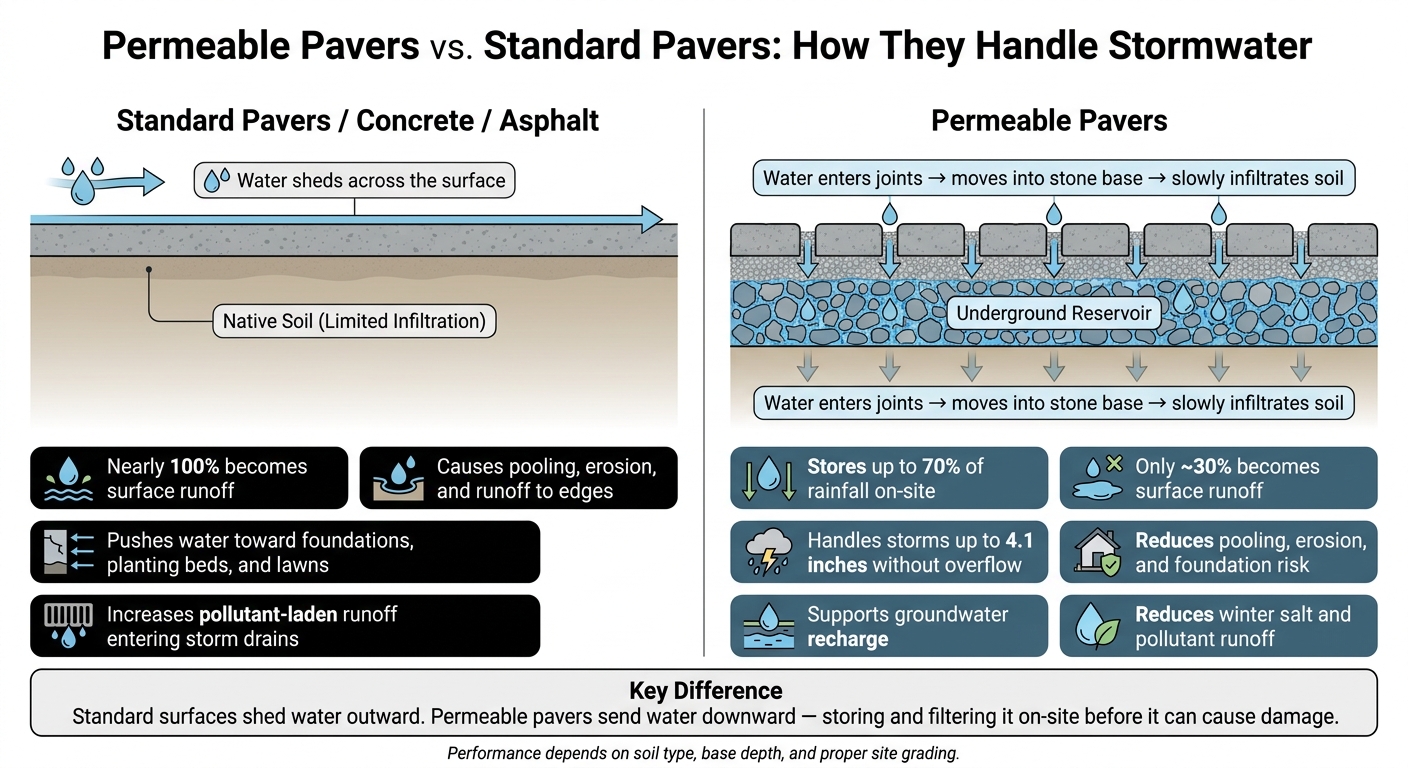
Permeable Pavers vs. Standard Pavers: Drainage Performance Compared
Permeable pavers are built to send water down instead of pushing it across the surface. That layered setup moves water out of the way before it has time to collect. The result is simple: the surface stays drier, and runoff is easier to control.
Water Moves Through the Joints Instead of Running Across the Top
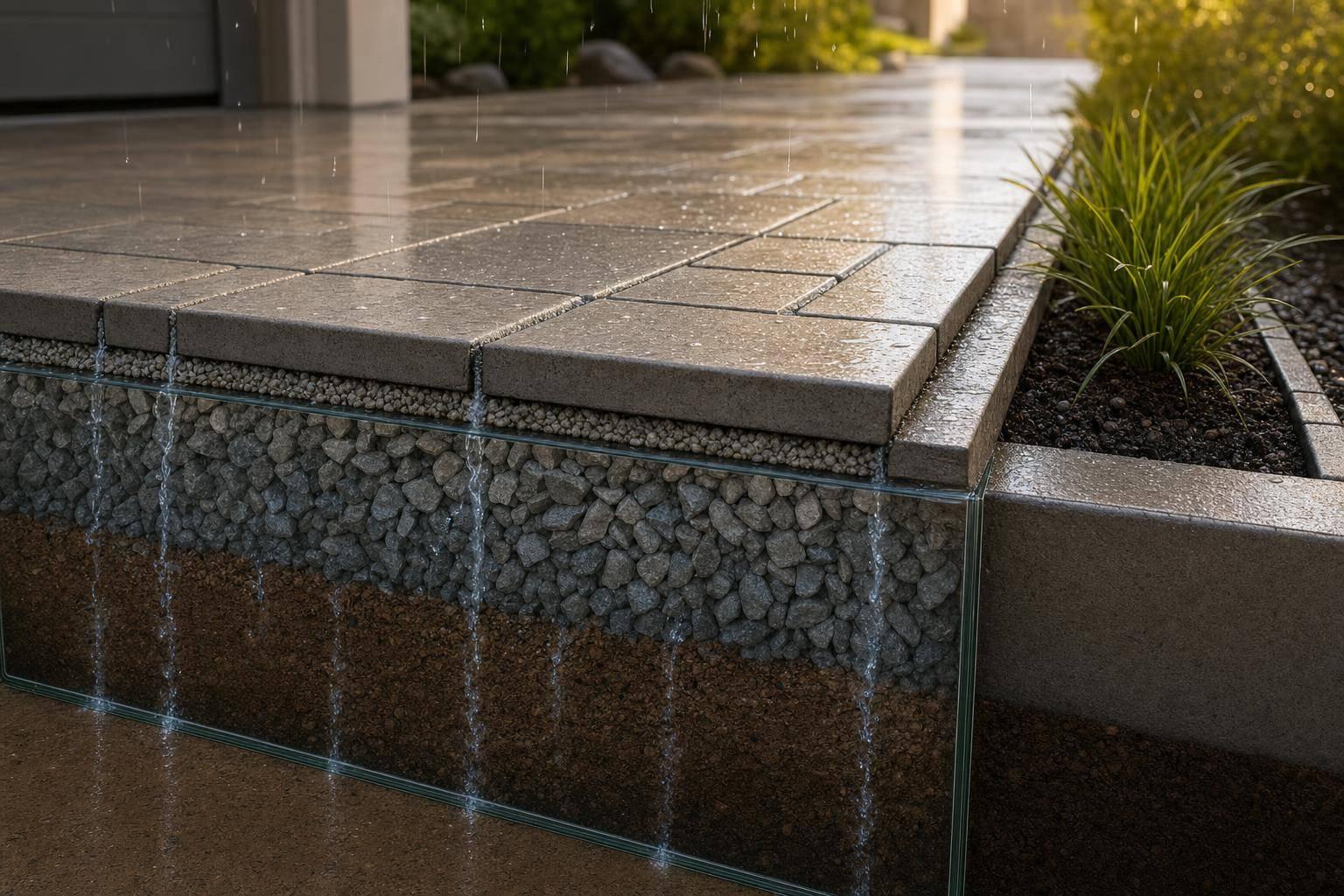
The joints are filled with open aggregate, which lets water pass through the surface fast. When rain falls, it slips into those joints and drains into the base below instead of moving across the top. That helps cut down on puddles and keeps water flowing through the system.
The Aggregate Base Stores and Slows Stormwater
Once water moves past the joints, the base layer does the heavy lifting. The open-graded stone base works like a reservoir, holding water for a short time and then letting it soak into the soil at a slower pace. Some systems can store up to 70% of rainfall, which means only about 30% turns into surface runoff [1].
Those open spaces in the stone matter a lot. During heavy rain, they give water room to collect for a while instead of rushing off the site all at once. That slows the flow and cuts the amount of water leaving the area.
How This System Reduces Runoff Compared to Standard Paver Surfaces
This layered flow path is what sets permeable pavers apart from standard paver surfaces. Standard pavers shed water across the top. Permeable pavers, by contrast, absorb and store water on site. That on-site control is what makes them effective for drainage.
Why Permeable Pavers Work Well for Maryland Properties
In Maryland, permeable pavers help stop stormwater from pooling around patios, walkways, and driveways. That kind of drainage matters even more here, where runoff can move fast and affect nearby soil and waterways.
Better Protection for Foundations, Planting Beds, and Lawn Areas
Standard driveways and patios push water toward the edges, planting beds, and lawn areas. Over time, that can lead to erosion, muddy patches, and soggy spots. Permeable pavers help slow that down by letting water soak into the ground instead of rushing across the surface.
That means better protection for planting beds, turf, and foundation edges. And it doesn’t just help your yard look better. It also helps cut down on runoff that can leave the property and cause problems downstream.
Stormwater Control in the Chesapeake Bay Watershed
Maryland is part of the Chesapeake Bay watershed, so on-site stormwater control plays a big part in protecting local water quality. Permeable pavers let stormwater infiltrate the ground, which helps reduce pollutants carried by runoff and supports groundwater recharge instead of sending water straight into storm drains [1].
They can also cut winter salt use, which means less chloride enters the environment [1]. For Maryland property owners, that makes permeable pavers a smart fit for both day-to-day drainage and the bigger water picture.
Installation Factors That Determine Whether Permeable Pavers Solve the Problem
Permeable pavers fix drainage issues only when the base, grading, and soil fit the site. That’s why site evaluation is the make-or-break step. If the conditions below the surface are off, the system won’t handle runoff the way it should.
Base Depth, Grading, and Soil Conditions Must Match the Site
Percolation testing should be one of the first steps before installation [1]. Sandy or loamy soils tend to work best. Heavier clay soils can still work too, but only if the base depth and the rate at which water leaves the base and moves into the soil are calculated the right way [2].
Here’s the key idea: the open-graded base acts like underground storage. It holds water for a short time, then lets it soak into the soil. That means base depth can’t be guessed. It needs to match the site’s runoff area and the storm volume the system is expected to handle.
If those numbers are too low, the system may not store enough water. And if the soil and base don’t work together, runoff control will fall short.
When Drainage Correction Should Come Before Paver Installation
Sometimes the pavers aren’t the first fix. If the site already pushes water toward the problem area, the grading has to be corrected first.
For example, if water is pooling near a foundation, moving toward a structure, or sitting in the yard after rain, regrading, leveling, or drainage piping may need to happen before paver installation. Roof runoff matters too. Downspouts from nearby roofs can feed into a permeable paver system, as long as in-line filters are added to keep leaves and debris from clogging the joints [1].
Only after those drainage issues are handled should the paver layout be finalized.
Professional Planning Determines Long-Term Performance
Research shows that a properly designed permeable paver system can fully capture rainfall from storms up to 4.1 inches without overflowing [2]. That kind of performance doesn’t come from the pavers alone. It comes from correct site prep and drainage design.
The runoff problems that show up on patios, walkways, and driveways are fixed below the surface, not just on top of it. Getting that result takes planning from the first site tests through base sizing and installation. Pro Landscapes MD installs environmental pavers and provides drainage solutions across central Maryland, combining hardscaping and drainage know-how to address both the surface and the ground beneath it.
Best Uses for Permeable Pavers and Key Takeaways
Where Permeable Pavers Are Most Effective
When a site has already been graded and tested, permeable pavers tend to deliver the most value in places with heavy runoff.
They work especially well for driveways, patios, walkways, and parking areas that collect water or send runoff into nearby planting beds, lawns, or foundations. They also make sense in low-lying spots with repeat ponding, along with other hardscape areas where standard concrete or asphalt would send even more water across the surface and wear away the surrounding soil.
Key Points to Keep in Mind Before Choosing This System
The best outcome comes from fitting the system to the site.
When the site is tested and graded the right way, permeable pavers can cut down on puddling, erosion, and runoff. In that setup, they turn problem hardscape areas into drainage surfaces that do useful work.
FAQs
Are permeable pavers right for clay soil?
Permeable pavers work best in well-draining soil because the system relies on the ground below to absorb the stormwater it collects. That’s why soil type matters so much.
Clay soil tends to drain slowly, which can make a standard installation harder to pull off.
Because slow-draining soils don’t fall within normal design guidelines, the site needs a closer look before moving forward. A property-specific assessment helps confirm that the system will work as intended and won’t lead to drainage issues. Pro Landscapes MD can help determine whether your property is a good fit.
Do permeable pavers clog over time?
Yes. Permeable pavers can clog over time if sediment, sand, organic matter, or plant debris builds up in the joints. When that happens, water has a harder time draining through the surface.
The good news is that routine upkeep goes a long way. Keep the surface clear and vacuum it with a heavy-duty wet/dry vacuum twice a year.
If a few joints do clog, you can clean them out and refill them with fresh aggregate to help restore drainage.
Can permeable pavers handle roof runoff?
Yes. Permeable pavers can handle roof runoff well when you direct downspouts into the paver system. That lets the system take in and manage extra stormwater instead of sending it straight across the surface.
To keep it working the way it should, add an in-line filter to the downspout. The filter helps catch leaves, sediment, and roof debris before they get into the paver system and cause clogs.
Chat with Us