









- bhavya gada
- No Comments
Permeable pavers are a practical solution for managing stormwater runoff, especially in areas prone to heavy rains like Maryland. Unlike traditional surfaces, these pavers allow water to seep into the ground, reducing flooding, filtering pollutants, and recharging groundwater. Here’s what you need to know:
- How they work: Rainwater flows through porous pavers into a stone reservoir, where it’s stored and filtered before entering the soil or a drainage system.
- Key benefits: They reduce surface runoff by up to 90%, prevent basement flooding, and protect local waterways like the Chesapeake Bay from pollution.
- Installation essentials: Proper soil testing, layering with gravel, and maintaining a slope under 5% are critical for effective performance.
- Maintenance tips: Regular vacuuming and inspections prevent clogs and ensure long-term functionality.
For Maryland homeowners, permeable pavers offer a reliable way to address stormwater challenges while protecting property and the environment.
Permeable Pavement – Explained | Exact
sbb-itb-843f8be
How Permeable Pavers Work
How Permeable Pavers Filter Stormwater: 4-Layer System Diagram
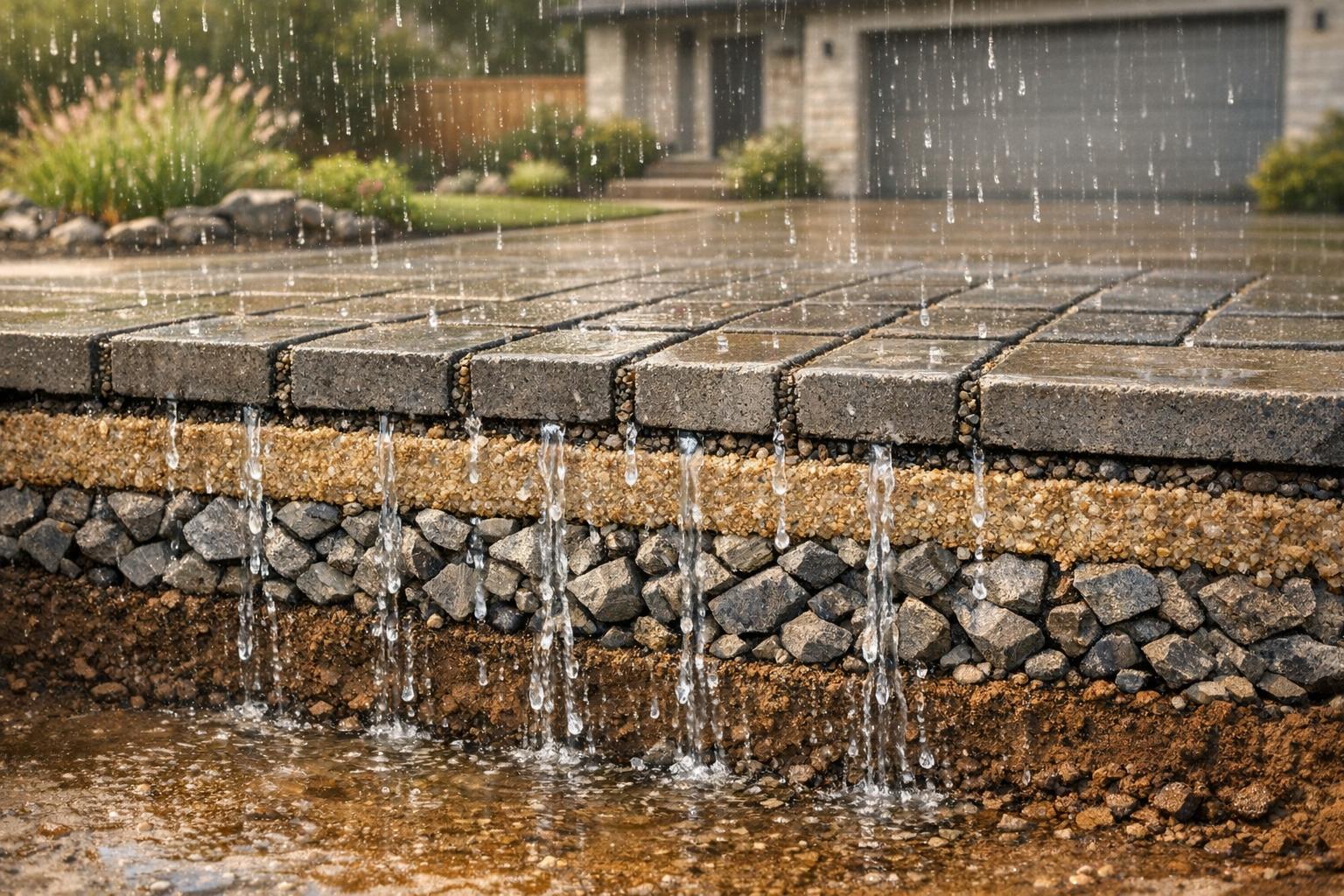
Permeable pavers imitate the way soil naturally absorbs water, creating pathways that let rainwater flow through multiple layers instead of pooling on the surface. These systems use interconnected voids and surface gaps to mimic the ground’s porosity, allowing water to seep into the earth rather than overwhelming storm drains. Their design is key to managing stormwater effectively.
Design Features of Permeable Pavers
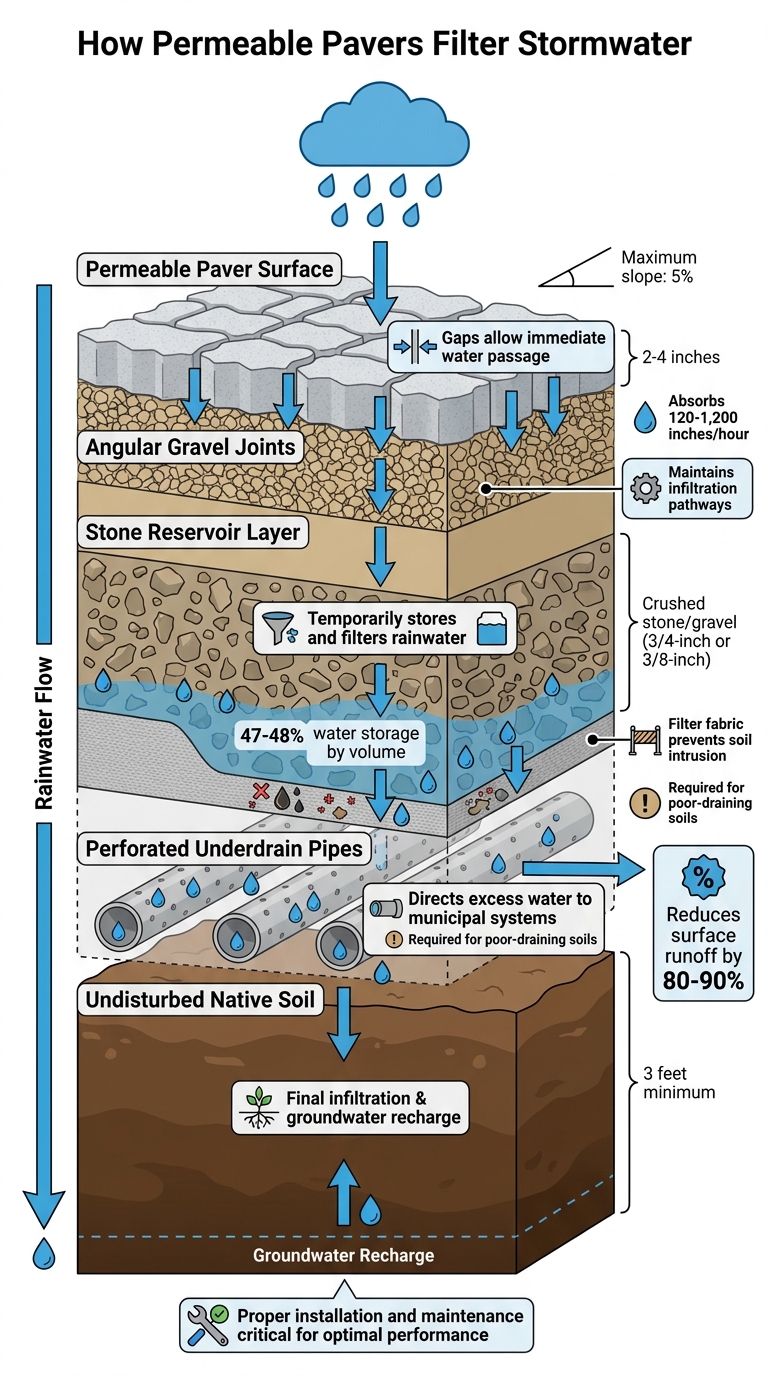
The effectiveness of permeable pavers lies in their layered structure. The top surface, usually 2 to 4 inches thick, includes gaps or voids that allow water to pass through immediately.
Below this is the stone reservoir layer, made of porous crushed stone or gravel. This layer temporarily holds rainwater, releasing it slowly to prevent flooding. To avoid clogging, the reservoir is wrapped in filter fabric to keep fine soil out. In areas where the soil doesn’t absorb water well, perforated underdrain pipes can be added to guide excess water to municipal sewer systems.
For proper function, there should be at least 3 feet of undisturbed soil beneath the reservoir layer. Additionally, the installation site should have a slope of no more than 5%, as steeper slopes can cause the pavers to shift and reduce their ability to manage stormwater.
Stormwater Infiltration Process
When it rains, water flows quickly through the permeable surface and collects in the stone reservoir. For instance, pervious concrete can absorb water at rates ranging from 120 to 1,200 inches per hour, depending on its mix and porosity [4].
As the water moves through the layers, natural filtration processes – physical, chemical, and biological – remove contaminants. The filtered water either seeps into the native soil to recharge groundwater or is directed to a drain tile system for controlled release.
This process not only reduces flooding but also slows the water’s movement, cooling it before it reaches local waterways. For example, porous asphalt systems combined with a stone reservoir can cut surface runoff by 80% or more, while Permeable Interlocking Concrete Pavement systems can reduce peak water flow by up to 90% [4].
Installing Permeable Pavers for Stormwater Control
Getting the installation right is essential for mimicking natural water infiltration, which is the backbone of effective stormwater management.
Preparation and Site Assessment
Start by testing the soil’s drainage ability with a percolation test. Dig a hole to the intended installation depth, fill it with water, and measure how long it takes to drain. Sandy-gravel soils will drain quickly, while clay-heavy soils may drain slowly and could require a deeper base layer.
Take note of all nearby impervious surfaces – like roofs, patios, and garages – that will channel runoff into your system. Keep the installation site a safe distance from buildings, wells, and septic systems. Before digging, call 811 to check for underground utilities, and verify local setback and permit requirements with your building department [5].
Once you’ve assessed the site and confirmed the soil conditions, you can move on to proper layering and placement.
Layering and Placement
Getting the layers right is critical for the system to work efficiently.
Use open-graded base materials – gravel with larger particles that create voids for water storage. For instance, 3/4-inch open-graded gravel can hold about 48% of its volume in water, while 3/8-inch pea gravel holds approximately 47% [6].
Prepare the ground by clearing, leveling, and lightly compacting it to maintain permeability. If you need a landscape fabric, opt for a permeable geotextile fabric rather than an impermeable plastic sheet. To keep the pavers in place, install sturdy edging like steel borders or low retaining walls. Lay the pavers tightly on the leveled surface, and fill the joints with angular gravel to ensure high infiltration rates [5].
Common Mistakes to Avoid
Skipping the percolation test can result in a base layer that’s too shallow, leading to overflow during heavy rain. Similarly, using traditional paver base materials with fines instead of open-graded gravel can create an impermeable barrier [5][6].
"The most common installation issues come from skipping the perc test, placing systems too close to foundations, using the wrong soil mix in rain gardens, and neglecting sediment maintenance on permeable surfaces." – Sustainable Design Group [5]
Don’t forget to account for runoff from all impervious surfaces, not just the paver area [6]. Also, avoid installing permeable pavers on slopes steeper than 12%, as water may flow over the surface instead of seeping through the joints [6]. For sloped driveways, consider deepening the base layer on the downhill side to make up for reduced water storage. Always include an overflow path to direct excess water safely away from your foundation during intense rainstorms [6].
Maintaining Permeable Pavers for Long-Term Performance
Taking care of permeable pavers is essential to prevent sediment buildup, which can clog joints and reduce water infiltration.
Regular Cleaning and Clog Prevention
To keep your pavers functioning effectively, vacuum the joints once or twice a year using a regenerative air or pure vacuum sweeper truck. This process removes fine particles that settle deep in the joints. A study conducted in Madison found that proper maintenance can boost infiltration rates in permeable interlocking concrete pavement (PICP) by an impressive 94% to 1,703% [8].
Additionally, clear debris and organic material every 3–6 months to stop fine particles from clogging the system. Make sure the aggregate in the joints stays within 0.6 inches (15 mm) of the paver surface. If it settles deeper, refill the joints with fresh angular gravel to maintain performance [7].
Stabilize nearby landscaped areas with vegetation to prevent soil erosion, which can wash sediment onto the pavers. If you notice water pooling on the surface during rainstorms, it’s time for a deep cleaning. Waiting until the system fails entirely will lead to costly repairs that could have been avoided with routine upkeep.
Consistent cleaning pairs well with regular inspections to keep the system running smoothly.
Seasonal Inspections and Repairs
After cleaning, inspect your pavers twice a year and after heavy rainfalls of 0.6 inches (15 mm) or more [7]. Look for signs of sediment buildup, missing joint material, or areas where water isn’t draining properly. Check that overflow outlets and inlets are free of blockages.
During winter, protect the pavers by using a plow shoe to lift the blade about 1/4 inch (0.6 cm). This prevents the displacement of pavers or loss of joint fill material [7]. Avoid using sand for traction or piling plowed snow on the pavers, as both can lead to clogging. Instead, use the same fine, washed gravel from the joints for traction. Since permeable pavers drain water efficiently, they’re less likely to form ice, allowing you to cut back on de-icing salt by 64% to 77% without compromising safety [7]. Lastly, never apply sealants to the pavers, as they can interfere with their permeability [7].
Benefits of Permeable Pavers in Maryland
Environmental and Economic Benefits
Permeable pavers bring long-term benefits not just to the environment but also to your wallet – if installed and maintained properly.
These pavers play a key role in filtering out pollutants and replenishing groundwater, which helps safeguard Maryland’s waterways, including the Chesapeake Bay [1]. They work by physically trapping sediments, chemically breaking down harmful substances, and biologically storing nutrients [1]. This means things like motor oil, fertilizers, and even pet waste are captured before they can flow into storm drains or seep into groundwater.
Another major plus is how these systems help recharge local groundwater. Instead of water running off into city infrastructure, it infiltrates directly into the ground. And here’s something homeowners might appreciate during Maryland winters: permeable pavers require only 0%–25% of the road salt needed for traditional asphalt surfaces [3]. Thanks to air trapped within the pavement, heat is stored and released to naturally melt snow, reducing the risk of black ice and the freeze-thaw cycle that damages surfaces [3].
On the economic side, these pavers help prevent foundation erosion, basement flooding, and surface cracks caused by standing water – all of which can lead to costly repairs. Plus, many Maryland municipalities offer rebates or incentives to encourage homeowners to install these systems [5].
"Routine cleaning is simple and considerably cheaper than letting clogs develop" – Sustainable Design Group [5]
By managing stormwater directly at the source, such as along your driveway, permeable pavers can even reduce the need for expensive regional stormwater solutions like detention ponds [3].
Local Relevance for Maryland Homeowners
Permeable pavers are particularly well-suited to Maryland’s unique climate and soil conditions, making them a smart choice for local homeowners.
With Maryland’s clay-heavy soils and frequent storms, effective stormwater management is essential. Permeable pavers address these challenges by intercepting rainwater before it becomes runoff [5]. This is especially useful in areas where traditional drainage systems struggle, such as neighborhoods with dense clay soils. Instead of water pooling and moving across yards toward foundations, these pavers prevent the issue altogether.
Additionally, these systems help cool urban runoff, reducing thermal stress on the Chesapeake Bay’s delicate ecosystems [5]. For homeowners in areas like Ellicott City, Columbia, Bethesda, or Silver Spring, permeable pavers offer both environmental protection and peace of mind. Before installation, it’s a good idea to perform a percolation test to ensure your soil can handle drainage and check with your local water authority for any available incentives [5].
For professional installation and maintenance tailored to Maryland’s conditions, reach out to Pro Landscapes MD.
Conclusion
Permeable pavers offer Maryland homeowners a practical way to manage stormwater right where it falls. By capturing rainfall and storing it in a stone reservoir beneath the surface, these systems can cut peak water flow during heavy storms by as much as 90% [4]. This helps prevent the sudden surges that overwhelm municipal drainage systems and lead to downstream flooding. However, their effectiveness hinges on proper installation and consistent upkeep.
In addition to flood control, these pavers help filter out pollutants and recharge groundwater, playing a key role in protecting Maryland’s waterways [3][2]. They also cool urban runoff, which helps reduce thermal stress on local streams [3].
For homeowners contending with Maryland’s heavy rains and challenging soil conditions, permeable pavers can safeguard foundations and prevent basement flooding [5]. But achieving these results requires professional installation.
A professional touch is critical for long-term durability and performance. This starts with a thorough site assessment, including soil analysis and grading, to ensure water is directed away from your home’s foundation [9][10]. Skilled installers use angular, washed aggregates compacted in precise layers to handle weight while maintaining effective drainage. When installed correctly and maintained regularly, these systems can deliver reliable performance for years to come.
To enjoy these benefits, reach out to Pro Landscapes MD for expert installation tailored to Maryland’s unique conditions.
FAQs
Will permeable pavers work in clay soil?
Permeable pavers can work in clay soil, but their success largely hinges on proper installation and a well-thought-out drainage system. Clay soil tends to retain water, which can pose challenges. To get the best results, it’s a good idea to consult a professional who can design a system tailored to these conditions and ensure everything is installed correctly.
How do I know if my yard needs an underdrain?
If your yard tends to have standing water, frequent flooding, or slow drainage – even when permeable materials are correctly installed – an underdrain might be the solution. Soil with low permeability or compacted ground can block water from soaking in, leading to runoff or oversaturation. These signs indicate that installing an underdrain could help manage excess water effectively, especially during heavy rainfall.
How often do permeable pavers need cleaning?
Permeable pavers need cleaning about once or twice a year to keep them working properly. This helps remove sediment buildup and prevents clogging. The best method? Using a vacuum sweeping unit to ensure they stay effective at managing stormwater runoff.
Chat with Us