









- bhavya gada
- No Comments
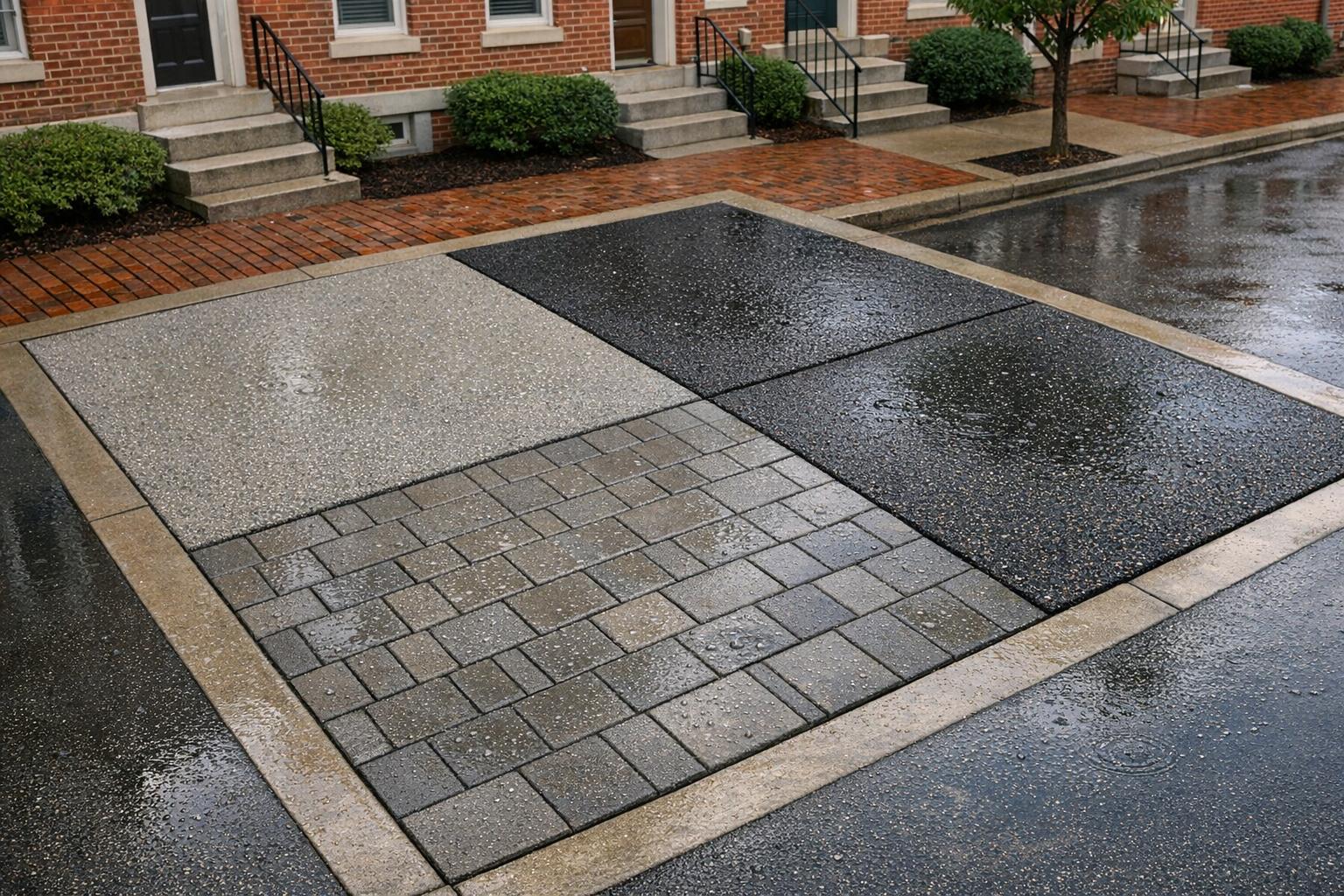
Looking to manage stormwater effectively while upgrading your property? Permeable surfaces like pervious concrete, porous asphalt, interlocking pavers, and Flexi-Pave offer functional and aesthetic solutions for Maryland homeowners and businesses. Here’s what you need to know:
Key Points:
- Cost Range: Installation costs vary by material:
- Pervious Concrete: $7–$15/sq. ft.
- Porous Asphalt: $7–$12/sq. ft.
- Interlocking Pavers: $10–$35/sq. ft. (materials + labor)
- Flexi-Pave: High-end option with superior drainage and longevity.
- Lifespan: Materials last 15–60+ years depending on type and maintenance.
- Additional Costs: Site prep (grading, excavation) adds $500–$3,000; permits cost $100–$500.
- Maintenance: Annual upkeep ranges from $500–$1,200, with professional cleaning every few years.
Why Consider Permeable Surfaces?
- Stormwater Management: Reduces runoff, prevents flooding, and protects local waterways like the Chesapeake Bay.
- Regulatory Compliance: Meets Maryland’s strict stormwater regulations.
- Long-Term Savings: Eliminates the need for expensive drainage systems and lowers stormwater fees.
Incentives:
- Rebates: Programs like Rain Check offer $10–$20/sq. ft. rebates in some counties.
- Tax Benefits: Potential reductions in stormwater fees and LEED credits.
For Maryland property owners, investing in permeable surfaces is a smart choice for addressing stormwater challenges while adding value to your property. Whether you’re in Rockville, Columbia, or Ellicott City, these options balance upfront costs with long-term benefits.
How much do PERMEABLE pavers cost?
sbb-itb-843f8be
Types of Permeable Surfaces and Their Costs
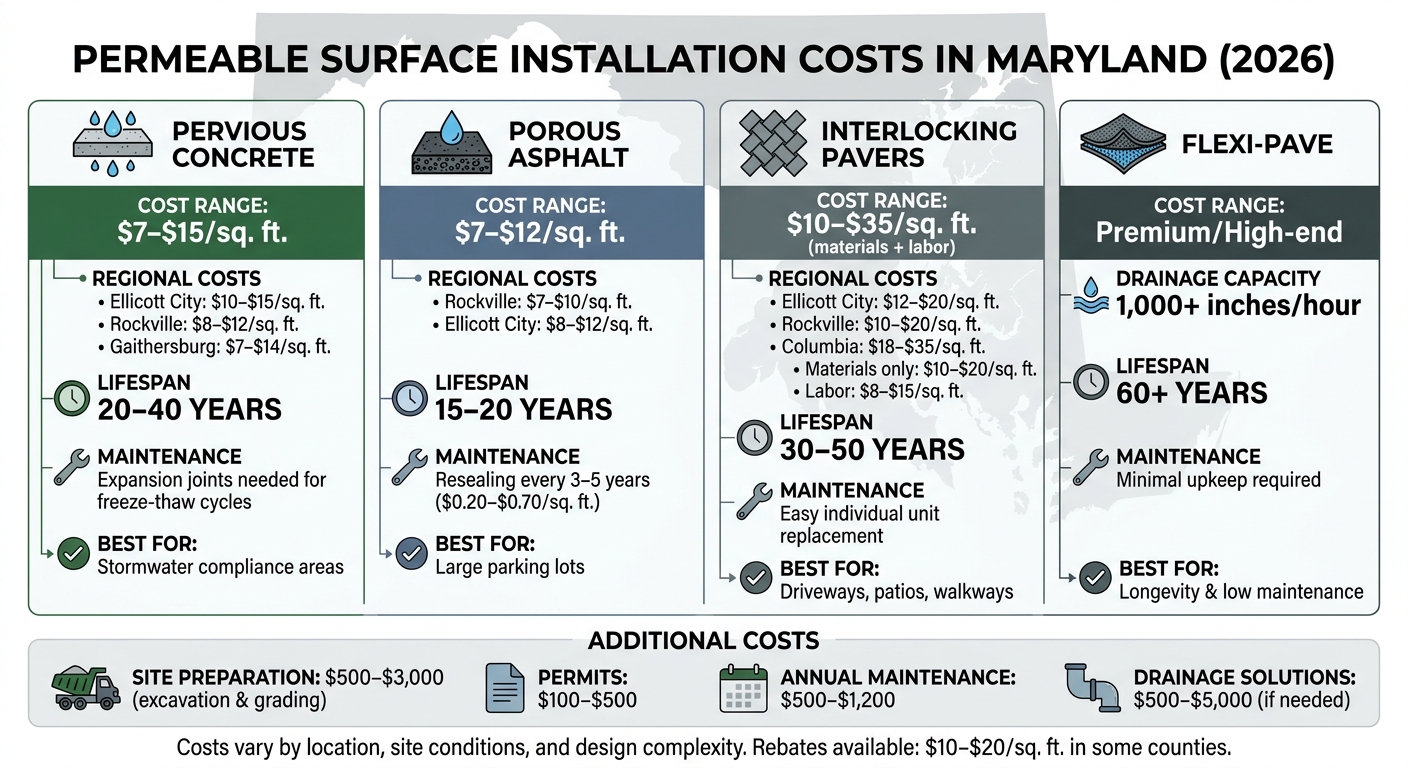
Maryland Permeable Surface Installation Costs Comparison 2026
Maryland property owners in 2026 have four primary permeable surface options to choose from, each with distinct features and price ranges. Here’s a closer look at these materials to help you plan your budget and pick the best fit for your needs.
Pervious Concrete
Pervious concrete is crafted with a unique mix that forms interconnected voids, allowing water to seep directly into the ground. This material has gained traction in Gaithersburg, where its 4- to 6-inch slab design aligns with local stormwater regulations and weather needs[4]. Installation costs in Maryland range from $7 to $15 per square foot, with specific averages like $10 to $15 in Ellicott City, $8 to $12 in Rockville, and $7 to $14 in Gaithersburg[1]. When installed correctly, pervious concrete can last 20 to 40 years, though Maryland’s freeze-thaw cycles demand extra care with expansion joints to avoid cracking[6].
Porous Asphalt
Porous asphalt is one of the most economical options for permeable surfaces. Installation costs in Maryland typically fall between $7 and $12 per square foot[1]. For example, projects in Rockville average $7 to $10 per square foot, while Ellicott City installations range from $8 to $12 per square foot. This material works well for large areas, such as parking lots, but requires resealing every 3 to 5 years, which costs around $0.20 to $0.70 per square foot. Its lifespan is shorter, generally 15 to 20 years, and frequent maintenance can reduce its cost-effectiveness over time[6].
Interlocking Permeable Pavers
Interlocking permeable pavers combine functionality with aesthetic appeal, making them a popular choice for driveways, patios, and walkways. Costs vary across Maryland: $12 to $20 per square foot in Ellicott City, $10 to $20 per square foot in Rockville, and $18 to $35 per square foot in Columbia when factoring in both materials and labor[1]. In Columbia, material costs alone range from $10 to $20 per square foot, with labor adding another $8 to $15 per square foot[2]. These pavers boast impressive durability, lasting 30 to 50 years, and allow for easy repairs by replacing individual units instead of the entire surface, which helps keep long-term costs manageable[6].
Flexi-Pave
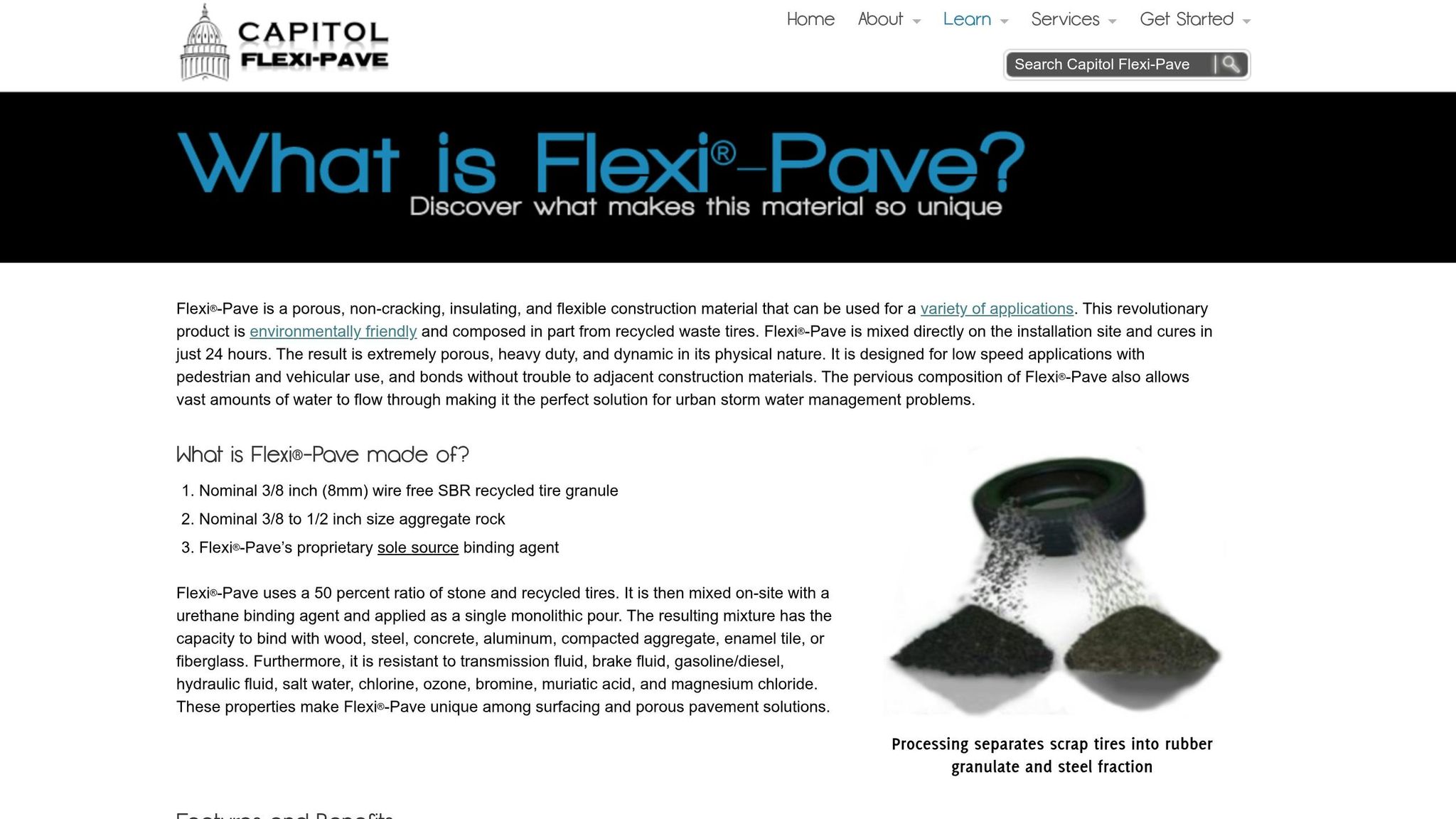
Flexi-Pave is a high-end option known for its exceptional drainage capabilities, with some systems handling over 1,000 inches of rainwater per hour[5]. Certain plastic-based permeable systems can last over 60 years with minimal upkeep, making them a standout choice for those prioritizing longevity and low maintenance[5].
Factors That Affect Installation Costs in Maryland
Site-Specific Considerations
Several factors tied to the specific characteristics of a site can significantly impact installation costs. In Maryland, elements like soil type, slope, and drainage play a big role. For example, dealing with the state’s soil conditions or addressing drainage and terrain challenges can tack on anywhere from $1,000 to $3,000 for excavation and grading. Projects in areas like Ellicott City often fall on the higher end, costing $1,500 to $3,000. Additionally, implementing drainage solutions can range from $500 to $5,000, while permit fees vary between $100 and $500, depending on local regulations [1][3][4].
Sites that are harder to access or have difficult terrain can further drive up costs, particularly in more populated areas where transportation and labor expenses are higher [4]. These localized challenges, combined with broader pricing trends in the region, can make a noticeable difference in overall project budgets.
Regional Cost Variations
Installation costs in Maryland also fluctuate based on regional economic factors and labor market conditions. Labor rates and the availability of materials vary between counties, leading to differences in pricing. For instance, the cost of pervious concrete changes depending on the local labor and material market, with notable variations across areas like Rockville, Ellicott City, and Gaithersburg [1][3][4].
In Columbia, the complexity of certain paver designs can significantly impact labor expenses. Projects requiring intricate designs and specialized skills can push labor costs to anywhere from $8 to $15 per square foot. This highlights how design intricacies, coupled with regional labor dynamics, influence pricing [2].
Rebates and Incentives for Permeable Surface Projects
Maryland property owners have access to programs that help reduce the upfront costs of installing permeable surfaces. These state and local initiatives not only make eco-friendly stormwater solutions more affordable but also support efforts to protect the Chesapeake Bay and nearby waterways.
Rain Check Rebate Program
Many municipalities in Maryland offer rebate programs to cut down installation costs for permeable surfaces. The specifics of these rebates can differ by county, so it’s essential to check with local government offices for details. Some programs provide financial incentives based on square footage, potentially covering $10–$20 per square foot of installation costs [1].
In addition to rebates, permeable surfaces can help lower ongoing stormwater fees. These fees are often calculated based on the amount of runoff a property generates. By replacing impermeable surfaces with permeable ones, property owners may see a reduction in their monthly or annual charges. Moreover, these projects can earn LEED credits, specifically SS-C6.1 and SS-C6.2 for Storm Water Management, which might lead to further financial perks, including tax incentives or additional credits.
Chesapeake Bay Trust Initiatives
These incentive programs are about more than just saving money – they play a critical role in protecting Maryland’s environment. For example, a study by the Maryland Department of Natural Resources revealed that when impermeable cover reaches just 20%, stream biodiversity can suffer significantly [1]. This has driven the creation of grants and funding opportunities aimed at reducing stormwater runoff.
To benefit from these programs, property owners should work with permeable paving experts to ensure their chosen materials qualify for local rebates [7]. Keep in mind that permits, which typically cost between $100 and $500, are often required to access these incentives [1]. Over the long term, permeable materials can also lead to significant savings. Compared to traditional pavements, they require less maintenance and reduce infrastructure costs over a 25-year lifespan.
For more information on rebates and permit requirements, reach out to Pro Landscapes MD.
Maintenance and Long-Term Cost Efficiency
Annual Maintenance Costs
Keeping permeable surfaces in good condition requires regular maintenance to ensure they retain their drainage capabilities. In areas like Ellicott City, Maryland, annual maintenance costs typically range from $500 to $1,200 [3]. This includes tasks like clearing debris and vacuuming joints to prevent organic material from clogging the surface.
Homeowners can handle routine cleaning with tools like leaf blowers or wet/dry vacuums. For more thorough cleaning, professional regenerative air vacuuming every few years can help maintain peak performance. In Columbia, services for cleaning and sealing permeable surfaces are estimated at $300 to $700 [2]. Compared to traditional asphalt, which needs resealing every 3 to 5 years at $0.20–$0.70 per square foot, permeable pavers require less frequent upkeep. Maintenance usually involves clearing debris and occasionally refilling joint aggregates at $1–$3 per square foot. These relatively low annual costs contribute to significant savings over time.
Lifecycle Savings
The long-term benefits of permeable surfaces become evident when considering their lifespan and reduced replacement needs. Traditional asphalt has a lifespan of 15 to 20 years, while permeable interlocking pavers can last 30 to 50 years, and plastic permeable grid systems may exceed 60 years [5][6]. Their durability translates to fewer replacements and lower overall costs.
Another major advantage is that permeable surfaces often eliminate the need for extra drainage infrastructure. Conventional paving frequently requires French or channel drains, which can cost anywhere from $1,000 to $5,000 [5][6]. By managing stormwater directly on-site, permeable installations cut down on these additional expenses, making them a more budget-friendly option over a 25-year period.
For expert advice on choosing the right permeable solution for your Maryland property, reach out to Pro Landscapes MD.
Conclusion
Maryland’s permeable surface installations come with a range of costs and benefits, making them a practical choice for many property owners. Installation expenses vary depending on material, site preparation, and upkeep. For example, porous asphalt costs around $7 per square foot, while permeable pavers can go up to $20 per square foot and last between 30 and 50 years [3][6]. Site preparation and grading add an extra $500 to $3,000, and annual maintenance typically runs between $500 and $1,200 [3][2]. However, opting for permeable surfaces often eliminates the need for additional drainage infrastructure, which can save between $500 and $5,000 [3][2].
These surfaces provide more than just financial advantages. They help property owners in Maryland meet stormwater management regulations, reduce flooding risks, and contribute to improved water quality in the Chesapeake Bay watershed [1][4]. When installed professionally, these systems are built to handle extreme rainfall – sometimes over 1,000 inches per hour. On the other hand, subpar installation can lead to system failures and costly repairs [5][6].
For those in areas like Ellicott City, Columbia, and Gaithersburg, Pro Landscapes MD offers expert services in permeable surface installation. Their all-inclusive approach – covering site preparation, grading, drainage solutions, and paver installation – ensures optimal performance and long-term cost savings.
FAQs
Which permeable surface is best for my driveway?
Permeable interlocking concrete pavers are a solid option for driveways, offering durability, affordability, and effective rainwater drainage. With installation costs generally falling between $4 and $12 per square foot, these pavers are a smart way to create a functional driveway that also helps manage water runoff efficiently. They’re a practical choice for homeowners looking to combine sustainability with long-lasting performance.
How do I know if my soil can handle permeable paving?
To determine if your soil is ready for permeable paving, check its percolation rate. It should be able to absorb at least 2 gallons of water per minute per square foot. This ensures the soil can handle water efficiently and provide adequate drainage.
Will I still need drains or a French drain?
Permeable surfaces can assist with water drainage, but they might not be enough in areas with heavy rainfall or poor soil drainage. You may still need to install additional measures, like drains or a French drain, to handle water runoff effectively and prevent pooling. These solutions help ensure proper water management in challenging conditions.
Chat with Us