









- bhavya gada
- No Comments
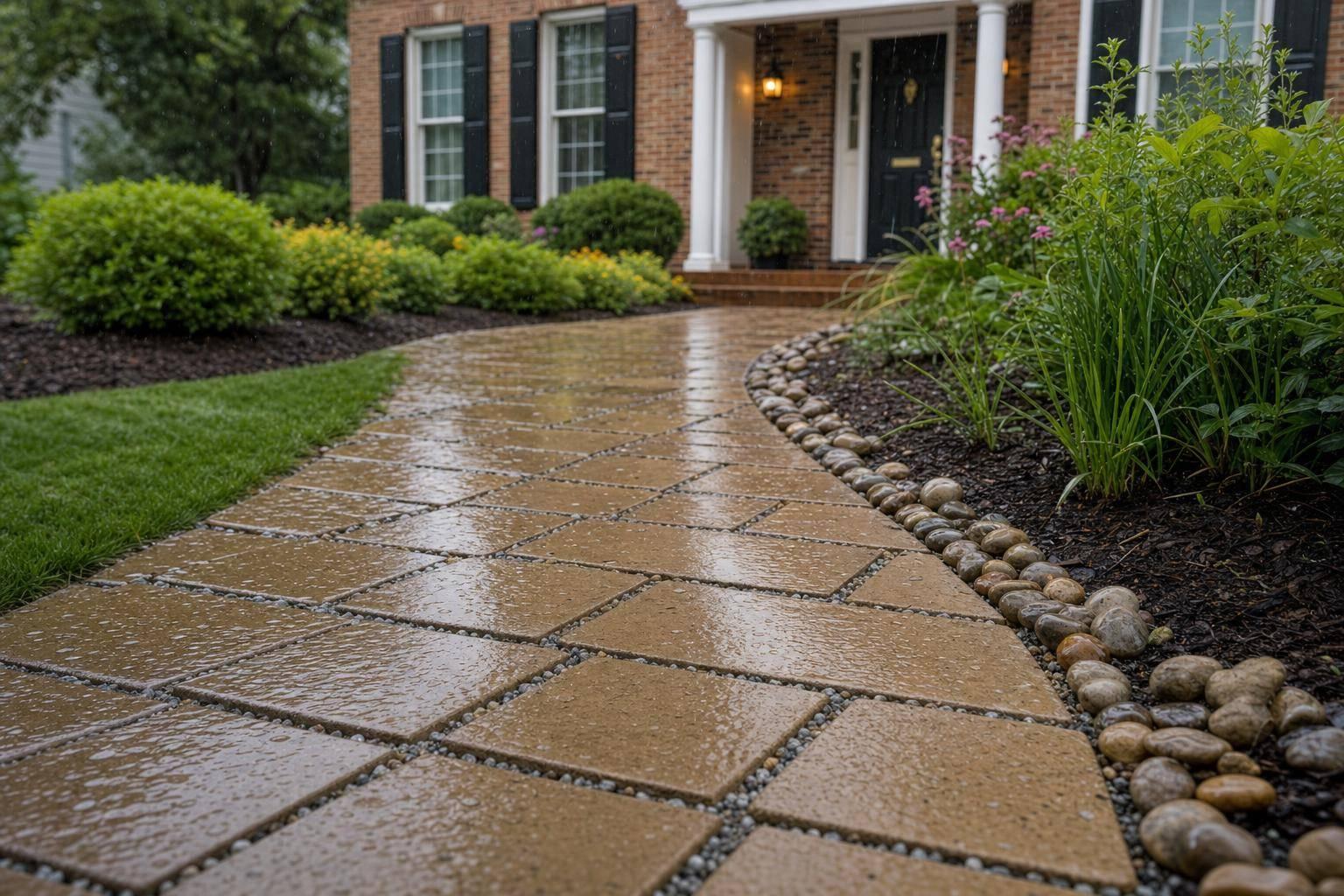
If your walkway holds water after rain, a permeable surface can help fix it. Instead of sending water across the yard, it lets rain move down into a stone base and then into the soil below. For many Maryland homes, that means fewer puddles, less washout, and safer footing in winter.
I’d sum it up like this:
- Permeable walkways cut runoff at the source
- They can reduce stormwater runoff by 95% to 99% for a design storm
- They help limit erosion near beds, lawns, and the house
- They can lower icy spots during freeze-thaw weather
- They need upkeep, like vacuum sweeping twice a year, to keep water moving through the surface
In central Maryland, heavy rain, clay soil, and sloped lots often make drainage hard to control. In the Baltimore urban area, more than 45% of the land is covered by hard surfaces, which leaves less ground to soak up rain. That’s why water often shows up first on the walkway.
Here’s the simple takeaway: if you want a path that drains better than concrete or tightly sealed pavers, a permeable walkway is often a smart fit – as long as the base, slope, and distance from the house are planned the right way.
Permeable Paving – Reducing Excess Stormwater, Beautifully
sbb-itb-843f8be
Quick Comparison
| Feature | Standard Walkway | Permeable Walkway |
|---|---|---|
| Water flow | Sends water across the surface | Lets water move through the surface |
| Puddles | More common | Less common |
| Erosion near edges | More likely | Less likely |
| Winter slick spots | More likely to refreeze | Lower chance of surface ice |
| Upkeep | Crack repair, drainage fixes | Sweep or vacuum to keep joints open |
| Best use | Basic hard surface path | Drainage-focused path with water control |
Below, I break down how these walkways work, where they help most in Maryland, and what to watch before installation.
Runoff and Drainage Problems Around Maryland Walkways
Standard concrete and asphalt walkways don’t absorb rain. They shed it. That water then moves into nearby planting beds, lawns, and even toward the foundation.
The root of the problem is simple: these are impervious surfaces. Instead of letting rain soak into the ground, they push it away. For many Maryland homeowners, the warning signs show up fast – a muddy strip along the walkway, mulch washed out of beds, or a puddle that sticks around long after the storm passes.
How Impervious Surfaces Cause Puddles and Runoff
When rain lands on a concrete walkway or tightly sealed pavers, it spreads across the surface and heads to the lowest point. If the grading is off, or if part of the path has settled unevenly, water gathers in those low spots. If the walkway slopes toward the lawn or the house, that’s where the water goes.
The result is often messy and hard to ignore:
- Edge soil gets saturated fast
- Turf along the margins starts to struggle
- Mulch shifts out of place
- Puddles form where water has nowhere else to go
The Chesapeake Bay Program cites EPA data showing that a typical urban city block with impervious surfaces generates over five times as much runoff as a forested area of the same size.[1] Walkways add to that same issue by sending water and pollutants toward storm drains and local streams.
There’s also the safety side of it. Damp surfaces can grow algae and moss. In winter, water trapped in small dips can freeze overnight and turn into slick ice patches on paths and stairs.
Why These Problems Are Common in Central Maryland
Maryland’s climate and soils make drainage trouble more common than many homeowners expect. In central Maryland, frequent heavy rain and clay-heavy soils leave very little room for water to soak in.
Sloped lots make things worse. Water naturally moves downhill, collects at the base of paths and steps, and can build up against foundation walls or basement window wells. Over time, that moisture may seep into cracks. Permeable walkways help by letting rain move through the surface and drain below.
How Permeable Walkways Manage Water Problems
A permeable walkway handles rain in a very different way than standard concrete or asphalt. Instead of pushing water off the surface, it lets water move down through the walkway and into a stone base below. That base holds stormwater under the surface and lets it drain out over time. In plain English, rain gets stored instead of turning into runoff.
How Water Moves Through the Surface and Stone Base
Permeable walkways usually have open joints or porous pavers set over a bedding layer of clean stone, an open-graded base, and a deeper reservoir layer. Each layer has a job. Together, they support the walkway and store runoff underground.
A properly sized base can hold a large amount of stormwater during a storm. After that, the water slowly infiltrates into the soil below. In slow-draining soils, which are common in central Maryland, a perforated underdrain can help carry extra water away when infiltration slows.[2][13]
When the storage layer is sized the right way, permeable pavement systems can also cut runoff by 95% to 99% for a design storm.[13] That below-ground storage is the part that changes how water behaves across the property, not just on the walkway itself.
What Changes on a Residential Property
On a typical Maryland property, the first change most homeowners notice is simple: fewer puddles on and around the walkway. Because water drops into the base instead of spreading across the surface, less runoff reaches lawn edges, planting beds, and low areas near the foundation.
That also means:
- Less erosion along the edges of the path
- Less water pressure on nearby drainage systems
- Fewer ice patches in winter during Maryland’s freeze-thaw cycles, since water drains through the walkway instead of freezing on top[12][13]
There’s one catch: routine maintenance matters. Fine sediment, mulch particles, and debris can slowly clog the joints and reduce infiltration over time. Regular sweeping and vacuuming as needed help keep those joints open. If that upkeep gets skipped, the walkway can start acting more like a standard impervious surface, which cuts into the stormwater gains.[2][8][13]
Those day-to-day changes set up the homeowner benefits covered next.
Benefits of Permeable Walkways for Maryland Homes
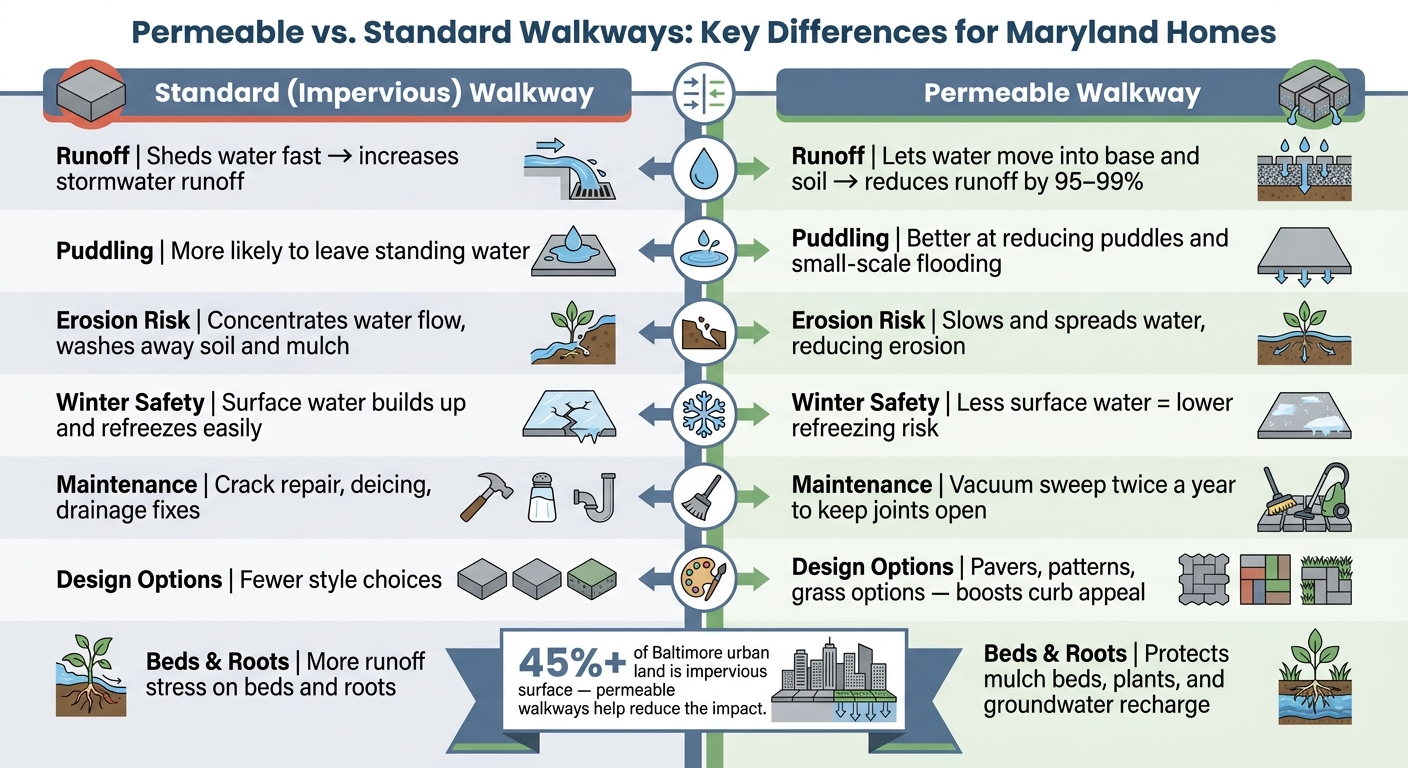
Permeable vs. Standard Walkways: Key Differences for Maryland Homes
Those drainage gains show up in ways homeowners notice fast: safer paths, less erosion, and cleaner runoff around the house.
Better Drainage, Safer Walking, and Less Erosion
One of the first things Maryland homeowners tend to notice is how much faster standing water clears. Entrances, side yards, and planting edges stay drier after storms.[2][14][3] That means fewer puddles, drier borders, and yard space you can use sooner after it rains.[15][3]
There’s also a winter safety angle. Because permeable surfaces limit surface water, they can reduce slick freeze-thaw spots. That helps make front walks and side paths safer when temperatures drop.[2][18]
Erosion is another big plus. When water soaks in instead of racing across the surface, it loses the force that can wash away mulch, cut small channels through bare soil, and weaken hardscape edges near planting areas.[14][3][9] Over time, that can help protect mulch beds, root zones, and foundation edges.
Cleaner Runoff, Curb Appeal, and Usable Outdoor Space
Permeable walkways can also help clean stormwater on site. As water moves through the base, sediment can get trapped and pollutants can be reduced before runoff reaches nearby streams.[2][16][17]
And this isn’t just about function. Pavers and grass pavers can fit the look of the home while still preserving drainage and usable yard space.[7][9][21]
Impervious vs. Permeable Walkways: A Side-by-Side Look
At a glance, permeable walkways cut runoff, improve footing, and help shield nearby landscaping.
| Feature | Impervious Walkways | Permeable Walkways |
|---|---|---|
| Runoff | Shed water fast, which increases stormwater runoff.[2][21] | Let water move into the base and soil, which reduces runoff.[2][21] |
| Puddling | More likely to leave standing water behind.[2][5] | Better at reducing puddles and small-scale flooding.[2][5] |
| Erosion risk | Can concentrate water flow and wash away soil or mulch.[20][21] | Slow and spread out water, which reduces erosion.[20][21][4] |
| Winter safety | Surface water can build up and refreeze more easily.[5] | Less surface water means a lower refreezing risk.[5] |
| Maintenance | May need more deicing, crack repair, and drainage work. | Needs periodic sweeping or vacuuming to keep water moving through the surface.[15][16] |
| Design options | Often comes with fewer style choices.[19][9] | Can boost curb appeal with pavers, patterns, and grass options.[7][9][21] |
| Beds and roots | Places more runoff stress on beds and roots.[9][21] | Better protects mulch beds, plants, and groundwater recharge.[9][21][4] |
Materials, Maryland Best Practices, and Professional Installation
Permeable Materials and Layout Options for Residential Walkways
Once you know where the water is coming from, the next step is picking a material that fits the site.
For many Maryland front walks and side yards, permeable interlocking concrete pavers are a solid option. They hold up well under foot traffic and come in a range of patterns, so you don’t have to trade function for looks. For longer walkway sections, pervious concrete or porous asphalt can make more sense. And for low-traffic zones, overflow paths, or areas where a softer, greener look works better, open-grid systems filled with gravel or grass are often a good fit.
Slope matters here too. Keep surface slopes at 5% or less so water can soak in instead of running off.[4] Near planting beds, it’s also smart to plan for mulch and soil movement. If those materials wash into the joints, drainage can get worse over time.
Maryland Installation Standards and Basic Maintenance
Material alone won’t solve the problem. The base, slope, and setbacks all need to fit the property.
Use clean, open-graded aggregate below the surface so water can collect there and drain out slowly. For pedestrian walkways, the base usually needs 3½ to 6 inches of open-graded stone. If the site has clay-heavy soil, the base often needs to be deeper.[10][26][27] The bottom of the stone reservoir should stay about 3 feet above bedrock or groundwater to allow proper filtration.[4][6]
Setbacks from the home’s foundation matter too. Water that moves through the walkway should be sent away from the house. If the native soil drains poorly, or if the walkway is close to the structure, an underdrain can help move extra water away safely.[23][24]
| Planning Factor | Guidance |
|---|---|
| Max surface slope | ≤5% for steady infiltration and paver stability |
| Base depth (pedestrian) | 3½–6 inches of clean, open-graded aggregate |
| Clearance below the base | About 3 feet above bedrock or groundwater |
| Foundation setback | Direct overflow away from the house; use an underdrain if needed |
| Routine maintenance | Vacuum sweep twice a year; inspect after major storms |
| What to avoid | Piling mulch, soil, or sanded snow on the surface |
Maintenance is pretty simple, but it does matter. Vacuum sweep twice a year – usually in spring and after winter – to clear out sediment and leaf debris before the joints clog.[22][25] If water starts sitting on the surface long after a rain, that’s often the sign that the surface or joints need cleaning.
For Maryland homes with clay soil, tight setbacks, or poor grading, installation details tend to make or break the result. Pro Landscapes MD installs permeable walkways and environmental pavers across central Maryland and can tie them into grading, French drains, dry riverbeds, and stormwater management.[11]
Conclusion: When a Permeable Walkway Is the Right Choice
A permeable walkway lets water move down into the base and soil instead of rushing across the top. That usually means less puddling, less erosion, and a yard that’s easier to use after rain.
The best setup depends on the site. Slope, soil type, distance from the house, and how the walkway ties into the rest of the yard all shape the right material and base depth. When those parts are handled well during installation, a permeable walkway can improve drainage, help protect nearby landscaping, and add lasting curb appeal to a Maryland home.
FAQs
Will a permeable walkway work in Maryland clay soil?
Yes, but Maryland clay soil can make drainage a bit tricky. Permeable walkways can still work well, though slow-draining or impermeable soils may call for a site-specific design, such as an underdrain system.
Because soil type affects how the walkway performs over time, a professional assessment can help make sure it holds up well and manages stormwater runoff the way it should.
How much maintenance does a permeable walkway need?
Permeable walkways are fairly easy to maintain, but they still need routine care so they don’t clog and stop draining the way they should.
A good rule of thumb is to vacuum the surface with a heavy-duty wet/dry vacuum twice a year, usually in spring and fall. It also helps to check drainage after major storms. If water starts sitting on the surface, that’s a sign the system may need attention.
For interlocking pavers, add more joint material when needed after sweeping. In winter, clear snow with a rubber-tipped shovel or use a plow set 1 inch above the surface.
How close can a permeable walkway be to my house?
A permeable walkway should usually sit at least 10 feet from your home’s foundation. That buffer helps reduce the chance of water seeping into a basement.
If you install the walkway within that 10-foot zone, add a waterproof liner along the edge next to the structure.
The soil subgrade beneath the permeable system should also slope away from the house so water drains in the right direction.
Chat with Us