









- bhavya gada
- No Comments
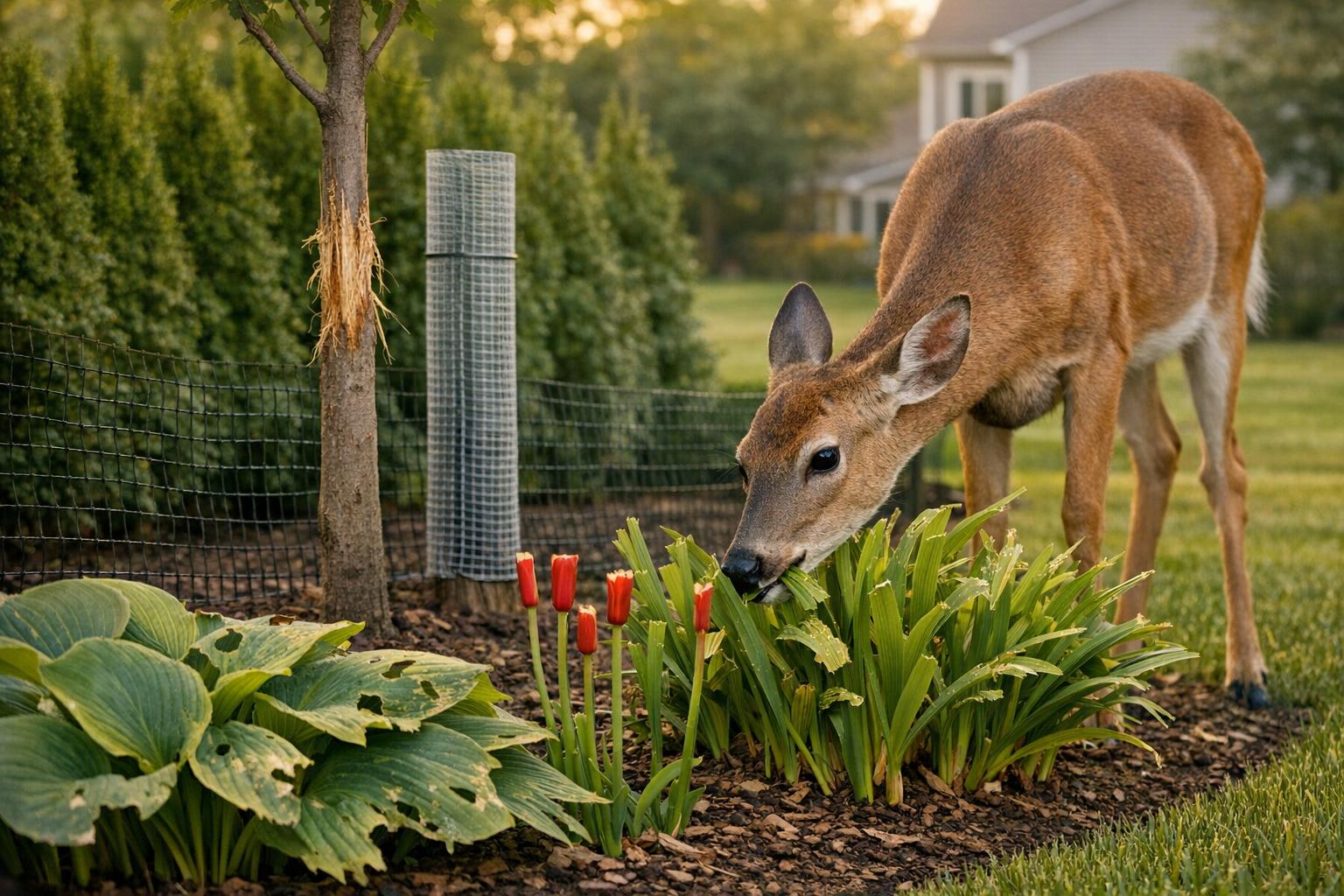
Deer in Maryland have become a growing issue for gardeners and homeowners, often damaging plants by feeding on leaves, flowers, and twigs or engaging in "buck rub" during the fall. Here’s what you need to know about the plants they target most, how they cause harm, and ways to protect your garden:
Key Plants Most Affected:
- Perennials: Hostas, daylilies, and tulips are often eaten due to their tender foliage and blooms.
- Shrubs: Yews, arborvitae, and rhododendrons are heavily browsed, especially in winter when food is scarce.
- Trees and Vines: Japanese maples and English ivy are frequently damaged by browsing and buck rub.
Common Signs of Deer Damage:
- Torn or ragged plant edges
- Stripped bark on young tree trunks
- A "browse line" on shrubs and trees up to six feet high
Protection Tips:
- Use deer-resistant plants like switchgrass, little bluestem, and American holly.
- Install physical barriers, such as wire mesh or tree guards, around vulnerable plants.
- Monitor deer activity with trail cameras and check for hoof prints or droppings.
For tailored solutions, professional services like Pro Landscapes MD can help design deer-resistant gardens and install protective measures.
Quick Tip: Deer will eat almost anything when food is limited, so combining resistant plants with barriers and regular monitoring is the best way to safeguard your garden.
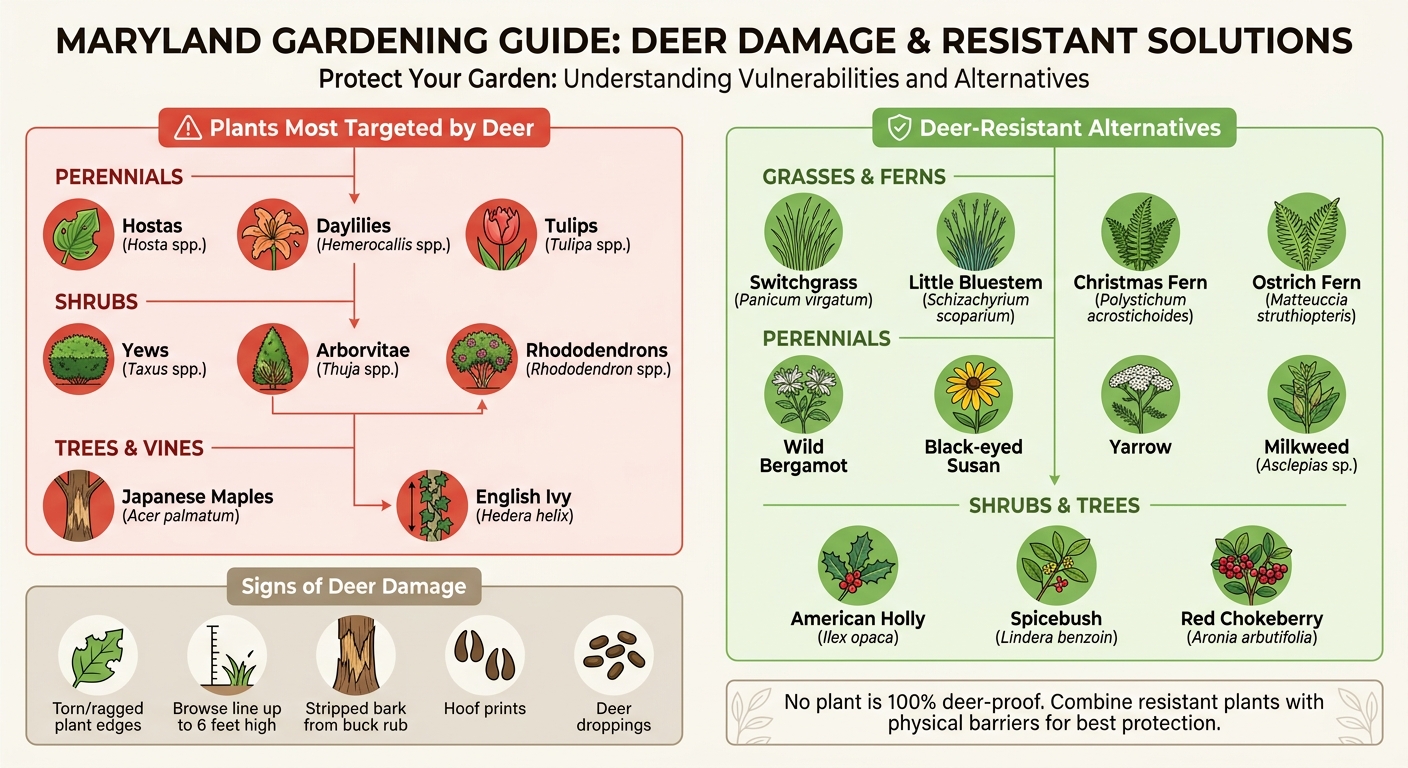
Most Deer-Damaged Plants vs Deer-Resistant Alternatives in Maryland Gardens
50 DEER RESISTANT Plants for a Deer Proof Garden & What Plants to Avoid
sbb-itb-843f8be
Perennials Most Eaten by Deer
Perennials in Maryland gardens often fall victim to deer, especially those with soft, moisture-rich foliage and tender growth. According to Dr. Sara Tangren from the University of Maryland Extension:
"There is no deer-proof plant, and frustratingly, lists of which plants are deer-resistant vary so much they are sometimes in direct contradiction with one another. This is because deer food preferences vary depending on what else is available to eat at any particular time and location." [1]
Here are some of the perennials that deer commonly target.
Hostas (Hosta spp.)
Hostas are a favorite for deer, particularly in shaded areas. Their lush, succulent leaves are irresistible, and deer often leave behind ragged, torn edges after feeding [1]. This damage is most noticeable in spots where deer feel safe to browse.
Daylilies (Hemerocallis spp.)
Daylilies often lose their buds and blooms to deer, which can ruin an entire season of flowers. Since deer lack upper incisors, they tear at the buds, leaving behind uneven, torn stems [1]. This distinctive damage makes it easy to identify deer as the culprits.
Tulips (Tulipa spp.)
Tulips face a high risk, especially in early spring when food options are limited. Deer are drawn to their emerging shoots and flowers, often consuming the upper foliage and blooms quickly [1]. This makes tulips a particularly vulnerable choice for Maryland gardens, especially without proper protection and maintenance.
Shrubs Most Damaged by Deer
In Maryland, shrubs – particularly evergreens and broadleaf varieties – show unmistakable signs of deer browsing. The damage to these shrubs mirrors what’s observed in other plant groups across Maryland’s gardens and landscapes.
Yews (Taxus spp.)
Yews are among the most susceptible shrubs to deer damage in Maryland. Deer typically start by thinning the lower branches, creating a noticeable "browse line" up to about six feet high. Since deer lack upper incisors, the branches are left with ragged, torn edges as they jerk and tear at the foliage to feed. This damage intensifies during winter when food is scarce, often resulting in severe defoliation and stunted growth. Recognizing these patterns is key to implementing effective protective measures for Maryland gardens. Beyond plant selection, Baltimore hardscaping solutions like retaining walls can provide additional physical barriers.
Arborvitae (Thuja spp.)
Arborvitae, with its soft evergreen needles, is another favorite target for deer. Browsing often leaves the lower branches stripped bare up to six feet, especially on upright varieties. This creates a distinct browse line, which becomes even more noticeable on mature plants in areas with significant deer activity.
Rhododendrons (Rhododendron spp.)
Rhododendrons, along with native azaleas (R. periclymenoides), frequently fall victim to deer, particularly their tender new growth. Native shrubs like Eastern ninebark (Physocarpus opulifolius) are also heavily browsed, leading to a decline in biodiversity that impacts insects and songbirds alike [1]. Additionally, young rhododendrons face another threat in the fall – "buck rub." Male deer scrape their antlers against trunks and stems, stripping bark and sometimes killing the plant [1].
Next, we’ll explore how deer damage extends to trees and vines.
Trees and Vines Targeted by Deer
Deer can cause serious harm to trees and vines through two main behaviors: browsing, which leaves ragged edges on plants, and buck rub, where deer scrape their antlers against young trees in the fall, often causing significant damage or even death to the trees[1].
Here’s how some specific plants are affected:
Japanese Maples (Acer palmatum)
Japanese Maples are especially at risk in Maryland. Deer frequently munch on their delicate leaves and new shoots, leaving behind shredded foliage. During autumn, buck rub becomes a major threat, as deer strip bark from the thin trunks of young trees, potentially killing them[1]. To protect these trees, homeowners can use wire mesh cylinders, tree guards, or plant them in areas with frequent human activity.
English Ivy (Hedera helix)
English Ivy often suffers heavy browsing along forest edges. Deer can strip vines up to about 6 feet high[2]. When their preferred food sources are scarce, deer will eat almost any vegetation, including plants they typically avoid[1]. This makes English Ivy particularly vulnerable during the winter months or in areas with high deer populations.
Deer-Resistant Plants and Protection Methods
Plants That Deer Avoid
While no plant is entirely safe from deer, some species are far less tempting due to their texture, scent, or taste. If you’re gardening in Maryland, native grasses and ferns are great options. For instance, switchgrass (Panicum virgatum) and little bluestem (Schizachyrium scoparium) are rarely damaged by deer. Ferns like Christmas fern (Polystichum acrostichoides) and ostrich fern (Matteuccia struthiopteris) also provide dependable ground cover that deer tend to avoid.
If you’re looking to add color, herbaceous perennials such as wild bergamot, black-eyed Susan, and yarrow are excellent choices, as deer typically steer clear of their blooms. Milkweed (Asclepias sp.) is another great option – its toxicity makes it unappealing to deer. For shrubs and trees, consider American holly (Ilex opaca), spicebush (Lindera benzoin), or red chokeberry (Aronia arbutifolia). These plants not only resist deer but also enhance your garden with structure and seasonal interest [1].
Protection Methods
Physical barriers are a reliable way to protect plants, especially in the short term. For young trees, barriers are particularly useful in preventing browsing and damage caused by buck rub. Buck rub happens in the fall when male deer scrape their antlers against tree trunks, often causing significant harm.
Dr. Sara Tangren from the University of Maryland Extension highlights the broader challenge of managing deer:
The only effective and long-term solution to the challenges of gardening with deer pressure… is to bring the deer population back down to sustainable levels [1].
For those seeking professional help, there are services that specialize in implementing these protective measures.
Pro Landscapes MD Services

Pro Landscapes MD offers tailored solutions for homeowners dealing with deer pressure. They design and plant deer-resistant gardens across Howard County, Montgomery County, Carroll County, Frederick County, Prince George’s County, and Baltimore County. Their team of professional horticulturists focuses on selecting native plants that deer rarely target, while also factoring in local deer populations and seasonal feeding habits.
Additionally, Pro Landscapes MD installs protective barriers around young trees and shrubs to minimize damage from buck rub during the fall. Whether you’re in Ellicott City, Bethesda, Columbia, or Gaithersburg, they create gardens that are both visually appealing and practical for managing deer activity. Their approach ensures a balance between beauty and functionality, giving homeowners sustainable landscapes that thrive despite the challenges of deer.
How to Monitor Deer Activity in Your Yard
After understanding which plants are most at risk and implementing protective measures, keeping an eye on deer activity can help you refine your strategies to safeguard your yard.
Signs of Deer Damage
Spotting deer activity often starts with identifying the damage they leave behind. Look for torn vegetation – a clear indicator of deer feeding. Since deer lack upper incisors, they tug at plants, creating ragged, uneven edges [3][5]. Buck rubs are another clue, especially in the fall, as male deer scrape their antlers against young tree trunks [3]. In areas with a lot of deer, you might notice browse lines, where all foliage below about 6 feet has been stripped, leaving a bare zone on trees and shrubs [3].
Other signs include hoof prints, which appear as two teardrop-shaped indentations side-by-side, usually 2 to 3 inches long [5]. Additionally, deer droppings – oval-shaped pellets often scattered in clusters – are another giveaway. These differ from rabbit droppings, which are rounder [5].
Recognizing these signs helps you understand when and how deer are feeding, which often changes with the seasons.
Seasonal Browsing Patterns
Deer feeding habits vary throughout the year, influenced by food availability. In spring, new plant growth is especially vulnerable, as deer take advantage of the fresh greenery after winter scarcity [3]. By fall, their focus shifts to acorns and other mast, and bucks begin rubbing their antlers on tree trunks [3]. During winter, when food is scarce, deer are far less selective – they’ll consume bark, dried leaves, and woody plants to survive [3][5].
Dr. Sara Tangren from the University of Maryland Extension explains how deer adapt their diets to the environment:
When their favorite foods are in short supply, they will eat whatever remains, even plants like milkweed that would otherwise be toxic [1].
Understanding these seasonal shifts can help you choose the best tools and timing for monitoring deer activity.
Monitoring Tools
To track deer activity in your yard, trail cameras are invaluable. They provide insight into when deer visit and the paths they frequently use. These cameras can also help identify which plants are being targeted, as deer are creatures of habit [3]. Regular browse surveys are another effective tool, allowing you to document new damage and respond quickly [3].
Taking action early is key. Once deer establish feeding habits in your yard, it becomes much harder to deter them [3]. From late summer through early winter (August to December), inspect young trees weekly for signs of antler rubbing. Protect vulnerable trunks with garden walls, wire cages, or plastic tubing to prevent damage [3][4].
Conclusion
Protecting your Maryland landscape starts with understanding which plants deer prefer and how their feeding habits shift throughout the year. Favorites like hostas, daylilies, tulips, yews, arborvitae, and rhododendrons often bear the brunt of browsing. Japanese maples and English ivy also frequently fall victim to deer appetites.
It’s important to remember that no plant is completely safe from deer. The best approach combines deer-resistant plants with protective measures. Native grasses like switchgrass and little bluestem, ferns such as Christmas fern and ostrich fern, and woody plants like spicebush and American holly can help reduce damage. Adding physical barriers, repellents, and monitoring tools will also help you adapt to seasonal changes in deer behavior. Since deer will eat almost anything when food is scarce, especially in winter, staying vigilant is crucial. During these lean months, they often turn to bark, dried leaves, and woody plants.
For Maryland homeowners looking for expert assistance, Pro Landscapes MD offers tailored solutions to manage deer challenges. Serving areas like Howard County, Montgomery County, Carroll County, Frederick County, Prince George’s County, and Baltimore County, their team of professional horticulturists specializes in designing deer-resistant landscapes. From selecting native plants to protecting young trees from buck rub damage in the fall, they provide strategies to help your outdoor spaces thrive despite the challenges posed by local deer populations.
FAQs
When are deer most likely to damage my plants in Maryland?
Deer in Maryland tend to cause the most damage to plants between April and August, coinciding with the period when male deer grow and shed their antlers. The fall breeding season also sees increased activity as they rub their antlers on trees. These behaviors can take a toll on trees and shrubs. To protect your garden, consider incorporating plants that deer are less likely to target.
How can I tell deer damage from rabbits or other pests?
Deer damage is easy to spot if you know what to look for. Their feeding leaves torn, jagged edges on stems and leaves, thanks to the way they eat. You’ll usually find this damage up to 6 feet high, which matches their reach. On the other hand, rabbits and rodents leave behind clean, angled cuts, often at a 45-degree angle. Paying attention to these signs can help you figure out which animal is causing the trouble.
What’s the most effective way to protect young trees from buck rub?
The best way to safeguard young trees from buck rub is by using tree protectors or setting up fencing around the trunks. These barriers act as a shield, stopping deer from harming the trees by rubbing their antlers against them. Ensuring the protectors or fences are installed correctly helps keep the trees healthy and free from damage caused by deer activity.
Chat with Us