









- bhavya gada
- No Comments
Pollinators are vital for ecosystems and agriculture, supporting 75% of flowering plants and 35% of U.S. food crops, contributing $34 billion annually. However, their numbers are declining due to habitat loss, with some species like the rusty-patched bumblebee now endangered. Traditional lawns offer little support, but layered gardens – incorporating groundcovers, perennials, shrubs, and trees – can create essential habitats.
Layered planting mimics natural ecosystems, providing food, shelter, and nesting spaces throughout the year. In Maryland, over 400 bee species benefit from native plants tailored to the state’s diverse regions. By choosing plants with overlapping bloom times and leaving natural debris like leaf litter, you can support pollinators while reducing maintenance.
From groundcovers like Wild Strawberry to canopy trees like White Oak, each layer plays a role in creating a thriving habitat. Start small, focus on native plants, and avoid pesticides to make a big impact on pollinator recovery.
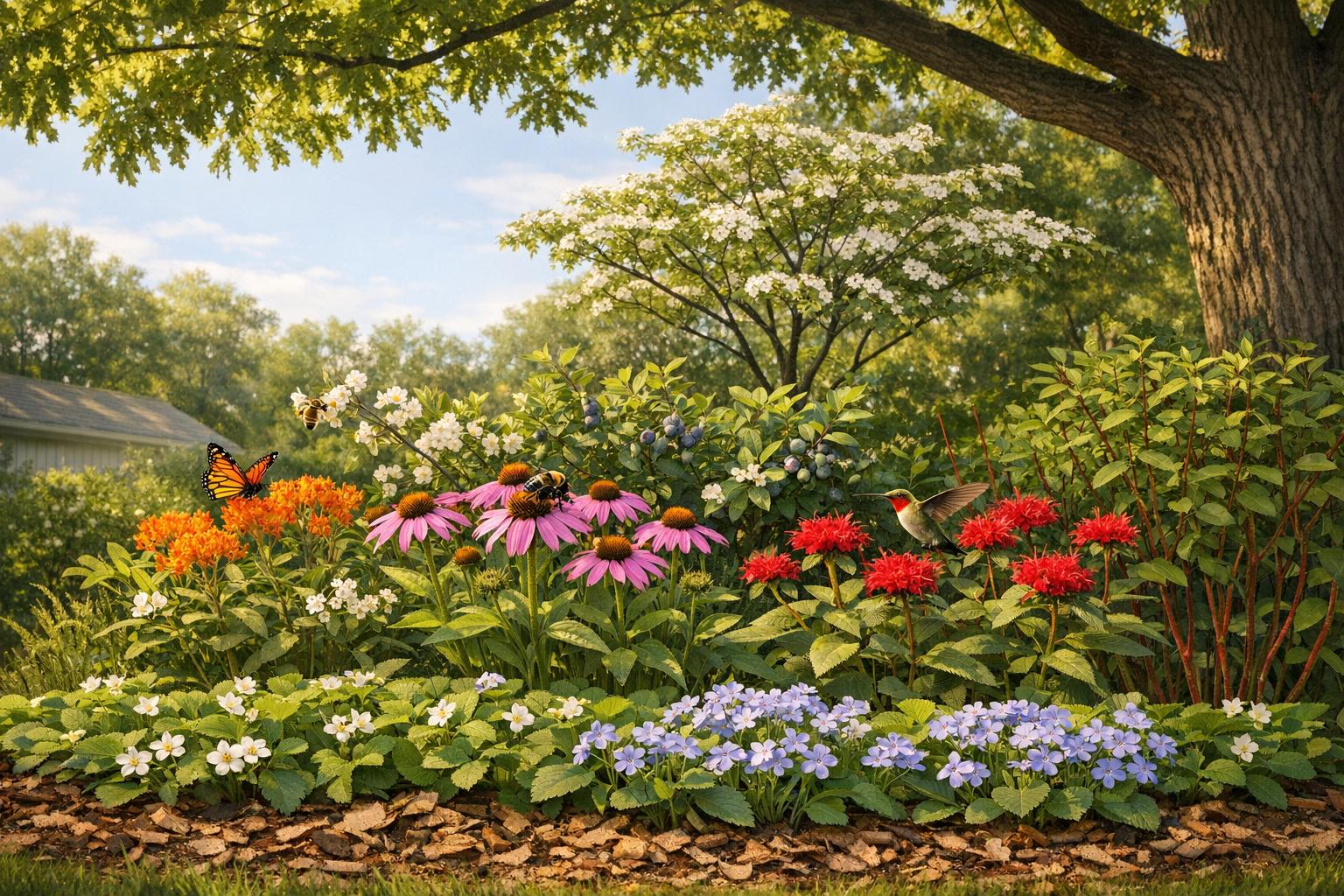
A Layered Garden Using Regionally Native Plants
How Layered Planting Supports Pollinators
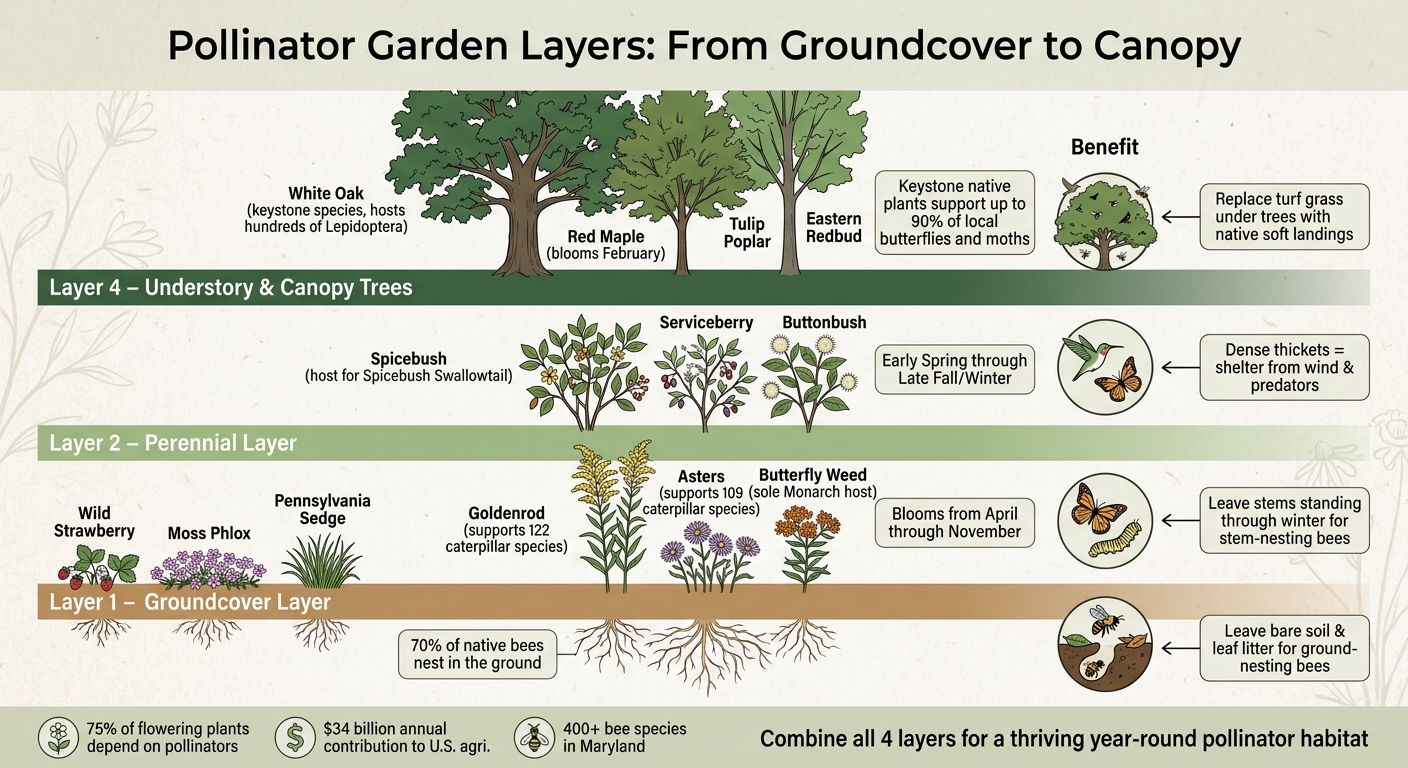
Pollinator Garden Layers: From Groundcover to Canopy
A flat, single-layer yard might look neat, but it doesn’t do much for pollinators beyond serving as a quick stopover. A layered garden, on the other hand, creates a multi-dimensional habitat that encourages pollinators to stay longer. By incorporating plants at different heights – groundcovers, shrubs, perennials, and trees – you mimic the complexity of natural ecosystems, which helps support a wider variety of pollinator species.
How Each Plant Layer Helps Pollinators
Each plant layer contributes something unique to the ecosystem:
- Canopy trees: These provide forage early in the growing season.
- Shrubs: They offer shelter and mid-season nectar sources.
- Perennials: Their blooms extend the availability of nectar and pollen into the fall.
- Groundcovers: These help retain soil moisture and provide access to low-lying flowers for smaller pollinators.
A great example is solitary bees, such as mason bees and leafcutter bees, which make up about 90% of native bee species [7]. These bees need specific features like bare soil, hollow stems, and leaf litter for nesting [7].
The U.S. Fish & Wildlife Service highlights the importance of continuous nectar availability:
"Pollinators need nectar early in the spring, throughout the summer and even into the fall." [3]
To support stem-nesting bees, it’s helpful to leave dead perennial stems standing through winter and wait until late April to clean up your garden. This delay allows these bees to safely emerge from their nests [7].
Why Maryland Is Ideal for Layered Gardens
Maryland’s diverse geography makes it an excellent place to create layered gardens. The state spans USDA hardiness zones 5b to 8a [6] and includes three distinct regions: the western mountains, the central Piedmont plateau, and the coastal plain. These areas differ in soil types, moisture levels, and temperatures, which means native plants adapted to local conditions thrive with minimal water and fertilizer needs [1].
Maryland is home to over 400 bee species [5], many of which are specialists that depend on specific host plants to raise their young. Keystone native plants in the region can support up to 90% of local butterflies and moths [6]. By using these plants in a layered garden, you not only provide food for adult pollinators but also create the necessary habitat for their larvae to grow and flourish.
Groundcover Layer: Building the Base of a Pollinator Habitat
The groundcover layer forms the foundation of any pollinator garden. Acting as the base in a layered garden design, groundcovers set the stage for a thriving ecosystem that supports pollinators.
What Low-Growing Plants Do for Pollinators
Groundcovers are nature’s multitaskers. They act like a living mulch, helping to suppress weeds by competing for light, water, and nutrients, while also protecting the soil from erosion and runoff [10]. Beneath the surface, their roots foster a rich microbial network, enhancing nutrient absorption in the soil [11]. Fun fact: just one teaspoon of healthy soil can contain billions of microbes, many of which are supported by native groundcovers [11].
These plants also provide essential nectar and nesting opportunities for pollinators. With about 70% of native bees nesting in the ground [10], it’s important to leave some bare soil exposed and avoid over-mulching to support their needs.
"Ideally, a groundcover should include several species combined to create a beautiful tapestry of foliage and blooms, offering a long season of interest to humans and pollinators." – Heather McCargo, Wild Seed Project [8]
Here’s a simple tip: let fallen leaves stay put during autumn and winter. Many native groundcovers, particularly those from wooded habitats, thrive under leaf litter. This natural layer serves as insulation for insects overwintering in the soil [10]. Next up, we’ll look at perennials that extend pollinator support into the later seasons.
Groundcover Plants That Work Well in Maryland
The success of your groundcover layer depends on choosing plants that match your site’s light, soil, and moisture conditions. Below is a selection of reliable native and well-suited plants for Maryland landscapes, along with their benefits for pollinators.
| Plant | Site Conditions | Pollinator/Habitat Value |
|---|---|---|
| Wild Strawberry (Fragaria virginiana) | Full sun to part shade, well-drained soil | Spreads via runners; offers early forage and berries [10] |
| Moss Phlox (Phlox subulata) | Full sun, dry or gravelly soil | Evergreen foliage; early blooms for bees and butterflies [10] |
| Golden Star (Chrysogonum virginianum) | Shade to part shade, medium moisture | Long blooming season; supports native bees [8][9] |
| Golden Groundsel (Packera aurea) | Part to full shade, wet soil | Aggressive spreader; stabilizes damp, shady areas [10] |
| Pennsylvania Sedge (Carex pensylvanica) | Part to full shade, dry soil | Host plant for Skipper and Appalachian Brown butterflies; stabilizes soil with fibrous roots [11] |
| Creeping Thyme (Thymus serpyllum) | Full sun, drought-tolerant | Non-native but non-invasive; fragrant nectar source for bees [10] |
It’s best to steer clear of invasive plants like English Ivy (Hedera helix), Periwinkle (Vinca minor), and Japanese Spurge (Pachysandra terminalis), as they displace native wildflowers and harm Maryland’s habitats [10].
For optimal results, combine at least three species that fit your site’s conditions. A mix of plants ensures overlapping bloom times, a longer nectar season, and a more resilient habitat overall [8][10].
Perennial Layer: Keeping Pollinators Fed All Season
Once you’ve got your groundcover established, the next step is adding herbaceous perennials. These plants are the backbone of a pollinator-friendly garden because they bloom year after year and, when chosen carefully, provide a steady supply of nectar and pollen from spring to fall.
How to Plan a Bloom Succession Schedule
The key to a thriving pollinator garden is ensuring there’s always something blooming. This means planning your garden so that as one plant finishes, another starts. In Maryland, this could mean having flowers available from early April all the way through early November.
To make this happen, divide the growing season into three parts:
- Early Spring: Plants like Bluebells are perfect for this time when pollinators are just waking up from dormancy.
- Mid-Season: Wild Bergamot (Monarda fistulosa) keeps pollinators happy during the height of summer.
- Late Season: Goldenrod and Asters step in as the temperatures cool, giving pollinators the energy they need before winter.
It’s also important to check your local frost dates. In Maryland, the last frost usually happens between mid-March and late April, while the first frost arrives from mid-October to early November. Plan your plants’ bloom times to overlap within this window.
"A good pollinator garden should have native perennials as its core." – Rich Dolesh, Board Member, Black Swamp Creek Land Trust [2]
Some perennials can even be coaxed into blooming twice. For example, if you cut back Tickseed (Coreopsis) in midsummer, it often produces another round of flowers in the fall [12]. This approach not only keeps adult pollinators fed but also supports plants that help their larvae thrive.
Perennials That Feed Adults and Support Larvae
While nectar plants are essential for feeding adult pollinators, host plants take your garden to the next level by providing food for caterpillars and larvae. The best perennials do both.
Take Butterfly Weed (Asclepias tuberosa), for instance. It’s a favorite of bees and butterflies for its nectar, but it’s also the only food source for Monarch caterpillars [1][12]. With Monarch populations dropping by over 90% in the last two decades [2], planting Butterfly Weed is a simple yet impactful way to help.
Goldenrod (Solidago) and Asters (Symphyotrichum) are equally impressive. Goldenrod supports up to 122 species of native caterpillars, while Asters support up to 109 [2]. Both bloom during late summer and fall, making them essential for the season’s final stretch. Maryland’s state flower, Black-eyed Susan (Rudbeckia hirta), isn’t just beautiful – it’s also a host plant for Silvery Checkerspot butterfly larvae and attracts bees and hummingbirds throughout the summer.
Perennial Selection and Pollinator Benefits
| Season | Perennial | Pollinator Benefit |
|---|---|---|
| Early Spring | Bluebells (Hyacinthoides) | Provides early pollen for bees coming out of dormancy |
| Late Spring/Summer | Foxglove Beardtongue (Penstemon digitalis) | Attracts bees, hummingbirds, and butterflies; drought-tolerant |
| Summer | Butterfly Weed (Asclepias tuberosa) | Nectar for adults; sole host for Monarch caterpillars |
| Summer | Black-eyed Susan (Rudbeckia hirta) | Nectar source; host for Silvery Checkerspot larvae |
| Summer | Wild Bergamot (Monarda fistulosa) | High nectar producer; supports seven caterpillar species |
| Late Summer/Fall | Goldenrod (Solidago) | Supports up to 122 caterpillar species; forage for specialist bees |
| Fall | Aster (Symphyotrichum) | Supports up to 109 caterpillar species; provides late-season nectar |
Here’s another tip: don’t cut back your perennials in the fall. Many pollinators, like leaf-cutter and mason bees, use hollow stems to overwinter. By leaving these stems standing until late spring, you’re giving the next generation of pollinators a safe place to develop [1]. That small act can make a big difference in supporting local pollinator populations.
sbb-itb-843f8be
Shrub Layer: Structure and Shelter for Pollinators
Shrubs do more than just add greenery to a garden – they provide critical shelter for pollinators. Native shrubs, with their dense branches and layered foliage, create safe nesting spots and overwintering habitats. Many of these shrubs also bloom early in the season, often before most perennials, offering an extended food supply for pollinators. This early bloom period bridges the gap until later-blooming trees and plants take over.
How Shrub Borders and Hedgerows Help Wildlife
Planting shrubs in clusters forms protective thickets that shield wildlife from wind and predators. These dense groupings are especially valuable for species like hummingbirds, which often build their nests in low shrub branches. To protect these nests, avoid heavy pruning during early spring when nesting activity is underway.
The ground beneath shrub thickets also plays a crucial role. Fallen leaves, twigs, and untrimmed wood create insulation for ground-nesting bees and butterfly larvae. These natural layers also support predatory insects, which help control pests without the need for chemicals.
Native Shrubs to Plant in Maryland Pollinator Gardens
Maryland’s diverse terrain, from mountains to coastal plains, offers a range of soil and climate conditions. Fortunately, several native shrubs thrive across these regions while supporting pollinators.
Spicebush (Lindera benzoin) is a standout choice, blooming in early spring and serving as the primary host plant for the Spicebush Swallowtail butterfly. Without this shrub, the butterfly’s caterpillars cannot complete their life cycle [13][14].
Serviceberry (Amelanchier spp.) also blooms early, providing nectar for pollinators emerging from dormancy. It doubles as a host plant for the Red-spotted Purple butterfly and produces fruit that attracts birds [13].
For mid-to-late summer, Buttonbush (Cephalanthus occidentalis) is a fantastic option. Its fragrant, globe-shaped white flowers draw Swallowtail butterflies, and its ability to thrive in wet soils makes it ideal for rain gardens [13]. Another summer bloomer, Sweet Pepperbush (Clethra alnifolia), produces fragrant white or pink flower spikes that are irresistible to bees and butterflies [13][14].
Winterberry Holly (Ilex verticillata) provides bright red berries in winter, a critical food source for birds during the colder months. Common Witchhazel (Hamamelis virginiana) is another unique shrub, blooming in late fall and winter when few other plants are flowering.
| Native Shrub | Bloom Period | Key Value |
|---|---|---|
| Spicebush (Lindera benzoin) | Early Spring | Host for Spicebush Swallowtail; early nectar source |
| Serviceberry (Amelanchier spp.) | Early Spring | Host for Red-spotted Purple; fruit for birds |
| Buttonbush (Cephalanthus occidentalis) | June | Attracts Swallowtails; thrives in wet soils |
| Sweet Pepperbush (Clethra alnifolia) | Summer | Attractive to bees and butterflies |
| Winterberry Holly (Ilex verticillata) | Winter (Fruit) | Critical red berries for birds in cold months |
| Common Witchhazel (Hamamelis virginiana) | Late Fall/Winter | Blooms when almost nothing else does |
When shopping for shrubs, always ask whether the plants have been treated with neonicotinoids [2]. These pesticides can linger in plant tissues and harm pollinators. Opting for untreated plants ensures your shrub layer can fully support the local ecosystem.
Next, discover how understory and canopy trees contribute to pollinator habitats.
Understory and Canopy Layers: Trees That Support Pollinator Ecosystems
Trees are the backbone of a pollinator garden, offering food, shelter, nesting spots, and a stable microclimate for pollinators at every stage of their life cycle. Without trees, the surrounding layers – like groundcovers, perennials, and shrubs – lose much of their ecological purpose.
Flowering Trees That Provide Early-Season Forage
Flowering understory trees bridge the gap between shrubs and the taller canopy, playing a crucial role in early spring. For example, Eastern Redbud (Cercis canadensis) blooms with vibrant pink-purple clusters, providing nectar for long-tongued bees just emerging from winter dormancy. Then comes Flowering Dogwood (Cornus florida), which not only offers springtime forage but also produces fruits that sustain birds through the summer. Another standout is Pawpaw (Asimina triloba), which serves as the sole host plant for Zebra Swallowtail butterfly caterpillars – without it, these butterflies can’t reproduce.
These trees typically grow between 15 and 30 feet, offering critical resources for pollinators while paving the way for the larger canopy trees to take their turn in supporting the ecosystem.
Canopy Trees for Shade and Insect Habitat
As the season progresses, mature canopy trees provide broad habitats for pollinators. White Oak (Quercus alba), for instance, is a keystone species, supporting hundreds of moth and butterfly caterpillars that nesting birds rely on to feed their young. Tulip Poplar (Liriodendron tulipifera) is a favorite nectar source for both honeybees and native bees, while American Linden (Tilia americana), often called the "Bee Tree", produces fragrant, nectar-filled flowers. Red Maple (Acer rubrum) blooms as early as February, making it a vital source of pollen and nectar at the tail end of winter.
The shade provided by these canopy trees creates a cooler microclimate, benefiting native plants like wild geranium, Virginia bluebells, and zigzag goldenrod. These ground-layer plants bloom before the canopy fills in, then transition to providing structure and shelter at ground level.
One impactful way to support pollinators under canopy trees is by replacing turf grass with native plantings. Pollinator conservationist Heather Holm emphasizes the importance of this approach:
"Soft Landings are diverse native plantings under keystone trees (or any other regionally appropriate native tree). These plantings provide critical shelter and habitat for one or more life cycle stages of moths, butterflies, and beneficial insects." [4]
Native plants like Christmas fern, Pennsylvania sedge, and wild columbine create these "soft landings." This mix of leaf litter and low vegetation offers essential shelter for overwintering insects and butterfly larvae. Leaving natural debris, such as fallen leaves, under your trees is a simple yet effective way to maintain this habitat throughout the year [4].
Here’s a quick overview of key native tree species and their pollinator benefits:
| Tree Layer | Native Maryland Species | Key Pollinator Value |
|---|---|---|
| Understory | Eastern Redbud (Cercis canadensis) | Early spring nectar; benefits long-tongued bees |
| Understory | Flowering Dogwood (Cornus florida) | Spring forage; larval host; fruit for birds |
| Understory | Pawpaw (Asimina triloba) | Exclusive host for Zebra Swallowtail butterfly |
| Canopy | White Oak (Quercus alba) | Keystone species; hosts hundreds of Lepidoptera species |
| Canopy | Red Maple (Acer rubrum) | Critical early pollen and nectar; blooms February–March |
| Canopy | Tulip Poplar (Liriodendron tulipifera) | Major nectar source for honeybees and native bees |
| Canopy | American Linden (Tilia americana) | Prolific, fragrant nectar-rich blooms; known as the "Bee Tree" |
| Canopy | Black Cherry (Prunus serotina) | High-value nectar; hosts many butterfly and moth larvae |
How to Design and Maintain a Layered Pollinator Garden
This section focuses on creating and caring for a pollinator garden that integrates all plant layers into a cohesive space. By combining thoughtful design with simple upkeep, you can build a garden that thrives while supporting pollinators.
Arranging Plants by Height, Sun, and Bloom Time
Start by evaluating your garden’s soil, light, and wind exposure. Since most pollinator-friendly wildflowers and their visitors prefer full or partial sun, prioritize your sunniest areas for planting. Also, select spots with some wind protection, as butterflies need calm, sunny areas to bask and stay active.
Plan your garden with a continuous bloom cycle in mind, ensuring flowers are available from early spring to fall. Cluster identical species in groups of 3–5 to make it easier for pollinators to find and access them. A space of at least 100 square feet allows you to layer multiple species effectively. Adding design features like landscape edging or a flagstone path can give your garden a more polished appearance and help distinguish it from a wild patch.
This intentional arrangement not only attracts more pollinators but also simplifies garden maintenance, making it easier to keep your space thriving.
Low-Impact Maintenance Practices for Pollinator Gardens
Once your garden is designed, keeping it healthy requires eco-friendly care. The golden rule? Avoid any plants treated with pesticides, insecticides, or neonicotinoids. When buying plants, always confirm with your nursery that they haven’t been chemically treated.
Follow a "wait, watch, water, and weed" approach. Use organic mulch and compost to retain moisture and suppress weeds. Patience is essential – some native plants, like milkweed, might take a few seasons to bloom. If you’re starting with seeds, scatter them over snow in late winter. As the snow melts, it will provide the moisture needed to anchor the seeds for spring germination.
Avoid over-cleaning your garden in the fall. Leaving leaf litter and plant stems intact provides critical overwintering habitats for ground-nesting bees, moth pupae, and butterfly larvae – pollinators that will help your garden flourish come spring.
Working with Pro Landscapes MD on Your Pollinator Garden

Designing a layered pollinator garden takes careful planning, from understanding soil and sunlight to selecting plants and timing blooms. For expert guidance, Pro Landscapes MD offers services tailored to Maryland’s unique conditions. Their team specializes in creating native plant gardens across Howard County, Montgomery County, Carroll County, Frederick County, Prince George’s County, and Baltimore County.
Whether you’re starting fresh or revitalizing an existing yard, Pro Landscapes MD can handle everything – from initial design and site prep to planting and ongoing care. They’ll help you create a garden that not only supports pollinators but also enhances the beauty of your outdoor space.
Conclusion: Steps to Build a Layered Pollinator Landscape
Creating a layered pollinator garden can do wonders for your local environment. As Mara Koenig from the U.S. Fish and Wildlife Service explains:
"Pollinators are the engine that run healthy habitats." [3]
Start by assessing your site – look at soil type, sun exposure, and areas sheltered from wind. Begin with keystone trees and shrubs, then add perennials and groundcovers to build out the layers beneath. Always prioritize native plants. They’re better adapted to the local environment, need less maintenance, and play a critical role in supporting long-standing ecological connections. This layered approach – from the tallest trees to the smallest groundcovers – lays the foundation for a thriving pollinator-friendly space.
Once your garden is planned, shift your focus to ensuring continuous blooms and responsible care. Aim for a variety of flowers that bloom from early spring through late fall to keep pollinators active and supported. A study in Landscape Ecology revealed that 85% of unique plant-pollinator interactions only occurred after a garden included a diverse range of floral resources [15]. This shows how essential plant diversity is for a functional ecosystem. Complement this diversity with eco-friendly practices: skip pesticides, leave leaf litter for overwintering insects, and give plants like milkweed time to grow and establish themselves.
This method not only nurtures pollinators but also cuts down on lawn upkeep and improves soil health. If you’re in Maryland and need expert advice, Pro Landscapes MD offers tailored solutions to help you design and maintain a layered garden that thrives year after year.
FAQs
How do I pick native plants for my exact Maryland region?
To pick native plants for your area in Maryland, start with tools like the Maryland Native Plant Guides, which are tailored to specific ecoregions like the Piedmont, Coastal Plain, and Mountain areas. Pay attention to your site’s unique conditions – things like soil type, sunlight exposure, and moisture levels. It’s also important to source plants locally and double-check they’re listed on the Maryland Native Plant List. For extra help, connect with local native plant societies. They can guide you toward species that not only thrive in your area but also support pollinators and strengthen local ecosystems.
What should I plant so something is blooming all season?
To enjoy blooms throughout the season, try planting a mix of native species that flower during spring, summer, and fall. Include plants from the daisy family (Asteraceae) and the carrot family (Umbelliferae) to ensure a steady supply of nectar and pollen. Opt for a variety of colors, shapes, and heights, and include larger blossoms and tubular flowers to draw in butterflies, bees, and hummingbirds. Native plants not only help pollinators thrive but also require less upkeep, making them a win-win for your garden.
How can I keep my yard tidy without harming pollinators?
Delay your garden cleanup until mid to late spring, after trees like apple and pear finish blooming. Early spring pruning or clearing debris can harm overwintering bees, caterpillars, and other insects that rely on these areas for shelter. Instead, let leaves stay where they are, keep stems intact, and avoid disturbing soil or logs. These elements provide essential habitats for pollinators, helping them survive and ensuring your garden flourishes.
Chat with Us