









- bhavya gada
- No Comments
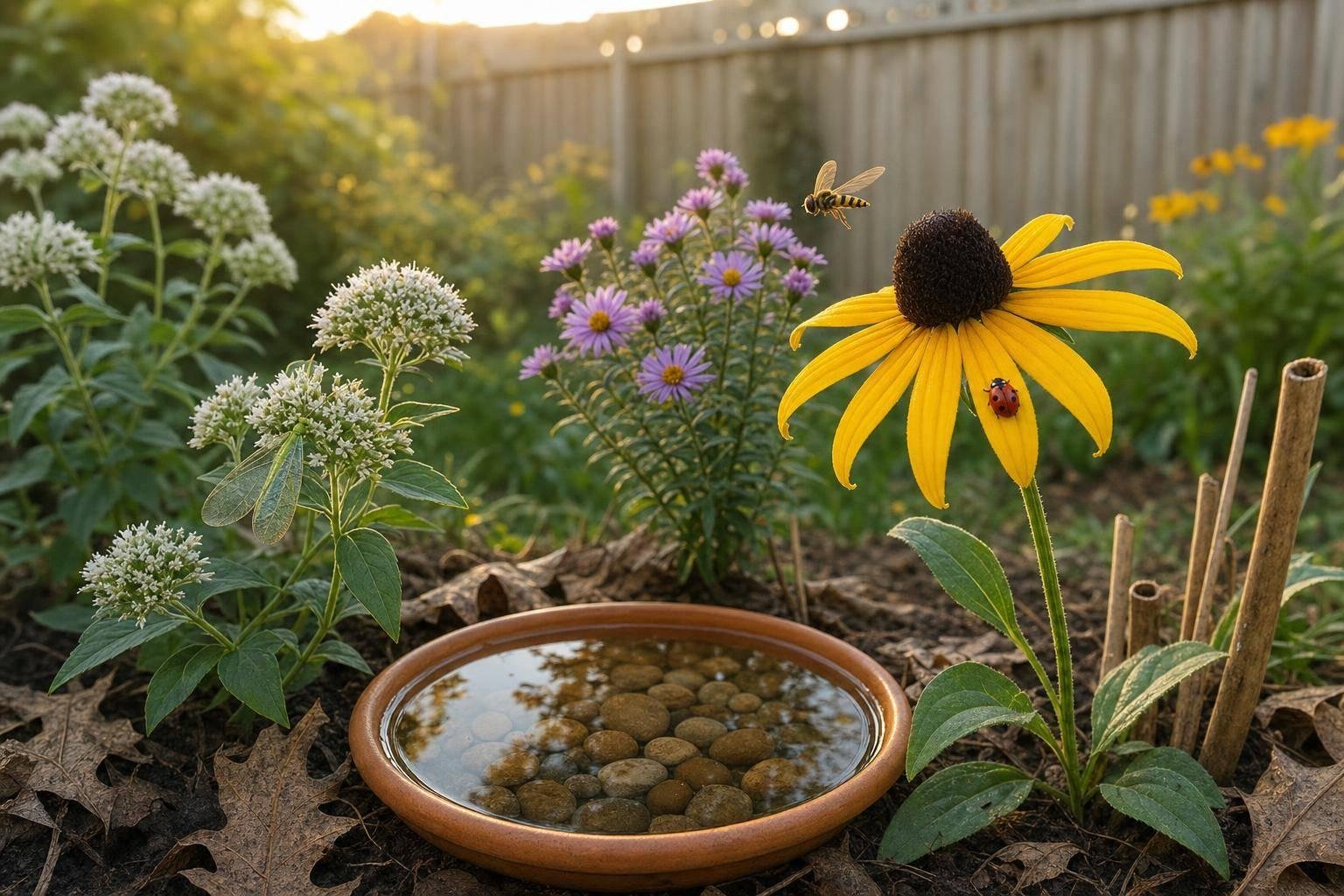
If you want fewer aphids, slugs, caterpillars, and whiteflies in a Maryland yard, start with habitat – not spray.
I’d boil this article down to 3 things:
- Know who’s helping: lady beetles, lacewings, hoverflies, ground beetles, spiders, assassin bugs, and minute pirate bugs
- Give them what they need: flowers from spring to fall, leaf litter, light mulch, hollow stems, brush or rock piles, water, and a small patch of bare soil
- Avoid wiping them out: skip broad-spectrum insecticides, spot-treat only when needed, and wait until late April or May for spring cleanup
The article also gives me a yard scorecard. I can use it to check for layered planting, native flowers, 1 to 4 inches of mulch, a shallow water source changed every 1 to 3 days, and a 2- to 4-square-foot sunny soil patch for ground-nesting wasps.
Bottom line: if I keep some mess at ground level and keep flowers in bloom across the season, predator insects are more likely to stay and feed on pests.
| Group | What they help with | What I should provide |
|---|---|---|
| Lady beetles | Aphids, scale, small caterpillars | Aphid-prone plants, low-spray care |
| Lacewings | Aphids and other soft-bodied pests | Flowering plants, stems left in place |
| Hoverflies | Aphids | Shallow flowers, bloom through the season |
| Ground beetles | Slugs, cutworms, soil pests | Leaf litter, mulch, dark hiding spots |
| Spiders | Many small insects | Low vegetation, mulch, brush piles |
| Predatory wasps | Caterpillars and other prey | Bare soil, hollow stems, water |
If I’m checking my yard, I’d start with the predators I can spot fast, then look at the ground layer. In many cases, that’s what decides whether these pest-eaters stay from one year to the next.
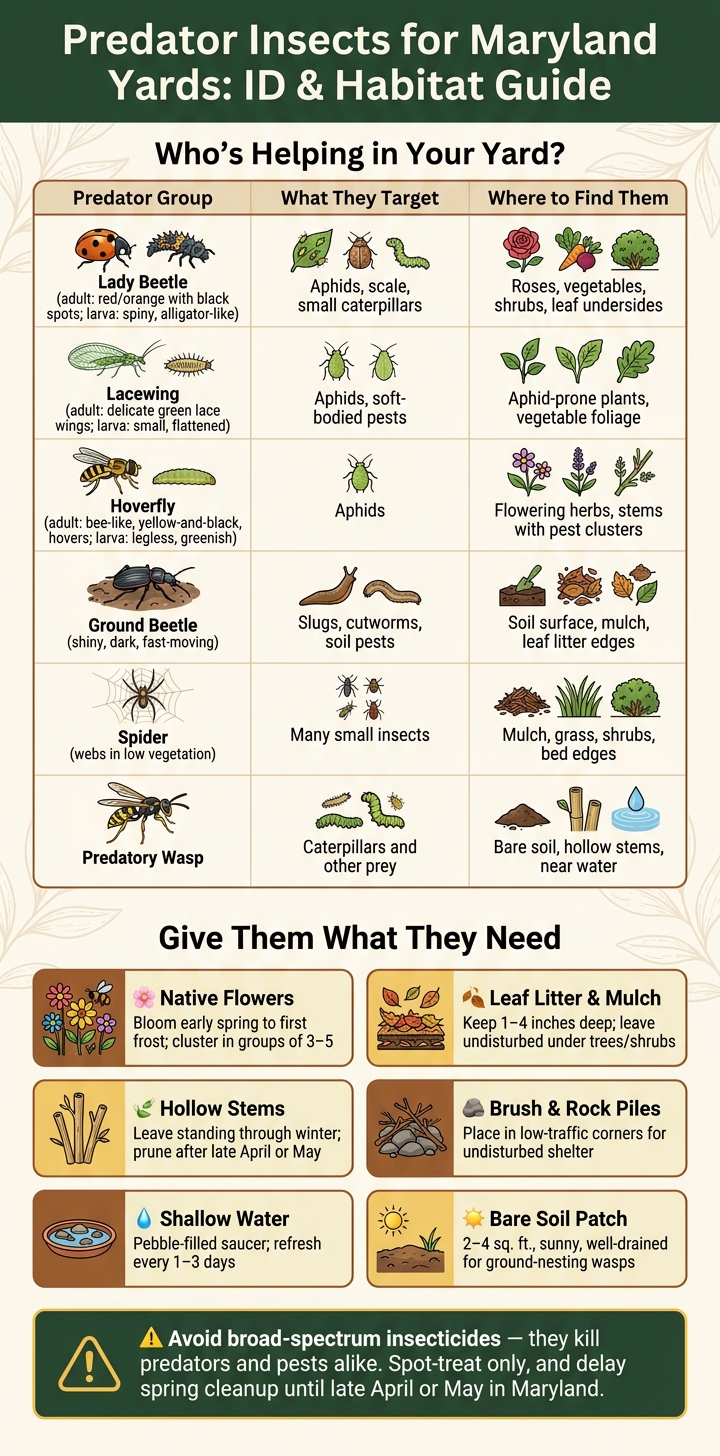
Predator Insects for Maryland Yards: ID & Habitat Guide
Predator insect ID checklist for Maryland landscapes
Use this checklist as you walk your yard from spring through early fall. The goal is simple: spot the predator, confirm it’s there, and jot down where you found it.
Lady beetles, lacewings, and hoverflies
Lady beetles are often the easiest ones to spot, especially in aphid-heavy spots like vegetable beds and ornamental plantings. The adults stand out. The larvae usually don’t. They’re elongated, spiny, and a bit alligator-like in shape. If that sounds odd, it is – but that’s what makes them easy to mix up with pests. They feed on aphids, scale, and small caterpillars, so check roses, vegetables, shrubs, and leaf undersides near active colonies.
Green lacewings look delicate as adults, with green, lace-like wings. Their eggs are easier to miss unless you slow down: tiny white ovals perched on thin stalks near aphid activity. The larvae look nothing like the adults. They’re small, flattened, and aggressive hunters, often called aphid lions. Look for them on aphid-prone plants, especially vegetables.
Hoverflies can fool people at first glance because they mimic the yellow-and-black look of bees or wasps. But there are a few easy tells: they have only two wings, lack fuzzy bodies, hover in place, and don’t sting. Their larvae do the feeding. These larvae are legless, greenish, and found right inside pest colonies on stems and leaf surfaces.
| Predator | What to look for | Where to check |
|---|---|---|
| Lady beetle adult | Red or orange with black spots | Roses, vegetables, shrubs, ornamental beds |
| Lady beetle larva | Elongated, spiny, alligator-like body | Leaf undersides near pest colonies |
| Lacewing egg | Tiny white oval on a thin stalk | Stems of aphid-prone plants |
| Lacewing larva | Small, flattened, aggressive hunter | Vegetable foliage and other aphid-prone plants |
| Hoverfly adult | Bee-like, yellow-and-black, hovers in place | Flowering herbs, vegetables, ornamentals |
| Hoverfly larva | Legless, greenish, inside pest clusters | Stems and leaf surfaces with aphids |
Ground beetles, spiders, and other generalist predators
These predators tend to work the night shift or stay tucked away during the day. That’s why a quick flashlight check after dark tells you a lot more than a daytime walk. Focus on the edges of foundation beds, stone borders, and spots with thick mulch or leaf litter.
Ground beetles are shiny, dark, and fast-moving. They patrol the soil surface and hunt slugs, cutworm larvae, and other pests that stay close to the ground. They scatter fast when disturbed, so it helps to move slowly.
Spiders hunt across webs, mulch, grass, and shrubs. If you see webs in low vegetation or along bed edges, that’s a good sign your yard has active spider populations working overnight. Once you know which predators are around, the next step is to see whether your yard gives them enough cover, bloom, and shelter.
sbb-itb-843f8be
Habitat checklist: yard features that support predator insects
A yard supports predator insects when it has food, cover, and shelter through the year. Once you know which predators are already around, this checklist helps you keep them there.
Plant diversity and bloom across the seasons
Use layered planting to give insects both food and places to hide. Oaks (Quercus spp.) matter a lot here because they support hundreds of insect species [3]. That layered setup also gives different predator groups places to live and hunt.
For adult hoverflies, nectar and pollen should be available from early spring through late fall [1][3]. Here’s a quick way to plan the sequence:
| Season | Maryland-native plants to include |
|---|---|
| Early spring | Serviceberry (Amelanchier), redbud (Cercis canadensis), spicebush [3] |
| Mid-season | Milkweed (Asclepias), coneflower (Echinacea), black-eyed Susan (Rudbeckia) [3] |
| Late fall | Goldenrod (Solidago), native asters, Joe-Pye weed [1][3] |
Shallow flowers are a smart pick because small predatory insects can reach the nectar more easily. Good options include dill, fennel, coriander, and native asters [4]. It also helps to plant in clusters of 3 to 5, which makes foraging easier for predators [3].
Mulch, leaf litter, water, and overwintering cover
Food helps, but it won’t do the whole job. Predator insects also need spots to hide, rest, and make it through winter.
Keep mulch 1 to 4 inches deep and don’t pile it against plant stems [3]. Under trees and shrubs, leave leaf litter where it falls instead of raking everything away. That loose layer gives ground beetles and spiders cover.
You can also tuck small brush piles, deadwood, or standing hollow stems along a fence line or near a shed so they stay out of the main sightline [4]. In a sunny corner, a 2- to 4-square-foot patch of bare, well-drained soil can support ground-nesting solitary predatory wasps [4].
For water, a shallow saucer with pebbles and water gives insects a place to drink without drowning. Refresh it every 1 to 3 days so it stays clean and is less likely to turn into a mosquito nursery [4].
Low-spray maintenance and spring cleanup timing
Maintenance choices matter just as much as plant choices.
Broad-spectrum insecticides such as pyrethroids and organophosphates kill pests and predators alike. One application can disrupt natural enemies and leave your yard with fewer beneficial insects to help keep pests under control [3][4][6].
If you need to treat a problem, keep it tight and local:
- Spot-treat only the affected plants
- Use targeted products such as insecticidal soaps or horticultural oils
- Apply them in the evening [1][4][6]
It also helps to tolerate a little pest damage. Light skeletonizing or a few aphid clusters can keep prey around, which helps predator populations stay in the yard [4][6].
Hold off on spring cleanup until temperatures stay in the mid-50s °F, which is usually late April or May in Maryland [4][5]. That extra time lets overwintering predators emerge from hollow stems and leaf litter before those materials are removed.
Maryland yard assessment checklist
Use this scorecard after the habitat checklist to see what your yard already does well and where it still falls short.
Landscape structure and plantings
Walk through your front yard, backyard, and side beds. Then mark each item yes or no.
| # | Check | Yes / No |
|---|---|---|
| 1 | Yard includes canopy trees, understory shrubs, perennials, and native grasses (layered structure) | |
| 2 | At least half the plantings are native and insect-supporting | |
| 3 | Bloom runs from early spring to first frost | |
| 4 | Flowering plants are grouped in clusters of 3 to 5, not scattered individually [3] |
If you leave several boxes unchecked, start with layered planting and season-long bloom. Those two pieces do a lot of the heavy lifting before you fine-tune the rest of the yard.
Ground layer, water, and maintenance
If your plant layer looks solid, move to the ground layer next.
| # | Check | Yes / No |
|---|---|---|
| 5 | Leaf litter is left undisturbed under trees and shrubs through winter | |
| 6 | Mulch is kept in a moderate layer and not piled against trunks | |
| 7 | Hollow stems (elderberry, raspberry, or similar) are left standing until late April or May [4] | |
| 8 | A brush pile, rock pile, or deadwood section exists in a low-traffic corner | |
| 9 | A 2- to 4-sq.-ft. patch of bare, well-drained soil is available in a sunny spot [4] | |
| 10 | A shallow water source with pebbles is present and kept clean [1][4] | |
| 11 | Broad-spectrum insecticides are avoided; any treatments are spot-applied only [1][6][2] | |
| 12 | Spring cleanup is delayed until late April or May [4][5] |
These ground-layer items matter because they give predators places to overwinter, nest, and find water. In plain English, the plants get most of the attention, but the stuff underneath often decides whether those insects can stick around.
Match each gap to the predator groups it supports:
| Yard feature | Supported predator groups | Maintenance notes |
|---|---|---|
| Leaf litter & mulch | Ground beetles, spiders | Retain in non-sensitive areas; avoid "volcano" mulching on trunks [1][2] |
| Hollow stems & canes | Solitary wasps, parasitoid wasps | Leave standing through winter; prune in late April or May [4][3] |
| Native flowering strips | Hoverflies, lacewings, adult parasitoid wasps | Ensure bloom overlap from early spring through frost [1][3][6] |
| Brush & rock piles | Spiders, ground beetles | Place in out-of-the-way corners for undisturbed shelter [1][4] |
| Shallow water | Predatory wasps, dragonflies | Refresh every 1 to 3 days to keep it clean [4] |
| Undisturbed bare soil | Digger wasps, sand wasps | Maintain a 2- to 4-sq.-ft. sunny patch in a low-traffic area [4] |
Conclusion: Small Habitat Changes That Improve Natural Pest Control
Small changes can help predator insects stick around and do more of the pest-control work for you. The checklists in this article show how a handful of yard updates can work together to support lady beetles, lacewings, ground beetles, hoverflies, and wasps.
The big idea is simple: use these checklist items as a group, not one at a time. Keep the basics in place – native plants, blooms across the season, leaf litter and hollow stems left through winter, clean shallow water, and little or no broad-spectrum spraying. Those habits give predator insects the time and shelter they need to cut pest numbers on their own.
If you want an easy place to begin, start at ground level. A brush pile, a patch of bare soil, and undisturbed leaf litter can add the overwintering cover that helps beneficial insects stay in the yard from one season to the next.
If your yard needs habitat-friendly design or drainage work, Pro Landscapes MD can help. Pro Landscapes MD designs layered plantings, rain gardens, and drainage features that support predator habitat in Maryland yards.
FAQs
How fast do predator insects reduce pests?
Predator insects aren’t a quick fix. They’re a long-term way to manage pests, and it can take a few seasons for their numbers to settle in.
Most people should expect gradual improvement over 2 to 5 years as the habitat develops and natural enemy populations grow. If you’re dealing with a heavy outbreak, they may not move fast enough to stop damage on their own.
Which native plants help beneficial insects most?
Plant a mix of native species that offer nectar and pollen across the growing season. Solid picks include goldenrod, asters, Joe-Pye weed, milkweed, coneflower, and black-eyed Susans.
For shelter and shape, add shrubs like serviceberry, spicebush, and native hollies. You can also mix in herbs such as dill, fennel, and coriander, along with native grasses like switchgrass and little bluestem.
What should I do if my yard has few predator insects?
Improve habitat diversity and cut back on chemical use. Plant a mix of native species that bloom across the season so helpful insects have food for longer. Leave some leaf litter in place, and where it makes sense, keep small brush piles, rock piles, or deadwood. A shallow water source with pebbles also helps.
Skip broad-spectrum insecticides when you can. They don’t just hit pests – they can wipe out the insects you want around, too. And be patient with monitoring. Predator numbers often need a season or two to build up.
Chat with Us