









- bhavya gada
- No Comments
Ice and snow can wreak havoc on your patio or deck if left unchecked. Freezing water expands by 9%, worsening cracks, warping wood, and weakening structures. In Maryland, frequent freeze-thaw cycles amplify these issues, leading to crumbling surfaces, frost heaving, and moisture damage.
Key Tips to Prevent Damage:
- Inspect and Seal: Fill cracks, secure fasteners, and apply water-resistant sealers before winter.
- Safe Snow Removal: Use plastic shovels or brooms to avoid scratches; clear snow early to prevent ice buildup.
- Choose the Right Ice Melt: Opt for calcium or magnesium chloride to protect surfaces and hardware.
- Improve Drainage: Ensure proper grading, clear gutters, and use permeable materials to prevent water pooling.
By preparing before temperatures drop and maintaining surfaces throughout winter, you can avoid costly repairs and keep your outdoor spaces safe and durable.
Tips For Winterizing Your Deck // Episode 102
sbb-itb-843f8be
Common Ice Damage Problems on Patios and Decks
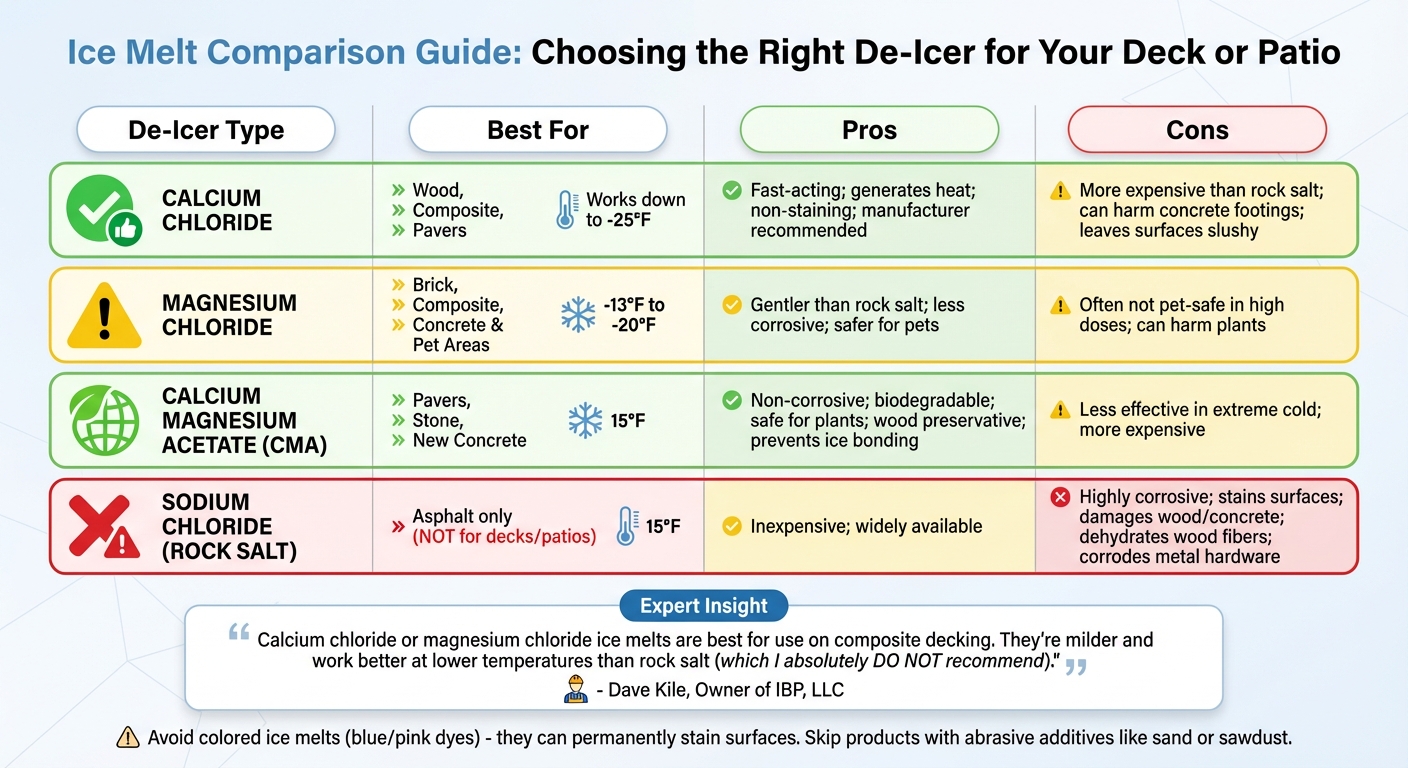
Ice Melt Comparison Guide for Patios and Decks
Knowing how ice and snow can affect your patio or deck is key to protecting your outdoor space. While different materials react differently to winter conditions, all face similar challenges during freezing weather.
Freeze-Thaw Damage and Surface Cracking
When water finds its way into small cracks or gaps and freezes, it expands, causing materials to shift and break apart. Maryland Decking explains this process:
As snow and ice accumulate on deck surfaces, water can seep into small cracks or between boards. When temperatures drop, this water freezes, expands, and creates pressure that leads to warping, splitting, or loosening of fasteners [2].
For pavers and stone surfaces, this often leads to crumbling edges and uneven areas. A common issue is "frost heaving", where freezing water beneath pavers pushes them upward, disrupting the surface and creating tripping hazards [1][3]. Materials like sandstone and limestone, which absorb more water, are especially at risk compared to denser options like granite or bluestone [1].
Wood decks, on the other hand, are prone to warping and splitting as frozen water exerts pressure along the wood grain. Fasteners such as screws and nails can loosen, resulting in unstable or squeaky boards [2]. Composite decking, while generally more moisture-resistant than wood, isn’t immune – it can experience surface erosion or scratches, especially if improper tools are used for ice removal [2]. Proper maintenance is crucial to minimize such damage.
These physical shifts caused by freezing and thawing pave the way for further long-term deterioration.
Moisture Buildup Leading to Rot and Warping
Beyond the immediate damage, lingering moisture can weaken your deck or patio over time. Snow piles hold moisture against surfaces, and cold weather slows the drying process. This creates the perfect conditions for mold, mildew, and rot to develop [2].
Wood decks are especially vulnerable. Water that seeps into gaps during the day freezes at night, repeating a wet–dry–freeze cycle that breaks down wood fibers and wears away protective coatings. Over time, this leaves the wood looking faded and brittle [2]. Keeping debris like leaves and pine needles out of the gaps between deck boards is essential for proper drainage and to prevent moisture buildup.
Additionally, heavy snow and ice can place a significant load on deck structures. This extra weight can strain railings, support beams, and joists – especially if the deck already has weak points [2].
Corrosion and Discoloration from Ice Melts
The type of ice melt you use can have a major impact on your patio or deck. Sodium chloride (rock salt), for example, is highly corrosive. It can damage metal hardware like screws and brackets, cause pitting on concrete and pavers, and dry out wood fibers, leading to cracking and discoloration [4][5][7][8].
Dave Kile, Owner of IBP, LLC, advises:
Calcium chloride or magnesium chloride ice melts are best for use on composite decking. They’re milder and work better at lower temperatures than rock salt (which I absolutely DO NOT recommend). Also, skip colored ice melt. While it aids visibility, the dye may stain your deck [7].
Ice melts with abrasive additives like sand or sawdust can scratch composite boards and dull the finish on wood and stone surfaces [4][7][8]. Similarly, products with blue or pink dyes can leave permanent stains on light-colored composite decking or porous stone [4][7]. Using the wrong de-icer can even void the warranty on composite decks [7].
| De-Icer Type | Best For | Pros | Cons |
|---|---|---|---|
| Calcium Chloride | Wood, Composite, Pavers | Fast-acting; works down to -25°F; non-staining [4][5][8] | More expensive than rock salt |
| Magnesium Chloride | Brick, Composite | Gentler than rock salt; effective [4][5] | Often not pet-safe; can harm plants [4][8] |
| Sodium Chloride | Asphalt only | Inexpensive; widely available [4][5] | Corrosive; stains surfaces; damages wood/concrete [6][7][8] |
Pre-Winter Preparation and Maintenance
Getting your patio or deck ready before winter can help you avoid expensive repairs once spring arrives. A good inspection and proper sealing will shield your outdoor surfaces from the freeze-thaw cycles that often cause damage.
Inspecting for Structural Issues
Start by examining all visible surfaces for cracks, chips, or uneven joints in materials like stone, brick, or concrete. Even the smallest fractures can worsen when water seeps in and freezes, as water expands when it freezes, leading to more severe damage [1]. Make sure that polymeric sand is properly filling the joints between pavers. Missing sand allows water to reach the base layer, which can result in frost heaving and uneven surfaces.
Check the stability of railings and handrails – they should feel solid and secure without any wobbling. Look at metal hardware like screws, nails, and brackets for signs of rust or looseness. Replace any damaged fasteners with weather-resistant options like stainless steel or galvanized hardware before the first frost. For wood decks, inspect the boards for rot, cracks, or warping, particularly in areas where water tends to collect. Any weak boards should be replaced immediately, as they can deteriorate quickly under the weight of snow.
Don’t forget to inspect your drainage systems. Clear out gutters, downspouts, and any specialized drains to ensure water flows away from your deck or patio. Also, remove heavy planters and furniture to avoid moisture getting trapped underneath, which can lead to rot or discoloration.
Cleaning and Sealing Surfaces
Once structural issues are taken care of, focus on cleaning and sealing the surfaces. Start by giving your deck or patio a deep clean to remove dirt and debris that can trap moisture and encourage mold or rot. Use a cleaner designed for your specific material, and let the surface dry completely for at least 48 hours before applying a sealant [9].
Sealing is essential because it creates a water-resistant barrier, keeping moisture out of porous materials like sandstone, limestone, concrete, and wood. This prevents the freeze-thaw cycle from causing cracks. Look for breathable sealers that allow trapped moisture to escape while blocking new water from seeping in [1]. For natural stone, impregnating sealers are ideal because they bond with the pores rather than just coating the surface. For wood decks, polyurethane or acrylic sealers are great options, as they also protect against damage caused by de-icing salts, which can corrode and break down wood fibers.
Safe Ice and Snow Removal Techniques
Proper snow and ice removal is a critical part of protecting your outdoor surfaces during winter. These methods complement your pre-winter sealing and inspection efforts to help prevent damage caused by ice buildup. Using inappropriate tools or harsh chemicals can lead to scratches, corrosion, or other costly issues.
Choosing the Right Tools for Snow Removal
When clearing snow, the tools you choose can make all the difference. Opt for plastic or rubber-edged shovels to avoid damaging wood or paver surfaces. Metal shovels, on the other hand, can cause lasting harm. As Allan Jeffrey from UltraDecking explains:
The sharp edges of an aluminum or steel shovel can slice into the deck’s surface, leaving permanent white scratches [4].
Metal blades or ice picks can also crack composite materials, splinter wood, or chip pavers, leading to expensive repairs [10].
For lighter snow or hard-to-reach areas, a stiff-bristled broom is a great alternative. To minimize damage, shovel parallel to deck boards or paver seams, which helps avoid catching on edges or fasteners. Clearing snow as soon as it falls is key – it prevents it from compacting into ice during freeze-thaw cycles. If ice melt isn’t an option, non-clumping kitty litter, coarse sand, or fine gravel can provide traction while avoiding slippery, mushy conditions.
Once the snow is cleared, the next step is selecting the right ice melt to protect your surfaces.
Using Safe Ice Melts
After using the proper tools, choosing a safe ice melt is essential to prevent corrosion or surface damage. Calcium Chloride is an excellent option for wood and composite decks because it works in temperatures as low as –25°F and avoids discoloration [11]. For pavers, natural stone, and concrete, Calcium Magnesium Acetate (CMA) is a top choice. It’s non-corrosive, biodegradable, and even helps preserve wood by neutralizing acids. Nick Polishchuk from House Digest explains:
Unlike salt, which melts ice outright, CMA stops it from forming a bond with the pavers’ surface. This property makes mechanical ice removal that much easier [3].
Avoid using rock salt on wood or composite decks, as it dehydrates wood, corrodes metal, and leaves behind heavy residue. Similarly, steer clear of colored ice melts or those with abrasive additives, which can stain or scratch surfaces. For eco-friendly alternatives, consider beet juice or vinegar, both of which lower water’s freezing point. Beet juice works particularly well when mixed with a small amount of salt. Always shovel first to remove as much snow as possible before applying ice melt – this ensures better efficiency and reduces the amount of chemical needed.
| Ice Melt Type | Best For | Temperature Limit | Key Benefits | Drawbacks |
|---|---|---|---|---|
| Calcium Chloride | Wood & Composite Decks | –25°F | Fast-acting; generates heat; manufacturer recommended | Can harm concrete footings; leaves surfaces slushy |
| CMA | Pavers, Stone, New Concrete | 15°F | Non-corrosive; safe for plants; wood preservative | Less effective in extreme cold; more expensive |
| Magnesium Chloride | Concrete & Pet Areas | –13°F to –20°F | Less corrosive than salt; safer for pets | Can damage plants in high doses |
| Sodium Chloride | Budget (Not for Decks) | 15°F | Inexpensive | Corrodes metal; damages concrete; dehydrates wood |
Long-Term Solutions for Ice Damage Prevention
Taking steps to prevent ice damage before winter hits is far more effective than just reacting to it. The key lies in addressing the root causes – water accumulation and poor drainage. When water doesn’t drain properly, it pools, freezes, and exerts pressure that can damage materials. The strategies below focus on tackling these issues at their source.
Improving Drainage Systems
A well-designed drainage system is essential for keeping water away from outdoor surfaces. Start with proper grading – your patio or deck should have a slight slope to direct water away from your home. Even a subtle incline can stop water from pooling and freezing into slippery, damaging ice patches.
For better drainage, consider using a compacted crushed stone base, which helps reduce frost heave. Adding a layer of geo-textile fabric beneath pavers provides extra insulation and minimizes the pressure caused by freezing and thawing cycles. In areas that tend to collect water, French drains or channel drains can redirect runoff before it becomes an issue. Another option is permeable pavers, which let water pass through the surface into the ground, preventing it from pooling and freezing on top.
For decks, proper spacing between boards ensures water doesn’t collect on the surface. Keep the area under your deck free of clutter and debris to improve ventilation and allow moisture to evaporate. Redirecting gutter downspouts away from paved areas is another simple but effective way to avoid icy walkways and patios.
Design Adjustments for Durability
In addition to drainage, the materials and construction methods you choose can make a big difference in durability. Dense, non-porous materials like granite, bluestone, or engineered concrete pavers are better equipped to resist the freeze-thaw cycle.
For decks, composite materials or well-sealed cedar and pressure-treated lumber are excellent choices for moisture resistance. No matter the material, using stainless steel or galvanized fasteners and brackets ensures they won’t corrode from winter moisture or de-icing chemicals. This keeps your structure sturdy and safe over time. When building or renovating, it’s worth working with professionals who specialize in cold-weather construction. They’ll know how to incorporate these features into your project from the start. Companies like Pro Landscapes MD offer services such as grading, French drain installation, and hardscaping solutions designed to handle harsh winters effectively.
These proactive measures can save you from major repairs down the line. However, it’s still important to inspect your surfaces regularly to catch and address any damage early.
Post-Winter Repair and Maintenance
After winter, it’s crucial to inspect all surfaces early to catch any damage and stop minor issues from becoming major problems.
Inspecting and Repairing Damage
Begin with a thorough inspection of all visible surfaces and structural elements. For patios, check for widening cracks in pavers or stone, and look for signs of frost heaving – this happens when freezing water pushes pavers upward due to an insufficiently compacted base[1].
On decks, inspect boards for signs of moisture damage, such as cupping, warping, or swelling[2]. Press questionable areas with a screwdriver or your finger; if the wood feels soft or spongy, it’s likely rotted and needs replacing[12][13]. Look closely at fasteners, checking for loose screws, nails that have popped out, or rusted hardware caused by the natural expansion and contraction of wood[2]. Don’t forget to examine railings, posts, and joists for signs of wobbling, sagging, or cracking, and inspect composite surfaces for splintering or cracks[2].
If you find rotted boards, remove them entirely using tools like a circular saw, pry bar, or chisel. Experts recommend cutting out at least 32 inches of material to ensure the structure remains sound[12][13]. For compromised joists, try "sistering", a repair method where a new piece of lumber is attached alongside the damaged joist using 16d galvanized nails or 3.5-inch deck screws[14]. Replace any corroded fasteners with stainless steel or galvanized hardware to prevent future issues[2]. When installing replacement boards, don’t skip sealing or staining all sides to protect the wood from moisture[14].
Finish all repairs before moving on to resealing your surfaces. These steps ensure your outdoor spaces are ready to handle the elements again.
Re-Sealing and Protecting Surfaces
Once structural repairs are done, focus on resealing to restore moisture protection. Start by deep cleaning with a deck-specific cleaner or oxygen-based bleach to remove dirt, salt, and mildew buildup. Then, perform a simple water drop test: pour water onto the surface. If it absorbs quickly, the sealant has worn off and needs to be reapplied. If the water beads up, the surface is still protected[15].
Apply new sealant during a dry period with mild temperatures, ideally between 50°F and 77°F, and make sure no rain is expected for at least 24 to 48 hours[15]. As Maryland Decking explains:
Sealing a deck means applying a protective coating… that helps repel moisture, resist UV damage, and guard the wood against weather-related wear.[16]
Use thin, even coats to avoid sticky finishes or peeling. Keep in mind that composite or PVC materials usually don’t need sealing, and doing so might void their manufacturer warranties[16].
If the damage is extensive or repairs feel overwhelming, consider hiring professionals like Pro Landscapes MD. They can ensure everything is repaired correctly, leaving your outdoor spaces ready for years of enjoyment.
Conclusion
Taking care of your patio or deck during winter doesn’t have to be overwhelming. By combining smart preparation, safe snow removal practices, and thoughtful post-winter upkeep, you can protect your outdoor spaces from the harsh effects of freeze-thaw cycles. These cycles can turn small problems into expensive repairs if left unchecked[1]. Simple steps like sealing surfaces before temperatures dip below 50°F and using plastic-edged shovels for snow removal can make all the difference.
As Shorb Landscaping aptly puts it:
A little foresight and regular maintenance go a long way in preserving the beauty and functionality of your stone patios through even the harshest winters.[1]
Addressing drainage problems, opting for safer ice melts like Calcium Magnesium Acetate instead of damaging rock salt, and keeping an eye on hardware for rust or looseness are all effective ways to extend the life of your patio or deck.
For homeowners in central Maryland – from Ellicott City to Bethesda to Columbia – Pro Landscapes MD offers expert hardscaping and seasonal care services. Using premium materials like Techo-Bloc and Allen Block, their team ensures your patios, retaining walls, and drainage systems can handle winter’s toughest challenges[17]. Whether it’s installing French drains, repairing paver patios, or performing spring inspections, their professional services help keep your outdoor areas both durable and beautiful. Reach out to Pro Landscapes MD to protect your investment and enjoy your outdoor spaces, no matter the season.
FAQs
How do I know if my patio damage is frost heave?
Frost heave damage often shows up as cracks, uneven surfaces, or lifted sections in patio slabs, driveways, or walkways. These problems occur during freeze-thaw cycles, where the ground repeatedly expands and contracts, forcing materials upward.
What ice melt is safest for my deck and pavers?
The best ice melt options for decks and pavers are those that are natural, non-toxic, and gentle on the environment. Products like calcium magnesium acetate (CMA) or pet-safe, eco-friendly alternatives are excellent choices. They are less likely to cause harm to your hardscapes, pets, or the surrounding environment. Always read product labels carefully to confirm they are safe for your specific surfaces.
When should I call Pro Landscapes MD for drainage fixes?
If you spot issues such as standing water after rain, constantly soggy lawns, soil erosion, or water pooling near your home’s foundation, it’s time to call Pro Landscapes MD. These problems can escalate into serious concerns like flooding, erosion, or even foundation damage. Taking quick action can safeguard your property and prevent costly repairs down the line.
Chat with Us