









- bhavya gada
- No Comments
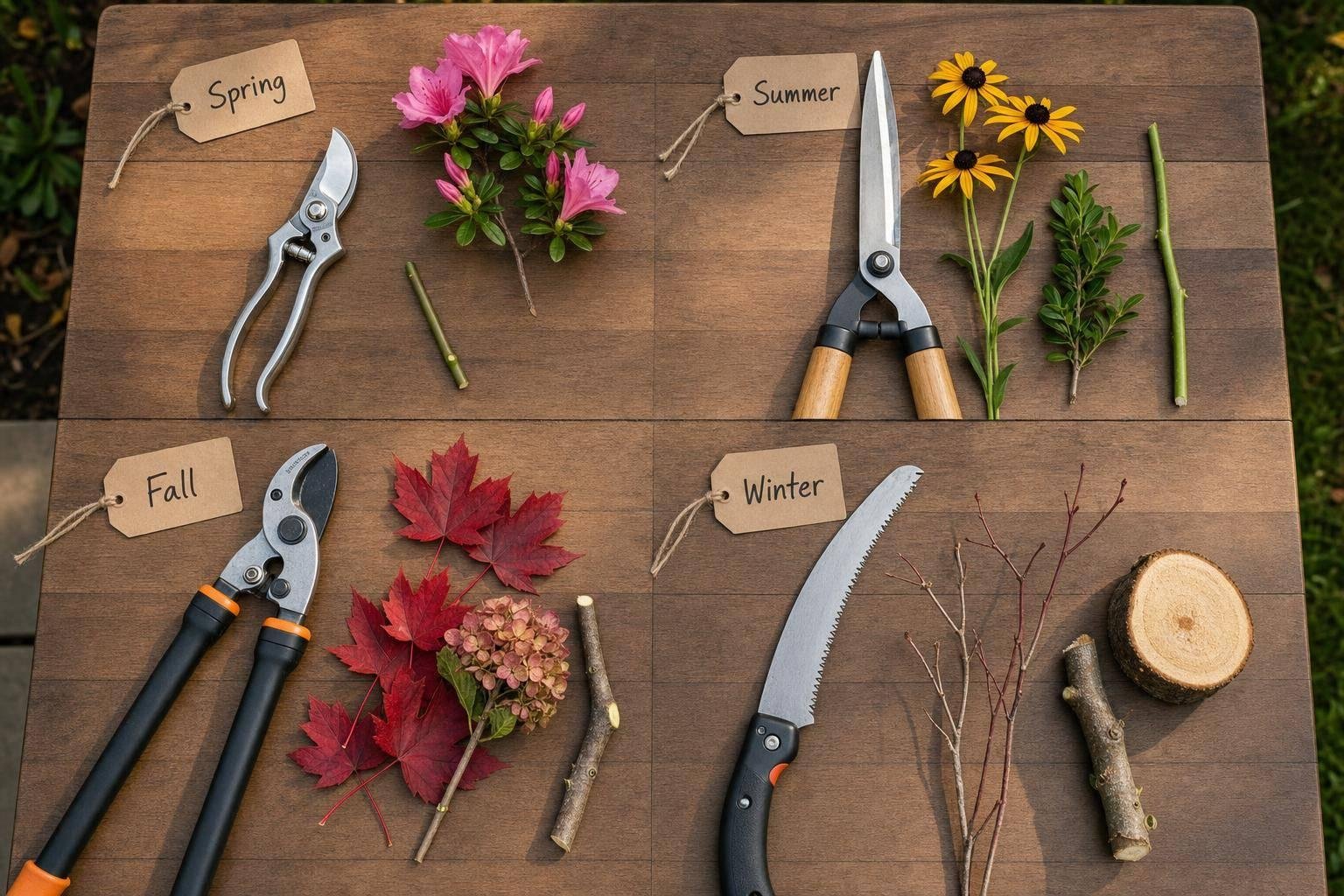
In central Maryland, the right cut at the wrong time can cost you a full bloom season. If I want clean cuts and fewer plant problems, I need to match season, stem size, and tool type first.
Here’s the short version:
- Late winter to early spring (February–March): I do most structural pruning here.
- After spring bloom (May–June): I shape forsythia, azalea, and lilac after flowers fade.
- Summer (June–August): I keep it light with deadheading and small touch-ups.
- Fall (September–November): I remove dead, damaged, or diseased wood only.
I also keep branch size in mind:
- Up to 1/2 inch: bypass pruners
- 1/2 inch to 1 1/2 inches: loppers
- Over 1 1/2 inches: pruning saw
- Tiny flower stems: precision snips
In Maryland’s humid summers, freeze-thaw winters, and Zones 6b–7a conditions, dirty or dull blades can spread disease and tear plant tissue. A sharp blade can make a cut in one pass. A dull one often crushes stems instead.
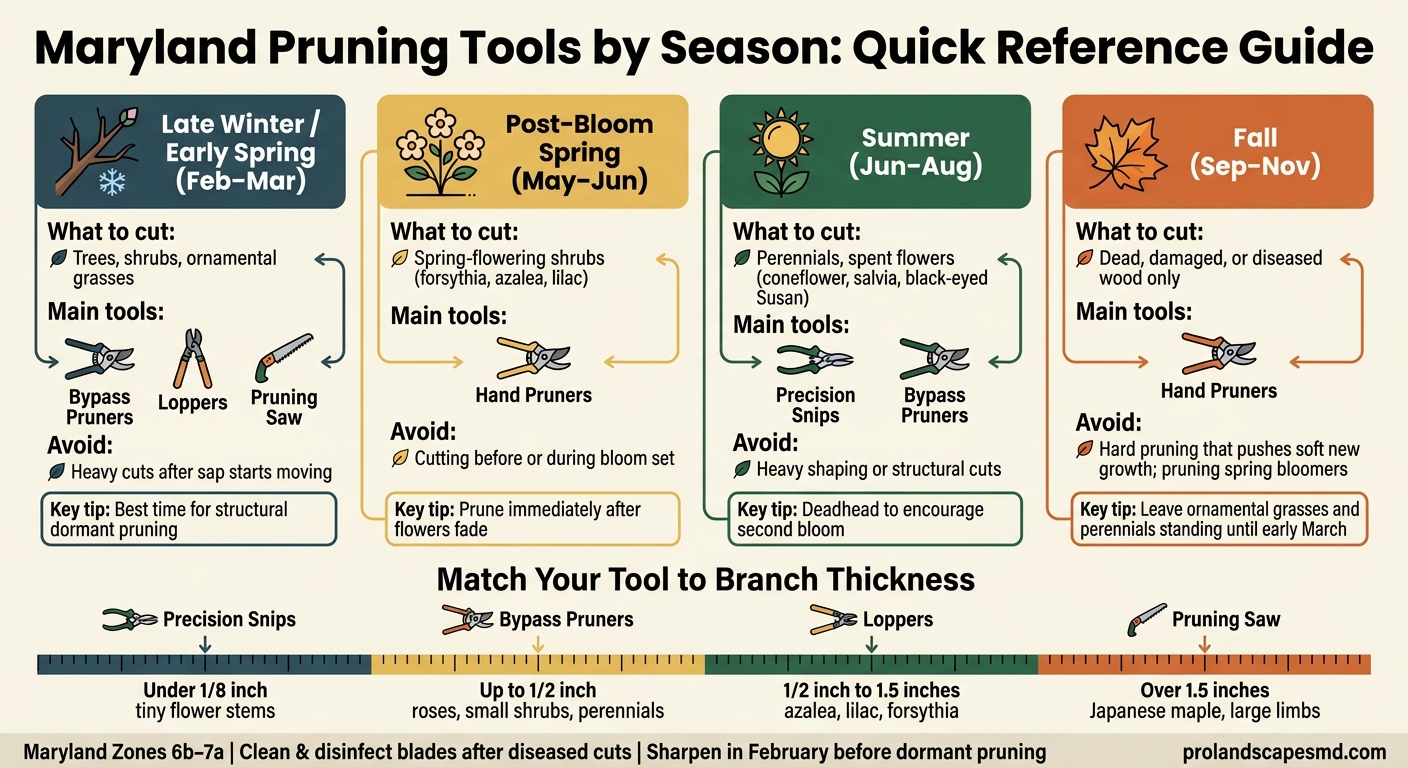
Maryland Pruning Tools by Season: Quick Reference Guide
The right pruning tools make gardening easy and safe
sbb-itb-843f8be
Quick Comparison
| Season | What I cut | Main tools | What I avoid |
|---|---|---|---|
| Late Winter / Early Spring | Trees, shrubs, grasses | Bypass pruners, loppers, pruning saw | Heavy cuts after sap starts moving |
| Post-Bloom | Spring-flowering shrubs | Hand pruners | Cutting before or during bloom set |
| Summer | Perennials, spent flowers | Precision snips, bypass pruners | Heavy shaping |
| Fall | Dead, damaged, diseased wood | Hand pruners | Hard pruning that pushes soft new growth |
A few rules guide the whole job: prune spring bloomers after flowering, leave ornamental grasses up until early March, never use small pruners on thick branches, and clean blades after diseased cuts. That keeps the work simple and helps plants recover with less stress.
Core Pruning Tools and How To Match Them to Plant Type
The right tool comes down to two things: stem thickness and the kind of cut you need to make. Get that match wrong, and you can leave rough cuts behind, put extra strain on the plant, and spread disease, which is a bigger issue during humid Maryland summers. The chart below helps line up each tool with the plant type and the time of year.
Choosing Tools by Branch Size and Cut Type
Branch thickness and cut type tell you which tool to grab. Use the wrong one, and you may crush stems instead of cutting them cleanly, which slows healing.
Bypass pruners work best on stems up to 1/2 inch thick. They’re a good fit for roses, small shrubs, and many perennial stems. Loppers are the next step up for stems between 1/2 inch and 1 1/2 inches. Once a branch is thicker than 1 1/2 inches, switch to a pruning saw.
Bloom timing matters too. Prune azalea, lilac, and forsythia right after they bloom so you don’t remove next year’s buds. For summer deadheading on coneflower and salvia, use precision snips for tighter, cleaner cuts.
So pruning isn’t only about branch size. It’s also a seasonal decision.
Matching Tools to Shrubs, Perennials, and Small Trees
The table below matches each tool with branch size, plant type, and season.
| Tool | Branch Size | Best Plant Types | Typical Seasons | Weather Note |
|---|---|---|---|---|
| Precision Snips | Under 1/8 inch | Coneflower, salvia, annuals | Summer | Sap buildup requires frequent wiping. |
| Bypass Pruners | Up to 1/2 inch | Roses, small shrubs, perennials | Year-round; peak late winter | Rusts fast without regular oiling. |
| Loppers | 1/2 inch–1 1/2 inches | Azalea, lilac, forsythia stems | Late winter; post-bloom | Awkward in wet spring weather. |
| Pruning Saw | 1 1/2–4 inches | Japanese maple, large shrub limbs | Late winter; post-storm | Saw cuts need a clean finish to reduce fungal entry. |
| Pole Pruners | 1/2–1 inch (at height) | Dogwood, redbud, small ornamental trees | Late winter | Hard to control on windy days. |
| Hedge Shears | Outer shaping only | Boxwood, holly, formal evergreen shrubs | Late spring; summer | Late-fall use can trigger growth that winter-kills. |
Start with the table, then check stem size and bloom timing before you make the cut.
Spring and Summer Pruning: Tools To Use and When To Cut
Spring is the time for structural cuts. Summer is better for deadheading and light shaping. The simplest way to stay on track is to match the season – and the branch size – to the right tool.
Spring Tools for Dormant Pruning and Post-Bloom Shrub Care
While plants are still dormant, use hand pruners for roses and loppers or a pruning saw for woody trees and large shrubs like crape myrtles, shade trees, Japanese maples, and crabapples. With bare branches, you can see the plant’s shape more clearly and place each cut where it belongs.
After flowering, the job shifts from structure to upkeep. Once forsythia, azaleas, and lilacs finish blooming – usually in May – use hand pruners for post-bloom shaping. For ornamental grasses, cut them down to the base in early March before new growth starts, using hand pruners or garden scissors.
Summer Tools for Light Summer Pruning and Deadheading
When Maryland’s heat and humidity settle in, keep pruning light. From June through August, use precision snips and bypass pruners on perennials like coneflowers, black-eyed Susans, and salvia to encourage a second round of blooms. This is not the time for heavy structural work.
Here’s a quick reference for common central Maryland plants, along with the best pruning window, tool, and cut type:
| Plant | Timing | Preferred Tool | Cut Type |
|---|---|---|---|
| Japanese Maple, Crabapple | Early March | Pruning Saw, Loppers | Structural / Dormant |
| Roses | February | Hand Pruners | Dormant Structural |
| Crape Myrtles, Shade Trees | February | Loppers, Pruning Saw | Dormant Structural |
| Ornamental Grasses | Early March | Hand Pruners or Garden Scissors | Cut to base |
| Forsythia, Azalea, Lilac | May (post-bloom) | Hand Pruners | Post-Bloom Shaping |
| Spring Bulbs (Daffodils, Tulips) | Late Spring (post-bloom) | Garden Scissors | Deadheading (flower only) |
| Coneflower, Black-eyed Susan, Salvia | June–August | Precision Snips, Bypass Pruners | Deadheading / Light Shaping |
A good rule of thumb: prune in the cool morning hours, and disinfect blades between plants.
Fall and Winter Pruning: Cleanup, Dormant Cuts, and Tool Protection
Once summer deadheading wraps up, fall pruning should move into cleanup mode and winter prep. This time of year usually calls for fewer tools, not more, because you’re no longer shaping plants. You’re mostly cleaning up and making dormant structural cuts. Heavy pruning in late summer or early fall can push new, tender growth that may not harden off before frost [1].
What To Prune in Fall and What To Leave Alone
Fall pruning has a pretty narrow job. Remove dead, damaged, or diseased wood as soon as you spot it, and cut back spent perennials if you like a neat garden bed. In most cases, hand pruners are all you need.
Some plants are better left standing. Coneflower and black-eyed Susan seed heads add winter interest and feed birds. Ornamental grasses should stay up until early March, which helps protect their crowns from cold damage [1].
Skip fall pruning on spring-flowering shrubs. Forsythia, azalea, rhododendron, and lilac all set next year’s buds before winter, so cutting them now means cutting off blooms too [1].
Winter Tools, Cold-Weather Handling, and Storage
Once the leaves are down, the job shifts from cleanup to dormant cuts on bare wood. Loppers and pruning saws do most of the heavy lifting here. With branches exposed, it’s much easier to place cuts where you want them. February is the right time for structural work on fruit trees, crape myrtles, roses, Japanese maples, and most shade trees – before sap starts moving [1].
After the season’s last cuts, take a few minutes to get your tools in shape:
- Clean: Wipe blades with a clean rag; use rubbing alcohol for sticky residue
- Disinfect: Wipe with 70% isopropyl alcohol or a 10% bleach solution
- Sharpen: Use a sharpening stone at the blade’s original bevel angle
- Oil lightly: Apply a thin coat of light tool oil to all metal surfaces
Store pruners, loppers, and saws in a dry shed or garage. Keeping them dry helps prevent rust and leaves them ready for the next dormant-pruning window.
Common Pruning Mistakes in Maryland Garden Beds
Even skilled gardeners slip up with pruning, and one bad cut can cost you a full bloom cycle. In central Maryland, the biggest problems usually come down to timing or tool choice.
Timing Mistakes That Reduce Flowers or Trigger Weak Growth
If you prune spring-blooming shrubs like forsythia, azalea, rhododendron, and lilac in fall or winter, you’re cutting off next spring’s flower buds. That’s the whole show, gone before it starts. The fix is simple: prune these shrubs right after they finish blooming.
Woody plants have a timing issue too. If you prune too late in the season, plants may push out new growth that doesn’t have time to toughen up before frost hits. Finish late-season pruning on woody plants in late summer or fall before the first frost.
For ornamental grasses, coneflowers, and black-eyed Susans, it’s better to leave them alone through winter. Cutting them back in fall leaves the crowns more exposed to freeze-thaw heaving. Leave them standing until early March.[1]
Once you get the timing right, the next thing that matters is the cut itself.
Tool Misuse That Causes Ragged Cuts and Plant Stress
A dull blade doesn’t make a clean cut. It tears plant tissue, and those rough wounds take longer to heal. That puts more strain on the plant and can open the door to disease.
Tool size matters too. Hand pruners work well on smaller stems, but thicker branches need a tool that can handle the job without crushing the wood. And if a shrub needs thinning, shearing usually isn’t the answer. Use hand pruning to remove selected stems instead of chopping the whole surface into a tight shell.
A few rules are worth keeping front and center:
- Keep blades sharp.
- Match the tool to the branch size.
- Use selective hand pruning for shrubs that need thinning.
- Never top trees.
- Clean and disinfect blades after pruning diseased wood.
Use the chart below to match each mistake with the right fix.
| Mistake | What Goes Wrong | What To Do Instead |
|---|---|---|
| Pruning spring-flowering shrubs in fall or winter | Removes next year’s flower buds | Prune immediately after spring bloom |
| Pruning woody plants in late summer or fall | New growth won’t harden off before frost | Finish pruning before the first frost |
| Cutting back ornamental grasses and perennials in fall | Exposes crowns to freeze-thaw heaving | Leave them standing until early March |
| Using dull blades | Tears tissue and increases disease risk | Keep blades sharp |
| Using hand pruners on thick branches | Crushes wood and leaves ragged cuts | Match the tool to the branch |
| Shearing shrubs that need thinning | Damages natural structure and reduces blooms | Use selective hand pruning |
| Topping trees | Permanently destroys tree structure | Avoid topping; use proper structural pruning |
| Skipping blade sanitation after diseased cuts | Spreads disease to other plants | Clean and disinfect blades after use |
A Simple Year-Round Tool Care Routine
After seasonal pruning, a simple maintenance routine keeps your tools ready for the next round. Clean, sharp tools make cleaner cuts and hold up better through Maryland’s changing seasons.
After-Use Cleaning and Disinfecting Steps
Brush off debris and wipe sap from the blade. Clean blades after each use, then dry them before putting them away. If you cut into diseased wood, disinfect the blades right after. Then add a light coat of oil to the blade and pivot before storage.
When To Sharpen, Oil, and Replace Parts
Sharpen tools in February before dormant pruning starts. If you put them through heavy use in spring, touch up the edge again after that push. Check springs, grips, and cutting edges in January and February so any repairs are handled before spring pruning begins. Before the first hard freeze, store tools in a dry, protected spot.
| Season | Priority Task | Why It Matters |
|---|---|---|
| Late Winter (Feb) | Sharpen blades, oil pivots | Ready for dormant pruning |
| Spring/Summer | Clean after use, disinfect after diseased cuts | Limits disease spread in humid weather |
| Late Fall (Nov) | Final clean, dry, and store | Prevents rust and freeze damage |
| Winter (Jan–Feb) | Inspect springs, grips, and edges | Catches wear before spring use |
Tool care is only half the job; the next risk is using the right tool at the wrong time.
Conclusion: Build a Seasonal Pruning Routine for Maryland
Build your pruning routine around three things: stem size, timing, and tool care.
Match the tool to the stem size, plan cuts around bloom cycles and dormancy, and keep blades clean, sharp, and dry between uses.
Prune spring bloomers after they flower. Keep summer cuts light. Save major structural work for late winter, when plants are fully dormant. [1]
Tool care matters just as much. Use bypass pruners on living stems, reserve anvil pruners for dead wood, and sharpen and oil blades often so each cut stays clean. [1]
For larger shrubs, small trees, or storm-damaged limbs, Pro Landscapes MD can handle higher-risk pruning across central Maryland.
FAQs
What happens if I prune at the wrong time?
Pruning at the wrong time can cost you a season of blooms.
Take spring-flowering shrubs like azaleas, lilacs, and forsythia. These plants set their flower buds during the previous growing season. So if you prune them in fall or winter, you’re cutting off the buds that would have opened in spring.
Heavy trimming too close to winter can cause another problem: it may push out new growth right before cold weather hits. That fresh growth is tender and can be damaged by freezing temperatures.
You can still remove dead, damaged, or crossing branches when needed. But for the rest, stick to the right seasonal timing to keep plants healthy and flowering well.
How do I choose the right pruner size?
Choose your pruner based on the thickness of the stems or branches you’re cutting.
Use small handheld pruners for delicate stems, perennials, and small shrubs. They’re best for light, precise cuts.
For thicker branches on shrubs and small trees, switch to larger loppers. They give you more leverage and extra reach, which makes tougher cuts much easier.
Only remove dead, damaged, or diseased wood to help protect plant health.
What should I disinfect tools with?
Wipe off dirt and grass clippings first. Then disinfect the blades before you move to the next plant, so you don’t spread disease.
Pro Landscapes MD also says it’s smart to clean your tools before each season starts. After that, store them dry and covered to help prevent problems later.
Chat with Us