









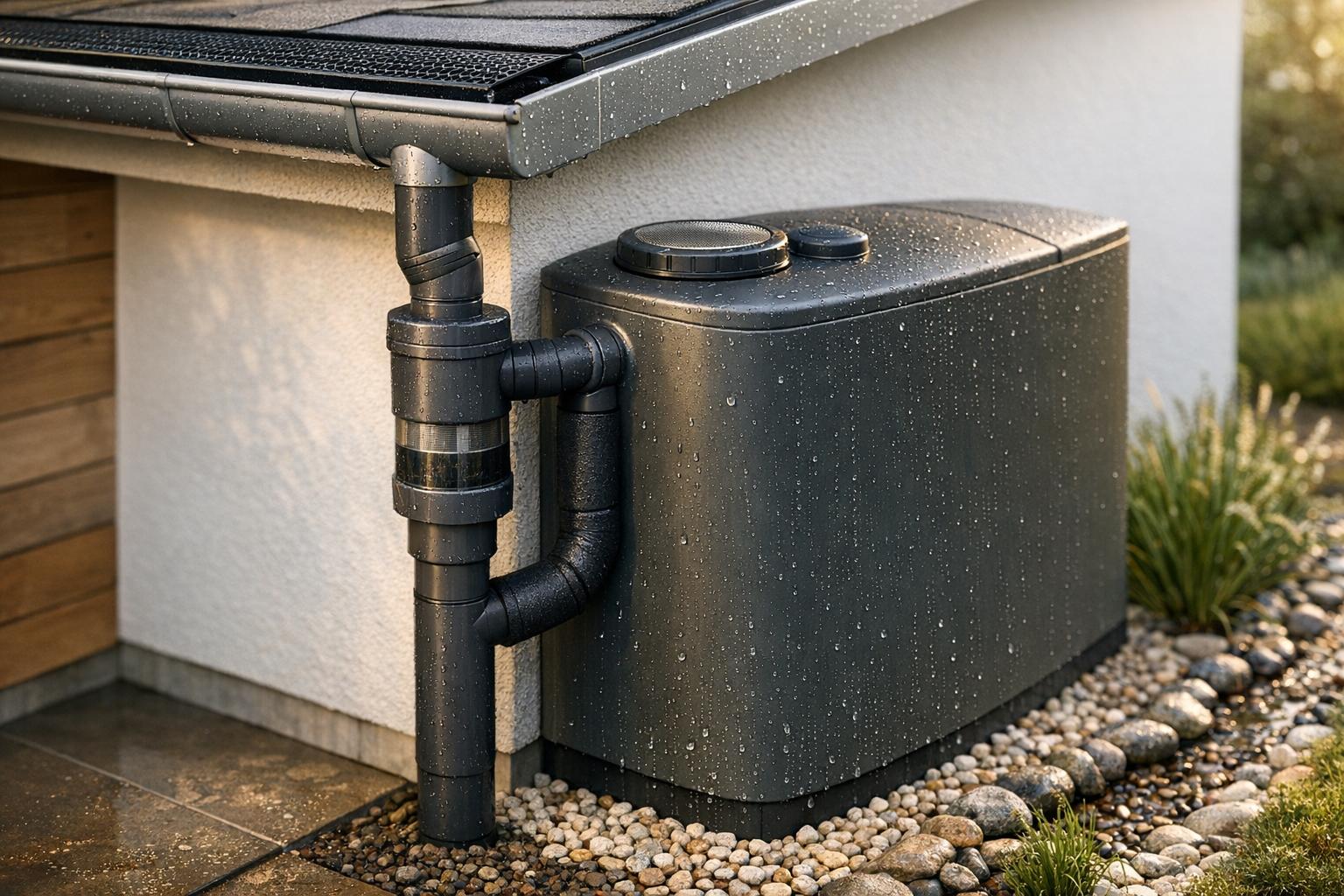
- bhavya gada
- No Comments
Rainwater harvesting is a practical way to conserve water and reduce runoff, but it comes with challenges like clogs, overflows, water contamination, mosquito breeding, and freeze damage. Addressing these issues involves regular maintenance and proper system design. Here’s a quick overview:
- Clogs: Clean gutters, downspouts, and filters regularly to ensure smooth water flow.
- Overflow: Use properly sized overflow pipes and direct excess water away from foundations.
- Water Quality: Prevent debris buildup, use first-flush diverters, and test for contaminants.
- Mosquitoes: Seal tanks and use fine mesh screens to block pests.
- Freeze Damage: Winterize systems by draining and insulating pipes before freezing temperatures.
With consistent care, your system can last decades while providing clean, usable water. Below, we explore solutions to these problems in detail.
Full rainwater tank maintenance video (all clips)
sbb-itb-843f8be
Common Rainwater Harvesting Problems
Even the best rainwater harvesting systems can encounter hiccups. Knowing what can go wrong – and why – helps you address issues early, preventing bigger headaches down the road.
Poor Water Collection or Flow
One of the most noticeable problems is when water doesn’t collect or flow as it should. Clogged gutters, downspouts, or pre-filters are often the culprits, blocking the path to the storage tank [2]. Sediment buildup and the use of multiple filters in sequence can also restrict water flow and reduce pressure.
"Multiple filters will reduce the water flow." – John C. Daley, Pollinator [1]
Sizing matters, too. If the roof catchment area or storage tank is too small, it won’t keep up with demand, especially during Maryland’s dry late-summer months [2].
Overflow and Erosion
When your tank fills faster than you can use the water, the overflow needs to be managed properly. Without a well-designed outlet, excess water can pool around your foundation or flow unchecked across your yard. Over time, this runoff can erode soil, damage landscaping and yard maintenance, and even carry pollutants like oil or sediment into nearby waterways [3]. In Maryland, where summer thunderstorms can drop inches of rain quickly, a poorly routed overflow system can lead to serious problems, including foundation damage and reduced system efficiency.
Contaminated or Discolored Water
Water quality issues often sneak up on you. Organic debris breaking down in the system can create sediment and discolor the water, while open or poorly sealed containers invite microbial contamination. According to the WHO, fecal contamination poses the greatest risk to stored water safety [4]. Chemical leaching is another concern – older system components can introduce harmful substances like lead into your harvested water [4].
"The simple intervention of covering water storage containers can reduce vector breeding and may also reduce faecal contamination of water at the household level." – WHO [4]
Mosquitoes and Pest Infestations
Standing water is a magnet for mosquitoes. Loose-fitting lids, gaps in screens, or small puddles around the base of your storage unit can quickly become breeding grounds. In Maryland’s humid climate, even minor oversights can lead to pest problems. Small animals and insects can also find their way into tanks through damaged fittings or uncovered overflow pipes.
Freeze Damage and Structural Failures
Maryland’s freeze-thaw cycles – where temperatures can swing from the 20s°F to the 50s°F in a single week – put rainwater systems under serious stress. Water left in pipes, fittings, or barrels during a freeze can expand and cause cracks. Plastic barrels are especially vulnerable, but even metal fittings and concrete bases can be affected as the ground shifts. A system that seems fine in the fall might be leaking or damaged by early spring if it hasn’t been properly winterized.
How to Fix Common Issues
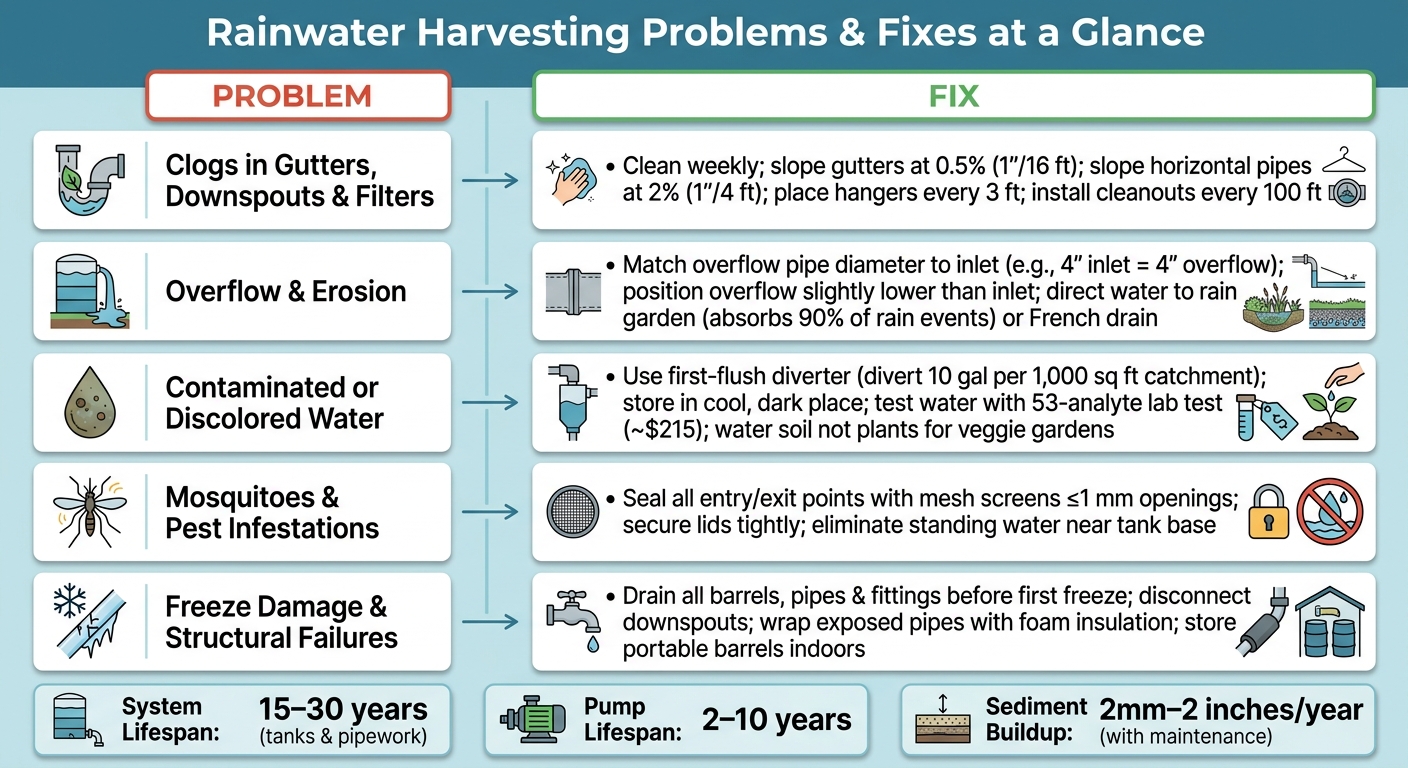
Rainwater Harvesting Problems & Fixes: Quick Reference Guide
Once you’ve identified a problem, fixing it is usually straightforward – provided you address it before small issues turn into major repairs.
Clearing Clogs in Gutters, Downspouts, and Filters
After every storm, inspect your system for signs of trouble. Keep an eye out for water backing up in the gutters, pooling around your foundation, or overflowing in unexpected areas. Remove debris like leaves and sticks from the roof surface, gutter screens, and leaf guards. For inlet filters, clean them weekly or as recommended by the manufacturer.
Here are some key guidelines to keep your system in shape:
- Gutters should slope at 0.5% (1 inch per 16 feet).
- Horizontal pipes should slope at 2% (1 inch per 4 feet).
- Place hangers every 3 feet.
- Install cleanout access points every 100 feet [6].
Proper maintenance ensures sediment buildup in the storage tank stays minimal – between 2 mm and 2 inches per year [5]. If you notice more accumulation, it might be time to replace your filter media earlier than planned.
Once clogs are cleared, focus on optimizing the overflow system to maintain smooth performance.
Managing Overflow and Drainage
The overflow pipe often gets overlooked, but it plays a crucial role in your rainwater system. Make sure its diameter matches the inlet pipe’s size – a 4-inch inlet needs a 4-inch overflow – to handle heavy rain without backups [9]. Position the overflow pipe slightly lower than the inlet, at least half the pipe’s diameter below, to keep water flowing in the right direction [9].
"Creating an exit path for incoming water is important in preventing water tank overflow through the manway, back-up through your pre-tank filter, or create excess pressure on the storage vessel." – Rainwater Management Solutions [9]
To protect your foundation, direct discharged water away using solutions like corrugated tubing, splash blocks, a rain garden, a stone-lined dry riverbed, or a French drain [7][8]. Rain gardens can absorb up to 90% of rain events and hold water for 12 to 48 hours before it drains away [7]. French drains, on the other hand, move water underground and away from problem areas [8]. Pro Landscapes MD specializes in these drainage solutions across central Maryland, ensuring proper water flow and erosion control.
Once your drainage system is sorted, focus on maintaining water quality.
Improving Water Quality
If your water looks discolored or murky, it’s likely due to organic debris breaking down in the system. Start by thoroughly cleaning the storage tank – scrub, rinse, and inspect for cracks or gaps where insects or debris might enter.
A first-flush diverter can help by removing initial contaminants. Aim to divert at least 10 gallons of water per 1,000 square feet of catchment area at the start of a storm [6]. Be sure to clean the diverter chamber after every storm so it’s ready for the next rainfall [5][6]. For storage, keep containers in a cool, dark place like a basement or cellar to slow microbial growth [10]. If you’re using harvested water on a vegetable garden, water the soil directly instead of the plants to minimize contamination risks [10].
Lab testing is also essential for detecting invisible contaminants like lead, nitrates, or PFAS. A comprehensive rainwater test covering 53 analytes, including bacteria and heavy metals, typically costs around $215 [10].
Mosquito and Pest Control
To prevent pest problems, ensure your system is sealed tightly. Use mesh screens with openings no larger than 1 mm at every entry and exit point, including inlets, overflows, and vents [6]. Check that lids fit securely and that overflow pipes are screened to keep pests out. If you notice standing water near the base of your tank, adjust the grading to encourage proper drainage and eliminate pooling. Securing these entry points not only deters pests but also keeps your system running efficiently year-round.
Winterizing Systems to Prevent Freeze Damage
Winterizing is essential to avoid damage from freezing temperatures, especially in areas like Maryland with freeze-thaw cycles. Before the first hard freeze, drain all barrels, pipes, and fittings. Even a small amount of water left in a plastic barrel or metal coupling can freeze, expand, and cause cracks. Disconnect downspout connections to rain barrels and store them indoors or in a sheltered space like a garage. For pipes that can’t be fully drained, wrap them with foam pipe insulation, paying extra attention to exposed sections or fittings near the ground. If your system includes a below-ground tank, ensure the manhole cover is secure and sealed to keep cold air out [6].
Preventive Maintenance Tips
Preventive maintenance can save you a lot of hassle, money, and time in the long run. Barry Chenkin, Founder of AquaBarrel, emphasizes this perfectly:
"A rainwater harvesting system is only as good as the upkeep behind it. Without regular care, what started as a smart, eco-friendly investment can quickly turn into a health hazard or structural headache." [11]
With consistent care, rainwater harvesting systems can last anywhere from 15 to 30 years [12]. Neglecting maintenance, however, is a recipe for trouble – 90% of slime buildup and odor problems stem from skipped upkeep [11].
Seasonal Maintenance Schedule
Breaking maintenance into seasonal tasks makes it easier to stay on top of everything. Here’s a handy seasonal guide:
| Season | Primary Focus | Key Tasks |
|---|---|---|
| Spring | System Kick-off | Inspect roof and gutters for winter debris; rinse first-flush diverters; test water pH and microbial levels. |
| Summer | Peak Usage & Pests | Clean gutters monthly if trees overhang the roof; monitor pump pressure; check mesh screens for mosquito activity. |
| Fall | Winter Prep | Remove residual sludge from the tank base with a wet/dry vacuum; inspect seals and fittings for cracks or dry rot. |
| Winter | Dormancy & Protection | Disconnect hoses; insulate exposed pipes with foam sleeves or heat tape; store portable barrels indoors. |
These tasks help prevent sediment buildup in problem areas like seams, corners, and spots directly under inlets. One important tip: don’t leave empty barrels upside down outside during winter. UV rays and snowmelt can weaken the material. Instead, store barrels in a garage or sealed container [11].
If these steps don’t solve a problem, it’s time to bring in a professional.
When to Call a Professional
While most maintenance tasks are manageable on your own, some situations demand expert attention. For example, a pump that’s rattling or humming might have a mechanical issue that requires professional repair [11]. Other red flags include visible cracks in a concrete cistern, leaking seals, or a malfunctioning make-up water supply system – all of which should be handled by a licensed plumber or structural specialist [13].
Backflow preventers need annual testing by a certified professional, as required by local regulations, to ensure contaminated water doesn’t enter your main water supply [5]. If working on a roof or dealing with underground components feels overwhelming, it’s best to call in a pro. For those in central Maryland, Pro Landscapes MD offers services like drainage design, grading, and French drain installation, which can help keep your rainwater harvesting system running smoothly while protecting your property from water-related damage.
Conclusion
Taking care of your rainwater harvesting system pays off in the long run. Storage tanks and pipework can last anywhere from 15 to 30 years, but that kind of longevity depends on consistent upkeep [5]. Pumps, on the other hand, have a shorter lifespan – just 2 to 10 years – so they need regular monitoring to avoid unexpected failures [5]. Something as simple as cleaning inlet filters weekly can make a big difference by keeping sediment buildup to just 2 mm (0.08 inches) per year, which helps extend the life of your system [5].
Catching problems early is just as important. Routine maintenance and quick action when issues arise not only protect your equipment but also ensure your system delivers its full benefits. These include reducing runoff, preventing soil erosion, and maintaining high water quality.
In the bigger picture, rainwater harvesting works hand-in-hand with stormwater management strategies. Directing overflow into features like rain gardens or percolation trenches creates a smarter, more efficient system that further minimizes erosion and runoff [11][13]. For homeowners in central Maryland, combining these practices with thoughtful landscape design can make all the difference. Companies like Pro Landscapes MD specialize in drainage design, grading, and other landscaping solutions to keep your system running smoothly for years to come.
FAQs
How can I tell if my tank or overflow is too small for my roof?
To figure out if your tank or overflow system is undersized, start by calculating how much water your roof collects annually. Here’s how: multiply your roof’s area by the average rainfall in your area and a conversion factor. For example, you can use 600 gallons per inch of rain per 1,000 square feet as a standard.
Once you have this number, compare it to your tank’s capacity. If your tank frequently overflows, it’s a sign that it might be too small. In that case, your overflow system must be equipped to manage the extra water effectively to avoid potential damage.
Is harvested rainwater safe for vegetables and pets?
Harvested rainwater can be safe for watering vegetables and providing for pets, but it requires proper filtration, treatment, and consistent maintenance. Regular care helps eliminate contaminants, bacteria, and pathogens, ensuring the water remains clean and suitable for use.
What’s the easiest way to prevent winter freeze damage?
To keep your rainwater harvesting system safe from winter freeze damage, make sure it’s equipped with proper drainage and insulation. These steps help prevent water from accumulating and freezing, which could result in expensive repairs. Performing regular maintenance before the cold sets in is another key way to shield your system from freezing temperatures.
Chat with Us