









- bhavya gada
- No Comments
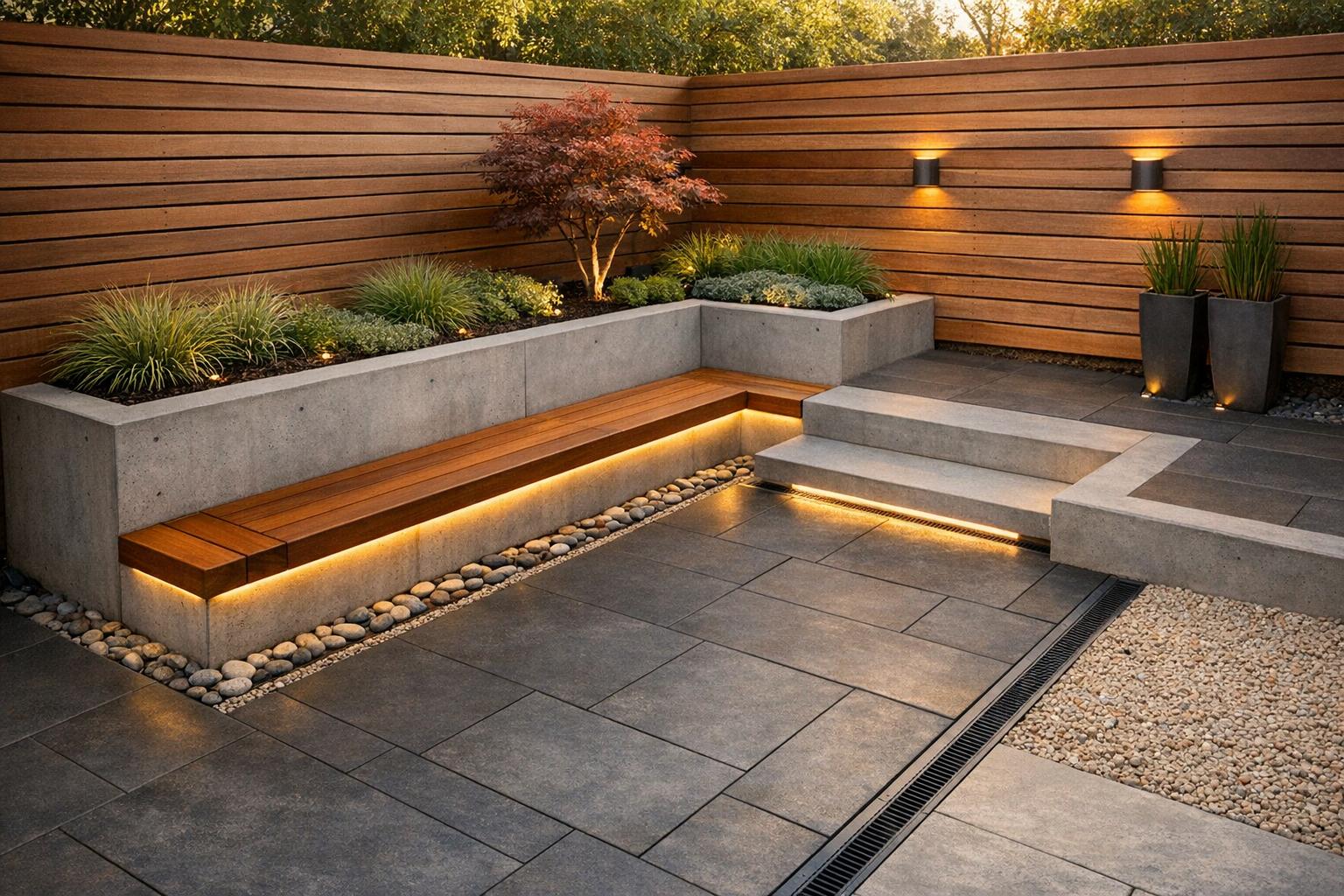
Retaining walls are a practical way to manage sloped yards, prevent erosion, and improve drainage. But they can also be a design feature, adding depth and functionality to small outdoor spaces. Whether you want to create planting zones, seating areas, or outdoor kitchen supports, a well-designed retaining wall can transform your yard into a more usable and visually appealing space.
Key Takeaways:
- Choose materials like natural stone, timber, modular concrete blocks, or gabion walls based on your yard’s style and needs.
- Incorporate greenery, vertical gardens, or tiered designs to maximize space and soften the look.
- Add functional features like built-in seating, steps, or LED lighting for added usability and ambiance.
- Proper planning and professional installation ensure durability, drainage, and structural integrity.
From curved layouts to modern finishes, retaining walls can serve both form and function in compact yards. For Maryland homeowners, Pro Landscapes MD offers tailored solutions to make the most of your outdoor space.
How to Build a Garden Retaining Wall | Ask This Old House

sbb-itb-843f8be
Design Principles for Small Yard Retaining Walls
Careful planning and a touch of creativity can transform a small yard retaining wall into a functional and visually appealing feature.
Site Assessment and Space Planning
Start by measuring your yard accurately. In smaller spaces, oversized walls can feel out of place and dominate the area. Think about how the wall will interact with existing elements like trees, patios, or walkways. Proper planning here can help prevent issues, such as uneven settling that could lead to cracks down the line. Once you have the measurements, decide on a wall height and layout that fits the space and complements its overall design.
Wall Height and Layout Options
The height of your retaining wall should match the scale of your yard. A lower-profile wall often works best in compact spaces, maintaining balance without overwhelming the area. If your yard has slopes, tiered designs can create distinct planting zones, adding depth and character without making the space feel crowded. Curved borders are another smart choice – they can wrap around trees or flower beds, softening the look and avoiding sharp angles. Materials like Brandon modular blocks are ideal for achieving these smooth curves. Plus, finishing the top near features like fire pits can double as seating, making the most of your limited yard space [1]. Once the layout is set, incorporating greenery can take the design to the next level.
Adding Plants and Greenery
Greenery can transform a retaining wall into a standout feature. Tiered sections are perfect for planting, offering visual interest without adding bulk. The contrast between the hard surface of stone and the soft textures of shrubs, perennials, or ornamental grasses creates a dynamic look. A modern trend, often referred to as the "green and gray" style, pairs modular stone with lush plantings for a sleek and contemporary vibe. For yards with limited ground space, consider modular wall structures that support vertical gardens – these let you mix stone and greenery while conserving precious square footage. Curved wall designs also work well with existing vegetation, helping the hardscape blend naturally into the surrounding landscape [1].
Retaining Wall Materials for Small Yards
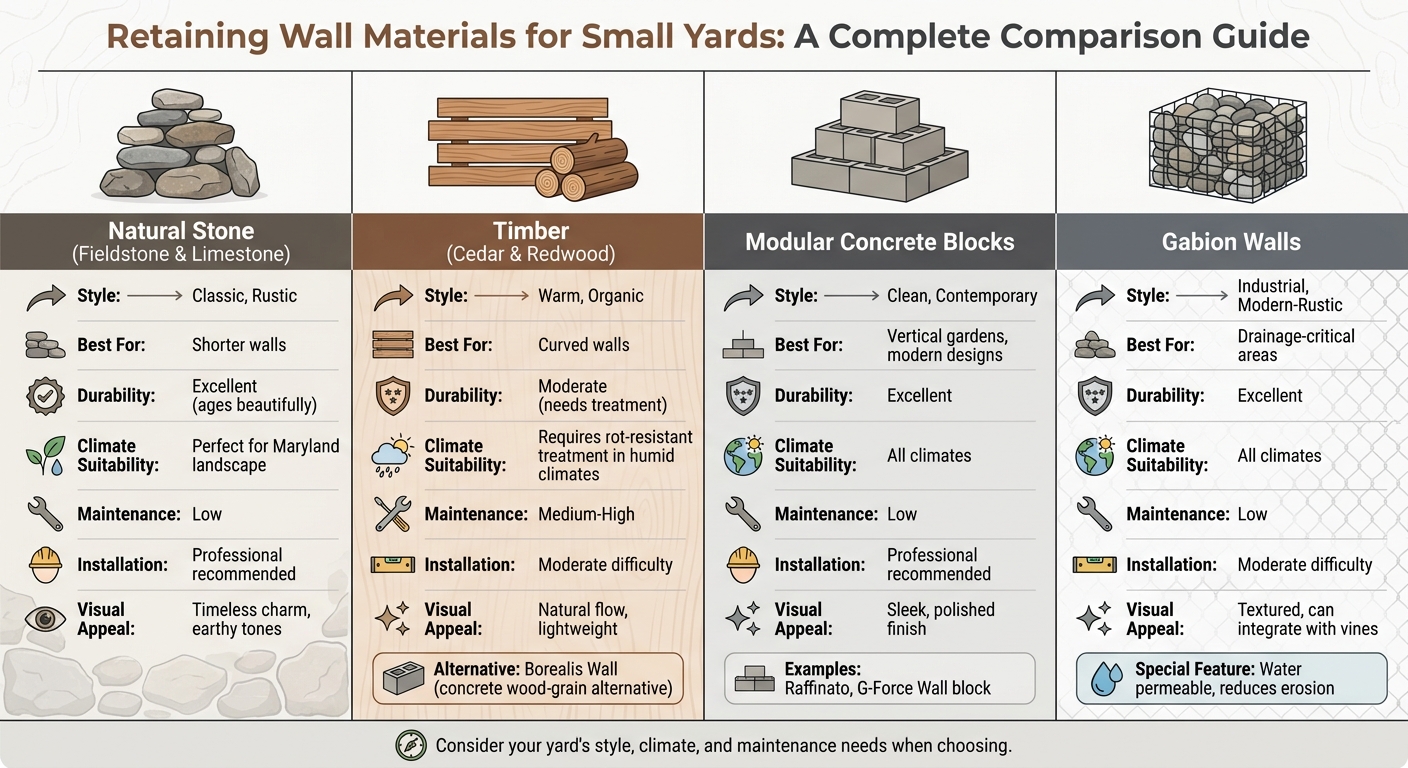
Retaining Wall Materials Comparison for Small Yards
When designing a retaining wall for a small yard, choosing the right material is crucial. The goal is to find something that blends aesthetics, durability, and practicality while making the most of limited space.
Natural Stone
If you’re aiming for a classic, rustic vibe, natural stones like fieldstone and limestone are fantastic choices. These materials bring a timeless charm to your yard, especially in Maryland, where their earthy tones naturally complement the local landscape. They work best for shorter walls, as their irregular shapes add character without overwhelming the space. Plus, natural stone is tough and only gets more charming with age. However, professional installation is a smart move to ensure stability and a polished finish.
Timber and Redwood
Cedar and redwood are perfect if you want a warm, organic feel. These woods are lightweight, making them ideal for creating curved walls that flow naturally with your yard’s layout. That said, Maryland’s humid summers and wet winters mean wood needs proper rot-resistant treatments to last. If you love the look of wood but want something more durable and easier to maintain, consider concrete alternatives like the Borealis Wall, which mimics wood grain beautifully [1].
Modular Concrete Blocks
Interlocking concrete blocks, such as Raffinato and the G-Force Wall block, are a go-to for a clean, contemporary style. They’re not just about looks – they provide solid structural support and work great as a backdrop for vertical gardens or other greenery [1].
Gabion Walls
Gabion walls bring an industrial edge to your yard while staying functional. These are wire baskets filled with stones, offering a modern yet rustic appearance. One of their biggest advantages is permeability – water can drain right through, reducing the risk of water buildup and erosion. Over time, vines and ground covers can weave through the mesh, softening the look and adding a natural touch. Gabions also give you the option to use locally sourced stones, which can help lower costs and tie the wall’s style to your surroundings.
Each material has its strengths, so think about your yard’s style, climate, and maintenance needs when making your choice. The right retaining wall can transform your small yard into a space that’s both functional and visually appealing.
Adding Functional Features to Retaining Walls
Retaining walls can do more than just hold back soil – they can transform into versatile features that improve how you use your yard. With smart material choices and thoughtful planning, these additions can enhance both the look and functionality of smaller outdoor spaces.
Vertical Gardens and Planters
If you’re working with limited space, vertical gardening is a great way to add greenery. Modular blocks, like the G-Force Wall, can double as a base for tiered plant beds. These not only bring depth to your yard but also help manage erosion. The mix of structured wall materials with the softer, natural look of plants creates a striking visual contrast. Plus, tiered designs are perfect for sloped areas, making them both practical and visually appealing.
Built-In Seating and Steps
Retaining walls can also double as seating. By adding a flat top cap, you can turn the wall into a comfortable bench. Tiered steps built into the wall add convenience, especially near outdoor kitchens or casual gathering spots. For example, materials like the Rocka Wall are ideal for these setups, offering a sturdy base for countertops or seating areas in outdoor entertainment spaces.
Lighting and Decorative Accents
Incorporating low-voltage LED lighting into retaining walls not only improves safety after dark but also creates a welcoming atmosphere. These lights can be hidden within the wall’s clean lines, softly illuminating pathways or seating areas. For an added touch of elegance, consider a small water feature flowing over textured wall surfaces. Whether you prefer smooth finishes for a sleek, modern vibe or heavily textured blocks for a bold statement, the right material can elevate your backyard’s overall design.
Pro Landscapes MD: Professional Retaining Wall Installation

When space is tight, every detail counts. Pro Landscapes MD specializes in designing and building retaining walls tailored to small yards across central Maryland. They serve communities in Howard County, Montgomery County, Carroll County, Frederick County, Prince George’s County, and Baltimore County, blending structural expertise with an eye for design to create walls that last.
Their process starts with careful planning. Accurate measurements and precise mortar work ensure walls remain crack-free and properly aligned. For sloped properties, they use tiering techniques, incorporating systems like the Mini-Creta Architectural collection. This method not only helps manage erosion but also creates multi-level planting areas, adding depth and dimension to compact spaces while solving drainage issues.
Pro Landscapes MD goes beyond basic wall construction by integrating functional and decorative elements directly into their designs. Features like built-in fire pits, outdoor kitchen bases, and seating areas are seamlessly incorporated into retaining walls. They also offer modern materials, such as the Raffinato wall system, which provides a sleek, polished look ideal for contemporary outdoor spaces.
To enhance safety and ambiance, they include LED lighting solutions, creating well-lit pathways for evening use. Their services extend to comprehensive drainage systems, including French drains and stormwater management, ensuring water doesn’t compromise the wall’s durability or the yard’s usability.
From Ellicott City and Columbia to Bethesda, Potomac, and even Washington, DC, Pro Landscapes MD delivers high-quality craftsmanship using professional-grade materials. Whether you’re working with a compact urban yard or a sloped suburban property, their retaining walls are designed to make the most of your space while maintaining structural integrity. Their work transforms small yards into functional and visually appealing outdoor areas.
Conclusion
Retaining walls in small yards do more than just hold back soil – they reshape how you use and enjoy your outdoor space. The trick lies in blending practical features like soil stabilization and erosion control with designs that enhance your home’s overall look. Whether you choose natural stone, modular blocks, or timber, pairing the right material with a well-thought-out design can turn a basic necessity into a standout feature.
In compact spaces, multi-functional designs are game-changers. Retaining walls that double as seating around a fire pit, support counters in an outdoor kitchen, or provide a backdrop for a vertical garden make the most of limited space. Elements like built-in LED lighting or gently curved layouts not only soften the look but also increase usability, even after the sun goes down. These thoughtful touches ensure your retaining wall is as functional as it is visually appealing.
A well-designed retaining wall serves two key purposes: solving structural concerns and elevating the overall landscape design.
But even the best design won’t hold up without precise installation. Accurate measurements, proper drainage systems, and quality craftsmanship are essential to avoid issues like cracks, misalignment, or water damage down the road. For homeowners in central Maryland – whether in Ellicott City, Bethesda, or beyond – working with skilled professionals ensures a retaining wall that stands the test of time while looking great.
Pro Landscapes MD brings together structural know-how and an eye for design to create retaining walls that not only solve landscape challenges but also add value to your property. With their expertise in material selection, site-specific solutions, and functional enhancements, they help homeowners across central Maryland turn small yards into efficient, beautiful spaces.
FAQs
Do I need a permit for a retaining wall in Maryland?
In Maryland, retaining walls that are less than 2 feet high generally don’t need a permit. But if the wall exceeds 2 feet or is designed to support additional weight (a surcharge), a permit is usually required. Some cases might even call for an engineering review, depending on the regulations in your specific county.
What retaining wall height requires an engineer?
Retaining walls that are taller than 4 feet from the base of the footing usually need an engineering design. If the wall height exceeds 6 feet, you might also need a revocable permit and a plan review by city officials. Be sure to review your local regulations to stay compliant with safety and construction standards.
How can I prevent water damage behind a retaining wall?
Proper drainage is key to preventing water damage behind a retaining wall. Without it, water can build up, increasing pressure and saturating the soil, which could compromise the wall’s stability.
To manage this, install drainage pipes and weep holes to channel water away effectively. Backfilling the area behind the wall with gravel or crushed stone helps improve water flow and reduces soil saturation. Additionally, make sure the surrounding landscape is graded to slope water away from the wall.
Don’t forget about upkeep – regularly check and maintain the drainage system to avoid blockages and ensure everything is working as it should. A little maintenance goes a long way in protecting your retaining wall.
Chat with Us