









- bhavya gada
- No Comments
Retaining walls are more than just decorative structures – they’re a practical solution for managing soil erosion and improving outdoor spaces, especially in areas with sloped terrain. These walls stabilize soil, protect foundations, and create usable terraces while managing water flow effectively. For Maryland homeowners, where clay-heavy soils and heavy rains are common, retaining walls help prevent erosion, safeguard landscaping, and add value to properties.
Key takeaways:
- Erosion Control: Retaining walls reduce soil loss by breaking slopes into manageable sections and redirecting water with proper drainage.
- Stormwater Management: Features like gravel backfill, perforated pipes, and French drains prevent water pressure buildup and protect structures.
- Durability: Materials like concrete blocks and natural stone withstand Maryland’s freeze-thaw cycles better than timber.
- Aesthetic Appeal: Retaining walls can transform steep yards into functional terraces and enhance curb appeal.
Proper installation, including a solid foundation and drainage system, is essential for long-lasting performance. For taller or complex walls, hiring professionals ensures compliance with local regulations and effective designs tailored to Maryland’s unique climate challenges.
Erosion Control: How Retaining Walls Protect Your Property
How Erosion Happens on Sloped Yards
Erosion on sloped yards often begins subtly but can escalate quickly. The most common types are sheet erosion, rill erosion, and gully erosion. Sheet erosion removes a thin layer of topsoil during heavy rains. Rill erosion forms small channels in the soil where water runoff concentrates, particularly on steep slopes or near downspouts. If left unchecked, these rills can develop into larger gullies, making the yard harder to use and maintain.
In Maryland, the clay-heavy soil makes these issues worse. Clay doesn’t absorb water efficiently, so during intense storms, water tends to run off rather than soak in. The USDA estimates that unprotected slopes experience average sheet and rill erosion rates of 4.6 tons of soil per acre annually, with steeper or disturbed ground losing even more. On a residential property, this translates to issues like mulch washing away, topsoil accumulating against fences, and muddy low spots forming after every storm.
How Retaining Walls Prevent Erosion
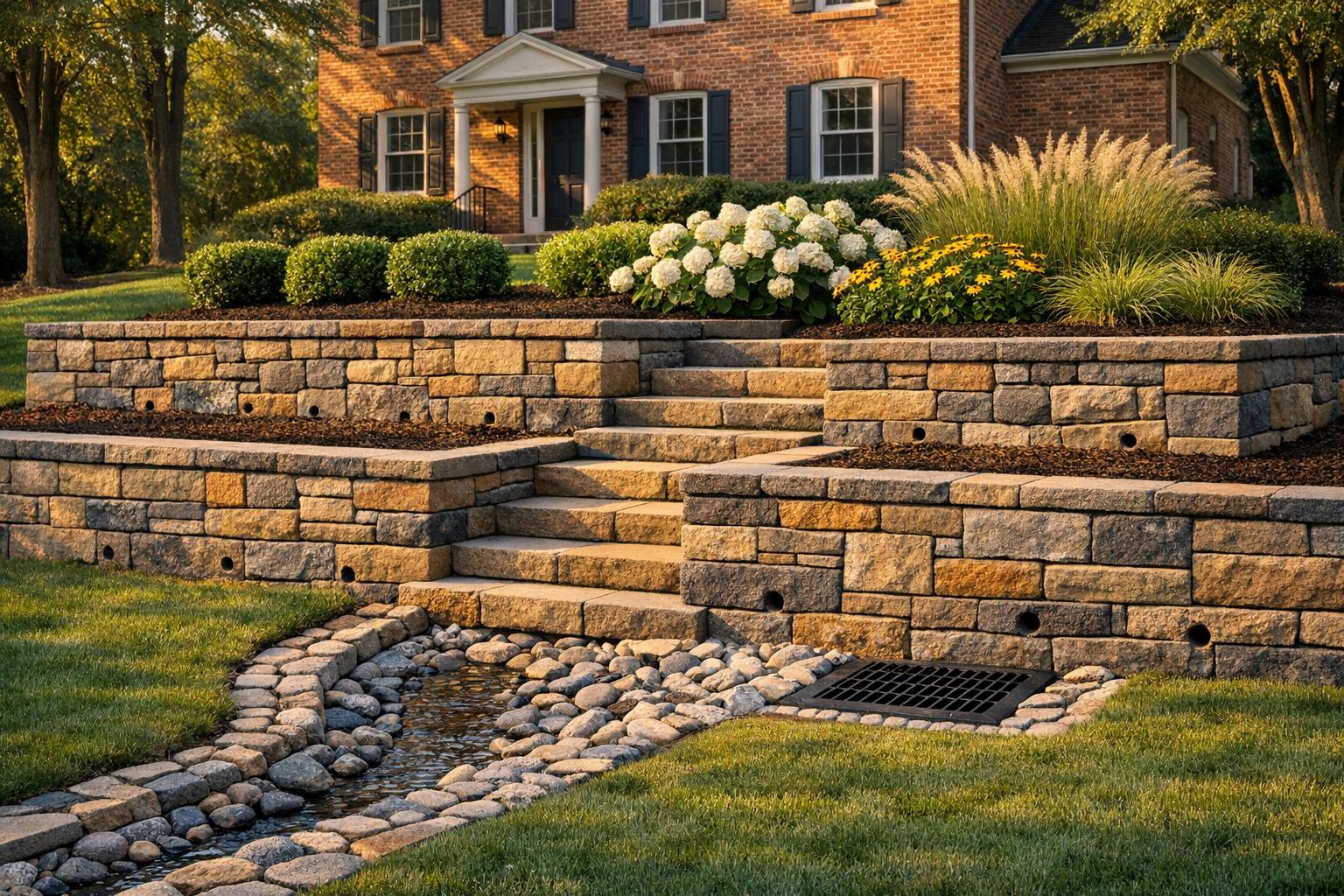
Retaining walls combat erosion by stabilizing soil and breaking up the slope into shorter, more manageable sections. By creating two or three terraced levels on a hillside, water has less distance to travel before hitting a flat surface. This shorter travel distance reduces water speed, which in turn minimizes its erosive power. For this reason, tiered retaining walls are often more effective than a single tall wall, as each level disrupts water flow further.
Proper drainage is another key component. Installing a 12-inch layer of free-draining gravel and a 4-inch perforated drain pipe behind the wall allows water to flow through the system in a controlled manner. This prevents water pressure from building up behind the wall, which could otherwise lead to soil slumping downhill. By managing water effectively, retaining walls not only enhance structural stability but also help maintain visual appeal over time.
"Retaining walls help direct and manage water flow, preventing pooling and water damage." – Pro Landscapes MD [1]
Stormwater Management Benefits
Retaining walls don’t just prevent erosion – they also provide a solution for managing stormwater. With the addition of a French drain behind the wall, both surface and subsurface water can be collected and safely redirected. This drainage system channels water along the wall’s base to areas like swales, dry riverbeds, or vegetated zones designed to absorb it. Roof runoff can also be integrated into this system by connecting downspouts via solid pipes, keeping excess water from cascading directly onto slopes.
Table: Erosion Impact Comparison
| Condition | Unprotected Slope | Slope with Retaining Wall & Drainage |
|---|---|---|
| Runoff behavior | Accelerates downhill, gaining erosive force | Slowed and redirected through controlled drainage |
| Erosion risk | High – sheet, rill, and gully erosion likely | Reduced; soil remains stable |
| Impact on structures | Damages patios, driveways, and foundations | Protects structures and prevents sediment buildup |
In Maryland’s storm-prone climate, where heavy rains can deliver inches of water in just hours, retaining walls designed for high water volumes are critical. Urban development compounds the problem, as impervious surfaces like roofs and driveways prevent water from being absorbed. In fact, stormwater runoff from developed land can be 2 to 5 times greater than from natural areas. By combining retaining walls with proper grading and drainage, you can safeguard your yard, protect your foundation, and contribute to better watershed health. Plus, these systems can enhance the overall look of your outdoor space while providing practical benefits.
sbb-itb-843f8be
Controlling Erosion with Drainage and a Boulder Retaining Wall
Design Features That Improve Retaining Wall Performance
Retaining Wall Materials Compared: Durability, Style & Best Use
Retaining walls do more than control erosion – they also enhance the look and functionality of outdoor spaces. But their effectiveness depends heavily on thoughtful design and proper construction.
Key Structural Components of Retaining Walls
The real strength of a retaining wall lies in the parts you don’t see: its foundation and drainage systems. While the visible surface may catch your eye, it’s the hidden elements that ensure the wall stays upright and functional.
- Foundation: A solid base of compacted crushed stone, usually 6–12 inches thick, is essential. This base spreads the wall’s weight evenly and reduces the risk of settling or tilting. In areas like Maryland, where freeze-thaw cycles can shift the ground, this step is especially critical. The first layer of blocks or stones must be perfectly level – any mistakes here will worsen as the wall rises.
- Drainage Layer: Behind the wall, a 12–18 inch-wide layer of clean gravel allows water to flow downward instead of building up pressure. A perforated drain pipe at the base collects this water and directs it away from the wall. Adding a non-woven geotextile fabric between the gravel and the native soil prevents fine particles from clogging the drainage system – a must in Maryland’s clay-heavy soils.
- Reinforcement: For walls over 3–4 feet high, geogrid reinforcement is often necessary. This synthetic mesh ties the wall and the retained soil together, creating a unified, stable structure. According to the Federal Highway Administration, properly designed geosynthetic-reinforced walls can last over 50 years when paired with effective drainage systems [5][6].
The National Concrete Masonry Association emphasizes that water buildup, or hydrostatic pressure, is one of the top causes of retaining wall failure. This makes a well-designed drainage system – gravel, pipe, fabric, and proper grading – non-negotiable [3][4].
With these structural essentials in place, the materials you choose will further shape the wall’s durability and appearance.
Material Options: Durability and Style
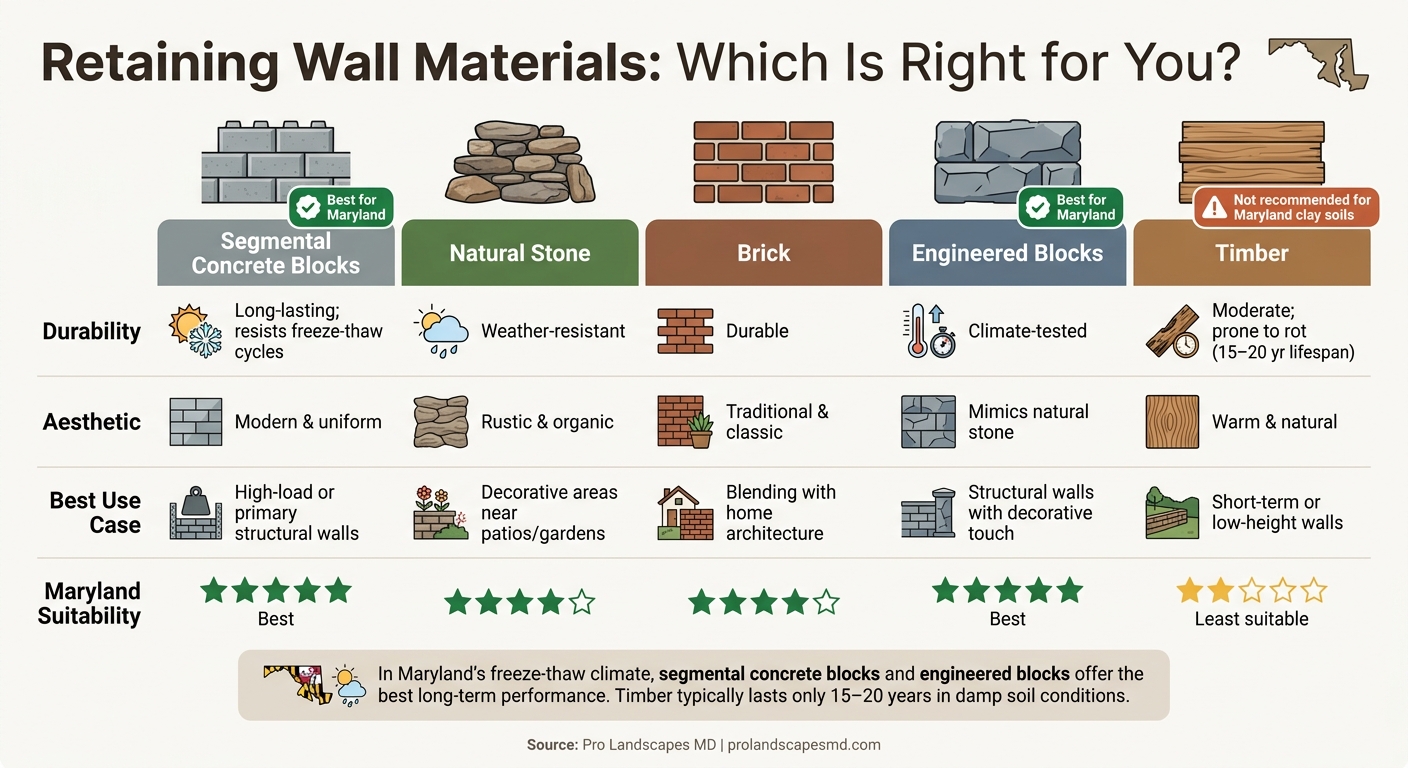
The material of your retaining wall influences both its lifespan and how it complements your property. Here’s a quick comparison of popular options:
| Material | Durability | Aesthetic | Best Use Case |
|---|---|---|---|
| Segmental concrete blocks | Long-lasting; resists freeze-thaw cycles | Modern and uniform | High-load areas or primary structural walls |
| Natural stone | Weather-resistant | Rustic and organic | Decorative areas near patios or gardens |
| Brick | Durable | Traditional and classic | Blending with home architecture |
| Engineered blocks | Climate-tested | Mimics natural stone | Structural walls with a decorative touch |
| Timber | Moderate; prone to rot | Warm and natural | Short-term or low-height walls |
For Maryland homeowners, segmental concrete blocks are often the best choice. They’re specifically designed for retaining walls, require little maintenance, and resist pests and rot. Natural stone, while visually appealing, demands skilled installation and careful drainage planning due to its irregular shapes. On the other hand, timber is a budget-friendly option but typically lasts only 15–20 years and struggles in Maryland’s damp soil conditions [7].
"When built properly using quality materials, retaining walls can last for several decades." – Pro Landscapes MD [1]
Why Proper Installation Matters
Even with top-notch materials, poor installation can compromise a retaining wall’s longevity. Common mistakes – like skipping drainage systems, using insufficient base depth, or neglecting geogrid reinforcement on taller walls – may not show immediate problems but often lead to leaning walls, bulging surfaces, or soil slumping over time.
In Maryland, retaining walls over 3–4 feet typically require a building permit and, in many cases, an engineered design. These regulations aren’t just red tape – they ensure the wall is tailored to the site’s soil, slope, and any additional loads like patios or driveways. Ignoring this step can result in unsafe structures and code violations.
"Drainage problems are complex and require a custom approach for each project. These issues can cause long-term damage to your property if not handled correctly, which is why hiring an experienced team is critical." – Pro Landscapes MD [2]
Hiring professionals who understand Maryland’s unique soil and drainage challenges can make all the difference. Companies like Pro Landscapes MD combine retaining wall construction with broader drainage solutions, ensuring the wall is both structurally sound and seamlessly integrated into your landscape [3][4].
How Retaining Walls Improve the Look of Outdoor Spaces
Retaining walls do more than just stabilize slopes – they redefine outdoor areas, turning challenging landscapes into visually appealing and functional spaces. With the right design, they can transform a plain slope into a standout feature of your yard.
Creating More Usable Space
For properties with sloped lots, retaining walls are a game-changer. They create level terraces, which make room for patios, gardens, or grassy areas. Picture a steep backyard turned into tiered levels that seamlessly connect your home’s entryways to outdoor spaces. This is especially practical in areas like central Maryland, where walk-out basements and uneven lots are common. By adding these terraces, you’re essentially expanding your living space into areas that were once too steep to use.
Combining Function and Design
A well-designed retaining wall isn’t just about utility – it can also elevate the look of your outdoor space. Features like built-in seating, planter beds, and curved designs that follow the natural landscape create a welcoming and harmonious vibe. Add varying wall heights or integrated LED lighting, and you’ve got a visually dynamic area that feels both stylish and safe. Plus, by incorporating these elements into the wall itself, you can avoid the need for extra furniture or fixtures, keeping the design clean and polished.
Curb Appeal and Property Value
Retaining walls do more than keep soil in place – they also protect and enhance your property’s value. Studies suggest that attractive hardscaping can increase home values by 5–12%, often leading to higher sales prices and a solid return on investment. On sloped lots, terraces created by retaining walls add functional outdoor living areas, boosting curb appeal and making the property more marketable. Pairing these walls with effective drainage solutions, like French drains or grading work, ensures the investment is not only beautiful but also durable. Companies like Pro Landscapes MD specialize in combining these features, offering designs that make homes stand out in the market.
What Maryland Homeowners Should Know Before Installing a Retaining Wall
Accounting for Maryland’s Climate
Maryland’s weather puts retaining walls through their paces. Winters bring freeze-thaw cycles, where trapped water expands by about 9% when it freezes, gradually pushing walls outward. Summers don’t offer much relief either, as heavy rainfall from nor’easters and thunderstorms adds to the stress. This is especially true in areas with clay-heavy soils, common in central Maryland. Clay tends to hold water instead of letting it drain, which significantly increases the pressure a wall must withstand.
To endure these conditions, retaining walls need to be built with care. Footings should extend below the local frost line, usually around 30 inches in much of Maryland, and rest on a compacted crushed stone base. Materials matter too – segmental concrete blocks and natural stone hold up better than untreated timber in Maryland’s wet and freezing conditions. Wood tends to deteriorate faster, losing its strength over time. In such a climate, incorporating proper drainage systems is not just helpful – it’s essential.
Pairing Retaining Walls with Drainage Solutions
Proper drainage can make or break a retaining wall. The Interlocking Concrete Pavement Institute (ICPI) and the National Concrete Masonry Association (NCMA) note that controlled drainage can reduce hydrostatic pressure by up to 90%, depending on the soil type and the drainage design.
The best drainage setups include perforated pipes, gravel backfill, and proper grading to direct water away from the wall. If your property deals with heavy runoff – whether from rooftops or neighboring lots – French drains installed upslope can intercept water before it reaches the wall. Features like dry riverbeds and swales can then guide surface water safely downhill without causing erosion. This careful coordination between drainage and structural components highlights why professional expertise is so valuable.
Working with Professionals
Given the complexity of structural and drainage requirements, retaining walls taller than 3–4 feet, those near buildings, or those on steep slopes should be left to professionals. Local regulations, including setback requirements, guardrails, and property line rules, vary widely, so it’s critical to check the codes before starting construction. [8]
Pro Landscapes MD specializes in designing and building retaining walls across central Maryland. They offer integrated solutions that combine French drains, dry riverbeds, grading, and stormwater management into a cohesive plan, rather than treating each element as a separate task. With extensive experience in areas like Howard County, Montgomery County, and Frederick County, they understand the specific soil conditions, permitting processes, and drainage challenges of the region. [9] When choosing a contractor, ask for local references, detailed explanations of their base preparation and drainage methods, and a clear understanding of what their warranties cover – both for materials and workmanship.
Conclusion: The Case for Retaining Walls in Maryland
A properly constructed retaining wall not only helps prevent erosion but also adds functionality and beauty to your outdoor space. For Maryland homeowners, dealing with sloped lots, clay-rich soils, and heavy seasonal rainfall, stabilizing slopes is essential. It protects your foundation, driveway, and landscaping from potential washouts. Beyond protection, retaining walls can transform your yard, creating flat patios, garden terraces, or defined seating areas that enhance both usability and property value.
Maryland’s unique climate makes investing in a durable retaining wall a smart choice for safeguarding your property and improving its overall appeal. Financially, the numbers make sense: segmental block or stone walls typically cost between $25 and $50 per square foot, with more intricate designs costing more. However, this upfront expense is often far less than the cost of repairing foundation damage, replacing washed-out landscaping, or redoing a failed DIY wall after a few harsh Maryland winters. [1]
The key to a long-lasting wall lies in proper drainage, a strong foundation, and the right materials. Without these, saturated soils – common during Maryland storms – can increase lateral earth pressure by over 50%, posing a significant risk to poorly built structures.
FAQs
Do I need a permit for a retaining wall in Maryland?
To find out if a permit is needed for retaining walls in Maryland, you’ll need to check with your local municipal or county building department. Regulations can vary depending on your location and the specifics of your project. If you’re looking for professional assistance, Pro Landscapes MD specializes in designing and installing retaining walls that are not only sturdy and practical but also enhance the look of your outdoor space. They use top-notch materials to ensure the wall fits seamlessly with your landscape.
How do I know if my wall needs geogrid reinforcement?
Geogrid reinforcement is often necessary for retaining walls that support slopes under high soil pressure or in areas prone to erosion. This reinforcement provides added stability to the wall and helps prevent soil from shifting. However, factors like the complexity of the site and drainage conditions also influence the need for reinforcement. To ensure the wall is stable and well-reinforced for the long term, it’s a good idea to have an experienced contractor review your wall design and water management plan.
What drainage setup prevents retaining wall failure?
Effective water management is key to avoiding retaining wall failure. By reducing hydrostatic pressure, you can prevent pooling and potential structural issues. Installing proper drainage systems, like pipes or redirecting water flow, plays a major role in maintaining the wall’s stability. Pro Landscapes MD offers tailored solutions to handle excess water, helping to keep your landscape secure and your retaining wall in good condition.
Chat with Us