









- bhavya gada
- No Comments
Retention basins, or wet ponds, are designed to hold water permanently and manage stormwater runoff. Proper vegetation is crucial for their functionality. Here’s what you need to know:
- Purpose: Retention basins slow runoff, improve water quality by settling pollutants, and sometimes recharge groundwater.
- Vegetation’s Role: Deep-rooted native plants stabilize soil, filter pollutants, and reduce erosion. Turf grass, by contrast, offers limited benefits and can lead to erosion.
- Key Challenges:
- Erosion: Use native grasses like switchgrass and erosion control materials like coir mats.
- Waterlogged Zones: Plant wetland species such as soft rush or bulrush in areas prone to standing water.
- Weed Control: Dense planting of native species and regular inspections help prevent overgrowth by non-native plants.
- Planting Zones:
- High bench (dry areas): Use drought-tolerant plants like little bluestem.
- Mid-slope (alternating wet/dry): Include sedges and soft rush.
- Bottom (wettest areas): Plant species like pickerelweed for sediment control.
- Maintenance: Regular inspections, weed removal, and proper grading ensure long-term success.
Retention basins with well-chosen vegetation not only manage water effectively but also enhance the landscape and meet stormwater regulations.
Beautiful Ponds–Using Native Plants for Color and Function in Stormwater Basins | Webinar
Common Challenges in Retention Basin Vegetation Design
Designing vegetation for retention basins in Maryland comes with its fair share of hurdles. The region’s intense storms, fluctuating freeze-thaw cycles, and compacted soils create conditions that can derail even the best-laid plans. Below, we’ll explore three common challenges and practical solutions to keep vegetation thriving.
Erosion and Soil Instability
Stormwater runoff can wreak havoc on basin slopes, inlets, and outlets. The concentrated flow erodes topsoil, exposes plant roots, and undermines the structural integrity of the basin. Over time, this leads to reduced storage capacity and diminished sediment control.
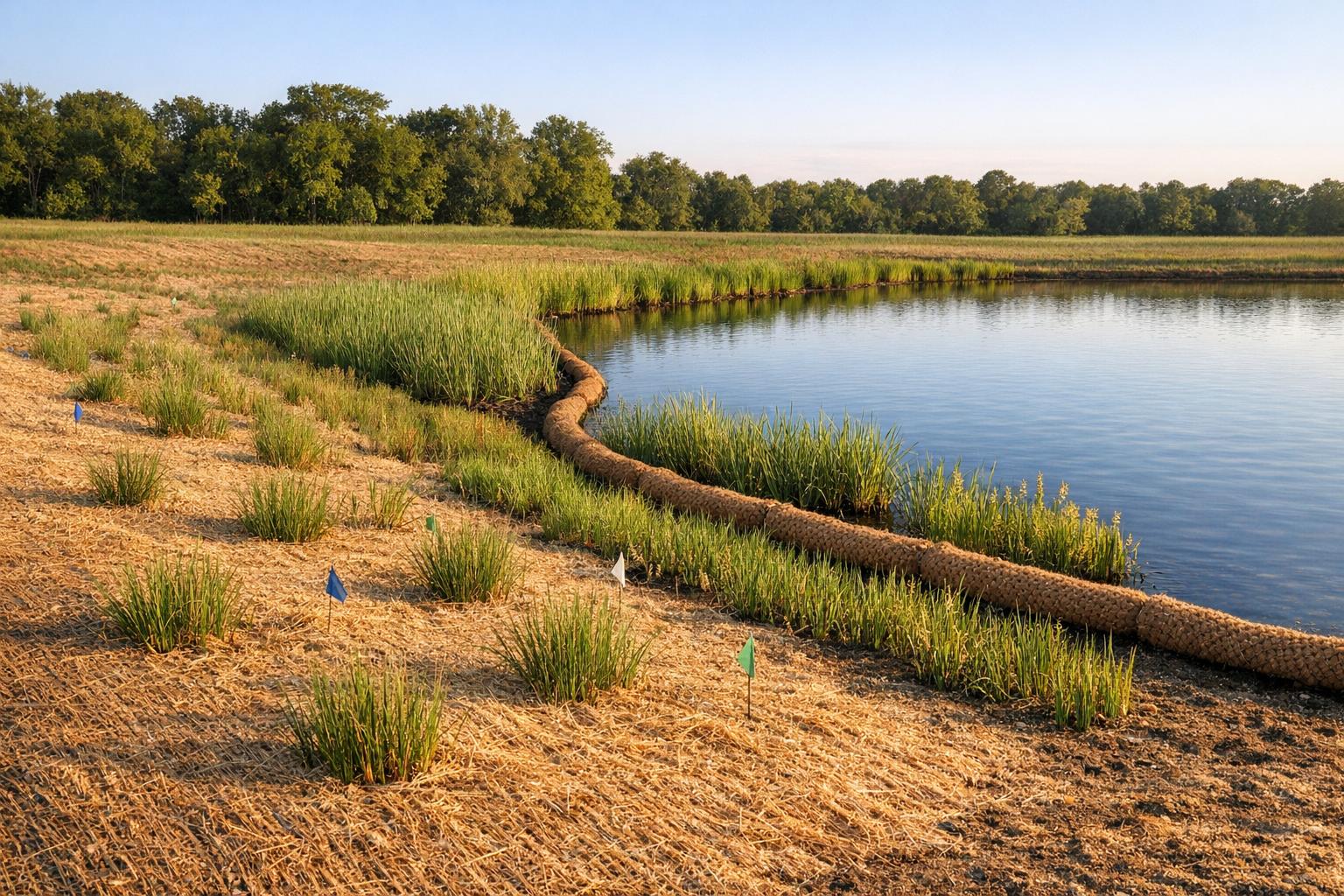
The solution? It’s not just about planting vegetation – it’s about planting the right vegetation. Deep-rooted native grasses and forbs, such as switchgrass (Panicum virgatum), little bluestem (Schizachyrium scoparium), and Indiangrass (Sorghastrum nutans), provide excellent soil anchoring compared to shallow-rooted turf. To protect vulnerable areas like steep slopes and inlets, erosion control blankets or coir mats can stabilize the soil while plants establish. Additionally, stone energy dissipators – like riprap aprons or level spreaders – help reduce scouring at inlets. For long-term success, consider designing side slopes at 3H:1V or flatter, as this makes it easier for vegetation to take root and simplifies maintenance.
Standing Water and Plant Survival
Retention basins often experience uneven moisture levels. The bottom zones may remain waterlogged for days after a storm, while the upper edges dry out quickly. Planting the wrong species in these zones can lead to costly failures.
Plants need oxygen for their roots to survive. In areas where soil stays saturated, plants not adapted to wet conditions will suffocate. To prevent this, ensure water quality basins drain within 48–72 hours. This reduces plant stress and discourages mosquito breeding. For basins with permanent pools, stick to obligate or facultative wetland species like soft rush (Juncus effusus), bulrush (Scirpus spp.), and various Carex sedges. Avoid using standard turf grasses or upland ornamentals in areas prone to ponding, as they’re highly susceptible to root rot and winter damage.
Weed Pressure and Overgrowth from Non-Native Species
Retention basins often become magnets for invasive plants, especially in disturbed and nutrient-rich soils. In Maryland, aggressive invaders like Phragmites australis (common reed), Japanese stiltgrass (Microstegium vimineum), multiflora rose, and tree-of-heaven (Ailanthus altissima) are common culprits. Studies show that without active management, invasive species can dominate over 50% of vegetated areas in stormwater basins.
Seeds from invasive plants can spread via upstream water flow or even waterfowl, meaning a well-designed basin can quickly become overrun. The best defense is dense planting of native species from the start, which minimizes open soil where weeds can take hold. Combine this with regular inspections during the first two to three growing seasons to catch invasive species before they set seed. Early intervention is far less expensive than removing well-established colonies. A detailed maintenance plan is essential – it should outline mowing schedules, removal protocols, and guidance on distinguishing native plants from invasive ones.
Plant Selection by Retention Basin Zone
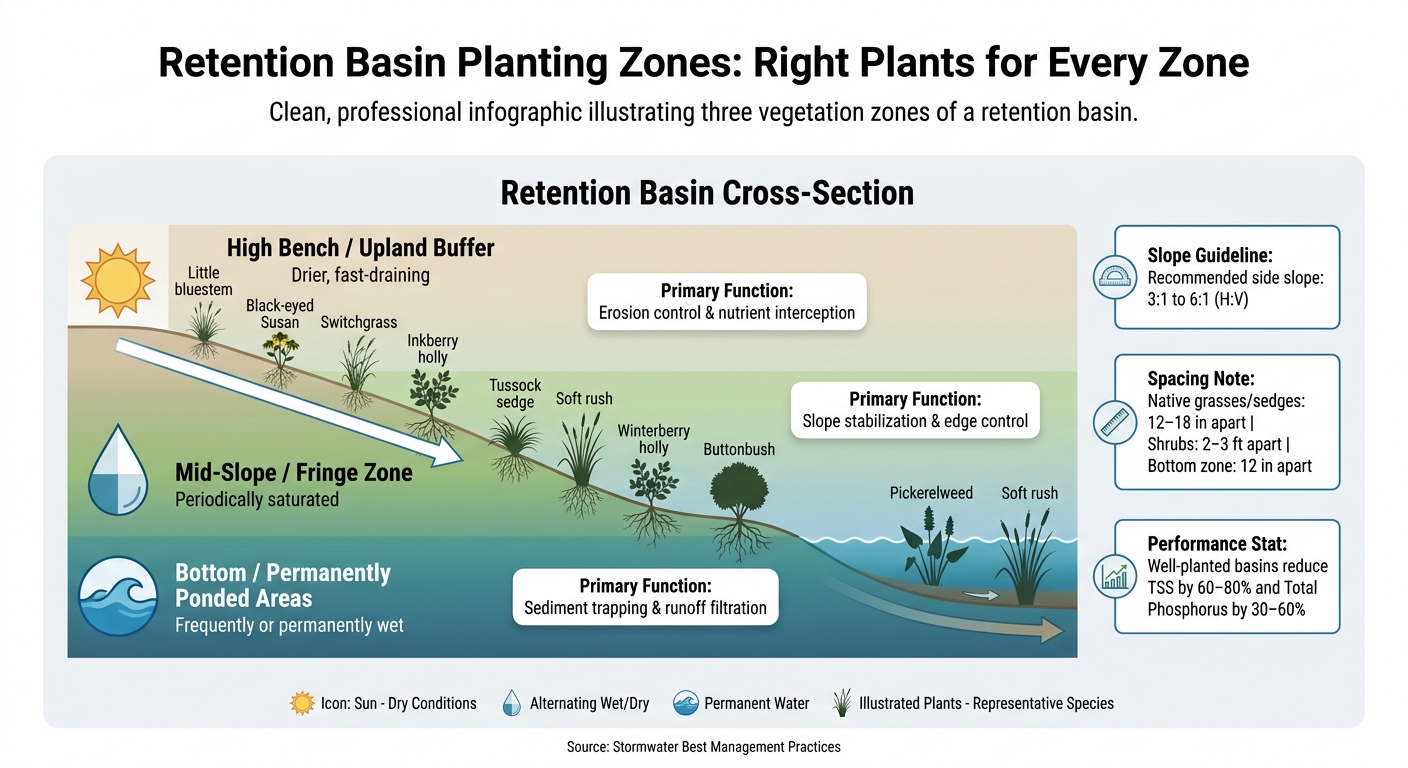
Retention Basin Planting Zones: Right Plants for Every Zone
Selecting the right plants for each zone of a retention basin is key to ensuring its effectiveness. By matching plants to the moisture conditions of each area, you can enhance the basin’s ability to manage stormwater and support healthy ecosystems.
High Bench and Upland Buffer Zone
This area sits above the normal water level and dries out quickly after storms. Its compact, low-organic soils benefit from plants with dense, deep roots that can reduce erosion and absorb nutrients from runoff.
- Little bluestem (Schizachyrium scoparium): This clumping grass slows water flow while its deep roots stabilize the soil.
- Black-eyed Susan (Rudbeckia hirta or R. fulgida): Its fibrous roots protect exposed soil and absorb nutrients.
- Switchgrass (Panicum virgatum): Adaptable to various soils, it remains upright even in heavy rain, providing additional stability.
- Inkberry holly (Ilex glabra) and bayberry (Morella pensylvanica): These shrubs offer year-round soil protection.
Mid-Slope and Fringe Zone
This zone experiences alternating wet and dry conditions, making it prone to slope softening or slumping. Plants here need to handle repeated saturation while reinforcing soil structure.
- Tussock sedge (Carex stricta) and fox sedge (Carex vulpinoidea): Their dense growth traps sediment and strengthens muddy edges.
- Soft rush (Juncus effusus): This plant tolerates flooding and helps slow runoff with its upright clumps.
- Winterberry holly (Ilex verticillata): Thrives in wet conditions during colder months.
- Buttonbush (Cephalanthus occidentalis): Performs well in areas prone to shallow standing water after storms.
Bottom Zone and Permanently Ponded Areas
This zone stays wet the longest, sometimes continuously. Plant selection depends on factors like water depth, duration, and soil type.
- Pickerelweed (Pontederia cordata): Ideal for shallow water (12–18 inches deep), it filters nutrients from runoff.
- Soft rush: Extends into the shallow portions of this zone, complementing emergent vegetation that traps sediment and clarifies water.
The table below summarizes the recommended plants and their functions for each zone:
| Zone | Typical Moisture | Recommended Species | Primary Function |
|---|---|---|---|
| High bench / upland buffer | Drier, fast-draining | Little bluestem, black-eyed Susan, switchgrass, inkberry holly | Erosion control, nutrient interception |
| Mid-slope / fringe | Periodically saturated | Tussock sedge, soft rush, winterberry holly, buttonbush | Slope stabilization, edge control |
| Bottom / ponded areas | Frequently or permanently wet | Pickerelweed, soft rush | Sediment trapping, runoff filtration |
Pro Landscapes MD applies this zone-based strategy to stormwater management projects across central Maryland. By tailoring planting plans to site-specific conditions like soil type and sunlight, they ensure retention basins function effectively from the start of the growing season.
sbb-itb-843f8be
Retention Basin Design and Maintenance Best Practices
Site Grading and Soil Preparation
Managing soil erosion and water flow starts with proper site grading and soil preparation. The grading of a retention basin is essential for its effectiveness. Side slopes should ideally be no steeper than 3:1 (horizontal to vertical), though many experts recommend gentler slopes of 4:1 to 6:1. These flatter slopes slow down water runoff, reduce the risk of erosion, and provide better conditions for plant roots to establish before the basin faces heavy rainfall. For the basin floor, maintaining a 1–2% grade toward the outlet is key to avoiding stagnant water, which can harm vegetation.
Soil preparation is equally important. Construction activity often compacts the soil, so planting zones should be scarified or tilled to a depth of 6–12 inches before planting. Adding 2–4 inches of topsoil enriched with 3–5% organic matter by volume to the side slopes and upland buffer areas improves both root growth and water infiltration. In regions like Maryland and the Mid-Atlantic, certified compost blends that meet state organic content standards are commonly used to ensure consistent results. Around the water’s edge, it’s best to limit nutrient additions to avoid triggering algal blooms or degrading water quality.
Planting Layout and Spacing
Dense planting with native species is a proven way to control erosion on basin slopes. Native bunchgrasses and sedges should be spaced 12–18 inches apart, while shrubs can be planted 2–3 feet apart. Using a staggered or triangular planting pattern, instead of straight rows, helps disrupt water flow and reduces erosion.
In the bottom and fringe zones, tighter plant spacing – around 12 inches apart – is recommended to create a dense root mat. This setup enhances infiltration and captures fine sediments. For areas with high-velocity water flow, like inlet zones, combining deep-rooted grasses, shrub clusters, and coir logs can further stabilize the soil. To protect the basin’s earthen structures, maintain a 15–25-foot clearance between woody vegetation and the basin itself to prevent root damage and soil disturbance.
Once plants are established, regular inspections and proactive weed management are essential to keep the basin functioning effectively.
Routine Maintenance and Weed Control
Ongoing maintenance is critical to preserving the basin’s functionality and ensuring the vegetation thrives. Regular inspections make a significant difference between a basin that performs well and one that deteriorates unnoticed. Basins should be inspected twice a year and after major storms, with quarterly checks recommended during the first three growing seasons. Inspections should focus on identifying bare soil, gullies, sediment accumulation at inlets, outlet blockages, and signs of stressed or dying plants. For a fully established basin, aim for 80–90% live vegetative cover across all planted areas.
Weed control is most effective when tackled early. During the first growing season, monthly visits to hand-pull or spot-treat invasive weeds can prevent them from spreading. In Maryland, problem species like Phragmites australis, Japanese stiltgrass, and invasive shrubs can quickly overtake native plantings if left unchecked. If invasive plants cover more than 10–20% of any zone, immediate removal is necessary. Over time, a dense community of native plants becomes the best defense against weeds, as they naturally outcompete invasive species by limiting available light and space.
Pro Landscapes MD applies these principles in their stormwater management projects throughout central Maryland. Their services, including grading, land leveling, and drainage system installation, support healthy vegetation growth from the ground up, ensuring retention basins continue to perform well beyond the initial planting phase.
Conclusion: Choosing the Right Vegetation for Your Retention Basin
The effectiveness of a retention basin is closely tied to its vegetation. The plants you choose and their placement directly influence stormwater management, recovery from drought, and long-term maintenance. For the best results, it’s essential to match plants to their specific zones: drought-resistant natives on the high bench, moisture-loving species on the mid-slope, and obligate wetland plants in the basin’s bottom.
Beyond plant selection, success relies on a combination of proper grading, soil preparation, and planting. A weakness in any of these areas can compromise the entire system, no matter how well the other elements are executed. By getting these basics right, vegetation can establish quickly and thrive through Maryland’s wet winters and dry summers.
Avoid using turf grass or standard ornamentals in the basin bottom. These plants hinder water infiltration and require more maintenance. Instead, opt for native grasses, sedges, and low-growing perennials. These plants establish more quickly, naturally suppress weeds, and need less intervention. As an added benefit, well-designed vegetated stormwater systems can reduce Total Suspended Solids (TSS) by 60–80% and Total Phosphorus by 30–60%, provided they are properly planted and maintained [1].
Applying these principles is key to creating a successful retention basin. Pro Landscapes MD exemplifies this approach, offering services that include precise grading, thoughtful plant selection, and ongoing maintenance. For homeowners in Maryland counties like Howard, Montgomery, Carroll, Frederick, Prince George’s, or Baltimore, their expertise ensures that retention basins not only meet stormwater management standards but also become functional and visually appealing landscape features.
A well-planted retention basin doesn’t just manage water – it helps prevent nuisance flooding, protects building foundations, and provides year-round beauty and habitat value. This starts with choosing the right plants for each zone, supported by solid preparation and consistent early care.
FAQs
What native plants are best for the high, mid, and bottom zones of my retention basin?
When it comes to retention basin zones, the use of native plants is essential for managing stormwater effectively while keeping maintenance needs low. Though specific plant recommendations aren’t provided here, selecting species that naturally thrive in your area can make all the difference. For personalized guidance and professional installation, Pro Landscapes MD offers landscaping services across central Maryland and Washington, DC. They specialize in sustainable approaches tailored to address your property’s specific drainage challenges.
How can I prevent erosion on basin slopes and at inlets/outlets?
To keep basin slopes and inlets or outlets from eroding, you can use natural water management tools like berms and swales. Berms are mounds of soil designed to redirect or block stormwater, helping stabilize soil in areas prone to heavy runoff. Swales, on the other hand, are shallow, plant-filled channels that slow down water flow and encourage it to soak into the ground. Companies like Pro Landscapes MD specialize in creating and installing these features, along with drainage systems, to tackle erosion and water flow issues effectively.
How can I stop invasive weeds from taking over a new basin?
To keep invasive weeds from taking over a new retention basin, consider planting native species such as Black-eyed Susans or Butterfly Weed. These plants are well-suited to the local environment, need little maintenance, and naturally crowd out weeds by creating dense, healthy ground cover. This not only helps stabilize the soil but also minimizes the chance of unwanted growth. For expert help with selecting and installing vegetation, Pro Landscapes MD offers professional horticultural and design services across central Maryland and Washington, DC.
Chat with Us