









- bhavya gada
- No Comments
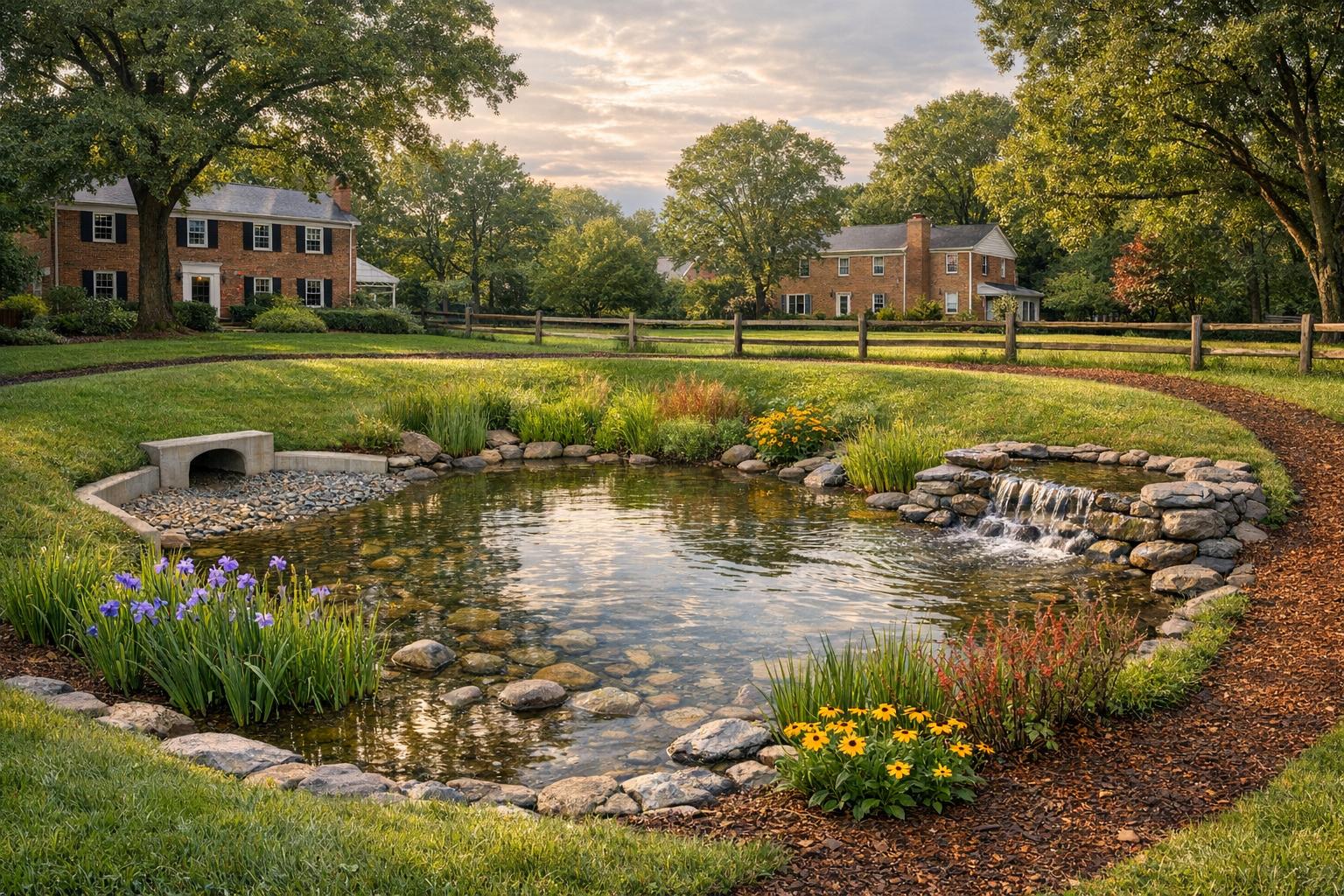
Retention basins are more than just stormwater solutions – they help control flooding, improve water quality, and recharge groundwater. For homeowners in Maryland, where heavy rainfall and clay-heavy soils create unique challenges, designing an effective retention basin requires careful planning. Here’s what you need to know:
- Purpose: Retention basins collect stormwater, reduce runoff speed, and filter pollutants like phosphorus and nitrogen.
- Key Design Goals: Focus on water detention, sediment control, nutrient reduction, safety, and aesthetics.
- Site Assessment: Evaluate soil, slopes, groundwater depth, and nearby structures to determine the best placement.
- Sizing: Aim to handle the first 1–1.5 inches of rainfall from impervious surfaces.
- Vegetation: Use native plants suited for specific moisture zones to stabilize slopes and filter water.
- Hydraulic Features: Include stable inlets, primary outlets, and emergency spillways to manage water flow and prevent erosion.
- Maintenance: Regularly inspect inlets, outlets, and vegetation to ensure long-term performance.
A well-designed retention basin not only manages stormwater but also integrates into your yard’s layout, improving drainage and usability while supporting Chesapeake Bay restoration efforts.
Best Practice for Detention Basin Optimization
sbb-itb-843f8be
Site Assessment and Design Basics
Before jumping into grading or planting, taking the time to assess your site can save you from costly mistakes. Maryland’s challenging mix of clay-heavy soils, uneven terrain, and intense summer storms makes this step especially important. Without careful planning, you could end up with retention basins that flood too long, drain poorly, or are simply placed in the wrong spot.
How to Assess Site Conditions
Take a walk around your property during or right after a heavy rainstorm. Look for areas where water pools, flows rapidly, or remains soggy for extended periods. These natural low points are ideal for retention basins since they already collect runoff, making it easier to work with the land instead of against it.
Beyond just observing, you’ll need to evaluate a few critical factors:
- Topography: Use a level tool to measure slopes (e.g., a 1-foot drop over 20 feet equals a 5% slope). Map out natural flow paths to determine the best placement for the basin.
- Soil and Infiltration: Perform a simple percolation test by digging a 12-inch by 6-inch hole and measuring how fast water drains. If it infiltrates at 0.5 inches per hour or faster, the soil supports natural drainage. Slower rates, which are common in Maryland’s developed areas, may require an underdrain or outlet structure to prevent prolonged standing water.
- Groundwater Depth: Check the seasonal high water table by probing the soil after wet weather. A shallow water table can cause basement seepage and limit how deep you can build the basin.
- Nearby Structures and Utilities: Maryland regulations typically require a 10–20-foot setback between a basin and building foundations. Be sure to locate septic systems, underground utilities, property lines, and HOA easements before finalizing the basin’s placement.
These observations will directly guide the basin’s size and shape.
Sizing and Shaping the Basin
Once you’ve assessed the site, it’s time to size the basin so it can handle the runoff from its drainage area. Start by estimating the total area contributing to the basin, including roofs, driveways, patios, and lawns. Since impervious surfaces like concrete produce far more runoff than lawns or gardens, give them more weight in your calculations.
A common goal for residential designs is to capture the first 1–1.5 inches of rainfall over impervious areas. This "first flush" often carries the highest levels of pollutants. For example, if your drainage area generates 300 cubic feet of runoff during a storm, a basin with a 1-foot ponding depth would need a surface area of about 300 square feet. To account for sediment buildup and vegetation growth, increase the capacity by 10–25%.
When shaping the basin, elongated designs with a 2:1 to 3:1 length-to-width ratio are ideal. This layout encourages water to travel farther, improving sediment settling and pollutant filtering before reaching the outlet. For a more natural look, consider curved outlines instead of rigid rectangles. Keep side slopes gentle – 3H:1V or less – for safety, especially in areas frequented by kids or pets. Additionally, grading the basin bottom with a slight 1–2% slope toward the outlet helps prevent stagnant water pockets.
Once the size and shape are set, the next step is integrating hydraulic controls and structural features.
Hydraulic and Structural Design Basics
A functional retention basin relies on three key components: a stable inlet, a primary outlet, and an emergency spillway.
- Inlet: Stormwater entering the basin can carry enough force to erode the bottom. To prevent this, install energy dissipators like riprap, plunge pools, or level spreaders. Using multiple inlets can also help distribute the flow evenly and reduce localized erosion.
- Primary Outlet: The primary outlet manages how water exits the basin under normal conditions. Common designs include orifices, weirs, or riser pipes, which should be sized to meet Maryland’s stormwater management standards. Adding a trash rack or debris screen helps prevent clogging from leaves or sediment. Given Maryland’s clay-heavy soils, an underdrain system – perforated pipes in gravel wrapped with filter fabric – is often necessary to ensure the basin drains in a reasonable timeframe.
- Emergency Spillway: This protects the basin during storms that exceed its design capacity. Positioned above the normal water level but below the embankment crest, the spillway should be lined with erosion-resistant materials like turf reinforcement mat or riprap. It must direct overflow to a safe area, away from structures or vulnerable spots in the yard. The freeboard – the vertical space between the high-water level and the top of the embankment – should be 1 to 3 feet, depending on the basin’s size and potential risks.
Vegetation Strategies for Retention Basins
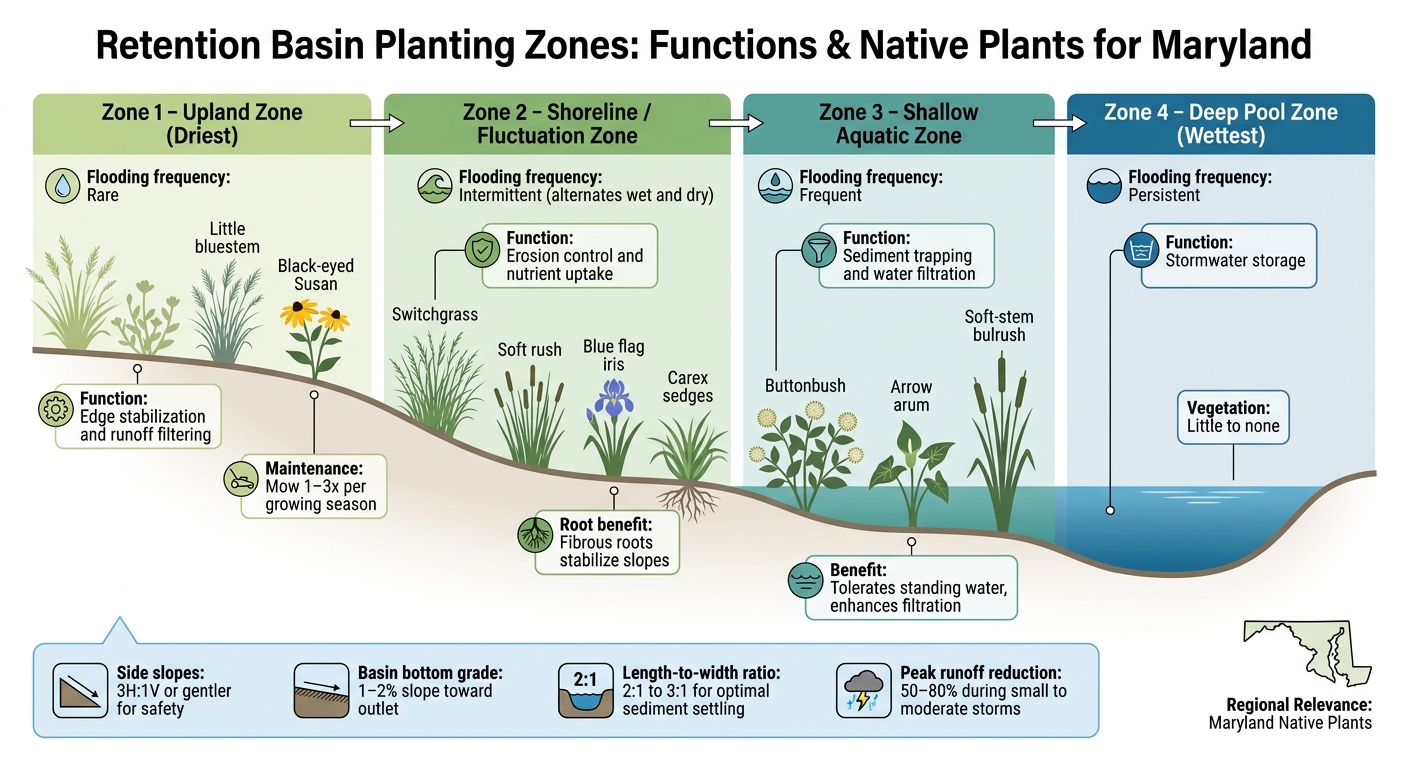
Retention Basin Planting Zones: Functions & Native Plants for Maryland
Once the hydraulic structure of a retention basin is in place, vegetation transforms it into a stable, functional, and visually appealing feature. Retention basins are not uniform environments – they consist of distinct zones, each with unique moisture conditions and flooding frequencies. These differences guide the selection of plants that can thrive in specific areas.
Planting Zones and Their Functions
Retention basins can be divided into concentric zones based on moisture levels. Here’s how each zone functions:
- Upland Zone: Found at the top of the basin’s bank, this area experiences minimal flooding. It acts as a buffer, filtering runoff before it reaches wetter zones.
- Shoreline or Fluctuation Zone: Alternates between wet and dry conditions, making it vital for erosion control and nutrient absorption.
- Shallow Aquatic Zone: Often inundated, this zone supports wetland plants that slow water flow and trap sediment.
- Deep Pool Zone: Retains water the longest and typically has little or no vegetation, serving as a stormwater storage area.
| Zone | Flooding | Function |
|---|---|---|
| Upland | Rare | Edge stabilization and runoff filtering |
| Shoreline/Bank | Intermittent | Erosion control and nutrient uptake |
| Shallow Aquatic | Frequent | Sediment trapping and water filtration |
| Deep Pool | Persistent | Stormwater storage |
Selecting plants suited to each zone is essential. Misplaced vegetation may not survive repeated flooding, leading to bare soil, increased erosion, and higher maintenance costs.
Choosing the Right Plants for Maryland
In Maryland, native plants are the best choice for retention basins, as they can handle rapid shifts from dry to flooded conditions, especially during storm seasons.
- Shoreline and Fluctuation Zone: Native species like switchgrass, soft rush, blue flag iris, and Carex sedges thrive here. Their fibrous roots stabilize slopes and manage moisture fluctuations effectively.
- Shallow Aquatic Zone: Plants such as buttonbush, arrow arum, and soft-stem bulrush tolerate standing water while enhancing filtration and sediment control.
- Upland Zone: Drier areas along the edges benefit from plants like little bluestem and black-eyed Susan, which require minimal upkeep and add seasonal color.
"Native plants, grasses, and water-tolerant shrubs are ideal for swales. These plants absorb water, filter pollutants, and provide habitat for local wildlife." – Pro Landscapes MD
Balancing Aesthetics with Function
Careful plant selection supports both water management and visual appeal, ensuring the basin meets its design goals. A well-planted basin combines functionality with beauty by using principles of zone-based planting, repetition, and layering.
- Taller grasses and shrubs: Place these along the edges for structure and screening.
- Medium-height perennials: Use these in transitional zones to add seasonal color.
- Moisture-tolerant plants: Focus these in shallow wet areas for erosion control.
Arranging plants in cohesive drifts rather than scattering them randomly creates a polished look while providing effective coverage. This layered approach ensures year-round interest, with different textures and colors emerging as the seasons change.
Maintenance and Long-Term Performance
Designing for Safety and Access
Retention basins should be designed with safety and ease of maintenance in mind. For areas requiring regular mowing or inspections, side slopes should not exceed a 3H:1V ratio. In locations where children or pets are often present, gentler slopes of 4H:1V are preferable – they’re easier to navigate when wet and reduce the risk of accidents. Adding a safety bench – a flat shelf between 5 and 15 feet wide with a slope no steeper than 10:1 – around the permanent pool provides stable footing for maintenance activities. Additionally, ensure at least one access route is 10–15 feet wide, reinforced with durable materials, and graded at no more than 10%. This allows maintenance equipment to move safely and efficiently.
Design Features That Simplify Maintenance
Incorporating specific features into the basin’s design can make ongoing maintenance much easier. For instance, a sediment forebay sized to approximately 10% of the basin’s permanent volume at the primary inlet can capture coarse debris, allowing for targeted cleanouts. Stone-lined forebays or compact riprap pools are effective options for this purpose.
Debris screens and trash racks are essential at outlets to prevent blockages from sticks, leaves, and litter. For residential basins, bar spacing of 1 to 2 inches is generally sufficient. Sloping the screen surface, rather than installing it vertically, helps debris slide off as water levels drop, reducing the need for frequent manual cleaning. Installing these screens on stable, dry inspection pads ensures safe and straightforward access for clearing.
These thoughtful design elements contribute to easier long-term maintenance and improved functionality over time.
Long-Term Care and Basin Rehabilitation
Effective long-term care builds on smart design choices. Vegetation management and sediment removal are key to maintaining basin performance. To minimize upkeep, consider vegetation carefully during the planting phase. Turf or low groundcovers on upper slopes typically require mowing only one to three times per growing season. In contrast, wetter lower zones planted with native grasses or sedges may only need cutting once or twice annually, ideally outside of peak nesting periods. Shrubs and small trees near inlets, outlets, and embankments should be selectively thinned to prevent roots from damaging structures and to maintain clear access paths.
Sediment removal should also be planned as part of the basin’s lifecycle, with cleanouts scheduled every 5–20 years depending on the size of the watershed and upstream land use. Locating the forebay near a driveway or street, ensuring access routes can handle heavy equipment, and providing enough space for a skid-steer to operate can make this process much simpler. For older basins that are no longer managing runoff effectively, a rehabilitation assessment can help determine whether regrading, replanting, or outlet repairs are necessary to restore their functionality.
Fitting Retention Basins into Maryland Landscapes
Once maintenance and performance are taken care of, the next step is incorporating the retention basin into your landscape design in a way that enhances both the yard’s functionality and appearance.
Coordinating Basins with Hardscape and Yard Layouts
A retention basin shouldn’t feel out of place in your yard. Think of it as a landscape "room" – a purposeful area that ties in with patios, walkways, and lawn spaces. It can be both practical and visually appealing.
The best spot for your basin is typically the natural low point of your yard, particularly near downspout discharges or where driveway runoff collects. Position it so it connects with your main outdoor spaces, making it visible from patio doors or decks. During Maryland’s colder months, a basin planted with red-twig dogwood, ornamental grasses, or native shrubs can transform into a striking focal point rather than a neglected corner of the yard.
Consistency in materials is key. For instance, if your basin’s edges include stone or boulders, choose materials that complement your patio or home exterior. A flagstone-edged basin that mirrors a nearby flagstone walkway creates a sense of unity. Adding a low seat wall – built with the same pavers as your patio – can serve as both a safety boundary on slopes and extra seating. To enhance usability, curved pathways along the basin’s edge add charm and make maintenance easier.
Blending these hardscape elements ensures your basin looks intentional while improving drainage across the property.
Supporting Drainage and Yard Usability
A well-integrated basin doesn’t just manage water – it can also reclaim parts of your yard that were once too wet or muddy to use.
Dry riverbeds are a great way to guide runoff from driveways or downspouts toward the basin. They help prevent erosion on slopes while adding a natural design element. For areas with Maryland’s heavy clay soils, French drains – gravel-filled trenches with perforated pipes – can be a game-changer. They’re especially useful for keeping side yards or spaces near foundations dry, channeling water directly into the basin. Broad, shallow surface swales, planted with native groundcovers, can direct water flow across the yard without looking like a drainage system.
"Berms and swales often work together to control water flow. Berms divert water toward swales, where it can be absorbed or redirected to a safe drainage area." – Pro Landscapes MD [1]
By capturing runoff from multiple sources – like your roof, driveway, and yard – the basin allows the rest of your property to be regraded for better drainage. Higher ground stays drier, making it more usable for lawns, play areas, or gardens. Research on bioretention systems shows that these types of integrated stormwater features can reduce peak runoff flows by 50–80% during small to moderate storms when designed to handle runoff from impervious surfaces.
How Pro Landscapes MD Can Help

For a seamless and effective basin project, professional expertise can make all the difference.
Pro Landscapes MD offers a comprehensive approach to basin integration throughout central Maryland, including Howard, Montgomery, Frederick, and Baltimore counties. Their services cover everything from grading and French drain installation to creating dry riverbeds, stormwater management systems, and hardscape additions like retaining walls, seat walls, and paver walkways. Instead of piecing these elements together over time, they design them as part of a unified plan.
As Pro Landscapes MD puts it, "A rain garden can handle that [heavy rains], and it looks great doing it." [3] This philosophy of combining functionality with beauty sets a high standard for any retention basin project.
Conclusion
A retention basin does more than just collect water – it safeguards your home’s foundation, minimizes erosion, filters runoff before it reaches local waterways, and can even enhance the overall look and functionality of your yard. But achieving these benefits takes more than simply digging a hole. It requires a detailed site assessment, proper sizing, selecting plants suited to varying moisture levels, and committing to a realistic maintenance routine.
When integrated thoughtfully with patios, walkways, and lawn areas, the basin becomes a valuable feature rather than a burden. For homeowners in Maryland’s Chesapeake Bay watershed, a well-planned basin also plays a critical role in reducing pollutants in runoff before it reaches nearby streams, benefiting the broader environment. This kind of planning ensures the basin performs well for years to come.
Maintenance is key. Regular inspections of inlets and outlets after heavy rain, controlling invasive plants, and addressing erosion early are essential to keeping the basin in good shape. Neglecting these tasks can lead to standing water, blocked outlets, and damaged slopes – issues that are often more expensive to fix than to prevent.
As a Pro Landscapes MD expert explains:
"Drainage problems are complex and require a custom approach for each project. These issues can cause long-term damage to your property if not handled correctly, which is why hiring an experienced team is critical." – Pro Landscapes MD [2]
To move forward, revisit your site assessment to pinpoint key water collection areas, then consult a professional with expertise in both drainage and landscape design. Companies like Pro Landscapes MD serve central Maryland homeowners, offering services like grading, stormwater management, planting, and hardscaping to ensure your retention basin is built right from the start.
FAQs
Do I need a retention basin or a rain garden?
When deciding between a retention basin and a rain garden, it all comes down to your property’s specific drainage needs and scale. Retention basins are designed to handle larger volumes of stormwater, helping with infiltration and reducing pollutants. On the other hand, rain gardens are a great way to manage runoff while also boosting the visual appeal of your space and supporting local biodiversity. Since every property has unique drainage challenges, Pro Landscapes MD provides personalized assessments to help you find the right water management solution.
How long should water stay in my basin after a storm?
Bioretention basins are built to temporarily collect stormwater, giving it time to naturally filter into the ground while removing pollutants. Vegetation plays a key role in this process, helping absorb water and aid in treatment. However, if water lingers too long in the basin, it might point to a drainage problem, as these systems are designed to handle runoff efficiently. For expert evaluation and upkeep, Pro Landscapes MD provides specialized stormwater management and drainage services to ensure your basin operates as it should.
Will a retention basin cause mosquitoes or standing water?
Properly designed retention basins are built to temporarily hold stormwater, giving it time to naturally soak into the ground. This prevents the formation of permanent standing water. While standing water can sometimes attract mosquitoes, a well-thought-out system incorporates vegetation and soil to keep water from becoming stagnant – conditions where mosquitoes and other pests typically thrive. Pro Landscapes MD specializes in drainage and stormwater management solutions, helping safeguard your property from issues like flooding and pest problems caused by improper water accumulation.
Chat with Us