









- bhavya gada
- No Comments
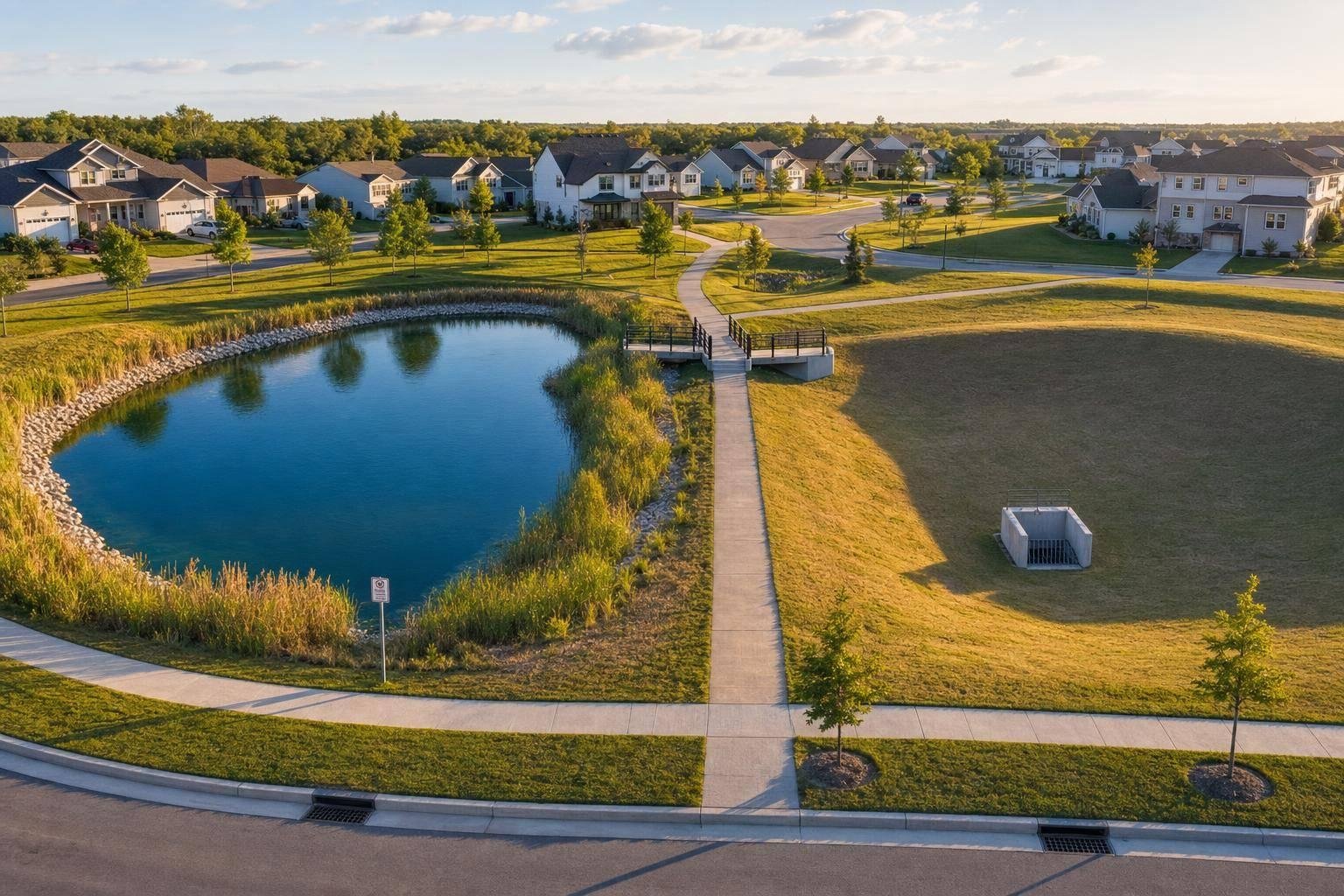
If I live near a stormwater basin, the main difference is simple: retention basins keep water all the time, while detention basins are usually dry and only hold water after rain. That one design choice affects safety, yard drainage, mosquito risk, upkeep, and how the space looks.
Here’s the short version:
- Retention basins
- Keep a permanent pool of water
- Often do more to settle sediment and clean runoff
- Can leave nearby ground wet
- Bring more concern about children, pets, and mosquitoes
- Need steady mowing, shoreline care, and sediment cleanup
- Detention basins
- Stay dry between storms
- Hold water for a short time, often 24 to 72 hours
- Help lower peak runoff on streets, sidewalks, and driveways
- Usually give neighborhoods more dry open space
- Can still cause puddles, odors, and mosquitoes if the outlet clogs
What I’d watch most is not just basin type, but maintenance and grading. A retention basin with poor grading can leave yards soggy. A detention basin with a blocked outlet can hold water too long and lead to mud, smell, icing, and bugs.
Bottom line: if a neighborhood needs more help with water treatment, retention may fit better. If the main problem is short-term storm surge and street flooding, detention often makes more sense.
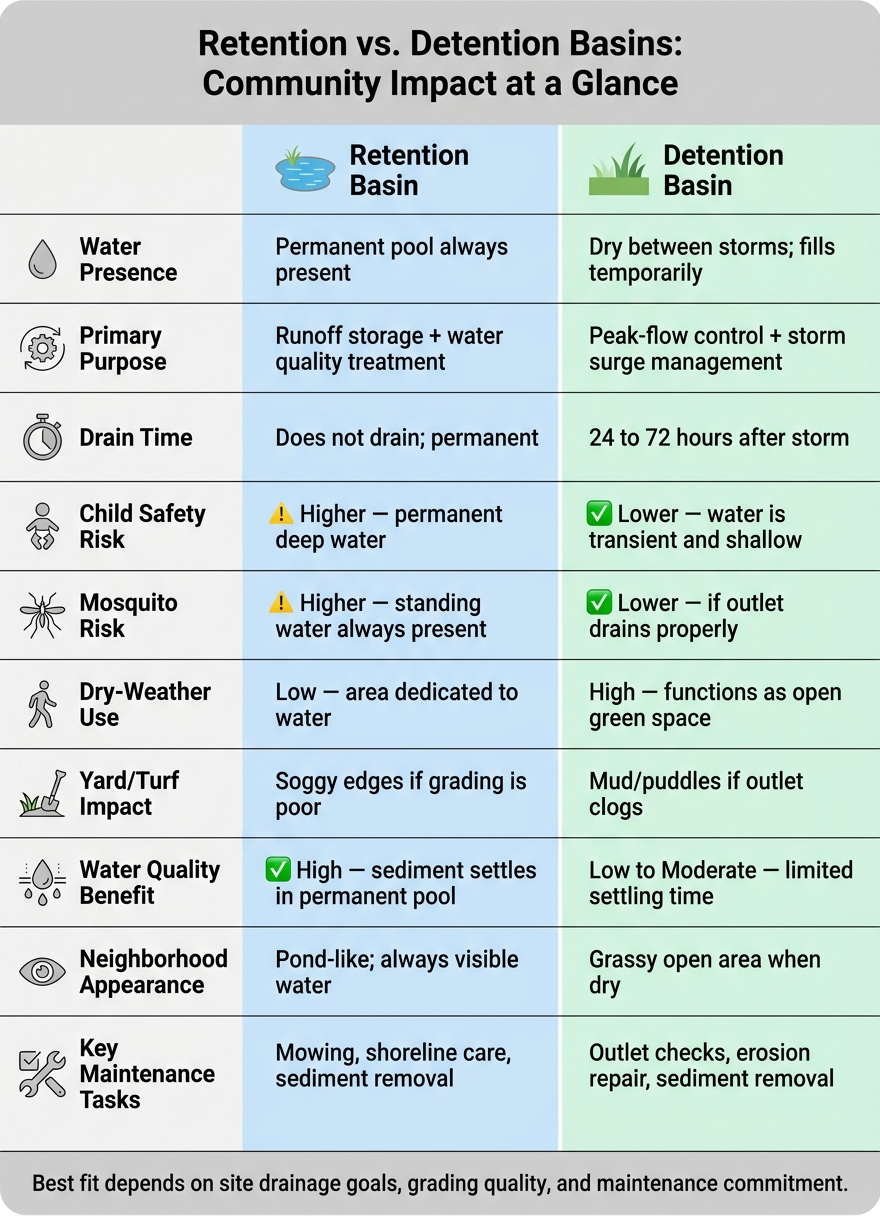
Retention vs Detention Basins: Community Impact Comparison
Detention Ponds vs. Retention Ponds: Is There A Difference?
sbb-itb-843f8be
Quick Comparison
| Item | Retention basin | Detention basin |
|---|---|---|
| Water in basin | Permanent | Temporary |
| Main job | Hold runoff and improve water treatment | Hold storm surge and lower peak flow |
| Dry-weather use | Low | Higher |
| Safety concern | постоян water risk | Fast filling during storms |
| Mosquito risk | Higher | Lower if drainage works |
| Yard impact | More chance of soggy edges | More chance of mud if outlet fails |
| Upkeep focus | Vegetation, shoreline, sediment | Outlet checks, erosion, sediment |
| Look in neighborhood | Pond-like | Open grassy area when dry |
In this review, I’d weigh runoff control, standing water, child safety, lot use, appearance, and effects on nearby yards, sidewalks, and streets before deciding which basin works best for a Maryland community.
Retention basins: benefits and tradeoffs for nearby residents
A well-kept retention basin can feel like part of the neighborhood. But when maintenance slips, it can become a daily headache fast. For nearby homeowners, the biggest differences tend to show up in how the space feels day to day, how safe it is, and how much upkeep it gets.
Runoff control, water quality, and downstream effects
Retention basins are stormwater basins that collect runoff and then release or absorb it slowly. That slower pace helps cut erosion, limit water pollution, and protect nearby streets and yards from fast-moving runoff.
Put simply: they help take the punch out of a storm. Instead of water rushing downhill all at once, the basin holds it back and reduces stress on the area around it.
Standing water, child safety, and nearby yard conditions
The permanent pool is the main downside. Wet edges and soggy soil can stick around after storms, especially in backyards that border the basin. That can make parts of a yard less usable and messier than homeowners expect.
Standing water also brings mosquito concerns. And for families near homes, sidewalks, or shared green space, child safety is a big issue. Water may look calm from a distance, but slippery banks and soft ground can still create problems.
Maintenance, appearance, and HOA responsibility
Retention basins need steady maintenance. That includes mowing, vegetation management, sediment removal, and shoreline upkeep. If that work falls behind, odors, overgrowth, and a neglected look can become part of daily life for nearby residents.
For HOAs and community groups, this is a repeat cost. And it does more than affect the budget. It shapes how the area looks and how neighbors feel about living next to it.
Those tradeoffs stand out even more when retention basins are compared directly with detention basins.
Detention basins: benefits and tradeoffs for nearby residents
Compared with retention basins, detention basins swap permanent water for short-term storm storage. They stay dry between storms and usually drain within 24 to 72 hours through a controlled outlet. That changes what nearby homeowners deal with day to day. In dry weather, the basin often blends into the surrounding landscape instead of looking like a pond.
Peak-flow control and flood reduction on streets and driveways
When heavy rain hits, runoff can move fast. If there’s nowhere for that water to go, it backs up at curb inlets, spills onto sidewalks, and floods low spots like driveways and yards. A detention basin holds that initial surge and lets it out slowly through a small outlet opening. The goal is simple: cut down peak flow before it reaches streets, driveway entrances, and sidewalk crossings.
For people living nearby, that can mean fewer flooded driveways after a hard rain and less water running across sidewalks.
Dry-weather use, short-term ponding, and safety
Between storms, a detention basin may look like ordinary open green space when it’s dry. But it’s still built for stormwater control, not day-to-day play or casual recreation.
That dry look can fool people. The main risk shows up during and right after storms, when the basin can fill fast. Keep children away from the basin and outlet structures until the area is fully dry and stable.
Maintenance, drainage failure, and nuisance conditions
This setup only works if the outlet stays clear. When drainage works as planned, a detention basin stays mostly out of sight. When it doesn’t, it can turn into a standing-water issue. The most common trouble spot is a clogged outlet, often blocked by leaves, grass clippings, or other debris. When that happens, water sits longer than it should.
Drainage failure can lead to:
- Muddy turf
- Puddles that stick around
- Mosquitoes
- Odors
- Less storage space from sediment buildup
HOAs and community managers should treat routine outlet checks and erosion inspections at inflow points as core maintenance work.
Retention vs. detention: side-by-side community review
Put them next to each other, and the main difference comes down to everyday neighborhood impact. It’s less about engineering jargon and more about what people see, walk around, and deal with after it rains.
Runoff control, standing water, and water quality
Both basin types cut peak flow during storms, but they don’t do it the same way. Retention basins do more for water quality. Detention basins are built mainly to reduce peak flow.
That difference matters. Fast runoff can carry pollutants and increase the risk of property damage.
| Feature | Retention basin | Detention basin |
|---|---|---|
| Peak flow control | High; uses permanent storage and controlled release – also reduces runoff volume through evaporation and infiltration | High; primary design purpose with mostly temporary storage |
| Water quality benefit | High; sediment settles in the permanent pool | Low to moderate; limited settling time |
| Visible standing water | Permanent; always present | Temporary; only during and after storms |
| Downstream erosion | Lower; consistent, controlled release rates | Moderate; depends on outlet design |
For most residents, water control feels most important when it changes whether an area seems safe, dry, and easy to use.
Child safety, lot use, and neighborhood appearance
The permanent water in a retention basin is the main safety issue. It’s always there, and it can be deep enough to pose a danger. A detention basin is usually dry, but during storms it can fill fast.
There’s also a plain day-to-day tradeoff: detention basins keep dry open space available, while retention basins set that land aside for permanent water storage.
| Issue | Retention basin | Detention basin |
|---|---|---|
| Child safety | Higher risk; permanent deep water | Lower risk; water is transient and shallow |
| Lot-use flexibility | Low; area is dedicated to water | High; can serve as open space when dry |
| Visual fit | Looks like a pond | Acts as open space when dry |
In practice, that means one option reads more like a pond, while the other often feels more like a grassy common area between storms.
Effects on nearby yards, sidewalks, and streets
The last check is what happens around the basin, especially where grading and runoff meet sidewalks, streets, and yards.
The basin type shapes what neighbors notice, but it’s not the whole story. Grading, overflow routes, and maintenance can matter just as much. A well-designed retention basin with poor grading can leave nearby yards soggy. A detention basin that isn’t maintained well can lead to standing water and winter icing near sidewalks.
| Area affected | Retention basin | Detention basin | What residents may notice |
|---|---|---|---|
| Nearby turf | May stay soggy near the water line if grading is poor | Generally dry between rain events | Soggy turf near retention edges |
| Basement/foundation | Poor grading can lead to seepage | Poor drainage can also lead to seepage | Grading matters as much as basin type |
| Sidewalks/streets | Low icing risk if overflow routes are clear | Higher icing risk near poorly maintained outlets | Winter icing near detention outlets |
| Driveways | Reduces sheet flow crossing drives | Captures runoff that would otherwise flood low-lying drives | Fewer washouts and less gravel loss |
That’s often what people care about most: whether grass stays wet, whether sidewalks ice up, and whether runoff ends up where it shouldn’t.
Choosing and maintaining the right basin for your community
Maryland site factors that shape basin choice
After looking at day-to-day impacts, the next step is simple: pick the basin that matches the site and the neighborhood’s main drainage issue.
In Maryland, site requirements often lean toward stormwater systems that slow down runoff, hold it, and help filter it before it moves downstream. If the main issue is peak-flow control, detention is usually the better fit. If water-quality treatment and infiltration matter more, retention is often the stronger option.
That distinction matters in practice. A basin can look fine on paper but still miss the mark if it doesn’t match what the property and surrounding area need most.
How Pro Landscapes MD can support repairs around basin edges

Once you’ve chosen the basin type, the work around it starts to matter just as much. The surrounding slope, grading, and drainage details play a big part in whether the basin keeps working the way it should.
Pro Landscapes MD helps address grading, drainage, and erosion problems around basin edges across central Maryland.
Their services include:
- Drainage installation
- Grading
- Land leveling
- Yard repair
These are practical fixes for soggy turf, poor grading, and erosion that often show up around basin perimeters. Routine work like outlet checks, erosion repair, sediment removal, and grading correction can keep basin-edge problems from turning into headaches for nearby residents.
A stormwater basin works best when function, upkeep, and appearance are handled together. If one of those slips, the basin can stop helping the neighborhood and start causing complaints.
Conclusion: key differences communities should weigh
The final choice isn’t just about basin type. It’s also about how dependably the basin will be maintained.
Retention basins tend to offer stronger water-quality gains because they hold and absorb runoff. But they also need more attention when it comes to safety and appearance. Detention basins do a better job managing peak flow and cutting down high-velocity runoff that can damage streets and driveways. Even so, they still need steady maintenance to prevent nuisance conditions.
Whichever option fits the site, long-term upkeep helps protect basin performance and neighborhood acceptance.
FAQs
Which basin is safer near homes?
Detention basins are often a safer fit near homes because they stay dry between storms and only hold runoff for a short time during heavy rain. In plain English: there’s less standing water sitting near kids, pets, and nearby property.
Retention basins keep water year-round, so standing water is there far more often. Detention basins can also lower peak runoff and help limit flooding around nearby yards and streets.
How can I tell if a basin is not draining right?
A basin may not be draining as it should if water sticks around longer than expected after storms, the inlet or outlet is blocked by debris, or you notice erosion or sediment buildup on the basin floor.
If standing water lasts an unusually long time or the outflow seems reduced after rain, the basin likely has a blockage or another performance issue.
Who is usually responsible for basin maintenance?
Basin maintenance is usually handled by property owners or the staff in charge of the stormwater system. In many cases, that work happens under HOA or program oversight. When the job goes beyond basic upkeep, professionals usually step in.
Routine upkeep often includes:
- inspections
- debris and vegetation removal
- clearing inlets and outlets
Bigger jobs, like structural repairs, sediment removal, or bank stabilization, usually call for professional help.
Chat with Us