









- bhavya gada
- No Comments
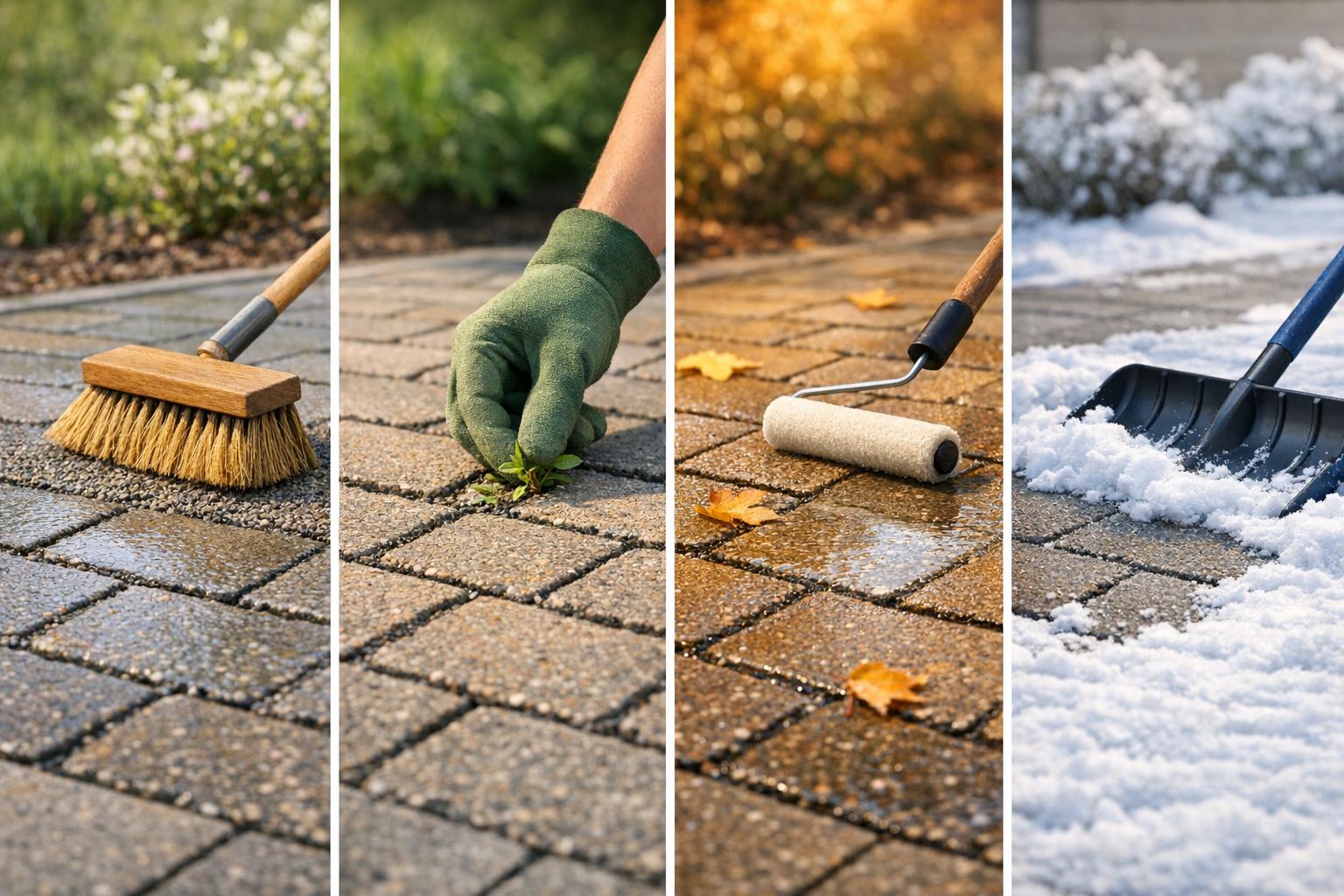
Permeable pavers are a smart choice for managing rainwater and reducing water pooling, but they require regular upkeep to maintain their performance. Without proper care, debris and sediment can clog the system, leading to water pooling, mosquito breeding, and drainage problems. Here’s a quick seasonal overview to keep your pavers in top condition:
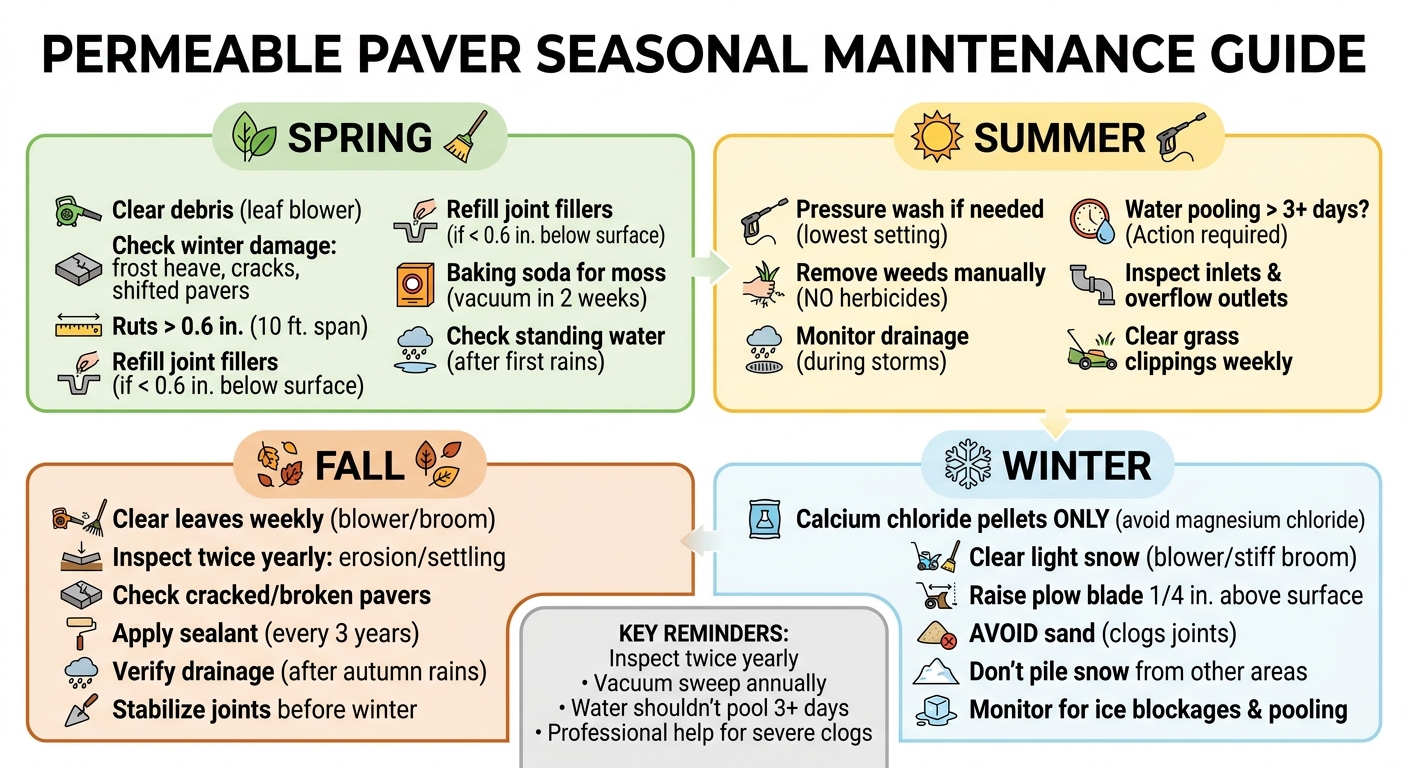
- Spring: Clear debris, check for winter damage, and refill joint fillers.
- Summer: Pressure wash if needed, remove weeds, and monitor drainage.
- Fall: Remove leaves, inspect for erosion, and apply a sealant for winter.
- Winter: Use safe de-icing products, avoid sand, and clear snow gently.
Routine cleaning and inspections twice a year are crucial to avoid clogs and ensure proper drainage. For severe issues, professional maintenance services can help restore functionality. Regular care not only protects your investment but also ensures your paver system continues to perform effectively year-round.
Seasonal Permeable Paver Maintenance Schedule: Spring, Summer, Fall, Winter Care Guide
Spring Maintenance for Permeable Pavers
Clearing Debris and Organic Matter
Winter tends to leave behind a mess – leaves, sediment, and other debris often settle into the joints of permeable pavers. If you don’t clear this buildup, it can clog the system and prevent water from draining properly.
Start by using a leaf blower to clear away loose debris from the surface. This quick step takes care of most visible messes. For a more thorough clean, use a vacuum sweeper at least once a year to remove finer particles lodged in the joints. After the first spring rains, check for standing water. If you notice water pooling for more than three days, it’s a sign that your joints are clogged and need immediate attention.
If moss has started growing in the joints – something that often happens in shady areas – sprinkle baking soda over the affected areas and vacuum it up after two weeks [1]. Avoid using chemical herbicides, as they can contaminate groundwater and defeat the purpose of having an environmentally friendly permeable system. Instead, pull weeds out by hand.
Once the surface is clean, take a closer look to assess any winter damage.
Inspecting for Winter Damage
The freeze-thaw cycles of winter can be tough on paver patios. Carefully check for frost heave, cracks, or pavers that have shifted out of place [3]. Pay attention to areas with ruts or sinking deeper than 0.6 inches over a 10-foot span, as well as vertical offsets of 0.2 inches or more between neighboring pavers [3].
If you find displaced pavers, reset them by hand. Ensure the bedding layer beneath them is in good condition before putting them back in place [3]. Cracked or broken pavers should be replaced entirely, as they can compromise both drainage and safety.
Replenishing Joint Fillers
Winter weather and cleaning efforts often wash away the aggregate in the joints. If the filler drops more than 0.6 inches below the surface of the pavers, refill it right away to maintain structural stability and ensure proper drainage [3].
Opt for specialized permeable jointing materials like SRW WetLok or Xtreme Easy resin-based compounds. These are designed to cure correctly even in wet spring conditions, as long as the temperature is above 37.4°F [4][5]. Make sure your joints are at least 3/16 inches wide to allow the material to penetrate properly [4][5]. Before adding new filler, vacuum or gently pressure wash the joints to clear out any lingering debris or sediment from winter [1].
sbb-itb-843f8be
Summer Maintenance for Permeable Pavers
Pressure Washing for Deep Cleaning
Pressure washing should be your go-to option only when regular sweeping or vacuuming doesn’t fully remove sediment or restore drainage. Use the lowest pressure setting to avoid disturbing joint fillers, damaging paver edges, or affecting filtration. Always check the manufacturer’s cleaning guidelines, as tolerances for water pressure can vary between permeable systems. Once you’ve tackled deep cleaning, shift your attention to managing weeds and moss to keep drainage channels clear.
Weed and Moss Control
Summer heat can lead to weeds sprouting up between pavers. Remove them manually to prevent their roots from trapping sediment in the joints. Steer clear of chemical herbicides, as they could seep into groundwater and undermine the eco-friendly purpose of your permeable pavers. For moss that thrives in humid or shaded areas, reapply baking soda as needed to keep it in check. Regular sweeping is also key – clearing away grass clippings and organic debris helps stop seeds from taking root in the joints [1].
Monitoring Drainage Performance
After cleaning and handling vegetation, keep an eye on how well your pavers drain during summer storms. Walk around during or right after rainfall to check if water is soaking through the joints or pooling on the surface. If you see water beading up or running off the edges, it might signal clogged joints filled with fine particles. Don’t forget to inspect nearby inlets and overflow outlets, like catch basins or curb cuts, to ensure they’re free of debris that could block water flow. If water remains pooled for over three days, it could attract mosquitoes. To test drainage, pour a bucket of water over a section of pavers and observe if it absorbs quickly – if not, a thorough vacuum cleaning might be necessary [1][3][6].
Fall Maintenance for Permeable Pavers
Clearing Fallen Leaves
Autumn means lots of falling leaves, which can quickly clog permeable pavers if not dealt with promptly. Using a leaf blower or a stiff-bristle broom is the best way to clear leaves regularly. Removing them quickly prevents buildup in the joints, which can lead to clogging. If leaves are left too long, they may also leave tough stains that are hard to clean later. To stay ahead, sweep or blow debris at least once a week during heavy leaf-fall periods, especially after strong winds or rain. Also, keep an eye on nearby areas with exposed soil, as they can add extra sediment to your pavers. After cleaning, take a moment to check for signs of erosion or settling.
Inspecting for Erosion or Settling
Fall is the perfect time to check your pavers for any damage caused by summer storms or heavy use. Regular inspections help maintain both the structure and drainage of your paver system. Professional Engineer Lincoln Paiva advises inspecting permeable pavers twice a year, emphasizing that this ensures "the paver points don’t get clogged with sediment that could get trapped between the joints" [2]. Look for cracked or broken pavers, uneven surfaces, or areas where water pools instead of draining properly. After heavy autumn rains, persistent water pooling often signals clogged joints or settling issues. If you notice clogged joints, you can usually fix just the affected area without replacing the entire system.
Sealing Pavers for Winter Protection
Sealing your pavers before winter is a smart way to strengthen the joints and protect against stains. Pete Baloglou from Techo-Bloc explains:
"Protectants and sealer products can help stabilize the joints of the paver system and adds to the adhesion of joints" [2].
Applying a sealant every three years can help prevent damage from freeze-thaw cycles, reduce deep staining from organic debris, and minimize weed growth between the pavers. Before sealing, make sure the joints are clear of debris – avoid using a power washer, as it can damage the surface and push sediment deeper into the joints. Ensure the pavers are clean and completely dry before applying the sealant. It’s also a good idea to check drainage by observing how water flows during a rainstorm.
These fall maintenance steps will keep your pavers in great shape and ready for winter conditions.
Winter Maintenance for Permeable Pavers
Using Safe De-Icing Products
Winter’s ice and snow can be challenging, but permeable pavers actually need less de-icer compared to traditional pavement. The City of Annapolis Department of Public Works explains:
"Permeable pavements require less deicing material than conventional pavement since melted water does not accumulate and will not refreeze on the surface." [1]
Thanks to their design, water drains through the joints, reducing the risk of ice buildup. However, it’s important to be selective with de-icing products. Avoid chemicals like magnesium chloride, calcium magnesium acetate, or potassium acetate, as they can harm the paver system and potentially contaminate groundwater. Instead, opt for calcium chloride pellets. These work quickly and are safe for permeable surfaces. The porous nature of these pavers also helps minimize the dangerous refreeze cycle that often leads to black ice on traditional surfaces.
Once de-icing is handled, the next step is careful snow removal.
Avoiding Damage from Snow Removal
When it comes to snow removal, permeable pavers need a gentler touch compared to conventional driveways. For light snow, a leaf blower or stiff-bristle broom can easily clear the surface without causing damage. For heavier snowfalls that require plowing, attach a blade shoe to your plow to raise the blade about 1/4 inch above the paver surface. This precaution reduces the risk of dislodging pavers or harming the joint fillers [3].
Avoid using sand for traction – it clogs the joints and disrupts drainage. Similarly, power washers are a no-go; they can erode the surface and push sediment deeper into the joints. Another key tip: don’t pile snow from other areas onto permeable pavers. As the snow melts, it can deposit debris that clogs the drainage system.
Monitoring for Ice Blockages
After clearing snow, it’s a good idea to inspect the pavers for any drainage issues. Check for water pooling on the surface after each storm. If you spot pooling, it could mean the joints are clogged with debris, sediment, or ice. This can become a hazard if the water refreezes. Walk the area and address any blocked joints promptly – small fixes can often solve the problem. Once winter is over, a thorough vacuum sweeping in the spring will help clear out sediment and keep the drainage system functioning properly for the seasons ahead.
Permeable Interlocking Concrete Pavers – Inspection and Maintenance
Year-Round Maintenance Tips
While seasonal upkeep tackles specific issues, these ongoing practices keep your pavers in top shape all year.
Routine Cleaning and Inspection
Give your pavers a thorough cleaning and inspection at least twice a year to avoid joint sediment buildup [2]. Most debris collects within the top inch of the joints, so a sweep with a stiff-bristle broom can easily clear out dirt, tire grit, soil, and organic matter.
After heavy rain or snow, take a moment to check for pooling water or any signs of surface clogging [2]. Lincoln Paiva emphasizes the importance of regular checks:
"Regular check-ins also: prevent weeds from sprouting up between the pavers; keep water from pooling up and stagnating on the surface; keep the materials from eroding over time." [2]
To keep your pavers looking good and functioning well, consider applying a sealer or protectant roughly every three years. This helps stabilize the joints, reduce staining, and discourage weed growth [2]. As Pete Baloglou from Techo-Bloc explains, "Putting a protectant down delays the cosmetic decline of the product" [2].
Professional Maintenance Services
Sometimes, professional help is necessary to ensure your pavers stay in optimal condition. Experts use advanced equipment to restore drainage and extend the life of your system. For severe clogs, tools like high-powered vacuums or pressure washers can clear blockages without harming the surface [1].
Pro Landscapes MD offers specialized paver maintenance and repair services across central Maryland. Their team focuses on environmental pavers and eco-friendly landscaping, ensuring that your permeable system continues to filter rainwater effectively and reduces pollutant runoff into local waterways [1]. Whether it’s routine cleaning, replacing joint filler, or repairing damaged pavers, their expertise in areas like Annapolis, Bethesda, Columbia, Ellicott City, and Potomac ensures your investment stays both functional and visually appealing for years to come.
Conclusion
Taking care of your pavers year-round helps maintain their performance and avoids expensive repairs down the road. Simple seasonal tasks like clearing debris, refilling joints, and scheduling periodic inspections ensure your pavers continue filtering rainwater properly and minimizing pollutant runoff into nearby streams.
It’s important to address water pooling as soon as possible. If water sits for more than three days, it can encourage mosquito breeding or lead to costly damage. Regular monthly checks after rain, along with annual vacuum sweeping and proper winter care, will keep your system running smoothly. Plus, permeable pavers need less de-icing material than traditional pavement because meltwater soaks into the ground rather than refreezing on the surface. This makes winter maintenance both simpler and more budget-friendly [1].
For professional help with your paver system, consider reaching out to experts. If you’re in central Maryland – covering areas like Annapolis, Bethesda, Columbia, Ellicott City, or Potomac – Pro Landscapes MD offers specialized paver maintenance and repair services. Their team focuses on environmentally friendly pavers and sustainable hardscaping solutions, ensuring your permeable system remains both functional and visually appealing. Whether you need routine maintenance or assistance with specific drainage issues, their experience in Howard County, Montgomery County, and nearby areas makes them a dependable choice for protecting your outdoor space.
FAQs
How can I tell if my permeable pavers are clogged?
If you notice water pooling on the surface or runoff instead of soaking into the ground, it’s a clear sign your permeable pavers are clogged. This usually happens when sediment or debris accumulates, blocking their ability to absorb water effectively.
What joint filler should I use for permeable pavers?
The best joint filler for permeable pavers is Gator Aqua Rock. It complies with ASTM No. 9 standards for permeable paver joints and is specifically designed to handle water runoff efficiently, ensuring the pavers perform at their best.
When should I hire Pro Landscapes MD for permeable paver maintenance?
Hire Pro Landscapes MD for maintaining your permeable pavers during key seasonal changes, like spring and fall. They can take care of inspections, cleaning, and any necessary repairs. Additionally, scheduling maintenance after heavy storms or winter weather is a smart move to ensure your pavers stay in top shape, with proper drainage and structural stability.
Chat with Us