









- bhavya gada
- No Comments
Sediment basins are essential for controlling runoff during construction, but they face common challenges like clogging, structural issues, and stagnant water. These problems reduce their effectiveness and can lead to compliance issues or environmental harm. Here’s a quick breakdown:
- Clogging: Sediment buildup reduces storage and blocks outlets, leading to overflow risks.
- Structural Failures: Heavy rainfall can cause overtopping or embankment erosion.
- Stagnant Water: Poor drainage creates standing water, attracting mosquitoes and causing odors.
Key Solutions:
- Regular inspections and cleaning to maintain capacity.
- Stabilizing embankments with vegetation or riprap to prevent erosion.
- Upgrading to floating skimmers for better drainage and sediment control.
Proper maintenance ensures sediment basins remain effective during construction and can later be converted into long-term stormwater features like rain gardens or wet ponds.
Maintaining Sediment Basins/Traps During Construction
sbb-itb-843f8be
Common Problems with Sediment Basins
Sediment Basin Problems, Warning Signs & Solutions
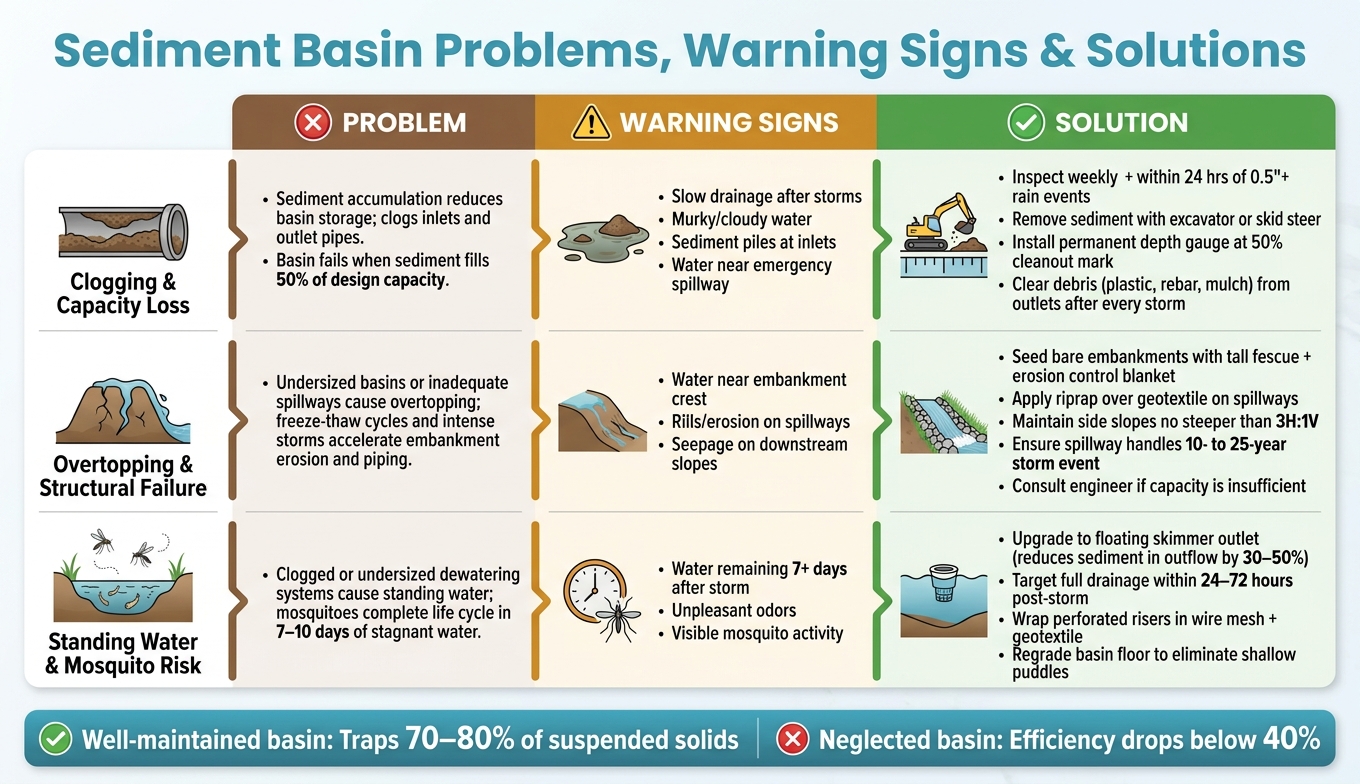
Sediment basins, even when carefully designed, can run into trouble if maintenance is neglected or if they’re pushed beyond their limits. The main issues tend to fall into three categories: losing storage capacity, structural failures during heavy rainfall, and stagnant water that lingers between storms. These challenges often stem from sediment buildup, insufficient design for extreme weather, and poor drainage systems.
Clogging and Loss of Capacity
One of the most persistent problems is the gradual loss of storage capacity due to sediment accumulation. As soil and debris flow into the basin, they settle at the bottom, reducing the available volume for water. This issue can also clog inlets and outlet pipes with silt, organic matter, or construction debris.
Signs of trouble include cloudy water after storms, sediment piles near inlets, and water levels rising dangerously close to the emergency spillway. Once sediment takes up about 50% of the basin’s designed storage capacity, it’s no longer functioning as intended and needs to be cleaned out. If left unaddressed, the risk of overflow becomes almost certain.
Overtopping and Structural Failures
Structural problems often come to light during heavy storms. Basins that are too small, have inadequate spillways, or suffer from sediment buildup are at risk of overtopping. Warning signs include water reaching the top of the embankment, erosion (rills) on spillways, and seepage along the downstream slope.
When water overtops the embankment instead of flowing through the spillway, the consequences can be severe. Overflowing water can erode the embankment’s downstream face, cause sections to collapse, or lead to piping, where water erodes the embankment from within. In regions like the mid-Atlantic, freeze-thaw cycles and intense summer storms can speed up this kind of damage, making post-storm inspections crucial.
Standing Water and Mosquito Risks
If dewatering systems – like skimmers, perforated risers, or outlet orifices – become blocked or aren’t designed properly, the basin won’t drain effectively between rain events. This leads to standing water, which invites a host of problems, including mosquito breeding. Mosquitoes can complete their life cycle in as little as 7–10 days of stagnant water, turning the basin into a health hazard. Standing water can also create unpleasant odors and may put contractors in violation of local health regulations.
| Problem | Primary Causes | Key Warning Signs |
|---|---|---|
| Clogging & Capacity Loss | Sediment buildup, blocked outlets, lack of upstream erosion controls | Slow drainage, murky water after storms, sediment piles at inlets |
| Overtopping & Structural Failure | Undersized basin, inadequate spillway, sediment reducing freeboard | Water near embankment crest, erosion on spillways, seepage on downstream slopes |
| Standing Water & Mosquito Risk | Clogged skimmers/orifices, poor grading, lack of dewatering maintenance | Water remaining 7+ days, odors, visible mosquito activity |
Solutions for Common Sediment Basin Problems
Keeping sediment basins effective requires consistent maintenance, well-thought-out design adjustments, and the right outlet hardware. Tackling problems as they arise ensures these basins perform properly throughout a project.
Regular Maintenance and Inspection
Set up a clear inspection schedule. Check the basin weekly during construction and within 24 hours of any storm that brings at least 0.5 inches of rain. Focus on sediment depth, the condition of inlets and outlets, and the integrity of the embankment.
To monitor sediment buildup, use a permanent gauge marked at the cleanout level. Once sediment fills about 50% of the basin’s storage capacity, it’s time to act. Bring in equipment like an excavator or skid steer to remove the material and dispose of it in a stable, designated area on-site.
Also, make it a priority to inspect and clean the inlets and outlets. After every storm, clear out trash, branches, and construction debris – common culprits like plastic, rebar, or mulch can easily clog outlets. Keep detailed logs of each inspection, noting the date, recent rainfall, observed conditions, and any maintenance performed. In Maryland, such records are often required under a Stormwater Pollution Prevention Plan (SWPPP).
Fixing Spillway and Embankment Design
To avoid overtopping or structural issues, address erosion problems like rills on spillways or exposed embankments. Use a mix of vegetation, armoring, and regrading to stabilize these areas. For bare embankments, seed them with a hardy grass blend – tall fescue works well in Maryland – and cover the area with mulch or an erosion control blanket right away.
In high-velocity areas like primary and emergency spillways, vegetation alone isn’t enough. Use riprap over geotextile fabric to protect against scouring. Embankment side slopes should have a gentle grade – no steeper than 3H:1V on the outer face – and be built in compacted layers. For the transition zone where the embankment meets natural ground, cut back and recompact the area to prevent seepage. If the spillway can’t handle the drainage area’s flow, consult a civil engineer to recalculate its capacity. Many temporary basins must handle a 10-year or 25-year storm event, so the spillway may need to be widened or regraded.
Improving Dewatering Systems
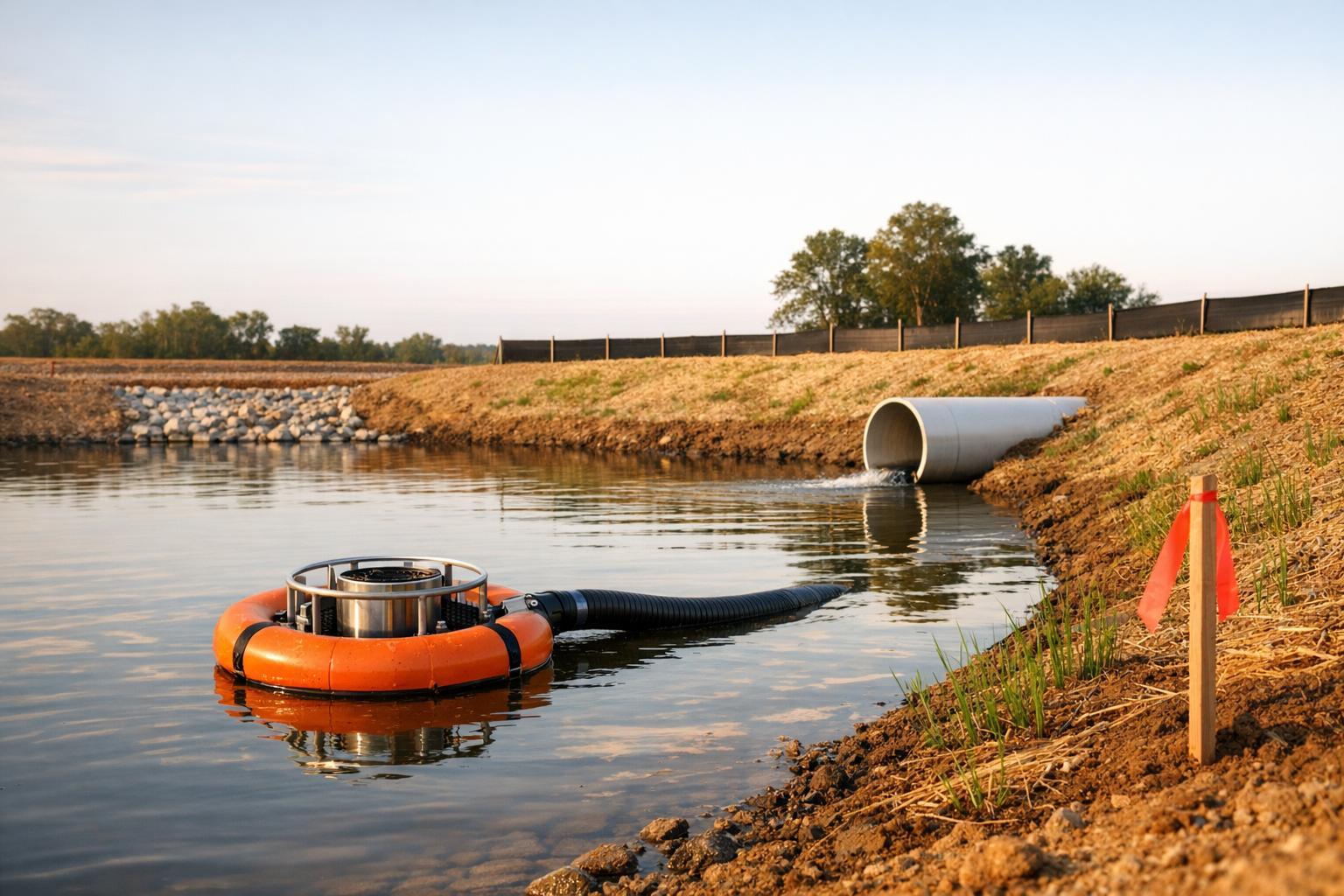
Upgrading from a standard bottom-drain riser to a floating skimmer outlet can significantly lower sediment levels in outflows and eliminate stagnant water that attracts mosquitoes. Skimmers pull water from the surface, where sediment levels are lower after settling, instead of from the sediment-heavy bottom layers. Studies show this switch can reduce sediment concentrations in outflows by 30–50%.
Temporary basins should drain within 24–72 hours after a storm. This timeframe helps prevent mosquito breeding while allowing enough time for sediment to settle. If you’re sticking with a perforated riser, wrap it in wire mesh and geotextile to reduce clogging, and ensure the orifice size aligns with the desired drawdown rate. After sediment removal, regrade the basin floor to eliminate shallow puddles. If a permanent micropool is needed, it’s easier to monitor and manage than multiple small depressions.
Fitting Sediment Basins into Maryland Landscaping Projects
Choosing Basin Placement and Access Points
When planning a sediment basin, timing is everything. Incorporate it into the early grading phase – before finalizing driveways, patios, or planting beds – to avoid costly changes later. Place the basin at a natural low point to efficiently capture runoff, and ensure there’s a dedicated access route for maintenance. Stabilized gravel or compacted turf works well for this purpose. Keep the area around the embankment and spillway clear of permanent structures, making inspections and repairs easier as the project progresses.
Once positioned correctly and made accessible, sediment basins can transition into attractive, long-term stormwater features.
Converting Basins into Permanent Stormwater Features
Sediment basins used during construction can later become an integral part of the finished landscape. Maryland’s Stormwater Management Act of 2007 promotes Environmental Site Design practices, and many construction-phase basins are already located where permanent stormwater features are planned.
The conversion process depends on factors like soil type, slope, and drainage volume. To repurpose the basin, remove accumulated sediment, regrade the side slopes to at least a 3H:1V ratio, reconfigure the outlet structure, and plant native, moisture-tolerant vegetation suited to the Mid-Atlantic region. These steps not only enhance the site’s appearance but also ensure continued sediment control and effective drainage.
| Conversion Option | Best Fit | Key Requirement |
|---|---|---|
| Rain garden / bioretention | Infiltrating soils, small drainage areas | Amended soil mix; underdrain if needed |
| Vegetated swale | Gentle slopes, linear drainage corridors | Stable grasses or native plantings |
| Decorative dry riverbed | Aesthetic priority, surface conveyance | Stone lining; stable channel grade |
| Permanent wet pond | Larger drainage areas, community sites | Adequate pool depth; aquatic plantings |
Working with a Professional Landscaping Service
For a drainage solution that’s both effective and visually appealing, integrate sediment basins with grading, drainage, and hardscaping from the start. Professionals can ensure that the basin functions seamlessly with the overall landscape design, avoiding common issues like clogging, overtopping, or stagnant water.
Pro Landscapes MD offers comprehensive services across central Maryland, specializing in drainage solutions such as French drains, dry riverbeds, stormwater management systems, grading, and yard leveling. Their expertise extends to hardscaping features like retaining walls, garden walls, and patios, ensuring elevation changes are handled safely without creating new drainage problems. As horticulture experts, they also ensure that trees and shrubs are strategically placed to protect embankments and spillways while enhancing the site’s overall aesthetic.
Conclusion: Keeping Sediment Basins Working Properly
Sediment basins that are well-maintained – cleaned before sediment levels reach half their design capacity and inspected on a regular basis – can trap 70–80% of suspended solids. But when maintenance is neglected, their efficiency can drop below 40%, putting nearby waterways at risk.
There are clear warning signs to watch for: water levels staying high after a storm, noticeable erosion along embankments, or standing water that lingers for more than 72 hours. Catching these issues early – especially after storms with 1 inch or more of rainfall – can save you from expensive repairs and potential compliance headaches.
A working sediment basin does more than protect waterways. It also shields your property from sediment-related damage, like harm to patios, walkways, and driveways, while helping to stabilize slopes with healthy vegetation – an important factor in areas like Maryland, where clay soils and heavy storms are common.
Once the construction phase is over, there’s an opportunity to repurpose temporary sediment basins into permanent, functional stormwater features. Options like rain gardens, dry ponds, or vegetated swales not only meet regulatory requirements but can also enhance your property’s appearance.
Pro Landscapes MD specializes in turning construction-phase sediment basins into fully compliant and visually appealing stormwater solutions. If you notice signs like clogging, overtopping, or standing water that won’t drain, schedule an on-site assessment to address the issue promptly.
FAQs
How do I measure sediment buildup in my basin?
To check sediment buildup, use a measuring pole or a marked stake to measure the depth of material that has accumulated. Compare this depth to the basin’s original base elevation, using installation records or notes from the last cleaning to track changes over time. If you’re uncertain about assessing your basin, Pro Landscapes MD provides professional stormwater management services to help with sediment and drainage issues in Maryland and Washington, DC.
What should I do if my sediment basin overflows during a storm?
If your sediment basin overflows during a storm, it’s a sign that the system isn’t equipped to manage the amount of runoff. To address this, reach out to experts like Pro Landscapes MD, who can evaluate your property and recommend fixes. Possible solutions might involve adding French drains, box and pipe systems, or creating berms and swales. These measures help control excess water, reducing the risk of flooding and erosion while safeguarding your landscape.
Should I switch to a floating skimmer outlet?
Switching to a floating skimmer outlet could be a smart move if your current sediment basin isn’t performing as well as you’d like. If sediment discharge is a problem or you’re aiming for cleaner water, a floating skimmer might help. It works by removing cleaner surface water instead of the sediment-laden water from the bottom. Pro Landscapes MD specializes in stormwater management and can assess your site to see if this upgrade would enhance your system’s efficiency and improve overall drainage.
Chat with Us