









- bhavya gada
- No Comments
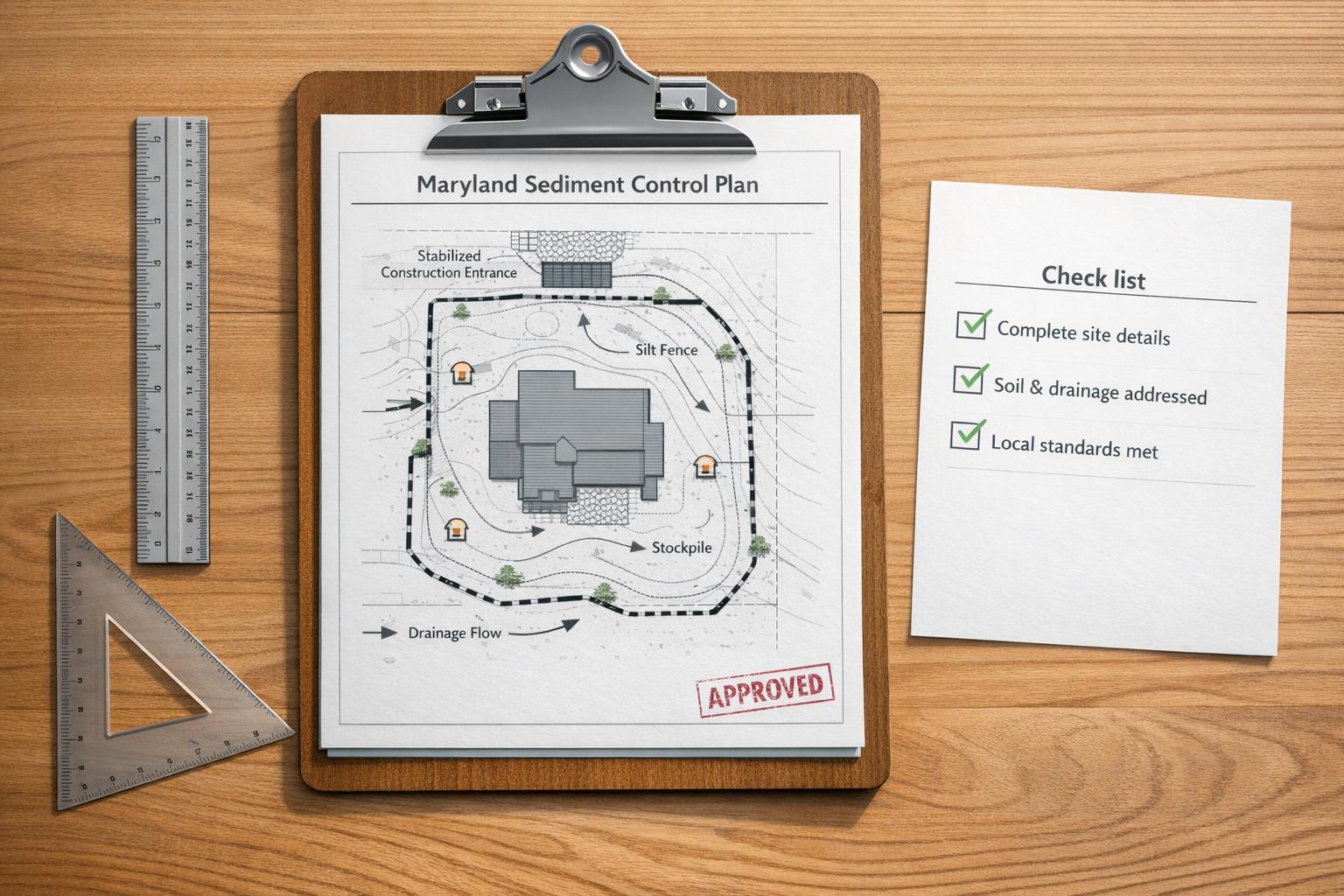
A sediment control permit ensures proper planning to manage soil disturbance and water runoff, protecting properties and waterways. In Maryland, these permits are often required for projects involving regrading, drainage systems, or major landscaping changes. However, many applications face delays due to common mistakes. Here’s what you need to know:
- Incomplete Site Details: Missing or incorrect property layouts lead to permit denials.
- Ignoring Soil Conditions: Plans that fail to address soil type or drainage patterns often fall short.
- Non-Compliant Plans: Generic solutions not tailored to Maryland’s standards are frequently rejected.
To avoid issues, work with licensed professionals, submit detailed, property-specific plans, and ensure compliance with local standards. Proper preparation saves time, money, and headaches.
Common Sediment Control Permit Mistakes
Navigating the sediment control permitting process can be more challenging than many homeowners and contractors expect. It’s not just about filling out paperwork – it requires precise, site-specific details that reflect the property’s actual conditions. Here are some frequent mistakes that often lead to delays or denials.
Incomplete or Missing Site Information
One of the most common errors is submitting plans with missing or incorrect site details. Reviewers need to see an accurate depiction of the property’s layout, including any uneven terrain, areas prone to water pooling, and the proximity of standing water to the home’s foundation [2]. Generic or overly simplified sketches won’t cut it.
If your grading plan doesn’t clearly show how water moves across the site, reviewers can’t properly evaluate the proposed measures. This often results in delays or outright denials of the permit application [2].
Ignoring Soil and Drainage Conditions
Another major oversight is neglecting to account for soil and drainage conditions. Factors like high water tables, poor soil permeability, and drainage patterns play a critical role in designing an effective sediment control system [2]. For example, a yard with heavy clay soil will handle water very differently than one with sandy loam. Failing to consider these differences can lead to poor water absorption, ineffective sediment control, and costly fixes down the road [2].
Sediment Control Plan Does Not Meet Maryland Standards
Generic sediment control plans that don’t address the specific characteristics of the property often fail to meet Maryland’s rigorous standards [2]. Reviewers expect to see solutions tailored to the site, such as swales, berms, or French drains, that demonstrate a clear plan for managing stormwater effectively [1][2].
The consequences of non-compliance are serious: rejected permits, project delays, and potentially expensive rework to bring the site up to code [2]. Even worse, a poorly designed plan can lead to structural issues over time, such as standing water near the foundation. Maryland’s standards specifically require plans to direct water away from the home to prevent such damage [2].
Avoiding these common pitfalls is essential for a smooth permitting process and sets the stage for the practical strategies covered in the next sections.
sbb-itb-843f8be
How to Avoid Sediment Control Permit Problems
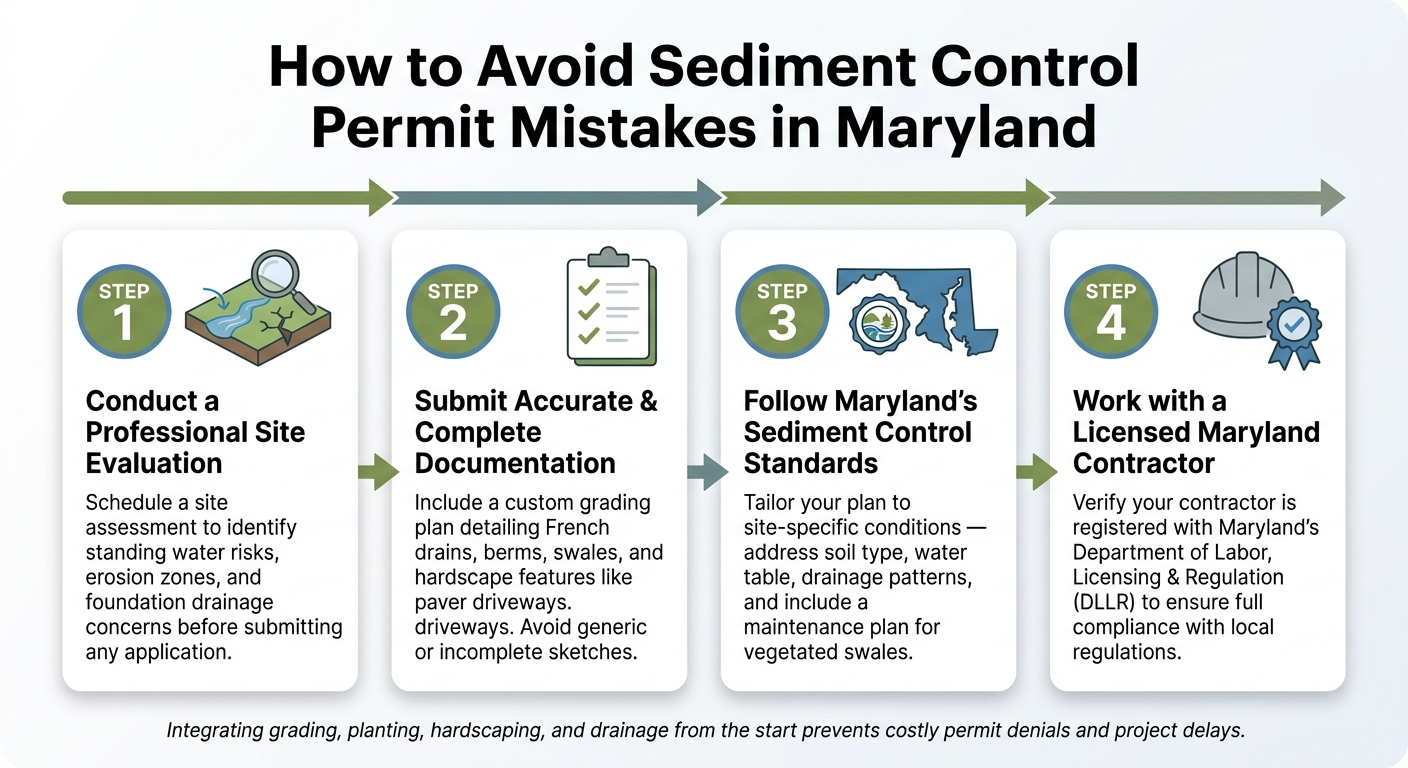
How to Avoid Sediment Control Permit Mistakes in Maryland
If you’re looking to avoid common issues with sediment control permits, following these best practices can make the process smoother and more efficient.
Submit Accurate and Complete Documentation
Before you even think about submitting your permit application, schedule a site evaluation with a qualified drainage expert. This step helps identify potential trouble spots, like areas prone to standing water or risks to your foundation, so you can address them upfront [2].
Your application should include a custom grading plan tailored to your property. This plan should detail drainage features like French drains, berms, and swales, as well as excavation and base preparation for hardscapes like paver driveways [2][3].
"We create a grading plan tailored to your property’s unique layout, ensuring that water flows efficiently and safely." – Pro Landscapes MD
If this sounds overwhelming, consider hiring a contractor to help manage the process. As Pro Landscapes MD explains, "In some cases, a permit may be required for extensive drainage projects. Our team will handle any necessary permits and ensure all work complies with local regulations" [2].
Once your documentation is ready, make sure it aligns with Maryland’s specific sediment control standards.
Follow Maryland’s Sediment Control Standards
Maryland’s sediment control regulations are highly site-specific. Your plan needs to clearly show how your property will manage water flow. This often involves a mix of strategies, like regrading to redirect water, using vegetated swales to filter runoff, and positioning berms to channel water into designated drainage areas [2].
It’s also a good idea to include a basic maintenance plan for features like swales. Regular tasks, such as checking plant health and trimming vegetation, can demonstrate your commitment to keeping these systems functional over time [1].
Also, verify that your contractor is properly licensed. In Maryland, landscape contractors should be registered with the Maryland Department of Labor, Licensing & Regulation (DLLR), ensuring they’re qualified to handle the complexities of sediment control and drainage requirements [4].
Align Landscaping Plans with Sediment Control Requirements
Landscaping and sediment control need to work hand-in-hand. Hardscape features like patios, driveways, and retaining walls all influence water flow, so your permit application must reflect these connections [2][3].
One effective strategy is to use permeable interlocking pavers for driveways or walkways. These pavers allow water to pass through the joints, reducing runoff and encouraging groundwater absorption [3]. Pairing permeable surfaces with drainage solutions like channel drains or French drains can create a comprehensive plan that directs water safely away from your home.
To avoid erosion and sediment displacement, make sure your grading, planting, hardscaping, and drainage systems are all designed to work together seamlessly. This integrated approach not only meets permit requirements but also helps protect your property in the long run.
Best Practices for Maryland Residential Landscaping Projects
Connect Sediment Control with Stormwater Management
To enhance your Maryland residential landscaping projects, it’s essential to integrate sediment control with stormwater management. This approach not only prevents erosion but also protects your property from damage. Maryland’s frequent heavy rainfall and clay-heavy soils make unmanaged runoff a significant concern, often leading to erosion, delays in permits, and structural issues.
A combination of structural and natural solutions works best. For instance, French drains – featuring perforated pipes and gravel – help redirect water away from foundations and low-lying spots, reducing soil saturation and sediment runoff. On sloped areas, regrading can channel water into designated drainage zones, minimizing pooling. Meanwhile, lining swales with native plants that thrive in wet conditions can stabilize soil and filter out pollutants before water flows into storm drains or nearby waterways.
"Berms and swales often work together to control water flow. Berms divert water toward swales, where it can be absorbed or redirected to a safe drainage area." – Pro Landscapes MD [1]
This kind of integrated design is exactly what Maryland reviewers prioritize when assessing sediment control plans. However, turning these strategies into effective, compliant designs requires a deep understanding of local conditions. Collaborating with professionals familiar with Maryland’s unique requirements is often the best way to ensure success.
Work with Local Professionals
Given Maryland’s specific compliance standards, working with local professionals is a smart move. A licensed contractor with experience in the area can tailor your landscaping design to match the property’s topography, soil characteristics, and drainage needs.
One such expert is Pro Landscapes MD, a Dayton-based company that has been serving central Maryland since February 2011. Holding Maryland license number 110409 from the Department of Labor, Licensing & Regulation [4], their team specializes in managing the entire permit process while adhering to local environmental regulations.
Before starting any major project, scheduling a professional site assessment is highly recommended. This step can identify potential risks like erosion or flooding early on, preventing them from escalating into costly repairs or permit complications. For homeowners in counties such as Howard, Montgomery, or Frederick, partnering with local experts can streamline the approval process, helping you avoid setbacks and keeping your project on schedule.
Conclusion: Key Steps to Avoid Permit Mistakes
Avoiding permit mistakes requires careful planning and attention to detail. Here are some steps to keep in mind.
Sediment control permits are essential because unmanaged runoff can harm property foundations, water quality, and nearby areas. Getting the right permits in place can help you avoid unnecessary delays, costs, and headaches.
Common permit errors often arise from incomplete site assessments or vague control plans. To avoid this, start with a detailed site assessment. Look for potential risks like standing water, erosion, or pooling near foundations. Then, outline specific solutions such as installing French drains, regrading the land, or using vegetated swales to manage runoff effectively [2].
Make sure your contractors are licensed by Maryland’s Department of Labor, Licensing & Regulation to ensure compliance. Additionally, incorporate sediment control measures into your overall landscape design from the start. This could include using permeable materials, designing natural drainage systems, and creating grading plans that direct water away from structures [1][3].
FAQs
Do I need a sediment control permit for my project in Maryland?
Whether you need a sediment control permit in Maryland depends on the details of your project. The state has strict water quality and runoff standards, so any work involving grading, drainage, or erosion control often requires careful planning. To stay compliant, it’s a good idea to consult with professionals. Pro Landscapes MD is experienced in handling these regulations and can help implement solutions like berms, swales, or filtration systems to meet Maryland’s runoff requirements.
What information should my sediment control plan include?
Your sediment control plan should detail strategies to manage water flow effectively and minimize soil erosion. Be sure to include clear layouts for features like French drains, berms, and swales to help control runoff. If modular filtration systems are part of your plan, address the specific soil conditions of your site. Consider incorporating elements like bioretention basins, flow-through planters, or pervious pavement to treat pollutants and meet regulatory requirements.
How long does it take to get a sediment control permit approved?
The time it takes to get a sediment control permit can vary based on local rules and how complex your project is. Because the process depends heavily on the specific site conditions, it’s important to ensure your plans are precise and comply with all necessary standards. If you need help, Pro Landscapes MD offers expertise in stormwater management and drainage solutions, making it easier to handle these regulations throughout central Maryland and nearby regions.
Chat with Us