









- bhavya gada
- No Comments
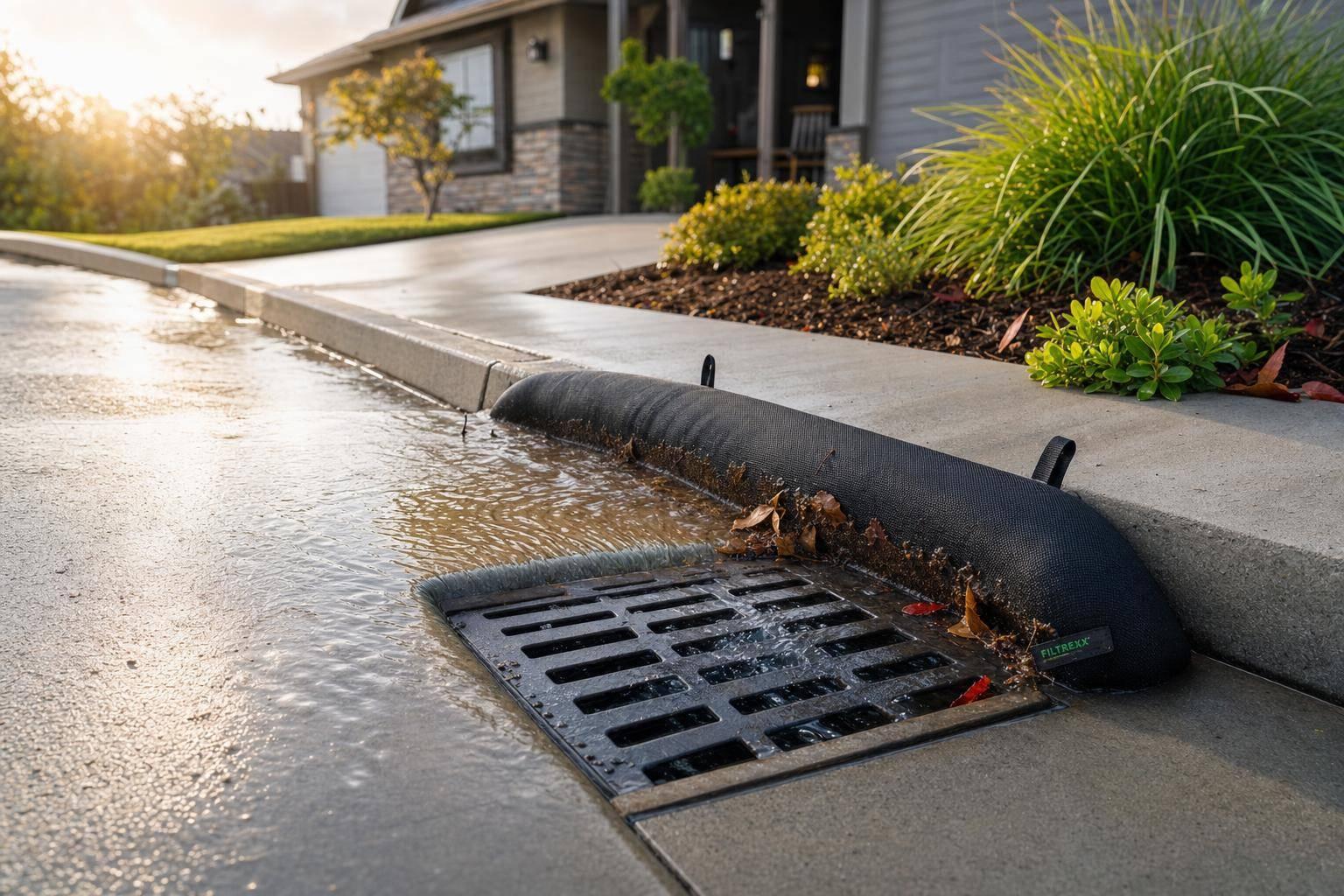
Sediment filters help keep stormwater cleaner by stopping soil, grit, and debris before they clog drains or wash into streams. If runoff on your property is picking up loose material, the fix usually comes down to three things: slow the water, trap the sediment, and keep the system clean.
Here’s the short version:
- Sediment starts on-site from bare soil, thin grass, mulch, gravel, and hard surfaces
- Dirty runoff can clog catch basins, swales, French drains, and pond inlets
- Filters work in 3 main ways: settling, screening, and media filtration
- Common systems include sand filters, gravel filters, vegetated strips, catch basin inserts, hydrodynamic units, and media cartridges
- Pretreatment matters because it removes heavier material before it reaches the main filter
- Maintenance matters just as much as design, since clogged filters stop doing their job
A simple fact: runoff pollution in the U.S. is driven in large part by stormwater moving over developed land, and sediment is one of the most common pollutants in that flow. On many Maryland properties, even a small amount of soil loss over time can lead to ponding, erosion, and drain cleanout costs that add up fast.
What I take from this article is simple: the best sediment filter is the one that fits the site, sits in the right spot, and gets cleaned after storms. A filter alone will not fix poor grading or bad runoff routing, but it can cut the amount of silt and debris moving through the drainage system.
Quick comparison
| System | Best for | What it removes first | Space need | Upkeep |
|---|---|---|---|---|
| Catch basin inserts | Existing drain inlets | Coarse sediment and debris | Low | Medium |
| Hydrodynamic units | Upstream pretreatment | Grit and heavier particles | Low to medium | Medium |
| Sand filters | Roofs, driveways, patios | Suspended solids after pretreatment | Medium | Medium |
| Gravel filters | Landscape edges and flow paths | Coarser sediment | Medium to high | Low to medium |
| Vegetated strips | Sheet flow at landscape edges | Coarse sediment | High | Low to medium |
| Media cartridges | Retrofit downstream treatment | Finer particles | Low to medium | Medium to high |
Bottom line: if you want cleaner stormwater, start by finding where sediment enters runoff, then pair the right filter with sound grading, flow control, and routine cleanout.
How the Stormwater Management StormFilter Works – Contech Engineered Solutions

How Sediment Filters Improve Stormwater Quality
Once runoff starts carrying sediment, the job changes. Now it’s about stopping those particles before they make it into storm drains, ponds, or nearby streams.
Sediment filters do that by trapping suspended material as runoff moves through sand, gravel, screens, or engineered media. Think of it like a checkpoint for dirty water: solids get held back while cleaner water keeps moving.
The 3 Main Removal Mechanisms
Sediment filters work through three main removal mechanisms.
- Settling happens in pretreatment areas where runoff slows down enough for heavier particles to fall out of suspension.
- Screening takes place as runoff moves through sand, gravel, or screens that catch larger particles.
- Media filtration helps trap finer particles as water passes through the filter material.
Sediment doesn’t travel alone, either. It often carries attached pollutants like oils, nutrients, and metals.
What Better Filtration Means for Your Property and Nearby Waterways
Better filtration means less sediment ends up in drains, ponds, and streams.
That can help keep drainage systems from filling up with silt and cut down on the amount of polluted runoff reaching nearby waterways.
Sediment Filtration Systems Used in Residential Stormwater Management
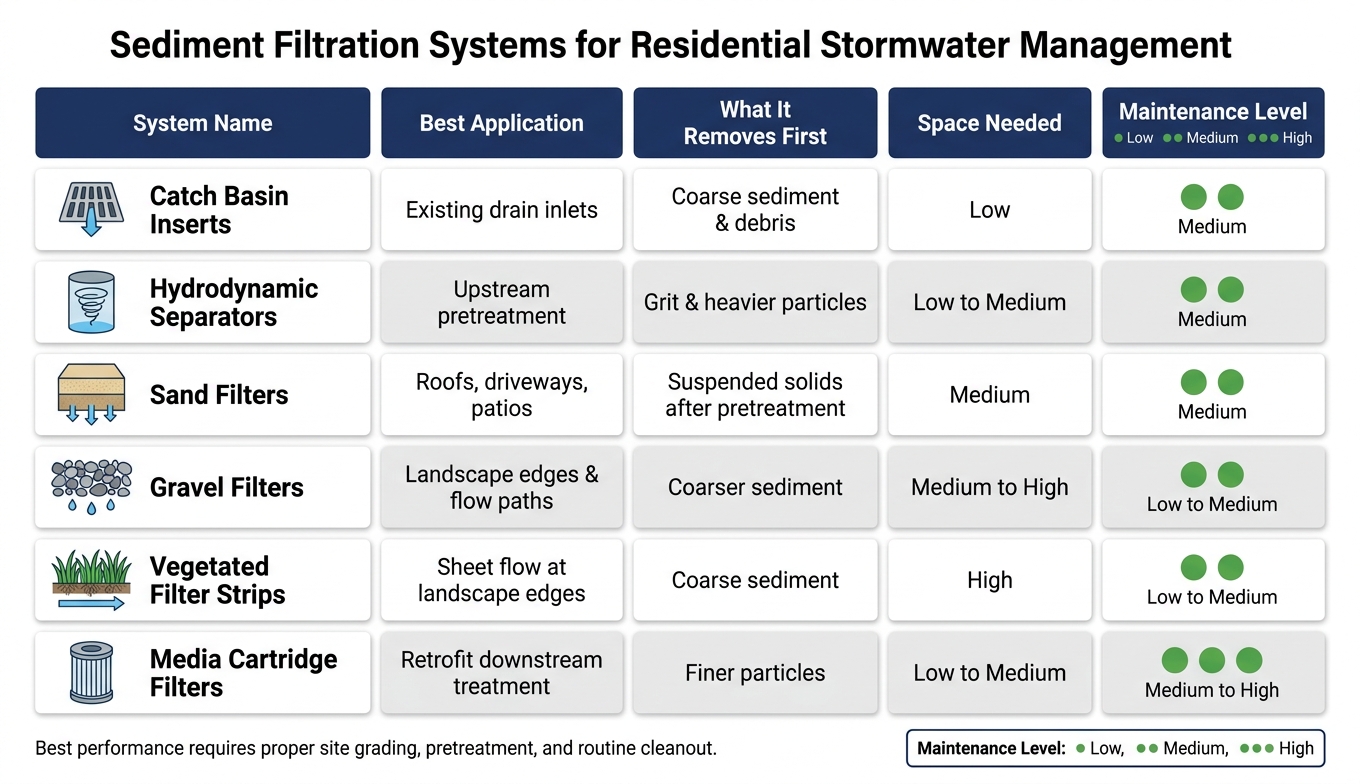
Sediment Filter Systems: Side-by-Side Comparison for Stormwater Management
Different filters remove sediment at different stages of runoff, from first capture to final polishing. Each one handles sediment at a different point in the runoff path.
| System | Typical Application | Primary Function | Space Needs | Maintenance Intensity |
|---|---|---|---|---|
| Sand filters | Roof, driveway, and other paved runoff | Removes suspended solids after pretreatment | Moderate | Moderate |
| Gravel filters or vegetated filter strips | Landscape edges, sheet flow areas, and small drainage paths | Slows runoff to trap coarse sediment and some suspended solids | Moderate to high | Low to moderate |
| Hydrodynamic separators | Pretreatment before downstream drains or filters | Captures coarse sediment and debris | Varies | Varies |
| Catch basin inserts | Existing inlets and retrofit drainage structures | Captures coarse sediment and debris | Low | Varies |
| Cartridge or engineered media filters | Downstream filtration in retrofit drainage systems | Work best after pretreatment to reduce premature clogging | Varies | Varies |
These systems vary in how they slow runoff, trap solids, and fit into an existing drainage layout.
Catch Basin Inserts and Hydrodynamic Pretreatment Devices
Once runoff starts moving sediment, these systems step in early and intercept it before it reaches drains or waterways. Catch basin inserts fit inside existing inlets and collect coarse sediment and debris before that material moves downstream. Because they can be added without major excavation, they make sense for many residential properties.
Hydrodynamic separators are usually placed upstream of another filter. Their job is to catch grit and coarse sediment first, so the downstream parts don’t take the full hit and are less likely to clog as fast.
Sand and Gravel Filters for Runoff from Roofs, Driveways, and Paved Areas
Sand filters are often used where runoff comes off hard surfaces like driveways, rooftops, or paved patios. They usually include a pretreatment zone and then a sand media layer, which removes suspended solids before water enters the larger drainage system.
Gravel filters are more common along landscape edges or in low-lying drainage paths. They slow the flow enough for coarser sediment to settle out as water loses speed.
Vegetated Filter Strips and Engineered Media Systems
Vegetated filter strips are planted buffer areas along the edges of driveways, patios, and walkways. As runoff spreads through the plants, the flow slows down and coarse sediment drops out. The tradeoff is space: these strips need more horizontal room than most other choices. They work best where runoff can spread out as sheet flow along landscape edges.
Engineered media filters tend to work best after pretreatment has already removed heavier debris.
Performance depends less on the filter by itself and more on whether it fits the site and gets proper maintenance.
sbb-itb-843f8be
Design and Maintenance Factors That Determine Filter Performance
Site design has a direct impact on how well a sediment filter works. Picking the right filter is only part of the job. After that, the layout of the site decides whether the system can do what it’s supposed to do.
A filter can be the right type on paper and still fail in the field. That happens when flow paths are off, slopes push water the wrong way, runoff routing is poorly planned, or there’s no easy way to reach the unit for cleanout. Good design helps keep sediment in the filter instead of letting it wash into the drain.
Why Pretreatment, Grading, and Flow Control Matter
Before runoff reaches a filter’s media layer, pretreatment helps slow the water down and catch heavier sediment before it overloads the main filter.
Slope matters too. It affects whether a gravity-fed system, such as a sand or gravel filter, makes sense for the site. Grading also controls where runoff moves when the filter hits capacity. On top of that, proper grading and energy dissipation can help cut soil erosion and protect hardscapes from water damage.
After pretreatment does its part, maintenance plays a big role in how long the filter keeps doing its job.
Routine Maintenance That Keeps Filters Working
No filter takes care of itself. Sediment cleanout, debris removal, and post-storm inspections are the basic tasks that keep a system working well. Routine inspections after major storm events can help spot problems before they turn into bigger failures.
If ponding stays on the filter surface, the media may need surface cleanout or full media replacement to bring infiltration rates back up. Systems also need clear access points from the beginning so crews can remove sediment and service the filter media without a hassle.
Advantages and Limits of Common Filter Types
Filter selection should fit the site. That means looking at slope, runoff volume, available space, and how easy it is to get in for maintenance.
Conclusion: Putting Sediment Filtration Into a Complete Drainage Plan
Sediment filters do their best work when they’re part of a full drainage plan. That means looking beyond the filter itself and dealing with grading, runoff routing, and repairs in trouble spots too. The aim isn’t only to catch sediment. It’s to protect the entire drainage system that moves water away from the property.
For Maryland properties, that kind of joined-up approach helps protect drains, cut erosion, and keep stormwater flowing cleanly.
Pro Landscapes MD designs drainage systems that support cleaner stormwater and healthier landscapes across central Maryland.
FAQs
How do I know which sediment filter fits my property?
The right sediment filter comes down to three things: your property’s space, soil conditions, and drainage goals.
For instance, bioretention systems are often a good fit for residential yards with more room to work with. In tighter urban spaces, underground filters or tree-box units usually make more sense.
If runoff from driveways or walkways is the main issue, permeable pavers can be a practical option that doesn’t take up extra space. Pro Landscapes MD can assess your site and recommend the best fit.
How often should a sediment filter be cleaned?
Cleaning needs depend on the kind of sediment filter you have. Sand filters often need more attention because they can clog. Organic or peat filters usually need the media changed every 3 to 5 years.
All stormwater filtration systems need regular inspections and routine debris removal to keep them working as they should. Pro Landscapes MD recommends frequent inspections so you can spot when cleaning or material replacement is needed.
Can a sediment filter fix yard drainage problems by itself?
No. A sediment filter is usually only one part of a larger stormwater management system, not a standalone fix for yard drainage problems.
Problems like flooding, pooling, and erosion often call for a mix of solutions. That can include sediment filtration, French drains, grading, land leveling, or underground storage.
A professional assessment can help determine the right approach for your property.
Chat with Us