









- bhavya gada
- No Comments
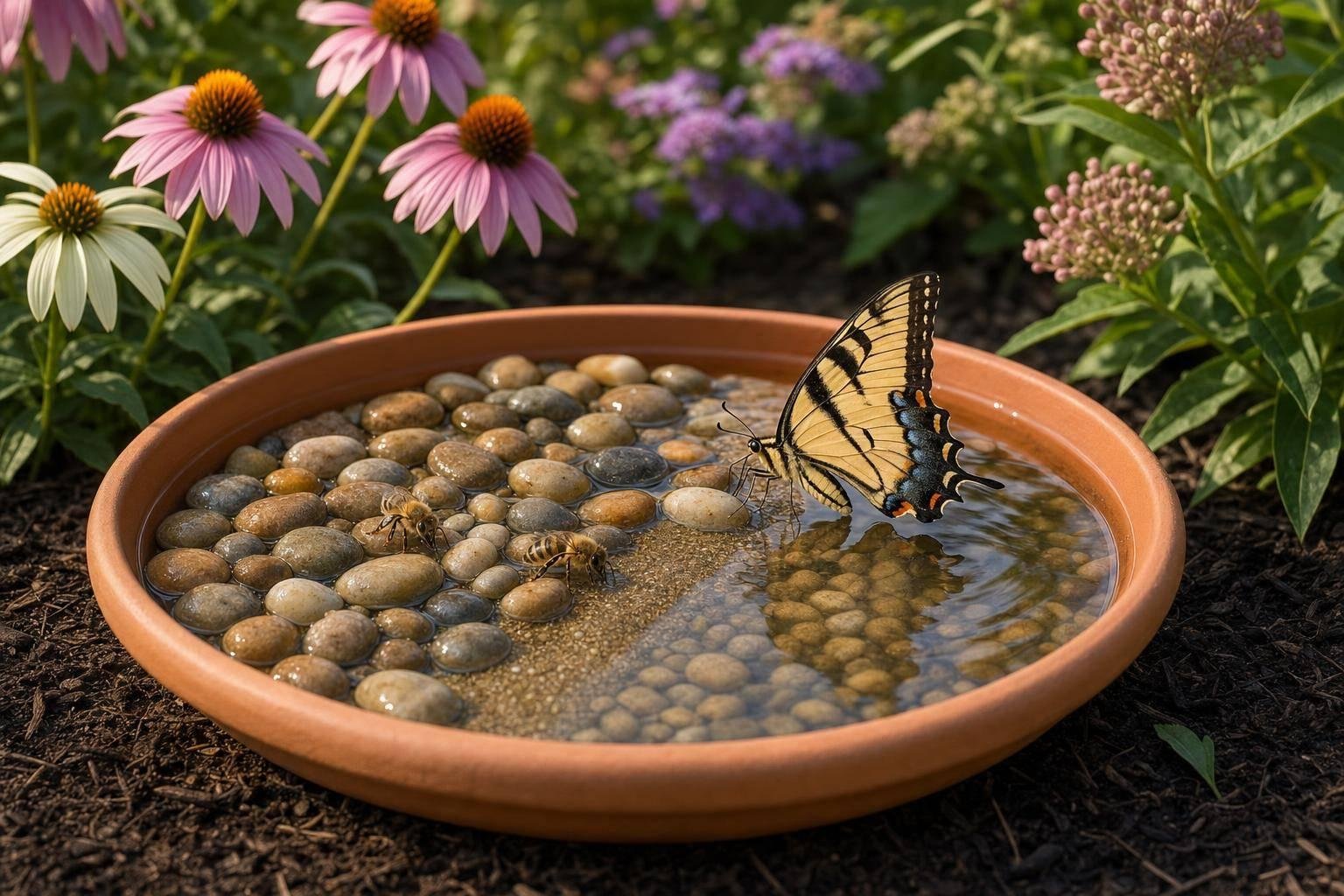
If you want to help bees and butterflies, give them shallow water, not deep water. Small pollinators can drown in smooth, deep containers, but they can drink from shallow water with pebbles, sand, or flat rocks.
I’d boil it down like this:
- Depth is the main issue. Pollinators need to stand at the edge, not swim.
- Landing spots matter. Pebbles, gravel, rocks, and sand help stop slipping.
- Butterflies often use damp soil or sand for water and minerals.
- Hot Maryland summers mean more refilling. Check water daily or every few days.
- Clean water helps. A quick rinse every few days helps limit algae and debris.
- Placement counts. Put the water source near flowers and, if possible, near bare or sandy ground for ground-nesting bees.
About 75% of flowering plants depend on animal pollinators, and bees may travel far from the hive to collect water during hot weather. So even a small saucer in your yard can help if it’s set up the right way.
If I were setting one up today, I’d use a shallow tray, fill it with stones so the water stays low, and place it near native blooms in a sunny spot.
| Setup item | What works best | Why |
|---|---|---|
| Water depth | Shallow | Lowers drowning risk |
| Landing surface | Pebbles, gravel, flat rocks, sand | Gives insects footing |
| Best container | Saucer, tray, or low birdbath | Easier access |
| Butterfly option | Damp sand or mud | Good for puddling |
| Upkeep | Refill and rinse every few days | Keeps water usable |
The core idea is simple: safe water for pollinators is shallow, stable, and clean.
DIY Pollinator Watering Station
sbb-itb-843f8be
Why Shallow Water Works Better Than Deep Water
Deep bowls and smooth basins can trap pollinators that need a steady edge to drink. The main issue isn’t how much water you put out. It’s whether insects can get to it without falling in.
Why Water Depth Matters for Bees and Small Insects
Bees don’t land in open water and swim around. They perch on a firm surface, then lean down to drink. Some smaller species also collect water and minerals from damp edges. That edge makes all the difference. It gives bees and other small insects a place to stand, drink, and stay out of trouble.
Pollinators use all kinds of water sources, but they can only drink safely when the water is shallow and easy to reach.
How Shallow Water Fits Into a Residential Yard
In a Maryland yard, a shallow saucer, tray, or shallow birdbath keeps the waterline within reach and fits neatly beside native nectar plants such as Mountain Mint or Goldenrod [1][2]. These containers are easy to add to a garden that’s already in place. After that, the next step is picking a container and fill material that keep the water shallow.
How Pollinators Drink Safely
Safe water isn’t only about keeping it shallow. Pollinators also need a steady place to land. Honey bees use nearby water to hydrate and cool the hive [2].
Landing Surfaces That Prevent Slipping and Drowning
A textured edge gives pollinators a solid foothold. Pebbles, stones, sand, or gravel let them land, drink, and leave without slipping. That same shallow edge helps butterflies puddle safely too.
Why Butterflies Often Prefer Puddling Areas Over Open Water
Butterflies use those same shallow, damp margins a bit differently. They often puddle in damp sand, mud, or moist soil because they need water and minerals, not deeper water [1][2].
Containers, Materials, and Upkeep
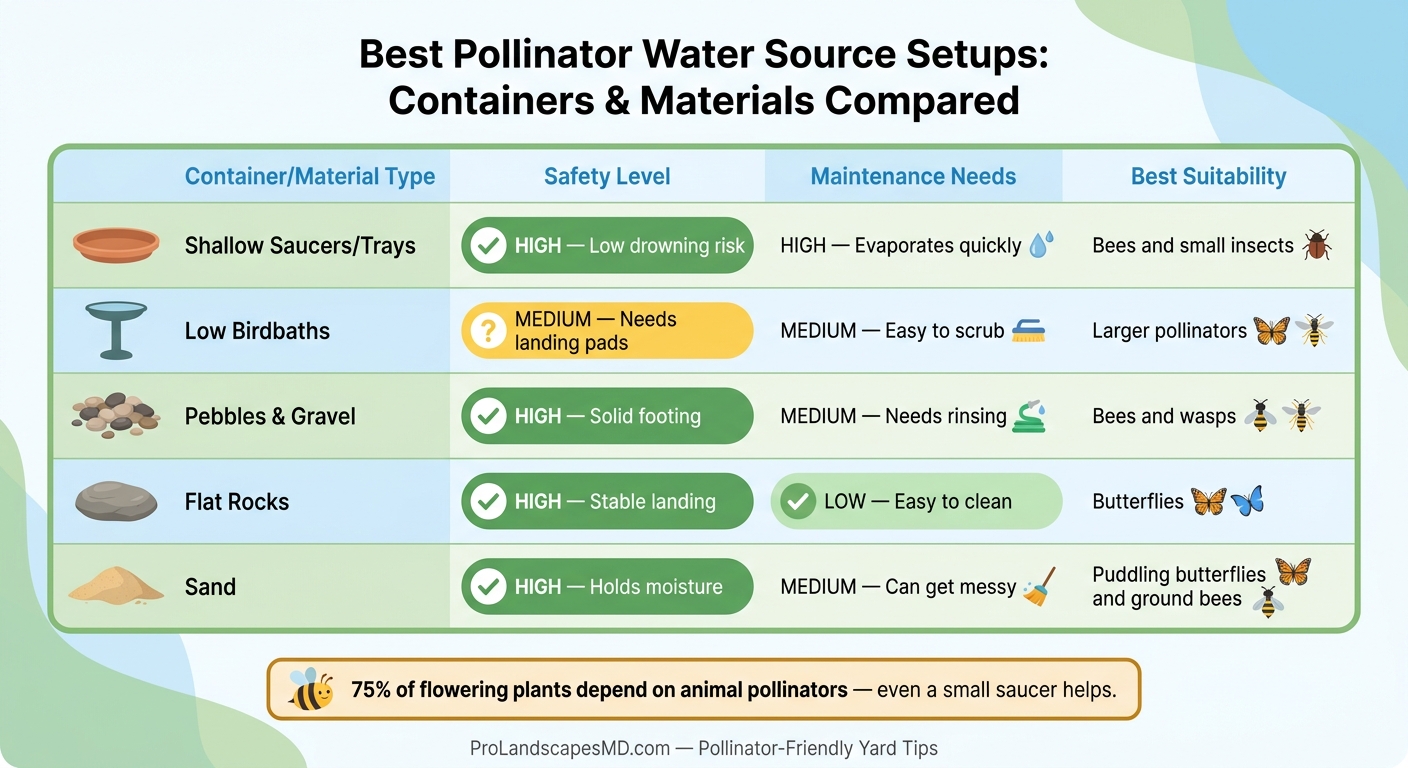
Best Pollinator Water Source Setups: Containers & Materials Compared
Containers and Fill Materials That Work Well
Once the water is shallow enough, the next step is the container and what goes inside it. A shallow saucer or tray, or a low birdbath, can work well for a pollinator water source. The main goal is simple: keep the water line low and give insects a steady place to land.
That landing surface does a lot of the heavy lifting. Pebbles, gravel, flat rocks, and sand help pollinators drink without slipping into the water.
| Container/Material Type | Safety Level | Maintenance Needs | Best Suitability |
|---|---|---|---|
| Shallow Saucers/Trays | High (low drowning risk) | High (evaporates quickly) | Bees and small insects |
| Low Birdbaths | Medium (needs landing pads) | Medium (easy to scrub) | Larger pollinators |
| Pebbles & Gravel | High (solid footing) | Medium (needs rinsing) | Bees and wasps |
| Flat Rocks | High (stable landing) | Low (easy to clean) | Butterflies |
| Sand | High (holds moisture) | Medium (can get messy) | Puddling butterflies and ground bees |
How Often to Refill and Clean the Water Source
Once it’s set up, you’ll need to keep an eye on it, especially in Maryland summer heat. Check the container daily or every few days [1]. If the water drops below the pebbles or other landing surfaces, add more.
Give it a rinse every few days too. That helps clear out algae and debris, so the water stays fresh.
Where to Place a Water Source in a Maryland Yard as part of your landscaping services
Placement matters just as much as the container. A sunny spot near a flowering border works well, especially next to native plants such as Virginia mountain mint. If you can, leave some bare or sandy soil nearby too. That helps ground-nesting bees [1].
Conclusion: Shallow Water Sources Can Support More Pollinators
After you refill and clean the container, keep the water shallow, add a stable landing spot, and stay on top of basic upkeep. A nearby patch of bare or sandy ground can help ground-nesting bees and wasps too.
Key Takeaways for Homeowners
Use a shallow container, add stable landing surfaces, and place it near native flowering plants. Keep the water fresh and the container clean.
If your yard needs pollinator habitat and better drainage, Pro Landscapes MD can build both into one plan. That can include pollinator-friendly planting areas and water-conscious features like rain gardens and drainage swales for Maryland yards. They work with homeowners across central Maryland, including Howard County, Montgomery County, and Prince George’s County.
FAQs
Can I use tap water for pollinators?
Yes. You can use tap water for pollinators. The main thing is to keep it clean and free of chemicals.
Swap the water in shallow dishes or basins every two to three days. A shallow, easy-to-reach water source helps bees, butterflies, and other helpful insects, especially during hot, dry spells in Maryland.
How do I keep a pollinator water source from attracting mosquitoes?
The best way to stop mosquitoes from breeding is to keep the water moving. A small bubbler, fountain, or circulating pump can make a big difference because mosquitoes lay eggs in still, stagnant water.
If a pump isn’t practical, change the water every 2 to 3 days instead. Regular cleaning and fresh water are a simple, chemical-free way to keep the area safe for pollinators.
What’s the best shallow water setup for a small yard?
A shallow basin or dish with gently sloped sides works best in a small yard. It gives pollinators a safe place to drink without falling in and drowning. Add flat stones, pebbles, or floating corks so they have easy spots to land.
Set it in a sunny, sheltered area near shrubs or other cover. If you can, keep the water moving with a small bubbler or fountain. If not, change it every 2 to 3 days to help keep mosquitoes away.
Chat with Us