









- bhavya gada
- No Comments
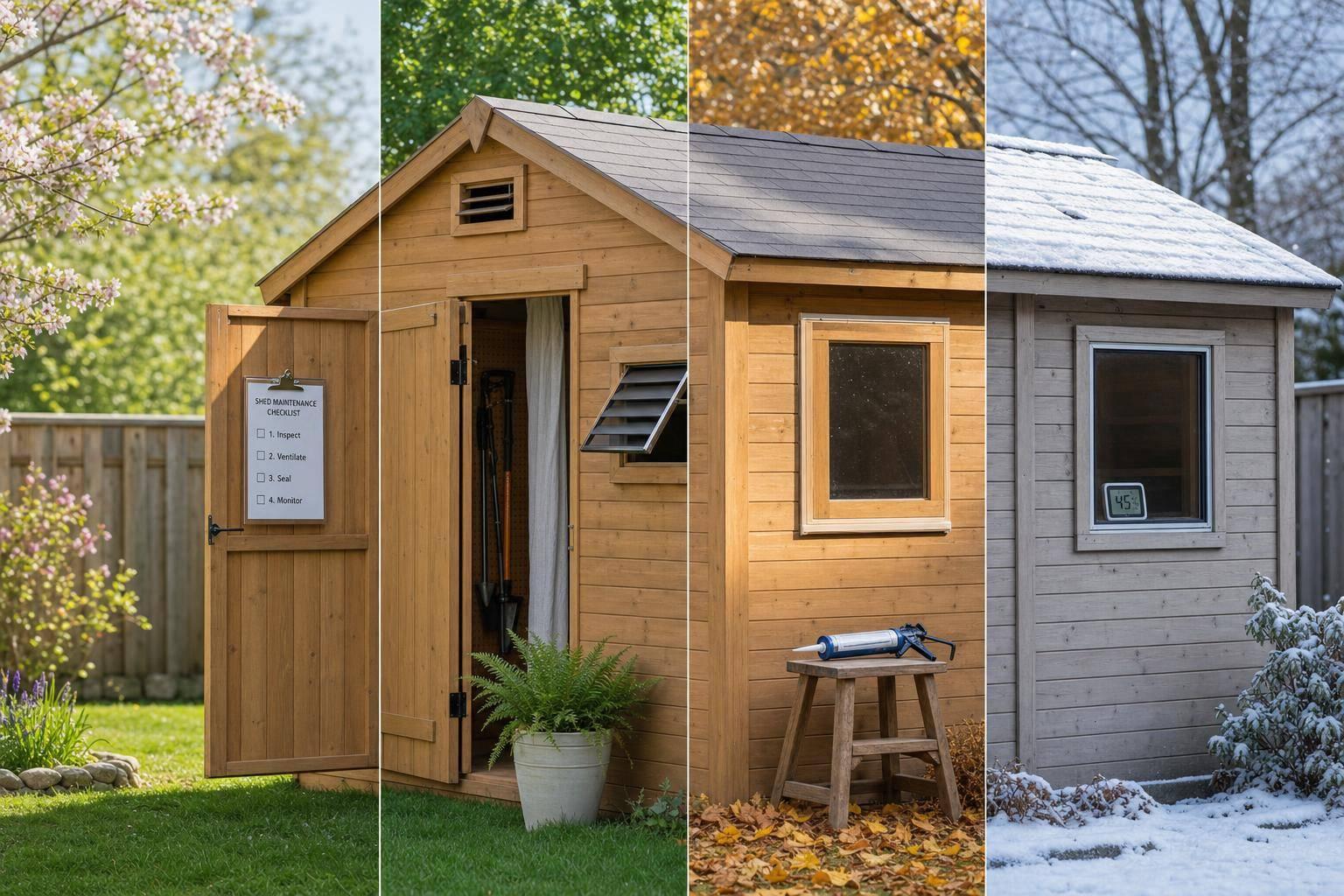
A shed usually needs only a short check at the start of each season to avoid leaks, rot, rust, mold, and stuck doors. In this guide, I boil it down to four steps: inspect in spring, vent in summer, seal in fall, and check moisture in winter.
Here’s the whole plan in plain terms:
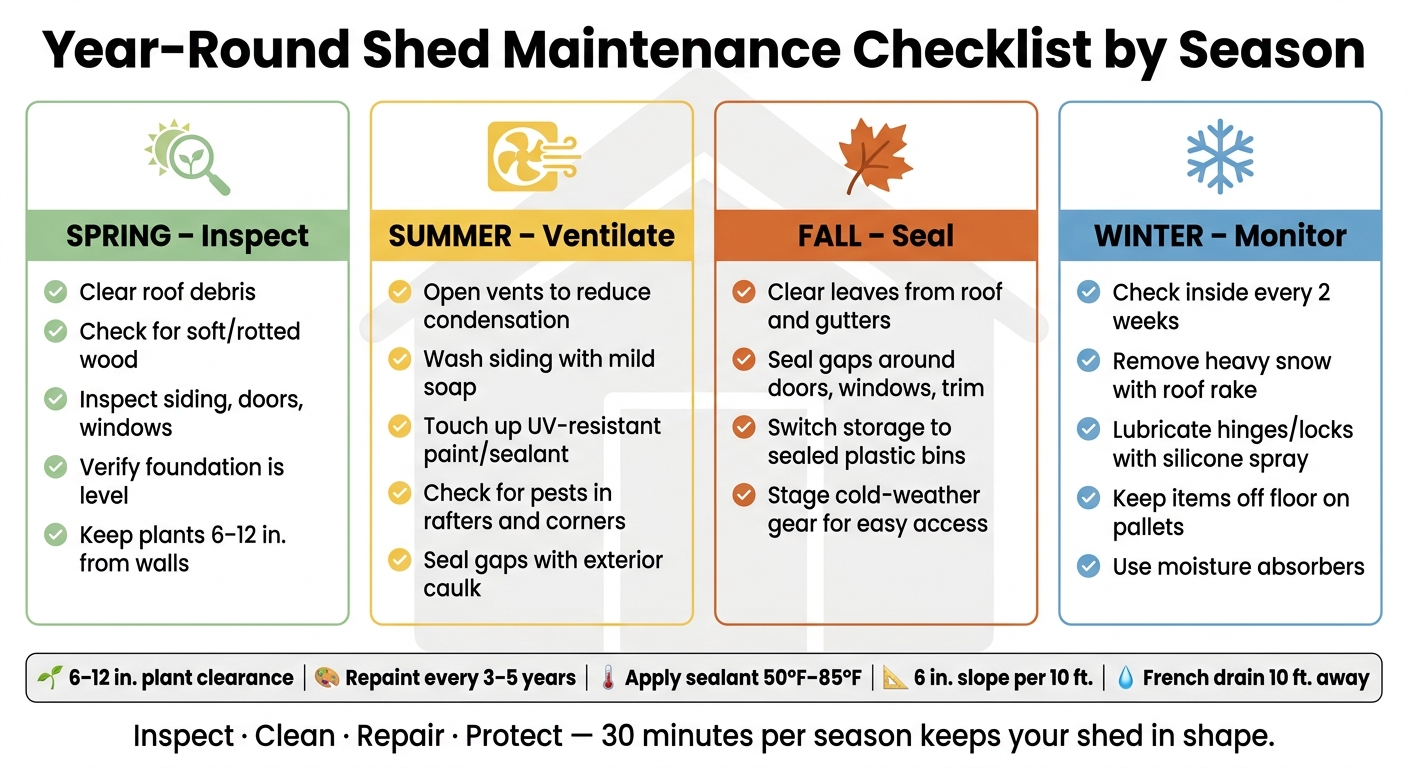
- Spring: clear debris, look for roof and siding damage, check for soft wood, and make sure the base is still level
- Summer: improve airflow, wash siding with mild soap, touch up worn paint or sealant, and look for pest signs
- Fall: remove leaves, clean gutters, seal gaps, and switch storage into sealed bins
- Winter: check inside every two weeks, remove heavy snow, stop doors from freezing, and keep items off the floor
A few numbers matter:
- Keep plants 6–12 inches away from shed walls
- Wood sheds often need paint or sealant work every 3–5 years
- Paint or sealant usually goes on best between 50°F and 85°F
- Ground should slope away about 6 inches over 10 feet
- A French drain should send water at least 10 feet away
I also cover the main care points for wood, metal, and resin sheds, plus the drainage issues that often cause damage near the base. If I stay on top of those small checks, I can cut down on repair costs and keep the shed in better shape through Maryland’s heat, humidity, rain, and freeze-thaw weather.
Year-Round Shed Maintenance Checklist by Season
Spring and Summer Shed Maintenance Checklist
Spring Cleanup and Post-Winter Inspection
When the weather warms up, give your shed a full walk-around and check for damage left behind by winter. Spring is the right time to spot problems before humid weather makes them worse.
Start outside. Clear leaves, sticks, and other debris from the roof and around the base. Then check the ground around the shed for shifting or uneven spots. Trim back grass and plants growing too close to the siding – keep vegetation at least 6–12 inches away from the walls to help prevent trapped moisture and allow better airflow[2][6].
From there, inspect the main trouble spots:
- Roof: Look for missing, lifted, or damaged shingles or metal panels.
- Siding: Check for warped boards, cracked panels, or peeling paint. Chalky residue means the finish is failing and needs repainting.
- Doors and windows: Make sure doors open and close smoothly, locks work, and weatherstripping hasn’t cracked or shrunk. Tighten loose hinges or screws.
- Foundation: Look for settling, gaps, or a floor that appears sloped.
- Interior: Use a flashlight to check the ceiling for wet patches or drips. Press on wooden sills and bottom plates; soft wood signals rot or termite damage.
Wooden sheds usually need repainting or resealing every 3–5 years[8][3]. If you’re doing touch-up work, wait for a dry day with temperatures between 50°F and 85°F[3] so paint or sealant goes on properly.
Once the shed is clean and any repair work is handled, move on to airflow and surface care for summer.
Summer Ventilation, Surface Care, and Pest Checks
As humidity climbs, put your attention on ventilation, mildew prevention, and pest control.
On dry days, open vents and doors to let out condensation. If your shed doesn’t have vents, a louvered vent, gable vent, or exhaust fan can help air move through the space.
In early summer, wash the siding with a garden hose and mild detergent. Skip pressure washing. It can push water into joints and seams, and that’s asking for trouble. If you spot mildew, clean it with a mild cleaner and rinse the area well. Then check the paint or sealant for fading, peeling, or chalky residue. Touch up worn spots with a UV-resistant paint or sealant.
After the surfaces are clean, check the out-of-sight areas where pests like to settle. Look in rafters, corners, and storage areas for nests, droppings, chew marks, and soft wood near the base. Seal gaps near the base and around doors or windows with exterior-grade caulk or expanding foam to block entry points before pests move in.
sbb-itb-843f8be
Fall and Winter Shed Maintenance Checklist
Fall Prep Before Freezing Weather
After summer moisture control, shift your attention to sealing gaps and getting storage ready before the first freeze. Fall is your last good window to deal with leaks and prep the shed before cold weather sets in.
Start with the roof. Clear off leaves and branches, and clean out the gutters. [2][7]
Then walk the full perimeter and check every spot where air or water might slip in: door frames, window edges, trim boards, and the area where the siding meets the foundation. Seal those gaps with exterior-grade silicone or polyurethane caulk before temperatures drop. Pay extra attention to walls that get a lot of sun, since caulk and paint tend to wear out faster there. [6][7][3]
Inside the shed, change your storage setup for winter use. Put shovels, salt, and other cold-weather gear where you can grab them fast. Move summer items into sealed plastic bins instead of cardboard boxes. [8][1][4] For birdseed and pet food, use sealed metal or heavy-duty containers. [6]
Winter Monitoring and Moisture Control
Once the shed is sealed, winter care is pretty light. The main job is checking in on it now and then. A quick look inside every two weeks can help you spot leaks, musty smells, or pest activity before they turn into a mess. [4]
After heavy snowfall, remove snow before too much weight builds up on the roof. Use a roof rake or a soft broom, and skip metal tools that could damage shingles or panels. [2][7]
To keep doors from freezing shut, clear ice around entry points and lubricate hinges and locks with a silicone-based spray. [5] Inside, keep stored items off the floor with pallets or risers so meltwater that seeps in doesn’t reach your tools or bins. [7][3] A moisture absorber can also help limit rust and mildew. [1]
🎥 ✅ The Ultimate Guide 🪵🌿 | Maintaining a Healthy & Long-Lasting Wooden Shed ✨
Material-Specific Care and Site Drainage Around the Shed
After seasonal cleanups, use this pass to spot wear tied to the shed’s material. The goal is simple: keep the shed clean, dry, and well-drained.
Wood, Metal, and Resin Shed Care Priorities
Wood sheds take on moisture the fastest, so start with the bottom plates, door frames, and window sills. Those spots tend to show trouble first. Apply a wood preservative or stain once a year to slow decay. If you see algae or mold, scrub it with a soft brush and a mix of water and white vinegar. Skip the pressure washer. It can push water into joints and make the problem worse. [5][3]
Metal sheds need less upkeep, but rust and corrosion can still show up where the galvanized coating has worn away or been scratched. If you find a bare spot, cover it with a rust-resistant primer or paint right away. That small fix can stop a bigger repair later. [5]
Resin sheds are pretty easy to care for. A wash with a hose and mild soap twice a year is usually enough. The main trouble spots are UV fading, warping during hot summer weather, and cracking during hard freezes. After big temperature swings, check the panels for bulging, cracking, or warping. [7][5]
Drainage, Grading, and Ground Contact Problems
If damage keeps showing up around the base, the shed may not be the main issue. The site often is.
Moisture damage at the bottom of a shed usually points to poor drainage, not just surface wear. When soil, mulch, or plants press against the siding, they hold moisture in place and speed up rot or corrosion. Keep a clear border around the shed, and make sure the ground slopes away from it with at least a 6-inch drop over the first 10 feet. [3][2]
For sheds in low spots or yards that drain poorly, a French drain can move water at least 10 feet away from the foundation. [3] If the ground has shifted or settled unevenly, doors and windows may start to stick. That can also break weather seals and let water inside. [7][4] For drainage or grading problems that won’t go away, Pro Landscapes MD installs French drains, grading, and yard leveling across central Maryland.
Conclusion: A Simple Year-Round Shed Maintenance Plan
Shed maintenance doesn’t need to turn into a big project. For most sheds, a 30-minute seasonal check does the job.[2] Start in spring, and use that check to spot small issues before they turn into bigger ones.
The routine is simple: inspect, clean, repair, protect. Brush debris off the roof, clear the gutters, tighten or replace loose hardware, and renew paint or sealant when it’s due. Wood sheds usually need stain or preservative at least once a year, plus a full repaint every 3–5 years.[8][5]
Then there’s drainage, which does a lot of the heavy lifting. Keep the ground sloping away from the shed, clear the area around the base, and deal with water issues early. When you stay on top of those basics, the shed stays drier and the fixes tend to stay small.
A simple seasonal rhythm works well:
- Spring: inspect
- Summer: ventilate
- Fall: seal
- Winter: monitor moisture
Stick with that cycle of inspect, clean, repair, and protect, and year-round shed care stays pretty manageable.
FAQs
How do I know if my shed has a drainage problem?
Look for standing water around the base of the shed. The soil should slope away from it so water drains out instead of pooling near the foundation. It’s also smart to check gutters and downspouts for debris, since clogs can send water right where you don’t want it.
Inside the shed, keep an eye out for moisture, water stains, soft spots in the floor, and any signs of mold or rot.
What’s the best way to stop moisture buildup inside a shed?
Keep airflow steady by making sure vents stay clear and opening doors for ventilation when needed. Seal entry points with caulk, weatherstripping, and roof leak repairs.
Outside, clear debris from the roof, clean the gutters, and grade the ground so water drains away from the area. Inside, use moisture absorbers or dehumidifiers, store sensitive items in sealed plastic bins, and avoid putting wet equipment away.
How often should I repaint or reseal my shed?
Apply paint, stain, or water-repellent treatments once a year to help guard the wood against sun damage and moisture.
Keep in mind that product life can vary. Semi-transparent stains often last 2 to 3 years, while solid stains can last up to 5 years.
It also helps to inspect the surface each season for fading or cracking. If you spot wear, handle touch-ups early before the damage spreads.
Chat with Us