









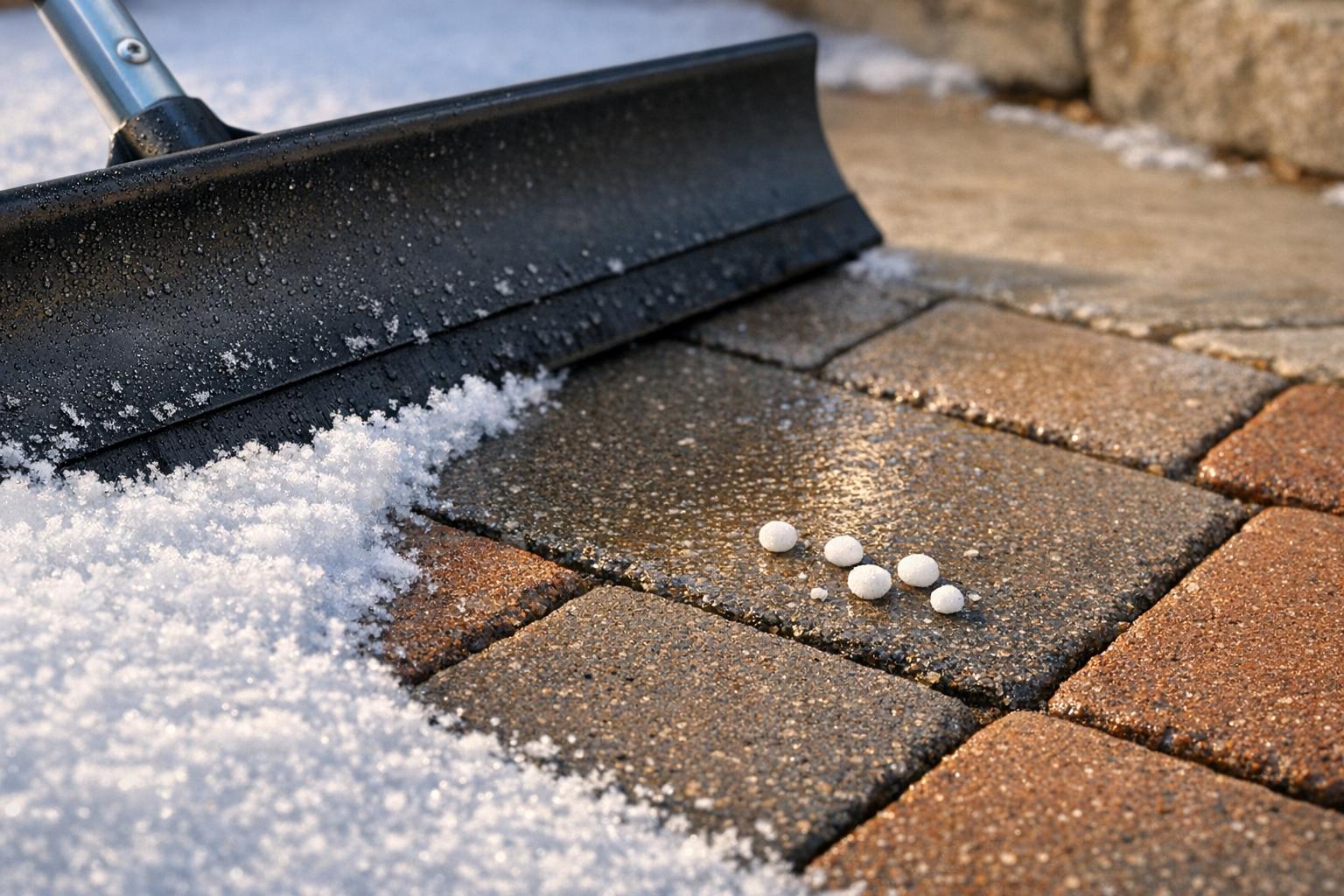
- bhavya gada
- No Comments
- Why It Matters: Proper snow removal protects the durability and appearance of patios, walkways, and driveways made from materials like pavers, flagstone, and concrete.
- Tools to Use: Opt for high-density polyethylene shovels for lighter snow and two- or three-stage snow blowers for larger areas. Avoid steel-edged tools to prevent surface damage.
- Deicers: Use safer options like calcium magnesium acetate (CMA) or magnesium chloride to avoid cracking and staining. Avoid rock salt, which can harm surfaces and plants.
- Preventative Steps: Prepare before winter by sealing surfaces, ensuring proper drainage, and placing snow stakes to protect edges.
- Post-Winter Repairs: Inspect for damage like loose pavers, cracks, or drainage issues. Address minor problems early to avoid costly repairs.
Quick Tip: Always clear snow promptly and avoid high-impact tools to keep your hardscaped areas in top condition.
3 Ways to Remove Snow & Ice for Hardscape | Western Interlock
sbb-itb-843f8be
Choosing the Right Snow Removal Tools
The tools you use for snow removal are just as important as the technique. Choosing the wrong ones can lead to scratched pavers, chipped stone, or displaced joint sand – issues that can be especially problematic during Maryland winters.
Shovels for Paver and Stone Surfaces
For lighter snowfalls (under 2 inches), a push-style shovel works best for paved surfaces. It glides across the surface like a plow, avoiding unnecessary digging. When dealing with heavier or crusty snow, a scoop shovel is a better choice. Its curved blade allows you to lift and toss snow instead of dragging it along the surface[2].
Opt for shovels made from high-density polyethylene. These are lightweight, tough, and less abrasive on surfaces. While steel-edged shovels can cut through packed snow more effectively, they come with a risk. According to Kage Innovation, steel edges can damage flagstone or softer natural stone, especially when they catch on uneven joints[2].
Using Snow Blowers Safely on Hardscapes
Snow blowers can save time and effort, but you need to choose the right type to avoid damaging your hardscape. A key factor is whether the auger – the part that moves the snow – makes contact with the surface. Single-stage blowers, for instance, have an auger that touches the ground, which increases the chance of scratching pavers or dislodging stones[3]. On the other hand, two-stage and three-stage blowers keep the auger elevated, making them safer for stone, gravel, or uneven surfaces[3].
| Blower Type | Best For | Surface Contact |
|---|---|---|
| Power Shovel | Short walkways, elevated decks | High |
| Single-Stage | Level paved driveways | High (auger touches ground) |
| Two-Stage | Stone, gravel, long driveways | Low (auger elevated) |
| Three-Stage | Large areas, heavy wet snow | Low (auger elevated) |
Be prepared by keeping extra shear pins on hand. These small parts are designed to break if the auger hits a hard object, preventing major engine damage[3]. For tight spaces, use handlebar trigger releases to disengage the drive wheels, allowing for more precise steering[3].
Safer Options Instead of Impact Tools
When tackling stubborn snow or ice, steer clear of high-impact tools. Tools that deliver concentrated force can crack pavers or chip the edges of flagstones. Instead, use gentler methods to remove snow and ice. To protect delicate areas, place snow stakes early in the season. These will guide plow blades and help prevent damage to vulnerable edges[4].
Deicers and How They Affect Hardscapes
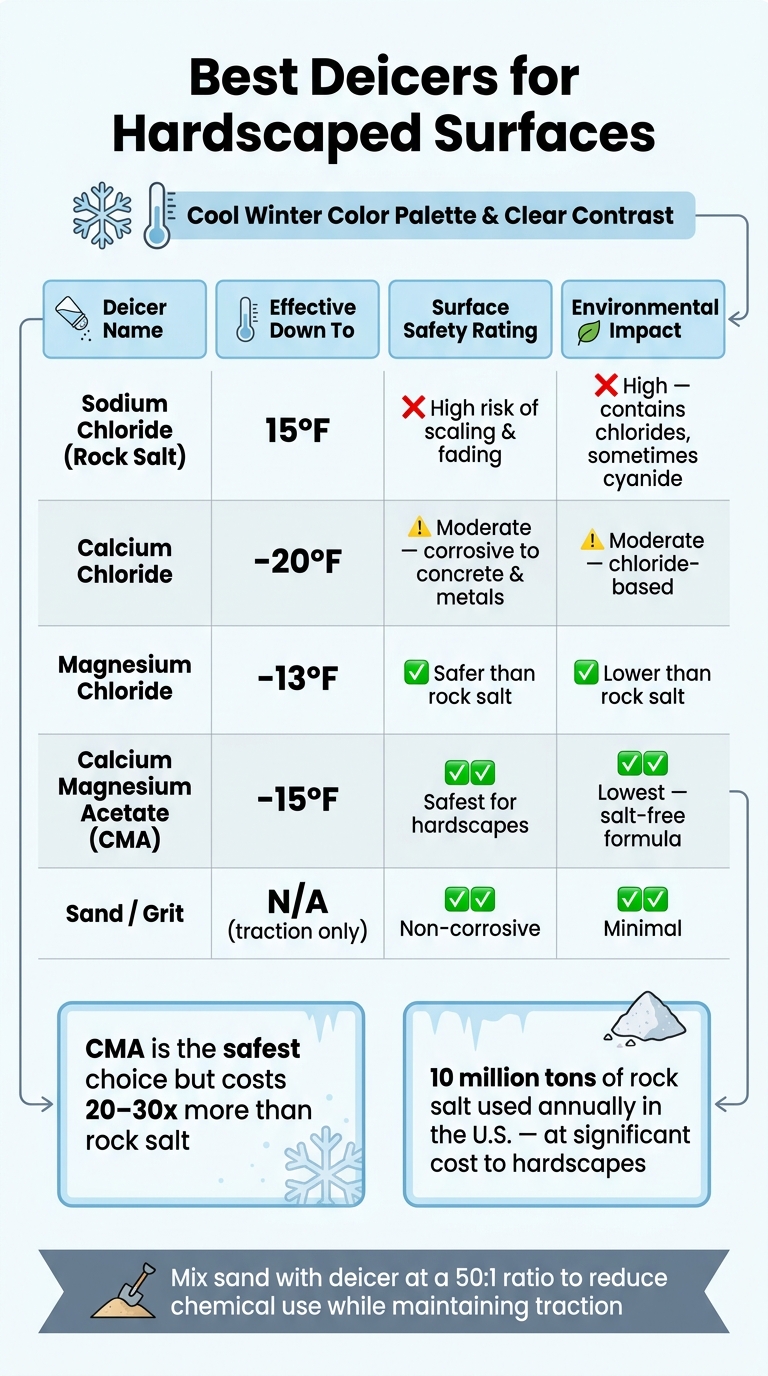
Best Deicers for Hardscaped Surfaces: Safety, Temperature & Environmental Impact
Using the wrong deicer can end up causing more harm to your pavers and stone than the ice itself. To avoid lasting damage, it’s important to understand how deicers interact with hardscapes before applying them.
Picking the Right Deicer for Pavers and Stone
Not all deicers are the same, and their effects on surfaces and the surrounding environment can vary widely. Here’s a quick comparison of the most common types:
| Deicer | Effective to | Surface Safety | Environmental Impact |
|---|---|---|---|
| Sodium Chloride (Rock Salt) | 15°F | High risk of scaling and fading | High – contains chlorides and sometimes cyanide as an anti-caking agent |
| Calcium Chloride | -20°F | Moderate – corrosive to concrete and metals | Moderate – chloride-based |
| Magnesium Chloride | -13°F | Safer than rock salt | Lower than rock salt |
| Calcium Magnesium Acetate (CMA) | -15°F | Safest for hardscapes | Lowest – salt-free formula |
| Sand / Grit | N/A | Non-corrosive | Minimal |
If your budget allows, calcium magnesium acetate (CMA) is the best option for protecting pavers and natural stone. As Justin Mansberger, an Extension Educator at Penn State Extension, explains:
"Calcium magnesium acetate (CMA) is considered one of the safer options for safely melting ice due to its low environmental impact." [7]
However, CMA comes at a steep price – it can cost 20 to 30 times more than standard rock salt [5]. For a more affordable compromise, magnesium chloride offers decent surface protection, works in temperatures as low as -13°F, and is easier to find than CMA. Choosing safer deicers like these can help maintain your hardscape’s condition over time.
Rock Salt and the Damage It Can Cause
Despite its popularity, rock salt (sodium chloride) is one of the most harmful deicers for hardscaped surfaces. In the U.S., around 10 million tons of rock salt are used annually on roads and driveways [6]. While it’s cheap and readily available, the long-term damage it causes can be costly.
Rock salt doesn’t just stain surfaces – it triggers chemical reactions that weaken concrete and stone. Concrete contains calcium hydroxide, which reacts with the calcium chloride in salt to form calcium oxychloride (CAOXY) crystals. As PROSOCO explains:
"The calcium hydroxide present in concrete reacts with the calcium chloride in salt, creating calcium oxychloride (CAOXY) in salt, thus wreaking havoc. When forming inside concrete, CAOXY crystals expand, causing internal cracks and crumbling." [6]
This isn’t the only issue. Rock salt lowers the freezing point of water, increasing the frequency of freeze-thaw cycles. When melted ice refreezes inside porous stone or pavers, it expands and creates hydraulic pressure, leading to scaling (surface flaking), efflorescence (white mineral deposits), and color fading [6]. Over time, salt can even seep into the joints between pavers, breaking down the base material and causing instability. If you have nearby plants or trees, rock salt in the soil can create a "physiological drought", depriving them of water even when moisture is present [6].
Using Sand or Grit for Traction
While sand doesn’t melt ice, it’s a practical alternative for improving traction without causing chemical damage. Sand is non-corrosive, safe for plants, and inexpensive.
To reduce chemical use, mix sand with deicer at a 50:1 ratio [6]. Focus on applying it to high-traffic areas like walkways, steps, and entry points rather than treating the entire surface.
The main drawback of sand is cleanup. Fine grit can displace joint sand and easily track indoors. Once temperatures warm up in spring, sweep up the sand and rinse surfaces with a hose to prevent it from clogging drainage systems or requiring professional drainage solutions or compacting into paver joints [7].
Winter Maintenance for Hardscaped Surfaces
Taking the right steps during winter can help keep your pavers, stone, and concrete in great shape.
How to Avoid Damage While Removing Snow
When clearing snow from hardscaped areas, it’s important to use gentle techniques to avoid harming the surface. Avoid using shovels with sharp edges that can scrape, chip, or dislodge materials – this is especially critical for natural stone, which can be more prone to damage.
How Drainage Affects Winter Performance
Poor drainage can lead to standing water, which freezes and creates ice buildup. Proper grading is key – your landscape should slope away from patios, walkways, and your home’s foundation. Drainage solutions like French drains and dry riverbeds are effective in redirecting both surface and subsurface water. French drains, for example, use permeable materials like river rock (about 1.5 inches in diameter) to channel water safely away from hardscaped areas [9].
Before winter hits, make sure to clear debris from drain grates, swales, and gutters. This simple step helps prevent ice dams from forming and causing further issues [8].
"Addressing drainage issues early will save you money and prevent bigger problems down the road." – New Garden Landscaping [8]
Once drainage is under control, take the next step by sealing your hardscapes to protect them from winter weather.
Sealing Hardscapes Before Winter
Applying a sealer to pavers and natural stone before winter adds a protective layer that reduces moisture absorption. This helps minimize damage from freeze-thaw cycles and also makes surfaces less prone to stains from deicing chemicals or organic debris.
For the best results, seal your hardscapes in late fall before temperatures drop. Even materials designed for tough climates, like those from Techo-Bloc, Belgard, and Unilock, benefit from an additional layer of protection [1]. A good sealer ensures your surfaces are ready to withstand whatever winter throws their way.
Repairing Hardscapes After Winter
Signs of Winter Damage to Look For
After winter, take a close look at your patios, walkways, and driveways for any signs of wear or damage. Watch for loose or unstable pavers, as well as any sections that have shifted – either raised or sunken – that could create trip hazards. Pay attention to the joints between pavers; if the sand has washed away or the gaps seem larger than usual, it might need attention. Also, check for chipped edges, surface flaking, or a white, powdery residue called efflorescence, which can indicate moisture moving through the material during the colder months.
For steps and retaining walls, look out for leaning, bulging, or gaps between the blocks. Don’t forget to inspect drainage areas. Standing water, especially near edges or foundations, could signal a drainage issue that needs to be addressed.
How to Repair Hardscape Damage
Fixing winter damage starts with careful inspection and maintenance. For smaller problems like settled pavers, minor cracks, or missing joint sand, you can follow these steps:
- Remove the affected pavers and the old bedding material.
- Compact the base using crushed stone to stabilize any soft spots.
- Add a fresh 1-inch layer of bedding sand.
- Reset the pavers and sweep polymeric sand into the joints diagonally.
- Compact the area using a plate compactor with a rubber pad, and lightly mist the area to activate the sand’s binder.
Using polymeric sand is key – regular play sand won’t hold up and can leave the joints vulnerable to further damage. For concrete surfaces, flexible crack fillers can handle minor cracks, but more serious issues like deep cracks or widespread scaling may require resurfacing or even partial replacement. Depending on the scope of the damage, these repairs can become quite costly.
If the damage seems beyond basic fixes, it’s smart to bring in a professional for a thorough assessment.
How Pro Landscapes MD Can Help

When hardscape damage is severe or keeps happening in the same areas, professional help can make all the difference. Problems with retaining walls, steps, or recurring issues often point to underlying drainage or base problems that DIY fixes won’t solve. Pro Landscapes MD specializes in diagnosing these deeper issues and providing solutions that last, not just quick fixes.
Serving homeowners in Howard County, Montgomery County, Baltimore County, and nearby areas, Pro Landscapes MD offers a range of services, including:
- Paver patio and driveway repair
- Retaining wall stabilization
- Natural stone step restoration
- Drainage upgrades, like French drains, dry riverbeds, grading, and yard leveling
These services are designed to tackle the root causes of freeze–thaw damage, ensuring your hardscapes stay in great shape. They also provide free site visits and hardscaping proposals for homeowners in the Baltimore and Washington, DC areas, giving you a clear understanding of what’s needed before any work begins.
"With proper care and maintenance, hardscaping materials such as stone and concrete can last decades." – Pro Landscapes MD
Conclusion
Keep your hardscape in top shape by sticking to consistent winter care routines. Clear snow promptly using the right tools and methods, apply calcium or magnesium chloride ice melt evenly with a spreader before storms, and steer clear of rock salt, especially on pavers and natural stone surfaces.
Take steps to prevent damage by ensuring proper drainage and applying a sealant before freezing temperatures hit. Make it a habit to prepare your hardscape each fall and inspect it every spring. A post-winter check can help you catch and address small problems before they become costly repairs.
Protecting your hardscape isn’t just about aesthetics – it’s about preserving your investment for the long haul. Regular maintenance can make a big difference in extending its lifespan.
For those in central Maryland or the Washington, DC area, Pro Landscapes MD provides free site visits and hardscaping proposals to help you assess your space after winter’s wear and tear.
Chat with Us