









- bhavya gada
- No Comments
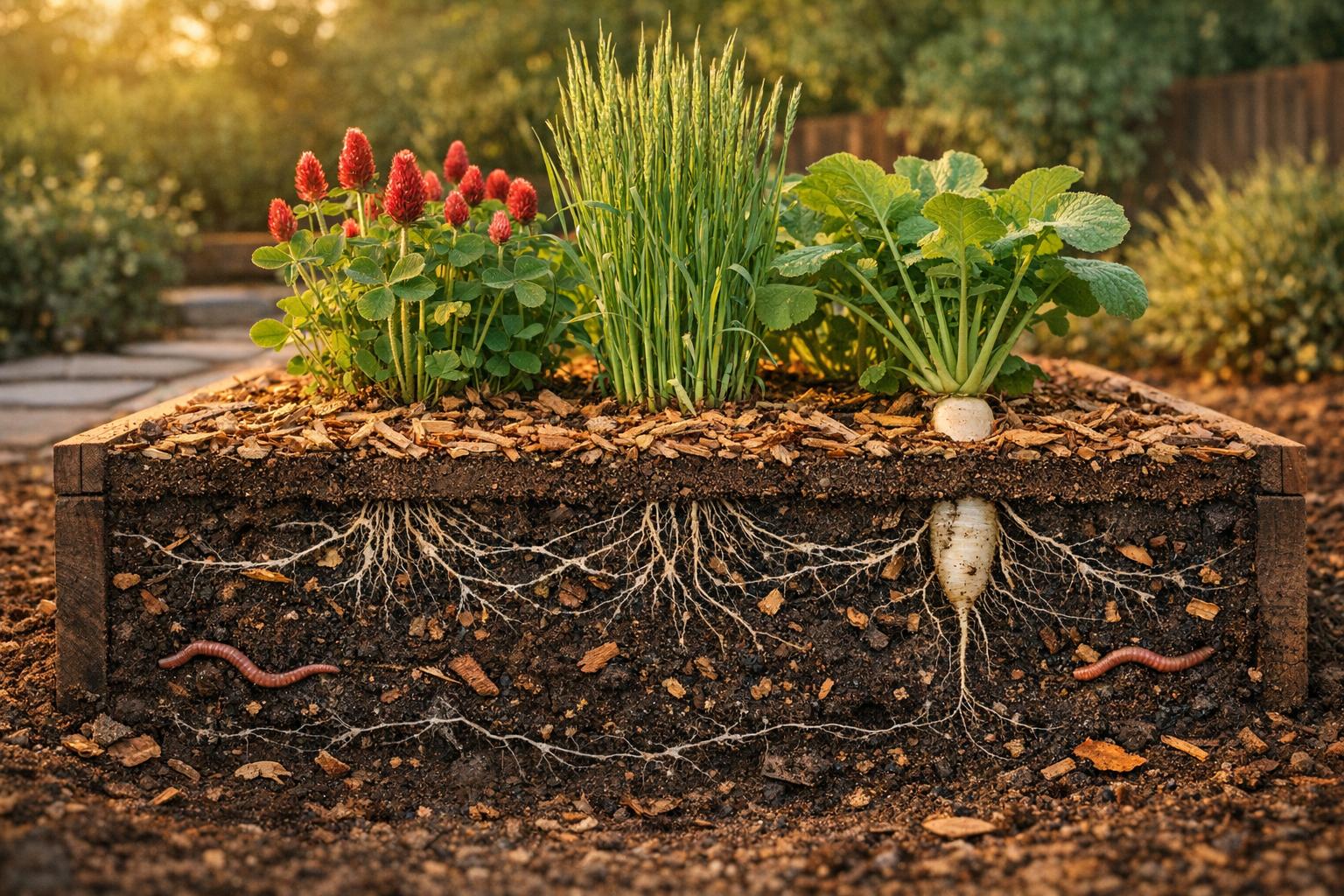
Soil microbial diversity is the backbone of healthy, thriving landscapes. It refers to the billions of microorganisms – bacteria, fungi, protozoa, nematodes, and more – that work together to improve soil structure, recycle nutrients, and support plant health. Here’s why it matters and how you can improve it:
- Better Plant Health: Microbes help plants absorb nutrients, manage stress, and grow stronger.
- Improved Soil Structure: Fungi and bacteria create stable soil aggregates, boosting aeration and water retention.
- Natural Pathogen Control: Beneficial microbes outcompete harmful ones, reducing the need for chemical pesticides.
- Eco-Friendly Practices: Adding organic matter, using cover crops, and avoiding synthetic chemicals can nurture microbial life.
Simple steps like reducing soil disturbance, applying compost, and incorporating diverse plantings can create a thriving soil ecosystem. For Maryland homeowners, companies like Pro Landscapes MD offer expert solutions to build long-term soil health while designing beautiful outdoor spaces.
Healthy soil isn’t just dirt – it’s a living system that supports plants, animals, and people.
Benefits of Soil Microbial Diversity
Better Plant Health and Growth
A rich microbial community plays a key role in boosting plant growth. Microbes fix atmospheric nitrogen, extend root systems to improve nutrient and water uptake, and even produce growth hormones and enzymes that help plants handle stress, like drought or heat. For instance, mycorrhizal fungi can cut the need for chemical phosphorus fertilizers by up to 50% [4]. Enzymes like ACC deaminase, produced by microbes, help plants manage stress, while bacteria such as Azotobacter can provide 10–30 lbs of nitrogen per acre naturally – no synthetic inputs required [4]. Additionally, protozoa and nematodes contribute by releasing excess nitrogen as ammonium, making it easier for plants to absorb [1]. Beyond nutrients, these microbial interactions help improve the soil’s overall structure, making it more resilient.
Stronger Soil Resilience
Healthy microbial populations contribute to soil’s ability to handle environmental challenges. For example, fungi produce hyphae and glomalin, which bind soil particles into stable clumps. This improves aeration, water infiltration, and root growth [1][4]. Microbial decomposition increases organic matter, which enhances the soil’s water-holding capacity – perfect for drought-prone areas [5]. Mycorrhizal fungi also extend root systems, helping plants reach far-off water sources, while other microbes produce siderophores to chelate iron and enzymes that buffer plants against stress [1]. These benefits create soil that’s better equipped to support sustainable landscaping efforts.
Eco-Friendly Landscaping Practices
Microbial diversity offers a natural way to suppress pathogens, reducing the need for chemical treatments. Beneficial organisms like nematodes and Trichoderma species compete with harmful pathogens and even produce natural antibiotics to keep diseases in check [3][5]. This approach not only cuts down on synthetic inputs but also protects the environment. Healthy microbial communities help sequester carbon and prevent nutrient loss by keeping nitrogen and phosphorus locked in the soil. When soil is treated as a living system instead of just a growing medium, landscapes become more efficient, resilient, and require less intervention over time.
sbb-itb-843f8be
Soil Microbes in the Garden – Answering your questions in a Q&A session
How to Promote Soil Microbial Diversity
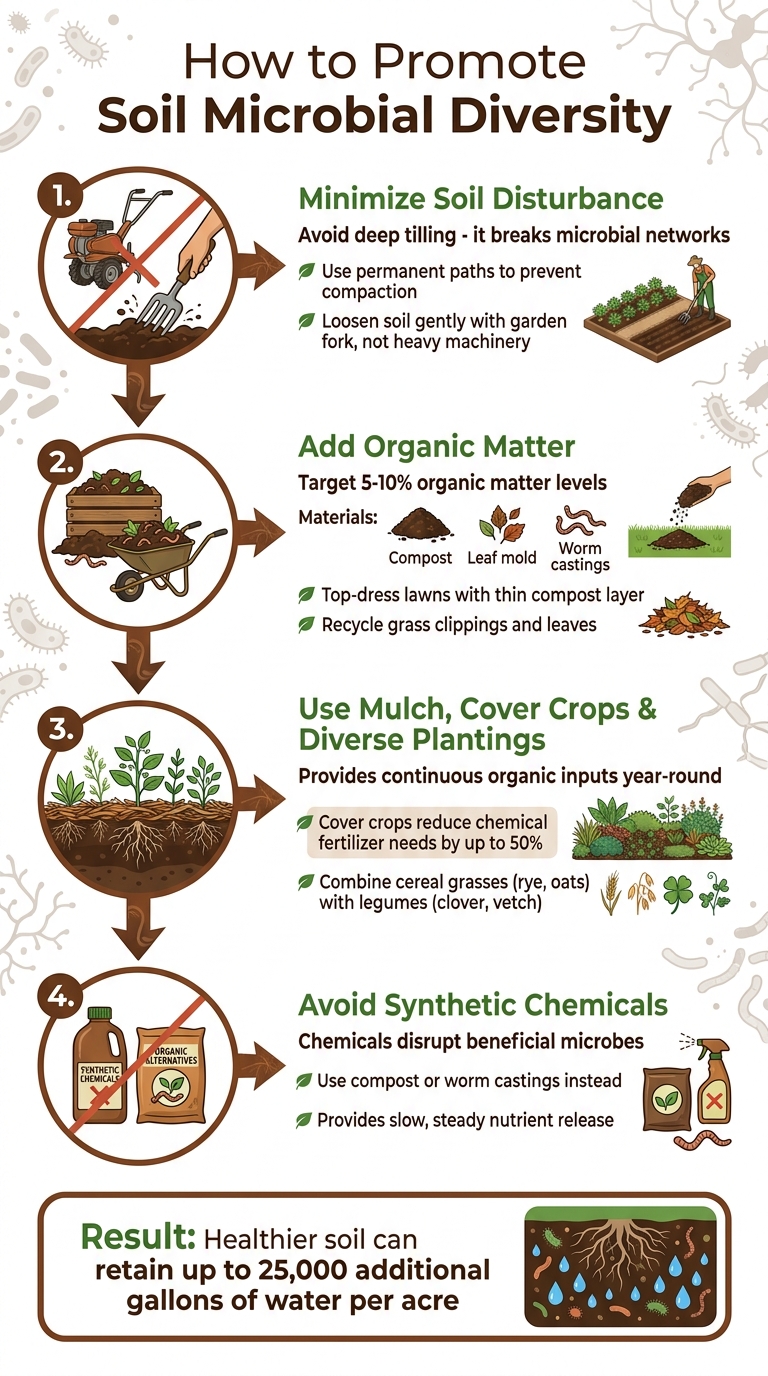
4 Essential Steps to Promote Soil Microbial Diversity in Your Landscape
Practical steps can directly support and maintain thriving soil microbial communities, which are essential for healthy soil.
Minimize Soil Disturbance
Deep tilling can break apart crucial microbial networks and speed up oxidation, which depletes organic matter. As experts Sally Scalera, Alexander J. Reisinger, and Mary Lusk from UF/IFAS explain, "Tilling and digging will harm mycorrhizae and other soil microbes" [6]. Instead, try to avoid soil compaction by using permanent paths or raised walkways. If compaction does occur, loosen the soil gently with a garden fork rather than heavy machinery.
Add Organic Matter
Organic matter is the backbone of a vibrant soil food web, supplying carbon and energy for microbes. Compost, leaf mold, and worm castings are excellent options, as they not only feed microbes but also release nutrients plants can absorb, improve soil structure, and enhance water infiltration. Aim for organic matter levels between 5% and 10% to support a rich microbial community.
You can top-dress lawns with a thin layer of compost and recycle yard waste like grass clippings and leaves. Using a variety of organic inputs – such as compost, straw, seaweed, or cover crop residues – ensures that different microbial groups are fed. If you’re incorporating biochar, mix it with compost or fish emulsions first to fill its porous surfaces with nutrients. Organic mulches and diverse plantings also play a role in sustaining this ecosystem.
Use Mulch, Cover Crops, and Diverse Plantings
Mulch, cover crops, and varied plantings keep microbial activity steady throughout the year by supplying continuous organic inputs and root exudates. Cover crops, in particular, provide essential nutrients directly to soil microbes through their roots. Combining cereal grasses like rye or oats with legumes such as clover and vetch can enhance connections with Arbuscular Mycorrhizal Fungi (AMF), potentially cutting the need for chemical phosphorus fertilizers by up to 50% [4]. For crops that don’t associate with mycorrhizal fungi, interplanting with AMF-friendly species can help sustain these beneficial fungi.
Avoid Synthetic Chemicals
Chemical fertilizers and pesticides can disrupt or even destroy beneficial soil microbes by interfering with natural nutrient cycles. Pesticides, in particular, can harm non-target organisms like helpful bacteria, fungi, and nematodes that naturally control pathogens. Instead, opt for organic alternatives such as compost or worm castings, which nourish beneficial microbes and provide a steady, slow release of nutrients.
Advanced Methods for Improving Soil Microbial Health
Taking soil care to the next level, advanced techniques can dramatically improve microbial health and contribute to more sustainable landscaping practices.
Mycorrhizal Fungi Inoculation
Mycorrhizal fungi form a mutually beneficial relationship with plant roots: plants provide carbohydrates, while the fungi supply essential nutrients and water. These fungi also produce glomalin, a substance that binds soil particles into stable clusters, improving both aeration and water infiltration [2][4].
To use mycorrhizal fungi effectively, apply inoculants during planting when roots are exposed. Bare roots can be dusted with the inoculant, or transplants can be dipped into a microbial slurry. Be sure to select products that clearly list the species and microbial counts, and confirm they are within their expiration date [1]. Avoid overusing high-phosphorus fertilizers, as excessive phosphorus can interfere with mycorrhizal colonization [2]. For St. Augustinegrass lawns, Glomus species are particularly effective, forming a beneficial partnership with this type of turf [2].
Compost Teas and Natural Additives
Compost teas bring a rich variety of microbes and humus to the soil, boosting nutrient retention [1]. Use finished compost that smells earthy and has a stable, ambient temperature. Regularly apply a thin layer of compost or vermicompost to lawns and garden beds to introduce beneficial microbes [1].
Natural additives like fish hydrolysate and kelp meals gently nourish soil microbes without the risk of root shock caused by synthetic fertilizers [1]. To feed a diverse range of microbial communities, rotate carbon sources by incorporating compost, straw, cover crop residues, and seaweed. If using biochar, pair it with compost or fish emulsions to "charge" it with nutrients before applying it to the soil [1].
Targeted Microbial Applications
These advanced methods not only enhance plant nutrition but also improve soil resilience – key to sustainable landscaping. For example, Trichoderma species colonize roots, protecting them from pathogens and stimulating root branching through enzyme production [1]. Azospirillum and Azotobacter promote root hair development, aiding in the uptake of micronutrients like iron, zinc, and boron. Phosphate-solubilizing bacteria release organic acids that free up bound phosphates in the soil, reducing reliance on chemical fertilizers. Additionally, nitrogen-fixing bacteria in commercial inoculants can contribute between 10 and 30 pounds of nitrogen per acre [4].
To ensure effectiveness, apply these inoculants directly to bare roots or dip transplants into a microbial slurry so the spores contact root hairs [1]. Look for products with clearly labeled species and guaranteed microbial counts, and store them in a cool, dry place to maintain their viability. Keep soil well-aerated and moist to support aerobic microbes. For tailored solutions, consult local experts like Pro Landscapes MD, who can help integrate these techniques into a comprehensive soil management plan.
Pro Landscapes MD: Supporting Microbial Diversity Through Expert Landscaping Services

Eco-Friendly Landscaping Techniques
Pro Landscapes MD focuses on promoting soil microbial health in every project they undertake across central Maryland, from Howard County to Baltimore County. They incorporate organic materials like compost, leaf mold, and aged manure to nourish soil microbes. This process enhances the soil’s ability to retain water and nutrients. By planting native, deep-rooted vegetation, they create ecosystems where diverse plant species encourage various microbial communities. This natural balance helps landscapes resist weeds, pests, and diseases more effectively [1][5].
Their drainage solutions, such as French drains, dry riverbeds, and proper grading, are designed to maintain oxygen levels in the soil, which is essential for aerobic microbes to thrive [1]. The company also takes care to protect mycorrhizal networks, which serve as nutrient pathways between plants. To avoid disrupting the soil’s natural microbial balance, they limit the use of synthetic fertilizers and broad-spectrum fungicides, both of which can harm microbial cells and the soil food web [1][5]. These thoughtful methods integrate seamlessly into their customized landscape designs, which prioritize long-term soil health.
Custom Landscape Design for Soil Health
Pro Landscapes MD takes eco-friendly practices a step further by tailoring every design to support thriving microbial communities. They start with comprehensive soil testing on each Maryland property, measuring factors like pH, phosphorus, potassium, and organic matter levels. Their goal is to build organic matter content to between 5% and 10%, creating an environment where the soil food web can flourish [5]. This data-driven process helps them choose plant species that benefit specific microbes, such as cereal grasses that work with arbuscular mycorrhizal fungi or legumes that attract nitrogen-fixing bacteria [4].
Even their hardscaping projects are designed with soil health in mind. Features like stacked stone installations around trees and flowerbeds are carefully implemented to reduce soil disruption. Retaining walls, garden walls, and environmental pavers are strategically placed to manage water flow without compacting the soil or damaging microbial habitats. By treating soil as a living ecosystem, Pro Landscapes MD creates landscapes that grow stronger and more self-sufficient over time [1][5].
Client Success Story
One Maryland homeowner shared their experience working with Pro Landscapes MD. The combination of engineered stone installations, native plants, and organic mulches helped reduce soil compaction in high-traffic areas while fostering a vibrant soil food web. Over time, the landscape improved as microbial activity increased with each growing season, demonstrating the long-term benefits of Pro Landscapes MD’s approach.
Conclusion
Soil microbial diversity transforms ordinary landscapes into thriving ecosystems. When you view soil as a living, interconnected community, your landscape becomes more resilient and efficient. Beneath the surface, countless organisms – like bacteria, fungi, and protozoa – work together to cycle nutrients, suppress harmful pathogens, and improve soil structure. This dynamic foundation gets stronger with every passing season.
The steps to healthier soil are simple yet impactful: reduce soil disturbance, incorporate a variety of organic matter, keep living roots in the ground year-round, and steer clear of harsh chemicals. Even small adjustments can make a big difference. For example, increasing organic matter can enable soil to retain up to 25,000 additional gallons of water per acre [5]. These practices set the stage for a vibrant, enduring landscape no matter the season.
For homeowners looking for expert guidance, Pro Landscapes MD offers tailored solutions to promote soil health. Serving communities across Howard County, Montgomery County, and nearby areas in Maryland, they specialize in soil testing, thoughtful plant selection, and hardscaping installations that protect and support microbial life. Whether you’re designing a new outdoor space, addressing drainage issues, or reviving an existing property, their expertise ensures your soil ecosystem will flourish for years to come.
As the USDA-NRCS defines it, soil health is the ability of soil to function as a living ecosystem that benefits plants, animals, and humans [5]. By working with professionals who understand this concept, you’re not just enhancing your outdoor space – you’re creating a landscape that collaborates with nature to thrive sustainably.
FAQs
How can I tell if my soil has low microbial diversity?
Signs of low microbial diversity in soil can show up in several ways: compacted or poorly structured soil, insufficient organic matter, weak plant growth, nutrient shortages, or increased vulnerability to diseases. On the other hand, healthy soil often teems with life – think earthworms, fungi, and lush plants. While lab tests can provide detailed insights into microbial activity, there are hands-on steps to improve soil health. Adding organic matter, cutting back on chemical inputs, and adopting eco-friendly landscaping practices can help nurture a thriving soil microbiome.
How long does it take to improve soil microbes after adding compost and mulch?
Soil microbes often respond positively to the addition of compost and mulch, with noticeable changes occurring within weeks to a few months. How quickly this happens depends on factors like the soil’s starting condition, temperature, and moisture levels. Consistently monitoring the soil and ensuring it stays in favorable conditions can speed up the process and encourage microbial activity.
What’s the best time to apply mycorrhizal inoculants or compost tea?
The best time to use mycorrhizal inoculants is either when seedlings are just emerging (roughly a week after germination) or during the transplanting of mature plants. At these stages, plant roots are most susceptible and open to colonization, which helps promote healthier growth and development.
Chat with Us