









- bhavya gada
- No Comments
If water sits in an outdoor cardio area for more than 24–48 hours, the site likely needs grading work, drain repair, or a better base. I’d look at three things first: where water is pooling, where runoff is entering, and whether the drain system is blocked or too small for heavy rain.
Here’s the short version:
- Standing water often points to low spots, poor slope, or compacted soil
- Runoff and erosion usually mean water is flowing in from roofs, driveways, or higher ground
- Drain backups often come from clogged grates, blocked pipes, or weak discharge points
- Good fixes include regrading, French drains, trench drains, and permeable surfaces over a crushed stone base
- In Maryland, clay soil and freeze-thaw weather make wet areas last longer and can crack or shift hard surfaces over time
A wet workout surface is more than annoying. It can turn paths, pads, and entry points into slip risks, loosen pavers, wash out edges, and lead to repair bills that can climb into the hundreds or thousands of dollars if the base starts to fail.
If I were planning or fixing an outdoor cardio zone, I’d keep the goal simple: move water away fast, give it a place to go, and keep the surface stable after storms.
Common Drainage Problems in Maryland Outdoor Cardio Areas
The most common drainage issues in outdoor cardio spaces are standing water, runoff, and drain failure. Maryland’s clay-heavy soil drains slowly, which means workout surfaces often stay wet longer than they should. Paver and turf exercise areas can remain damp well after the rain stops. And each issue usually points to a different fix, whether that’s regrading, drain repair, or better water discharge.
Standing Water and Slow-Drying Surfaces
Puddles that linger long after a storm are a red flag. In paver-based exercise zones, water often settles in low spots when the surface doesn’t have enough slope. In turf workout areas, compacted soil and heavy foot traffic can limit water absorption and leave the surface soggy.
Runoff, Erosion, and Washed-Out Edges
Cardio zones on sloped properties deal with a different kind of problem. Instead of water sitting in place, it flows into the area from somewhere else. Short downspout extensions, water spilling off nearby driveways, and runoff moving across nearby hard surfaces can all send water straight into a running lane or exercise pad [1][3][5].
Once that water hits the edge of the workout area, it can wear away the perimeter and make the nearby landscape less stable on sloped sites [1][3][2].
Clogged or Undersized Drain Systems
Some cardio areas already include drains, such as channel drains along paver edges, catch basins in low corners, or French drains below the surface. A lot of the time, the issue is pretty simple: leaves and sediment clog the inlet before water can move through the system [3][4].
The clearest sign of failure is water backing up at the grate or spilling over the channel during rain [6][7]. If the fitness area floods fast while it’s raining but no water is coming out of the drainage pipe, there’s probably a blockage in the line [2][1]. On some residential properties, undersized pipes can also lead to backups when the drain system can’t handle the water volume from a heavy Maryland storm [1].
Once you know what’s causing the issue, the next step usually comes down to regrading, better discharge, or adding a new drain layer.
sbb-itb-843f8be
Drainage Solutions for Outdoor Cardio Zones
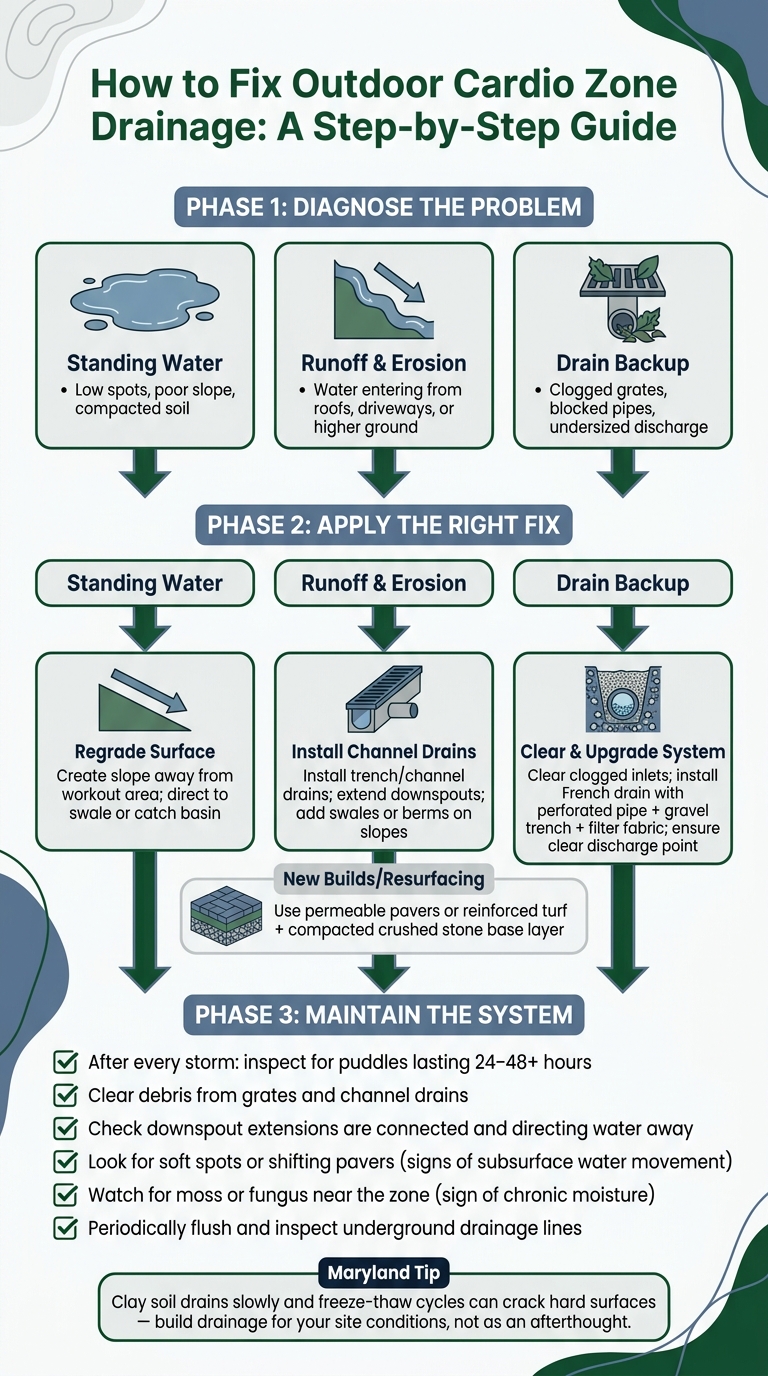
How to Fix Outdoor Drainage Problems: Diagnose, Fix & Maintain
Fix the site based on how water moves. Regrade low spots, intercept runoff, or repair the drain and base system. Once you know whether water is pooling, running in, or backing up, you can match the fix to the exact failure point.
Regrading and Slope Correction
Regrading is the first step for most drainage fixes. If the ground under a cardio zone doesn’t have a steady slope that pushes water away from the activity area, the surface won’t stay usable for long. The goal is simple: move water away from workout surfaces and direct it into a swale, rain garden, or catch basin.
In Maryland, clay-heavy soil makes this even more important because it holds water and drains slowly. That means even a small dip can turn into a puddle after a heavy storm. Regrading reshapes the terrain so water leaves the surface before it has time to sit and collect. If you’re resurfacing or rebuilding, start here. Putting new pavers or turf over a poorly graded base just covers the same problem for a while.
French Drains, Trench Drains, and Discharge Planning
After grading, pick the drain based on where the water is coming from.
If water is soaking in from below, use subsurface drainage. French drains are made for soil that stays saturated and keeps turf soggy for days after rain. A perforated pipe set in a gravel-filled trench and wrapped in filter fabric can carry that water to an outlet or a pop-up emitter at a lower elevation.
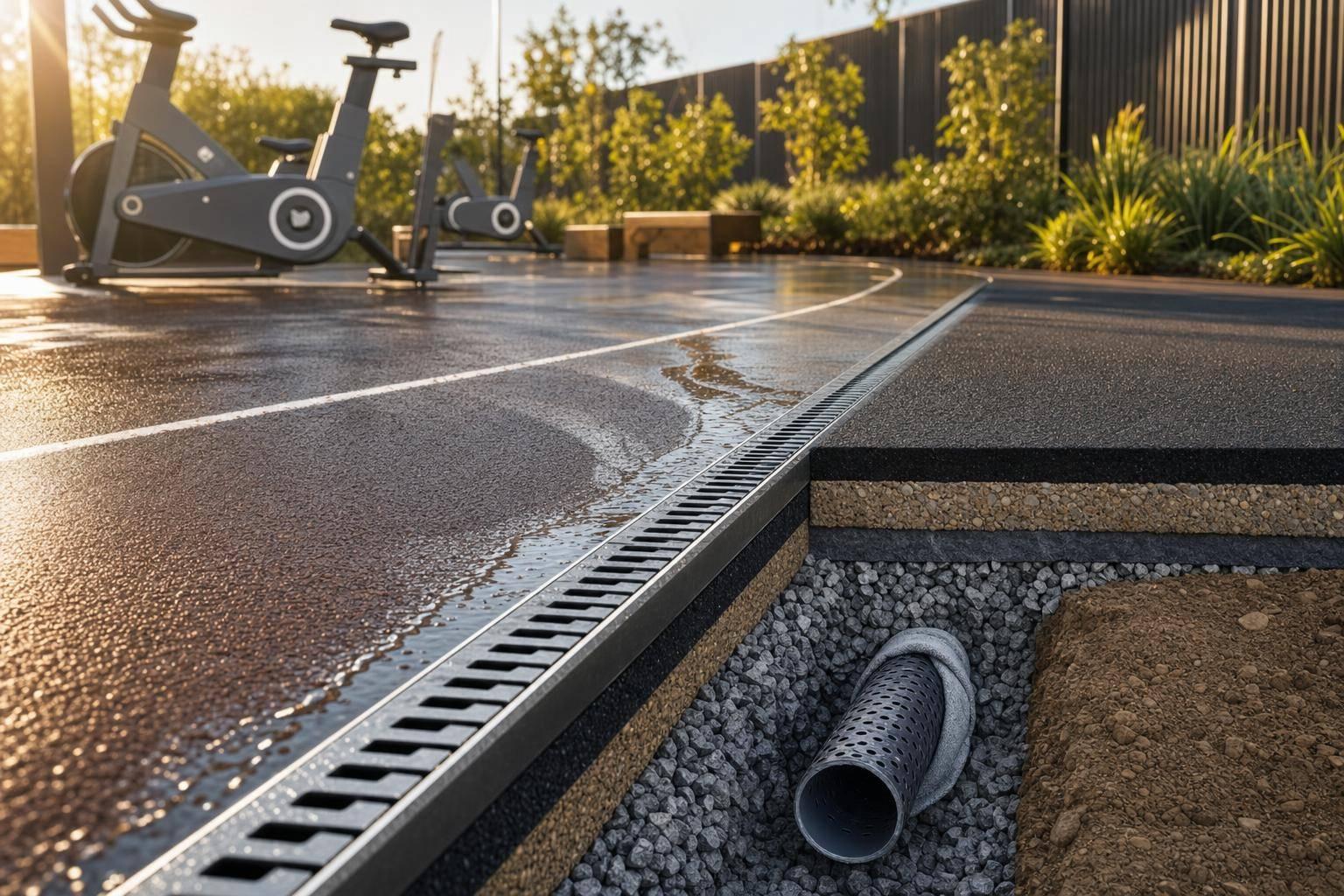
Trench or channel drains fix a different issue: surface runoff moving across patios, walkways, or exercise areas. These drains sit flush with the hardscape and catch water before it pools or runs over the edges.
Both systems need a clear discharge point. If they don’t have one, water backs up and the drain won’t work the way it’s supposed to.
Permeable Surfaces and Stable Base Layers
For new builds or resurfacing, drainage should also be built into the surface itself. Surface choice plays a big role in how fast the zone dries. Permeable pavers let water soak into the ground, which cuts runoff at the source. Reinforced turf systems do something similar. They stay firm under foot traffic while letting water pass through instead of sitting on top.
The surface and base need to work together. A compacted crushed stone base gives the area the support and drainage capacity it needs to stay in place and avoid saturation over time. In Maryland clay soils, that base layer is a big part of what keeps a cardio zone usable after rain.
Maryland Site Conditions and Professional Installation Factors
Once you’ve picked the right drainage fix, the site itself decides how that fix should be built. In central Maryland, clay soil, sloped yards, tight lots, and freeze-thaw weather patterns all shape the plan. Drainage needs to be built for the property, not treated like an add-on later.
Designing for Clay Soils, Slopes, and Freeze-Thaw Cycles
Clay soil needs a base and an outlet that can move water out before it sits under the surface. If water hangs around, the ground can stay wet longer than it should.
On sloped properties, grading, swales, or berms can help intercept runoff before it reaches the cardio zone. That matters because water moving downhill doesn’t just disappear – it goes somewhere. If you don’t guide it, it can end up right where you don’t want it.
Freeze-thaw cycles add another layer to the problem. Standing water becomes more damaging when temperatures swing, so discharge should move away from hard edges instead of collecting near them.
Coordinating Drainage with Nearby Hardscaping
Drainage has to work with the surrounding hardscape. Patios, walkways, retaining walls, and steps all affect whether a cardio surface stays dry and stable. That’s why these parts should be planned together, so one area doesn’t end up draining into another.
Retaining walls also need drainage built behind them. Water pressure behind retaining walls can lead to failure over time. And nearby hardscaping should include a clear route for surface water, whether that’s through a channel drain, surface grate, swale, or catch basin.
When drainage has to fit around patios, walls, or walkways, the install details matter just as much as the drain itself.
How Pro Landscapes MD Can Help

Pro Landscapes MD handles the drainage work that outdoor cardio zones in central Maryland often need. Their services include:
- French drains
- Drain pipe placement
- Drainage repair
- Grading
- Yard leveling
- Dry riverbeds
- Stormwater management
They also install patios, walkways, retaining walls, and environmental pavers, which helps when drainage and hardscaping need to be planned as one system. They serve properties across Howard County, Montgomery County, Carroll County, Frederick County, Prince George’s County, Baltimore County, and Washington, DC.
After installation, routine inlet checks and debris removal help keep the system working as intended.
Maintenance Steps and Key Takeaways
Once drainage is in place, maintenance is what keeps it doing its job. Even a well-built system needs routine checks. In Maryland, heavy storms, clay soil, and freeze-thaw cycles can bring drainage trouble back.
Start with a post-storm inspection. Then clear debris before it piles up. A simple walk around the site after a storm can help you spot trouble early. If puddles stick around for 24–48 hours, that usually points to a clog, a grading problem, or a soaked base layer [3][1].
Clean grates and channel drains after storms. Check downspout extensions too. They should still be connected and sending water well away from the cardio zone [3][1].
Regular cleaning helps stop leaves and other debris from blocking drains. French drains need routine inspection and cleaning as well. The same goes for underground drainage lines, which should be checked and cleaned out on a regular basis.
Keep an eye out for soft spots or shifting pavers. Those are often signs that water is moving under the surface. Moss or fungus near the zone can also be an early sign of long-term moisture. Spotting these issues early can help you avoid bigger repair bills later.
Regular upkeep helps protect the dry, stable surface an outdoor cardio zone depends on.
FAQs
How do I know if my cardio zone needs regrading or a new drain?
It comes down to how bad the water problem is and how long it sticks around.
Regrading is often enough when the issue comes from surface slopes that cause pooling, and the area dries out within 24 to 48 hours.
If the area stays wet for more than 48 hours after rain, or you notice foundation dampness, erosion, or standing water near cardio equipment, you’ll likely need a new drain.
What type of drain works best for runoff on a sloped yard?
French drains often work best on sloped yards because they intercept groundwater and surface water, then move it away from spots that tend to collect water.
For runoff you can actually see moving across the yard, dry creek beds help guide that flow and cut down on erosion. Berms and swales can also help by diverting, holding, and directing runoff where it needs to go. Pro Landscapes MD can assess site conditions and recommend the best solution.
How often should outdoor drainage systems be inspected and cleaned?
Regular maintenance helps keep drainage systems working well all year, especially since leaves and other debris can clog drains and slow water flow.
Check and clean your system on a regular basis based on your property’s conditions. That helps head off clogs and keeps water moving the way it should. Pro Landscapes MD can help with drainage assessments and maintenance across central Maryland.
Chat with Us