









- bhavya gada
- No Comments
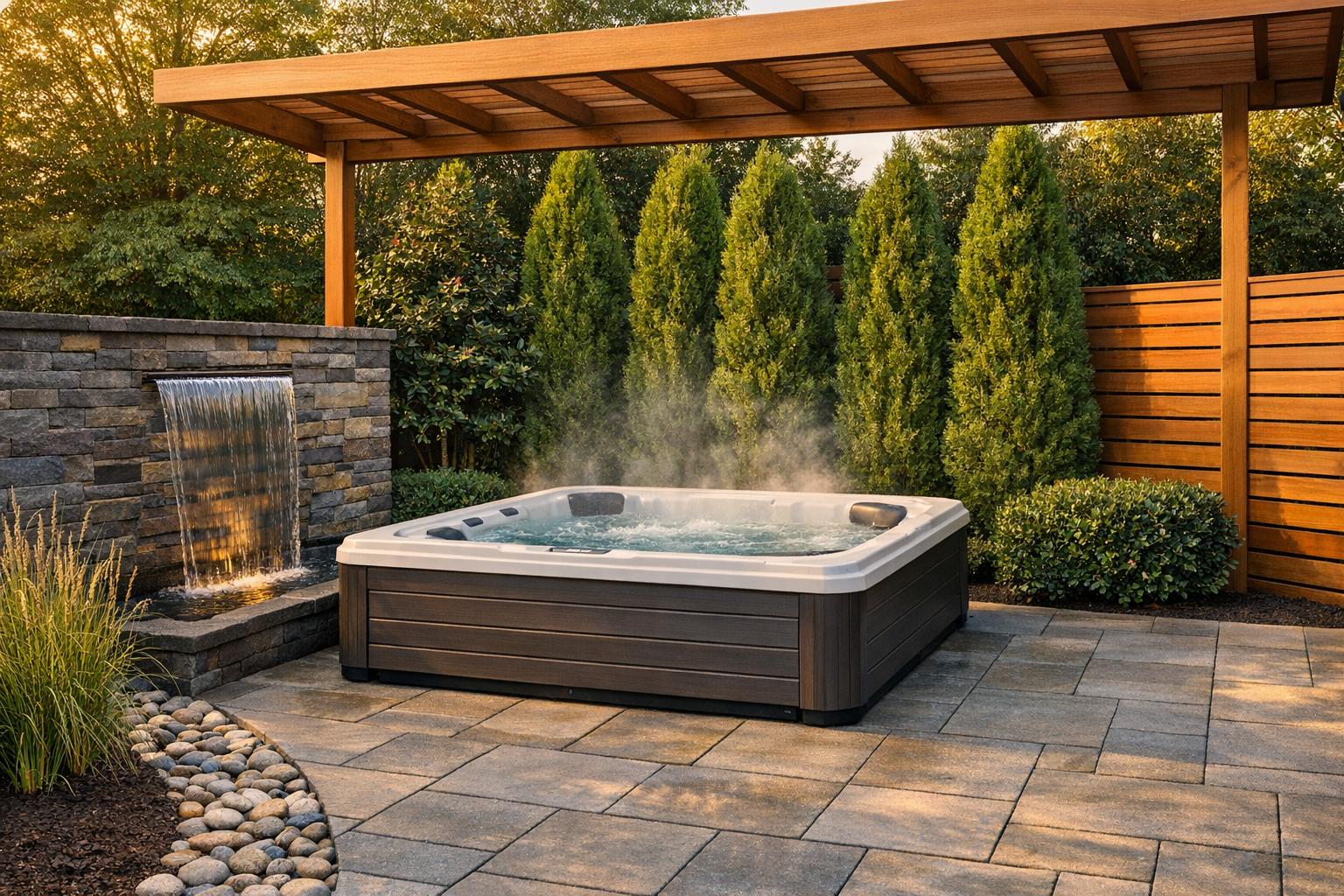
Creating a private spa retreat in your backyard is about combining plants, structures, and noise-reducing features to ensure a peaceful, secluded space. This guide covers everything you need to know, from choosing the best evergreen shrubs for year-round coverage to incorporating hardscaping elements like fences, pergolas, and water features. Here’s a quick overview:
- Privacy Plants: Use fast-growing evergreens like Green Giant Arborvitae or Leyland Cypress for dense coverage. Pair them with ornamental grasses or climbing vines for added texture.
- Hardscaping: Install fences, raised planters, or pergolas for immediate seclusion. Use durable materials like cedar, composite, or stone for long-lasting results.
- Noise Reduction: Add layered plants, retaining walls, or water features to absorb or mask unwanted sounds.
- Maryland-Specific Tips: Choose climate-suited plants, mix species for resilience, and avoid running bamboo due to its aggressive growth.
Start by surveying your yard to identify visibility and noise concerns, then layer plants and structures for a balanced design. With proper drainage and seasonal maintenance, your spa area will remain a relaxing retreat all year long.
Hot Tub and Swim Spa Backyard Privacy Ideas
sbb-itb-843f8be
Assessing Your Spa Privacy Needs
Take some time to survey your property at different times of the day to identify areas where privacy might be compromised. Stand where your spa will be located and look for direct sightlines, distractions, and sources of noise that could affect your experience [6]. This simple audit will help you pinpoint the areas that need the most attention when it comes to creating a private and peaceful setup.
"The landscape design of your hot tub begins with location." – Master Spas [4]
It’s also important to think about how privacy needs change with the seasons. For instance, deciduous trees and shrubs might block views effectively during the summer but leave your spa completely exposed in the winter months – especially in Maryland [6]. If you’re planning to use your hot tub year-round, consider evergreen plants that maintain their foliage even in the cold. Elevation is another factor to keep in mind. A spa on a raised deck might be visible from second-story windows, while a sunken design naturally offers more privacy but requires careful structural planning and professional landscaping services [3]. Once you’ve identified these factors, refine your observations to focus on visibility and noise concerns.
Evaluating Visibility and Noise Levels
Use your initial survey to figure out which areas need visual or acoustic screening. Spend a few days observing your yard to track sunlight, wind patterns, and any intrusive sightlines [2]. Sit in the exact spot where your hot tub will go to better understand the view and assess whether you need screening on just one or two sides, rather than enclosing the entire area [2].
Think about which views you want to keep open, and make sure to leave at least three feet of clearance around the spa for maintenance access [2][6]. When planning vertical privacy elements, follow the "rule of thirds" – aim for privacy features to occupy the upper third of your visual field. This creates a sense of enclosure without making the space feel cramped [6]. Before planting tall hedges or installing fences, check local building codes and HOA regulations, as they might limit height or restrict certain plant types [5]. Talking to your neighbors about your plans can also help avoid disputes about blocked views or sunlight [5].
While visibility and noise are immediate concerns, Maryland’s seasonal climate plays a big role in choosing the right plants for lasting privacy.
Considering Maryland’s Climate for Plant Selection
Maryland’s diverse and shifting climate makes plant selection crucial for year-round privacy. The state experiences extreme weather variations, including heavy rain and droughts, which can be tough on plants that aren’t adapted to wet soil – yews, for example, may struggle during rainy seasons [7]. Additionally, Maryland’s three distinct regions (Coastal Plain, Piedmont, and Mountain) each require different plant choices for optimal growth [7].
"A mixed screen will be more resilient to challenges such as droughts, flooding, pests, and diseases." – University of Maryland Extension [7]
For a resilient privacy screen, consider using a mix of regionally adapted plants. For example, Atlantic White Cedar works well in the Coastal Plain, while Eastern White Pine thrives in the Piedmont [7][8]. With Maryland’s temperatures expected to rise by 5°F to 11°F by 2100 [8], it’s wise to choose plants that are currently thriving in the mid-to-northern parts of their natural range to ensure they can handle future warming [8]. And steer clear of running bamboo entirely – Maryland allows local governments to regulate its sale because of its invasive tendencies [9].
Plant Options for Spa Privacy
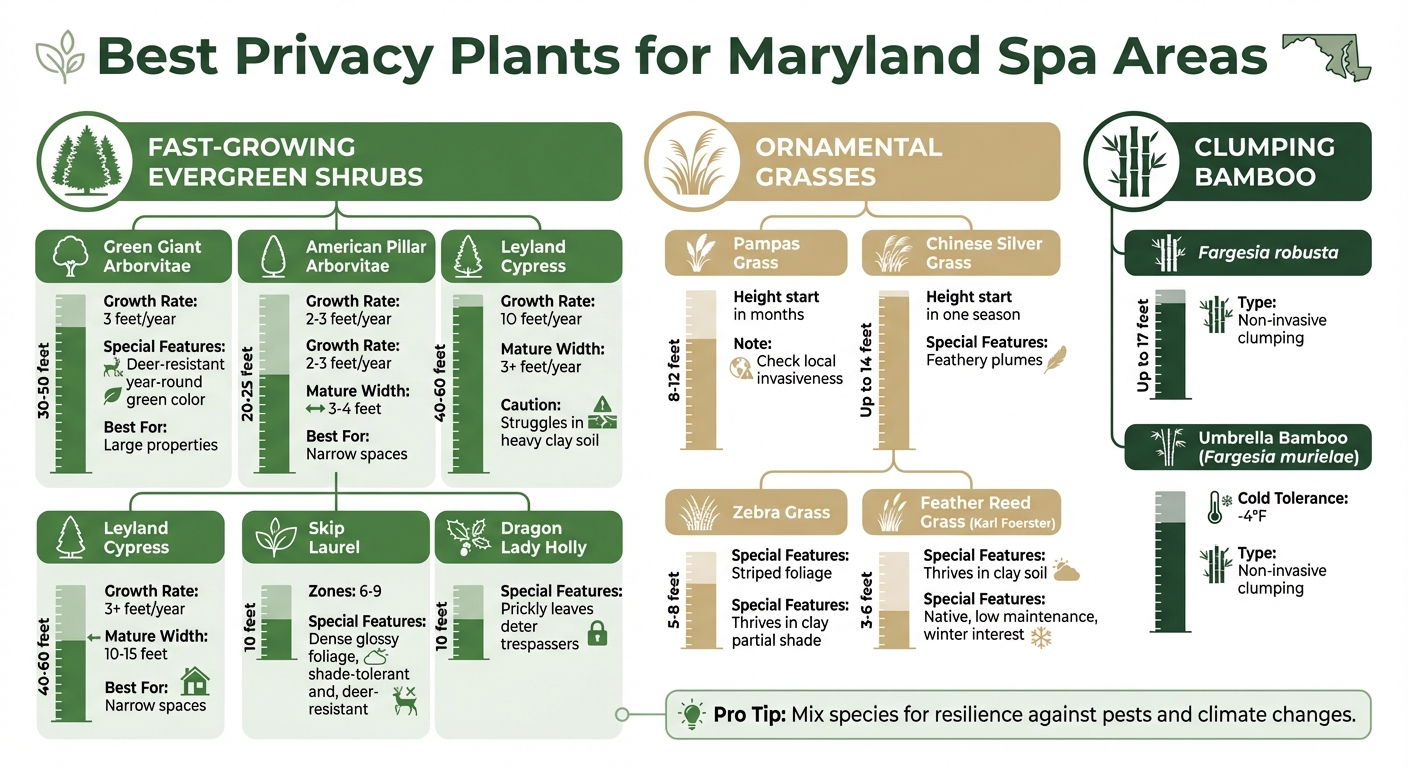
Best Privacy Plants for Maryland Spa Areas: Growth Rates and Characteristics
When it comes to creating a private spa retreat in Maryland, choosing plants that grow quickly and provide year-round coverage is key. A mix of evergreens, grasses, and climbing plants can offer lasting privacy with minimal upkeep.
Fast-Growing Evergreen Shrubs
For reliable privacy, Green Giant Arborvitae is a standout. It grows up to 3 feet per year, reaching heights of 30–50 feet, and keeps its lush green color all winter. Plus, it’s deer-resistant, making it a practical choice for Maryland properties [10][7]. If space is tight, American Pillar Arborvitae is a narrower option, growing 2–3 feet annually to a height of 20–25 feet while staying only 3–4 feet wide [10].
For those needing even faster growth, Leyland Cypress is hard to beat, adding more than 3 feet annually and maturing at 40–60 feet tall. However, its 10–15-foot width means it’s better suited for larger yards. Be cautious if your property has heavy clay soil, as Leyland Cypress may struggle in those conditions [10].
Other great options include Skip Laurel, which thrives in Maryland’s Zones 6-9. It reaches about 10 feet tall with dense, glossy foliage that resists deer and tolerates shade [11][7][12]. For added security, Dragon Lady Holly grows to 10 feet and has prickly leaves that naturally deter trespassers [7][4]. Experts, like the University of Maryland Extension, recommend mixing different species to increase resilience against pests and environmental changes [7].
For best results, plant in fall or early spring to give the roots time to establish. Regular watering during the first two years is essential [10]. Pair these shrubs with ornamental grasses for added texture and privacy.
Ornamental Grasses and Bamboo
Ornamental grasses are a fast and budget-friendly way to create privacy, often reaching their full height within two growing seasons [13]. Pampas grass is one of the quickest-growing options, shooting up to 8–12 feet in just a few months. However, check with local experts, as it can be invasive in some areas [15]. Another tall option is Chinese silver grass, which can grow up to 14 feet in a single season, forming a dense screen with feathery plumes [13][15].
For more compact choices, Zebra Grass grows 5–8 feet tall with striking striped foliage, while Feather Reed Grass (‘Karl Foerster’) reaches 3–6 feet and thrives in heavy clay soil and partial shade – conditions that challenge many other grasses [13][15]. Native options like Switchgrass grow 3–6 feet tall, require little care, and provide winter interest while offering seeds for birds [16][17].
If bamboo appeals to you, stick with clumping varieties like those in the Fargesia genus to avoid invasive issues. For example, Fargesia robusta can grow up to 17 feet tall, offering excellent vertical coverage. Another option, Umbrella Bamboo (Fargesia murielae), is highly cold-tolerant, surviving temperatures as low as -4°F [13][15]. Clumping bamboo thrives in consistently moist soil, while most ornamental grasses tolerate drought once established [13][15].
To maintain grasses, cut cool-season varieties down to one-third of their height in early spring, and trim warm-season types to the ground after they brown in late fall or early spring [14][16]. Many grasses retain their structure through winter, providing privacy even during dormant months [13][16].
Hedges and Climbing Vines
Dense hedges act like living walls, offering both visual and sound barriers around your spa [18][3]. Boxwood is a low-maintenance choice that requires minimal pruning, while Cherry Laurel grows quickly and thrives in hardiness zones 5-9 [4]. If your spa area is shaded, Yew is a great option, as it tolerates low light and fits well under tree canopies or near tall structures [3].
"Layered solutions tend to feel more natural and refined. Evergreen hedges provide year-round screening… Slatted wood panels or lattice walls define boundaries without blocking light." – Master Spas [2]
For vertical privacy, climbing vines trained on trellises, lattice panels, or pergolas can block sightlines without taking up much space [18][5]. Evergreen options like English Ivy and Star Jasmine provide year-round coverage, while Virginia Creeper adds seasonal color but loses its leaves in winter [18][4][3]. Ensure that trellises are sturdy enough to support the weight of mature vines [18].
Avoid planting tall, deciduous shrubs directly over your spa to prevent leaves from clogging filters or contaminating the water [4][5]. Also, be mindful of root systems when planting larger trees near an inground spa, as roots can damage plumbing or foundations over time [5]. For a polished look, layer taller hedges with shorter shrubs to create a natural, tiered effect that blends your spa into the landscape [3].
Hardscaping for Spa Privacy
If you’re looking for privacy that doesn’t depend on seasonal growth, hardscaping is the way to go. By using fences, walls, and raised planters, you can create a well-defined and polished space that offers year-round seclusion.
Fencing and Privacy Screens
Wood fencing is a classic choice for spa privacy, especially with horizontal slats that give a sleek, modern vibe. Cedar and redwood are popular for their moisture resistance, though they do require occasional staining to maintain their look. If you’re after something with less upkeep, composite materials are a great alternative – they can handle splashing and humidity without rotting.
Privacy screens are another option, offering both functionality and style. Laser-cut metal panels with geometric or nature-inspired patterns can act as eye-catching focal points, while wooden lattice pairs beautifully with climbing vines for a softer touch. Bamboo rolls can bring a tropical feel to your space, but they may need replacing after a few years due to wear and tear.
Before you start installing fences or screens, make sure to call utility services to avoid damaging any underground lines, and check local regulations for height restrictions. Place the tallest screens on sides facing neighbors or streets, leaving other angles open to maintain views and natural light.
To blend structure with greenery, consider adding planter beds alongside your screens.
Raised Planter Beds
Raised planters are a great way to add greenery at eye level, creating natural barriers around your spa area. Made from materials like stone, brick, or composite lumber, these planters can be placed along deck edges or patio perimeters to define your space without committing to a full fence. Plus, their elevated design helps with drainage, reducing the risk of waterlogged soil that can harm plants or nearby structures.
Fill these planters with evergreen shrubs or ornamental grasses to maintain a lush, structured look throughout the year. They’re both practical and visually appealing, making them a versatile addition to your spa setup.
Pergolas and Lattice Structures
Pergolas can transform your spa area into a cozy retreat, adding vertical interest and partial overhead coverage. Their open, lattice-style roofs let sunlight filter through while offering support for climbing plants like jasmine or wisteria, creating a beautiful "living ceiling." For added flexibility, you can install outdoor curtains or motorized louvers to adjust privacy and control sunlight throughout the day. Matching the pergola’s finish to your home’s trim creates a cohesive look, while string lights or hanging planters can elevate the ambiance, especially in the evening.
"Using lattice panels is an excellent way to achieve privacy without completely boxing in your pergola… Their grid-like structure offers the perfect balance of concealment and airflow." – BON Pergola [19]
When selecting materials, go for options that can handle Maryland’s humid climate. Aluminum is a lightweight yet durable choice, as it resists rust and remains strong. Cellular PVC is another option; it’s termite-proof and holds paint well, though it does have a more synthetic appearance. Be sure to leave at least three feet of clearance around the spa for easy access to covers and maintenance [2].
Noise Reduction Techniques for Spa Areas
Privacy isn’t just about shielding what people see – it’s also about controlling what they hear. A calm spa environment can easily be disrupted by traffic noise, neighborly chatter, or even the hum of nearby HVAC units. To maintain a serene atmosphere, reducing ambient sound is just as critical as visual screening. With a thoughtful mix of plants and structures, you can create a quieter, more relaxing space.
Layered Planting for Sound Absorption
Plants play a key role in absorbing sound. A layered approach works best: place tall evergreens along the edges, mid-height shrubs in the middle, and ornamental grasses at the base. This arrangement closes any gaps where sound might sneak through, with dense foliage that absorbs sound waves instead of bouncing them back.
For year-round effectiveness, choose plants like yew, holly, and juniper that stay green throughout winter. To enhance vertical surfaces, climbing plants like ivy or jasmine can be trained on trellises, creating "living walls" that soften noise from traffic or nearby properties. Bamboo is another excellent option. When planted closely, it forms a thick barrier, and the gentle rustling of its leaves adds a soothing, natural sound that can mask unwanted noise [3][4].
Combining plants with other sound-reducing elements can further enhance the acoustic privacy of your spa.
Incorporating Water Features
Water features are a great way to mask external sounds with calming, natural white noise. Options like waterfalls, fountains, or babbling brooks can help drown out traffic or neighborhood commotion [3]. For the best results, place your water feature between the spa and the main noise source, such as a busy street or a neighbor’s patio.
A well-placed waterfall integrated into a stone retaining wall can be especially effective. The wall deflects sound waves, while the water creates a masking effect, giving you dual-layer protection [3]. For a more eco-friendly option, solar-powered fountains are a smart choice, eliminating the need for electrical work near water.
Retaining Walls for Noise Deflection
When it comes to blocking noise, stone and rock walls are some of the most effective solutions. Unlike fences, which can vibrate and carry sound, solid masonry walls deflect sound waves away from your spa area [1][3]. Materials like natural stacked stone, block, or stone veneer not only reduce noise but also add a polished, permanent look to your outdoor space.
While rock walls can cost $50–$100 per square foot, their durability and sound-buffering capabilities make them a worthwhile investment, especially for properties near busy roads [1]. Smaller-scale options like seat walls or garden walls can also help. These structures double as acoustic barriers while providing functional seating or planting areas. For the best results, pair hard surfaces like stone walls with softer elements – such as layered plants or water features – to both deflect and absorb sound [1][3].
Pro Landscapes MD: Your Partner in Spa Privacy Landscaping

Creating a private spa retreat requires more than just a few plants and a fence. It demands a thoughtful balance of plant selection, hardscaping, and drainage solutions tailored to Maryland’s diverse landscapes. That’s exactly where Pro Landscapes MD shines. With a team that includes expert horticulturists, landscape designers, and licensed Maryland foresters, they bring unmatched expertise to every project.
Custom Designs for Maryland Properties
From the rolling hills of Ellicott City to the compact urban yards of Silver Spring, Maryland properties come in all shapes and sizes. Pro Landscapes MD tailors their approach to meet the unique needs of each location. Their professional grading, leveling, and regrading services create stable, functional surfaces for spa installations, ensuring proper water runoff.
Their designs combine climate-adapted plantings with structural privacy elements like retaining walls, stone veneers, and pergolas. These features provide immediate privacy, eliminating the wait for hedges or shrubs to grow.
"We prioritize sustainability by integrating native plant species and water-efficient systems, ensuring your landscape thrives in Maryland’s unique climate." – Pro Landscapes MD
For durability, they use top-tier materials like Techo-Bloc, Allen Block, and El Dorado Stone, which stand up to Maryland’s humid summers and icy winters. In tighter spaces, vertical privacy solutions such as stone walls or pergolas offer instant screening. Meanwhile, their horticulturists select native evergreen shrubs for year-round coverage, avoiding the seasonal leaf drop that can clutter your spa area. To complete the look, expert drainage solutions ensure your spa retreat stays clean and secure.
Integration of Drainage Solutions
Proper water management is essential for any spa installation. Without it, standing water, soil erosion, or poor drainage can damage your spa’s foundation and attract pests. Pro Landscapes MD incorporates French drains, berms, swales, and box-and-pipe systems to redirect water away from spa areas, preventing pooling and long-term issues. For properties in low-lying areas, they recommend tackling drainage concerns before the spa is installed to avoid future headaches.
But functionality doesn’t mean sacrificing beauty. They offer artistic solutions like dry riverbeds and rain gardens that not only manage stormwater but also enhance the visual appeal of your landscape. These features blend seamlessly with privacy plantings and hardscaping, turning a practical necessity into a design highlight. Their regrading expertise ensures that your property’s slope supports proper water flow, protecting patios, retaining walls, and other hardscapes from damage.
Customer Testimonials on Privacy Projects
Pro Landscapes MD’s ability to combine design, drainage, and hardscaping has earned them glowing client reviews. Serving areas like Baltimore, Gaithersburg, Clarksville, Silver Spring, Dayton, and Washington DC, their portfolio includes everything from backyard transformations to intricate stacked stone walls in Catonsville and decorative riverbeds in Columbia. One happy client raved:
"They came through with everything promised. I love the stacked stones we placed around our trees and flowerbed."
Their dedication to education and expertise sets them apart in the industry.
"Very few other landscapers will have gone to college for landscape design/horticulture, which puts our business and skill set ahead of the competition." – Pro Landscapes MD
With free proposals and site visits, they create designs tailored to your property’s unique layout. By combining expert craftsmanship, durable materials, and effective drainage, Pro Landscapes MD transforms spa areas into private, long-lasting retreats that elevate outdoor living.
Maintaining Your Spa Privacy Landscaping
Once you’ve set up your spa privacy landscaping, keeping it in good shape ensures it remains a peaceful escape all year long. The trick is knowing what each season requires and picking plants that won’t need constant care.
Seasonal Pruning and Care
Spring is the time to clear out winter debris, prune any dead branches, and check your irrigation system. Adding pre-emergent herbicides can stop weeds before they sprout, and refreshing the mulch helps nourish the soil [21][22][24].
In summer, keep an eye on your irrigation to prevent heat stress, which can thin out your privacy plants. Regularly remove spent blooms, lightly trim for a tidy look, and watch for pests or diseases that could damage your greenery [22][24]. Fall calls for clearing fallen leaves and debris to avoid mold buildup, applying compost or fertilizer to enrich the soil, and preparing your irrigation system for winter to prevent freeze damage [21][22]. During winter, inspect trees and shrubs for storm damage and apply a thick layer of mulch to protect the roots. For especially delicate plants, consider burlap covers to shield them from harsh weather [22].
"Maintenance prevents landscapes and garden designs from getting out of control, and keeps costs down by preventing the need for undertaking widescale renovation works." – SPA Landscaping [24]
Weeding consistently throughout the year is essential to stop invasive plants from robbing your privacy plants of sunlight and nutrients [22][24]. When pruning hedges or shrubs, focus on encouraging dense growth – thin or overgrown plants won’t provide the privacy you need [20][24]. Also, avoid planting deciduous trees directly above your spa; their falling leaves can clog filters and create extra cleaning work [4].
To make things even easier, choosing plants and materials that require less maintenance can save you time and effort in the long run.
Choosing Low-Maintenance Options
Adding to your seasonal care routine, opting for native species can simplify upkeep. These plants are naturally suited to Maryland’s climate, needing less water, fertilizer, and pest management compared to non-native options [26][27]. Evergreens like Arborvitae, Boxwood, or Inkberry Holly are great choices – they offer year-round coverage without littering your spa with leaves. Arborvitae, for example, grows 2-3 feet annually, forming a thick, low-maintenance barrier [23][4].
Consider replacing grassy areas with hardscaping like gravel, pavers, or stone to cut down on lawn care [26][27]. Perennials are another smart choice – they come back every year and thrive with minimal attention. Plants like Russian Sage, Sedum, and Daylilies are particularly hardy [25][28]. For potted plants, installing drip irrigation can automate watering and save you time [27].
"The happier your plants are, the less they’ll need your help." – Kevin Lenhart, Design Director, Yardzen [27]
Stick to plants that grow neatly, like Boxwood or select Junipers, to reduce pruning [27][4]. Avoid plants that drop excessive fruit, seeds, or leaves near your spa, as they can stain surfaces and add to your workload [27][4]. When planning your privacy landscaping, ensure mature plants won’t block access to your spa’s service panels [4]. Finally, use mulch wisely – it suppresses weeds and retains soil moisture, though bark mulch may need to be replaced each year [26][27].
Conclusion
Creating a private spa retreat requires a thoughtful combination of plants and hardscaping. Structural features like stone walls, pergolas, and privacy fences provide immediate seclusion and help block out noise. Meanwhile, layered evergreens, ornamental grasses, and climbing vines add a soft, natural touch that works year-round. Together, these elements transform your backyard spa into a seamless extension of your home.
Start with the essentials – proper drainage, solid foundations, and secure wiring – before adding decorative touches like plants and lighting. This upfront preparation minimizes future headaches and ensures your landscape can handle Maryland’s seasonal shifts. Incorporating sound barriers alongside water features can further enhance your sense of privacy.
"When landscaping and spa design work in tandem, the backyard starts to feel cohesive rather than assembled in stages." – Master Spas
This cohesive design approach not only creates a tranquil retreat but also adds value to your property.
Pro Landscapes MD specializes in bringing this vision to life for homes across central Maryland. Their team expertly handles everything from retaining walls and patios to drainage systems and climate-appropriate plantings. With their expertise, your spa area becomes a serene, private oasis that’s both functional and visually stunning. By blending hardscaping and horticulture, they craft outdoor spaces that look polished from day one and only grow more beautiful over time.
Whether you’re starting from scratch or enhancing an existing setup, combining professional design with the right mix of structural and natural elements ensures the peaceful, private escape you’ve been dreaming of. These strategic techniques guarantee both a secluded atmosphere and a calming ambiance.
FAQs
How tall can my privacy fence or hedge be?
Most towns and cities set backyard fence height limits between 6 and 8 feet. But if you’re looking for alternatives, tall hedges or plants can work just as well for privacy – just make sure they meet local rules. Always review your area’s specific regulations before making any updates.
What plants provide privacy in winter in Maryland?
Evergreen hedges and dense shrubs are perfect for ensuring privacy in Maryland’s winter months. They provide consistent, year-round coverage and can also help cut down on noise, making them a smart option for spa landscaping.
How do I reduce noise around my hot tub?
For a more serene and private hot tub area, consider using landscaping to your advantage. Planting dense shrubs, trees, or tall grasses like bamboo can naturally muffle noise while providing a visual barrier. You might also explore vertical gardens, living walls, or trellises covered with climbing plants to create a lush, green shield. If greenery isn’t enough, wooden privacy fences or similar structures can serve as sound barriers, helping to craft a calm and secluded retreat.
Chat with Us