









- bhavya gada
- No Comments
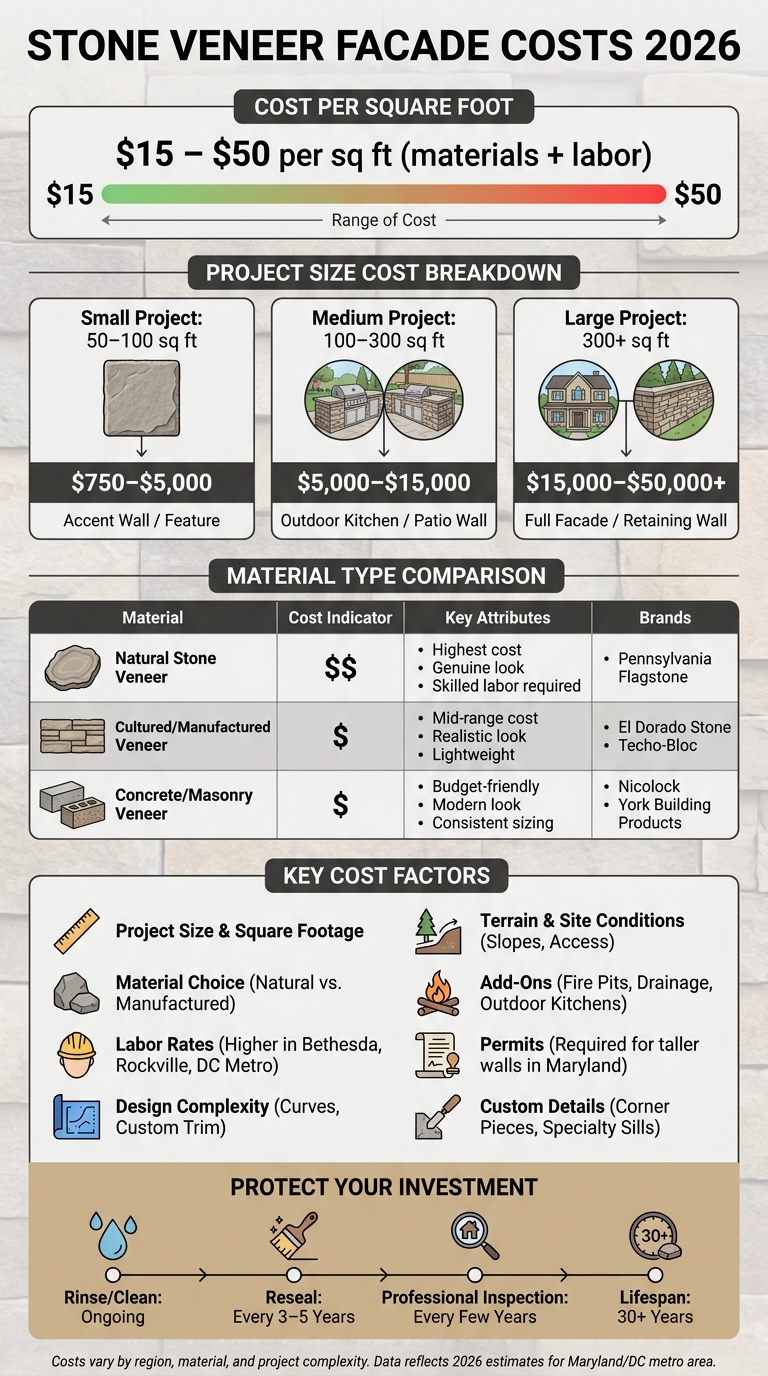
Stone veneer facades are a stylish and durable way to enhance your home or outdoor spaces. In 2026, the total cost of installation ranges from $15 to $50 per square foot, depending on material type, project size, and labor rates. Here’s a quick breakdown:
- Cost per Square Foot: $15–$50 (materials + labor)
- Small Projects (50–100 sq ft): $750–$5,000
- Medium Projects (100–300 sq ft): $5,000–$15,000
- Large Projects (300+ sq ft): $15,000–$50,000+
Key Factors Affecting Costs:
- Material Choice: Natural stone is pricier but durable; manufactured veneer is more budget-friendly.
- Labor Costs: Higher in areas like Bethesda and Rockville.
- Design Complexity: Curved walls, custom trims, or sloped terrain increase costs.
- Add-Ons: Features like fire pits or drainage systems add to the budget.
For Maryland and DC homeowners, Pro Landscapes MD offers expert stone veneer installation with free site visits and personalized proposals. Proper maintenance, like sealing every 3–5 years, ensures your investment lasts decades.
Stone Veneer Facade Costs 2026: Complete Price Breakdown
Real Stone Veneer Cost: Everything You Need to Know
sbb-itb-843f8be
Stone Veneer Installation Costs in 2026
Knowing the costs ahead of time helps you set a realistic budget before diving into a stone veneer project. Pricing depends on factors like the materials you choose, the size of the project, and local labor rates – especially in areas with higher demand, such as the Baltimore and Washington, DC metro regions.
Cost per Square Foot
By 2026, the cost of professional stone veneer installation, including both materials and labor, typically ranges from $15 to $50 per square foot. The type of material you select plays a big role in determining where your project falls within this range. For instance:
- Premium manufactured veneer often costs more due to its realistic appearance.
- Natural stone options, like Pennsylvania Flagstone, can drive costs higher because of their weight, handling challenges, and the skilled labor needed for proper installation.
Labor rates in specific areas also make a difference. In markets like Bethesda, Chevy Chase, and Rockville, labor costs tend to be higher due to the region’s demand and pricing trends [5][2]. Additionally, intricate designs, such as custom fascia or irregular patterns, can increase labor expenses.
These per-square-foot rates directly influence the overall project costs outlined below.
Total Project Cost Ranges
The total cost of a stone veneer project depends on its size and complexity. Here’s a breakdown:
| Project Size | Approximate Square Footage | Estimated Total Cost |
|---|---|---|
| Small (accent wall or feature) | 50–100 sq ft | $750–$5,000 |
| Medium (outdoor kitchen or patio wall) | 100–300 sq ft | $5,000–$15,000 |
| Large (full facade or retaining wall) | 300+ sq ft | $15,000–$50,000+ |
Larger projects, especially those involving functional structures like retaining walls, often land on the higher end of the cost spectrum. For example, a retaining wall with integrated drainage systems or structural supports will cost significantly more than a purely decorative accent wall [2][4].
If you’re considering premium materials, such as natural wall stone or high-end manufactured veneer, they can deliver long-term durability and withstand local weather for decades [1][2].
To ensure your budget is accurate, request a site-specific proposal. This will account for factors like the terrain, existing structures, and the complexity of your layout [1].
Stone Veneer Material Types and Costs
The type of material you choose plays a big role in the overall cost of a stone veneer project. Homeowners often decide between natural stone veneer and manufactured (or cultured) stone veneer, each offering unique looks and practical advantages.
Manufactured vs. Natural Stone Veneer
Natural stone veneer – like Pennsylvania Flagstone or Natural Wall Stone – delivers a genuine, timeless appearance. It’s known for its durability but requires skilled labor for installation. Its heavier weight and the need for specialized techniques make it a pricier option.
On the other hand, manufactured stone veneer is designed to replicate the look of natural stone while offering more flexibility in colors, shapes, and textures. Brands such as El Dorado Stone and Techo-Bloc create products that are lightweight, uniform, and weather-resistant. These qualities reduce installation time and labor expenses. For an even more budget-conscious option, cultured stone veneer provides a solid balance of affordability and style.
Cultured Stone Veneer
Cultured stone veneer is a specific type of manufactured veneer crafted from Portland cement, aggregates, and pigments. It’s shaped in molds that replicate real stone, giving it a polished and realistic appearance. This option is more economical than natural stone while still offering plenty of aesthetic appeal.
Comparison Table
| Material Type | Key Characteristics | Common Brands |
|---|---|---|
| Natural Stone Veneer | Genuine, organic look with natural textures; heavier and requires skilled labor | Pennsylvania Flagstone, Natural Wall Stone |
| Cultured/Manufactured Veneer | Mimics natural stone with a wide range of colors and textures; lightweight and versatile | El Dorado Stone, Techo-Bloc, Belgard |
| Concrete/Masonry Veneer | Sleek, modern appearance with consistent sizing | York Building Products, Nicolock |
Understanding these material differences is essential for planning your stone veneer project. Keep in mind that final costs will also depend on factors like project complexity and local labor rates.
What Affects the Cost of Stone Veneer
Once you’ve chosen your material, the next big question is: what factors influence the overall cost of your stone veneer project? Several key elements play a role, and understanding them early can help you plan more effectively.
Project Size and Layout Complexity
The size of your project and the complexity of its design are major cost drivers. The total square footage of the facade is the simplest factor – more area means more materials and labor. However, the layout’s complexity can have just as much impact. For instance, a flat, single-level wall is far less expensive than a design with multiple levels, curved sections, or decorative elements. If your property is on sloped terrain, additional terracing and reinforcements may be required to stabilize the soil, which adds both time and expense. As Pro Landscapes MD notes:
"Whether you want a simple, functional wall or an intricate, decorative design, we tailor the project to your vision." [2]
Labor and Installation Challenges
The conditions at your site significantly affect labor costs. Steep slopes or areas with limited access require more time and skilled labor, which increases expenses. If the stone veneer serves a structural purpose – such as retaining soil on a slope – it demands advanced construction techniques, which are often more costly than standard decorative installations. In Maryland, for example, retaining walls over a certain height may require permits, adding administrative costs and possibly requiring design changes. [2]
Another factor to consider is drainage. Poor drainage can complicate installation and drive up costs. Addressing drainage issues upfront is essential to protect your investment, but it does add to the initial budget. [4]
Add-Ons and Custom Details
Custom features can significantly influence the cost of your project. Items like corner pieces, decorative trims, and specialty finishes – such as Blue Thermal Sills or Lake George Fascia – require precise fitting and additional labor. Incorporating stone veneer into multi-functional structures like outdoor kitchens, fire pits, or seat walls also adds complexity compared to a simple accent wall. However, some features, like seat walls, can provide dual benefits by offering both structural support and built-in seating. [6][2]
| Factor | Cost Impact |
|---|---|
| Simple flat facade | Lower – standard cuts, minimal complexity |
| Terraced or curved layout | Higher – multiple levels and custom fitting |
| Sloped terrain | Higher – stabilization and drainage work required |
| Permitting (MD) | Variable – depends on wall height and local regulations |
| Custom trim and specialty stone | Medium to high – precision labor for sills, fascia, risers |
| Functional add-ons | Variable – includes outdoor kitchens, fire pits, seat walls |
These factors are crucial for setting a realistic budget, as we’ll explore further in the next section with specific examples.
Stone Veneer Budget Examples
When planning a stone veneer project, understanding the scale of your project is crucial for setting a realistic budget. Below, we break down examples of small, medium, and large-scale projects to show how scope and materials influence overall costs.
Small-Scale Projects
Small projects typically include features like accent walls, step risers, or decorative pillars. Among these, pillars can be pricier because of the need for corner wrapping and precise trim work. Material selection also plays a big role in cost. For instance, using premium options like El Dorado Stone paired with specialty trims such as Lake George Fascia or Blue Thermal Sills will cost more than simpler natural wall stone applications [1][6].
Medium and Large-Scale Projects
As projects grow in size, additional considerations come into play. Medium-scale projects – such as outdoor kitchens with stone veneer, seat walls, or decorative retaining walls – often require site preparation, erosion control, and drainage systems, which add to the budget [2].
Large-scale installations, like full exterior facades or multi-level terraced hardscapes, are the most complex and expensive. These projects may involve scaffolding, soil stabilization, and even permits for taller structures. High-end materials like Pennsylvania Flagstone or Allen Block further increase costs. Coordination with other elements, such as patios or driveways, also adds complexity [1][2].
Scenario Table
Here’s a quick comparison of project scales, their typical applications, key materials, and the main factors that drive costs:
| Project Scale | Typical Applications | Key Materials | Primary Cost Drivers |
|---|---|---|---|
| Small-Scale | Accent walls, step risers, decorative pillars | El Dorado Stone, Lake George Fascia, Blue Thermal Sills | Material quality, custom trim, site accessibility [1][6] |
| Medium-Scale | Outdoor kitchens, seat walls, retaining walls | Techo-Bloc, Natural Wall Stone, Nicolock products | Structural work, erosion control, drainage systems [1][2] |
| Large-Scale | Full facades, terraced gardens, structural walls | Natural Stone, Allen Block, Pennsylvania Flagstone | Total square footage, scaffolding, permits, soil stabilization [1][2] |
Since every property has unique challenges – especially in areas like Central Maryland, where terrain and soil conditions vary – it’s best to schedule a site visit for a free, personalized estimate [1][2].
Maintenance and Long-Term Value
Keeping your stone veneer facade in top shape takes regular care, but the effort pays off in both appearance and durability. Routine maintenance helps manage costs over time, fitting seamlessly into the budgeting strategies discussed earlier.
Cleaning and Sealing
Regular cleaning is key to protecting your facade. A simple rinse with a garden hose can remove dirt and debris, while a soft-bristle brush and mild detergent work well for stubborn buildup. Avoid using high-pressure washers, as they can erode the surface over time.
Sealing is just as important, especially in areas with high humidity or freeze-thaw cycles. A good penetrating sealer helps repel moisture and prevents efflorescence – those white, chalky deposits that sometimes appear on stone surfaces. Depending on the climate and exposure, resealing every 3 to 5 years is a good rule of thumb.
Inspection and Repairs
An annual inspection, ideally in the spring, can catch small issues before they turn into major problems. Look for hairline cracks, loose stones, or gaps in the mortar. Moisture is the biggest enemy here – if water seeps behind the veneer, it can damage the underlying structure, leading to bulging or delamination.
"With proper care and maintenance, hardscaping materials such as stone and concrete can last decades." – Pro Landscapes MD [1]
For structural elements like retaining walls or load-bearing columns, consider having a professional inspection every few years. Professionals can spot subtle signs of settling or water infiltration that might not be obvious to the untrained eye. These inspections are a smart addition to your long-term cost management plan.
Durability and Lifecycle Cost
When installed properly with high-quality materials – like El Dorado Stone or natural wall stone – a stone veneer facade can last 30 years or more [1]. This longevity makes the initial investment worthwhile, as ongoing costs are generally limited to resealing, occasional mortar touch-ups, and replacing the rare cracked or chipped stone.
"Go for materials that can handle the DC heat and Baltimore humidity. Composite decking and stone are solid choices." – Pro Landscapes MD
Over the course of three decades, the relatively low maintenance costs are balanced by the durability of the facade and the added value it brings to your property. Regular upkeep not only protects your investment but also ensures your project stays on track for the long haul.
Stone Veneer Services from Pro Landscapes MD
For those in the Baltimore or Washington, DC area looking for expertly installed stone veneer, Pro Landscapes MD is a trusted choice. Established in February 2011, the company brings over 15 years of hardscaping expertise to every project. With an A+ rating from the Better Business Bureau, they combine experience with a strong reputation for reliability and quality.
Hardscaping Services Offered
Pro Landscapes MD integrates stone veneer into a variety of hardscaping projects, including:
- Accent walls
- Outdoor kitchens
- Seating walls
- Fire pits
- Retaining walls
They use top-tier materials like El Dorado Stone and natural wall stone to ensure durable and visually appealing results. Every project begins with a free site visit and a customized proposal designed to match your home’s style and your budget.
Service Areas in Central Maryland and DC
Pro Landscapes MD provides localized services across central Maryland and Washington, DC, ensuring seamless support from start to finish. Their service areas include Howard County, Montgomery County, Carroll County, Frederick County, Prince George’s County, and Baltimore County. They serve communities such as Columbia, Ellicott City, Bethesda, Silver Spring, Towson, Rockville, Catonsville, Gaithersburg, Germantown, Chevy Chase, Owings Mills, and Reisterstown, among others.
Quality and Customer Satisfaction
Pro Landscapes MD is dedicated to delivering precision and quality in every project. This commitment not only boosts your home’s curb appeal but also ensures your investment stands the test of time. For example, in early 2025, Sharon C. praised the company for their "outstanding" work on a stone step installation [3]. Another client, Remi T., shared their satisfaction with a front yard redesign:
"I recently hired Pro Landscapes to completely redesign our front yard… and the results are absolutely phenomenal." – Remi T. [3]
Their focus on high-quality materials and tailored craftsmanship keeps clients coming back for more ambitious projects, time and time again.
Conclusion
Stone veneer combines flexibility with long-lasting appeal, making it a solid choice for many homeowners. The overall cost depends on several factors, including the materials you select, the size of your project, the complexity of the installation, and the quality of your contractor. With minimal maintenance and impressive durability, it’s an investment worth considering.
However, it’s important to account for labor and site-specific challenges, as these can significantly increase costs. Features like custom designs, tight corners, built-in elements such as fire pits, and even local permit requirements in areas like Maryland or DC can quickly raise the final price beyond the cost of materials alone.
If you’re based in central Maryland or Washington, DC, Pro Landscapes MD is a trusted option. With over 15 years of experience in hardscaping, an A+ rating from the BBB, and a licensed team (Maryland Department of Labor license #110409), they bring expertise to every project. They also offer free site visits and tailored proposals, helping you get an accurate estimate for your unique needs. Let Pro Landscapes MD handle your stone veneer project and create a space that delivers both beauty and lasting value.
FAQs
How do I estimate my stone veneer square footage?
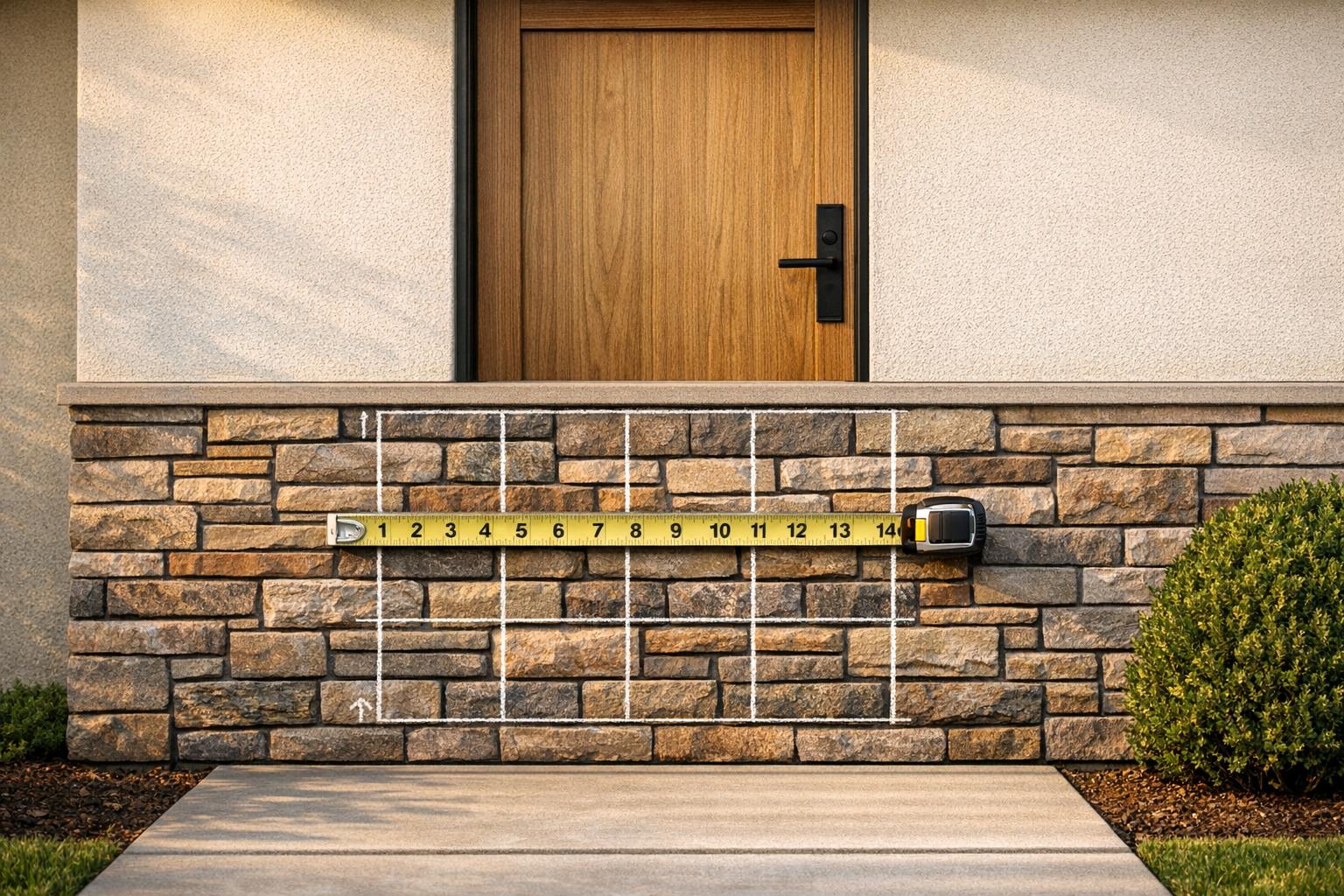
To figure out the square footage for your stone veneer project, start by measuring the height and width of each section you plan to cover. Multiply these measurements to calculate the square footage for each area. Once you’ve done this for all sections, add them together to get the total square footage. If your project has intricate details or requires precise planning, Pro Landscapes MD provides professional consultations and expert designs to help you choose the right amount of materials for your outdoor space.
Do I need a permit for a stone veneer wall in Maryland?
Permit requirements for building stone veneer walls in Maryland depend on the rules set by your local municipality. It’s essential to consult your county or city building department to determine if your project requires approval. If you’re planning a project, Pro Landscapes MD offers professional design and installation services for stone veneer and retaining walls throughout central Maryland and Washington, DC. They can also assist in navigating the necessary project requirements.
What questions should I ask during a site visit?
When meeting with Pro Landscapes MD for a site visit, it’s a good idea to ask how the stone veneer will complement your existing landscape and structures to create a unified appearance. Check on the durability of the materials they offer, especially in relation to your area’s weather conditions. You should also discuss practical aspects, like how the installation will handle structural support or manage water effectively, while ensuring the design reflects your vision for your outdoor space.
Chat with Us