









- bhavya gada
- No Comments
If the clog is only on top, I clean it. If water still ponds after cleaning, or the media is clogged deep down, I replace it. That is the short answer for most Maryland homeowners.
Here’s the simple way I look at it:
- Clean first when the problem is mostly leaves, light sediment, or a crusted top layer
- Replace when cleaning stops working, ponding comes back, or the media is worn out
- Partial replacement can work when only the top 2 to 5 inches are the problem
- Cartridge systems usually need replacement at the maker’s set service life
- In Maryland, clay soils, winter sanding, leaf debris, and repeated storms can shorten media life
Water should move through the system. When it does not, the cause is usually one of four things:
- Surface clogging
- Deep blockage
- Pollutant saturation
- Blocked flow paths
The choice affects both cost and performance. Cleaning often costs less upfront because it is mostly labor. Full replacement costs more because it includes new media, removal, and disposal. But if clogging keeps coming back, replacement often lasts longer and restores flow better.
| Issue | Cleaning | Replacement |
|---|---|---|
| Shallow buildup on top | Yes | No |
| Full-depth clogging | No | Yes |
| Flow returns only for a short time | No | Yes |
| Top layer damage only | Maybe, with 2 to 5 inches replaced | Maybe |
| Cartridge at end of service life | No | Yes |
My rule of thumb: if the media still drains below the surface, I start with cleaning. If it fails again soon after, I move to replacement.
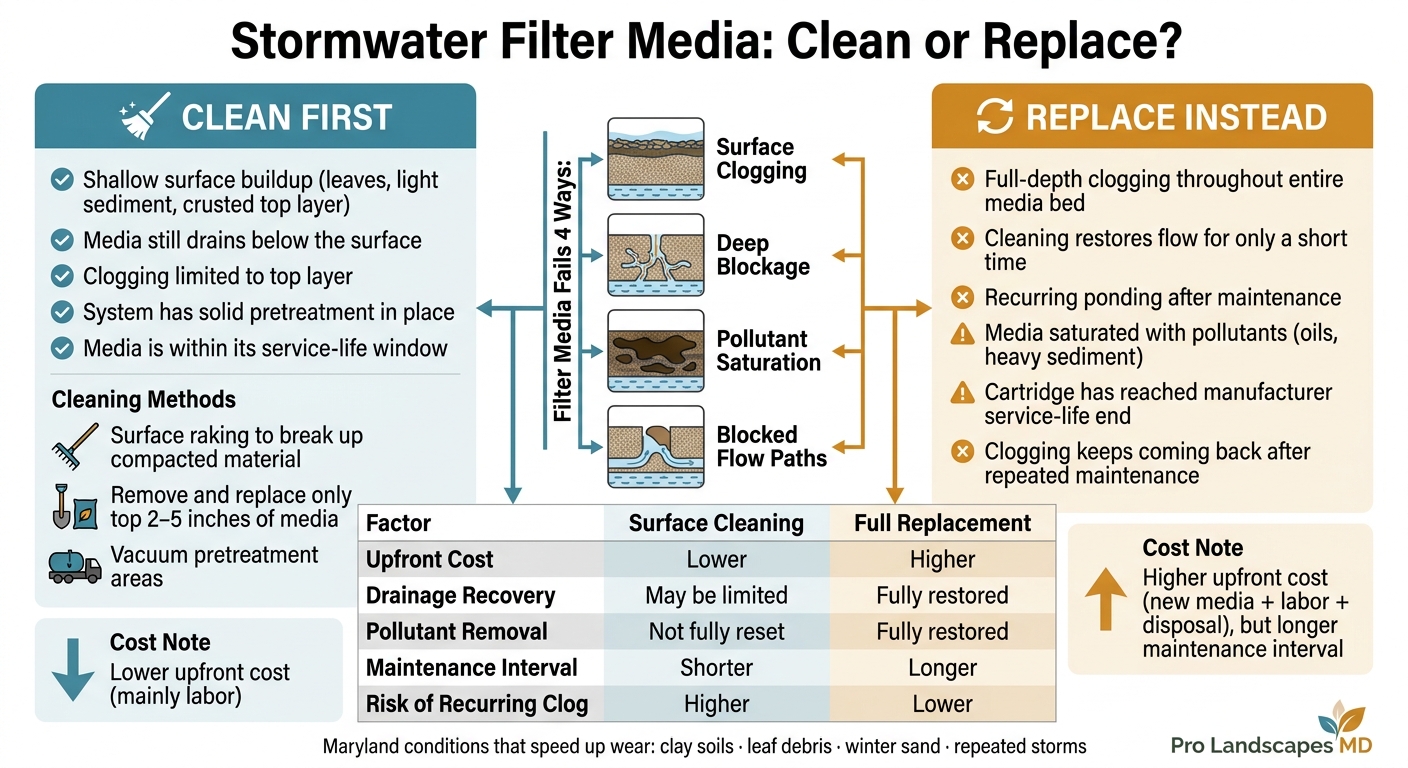
Stormwater Filter Media: Clean vs. Replace Decision Guide
StormFilter Maintenance Demonstration
sbb-itb-843f8be
How Filter Media Fails and What the Warning Signs Mean
The choice starts with how the media is failing.
Filter media usually fails in four ways: surface clogging, deep blockage, pollutant saturation, or blocked flow paths. Surface clogging happens when material builds up on top of the media. Deep blockage forms below the surface. Saturation means the media can’t hold any more contaminants. Blocked flow paths mean water is no longer moving through the media the way the system was built to handle.
If the issue stays near the top layer, cleaning is usually enough.
Signs that point to cleaning first
When buildup is limited to the surface – like shallow sediment, leaves, or other organic debris – cleaning is the right first move. In that case, if the media underneath is still intact, cleaning can bring flow back.
But once the buildup goes deeper, or the media is worn out, cleaning tends to stop working.
Signs that point to replacement
Replace the media when it is saturated with pollutants, when cleaning no longer restores flow, or when the system clogs again soon after maintenance.
Maryland site conditions that speed up media wear
In central Maryland, clay soils, leaf debris, winter sanding, and repeated storms can shorten media life by speeding up clogging. That often pushes systems toward cleaning first and then replacement once clogging starts happening again and again.
When Cleaning Filter Media Is the Better Option
When buildup stays close to the surface, cleaning is usually the fastest fix. It makes sense when clogging is limited to the top layer and the media underneath still drains well.
Cleaning methods for surface beds and accessible systems
Start with surface raking to break up crusted or compacted material. If the clogging is shallow, loosening the top few inches can help restore flow.
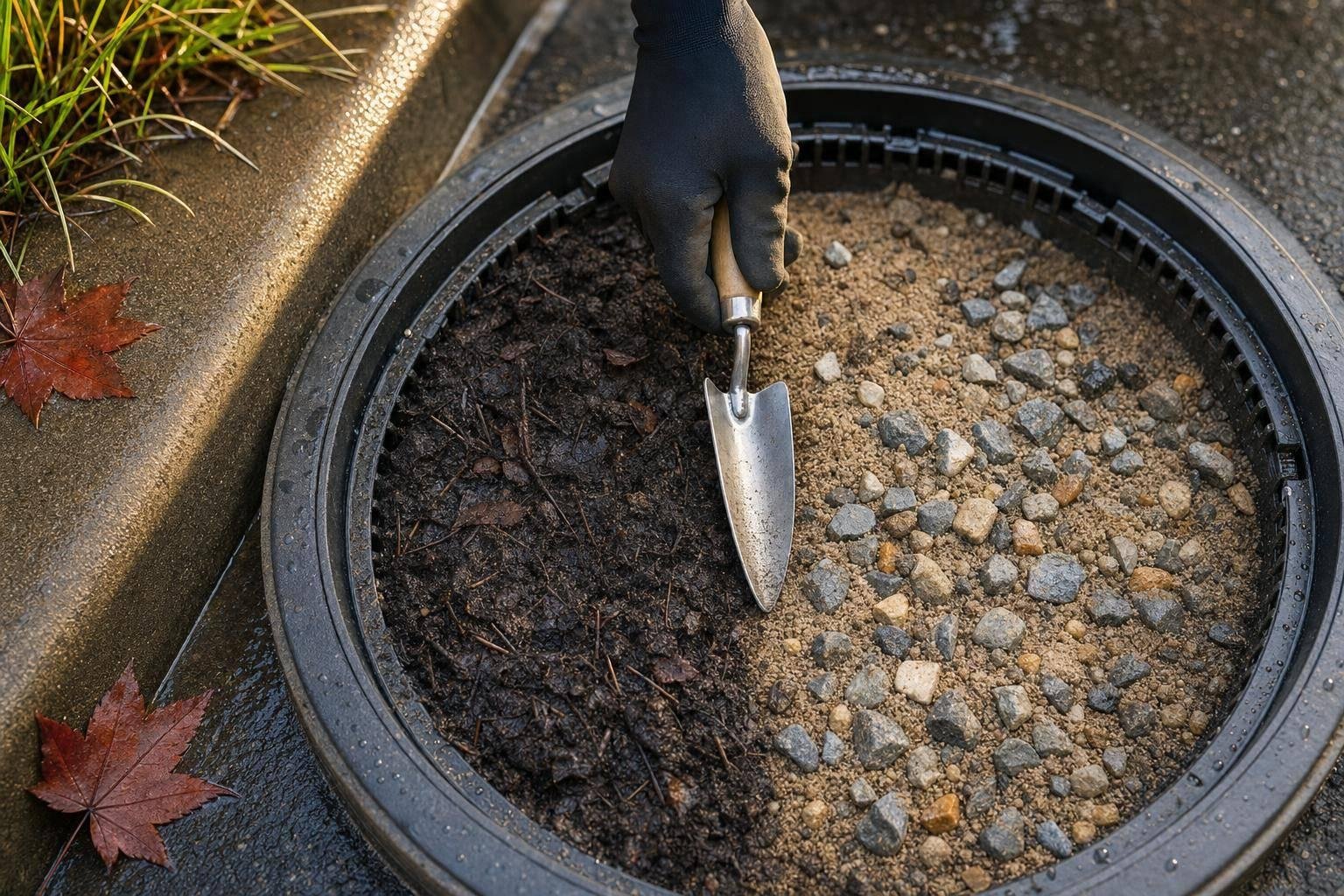
If raking doesn’t work, remove and replace only the top 2 to 5 inches of media. That lets you deal with the problem area without swapping out the entire bed. It’s also smart to vacuum pretreatment areas so debris stays out of the main filter bed.
Cost factors and how cleaning extends media life
Cleaning usually costs less than replacement because the main expense is labor and site access. A bed that’s hard to reach can take more time, which changes the math a bit, but cleaning still tends to win on cost when the media itself is still in good shape.
Done on a regular basis, cleaning can extend the life of the media and push back the need for full replacement.
If flow comes back for only a short time, that’s a sign replacement should come next.
When Replacing Filter Media Is the Better Option
Replace the media when surface cleaning stops fixing the problem. If cleaning brings flow back for only a short time, it’s usually time for replacement.
Common replacement triggers and service-life ranges
One of the clearest signs is full-depth clogging. That means sediment has moved through the whole media bed, not just the top layer, so surface maintenance no longer restores drainage.
Replacement also makes sense when the media no longer traps pollutants the way it should. At that point, cleaning the surface won’t solve the main issue.
Another clear trigger is recurring ponding after maintenance. If water still pools on the surface after cleaning, the media may have reached the end of its useful life. And for filter cartridges, the rule is even simpler: replace them at the end of the manufacturer-set service life.
What drives replacement cost and long-term performance
Replacement usually costs more upfront than cleaning. Most of that cost comes from:
- New media or cartridges
- Labor to remove the used media
- Site access
If the media is contaminated, disposal rules can push the total higher too.
That said, replacement often becomes the better move when clogging is deep or keeps coming back. You pay more at first, but you also get restored drainage and better pollutant removal, with a longer gap before the next round of maintenance.
| Factor | Surface Cleaning | Full Replacement |
|---|---|---|
| Upfront cost | Lower | Higher |
| Drainage recovery | May be limited | Restored |
| Pollutant removal efficiency | Not fully reset | Restored |
| Maintenance interval | Shorter | Longer |
| Risk of recurring clogging | Higher | Lower |
The next section turns these signs and costs into a simple decision guide.
Clean or Replace: A Decision Guide for Maryland Homeowners
Cases where cleaning makes more sense
Cleaning makes sense for shallow clogs that still respond to upkeep. If the media is still within its service-life window, cleaning is often the better first move.
Start there when the issue stays near the surface and the media still drains below that top layer. The same goes for surface beds you can reach easily, especially when the top sediment layer can be removed. And if your system already has solid pretreatment, the main media may only need light surface care from time to time to keep doing its job.
Cases where replacement makes more sense
Replacement makes more sense when cleaning helps for only a short time, or doesn’t help at all. Heavy oil exposure, large sediment loads, or deep contamination usually mean surface cleaning won’t fix the root problem.
The same is true for cartridge-based systems that have reached the end of their service-life range. In that case, replacement is the only reliable way to restore performance. If the same issue keeps coming back after maintenance, that’s a strong sign the media is no longer in the cleaning stage and has shifted into replacement territory.
Key signs, costs, and next steps
The short version: clean when clogging is shallow and the media still responds; replace when it is deeply clogged, saturated, or keeps failing after maintenance.
When the signs aren’t clear, a site inspection can sort out the next step. For Maryland properties with unclear symptoms or limited-access cartridge units, Pro Landscapes MD can assess whether cleaning, partial media replacement, or full replacement is the right next step.
FAQs
How can I tell if the clog is only on top?
Check the inlet areas for visible debris such as leaves, branches, or litter. In many multi-stage systems, the pretreatment chamber or top mulch layer is there to catch these larger solids before they move into the deeper media.
If water is pooling at the entry points but the rest of the system looks sound, the clog is probably limited to the surface. In that case, clearing the debris is often enough to get flow back to normal without replacing the media.
How long should cleaned filter media last?
It depends on the system, the type of media, site conditions, and how much pollutant buildup the unit has to handle. Organic or peat-based filter media usually needs replacement every 3 to 5 years.
Some systems include cleaning or self-cleaning features that can help the media last longer. Even so, materials like sand often need more frequent, hands-on maintenance. The best way to know if the media is still doing its job – or if it’s time for a full replacement – is through regular inspections.
When is partial media replacement enough?
Partial media replacement is often enough when there are localized issues or minor clogs rather than a full loss of filtration.
If rain inspections show that only certain sections are blocked, targeted maintenance – like refreshing mulch or clearing isolated debris – may restore performance. This approach tends to work best in newer systems that are otherwise structurally sound.
Chat with Us