









- bhavya gada
- No Comments
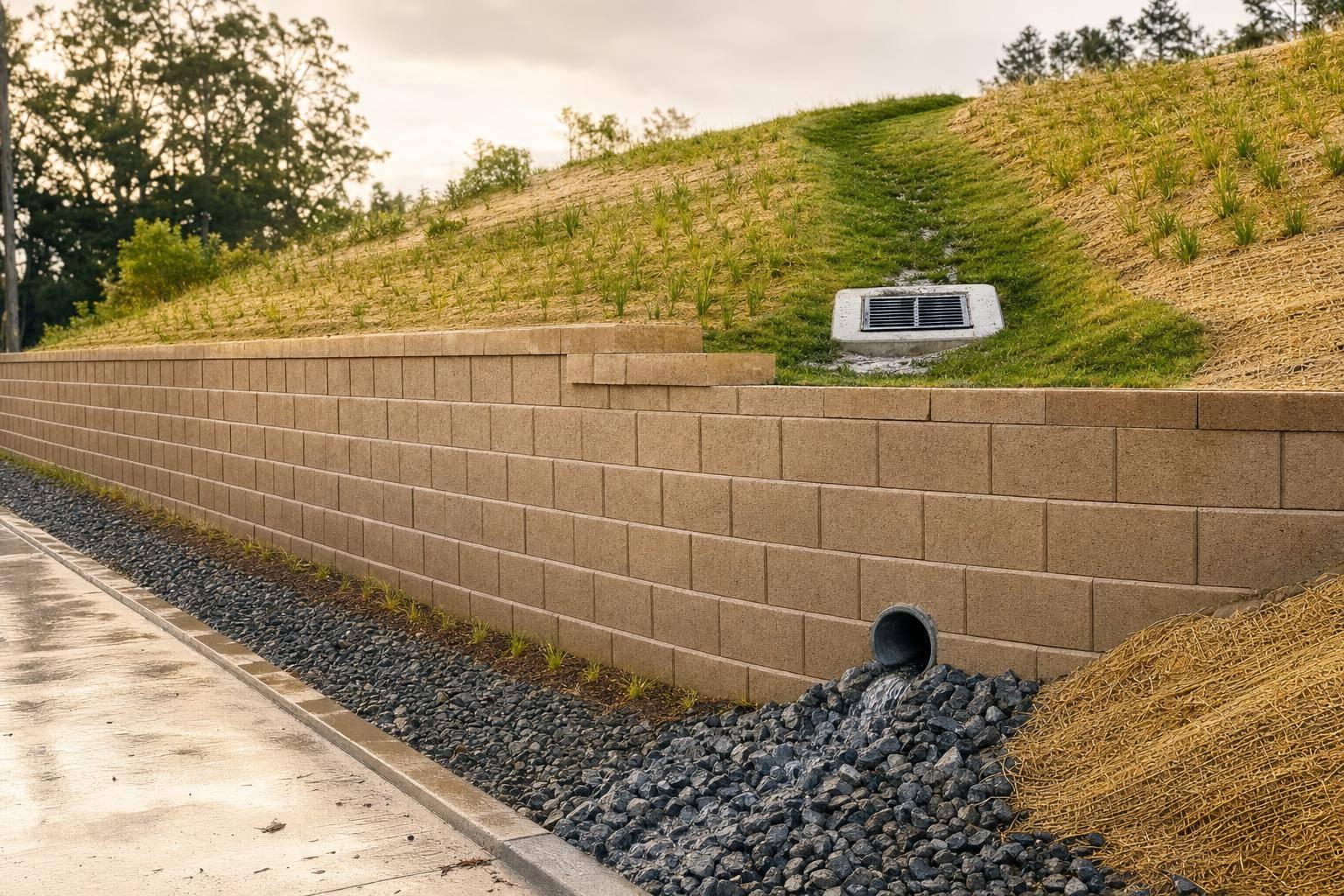
If water gets trapped behind an MSE wall, pressure builds and the wall is more likely to have problems. That’s the main point.
If I had to boil this article down into a few checks, I’d keep my eye on:
- free-draining backfill
- base and back drains
- filter layers
- surface grading
- swales that push runoff away from the wall face
- erosion control on steep slopes
In plain English: an MSE wall has to do two jobs at once. It must hold soil, and it must let water move out of the reinforced area before pressure builds. On Maryland sites with steep grades and heavy runoff, that matters a lot because even a small drainage miss can lead to more soil loss, more sediment in drains and inlets, and more stress on the wall.
I’d also look at the wall as part of one system, not a stand-alone structure. Drainage, grading, and erosion control need to work together. <u>That is the core takeaway from the article.</u>
Geosynthetics & MSE Walls – Design Basics
What Research Shows About Water Movement Behind MSE Walls
Research on MSE walls points to one big idea: drainage design decides how water moves through the reinforced zone.
When water builds up behind a wall, pressure goes up on the reinforced mass. As that pressure climbs, wall stability drops. That’s the whole problem in plain terms.
So the goal isn’t just to keep water away in a general sense. It’s to move water out of the wall system before it has time to collect and create pressure. In practice, the main issue is simple: how water leaves the reinforced zone without building up pressure first.
Drainage Design Elements That Make MSE Walls Work
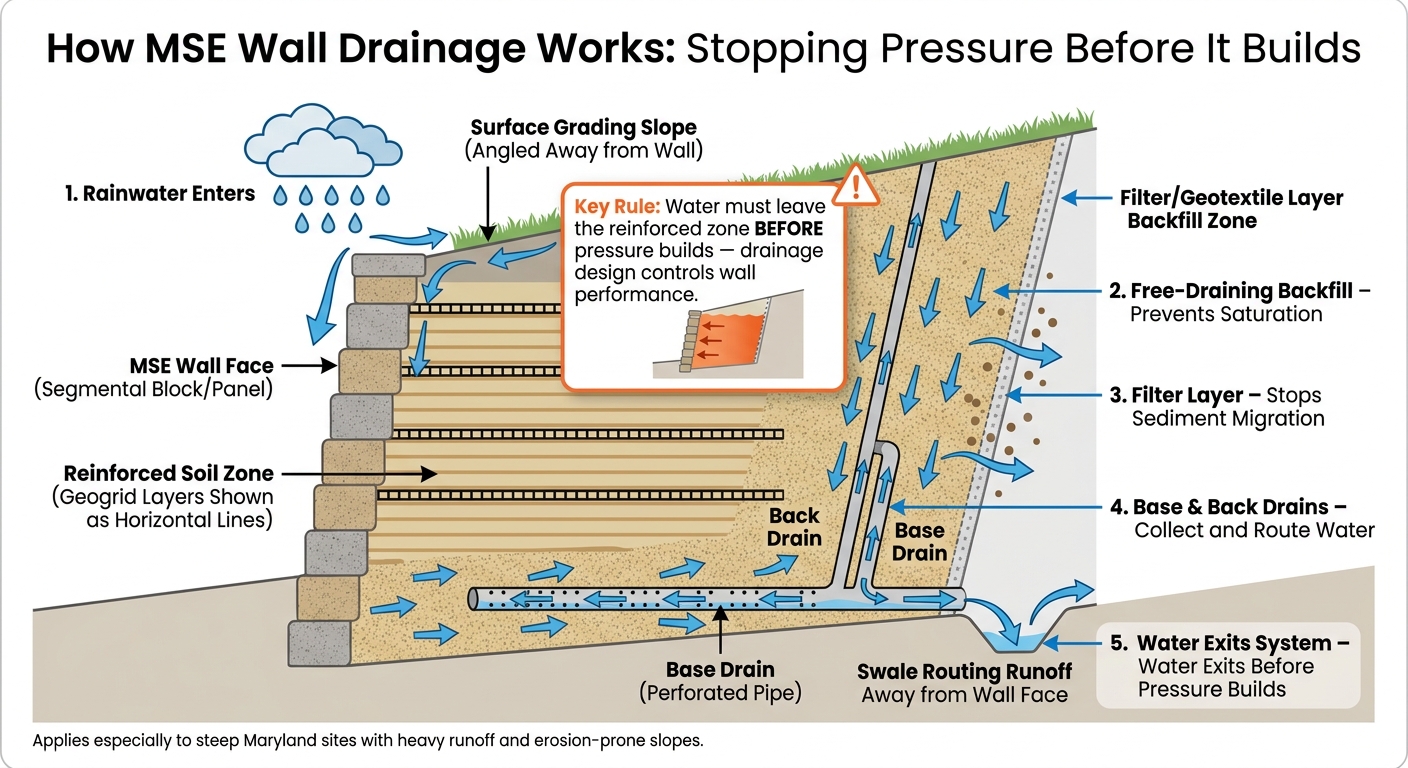
MSE Wall Drainage System: How Water Moves Out Before Pressure Builds
Once water pressure is identified as the main risk, the next step is simple: look at how the wall moves that water out.
Good MSE walls are built to stop water from building up behind the reinforced zone. If water sits there, pressure grows fast. And that can put the whole system under stress.
That’s why internal drains, filter layers, and site grading deserve a close look. These are the parts that help water pass through, flow down, and exit before it becomes a problem.
In plain terms, the wall doesn’t just need to hold soil. It also needs a clear path for water to leave.
sbb-itb-843f8be
Erosion Control and Green Infrastructure Benefits
MSE walls do more than help with drainage. They also cut down erosion on steep sites.
Here’s the issue: when water runs downhill, it pulls soil with it. On steep or shaky slopes, that soil loss can add up fast. The result is messy runoff and sediment that can clog stormwater features.
MSE walls help stop that cycle early by stabilizing the grade before erosion gets going.
How MSE Walls Protect Slopes and Reduce Sediment Loss
An MSE wall replaces an exposed slope with a reinforced wall. That means less bare soil sitting out in the rain, which helps reduce sediment loss during storm events.
Less sediment also means less material washing into:
- drains
- swales
- inlets
When MSE walls are paired with drainage layers or planted faces, they can also help guide cleaner runoff. With the right drainage and planting details, they can fit into low-impact site design too.
In that setup, the wall does two jobs at once: it helps control erosion and supports runoff management.
Best Practices for Residential and Urban Projects
For residential and urban projects, the studies point to one core rule: drainage design controls wall performance. Put simply, you have to keep water from building pressure behind the wall.
When free-draining backfill, internal drains, and proper grading work together, water can leave the reinforced zone before pressure builds. That helps keep the wall stable and cuts down on sediment loss during storm events.
Key Design Checks for Maryland Conditions
That brings the focus to the checks that matter most on Maryland slopes and runoff-prone lots. On these sites, the main items are drainage, grading, and erosion control.
In practical terms, that means paying close attention to:
- free-draining backfill selection
- base and back drain placement
- filter layer installation
- surface grading
- swale routing to move runoff away from the wall face
Summary of Key Findings
The studies support one clear takeaway: MSE walls work best when drainage and erosion control are planned together. Water needs to leave the reinforced zone fast, surface runoff needs to stay under control, and sediment loss needs to be kept in check.
In day-to-day design, MSE walls perform best when drainage, grading, and erosion control act as one system.
FAQs
Why is drainage so critical behind an MSE wall?
Proper drainage behind a mechanically stabilized earth (MSE) wall helps stop hydrostatic pressure from building up.
Here’s the issue: when water collects behind the wall, it pushes sideways on the structure. That extra lateral force can lead to bulging, cracking, or in the worst case, failure.
That’s why drainage matters so much. Systems like French drains move water away from the wall, helping support the wall’s stability and long life in your landscape.
What drainage features should an MSE wall include?
Proper drainage plays a big role in an MSE wall’s stability and long life. If water builds up behind the wall, pressure increases fast. That can lead to pooling, erosion, and extra stress where you don’t want it.
A solid drainage setup usually includes weep holes so water can exit through the wall face, drainage pipes to keep water moving, and French drains to push water away from the area.
Maintenance matters too. Regular inspections, along with clearing debris from pipes and weep holes, help the system keep doing its job and reduce the risk of water buildup behind the wall.
How do MSE walls control erosion and runoff?
Mechanically Stabilized Earth (MSE) walls help control erosion and runoff by holding back weak or shifting slopes. That keeps soil in place during heavy rain and cuts down on washouts. It also lowers the chance of landslides and damage to nearby structures.
They can also help with stormwater management. These walls guide water toward planned drainage areas, which helps stop pooling near foundations. In some setups, they can hold stormwater for a short time and let it out slowly, which helps reduce peak runoff and flood risk.
Chat with Us