









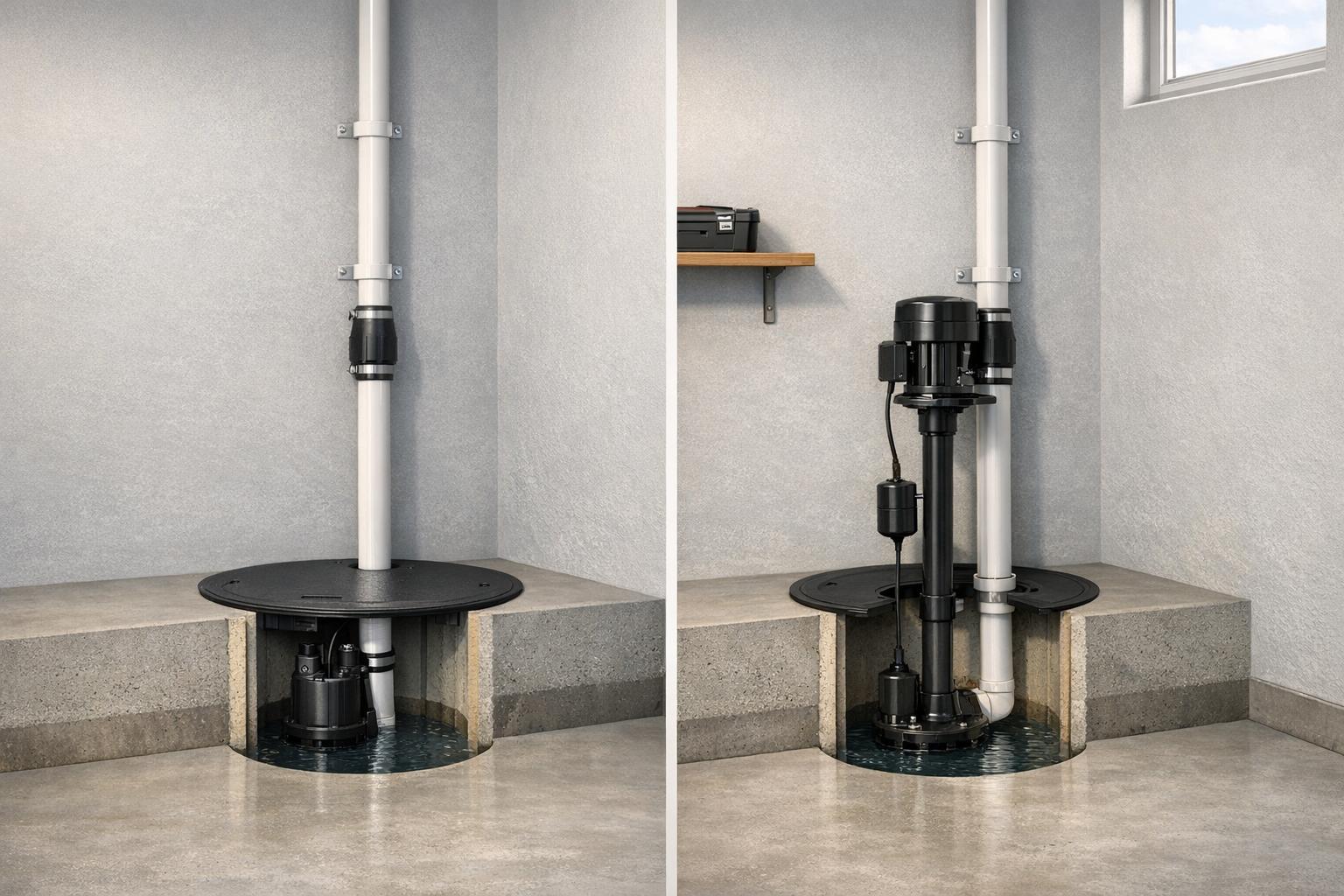
- bhavya gada
- No Comments
Choosing between a submersible and a pedestal sump pump depends on your home’s needs. Submersible pumps are quiet, powerful, and ideal for high water volumes or finished basements, while pedestal pumps are more affordable, easier to maintain, and suitable for moderate water issues or smaller pits. Here’s a quick breakdown:
- Submersible Pumps: Fully submerged in water, quieter (45–55 dB), higher capacity (up to 6,600 GPH), durable (7–15 years lifespan), but more expensive ($200–$900) and harder to maintain.
- Pedestal Pumps: Motor sits above water, louder (60–70 dB), lower capacity, shorter lifespan (5–10 years), but cheaper ($140–$300) and easier to access for repairs.
Quick Comparison:
| Factor | Submersible Pump | Pedestal Pump |
|---|---|---|
| Noise Level | Quieter (45–55 dB) | Louder (60–70 dB) |
| Lifespan | 7–15 years | 5–10 years |
| Cost | $200–$900 | $140–$300 |
| Maintenance | Harder to access | Easier to access |
| Capacity | Up to 6,600 GPH | Lower capacity |
Key Takeaway: Submersible pumps work best for heavy water situations and finished spaces, while pedestal pumps are a budget-friendly choice for moderate water needs. Both require proper installation for optimal performance.
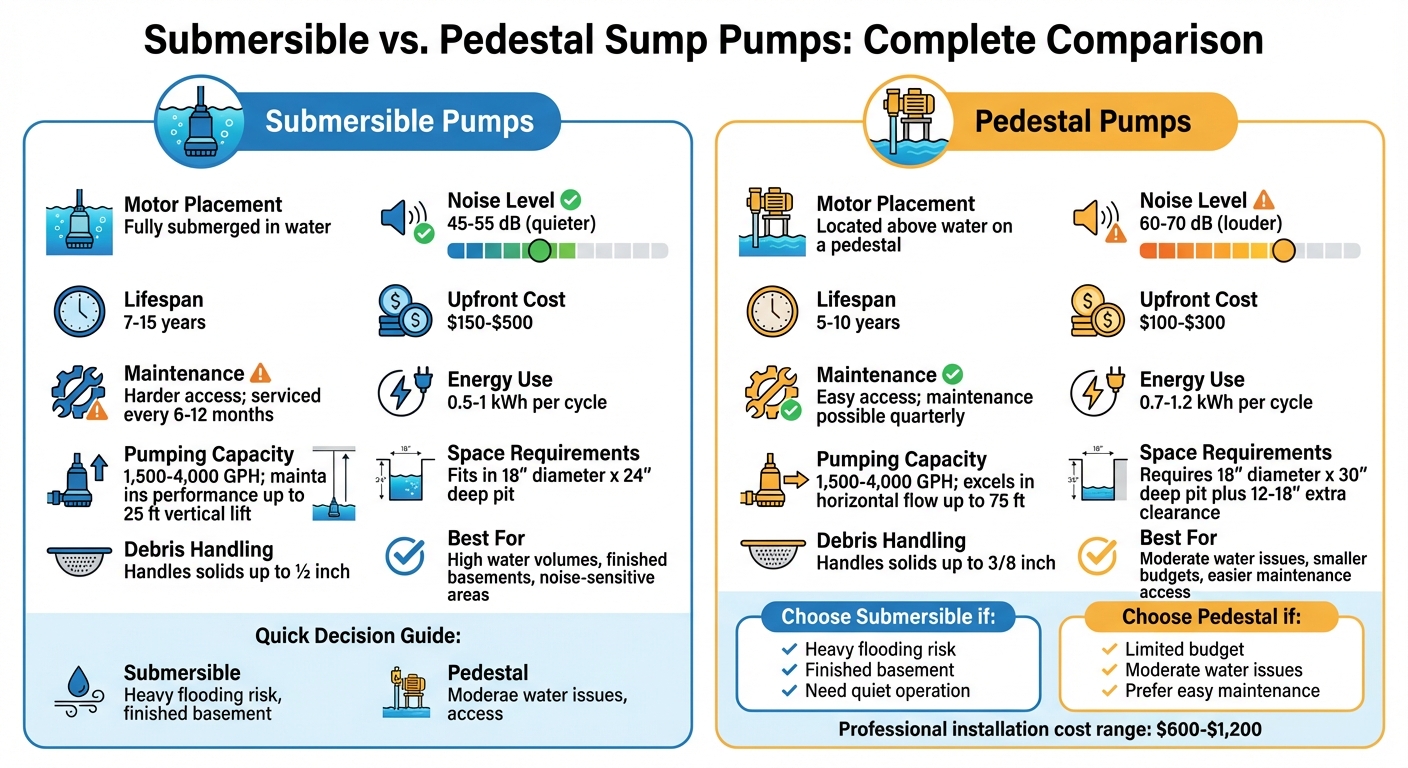
Submersible vs Pedestal Sump Pumps: Complete Comparison Chart
How Does A Pedestal Sump Pump Differ From Submersible Models? – Plumbing DIY Daily
sbb-itb-843f8be
Submersible Sump Pumps Explained
A submersible sump pump is designed to operate completely underwater, sitting at the base of a sump pit. Its motor is hermetically sealed – often filled with oil – to keep water from reaching the electrical components. Thanks to its compact, close-coupled design, it fits neatly inside a standard sump basin without taking up extra space on your basement floor [2].
Because it operates underwater, the pump uses positive fluid pressure to push water upward, which is more energy-efficient than relying on a vacuum. The surrounding water also helps cool the motor during extended use and acts as a natural sound barrier, making these pumps quieter. Additionally, their constant submersion ensures self-priming and reduces the risk of issues like air binding or cavitation. Let’s take a closer look at the features that make submersible sump pumps so effective.
Main Features of Submersible Sump Pumps
Submersible sump pumps typically run at speeds of up to 4,000 rpm and can handle liquid temperatures ranging from about 104°F to 248°F [3]. The water in the sump pit naturally cools the motor, preventing overheating even during long periods of operation [2]. Their compact design makes them perfect for tight spaces, like finished basements or crawl spaces, where space is limited [2].
Many models also feature vortex impellers, which circulate debris without direct contact, reducing the likelihood of clogs. Some higher-end models even come with grinder systems to handle tougher debris [2]. These thoughtful design elements make submersible sump pumps a practical solution for various residential needs.
Benefits of Submersible Sump Pumps
One of the standout benefits of submersible sump pumps is their quiet operation. Since the motor is submerged, the surrounding water muffles much of the noise, which is especially appealing for homes with finished basements. For example, Wayne Water Systems earned a perfect 5/5 rating for its quiet performance and energy-efficient design [1].
Submersible pumps are also known for their high pumping capacity. The Zoeller M53 Mighty-Mate, for instance, can move up to 42 gallons per minute, while more powerful 1-HP models can handle up to 6,600 gallons per hour [1]. Their compact size helps save floor space, keeping finished basements looking clean and organized. Durability is another strong point, with models like Zoeller’s receiving top marks for their cast-iron construction, which dissipates heat and extends the motor’s lifespan during heavy use [1].
Drawbacks of Submersible Sump Pumps
Despite their advantages, submersible sump pumps come with a few downsides. For one, they tend to have a higher upfront cost. Professional installation can range from $600 to $1,200, though budget-friendly options start at around $140 [1]. Advanced models with additional features can be significantly more expensive.
Another consideration is maintenance. While a well-maintained pump can last between 8 and 15 years [2], constant exposure to water can wear down seals and bearings over time. Inspecting or repairing these pumps often requires removing them from the pit, which can be inconvenient. Seal failure is a common issue and can be tricky to detect early, potentially leading to more significant problems [4]. These factors should be weighed carefully when deciding on the right sump pump for your home.
Pedestal Sump Pumps Explained
A pedestal sump pump works quite differently from a submersible pump. Its motor sits above the sump pit and is activated by a float switch. Since the motor relies on air cooling, it tends to be louder during operation. However, this design can extend the motor’s lifespan in settings where it’s not used heavily.
The pump operates by drawing water through the intake pipe and pushing it out via the discharge line. Unlike submersible pumps, the motor of a pedestal pump stays dry and accessible, which is convenient for maintenance but comes at the cost of increased noise.
These pumps are best suited for homes with smaller or shallower sump pits, such as those in crawl spaces or older houses with narrow or non-standard drainage pits. They are ideal for areas with a lower risk of heavy flooding [1]. Let’s break down their features, benefits, and drawbacks.
Main Features of Pedestal Sump Pumps
The elevated motor design makes inspections and adjustments straightforward. This design also allows the pump to fit into tight sump pits. Brands like Little Giant and Simer are known for offering compact models that perform well in confined spaces [1].
Benefits of Pedestal Sump Pumps
One major advantage of pedestal sump pumps is their affordability. Basic models are available for $140 to $300 [1]. Keeping the motor dry reduces wear caused by constant water exposure, and the accessible design makes repairs easier and often less expensive. These features make pedestal pumps a practical choice for basic flood protection.
Drawbacks of Pedestal Sump Pumps
The most noticeable downside is the noise produced by the exposed motor, which isn’t muffled by water. Additionally, pedestal pumps typically have a lower pumping capacity compared to submersible models, making them less effective for managing large volumes of water. For homes prone to heavy water intrusion, a dual-pump setup or a heavy-duty cast-iron model may be a better option [1].
Another consideration is the vertical space needed for the motor and pedestal assembly. Lower-cost models often use thermoplastic or plastic components, which may not hold up as well as cast-iron or stainless steel parts in demanding conditions [1].
Submersible vs. Pedestal Sump Pumps: Direct Comparison
Choosing between submersible and pedestal sump pumps comes down to understanding their design differences and how those affect performance. Both options offer similar flow rates, but their unique features make them better suited for different situations.
Motor Placement
Submersible pumps are designed to operate entirely underwater within the sump basin. This makes them suitable for installations in pits as shallow as 18 inches. On the other hand, pedestal pumps have their motor mounted above the water, requiring a deeper pit – typically 24 to 30 inches deep – and an additional 12 to 18 inches of clearance for the motor assembly [5][6]. This difference directly impacts installation flexibility.
Noise Levels
One of the most noticeable differences is the noise they produce. Submersible pumps run at 45–55 dB, as the surrounding water helps dampen motor sounds. Pedestal pumps are louder, operating at 60–70 dB because their motors are exposed. While vibration-dampening mounts can reduce noise by up to 15 dB, pedestal pumps still can’t match the quieter operation of submersibles [7][8]. This makes submersibles a better choice for finished basements or noise-sensitive areas.
Maintenance and Lifespan
Submersible pumps are more durable, with lifespans ranging from 7–15 years. However, maintenance can be more involved since the entire unit must be removed from the pit for servicing. Pedestal pumps, which typically last 5–10 years, offer easier access for maintenance, allowing for quarterly upkeep. That said, high sediment levels can reduce their lifespan by up to 30% [6][8][9][10]. These differences influence both long-term costs and convenience.
Comparison Table
| Factor | Submersible Pump | Pedestal Pump |
|---|---|---|
| Motor Placement | Fully submerged in water | Located above water on a pedestal |
| Noise Level | 45–55 dB (quieter) | 60–70 dB (louder) |
| Maintenance | Harder access; serviced every 6–12 months | Easy access; maintenance possible quarterly |
| Lifespan | 7–15 years | 5–10 years |
| Upfront Cost | $150–$500 | $100–$300 |
| Energy Use | 0.5–1 kWh per cycle | 0.7–1.2 kWh per cycle |
| Pumping Capacity | 1,500–4,000 GPH; maintains performance up to 25 ft vertical lift | 1,500–4,000 GPH; excels in horizontal flow up to 75 ft |
| Debris Handling | Handles solids up to ½ inch | Handles solids up to 3⁄8 inch |
| Space Requirements | Fits in an 18″ diameter x 24″ deep pit | Requires an 18″ diameter x 30″ deep pit plus 12–18″ extra clearance |
This breakdown highlights the key factors to consider, helping you select the pump that best suits your home and specific needs.
How to Choose the Right Sump Pump
Once you understand the key features of sump pumps, the next step is finding the right model for your home’s unique needs.
Start by measuring your sump basin’s size. Submersible pumps need larger pits to fit the motor underwater, but compact options – like Little Giant pumps – are designed for smaller spaces, such as shallow pits or crawl spaces [1]. If space is tight, a pedestal pump or a compact submersible model could be a better fit.
Next, consider your flooding risk and the volume of water your pump will need to handle. If your home is in a high-risk area, you’ll want a high-capacity cast-iron submersible pump or a dual-pump system to ensure maximum protection [1]. For example, the Zoeller M53 Mighty-Mate can pump up to 42 gallons per minute, making it a reliable choice for heavy-duty conditions [1]. On the other hand, if your basement only deals with occasional moisture or moderate water levels, a mid-range pedestal pump costing between $75 and $400 might be enough [11][12][13].
Budget is another important factor. Residential sump pumps generally cost between $200 and $900, while professional installation adds $600 to $900. If you need a dual-pump system, the cost can climb to $1,200 [1]. A pedestal pump is a good option for those on a tighter budget, as it’s easier to maintain. However, if you live in an area with frequent flooding or a high water table, a submersible pump is more effective at handling larger volumes of water [12][13].
"Choosing a durable, high-efficiency pump will reduce maintenance and replacement expenses long term." – Harris Plumbing [12]
Finally, think about power reliability and monitoring features. If your area is prone to power outages, look for a system with a battery backup, which can add $150 to $600 to your total cost. Dual-pump systems are another option for added reliability [1][12][13]. Many modern submersible pumps now come with smart monitoring features, like Wi-Fi connectivity, which provide real-time alerts and diagnostics. For instance, Liberty Pumps‘ PumpSpy offers these capabilities, with smart-enabled systems costing between $500 and $850 [1]. Professional-grade options, such as Groundworks‘ AquaStop, include dual-pump redundancy and extended warranties [1]. Combining a battery backup with smart diagnostics ensures uninterrupted protection for your home.
Professional Installation and Drainage Services
Getting your sump pump installed correctly is a must if you want it to work efficiently. A professional installation ensures the pump is placed in the right spot to remove water effectively and is seamlessly integrated into your existing drainage system [14]. Skilled technicians will evaluate your property’s drainage needs and recommend the best pump type – whether submersible or pedestal – based on factors like your property size and water exposure [14].
The installation process involves several specialized steps, including digging the sump pit, making any necessary modifications, and connecting the discharge system to direct water safely away from your foundation [14][15]. Professionals also ensure the pump is connected to a dependable power source and can install a battery backup system to keep it running during power outages [15]. In Maryland, the cost of professional installation typically ranges from $700 to $1,500. Labor fees alone can vary between $200 and $800, depending on the complexity of the plumbing and electrical work involved [14][15].
For those in central Maryland, Pro Landscapes MD offers a full range of drainage solutions, serving areas like Howard, Montgomery, Carroll, Frederick, Prince George’s, and Baltimore Counties. Their services go beyond sump pump installation, including French drains, dry riverbeds, stormwater management, grading, land leveling, and drainage repairs. They combine sump pump installation with advanced drainage techniques to provide comprehensive water management solutions.
A properly installed system optimizes the performance of both submersible and pedestal pumps, working hand-in-hand with the pump selection strategies mentioned earlier. When hiring a contractor, make sure they have local drainage expertise and provide a detailed written scope of work. Professional installation not only boosts system efficiency but also helps prevent costly issues like mold, wood rot, and structural damage in the long run [14][15].
Conclusion
When choosing a sump pump, consider your home’s specific water challenges and your budget. Submersible pumps are a great option for high-water situations or finished basements, as they run more quietly and handle heavy water intrusion effectively. On the other hand, pedestal pumps, while louder, are easier to maintain and come with a lower initial cost, making them a practical choice for those with moderate water issues or tighter budgets. Your decision should factor in the level of water exposure, the size of your sump pit, and how much you’re prepared to spend on both the pump itself and ongoing maintenance.
Equally important is the quality of installation. A properly installed sump pump ensures optimal performance and reliability. Pro Landscapes MD specializes in drainage solutions across central Maryland, offering professional sump pump installations along with services like French drains, dry riverbeds, stormwater management, grading, and drainage repairs. Their team ensures your entire water management system works seamlessly to protect your foundation and prevent costly damage. To keep your sump pump functioning year-round, schedule regular maintenance and consider adding a battery backup for added peace of mind and long-term protection.
FAQs
What size sump pit do I need?
The size of your sump pit depends on how much water it needs to handle. As a general rule, 1 cubic foot of sump capacity can hold about 28 liters of water. For example, if you need a capacity of 6,000 liters, you’d require a sump pit of around 215 cubic feet. Always calculate based on your specific drainage requirements to ensure it meets your needs.
Do I need a battery backup sump pump?
A battery backup sump pump is a smart choice if you live in an area that experiences frequent power outages or heavy rainfall. It keeps your sump pump running even when the power goes out, reducing the risk of flooding and water damage. For homes in storm-prone regions, this extra safeguard can provide much-needed peace of mind. To decide if it’s right for your home, consider consulting a professional.
When should I replace my sump pump?
Replace your sump pump if it often malfunctions, starts making strange noises, or is nearing the end of its usual lifespan (about 7–10 years). Swapping it out on time can help you avoid flooding and costly water damage in your home.
Chat with Us