









- bhavya gada
- No Comments
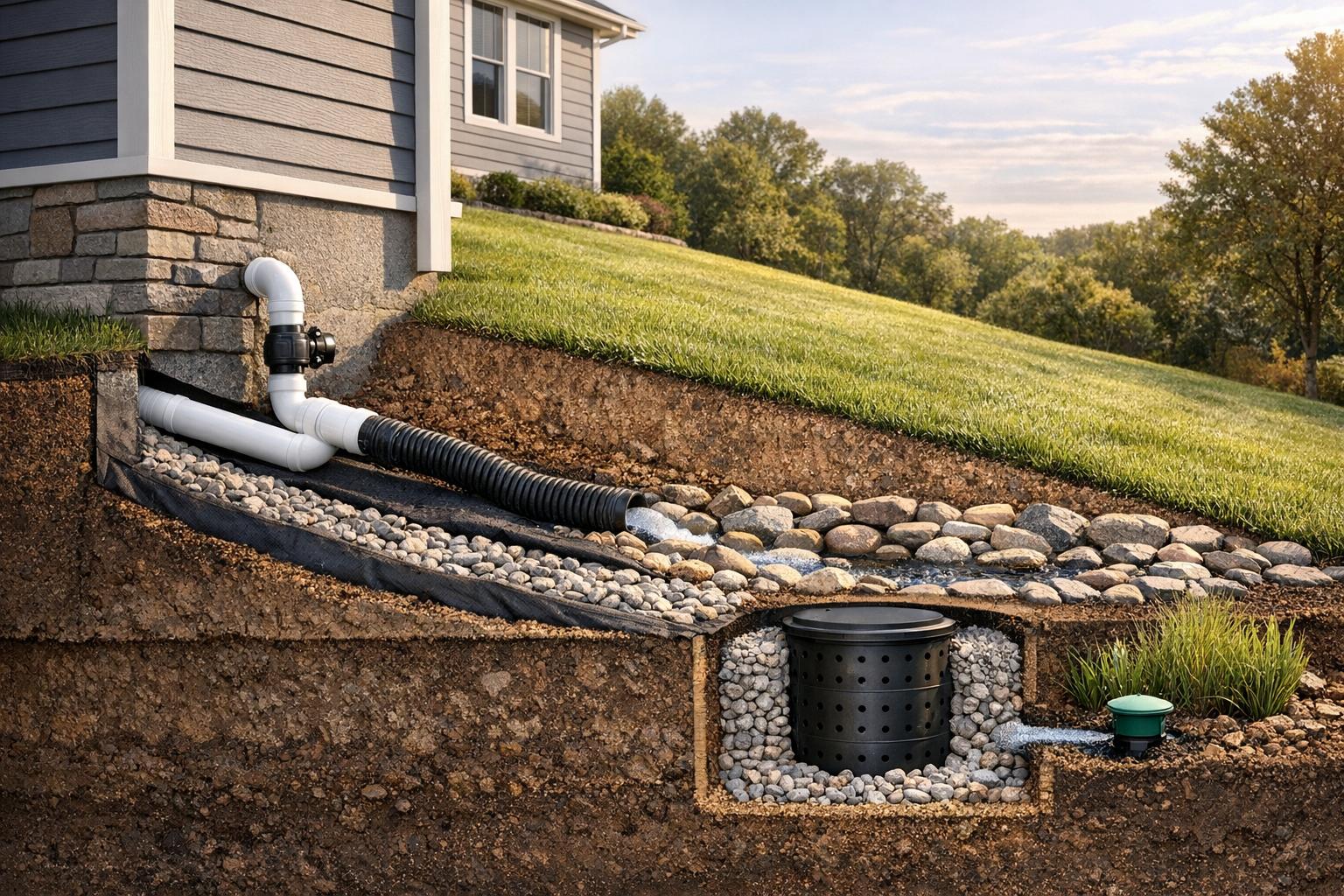
Managing sump pump discharge on sloped properties can be challenging. Improper drainage risks foundation damage, soil erosion, and frozen pipes. Here are seven effective solutions to address these issues:
- Buried PVC Discharge Lines: Install PVC pipes below the frost line (20–30 inches deep) to prevent freezing. Maintain a 1%-2% slope for smooth water flow and erosion control.
- French Drains: Use perforated pipes in gravel-filled trenches to redirect water efficiently while preventing erosion and clogs.
- Pop-Up Emitters: These systems release water gradually, reducing erosion and protecting against freezing when installed with proper slope and outlet protection.
- Switchback Routing: A zigzag pipe layout slows water on steep slopes, minimizing erosion and sediment buildup.
- Dry Creek Beds: Aesthetic and functional, these rock-lined channels slow water flow, protect soil, and integrate with landscaping.
- Insulated Above-Ground Pipes: For rocky or steep areas, use insulated PVC with heat tape to prevent freezing and maintain a steady downhill slope.
- Stormwater Swales: Create vegetated channels to disperse water, reduce runoff speed, and filter sediment.
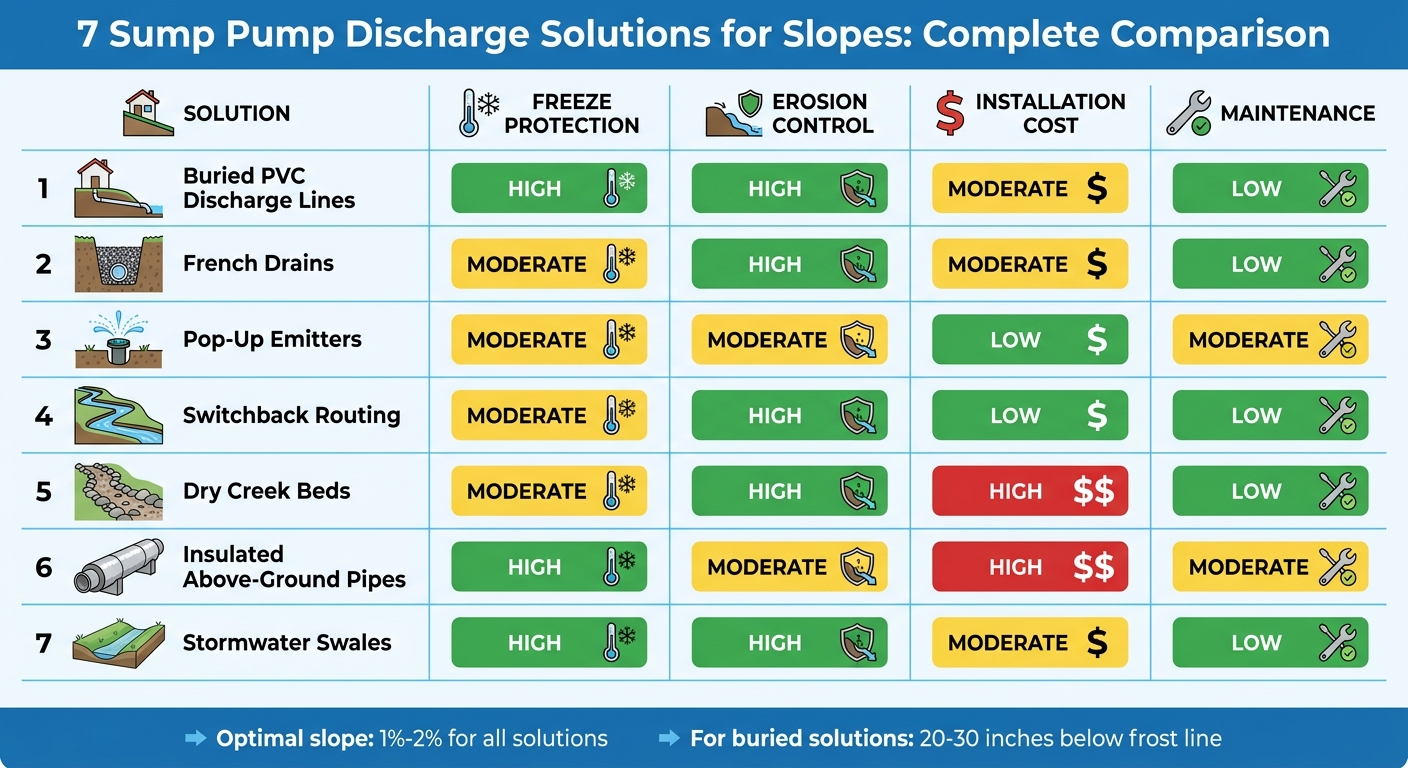
Quick Comparison
| Solution | Freeze Protection | Erosion Control | Installation Cost | Maintenance |
|---|---|---|---|---|
| Buried PVC Lines | High | High | Moderate | Low |
| French Drains | Moderate | High | Moderate | Low |
| Pop-Up Emitters | Moderate | Moderate | Low | Moderate |
| Switchback Routing | Moderate | High | Low | Low |
| Dry Creek Beds | Moderate | High | High | Low |
| Insulated Above-Ground | High | Moderate | High | Moderate |
| Stormwater Swales | High | High | Moderate | Low |
Proper slope (1%-2%), durable materials like PVC, and erosion control measures such as rock aprons or riprap are critical for effective drainage. These solutions not only protect your home but also prevent costly repairs.
Sump Pump Discharge Solutions Comparison: Costs, Freeze Protection & Erosion Control
What’s the Best Way to Run a Sump Pump Line? 4 Different Installs Including No Dig Option
sbb-itb-843f8be
1. Buried PVC Discharge Lines Below Frost Line
To keep PVC discharge lines from freezing on sloped Maryland properties, bury them 20–30 inches deep. At this depth, the soil stays warm enough to prevent water from freezing, ensuring smooth flow and avoiding ice blockages.
Freeze Resistance
The key to freeze protection lies in the proper burial depth and using gravity to assist drainage on slopes. By emptying water between cycles, you reduce the chance of freezing. The smooth interior of rigid PVC pipes also helps by minimizing friction, so water doesn’t cling to the walls and freeze. On the other hand, corrugated HDPE pipes, with their ridged interiors, can trap water and debris, increasing the likelihood of ice forming. Combining these features with careful slope control makes PVC lines a reliable choice for freeze resistance.
Slope Adaptability
A slope of 1%–2% is ideal for PVC lines, as it ensures efficient drainage and prevents sediment from settling. When installing, make sure the bell-ended joints face upslope and avoid sharp vertical rises – this reduces the risk of debris buildup and air pockets. Rigid PVC also holds its shape well under soil pressure and root growth, maintaining a consistent flow path and avoiding low spots that could lead to erosion.
Erosion Control
On steep slopes, fast-moving water can cause erosion. To combat this, add features like a rock apron, riprap, or a splash pad at the outlet. These slow down the water, protecting the surrounding soil and preventing damage to the landscape.
Cost-Effectiveness
Although rigid PVC requires a bit more effort to install due to solvent-weld fittings, it’s a solid long-term investment. Its smooth walls are less prone to clogs, and its durability means fewer maintenance headaches. For permanent installations below the frost line, PVC offers dependable performance without the need for additional insulation or heat tape.
2. French Drain Integration
French drain systems are an effective way to manage sump pump discharge and control groundwater drainage. This setup involves routing the sump pump’s discharge through a perforated pipe placed in a gravel-filled trench. To keep the system running smoothly, the entire assembly is wrapped in filter fabric, which blocks silt from clogging the pipe while still letting water flow freely. To get the best results, you’ll need to pay close attention to the slope, outlet protection, and material choices.
Slope Considerations
Getting the slope right is key to ensuring the French drain works efficiently. The grade should stay between 1% and 2% – this prevents solids from settling in the pipe and reduces the chance of erosion at the outlet [1]. Regularly check and adjust the slope to avoid pooling. On steeper terrain, rigid PVC is a great option for the main discharge pipe, as its smooth interior promotes steady water flow and resists damage from soil pressure [1].
Controlling Erosion
Both too little and too much slope can cause problems. A slope that’s too shallow can lead to water pooling, while a slope over 2% increases the risk of erosion at the outlet. If the slope exceeds 2%, adding protective measures like a rock apron, gabion basket, or vegetated filter strip can help slow the water and prevent erosion. It’s also a good idea to check the outlet regularly, especially after heavy rains and during seasonal transitions, to clear away leaves or debris that might cause backups or erosion [1].
Balancing Cost and Efficiency
French drains are a practical and economical solution for managing sump pump discharge and overall drainage. To maximize efficiency without overspending, use perforated pipes only within the gravel trench. For the pressurized section of the discharge line, solid pipes are a better choice, as they prevent soil from becoming oversaturated [1]. This approach keeps costs in check while ensuring the system works as intended. For professional help with French drain installation or tackling drainage challenges on sloped properties, Pro Landscapes MD offers tailored solutions to meet your needs.
3. Pop-Up Emitter Systems
Pop-up emitter systems offer a discreet and effective way to manage sump pump discharge on sloped properties. These systems feature spring-loaded caps that remain flush with the ground when not in use and automatically open when water flows through. By spreading water across a larger area, they help prevent erosion while balancing efficient water dispersal with protection against freezing and soil loss.
Freeze Resistance
In colder regions, preventing freeze-ups in the discharge line is crucial. To reduce the chance of water freezing inside the pipe, ensure the line has a steady downhill slope. This allows gravity to clear out any remaining water, minimizing ice blockages and ensuring the system operates smoothly during colder months [1].
Slope Adaptability
Pop-up emitters are most effective on slopes with a gradient of 1% to 2%. This range enables water to flow efficiently without gaining enough speed to cause erosion. For steeper slopes – those exceeding 2% – additional measures, such as energy-dissipation features, are necessary to prevent erosion. It’s also a good idea to place the emitter at least 5 feet away from your foundation on vegetated ground sloping away from your home. This setup helps protect your basement walls from excessive soil saturation [1].
Erosion Control
Even though pop-up emitters disperse water broadly, steep slopes can still face erosion challenges. For example:
"I once redirected a sump line down a 15 foot slope without a proper apron and watched the downhill neighbor’s planting bed turn into a gullied trench after one heavy storm" [1].
To avoid similar issues, you can install a small rock apron or a vegetated filter strip directly below the emitter. These additions slow down water flow and trap sediment, reducing the risk of erosion. After heavy rains, it’s wise to inspect the outlet for debris and clear any blockages to maintain proper functionality [1].
Cost-Effectiveness
Pop-up emitters are not only functional but also budget-friendly. They typically cost between $15 and $40 per unit, depending on the size and quality. Pairing them with corrugated HDPE pipe for the buried section keeps material costs low while offering the flexibility to navigate around obstacles. When installed correctly – with the right slope and outlet protection – they provide long-term benefits by preventing basement leaks and foundation damage. Regular maintenance, especially in spring and fall, can catch blockages early and avoid expensive repairs. This makes pop-up emitters a practical and reliable choice for managing sump pump discharge on sloped properties in Maryland and beyond [1].
4. Switchback Pipe Routing
Switchback pipe routing is a smart way to handle sump pump discharge on steep slopes. Instead of letting water rush straight downhill – risking high velocities and erosion – this method uses a zigzag pattern to control the flow. By keeping the slope between 1% and 2%, it reduces sediment buildup and erosion risks [1]. This technique combines thoughtful material selection with slope management to ensure effective drainage.
Slope Management
For slopes steeper than 2%, direct discharge can lead to dangerously fast water flow. Switchback routing stretches the discharge path, creating a gentler slope – around 1.5 feet of drop per 100 feet – ideal for safe and controlled drainage [1].
Preventing Erosion
Even when water flow is controlled, the discharge point needs extra protection. Using a rock apron, gabion basket, or riprap at the outlet helps absorb the remaining energy. As Iamarrows explains:
Above 2 percent you start encouraging erosive velocities at the outlet unless you arm the outfall with protective measures [1].
Smooth vertical transitions in the pipe design also help prevent air pockets from forming.
Budget-Friendly Solution
Switchback routing is cost-efficient, reducing the need for excessive fittings or complex installations. Flexible corrugated HDPE pipes are a great choice for this method. They’re less expensive and easier to maneuver around obstacles compared to rigid PVC. As Iamarrows points out:
Corrugated HDPE pipe is cheaper and flexible, which simplifies routing around obstacles and reduces the need for many fittings [1].
For the final stretch, switching to rigid PVC is a good idea – it helps prevent clogs and resists UV damage.
Freeze Protection
To avoid freezing problems, it’s crucial to maintain a continuous downhill pitch throughout the route. Any upward slope can trap water, leading to freezing in colder temperatures. Burying the pipes below the frost line ensures the system works reliably even during Maryland’s chilly winters [1].
5. Dry Creek Bed Extensions
A dry creek bed extension transforms sump pump discharge into a visually appealing landscape feature while effectively managing drainage on slopes. By using strategically placed rocks and gravel, this method slows water flow and minimizes erosion. On slopes steeper than 2%, standard discharge lines can lead to fast-moving water that cuts through your yard. A rock-lined creek bed disperses water energy, protecting your property and nearby areas. It works well alongside other slope-friendly drainage solutions by naturally breaking down water flow.
Erosion Control
Controlling erosion starts with selecting the right rock sizes for specific areas. Use 1–3 inch pebbles in the center channel where most of the water flows, and place 4–8 inch cobbles along the edges for added stability. At the point where the discharge pipe meets the creek bed, install a rock apron or a concrete splash pad to safely handle the transition. To keep the rocks in place, use anchored riprap sized appropriately for the water flow [1].
Slope Adaptability
Dry creek beds shine on slopes where rigid pipes often fall short – especially when the terrain twists, turns, or drops abruptly. Unlike straight trenches, these features follow the natural contours of your property, creating a more integrated look. The combination of rocks and gravel slows water flow, allowing it to soak into the soil gradually instead of rushing across the surface. Adding native plants along the banks not only stabilizes the area but also enhances its natural appearance. For added durability, lay landscape fabric beneath the rocks to prevent weeds and maintain an even distribution of stones.
Freeze Resistance
Although the creek bed itself sits at surface level, the discharge line leading to it should be buried below the frost line. The open design of the rock bed allows for better expansion and drainage during freeze-thaw cycles compared to buried pipes. Maintaining a continuous downhill slope from the sump pump to the creek bed ensures smooth water flow, reducing the risk of pooling and ice blockages that could damage your system in winter.
Cost-Effectiveness
While dry creek beds may cost more upfront than basic splash blocks, they offer plenty of long-term benefits. Once installed, they require minimal maintenance – just occasional checks after heavy rainfall to clear debris. Additionally, many municipalities mandate erosion control when discharging water into public areas, and a well-designed rock-lined swale often meets these regulations [1]. By combining durability, aesthetics, and functionality, dry creek bed extensions provide a smart solution for managing sump pump discharge on sloped properties.
For expert help with designing and installing dry creek bed extensions or other drainage solutions, visit Pro Landscapes MD.
6. Insulated Above-Ground Rigid Piping
When trenching isn’t possible due to rocky terrain or steep slopes, insulated above-ground rigid piping offers a dependable, freeze-resistant option for discharge systems. This method uses rigid PVC pipes wrapped in foam sleeves and outdoor-rated heat tape, ensuring protection against freezing while following the natural contours of the property. Rigid PVC is particularly effective because it holds its shape under pressure and has smooth internal walls, which help reduce debris buildup and ice formation.
Freeze Resistance
Keeping above-ground pipes from freezing involves a combination of insulation and heat. Foam sleeves wrapped around the pipe, combined with outdoor-rated heat tape connected to a GFCI-protected circuit, provide excellent protection. To further reduce freezing risks, install a check valve near the pump. This prevents water from flowing back into the sump pit, minimizing the amount of water that could freeze inside the pipe. Additionally, ensure the pipe maintains a continuous downhill slope of 1%–2% to clear residual water effectively [1].
Slope Adaptability
Rigid PVC is ideal for sloped properties because it resists collapsing under pressure and handles high-velocity water flow efficiently. Its smooth interior reduces friction, preventing clogs and ensuring water flows freely, even on steep inclines. For better performance, consider increasing the pipe diameter from the standard 1.25 inches to 1.5 or 2 inches, which reduces head loss and minimizes blockages. Avoid routing pipes across sidewalks or driveways, where frost heave could cause damage. Instead, follow the natural slope of the land and use solvent-weld fittings for strong, leak-free connections. Adding union fittings near the pump also makes maintenance more manageable.
Erosion Control
On slopes steeper than 2%, water exiting the pipe can move fast enough to erode the soil. To prevent this, install energy dissipation measures like a rock apron, gabion basket, or anchored riprap at the discharge point. These solutions help slow down the water and protect the surrounding soil. Make sure the chosen method can handle the concentrated flow from the pipe outlet to keep the area stable.
Cost-Effectiveness
While insulated above-ground piping has higher upfront costs due to the need for heat tape and insulation, it offers durability and requires less maintenance over time. UV-resistant PVC holds up well against sun exposure, though it’s a good idea to inspect exposed sections annually for cracks or damage from animals. Avoid using corrugated HDPE for exposed sections, as its ridges can trap water and debris, increasing the likelihood of freezing. With its resilience and reduced need for repairs, rigid PVC provides a reliable and cost-efficient solution for challenging terrain.
7. Sump Discharge to Stormwater Swales
Directing sump pump discharge into a vegetated stormwater swale offers a long-lasting and environmentally friendly way to manage water on slopes. This approach doesn’t just control erosion and prevent freezing – it also provides added environmental perks. By transitioning water from a concentrated pipe flow to a wider, slower surface flow within a vegetated channel, swales naturally filter sediment and reduce the overall environmental impact. It’s no surprise that many municipalities favor – or even mandate – this method over simply discharging water onto the street [1].
Slope Management
To keep water flowing smoothly without causing erosion, aim for a slope of 1%–2% (a drop of 1 to 2 feet over 100 feet) [1]. As noted by Iamarrows, "A discharge line that is too flat will pond and back up, too steep and it will erode the discharge point." For slopes steeper than 2%, adding a flared end section at the swale’s entry can help spread the water flow more evenly, reducing the risk of damage caused by high-velocity runoff.
Erosion Protection
Without proper safeguards, steep slopes can quickly erode at discharge points, turning them into unsightly gullies after heavy rainfall [1]. To prevent this, install energy-dissipating features such as rock aprons, gabion baskets, or anchored riprap, sized appropriately for the expected water volume. These structures help slow the water and trap sediment. Adding a vegetated filter strip further reduces the velocity of the water while capturing debris. These protective measures are especially important for swale systems, as the transition from pipe flow to surface flow can create unique erosion challenges at the entry point.
Freeze Prevention
A consistent downhill slope leading to the swale ensures gravity clears the discharge line after each pump cycle, preventing standing water that could freeze and block the system in winter [1]. This gravity-driven drainage is key to avoiding cold-weather issues. Additionally, using rigid PVC for the exposed section of the discharge line – rather than corrugated HDPE – provides a smoother interior that resists debris buildup and maintains its shape under UV exposure. These features not only improve functionality but also reduce maintenance costs over time.
Budget-Friendly Benefits
While swale discharge may require an initial investment in erosion control measures, it offers better long-term value compared to temporary solutions like splash blocks [1]. To keep costs manageable, consider using corrugated HDPE for buried sections and rigid PVC for the exposed portions. Before starting the project, review local regulations, as some municipalities may have specific rules for connecting to public swales or ditches, and permits might be required for sediment management. With its environmental advantages and compliance with drainage codes, this solution appeals to both homeowners and inspectors alike.
Material Comparison Table
When it comes to sloped properties, choosing the right discharge material for your sump pump is just as important as proper routing techniques. The material you select can determine whether your system runs smoothly all year or struggles with freezing and clogging in winter. Common options include rigid PVC, polyethylene (corrugated HDPE), and flexible hoses. Each has its own strengths and weaknesses for sloped terrain.
Rigid PVC stands out for its excellent freeze resistance. Its smooth interior walls help prevent debris buildup, making it a reliable choice for year-round performance. As Home Improvement Expert SteveSh points out:
The nice part about the solid pipe is that it’s easier… to ensure that you have the downward slope you want to the outfall [2].
Thanks to its rigidity, maintaining the recommended 1%–2% slope to avoid ice blockages is more straightforward [1]. However, PVC tends to be pricier than other materials and requires additional fittings – like elbows and couplings – when navigating around obstacles [1].
Polyethylene (Corrugated HDPE) is a flexible and cost-effective option, especially for long runs with twists and turns. Its flexibility reduces the need for extra fittings, but its corrugated design can trap debris and create low spots that freeze. Drainage specialist Anderson advises caution:
The downside [of corrugated HDPE] is that corrugations trap debris and can become an anchor point for roots… I avoid it for the final few feet where debris and freezing can be an issue [1].
Flexible Hoses are best suited for temporary fixes, emergency setups, or seasonal use. They are the most affordable and easiest to install, but they come with significant drawbacks. Flexible hoses are prone to kinking, degrade under UV exposure, and can form ice pockets. For permanent installations on slopes, they are not a viable option [1].
Choosing the right material impacts not just freeze resistance and durability but also how well your system handles erosion control.
| Feature | Rigid PVC | Polyethylene (Corrugated HDPE) | Flexible Hose |
|---|---|---|---|
| Freeze Resistance | High (smooth walls prevent pooling) | Moderate (corrugations trap water) | Low (prone to kinking and sagging) |
| Slope Installation | Easy to maintain consistent grade | Difficult; prone to "bellies" | Very difficult; requires constant support |
| Cost | Higher | Lower | Lowest |
| Durability | High; resists collapse and UV | Moderate; flexible but can shift | Low; temporary use only |
| Suitability for Slopes | Excellent for maintaining 1–2% grade | Good for routing around obstacles | Poor; best for temporary/emergency use |
For the best results, consider a hybrid approach: use corrugated HDPE for buried sections where cost is a priority, then switch to rigid PVC for the final few feet where the line exits to daylight. This strategy balances cost-effectiveness with the durability and freeze protection needed at critical discharge points [1]. By carefully weighing these options, you can create a sump pump discharge system that’s both reliable and budget-friendly.
Conclusion
Directing sump pump discharge on slopes is essential for protecting your foundation, preventing erosion, and avoiding expensive repairs. Maintaining a slope of 1%–2% (a 1–2 foot drop over 100 feet) ensures water flows quickly, reducing sediment buildup and erosion risks [1]. This slope also helps minimize hydrostatic pressure against foundation walls and prevents recurring basement seepage.
Using durable materials like rigid PVC is equally crucial. It resists clogs, root intrusion, and collapse, keeping maintenance costs lower over time. To further safeguard your landscape, energy dissipation features – like rock aprons or gabion baskets – at the discharge point help slow water velocity and trap sediment. These measures prevent topsoil loss and protect planting beds from damage.
For Maryland homeowners dealing with challenging slopes and strict discharge regulations, Pro Landscapes MD offers tailored drainage solutions. Their services include precise grading, frost-protected line burial, and advanced systems like French drains, dry creek beds, and stormwater swales. They serve key areas, including Howard, Montgomery, Carroll, Frederick, Prince George’s, and Baltimore Counties.
A well-planned system not only protects your home but also gives you peace of mind by preventing basement flooding and severe yard erosion.
FAQs
How do I know if my yard slope is in the 1%–2% range?
To determine if your yard slope falls within the 1%–2% range, you’ll need to measure the elevation change across a 100-foot horizontal stretch. For context, a 1% slope equals a 1-foot drop over that distance, while a 2% slope means a 2-foot drop. Use a level or a string level alongside a measuring tape to gauge the elevation difference. Then, divide that difference by the horizontal distance to calculate the slope.
Where can I legally discharge my sump pump water on a sloped lot?
To safely and legally discharge sump pump water on a sloped lot, route the discharge line to an outdoor area that directs water away from your home’s foundation and nearby properties. Maintain a proper slope (1%-2%) to avoid issues like erosion or water pooling. Be sure the discharge point – whether it’s a storm sewer, dry well, or another location – meets local regulations to prevent runoff problems.
When should I use rigid PVC vs corrugated HDPE for a discharge line?
Rigid PVC is a great choice for straight and stable discharge lines. Its durability, smooth interior, and resistance to clogging and corrosion make it perfect for high-pressure, permanent setups. On the other hand, corrugated HDPE shines in areas with uneven terrain or tricky routing, thanks to its flexibility and ability to handle soil movement. Use PVC when conditions are stable and HDPE when dealing with more challenging landscapes.
Chat with Us