









- bhavya gada
- No Comments
Maryland homeowners face unique challenges with basement flooding due to fluctuating water tables, heavy rainfall, and diverse soil types. Proper sump pump placement is critical to prevent water damage, mold, and structural issues. Here’s what you need to know:
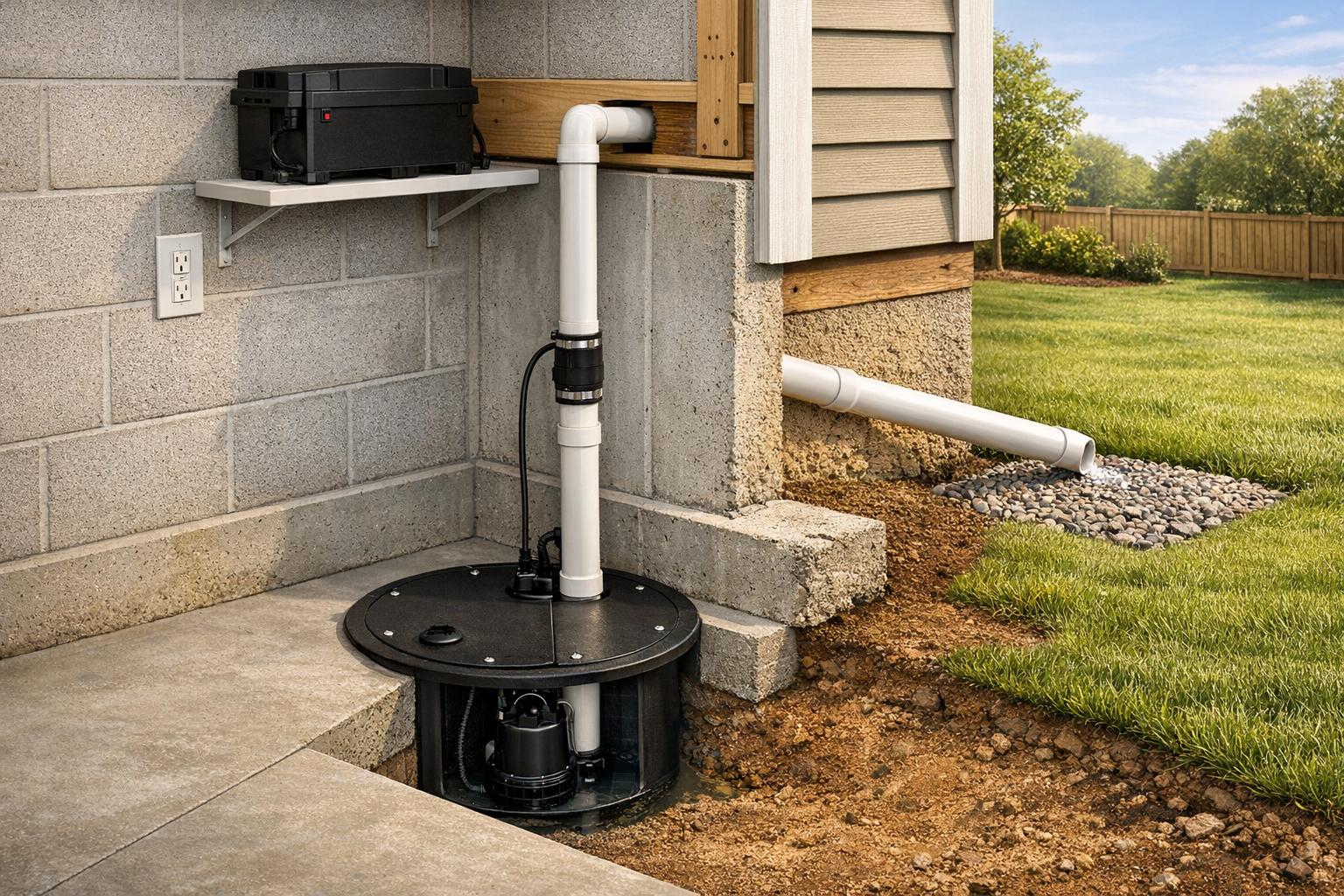
- Ideal Placement: Install the sump pump at the lowest point in your basement to collect water efficiently. Ensure it’s near a GFCI outlet for power and has enough space for maintenance.
- Soil Considerations: Clay-heavy soils (e.g., in Howard County) require larger systems, while sandy soils (e.g., in Baltimore County) may need deeper pits.
- Regulations: Maryland requires sump pits to be at least 18 inches in diameter and 24 inches deep. Discharge pipes must be at least 10 feet away from buildings, and stormwater cannot flow into sanitary sewers.
- Seasonal Timing: Late winter or early spring is the best time for installation to prepare for heavy rains and snowmelt.
- Backup Systems: Include a battery or water-powered backup to handle power outages during storms.
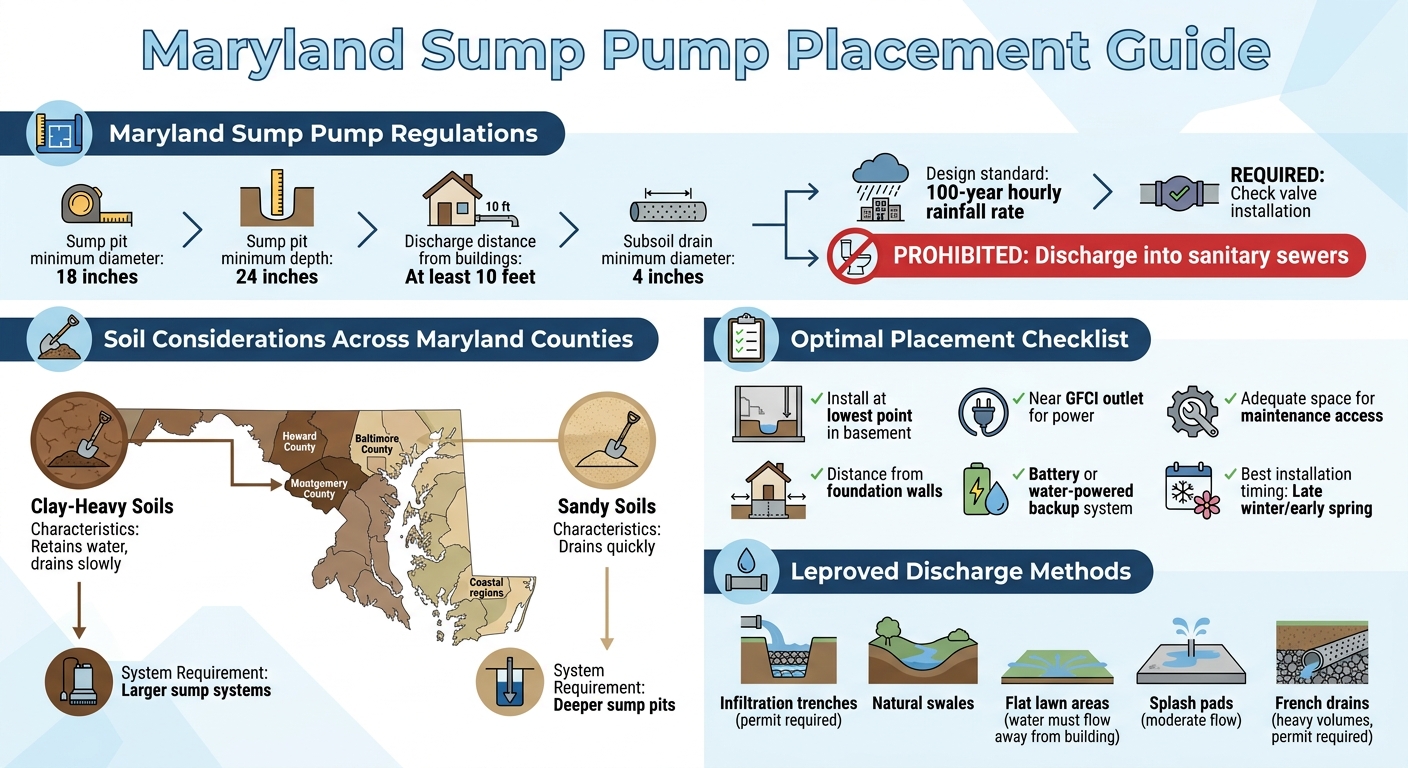
Maryland Sump Pump Placement Requirements and Soil Considerations by County
Maryland’s Drainage and Soil Conditions
Water Table Levels and Seasonal Flooding
Maryland’s water table tends to rise and fall with heavy rainfall, making it critical to place the sump pit at the lowest structural point. This ensures effective subsoil drainage while also allowing for the installation of an accessible backwater valve to prevent reverse flow during flooding events [2]. Homes built in low-lying areas or near water bodies are particularly vulnerable to basement flooding when groundwater levels spike.
To ensure stability, the pit floor must be solid, providing a permanent base for the pump [2]. Beyond these water table considerations, the local soil composition plays a significant role in how sump pump systems are designed.
Soil Types Across Maryland Counties
Maryland’s counties exhibit diverse soil types, which influence water movement. For example, Howard and Montgomery Counties have clay-heavy soils that retain water and drain slowly. These conditions often call for larger sump systems to handle the excess moisture. Conversely, sandy soils, common in Baltimore County and coastal regions, drain more quickly but may require deeper sump pits to capture groundwater effectively.
State plumbing codes in Maryland specify the use of open-jointed, horizontally split, or perforated subsoil drains with a minimum diameter of 4 inches [2]. Additionally, sump pits must adhere to specific dimensions: a minimum of 18 inches in diameter and 24 inches in depth [2]. Alongside soil conditions, Maryland’s distinct rainfall patterns further influence stormwater management strategies.
Rainfall Patterns and Stormwater Management
Maryland’s storm drainage systems are designed to handle intense weather events. Plumbing codes require that all conductors and leaders be sized according to the 100-year hourly rainfall rate [2]. This ensures that sump pumps are prepared for extreme conditions.
Proper stormwater management also depends on knowing where water can be legally discharged. Discharging stormwater or sump pump runoff into sanitary sewers is strictly prohibited [2]. Instead, approved discharge points include infiltration trenches, natural swales, or flat areas like lawns, as long as the water flows away from the building [2][3]. In areas like North Brentwood, discharge must be directed at least 10 feet away from buildings or public rights-of-way and cannot flow onto neighboring properties or sidewalks [3]. These regulations are key to ensuring sump pumps are positioned to handle heavy rainfall without causing additional drainage issues.
sbb-itb-843f8be
How to Install a Sump Pump | Ask This Old House
Where to Place Sump Pumps in Maryland Homes
Maryland’s varied soil conditions and frequent rainfall make careful sump pump placement essential for managing water effectively.
Basement Floor Location
Start by identifying the lowest point in your basement or crawlspace. This is where the sump pit should go, as water naturally flows to the lowest area. If your basement has multiple low spots, choose the one where water tends to collect first during heavy rain. This helps reduce standing water, which can lead to mold and structural problems[4][5].
Electrical Access and Maintenance Clearance
Place the pump near a GFCI outlet for reliable power access. At the same time, make sure there’s enough space around the pump for maintenance tasks like testing the float switch or replacing the pump. Avoid tight spots near walls or storage areas that could make routine checks difficult.
Since Maryland often experiences thunderstorms and power outages, having a backup power source is crucial. A battery backup or water-powered backup system can keep your pump running during outages[4]. Regularly test the pump by adding water to the pit to confirm the float switch activates as it should[4].
Distance from Foundation Walls
The pump should be positioned far enough from foundation walls to allow for smooth installation and easy servicing. If accessibility is a concern, pedestal pumps, with their external motors, are easier to maintain. On the other hand, submersible pumps are more compact and offer greater power, making them a good fit for tighter setups[5]. Choose the type that works best for your basement’s layout and needs.
Discharge Pipe Routing and Maryland Regulations
Once you’ve determined the best placement for your sump pump, the next step is ensuring the discharge pipe is routed correctly. In Maryland, where rainfall and soil conditions vary widely, proper routing is essential to avoid fines and potential damage to your property.
Maryland Discharge Distance Requirements
Maryland law requires that discharge pipes be placed at least 10 feet away from any building or right-of-way. Additionally, a check valve must be installed to prevent backflow[2][3].
"Storm water shall not be drained into sewers intended for sewage only." – Maryland Board of Plumbing[2]
Approved pipe materials include PVC, ABS, or Polyethylene (PE), all of which must meet ASTM standards[2]. If you plan to connect your discharge pipe to a municipal drainage system – such as an infiltration trench or swale – you will likely need a permit. In many Maryland towns, this permit typically costs around $100[3].
Once these requirements are met, it’s equally important to ensure that water is directed away from neighboring properties.
Avoiding Water Flow onto Neighboring Properties
In Maryland, discharging water onto a neighbor’s property is a serious violation. For example, in North Brentwood, fines for such violations start at $250 and increase monthly if unresolved[3].
"Any sump pump discharge or other clear water drainage shall not be allowed to flow onto or across a public street, right-of-way or sidewalk under the jurisdiction of the Town, nor shall any sump pump discharge or similar drainage be allowed to accumulate onto an adjoining lot." – Town of North Brentwood, MD[3]
To comply, direct your discharge pipe toward a flat area or a gentle slope on your property. This ensures water flows away from structures and does not accumulate in problematic areas[2]. If your property has high water volumes and requires a permit, take time-stamped photos of the discharge area at least 24 hours after rainfall. These can be helpful when submitting your permit application[3].
Keep in mind that unpaid fines for drainage violations can escalate into liens on your property[3].
Discharge Methods for Maryland Properties
The best discharge method depends on your property’s specific needs:
- Splash pads are suitable for moderate water flow.
- French drains or infiltration trenches are better for heavy volumes. However, these often require permits and inspections before being backfilled[3].
- Natural swales are a practical and cost-effective option if your property has low-lying areas entirely within its boundaries[3].
Regardless of the method, ensure the discharge point is positioned to prevent water pooling or erosion. For properties with steep slopes or challenging drainage, consulting a professional familiar with Maryland’s soil and regulations can make all the difference.
Pre-Installation Assessments
Before setting up your sump pump, it’s essential to evaluate the site thoroughly to match Maryland’s specific environmental conditions. These pre-installation checks can help you avoid expensive errors and ensure your system performs reliably.
Property and Site Inspection
Start by assessing the grading and surface drainage of your property. After a rainfall, take a close look at your foundation to spot any water pooling or flow patterns. Examine foundation walls and basement framing for signs of moisture intrusion, such as water stains or efflorescence (those white mineral deposits left behind by water). These indicators can pinpoint where water is entering and help you choose the most effective sump pump location.
If your home already has drainage systems like older sump pumps, floor drains, or perimeter drains, inspect them to see if they’re still functioning well. Many Maryland homes have outdated systems that struggle to handle current water volumes. And don’t forget to call Miss Utility at 811 before digging to locate underground utilities, gas lines, and electrical conduits. This step is critical for safety and informs the next phase: determining your water table levels.
Determining Water Table Levels
Knowing the depth of your water table is crucial for selecting and positioning your sump pump. In Maryland, water table levels can fluctuate significantly, depending on the season. For instance, they’re typically lower during the dry summer months and higher in spring due to snowmelt and heavy rainfall.
To measure, dig a test hole about 2–3 feet deep in your basement or crawlspace. After a rainstorm, wait 24–48 hours to check the water level. If the hole fills up to within a few inches of the surface, this indicates a high water table. In such cases, you’ll likely need a more robust sump pump system, possibly with a battery backup for added security.
Working with Drainage Professionals
Teaming up with drainage experts familiar with Maryland’s soil conditions and regulations can make a big difference. Professionals like those at Pro Landscapes MD can evaluate soil type, slope, and seasonal water table changes to design a sump pump system that works efficiently. A professional installation typically takes 1–2 days and helps avoid common problems like soil erosion, foundation damage, and mold growth. Plus, local contractors are well-versed in the permitting process, which is especially important in areas like Annapolis.
"Local contractors in Annapolis understand the region’s unique drainage concerns and install pumps that work effectively under the most common local conditions." – Buzz Landscape Drainage Solutions [1]
For optimal results, schedule your consultation in late winter or early spring – before Maryland’s heavy spring rains and snowmelt hit. This proactive approach ensures your system adheres to local standards and is ready to handle seasonal challenges.
Conclusion
Placing a sump pump in Maryland homes requires careful consideration of factors like water tables, soil types, and seasonal rainfall patterns. Poor placement can lead to foundation damage, flooding, and costly repairs.
To address these challenges, Maryland enforces strict plumbing codes. These regulations require sump pits to be at least 18 inches in diameter and 24 inches deep, equipped with a check valve, and capable of handling extreme weather events, such as 100-year storms [2]. Additionally, state laws prohibit draining stormwater into sanitary sewers, so discharge must be routed safely away from foundations and neighboring properties [2].
Local drainage experts play a crucial role in designing systems that meet Maryland’s specific needs. They also handle the necessary permits and ensure full compliance with state regulations [2]. Their expertise helps guarantee a system that operates efficiently and reliably.
A well-installed sump pump system not only keeps basements dry but also prevents mold growth and structural problems, creating a safer and healthier home environment [1]. For Maryland homeowners, scheduling installation during late winter or early spring ensures the system is ready before heavy rains arrive. In a state with Maryland’s climate, timing is essential to avoid seasonal water damage.
For those in central Maryland looking for reliable drainage solutions, Pro Landscapes MD provides expert assessments and installations tailored to the region’s conditions. Their deep understanding of Maryland’s environmental factors ensures your sump pump system will deliver dependable performance for years to come.
FAQs
How do I find the lowest point in my basement?
To find the best spot for your sump pump in the basement, start by identifying where water tends to pool or where the floor is at its lowest point. A helpful tool for this is a long level or a laser level, which can measure the floor’s height across different areas. Once you’ve taken measurements, mark the lowest point – this will be the most effective location for the sump pump pit. Proper placement is key for managing water and avoiding flooding, especially given Maryland’s weather conditions.
Do I need a permit to run my sump pump discharge outside?
Yes, you’ll need a permit from Montgomery County’s Department of Permitting Services if you plan to discharge your sump pump outside into the public right-of-way. The discharge must comply with county regulations, which include directing water to approved locations such as infiltration trenches, natural swales, or lawns that are at least 10 feet away from the property line.
What’s the best sump pump backup for Maryland power outages?
When power outages strike in Maryland, a battery backup sump pump is your best defense. Specifically, a DC battery backup pump connected to a 12V deep cycle marine battery provides dependable short-term protection. This setup ensures your sump pump keeps running during power failures, helping to protect your home from the risk of flooding.
Chat with Us