









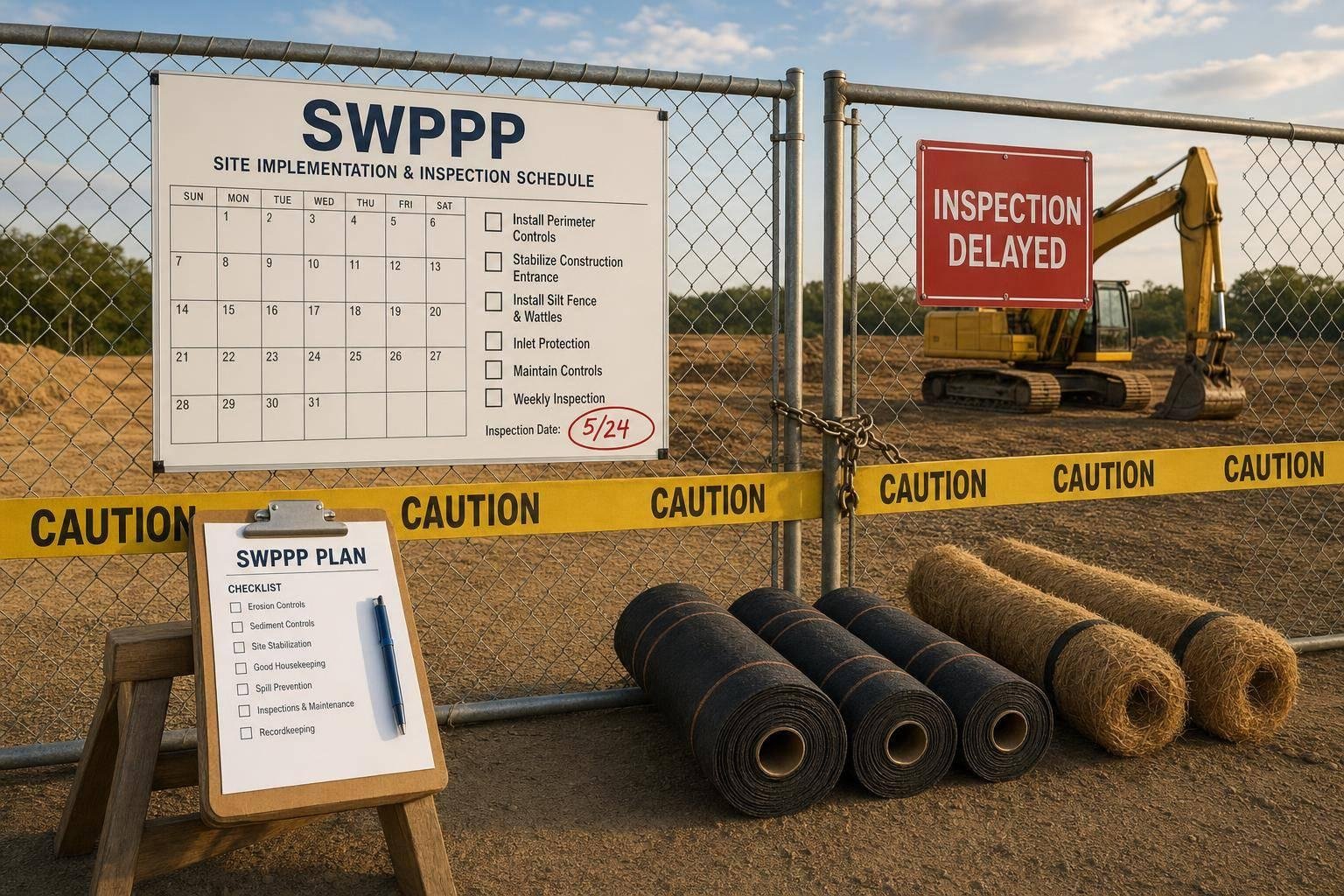
- bhavya gada
- No Comments
A job can be ready to start and still sit still if the SWPPP is late, incomplete, or out of date. In Maryland, that can delay permit coverage, push back earthwork, trigger failed inspections, and add stop-and-fix work after rain.
If I had to sum up the whole article in plain English, it’s this:
- SWPPP work starts before grading starts
- A 14-day public notice period does not start until the SWPPP and E&S plan are ready
- Sites that disturb 1 acre or more need permit coverage
- Inspections often happen every 7 days and after qualifying rain events
- Late plan updates, damaged controls, and wet ground are common causes of schedule slip
- The fix is to put SWPPP tasks directly into the job schedule from day one
In other words: if I treat SWPPP like paperwork, my schedule is at risk. If I treat it like a field task tied to grading, drainage, stabilization, and closeout, I have a much better shot at keeping work moving.
The main takeaway: SWPPP delays usually come from four pressure points – permit timing, inspections, weather damage, and late field corrections. The best way to limit them is simple: assign one owner, stage repair materials, update the plan before field changes happen, and line up grading, drainage, hardscape, and planting so exposed soil is covered as soon as possible.
That’s the article in a nutshell.
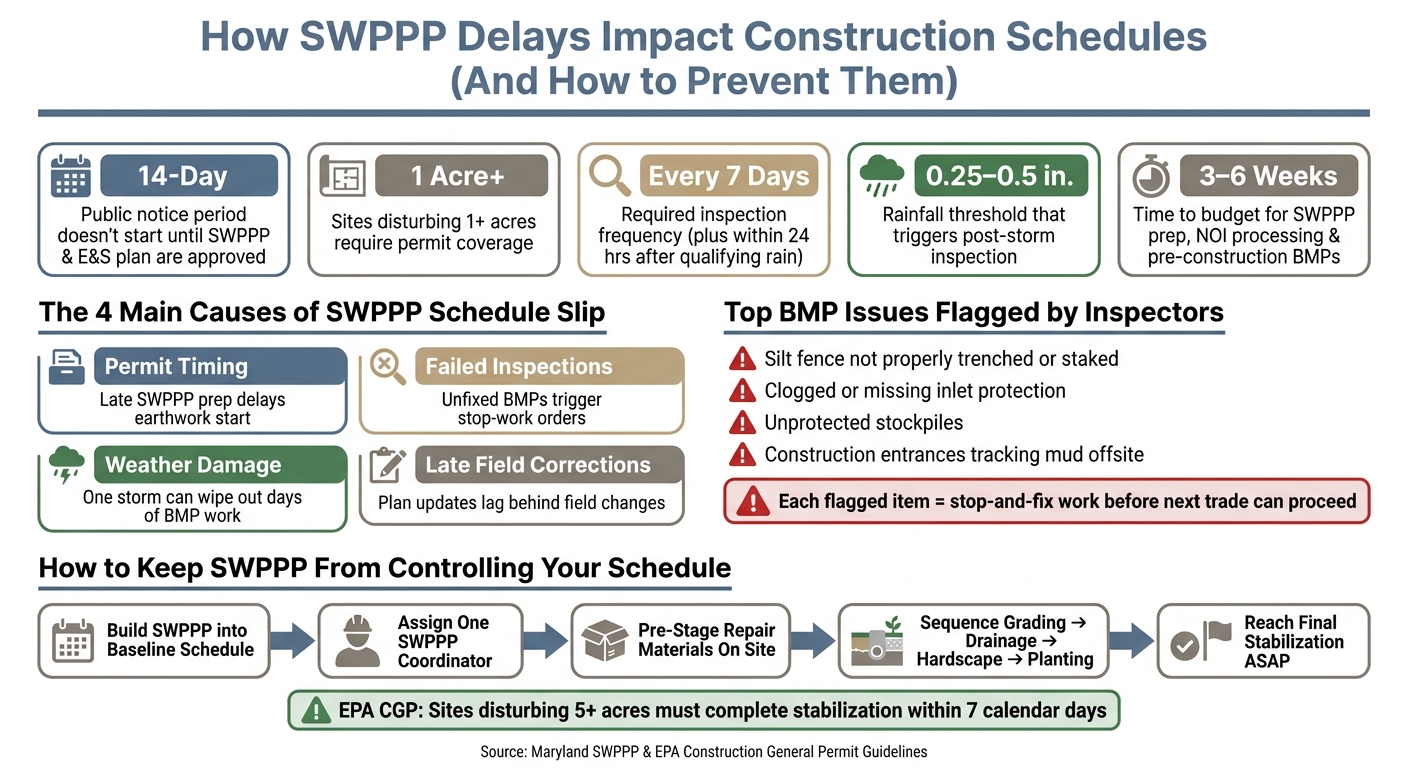
SWPPP Delay Points & Schedule Protection: A Construction Site Workflow
The Overlooked Importance of SWPPP in Construction
sbb-itb-843f8be
Common SWPPP Problems That Cause Schedule Slips
The biggest SWPPP delays tend to show up after mobilization, when site conditions shift, controls fail, or storms move through. Once construction is underway, the schedule usually starts to slide when the plan, field conditions, and permit no longer line up.
Late Plan Updates and Missing Approvals
When grading changes, drainage is rerouted, or phasing shifts, the SWPPP needs to reflect those changes before work continues in the affected area.[19][21] A common problem is simple: crews move ahead with revised grading or drainage, but the SWPPP still shows the old layout. Then an inspector arrives and sees controls missing where the plan says they should be, or spots new disturbed areas that never made it into the plan. At that point, work in that zone can stop until the SWPPP is revised, reviewed, and approved.[19][21]
That kind of pause can add a week or more to a phase, depending on how long review takes.[3][7][11] The fix is straightforward: revise the SWPPP before work resumes in that area.
Failed Inspections and Missing Erosion Controls
Maryland permits usually require inspections at least once every 7 calendar days and within 24 hours after a qualifying rain event, often triggered by as little as 0.25 to 0.5 inches of rainfall.[17][18][20][6][16] That leaves very little room for missed paperwork or weak BMP conditions.
The issues inspectors flag most often include:
- Silt fence that was not properly trenched or staked
- Clogged or missing inlet protection
- Unprotected stockpiles
- Construction entrances that track mud offsite[5][6][10][15][13]
When those problems show up, the result is usually stop-and-fix work that pushes the next trade back. If an inspector flags the area, work stops there until corrections are made and then verified.[5][7][9]
These failures often lead to stoppages, cleanup, resequencing, and extra time for follow-up inspections.
Weather Damage, Wet Conditions, and Rework
One heavy rain can wipe out days of BMP work. Runoff can overtop silt fences, scour channels, clog inlet protection, and erode freshly graded slopes.[4][5][2][10] In many cases, the next work window gets eaten up by inspection, repair, and cleanup. After the storm, crews still have to inspect, repair, and document the damage before construction can start again.[5][7][9][10]
Wet ground adds another delay. Heavy equipment often cannot compact or grade saturated soil safely, which pushes earthwork, utility installation, and paving farther down the calendar.[4][2][8][10] In colder months, freeze-thaw cycles can damage temporary blankets and seeding, and frozen conditions are not a valid reason to skip stabilization.[12][14] Exposed soils still need timely protection.
That’s why schedule control has to leave room for SWPPP work before crews start falling behind.
How Project Teams Can Cut SWPPP-Related Delays
Build SWPPP Tasks Into the Schedule From Day One
Treat SWPPP work as part of the baseline schedule, not something the team squeezes in later. Put clear activities for plan development, approval, BMP installation, and stabilization into the schedule before mobilization starts. If those steps aren’t shown up front, they can still slow the critical path even if no one labeled them that way.
Set aside 3–6 weeks for SWPPP preparation, NOI processing, and pre-construction BMP installation. Perimeter controls and a stabilized construction entrance must be in place before any earthwork begins. And if an area sits inactive for 14 or more days, most permit rules require temporary stabilization.[24] Seeding, mulching, and permanent surface installation should also line up with the main project schedule, because those are compliance checkpoints, not just field extras.
Once SWPPP work is built into the baseline, the next problem usually shows up in the field: slow follow-through.
Speed Up Inspection and Corrective Action Workflows
Even a solid schedule can slip when inspection issues sit there waiting for action. Assign one SWPPP coordinator to manage inspections, documentation, and corrective work orders. That gives the team a clear point person instead of a messy handoff between crews.
Use a standard checklist that covers:
- Drainage areas
- BMP condition
- Non-stormwater discharges
- Access routes
Every inspection should be logged with photos, locations, and records showing when the work was done. It also helps to pre-stage repair materials in one marked area. Keep extra silt fence rolls, inlet protection, gravel, seed, and mulch ready to go. That way, crews can fix problems on the spot instead of losing half a day on supply runs.
The other big source of delay is weather. A good plan on paper can fall apart fast after a few wet days.
Plan Ahead for Weather, Materials, and Crew Availability
Try to schedule mass grading and trenching during drier months when you can. If the schedule doesn’t give you much room, add weather buffers to rough grading and stabilization work during wet months so the float is based on real field conditions, not wishful thinking.[22][23]
Seasonal timing matters too. In winter, lean on structural BMPs and cold-weather stabilization methods. In spring and summer, time vegetative BMPs so you get faster cover.[22][1] Utility work should come after stabilization, not before, so crews don’t tear up soil that was just treated.[22][3]
That’s how teams keep SWPPP from taking over the entire job sequence.
Maryland Site Work: Coordinating SWPPP, Drainage, and Final Landscaping
Central Maryland jobs can move fast right up until stormwater coordination falls out of sync. At that point, small site design calls can snowball into repairs, extra inspections, and schedule drag. One of the simplest ways to cut those delays is to shape the site so temporary controls aren’t doing all the heavy lifting.
Clay soils and steep lots make runoff harder to manage and can wear out temporary controls sooner. In Maryland, erosion and sediment control approval is often needed before permit issuance. And the work most likely to trigger SWPPP controls is usually the same work that opens the site up the most: grading, drainage, and hardscape installation.
How Grading and Drainage Decisions Affect Compliance Timelines
By the time a project reaches rough grading, compliance starts to depend on one basic issue: where the water is going. If slopes run too long or drainage is routed poorly, inspection risk goes up and crews often end up doing corrective work they could have avoided. Shorter grade breaks and flatter slopes help slow runoff and cut down on rework.
Phasing matters too. When only one part of the lot is fully open at a time, the disturbed area under active inspection stays smaller. That gives crews a better shot at getting temporary stabilization in place before the next rain event.
Getting primary drainage features in early can also take pressure off temporary controls. That includes:
- Swales
- Yard inlets
- Underdrains
Once rough grading is stable, installing those features gives runoff a controlled path. Poor grading doesn’t just lead to erosion. It can also keep crews coming back again and again for repairs and inspections.
How Permanent Site Features Can Shorten the Risk Window
Permanent surfaces are usually the point where stormwater risk starts to shrink instead of spread. Retaining walls can break steep grade changes into shorter, more stable sections. That keeps erosion risk focused on compacted backfill and small terraces instead of the whole slope.
Patios, walkways, and driveways built with pavers or environmental pavers also help by turning exposed soil into stable surface area. In practice, that means water is either directed where it needs to go or allowed to soak in to some degree.
This is why sequencing matters. If hardscape goes in early instead of getting pushed to the punch list, the site can move from temporary stabilization to permanent stabilization sooner. That can reduce the stretch of time when SWPPP inspections, repairs, and stabilization work slow down everything that comes after. Planting and mulch then finish stabilization on the parts of the site that hardscape doesn’t cover.
Where Pro Landscapes MD Fits Into Stormwater-Focused Site Coordination
Pro Landscapes MD handles grading, drainage, retaining walls, hardscaping, and planting across central Maryland. That mix of services helps disturbed areas become stable surfaces sooner, which can reduce dependence on temporary erosion controls and support faster SWPPP closeout.
Early coordination also helps keep drainage, hardscape, and landscaping lined up with the stormwater plan. When that alignment happens early, drainage fixes are less likely to show up late in the job and stall the schedule.
Conclusion: Keep SWPPP Work From Controlling the Entire Schedule
SWPPP delays usually build over time. They’re not one-off problems. A missed plan update here, a late inspection there, a damaged control after bad weather, a few repairs that sit too long – before long, those small issues start pushing on critical-path work.
Once that pileup happens, getting the schedule back on track is hard if you didn’t plan for it early.
The fix is pretty simple: treat SWPPP as a baseline schedule item from day one. Give one person clear ownership for corrective actions. Keep repair materials staged on site. Add stabilization deadlines directly into the project timeline.
Under EPA’s Construction General Permit, sites disturbing more than 5 acres at one time must complete stabilization within 7 calendar days after initiation [25]. That deadline shouldn’t live in a binder somewhere. It needs to be part of the working schedule. Then field work can be sequenced to reach stabilization sooner.
The same idea carries into site design. If grading, drainage, hardscaping, and landscaping are sequenced to move the site toward final stabilization as soon as possible, the job tends to run with fewer SWPPP-related setbacks. Faster stabilization cuts inspection risk, rework, and downtime – and turns SWPPP into a milestone the project can close out.
FAQs
When should SWPPP work begin?
SWPPP work should start before any land-disturbing activity begins on-site. Putting erosion and sediment controls in place early helps manage stormwater from day one and cuts the risk of compliance problems and project delays.
When these measures are paired with proper grading and drainage, they can help keep construction on schedule.
What usually causes SWPPP delays?
SWPPP delays often come from late plan updates, failed site inspections, missing erosion and sediment controls, and major weather impacts. When those problems pile up, construction can slow down fast and throw off the schedule.
Pro Landscapes MD helps lower that risk with expert grading, land leveling, drainage, and stormwater management. The goal is simple: support compliance and keep site work moving.
How can teams reduce SWPPP schedule slips?
Teams can cut SWPPP schedule slips by getting ahead of water issues and staying on top of compliance. Good drainage matters here. French drains, dry riverbeds, and smart grading can help stop stormwater trouble before it slows the job down.
Handling water flow early does more than keep puddles off the site. It can help prevent site damage, reduce the risk of failed inspections, and keep work moving without avoidable delays.
Chat with Us