









- bhavya gada
- No Comments
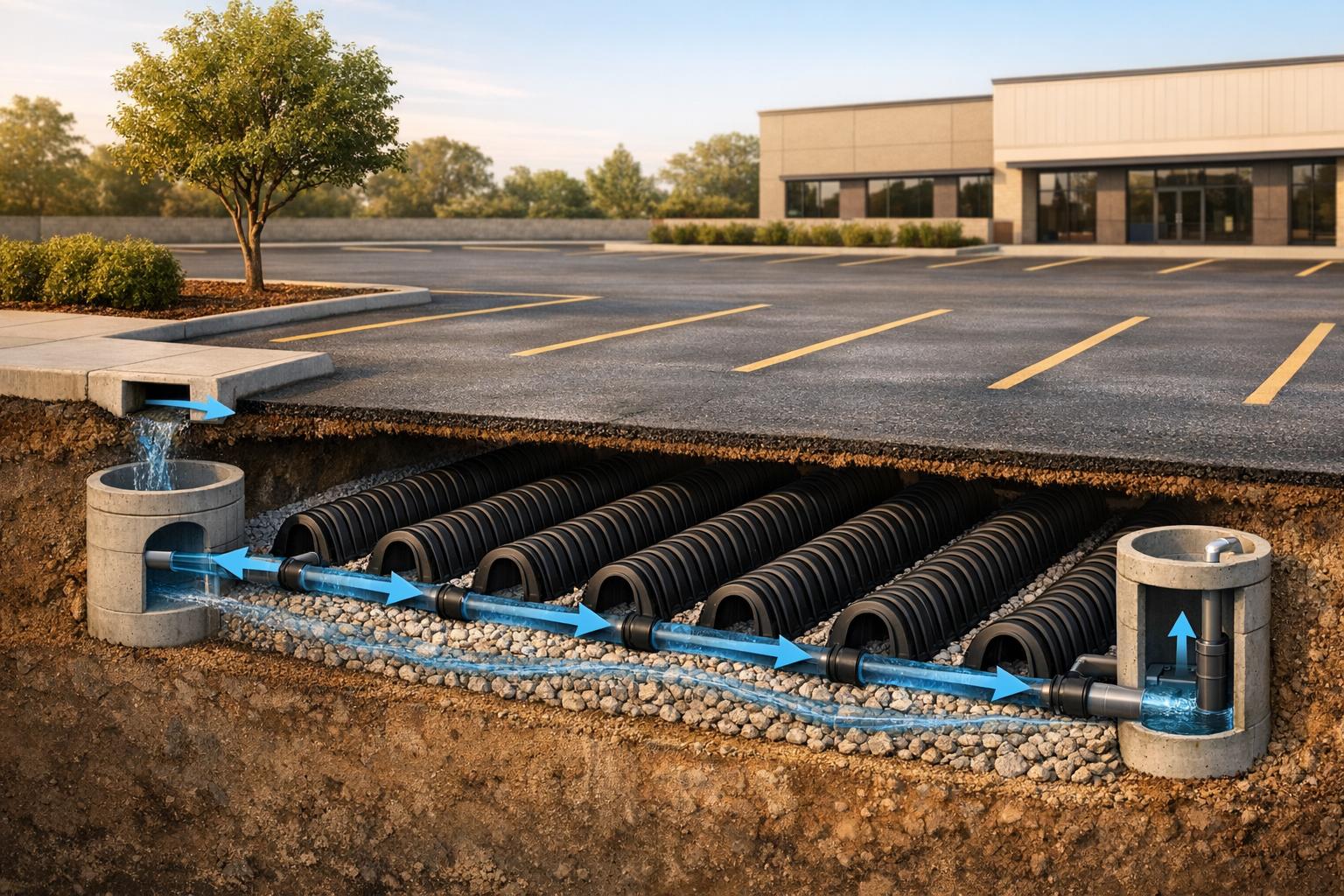
Underground detention systems store stormwater runoff temporarily and release it slowly to prevent flooding and manage peak flow rates. Proper sizing is essential to avoid issues like overflow, regulatory breaches, or excessive costs. These systems are especially useful in urban areas where land is expensive, saving surface space for development while meeting stormwater regulations.
Key Takeaways:
- Runoff Volumes: Calculate based on drainage area, storm intensity, and soil conditions.
- Site Constraints: Account for limited space, underground utilities, and load requirements.
- Storage Volume: Use tools like NOAA Atlas 14 and software like HydroCAD for precise calculations.
- Product Selection: Options include concrete vaults, arch chambers, geocellular modules, and gravel beds, each with different costs, void ratios, and lifespans.
- System Layout: Optimize depth and pipe diameter to reduce costs and maximize efficiency.
- Maintenance: Ensure access points for cleaning and inspections to maintain performance over time.
Proper planning ensures these systems meet regulatory standards, perform effectively, and save costs. Missteps in sizing can lead to expensive redesigns or flooding risks.
Mastering the Design of Underground Detention & Infiltration Systems
sbb-itb-843f8be
Factors That Affect System Sizing
Designing an underground detention system starts with understanding the runoff volume and navigating site-specific constraints. Every project comes with its own challenges, shaped by factors like rainfall patterns, soil conditions, space limitations, and local regulations. Getting the calculations right from the beginning is key to ensuring the system functions well during storms while avoiding expensive redesigns. Let’s break down the two main considerations: runoff calculations and site constraints.
Calculating Runoff Volume
The runoff volume is the foundation of any detention system design. It determines the amount of temporary storage needed before water can be safely released. This calculation depends on several factors:
- The size of the drainage area
- The intensity and duration of the design storm
- The soil conditions on-site
Impervious surfaces, like asphalt and concrete, generate significantly more runoff compared to undeveloped land. Soil type is another critical factor – clay-heavy soils, which absorb less water, require larger detention systems than sandy or loamy soils with better infiltration capacity.
Modern designs often aim to go beyond simple detention by incorporating Low-Impact Development (LID) practices. These methods focus on reducing overall runoff and promoting groundwater recharge through subsurface infiltration. As Contech explains:
Subsurface infiltration in urban environments meets the objectives of low-impact development by reducing runoff and recharging groundwater, contributing to a more sustainable urban ecosystem [2].
By assessing the site’s infiltration potential early on, designers can align with regulatory requirements while supporting environmental goals. Accurate runoff calculations are essential to properly size the system for peak storm conditions.
Working with Site Constraints
Site-specific challenges and regulations play a crucial role in shaping the design and placement of detention systems. One of the biggest hurdles, especially in urban areas, is limited land availability. Contech highlights this issue:
The problem with detention ponds is that they take up valuable land space. While this may not be a major issue in rural areas, it becomes a significant concern in urban environments where land space is limited and expensive [2].
The intended surface use above the system also impacts design decisions. For instance, if the area will serve as a parking lot, the system must be engineered to handle vehicle loads while staying within the available space. Other factors to consider include underground utilities, nearby building foundations, and site depth limitations caused by bedrock or high water tables. Local codes may add further requirements, such as setbacks, overflow routes, or maintenance access points, all of which influence the final design.
Identifying these constraints early helps guide the system’s layout and ensures the design meets both functional and regulatory needs. These considerations directly affect the next steps in the sizing process.
How to Size an Underground Detention System
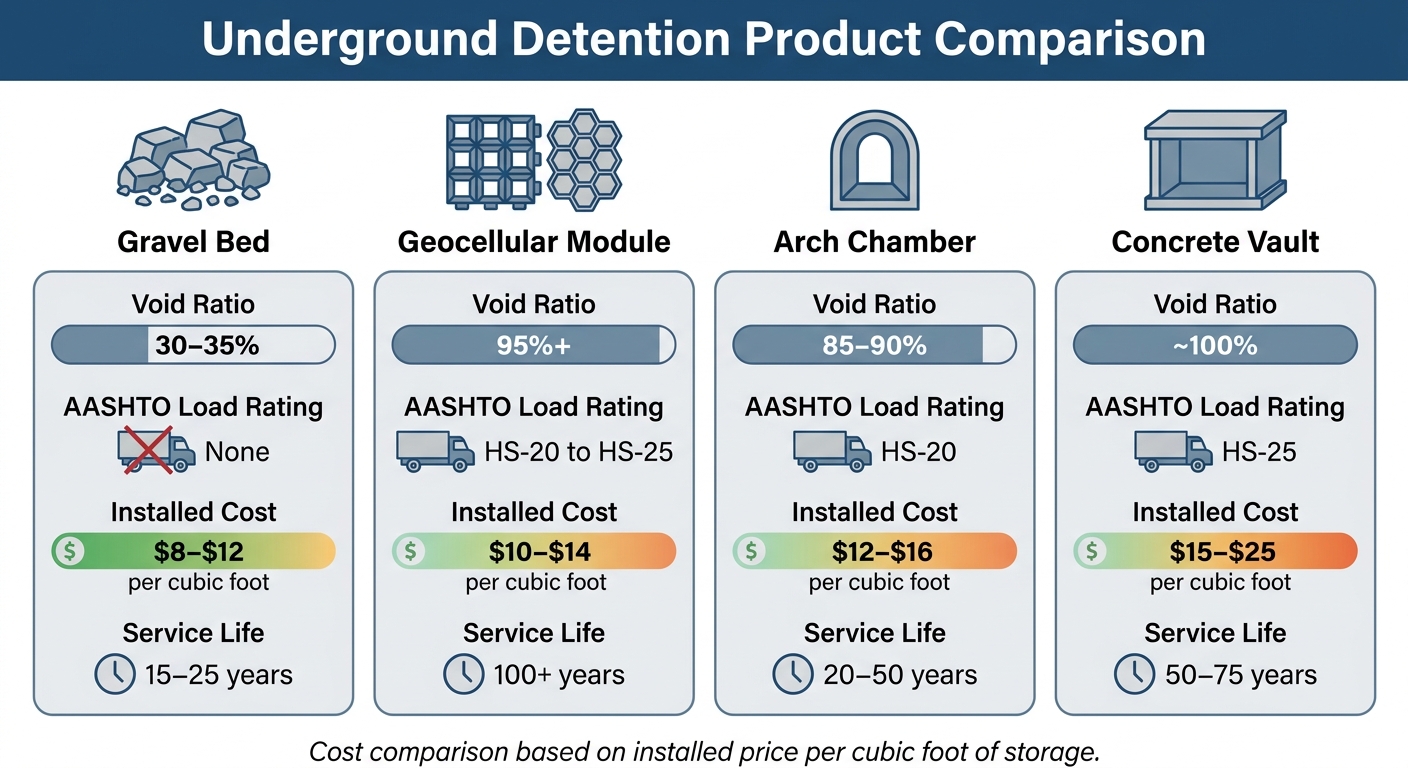
Underground Detention Product Comparison: Costs, Void Ratios, and Lifespan
Designing an underground detention system starts with analyzing runoff volumes and site constraints, then translating those findings into a layout. This involves determining vertical space, calculating storage needs, choosing the right product, and arranging the system to fit the site. Each step builds on the previous one, so following the process in sequence is critical. Here’s how to approach it:
Step 1: Determine Vertical Depth and Cover Requirements
Start by assessing the vertical space available, from the finished grade to the outlet invert. Since site grades vary, focus on the shallowest point for your initial design. Cover requirements are equally important. The system must handle construction loads during installation and traffic loads afterward. According to Southeast Culvert:
The construction loading minimum cover will always be more than the minimum allowable cover for traffic loading.
For medium loads, assume a 3-foot cover, though some products allow a minimum cover of 12–24 inches. For instance, a 72-inch corrugated steel pipe under H-20 highway loading may require only 12 inches of cover under flexible pavement (rigid pavement measurements are taken to the top). If your design needs a larger system than the 3-foot cover permits, reducing cover to the 12–24 inch range is possible but requires careful coordination with contractors to avoid damage during installation.
Step 2: Calculate Required Storage Volume
Use NOAA Atlas 14 to get design storm depths. Most jurisdictions demand runoff management for 2-year, 10-year, 25-year, and 100-year storm events, but local standards may differ. The required storage volume is the difference between runoff generated by your site and the allowable release rate during the storm.
For simple sites, the Modified Rational Method works well. For more complex sites or phased construction, consider hydrograph routing software like HydroCAD, StormShed, or PCSWMM. Keep in mind that smaller outlet sizes require larger storage volumes to maintain the release rate. Also, account for backwater conditions, where outlet pipes might become submerged during extended storms, reducing discharge capacity.
If your system includes infiltration, field percolation testing is crucial – typical rates should exceed 0.5 inches per hour. Additionally, the void ratio of your chosen product affects storage efficiency. For example:
- Geocellular modules: Over 95% void space
- Arch chambers: 85–90% void space
- Gravel beds: 30–35% void space
For a 3,000-cubic-foot detention requirement, a gravel system could need over 8,500 cubic feet of excavation.
Step 3: Choose the Right Detention Product
The choice of detention product depends on site conditions, budget, and performance needs. Here’s a breakdown of common options:
| Feature | Concrete Vault | Arch Chamber | Geocellular Module | Gravel Bed |
|---|---|---|---|---|
| Void Ratio | ~100% | 85–90% | 95%+ | 30–35% |
| AASHTO Load Rating | HS‑25 | HS‑20 | HS‑20 to HS‑25 | None |
| Installed Cost (per CF) | $15–$25 | $12–$16 | $10–$14 | $8–$12 |
| Service Life | 50–75 years | 20–50 years | 100+ years | 15–25 years |
Gravel beds are the most affordable at $8–$12 per cubic foot installed, but their low void ratio increases excavation needs. Geocellular modules cost $10–$14 per cubic foot and offer over 95% void space with a 100+ year service life. Arch chambers, at $12–$16 per cubic foot, provide 85–90% void space and last 20–50 years. Concrete vaults are the priciest at $15–$25 per cubic foot but offer nearly 100% void ratio and can handle heavy traffic, with a service life of 50–75 years.
On commercial sites where land costs $30–$80 per square foot, underground detention can save hundreds of thousands of dollars in development value compared to surface ponds.
Step 4: Optimize the System Layout
Arranging the system efficiently maximizes storage while working within site boundaries. Vertical optimization is a key strategy – deeper systems can reduce the footprint, cutting excavation costs and preserving surface area. Pipe diameter also plays a big role. As Robert Chapman and Andreea Simescu, P.E., explain:
Increasing the diameter of the pipe from 48 inches to 96 inches increases the volume per linear foot by a factor of four.
Larger-diameter pipes mean fewer linear feet are needed, reducing joints and installation costs. Simplify the layout with long, continuous pipe runs to minimize expensive fittings like tees and elbows. Custom fabrication of corrugated metal pipe (CMP) allows systems to navigate around utilities, easements, or irregular boundaries. Chapman and Simescu add:
Custom tees, elbows and manifolds enable engineers to design systems around obstacles rather than redesigning the site to accommodate the stormwater solution.
For maintenance, position access risers strategically while meeting setback requirements. If trees are planted above the system, use root barriers and select non-invasive species to avoid long-term structural damage.
Verifying System Performance
Once the sizing and layout are complete, it’s time to confirm that the system operates dependably in real-world conditions. This step focuses on ensuring structural soundness, preparing for extreme weather, and maintaining long-term functionality to safeguard your investment and keep the system running smoothly.
Checking Structural Load and Durability
Underground detention systems are often installed beneath heavy-use areas like parking lots and roads, so they must meet strict structural integrity requirements [1]. Opt for durable materials such as reinforced concrete or steel arches to handle vehicle and construction loads effectively. To prevent unwanted groundwater infiltration, the system should either be fully enclosed or paired with a liner, ensuring the detention area remains isolated [1]. Additionally, verify that the system fully drains between storms to maintain its effectiveness [1].
Planning for Overflow and Emergencies
A robust system isn’t just about material strength – it also needs to handle extreme weather events. Establish a Stormwater Management Maintenance Agreement with local authorities. These agreements require regular inspections and performance checks throughout the system’s lifespan, ensuring it remains resilient over time [3].
Providing Maintenance Access
Easy access is crucial for inspections and upkeep. Include features like manholes, catchbasins, and maintenance hatches to facilitate cleaning and routine checks [4]. Perforated standpipes, or monitoring wells, should extend from the bottom of the system to just below the surface. To protect these access points from damage, use lockable casings and secure caps [4].
A gravity-drain mechanism, such as a pipe and valve through a weir wall, can simplify inspections and repairs [4]. Additionally, ensure maintenance access to upstream pretreatment devices like oil and grit separators or isolator rows. These devices help prevent sediment buildup in the main detention area, keeping the system efficient [4].
Routine maintenance is key to meeting design standards and stormwater regulations. Inspections should be conducted at least twice a year – typically in spring and late fall [4]. For systems that collect runoff from roofs and roads, maintenance costs over 25 years can amount to about 67% of the original construction cost with minimal upkeep. However, more frequent maintenance could push costs up to 1.19 times the initial construction expense [4].
Conclusion
Getting the sizing right for an underground detention system involves a careful mix of precise runoff calculations, understanding site-specific limitations, and confirming the system’s performance. Start by calculating runoff accurately, factoring in soil infiltration rates and urban constraints like limited vertical space. This step sets the stage for a system that performs well and meets regulatory requirements.
Make sure the system’s structural design can handle expected loads – such as H-20 loading, which supports around 32,000 pounds in areas with vehicle traffic. Plan for overflow by incorporating bypass inlets designed to manage 100-year storm events. To keep the system functional over time, include access points like risers or manholes every 50–100 feet. This approach can cut maintenance costs by as much as 40% over two decades.
For more complex projects, where assumptions may not hold up, consulting experts is key. Mistakes in sizing can lead to runoff volume errors of 20–50%, potentially causing flooding or requiring retrofits that could cost 2–3 times more than the original system. Hydraulic modeling tools, combined with expert knowledge, can deliver over 90% accuracy while ensuring compliance with EPA MS4 permits and state DEP standards.
FAQs
Detention vs. infiltration – what’s the difference?
Detention and infiltration serve as two distinct approaches in stormwater management, each tailored to specific goals. Detention involves temporarily holding runoff to regulate flow rates and minimize flooding, releasing the water at a controlled pace. In contrast, infiltration directs water into the ground, decreasing surface runoff and replenishing groundwater reserves. The primary difference lies in their objectives: detention focuses on managing water flow, while infiltration aims to reduce runoff and enhance groundwater recharge, depending on the requirements of the site.
How can I quickly estimate the required storage volume?
To get a quick estimate of storage volume, you can rely on straightforward tools like surface storage tables or stormwater sizing guidelines. For instance, Maryland’s stormwater criteria recommend calculating the Water Quality Volume (WQv) using three key factors: the rainfall depth (1.0 inch for Eastern Maryland), the runoff coefficient, and the site area. Surface storage tables are another handy resource. They provide percentages of total volume based on the ratio of impervious surfaces to drainage areas, making it easier to approximate stormwater management needs efficiently.
What maintenance access does my system need?
Maintenance access is a key element in keeping underground detention systems functioning well over time. These systems need features such as manholes, access points, or inspection ports to allow for regular inspections, cleaning, and necessary repairs. Properly positioned access points – ideally close to the surface – make it easier for maintenance crews and their equipment to do their job with minimal disruption. This ensures problems like blockages, sediment buildup, or drainage issues are addressed quickly and efficiently.
Chat with Us