









- bhavya gada
- No Comments
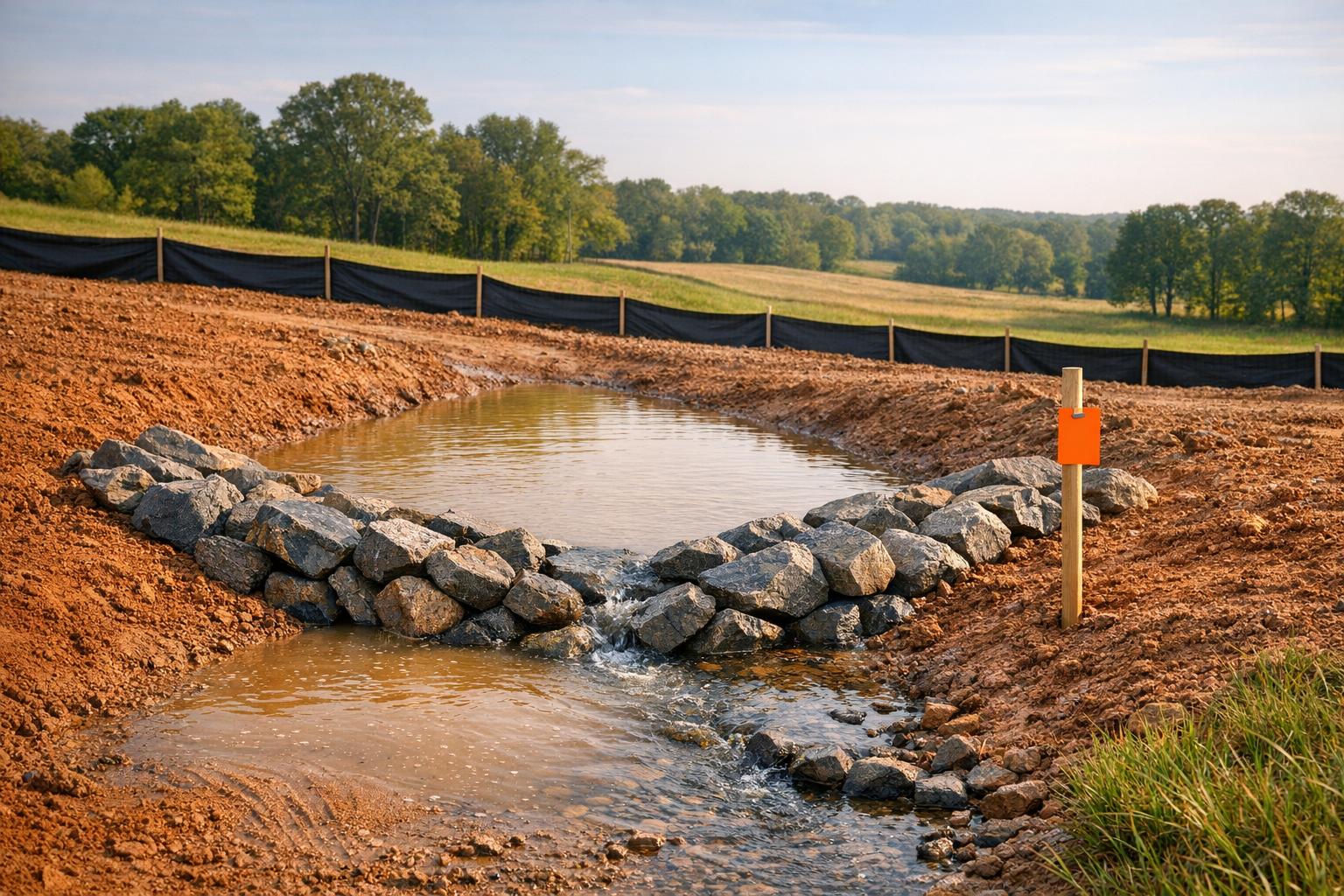
Temporary check dams are small, short-term barriers used to manage stormwater runoff, control erosion, and improve water quality during construction projects. In Maryland, where heavy rainfall and erosion-prone soils are common, these dams are crucial for protecting waterways like the Chesapeake Bay. They are made from materials such as sandbags, wattles, or compost filter socks and are easy to install, cost-effective, and compliant with environmental regulations.
Key Points:
- Quick Installation: Temporary check dams can be set up within hours, meeting Maryland’s strict stormwater management timelines.
- Cost-Effective: They reduce expenses by using affordable, reusable materials and preventing costly repairs.
- Erosion Control: These dams slow water flow, trap sediment, and reduce soil erosion, especially on steep slopes.
- Soil Suitability: Maryland’s sandy and clay-heavy soils benefit from these structures, especially near sensitive areas like Chesapeake Bay tributaries.
While temporary check dams are ideal for short-term erosion control, permanent solutions like riprap or sod offer long-lasting stability for high-flow areas. Each option has strengths, and the choice depends on the project’s duration, budget, and site conditions.
1. Temporary Check Dams
Installation Speed
Temporary check dams can be installed quickly – sometimes in just a few hours for linear setups. Designs like biodegradable wattles or compost filter socks are easy to work with and don’t require heavy machinery or intricate engineering plans [2][4]. This rapid setup is especially important in Maryland, where regulations mandate that the final 200 linear feet of ditches or swales must be stabilized within 24 hours of connecting to surface water. Full stabilization must follow within 14 days [3]. For construction projects involving channels with slopes exceeding 10%, this quick deployment ensures compliance with Maryland Department of the Environment (MDE) requirements while keeping projects on track [3][7].
Cost Effectiveness
Temporary check dams aren’t just fast – they’re also budget-friendly. They eliminate the need for costly permanent structures by using materials like rock or compost socks, which are affordable upfront and can often be reused after the project wraps up [2][3]. In Maryland, where soil erosion control is tightly regulated by MDE standards and NPDES permits, these temporary solutions help cut down on long-term expenses tied to stormwater system repairs and landscaping [3][5][7]. They provide an efficient way to meet compliance requirements without the high costs of permanent infrastructure.
Erosion Control
Temporary check dams are highly effective at slowing water flow, reducing velocities to less than 5 feet per second [3][4]. This slowdown creates low-velocity pools where sediment can settle instead of being carried downstream. These dams are particularly effective on slopes steeper than 10% with erodible soils, helping to prevent channel scour and protect downstream areas [3][4][5]. According to the EPA, they work best when combined with other erosion control measures in unvegetated channels, as they trap coarse sediment and support vegetation growth in swales [4][6]. To maintain their effectiveness, sediment should be removed once it reaches 50% of the dam’s height, preventing it from being washed away during storms [4].
Suitability for Maryland Soil
Maryland’s sandy-silty soils, which are prone to erosion, benefit greatly from temporary check dams, especially on steep slopes [3][7]. This is particularly important for construction sites near Chesapeake Bay tributaries, where managing peak runoff is crucial for protecting water quality. Maryland’s 2011 Standards and Specifications for Soil Erosion and Sediment Control provide detailed spacing guidelines to ensure these dams are placed correctly based on the length and slope of swales [7].
sbb-itb-843f8be
2. Traditional Channel Liners (Riprap/Sod)
Installation Speed
Traditional channel liners, like riprap and sod, are built for long-term erosion control but require more time to set up compared to temporary solutions. Installing riprap involves heavy machinery like excavators and loaders to properly place and grade the rocks, often taking several days to complete. On the other hand, turf reinforcement mats (TRMs) paired with sod can be installed faster than riprap, but they still need site preparation, grading, and time for vegetation to establish. This slower process stands in contrast to the quicker deployment of temporary check dams.
Cost Effectiveness
Traditional liners come with a higher initial price tag compared to temporary methods, but they often pay off over time with reduced maintenance needs. Riprap, for example, has a significant upfront cost but is highly durable, making it ideal for areas like culvert outlets, storm outfalls, and tidal zones where erosion is a constant threat. For projects where full riprap coverage isn’t necessary, reinforced sod combined with TRMs or blanket systems can provide a more budget-friendly option while maintaining effective soil stabilization.
Erosion Control
Riprap is especially effective in managing high-velocity water flows and areas with strong shear forces, where temporary solutions might fail. Its resilience against undercutting, washouts, and scouring makes it a reliable choice for steep slopes and areas with heavy water volumes. This is particularly important in regions prone to nor’easters, tropical storm remnants, or tidal backwater. Meanwhile, TRMs with sod create a vegetated layer that absorbs energy and stabilizes soil over the long term. Choosing the right method depends on site-specific conditions like water flow intensity and project lifespan.
Suitability for Maryland Soil
Maryland’s diverse soils, ranging from Piedmont clays to coastal sands, require customized stabilization strategies. Riprap performs well across these conditions, especially in areas with freeze-thaw cycles that can destabilize lighter materials. For more residential or recreational spaces, vegetated berms and reinforced sod offer a visually appealing alternative to the industrial look of riprap while still providing reliable, long-term stabilization. The choice of liner should consider factors like water flow, soil type, and the aesthetic goals of the project.
Check Dams & How They Should Work by Dr. Jim Spotts, CPESC.
Pros and Cons
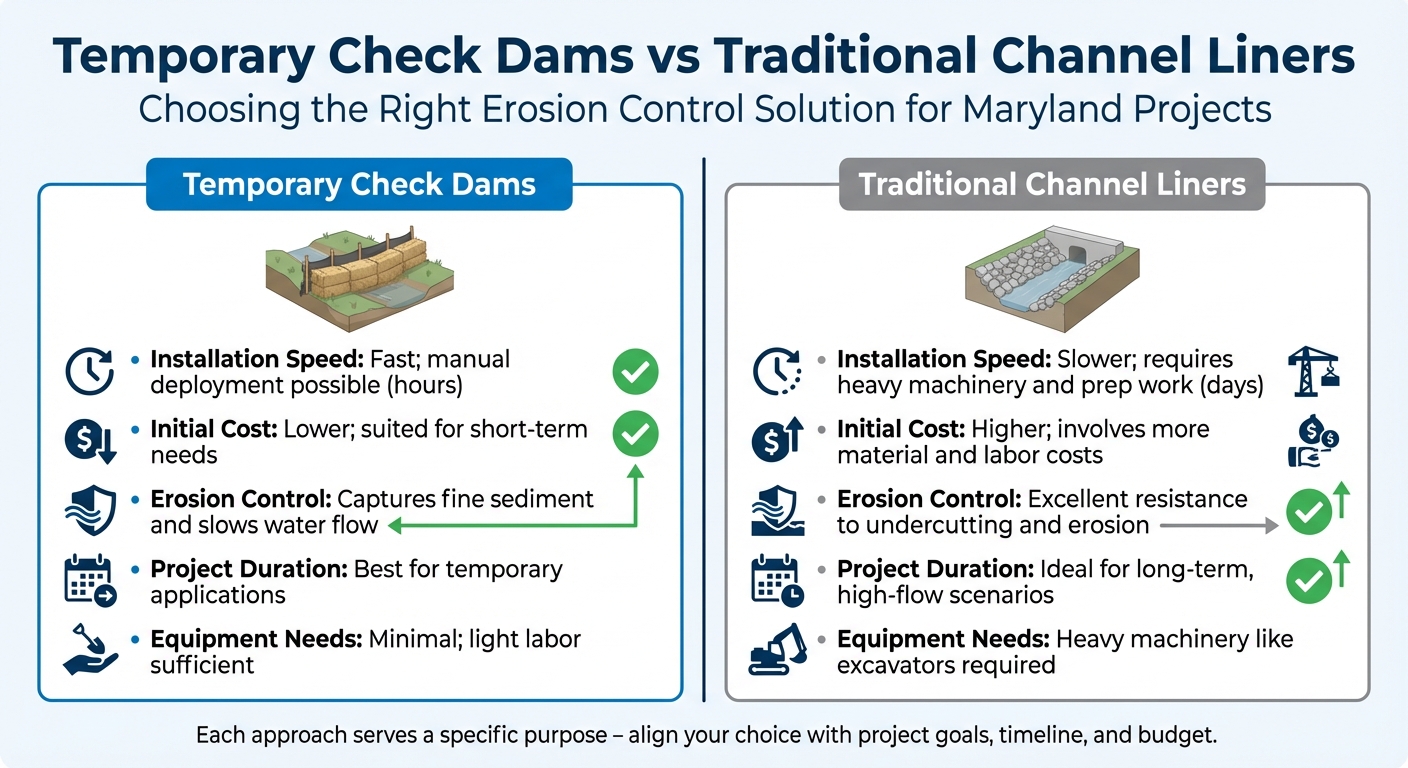
Temporary Check Dams vs Traditional Channel Liners Comparison Chart
When deciding between temporary check dams and traditional channel liners, the choice often hinges on factors like timeline, budget, and performance expectations. Each option has its own strengths and limitations, which are particularly relevant for construction sites and residential projects in Maryland.
Temporary check dams, such as SiltSoxx and straw wattles, are quick to install and cost-effective. Their lightweight design allows for manual placement, reducing labor and equipment expenses. These systems are great at controlling fine sediment and slowing down water flow during construction. However, they are designed for short-term use and may not hold up under sustained high-flow conditions.
On the other hand, traditional channel liners like riprap require a bigger upfront investment and more time due to the need for site preparation and heavy machinery. But what they lack in speed and cost-efficiency, they make up for in durability. Riprap is highly effective at preventing undercutting and scour, especially in steep or high-velocity water channels. For residential areas, vegetated berms with turf reinforcement mats can offer a middle ground, combining durability with a more visually appealing landscape.
Here’s a side-by-side comparison of these two approaches:
| Feature | Temporary Check Dams | Traditional Channel Liners |
|---|---|---|
| Installation Speed | Fast; manual deployment possible | Slower; requires heavy machinery and prep work |
| Initial Cost | Lower; suited for short-term needs | Higher; involves more material and labor costs |
| Erosion Control | Captures fine sediment and slows water flow | Excellent resistance to undercutting and erosion |
| Project Duration | Best for temporary applications | Ideal for long-term, high-flow scenarios |
| Equipment Needs | Minimal; light labor sufficient | Heavy machinery like excavators required |
This comparison highlights the main considerations to weigh as you plan your project. Each approach serves a specific purpose, so aligning your choice with the project’s goals is key.
Conclusion
Temporary check dams offer a practical and efficient erosion control solution tailored to Maryland’s specific needs, especially during active development phases.
For residential and construction projects across the state, these dams are a cost-effective choice. They’re quick to install, need minimal equipment, and can cut sediment runoff by 50% or more when implemented right after land disturbance [8]. This makes them particularly useful for safeguarding waterways like the Chesapeake Bay and meeting EPA NPDES stormwater permit standards [1].
What sets temporary check dams apart is their adaptability. Unlike permanent structures that require heavy machinery and extensive preparation, options like straw wattles and compost filter socks can be manually installed, adjusted as needed, and removed once vegetation stabilizes the site. Biodegradable options even break down naturally, avoiding the expense of removal.
For short-term projects where controlling costs and maintaining flexibility are key, temporary check dams provide effective erosion control without the financial or environmental impact of permanent solutions.
Whether you’re tackling a construction project in Howard County or managing drainage in Montgomery County, temporary check dams can help keep things on track and within budget. Protect your project and Maryland’s waterways with this smart, adaptable solution. Reach out to Pro Landscapes MD for customized drainage solutions and professional installation services across the state.
FAQs
When should I choose temporary check dams instead of riprap or sod?
Temporary check dams are a great choice when you need an affordable and fast solution for erosion control on short-term projects. They work particularly well in areas with slopes or flowing water where managing sediment and slowing down water movement are top concerns.
How do I determine the right spacing for check dams on my site?
The spacing of check dams is determined by their height and the natural conditions of your site. According to Maryland’s Standards and Specifications for Soil Erosion and Sediment Control, you can calculate the spacing by multiplying the height of the check dam by a specific factor tailored to your site. For detailed guidance, refer to the figure provided in the manual.
Getting the spacing right is crucial for controlling erosion and managing runoff efficiently. For adjustments specific to your site, it’s always a good idea to consult local regulations or seek advice from a professional.
What maintenance do check dams need during construction?
Check dams need consistent monitoring during their construction to make sure they stay stable and perform as expected. Maintenance involves fixing or replacing any damaged parts and clearing out sediment buildup to avoid blockages. These actions are crucial for controlling erosion effectively and keeping the check dams working as they should.
Chat with Us