









- bhavya gada
- No Comments
If disturbed soil in Maryland will sit idle for more than 7 days, I treat it before the next storm hits. For short-term cover – usually 6 months or less – temporary seeding can help hold soil in place, but only if I seed at the right time, prep the surface well, control runoff first, and protect the area with mulch.
Here’s the short version:
- Use temporary seeding for short-term stabilization on inactive disturbed soil
- Act when an area is idle for more than 7 days
- Loosen 3 to 5 inches of soil and leave the surface rough
- Seed in late summer to early fall in Maryland; spring is the backup window
- Use mulch-only cover if heat or timing makes seeding a bad bet
- Keep the soil evenly moist during early germination
- Do not rely on seed alone on steep slopes or where runoff concentrates
A few mistakes cause most failures: seeding before runoff is controlled, seeding outside the best window, and skipping mulch or mulch anchoring. I also avoid seeding areas that crews will disturb again for grading, trenching, or hardscape work.
| Topic | What I look for |
|---|---|
| Best use | Short-term cover on inactive soil |
| Timing trigger | More than 7 days inactive |
| Coverage period | About 6 months or less |
| Seedbed prep | Loosen 3–5 inches, roughen surface, track slopes on contour |
| Best Maryland window | Late summer through early fall |
| Backup window | Spring |
| Outside seeding window | Mulch-only until conditions improve |
| Extra protection needed | Steep slopes, drainage paths, concentrated flow areas |
My main takeaway: temporary seeding works when I treat water first, seed during the proper Maryland window, and keep the new cover protected until it takes hold.
Construction BMPs – 3: Surface Stabilization
When Temporary Seeding Is the Right Choice
Temporary seeding is a short-term way to stabilize disturbed soil on active grading and utility sites. It gives you fast-growing vegetative cover for about 6 months or less and helps hold soil in place until permanent stabilization is installed.
In Maryland, once an area goes inactive, temporary stabilization usually comes into play. So the main call is timing. If soil will sit exposed long enough to erode, but not long enough to make permanent planting worth it, temporary seeding is usually the best fit.
On active Maryland sites, disturbed areas left inactive for more than 7 days typically need stabilization. In that window, temporary seeding works as the short-term answer when permanent work isn’t ready yet.
Maryland Situations Where Temporary Seeding Fits Best
Temporary seeding tends to fit a few common Maryland construction-site scenarios:
- Inactive graded areas waiting for final grading, planting, sod, or hardscape work
- Exposed topsoil stockpiles before spreading
- Perimeter areas that need fast cover
- Areas delayed by schedule or season
That said, location still matters. Not every exposed area can rely on seed alone.
Where Temporary Seeding Works and Where It Needs Added Protection
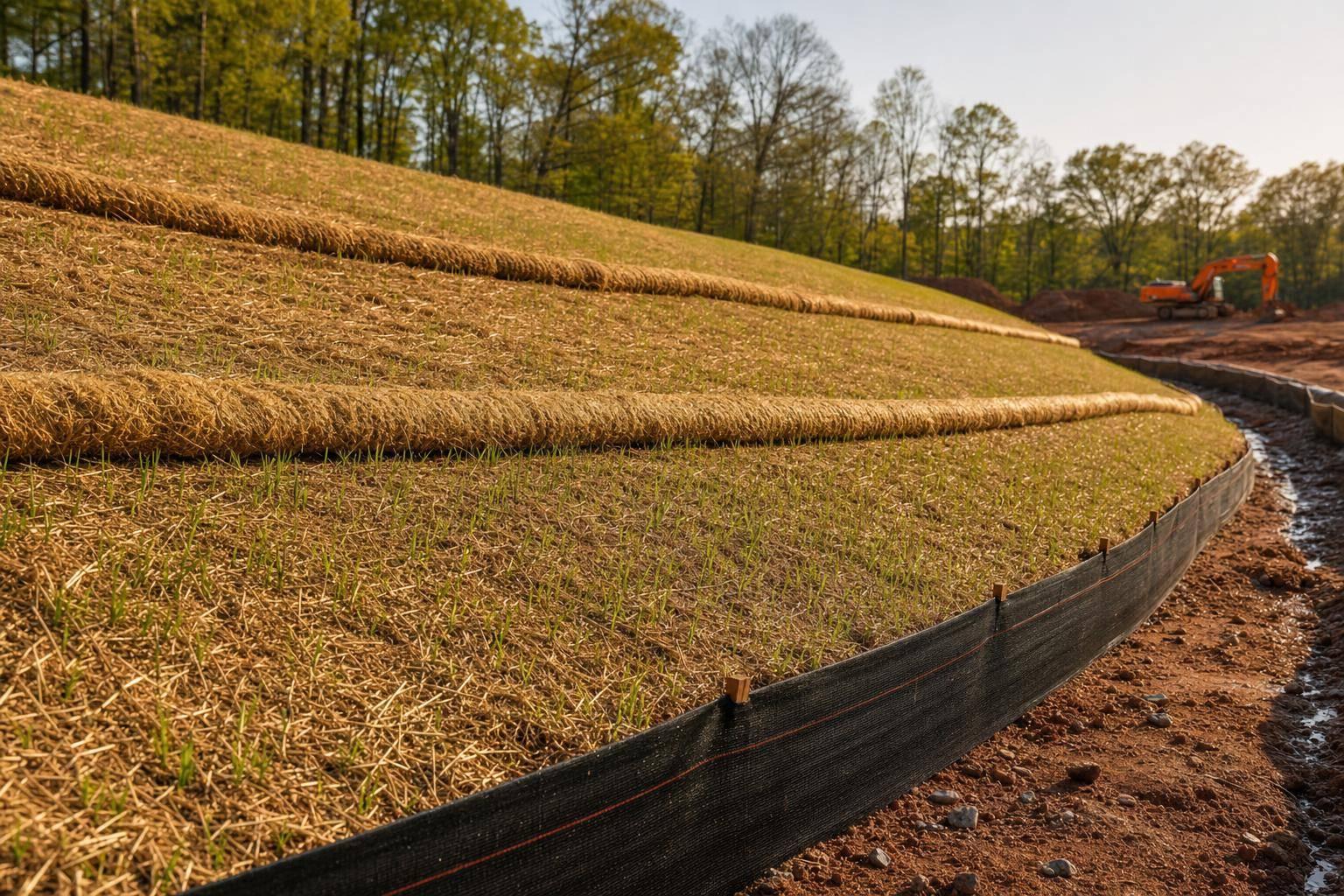
Temporary seeding works best on open, low-traffic soil with light runoff. On steep slopes, drainage paths, and areas with concentrated flow, you’ll usually need more than seed by itself. In those spots, add mulch, matting, or other erosion controls.
A simple way to think about it: use temporary seeding on stable, open soil, and combine it with other controls where runoff starts to funnel and pick up speed.
Once the site is cleared for seeding, the next step is preparing the soil so the seed can take hold.
How to Prepare the Seedbed and Install Temporary Seed Correctly
Temporary Seeding Process for Maryland Construction Sites
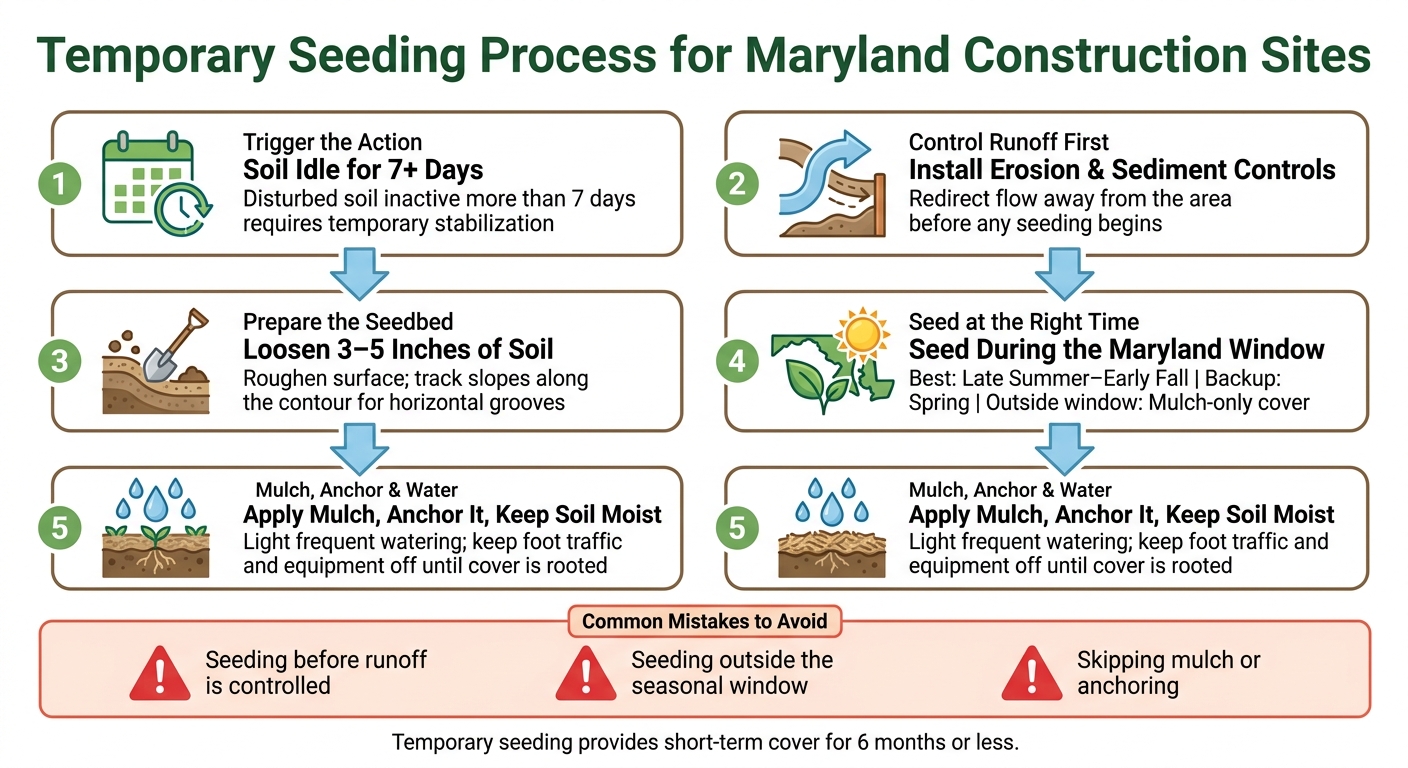
Temporary seeding works best when you handle water first and prep the soil so seed can sprout. The goal is simple: keep disturbed ground covered until grading, drainage, or hardscape work is done. After runoff is under control, you can shape the surface for fast cover.
Control Runoff Before You Seed
Install drainage and sediment controls before seeding so runoff doesn’t cross the treated area. Keep those controls in place until the cover is established. If water keeps washing through the area, even good seed can struggle to take hold.
Once flow is redirected, you’re ready to build a seedbed that can hold both moisture and seed.
Seedbed Preparation: Loosen, Roughen, and Track the Surface
Loosen the top 3 to 5 inches of soil to break up compaction. Then leave the surface rough instead of smooth and flat. That rough texture helps slow water, hold seed in place, and give young seedlings a better shot.
On slopes, track the surface along the contour. Think of it like adding small horizontal grooves across the slope rather than creating a slick path for water to run downhill.
Seeding, Mulch, and Anchoring Methods
Apply seed evenly across the prepared area. Then cover it with mulch to help hold moisture and protect the soil surface. On slopes or other exposed areas, anchor the mulch so it doesn’t shift or blow away.
After installation, success depends on Maryland’s seeding window and early watering.
sbb-itb-843f8be
Seed Timing, Watering, and Establishment in Maryland
Once the seedbed is ready, timing and early care make the difference between a stand that comes in well and one that struggles.
Best Seeding Windows and Seasonal Limits
In Maryland, the best time for temporary seeding is late summer through early fall. Spring is the backup option.
Outside those windows, germination rates drop and the odds of failure go up. If grading wraps up during extreme heat, or if you’re outside the seeding window, use mulch-only cover until conditions improve.
If the site can’t be seeded without risk, keep it protected with mulch until seeding conditions are suitable.
Watering and Early Maintenance Until Cover Is Established
After seeding, the first few days matter most.
Keep the soil surface evenly moist with light, frequent watering. That helps limit runoff and keeps seed from washing away.
Check the area for bare spots or early erosion and fix problems right away. Keep equipment and foot traffic off the seeded ground until the cover has rooted.
Common Mistakes That Cause Bare Soil or Washouts
Even if the seedbed is ready, a few missteps can wreck temporary stabilization. Most problems come down to poor sequencing, weak surface cover, or bad timing.
Mistake Comparison Table
These three errors cause most temporary seeding failures.
| Mistake | What Happens | How to Correct It |
|---|---|---|
| Runoff not controlled | Seed washes away in the next storm | Install erosion controls first |
| Seeding outside the window | Germination stays weak and cover remains thin | Match timing to the Maryland season |
| No mulch or anchoring | Soil dries out and cover shifts | Lock mulch in place |
Coordinating Temporary Seeding With Grading, Drainage, and Hardscape Work
Sequencing matters. Put temporary seeding down only after the area is ready to stay undisturbed. If crews are coming back to grade, trench, or install hardscape, hold off.
Seeding too early is one of the easiest ways to waste time and money. The area gets disturbed again, the cover breaks apart, and you end up reseeding later.
Keep protected areas covered once they’re finished. That helps prevent bare patches and cuts down on repeat work.
Conclusion: Key Points for Reliable Temporary Stabilization
Start by controlling runoff. Then prep the seedbed, seed during the right season, add mulch, and fix thin spots early before erosion spreads.
FAQs
What seed mix works best in Maryland?
The best seed mix for temporary stabilization in Maryland depends on the season and the soil. There isn’t one mix that works for every site.
If you need fast stabilization during cooler months, or you’re working outside the usual seeding windows, cereal rye is often a good fit. It germinates at lower temperatures, which makes it useful when other options may struggle to get going.
Many contractor mixes rely on annual ryegrass because it establishes fast and gives quick cover. That said, it can be aggressive. In most cases, it works better as a nurse crop paired with perennial species instead of being used on its own.
If you need cover that lasts longer, it’s smart to talk with professional horticulturists and choose a mix based on the site’s soil and conditions.
Can I use temporary seeding on stockpiles?
Yes. Temporary seeding is a standard way to stabilize stockpiles and other disturbed soil on construction sites and help prevent erosion and sediment runoff.
For stockpiles, proper soil prep matters if you want seed to take hold. On uneven areas, hydroseeding can help you get more even coverage. And since temporary stabilization may need to be reapplied during periods of heavy rain, it’s smart to keep extra materials on-site so you can maintain coverage and reduce the risk of compliance issues.
When should I switch to mulch only?
Use mulch-only stabilization when you need fast, short-term cover for disturbed soil and getting vegetation in place isn’t possible yet or just isn’t the main goal.
This approach works well as a stopgap before rain, or when harsh temperatures or heavy equipment traffic make seed germination unlikely. In Maryland, it also makes sense to keep extra mulch on-site so you can stay in compliance and cut down on sediment runoff during rainstorms.
Chat with Us