









- bhavya gada
- No Comments
Water damage is costly and avoidable. In Maryland, heavy rainfall, clay-rich soils, and freeze-thaw cycles make drainage maintenance critical. Poor drainage can damage foundations, hardscapes, and landscaping, costing homeowners thousands in repairs. Signs of trouble include water pooling near your home, soggy lawns, and damp basements. Routine inspections, clean gutters, proper grading, and vegetation care are key to prevention. Solutions like French drains, swales, and permeable pavers can protect your property while reducing runoff. This guide explains how to inspect, maintain, and upgrade your drainage system effectively.
Fix any drainage problem | Ultimate Guide to Rainwater Drainage
Understanding Residential Drainage Systems
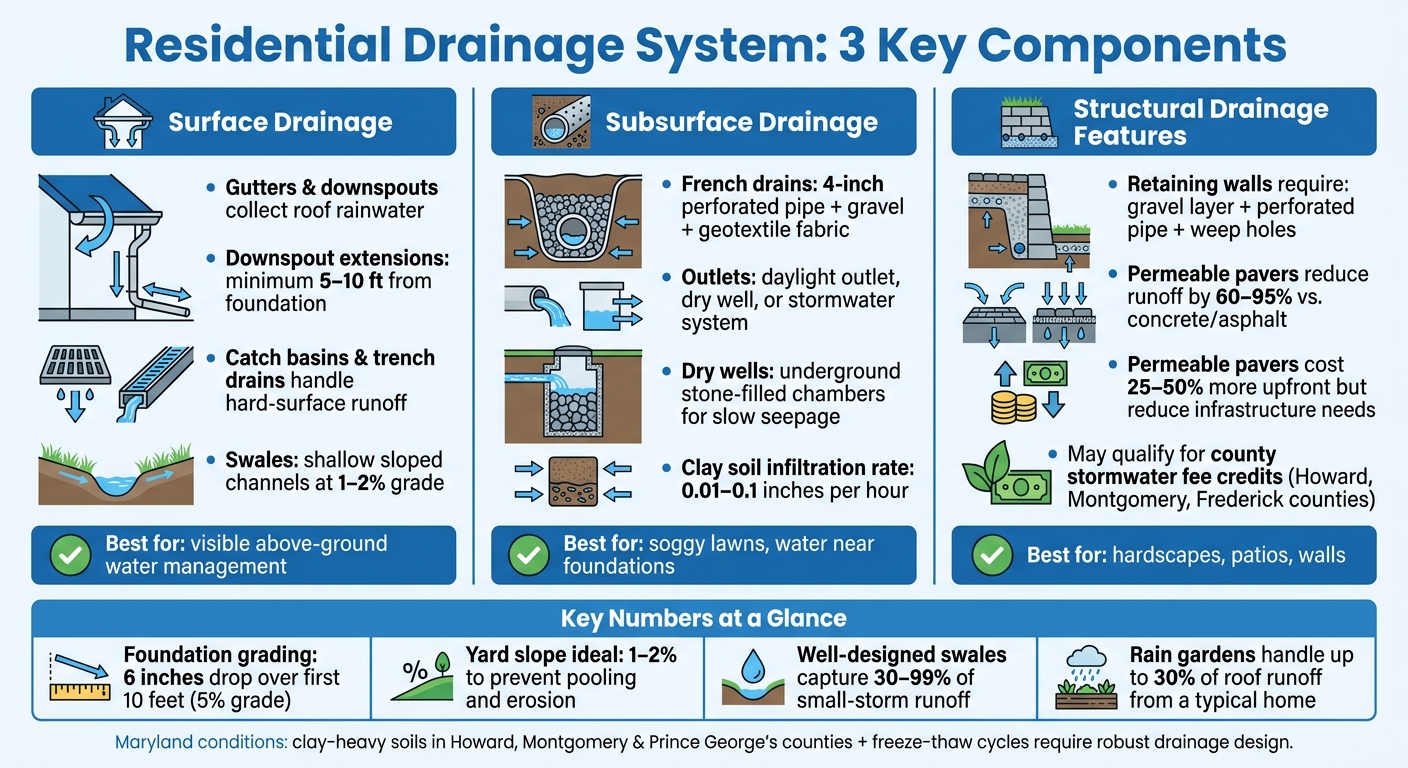
Drainage System Components: Surface vs. Subsurface vs. Structural
Residential drainage systems are made up of several components that work together to channel water away from your home. In Maryland, where weather and soil conditions can be challenging, every part of the system plays a critical role. Understanding how these components function can help you identify potential problems before they escalate.
Key Components of a Drainage System
Drainage systems are typically divided into three main categories: surface drainage, subsurface drainage, and structural drainage features.
Surface drainage is the most visible aspect of the system. Gutters and downspouts collect rainwater from your roof and direct it to the ground. To protect your foundation, downspout extensions should carry water at least 5–10 feet away, especially in areas with clay-heavy soil, which doesn’t absorb water quickly. Catch basins and trench drains handle runoff from hard surfaces like driveways and patios. Swales, which are shallow, sloped channels, direct water laterally across the yard toward a safe outlet. These swales are typically designed with a 1–2% grade to ensure consistent water flow.
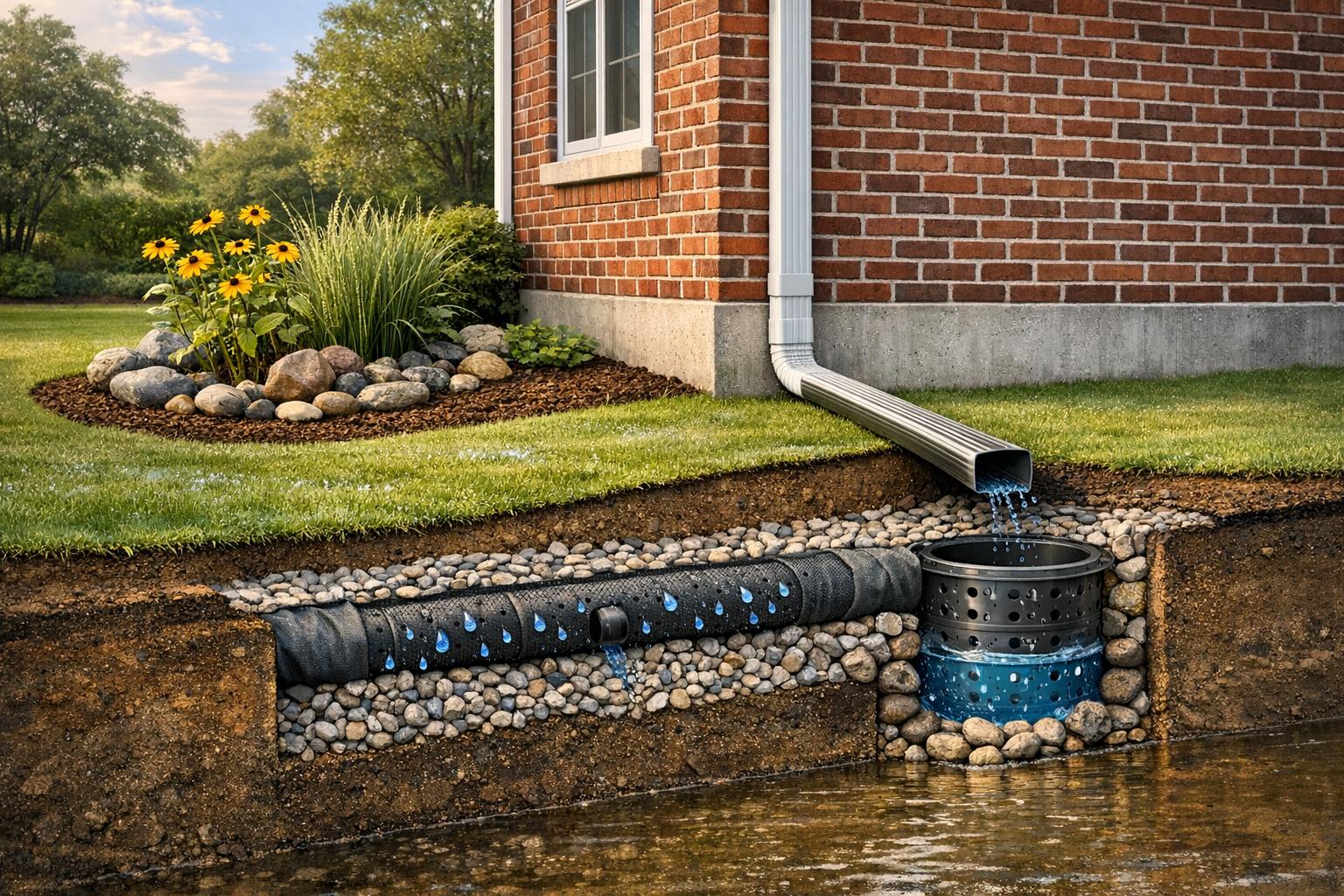
Subsurface drainage deals with water that seeps through the soil. A common solution is a French drain, which uses a 4-inch perforated pipe surrounded by gravel and wrapped in geotextile fabric to prevent clogging. This setup allows water to filter through the gravel, enter the pipe, and flow to a designated discharge point, such as a daylight outlet, dry well, or stormwater system. Dry wells, which are underground chambers filled with stone, temporarily store water and let it slowly seep into the surrounding soil. These are especially useful when surface discharge isn’t feasible.
Structural drainage features are built into hardscape elements like retaining walls and permeable pavers. Retaining walls, for example, require a gravel drainage layer, a perforated pipe at the base, and weep holes to relieve water pressure. Without these measures, water can accumulate behind the wall, leading to bulging or even collapse – particularly during Maryland’s wetter seasons. Permeable pavers, on the other hand, allow water to flow through their joints into a stone base, reducing runoff and helping properties comply with local stormwater regulations. Companies like Pro Landscapes MD often integrate these systems into retaining walls and patios to address drainage challenges in central Maryland.
Together, these components create a system that efficiently collects and redirects water away from your home.
How Drainage Systems Work
The effectiveness of a drainage system depends on gravity and proper slope. Rainwater starts on the roof, where gutters collect it. From there, downspouts direct the water to ground level, and grading ensures it flows away from the foundation. Subsurface drains capture water moving through the soil and guide it to the same exit points. Features like channel drains and permeable pavers also connect to this network, helping to manage water along the way.
To meet building codes and best practices, the ground should slope at least 6 inches over the first 10 feet from the foundation, creating a 5% grade. In the yard, a 1–2% slope is ideal for keeping water moving without causing erosion. Poor grading can lead to water pooling, which often results in damage to your home or landscaping.
In Maryland, these systems must contend with specific local challenges.
Maryland-Specific Conditions to Know
Three key factors make drainage systems in Maryland particularly demanding: heavy rainfall, clay-rich soils, and freeze-thaw cycles.
Clay-heavy soils, common in Howard, Montgomery, and Prince George’s counties, absorb water slowly. During heavy storms, these soils become saturated quickly, leading to increased surface runoff. This puts extra pressure on surface drainage elements like swales and catch basins. Subsurface drains also require careful planning to work effectively in these conditions, as water struggles to penetrate the dense soil.
Freeze-thaw cycles add another layer of complexity. When water trapped in the soil or behind a retaining wall freezes, it expands. This expansion can crack pipes, shift pavers, and push retaining walls out of alignment. Maryland’s winters often see temperatures fluctuating above and below freezing multiple times in a week, making this a frequent issue. After a significant cold spell, it’s a good idea to inspect weep holes, drain inlets, and downspout connections for any signs of damage or shifting. These checks can help prevent small issues from turning into costly repairs by spring.
Risks of Poor Drainage and Warning Signs
Structural and Landscape Damage
Poor drainage doesn’t just create puddles – it can seriously compromise your home and yard over time. When soil becomes oversaturated, it softens, shifts, and eventually shrinks as it dries. This movement puts stress on your home’s foundation and walls, often causing vertical or stair-step cracks, bowing walls, uneven floors, and doors or windows that stick.
The American Society of Home Inspectors highlights improper grading and drainage as one of the most common issues found during home inspections. Foundation repair companies also report that many of their projects stem from surface drainage problems rather than inherent structural flaws.
Hardscapes like patios, walkways, and retaining walls aren’t immune either. Water erodes their base, causing patios to sink, walkways to heave, and retaining walls to bow outward. Maryland’s clay-heavy soils make the problem worse – they swell when wet and shrink when dry, amplifying these issues with each rain cycle. Even plants suffer, as waterlogged soil suffocates roots, leading to yellowing leaves, declining health, and eventual plant death.
Spotting these problems early is key. There are several clear warning signs that indicate drainage issues may be developing.
Signs of Drainage Problems
The best time to check for drainage problems is right after a moderate rainstorm – not during a heavy downpour. Walk around your property and look for water pooling near your foundation, flowing toward your house, or lingering in low spots for more than 24–48 hours. These patterns often point to grading issues or inadequate drainage systems rather than just heavy rain.
Inside your home, keep an eye out for musty odors, white chalky deposits (efflorescence) on basement walls, damp spots at the base of concrete walls, or peeling paint – all signs that water is seeping through your foundation. On hardscapes, watch for sand washing out of paver joints, settling along patio edges, or puddles forming on surfaces that should drain properly. Also, check your gutters and downspouts. Overflowing gutters or water pooling near your foundation are red flags for drainage problems.
Financial and Environmental Impacts
The costs of poor drainage go beyond structural damage – they can hit your wallet and the environment hard. Routine maintenance, like cleaning gutters, extending downspouts, or fixing minor grading issues, typically costs just a few hundred dollars. But delaying these repairs can lead to much bigger expenses. Even just 1 inch of water damage can cost over $25,000, and that figure doesn’t include additional costs for waterproofing, mold remediation, or repairing hardscapes.
In Maryland, where clay-heavy soils make drainage challenges more severe, early action is even more critical. Poor drainage also contributes to environmental concerns. The Chesapeake Bay Program has identified stormwater runoff as the only major source of pollution to the Bay that is still increasing. Runoff from residential properties carries fertilizers, sediment, and other pollutants into local waterways. According to the EPA, up to 70% of the phosphorus in urban stormwater comes from residential areas, including lawns.
For those living in central Maryland, where many watersheds feed into the Chesapeake Bay, managing water on your property has an impact far beyond your own yard. Solutions like French drains, dry riverbeds, permeable pavers, and proper grading can protect your home while also reducing runoff’s environmental toll. Pro Landscapes MD offers tailored drainage solutions to address these challenges effectively.
sbb-itb-843f8be
Best Practices for Preserving Drainage Systems
Routine Inspections and Maintenance
Keeping a close eye on your drainage system is key, especially during or right after a moderate rainstorm. These moments reveal issues that are easy to miss in dry weather, like water pooling near your foundation, runoff flowing toward your house, or yard drains clogged with wet leaves. In Maryland, where clay soils and unpredictable weather are common, these checks are even more important.
Creating a seasonal maintenance routine can help you stay on top of things. In spring, clear out gutters and downspouts from winter debris, inspect for damage like sagging or cracked seams, and run water through drain outlets for 5–10 minutes to ensure they’re working properly. In fall, clean gutters every 4–6 weeks during heavy leaf fall and make sure drain grates on driveways, patios, and curb inlets are free of debris. After major storms, inspect your property for new low spots, damp areas in your basement or crawlspace, and any clogged or frozen sump pump discharge lines.
Every couple of years, check the grading around your foundation to confirm it still slopes away from your house. Over time, soil can settle and flatten, which may reverse proper drainage. Keeping passageways clear and maintaining vegetation around your property can further improve your system’s performance.
Cleaning and Vegetation Care
Clean gutters are your first line of defense against water damage. Experts from the University of Minnesota Extension recommend cleaning them at least twice a year – once in late spring and again in late fall. If your home is surrounded by trees, you might need to clean them more often. When flushing downspouts, watch for water backing up. If it does, use a plumber’s snake to remove blockages before they cause overflow that could damage your siding or foundation.
Beyond gutters, make sure yard drain inlets, catch basin grates, and swale channels are free of leaves, mulch, and other debris. For French drains or dry riverbeds, rake away debris and replace any washed-out stones to maintain proper water flow. On the vegetation side, planting deep-rooted native grasses and groundcovers on slopes and around swales helps anchor soil, slow down runoff, and encourage water to soak into the ground. However, avoid planting large trees or aggressive shrubs near underground drain pipes or French drains, as their roots can infiltrate and clog the system over time.
Regular cleaning and thoughtful vegetation management work hand-in-hand to support proper grading and erosion control.
Grading and Erosion Control
Grading and erosion control are essential for directing water away from your home and managing its flow. If you notice bare soil around downspout outlets, along walkways, or at slope breaks, replant these areas as soon as possible with turf, groundcovers, or mulch mats. According to the University of Maryland Extension, erosion can strip several tons of soil per acre each year on unprotected slopes. Acting early can save you from the higher costs of repairing a severely eroded yard.
Swales are a practical solution for managing runoff. These shallow, vegetated channels collect water from roofs, driveways, and lawns, guiding it to a safe discharge point. Vegetation within the swale slows the water’s movement and promotes absorption. The EPA reports that well-designed swales can capture and infiltrate 30–99% of annual runoff from small storms, depending on soil type. In areas with heavy water flow, such as at the base of downspouts or along narrow side yards, stone splash pads or dry creek beds can help dissipate water energy and protect the soil. For steeper slopes, retaining walls can break up long runs and prevent erosion. However, these walls need proper drainage – gravel backfill and perforated drain pipes – to keep hydrostatic pressure from building up over time. Companies like Pro Landscapes MD specialize in combining grading, dry riverbeds, retaining walls, and French drains into tailored solutions that address the unique soil and slope challenges found in central Maryland.
Planning and Upgrading Drainage Systems
Designing a Durable Drainage Layout
Take a moment during a rainstorm to observe how water moves through your yard. Look for areas where it collects, flows, or pools – especially near your home’s foundation. This simple exercise can tell you more about your yard’s drainage patterns than any fancy tools. A well-thought-out drainage system connects three main elements: collection points (where water enters the system), conveyance paths (how it moves), and a safe outlet (where it exits without causing new issues).
Collection points, like catch basins or trench inlets, should be placed where water naturally accumulates. Common spots include the base of downspouts, low areas in the yard, or uphill sides of retaining walls. The pipes carrying the water should follow the natural slope of the land, with a steady incline of 1–2%. For the outlet, choose a stable surface such as a riprap pad, dry riverbed, or rain garden, and avoid discharging water onto bare soil or toward a neighboring property.
The type of drainage solution you choose depends on your specific water issues. French drains are perfect for tackling subsurface moisture, such as soggy lawns or water near foundations. Dry riverbeds handle visible surface runoff while also adding a decorative touch. Surface swales are best for larger, gently sloped areas where directing water along the ground is easier than installing underground pipes. Often, combining methods – like using a swale or dry riverbed for surface water and a French drain for underground moisture – gives the best results.
Once your layout is planned, the next step is selecting durable materials.
Choosing the Right Materials
For buried mainlines, Schedule 40 or SDR-35 PVC pipe is the way to go. These pipes are far more resistant to crushing, root intrusion, and freeze–thaw cycles than standard black corrugated tubing, making them a long-lasting choice – especially in Maryland’s climate.
When it comes to gravel, choose clean, washed angular stone (typically 3/4-inch). Unlike pea gravel, the angular edges lock together, creating voids for water to flow and reducing compaction over time. To prevent clogging, wrap the entire gravel trench in nonwoven geotextile fabric. This step is especially important in Maryland’s clay-heavy soils, where infiltration rates can be as low as 0.01–0.1 inches per hour. Adding accessible cleanouts at key points in the system also makes maintenance easier, allowing you to flush or snake the lines without digging up the yard.
Experts like Pro Landscapes MD often go beyond standard practices, specifying materials and designs that stand up to Maryland’s challenging soil conditions for years of reliable performance.
Stormwater Practices That Reduce Runoff
Reducing runoff is another critical part of an effective drainage system. Permeable pavers are a great option, as they allow water to soak into the ground instead of running off. Research shows they can cut runoff by 60% to 95% compared to traditional concrete or asphalt. While permeable pavers cost 25–50% more upfront, they can reduce the need for additional drainage infrastructure and might even qualify for stormwater fee credits.
Another effective method is installing rain gardens. These gardens, placed in natural low spots at least 10 feet from your home, are planted with deep-rooted native plants. A properly designed rain garden can handle up to 30% of roof runoff from a typical residential property. Beyond reducing flooding, the EPA highlights rain gardens for their ability to filter out pollutants like nutrients, sediment, and heavy metals before they reach local waterways or the Chesapeake Bay.
In Maryland, many counties – including Howard, Montgomery, and Frederick – offer rebates or stormwater fee credits for homeowners who install qualifying features like rain gardens or permeable pavers. Checking your county’s programs before starting a project could save you money while helping protect your property and the environment.
Conclusion
Your drainage system works quietly behind the scenes every time it rains, protecting your foundation, yard, and hardscapes. But when problems arise, damage can add up quickly. A large number of homeowners face water damage issues, and the good news is that most of these problems can be avoided with regular upkeep.
Beyond protecting your home, how you handle water runoff impacts the wider community. In Maryland, stormwater runoff is one of the few sources of Chesapeake Bay pollution that’s still on the rise, largely due to the spread of paved and impervious surfaces. Features like rain gardens, permeable pavers, and properly graded yards not only shield your property but also help reduce sediment and nutrient runoff into local streams and the Bay.
Take a moment after the next rainstorm to walk around your yard. Look for areas where water pools, flows toward your house, or shows signs of erosion. Check that drain inlets are free of debris and that downspout extensions direct water at least 5–10 feet away from your foundation. These small observations can guide timely maintenance and prevent bigger issues. Catching problems early is crucial, and for ongoing concerns, a professional evaluation can help keep your system working effectively.
For more serious challenges – like recurring basement leaks, severe erosion on slopes, or failing retaining walls – calling in the experts is the best move. Pro Landscapes MD supports homeowners across central Maryland with drainage solutions tailored to the region’s tricky soil and weather conditions. Their services include French drains, dry riverbeds, yard regrading, drain pipe installations, and complete stormwater management systems – all designed to integrate seamlessly with new or existing hardscaping.
FAQs
Do I need a French drain or regrading?
If your property has drainage problems, deciding between a French drain and regrading comes down to the specific issue at hand. Regrading involves reshaping the slope of your land to ensure water flows away from your foundation, helping to avoid water pooling around your home. On the other hand, French drains use perforated pipes surrounded by gravel to channel surface or groundwater away from areas prone to flooding. At Pro Landscapes MD, experts assess your property’s layout and soil conditions to determine the most effective approach for managing stormwater and safeguarding your home.
Where should downspouts discharge on my property?
Downspouts play a critical role in protecting your home by channeling water away from the foundation and surrounding landscape. If not properly directed, water can cause damage, pooling, or even erosion. That’s why Pro Landscapes MD offers tailored drainage solutions like underground pipes, French drains, or swales. These systems safely guide water to designated areas such as rain gardens or infiltration zones. Because every property is different, a professional evaluation ensures the drainage system is designed to meet your specific needs.
When should I call Pro Landscapes MD for drainage help?
If you’re dealing with ongoing flooding, basement leaks, erosion, or poor drainage on your property, reach out to Pro Landscapes MD. They are experts in grading, stormwater management, and designing custom drainage systems tailored to your needs. Whether it’s clay soil, steep slopes, or areas with heavy foot or vehicle traffic, their professional services can help protect your foundation and provide reliable drainage solutions for even the toughest conditions.
Chat with Us