









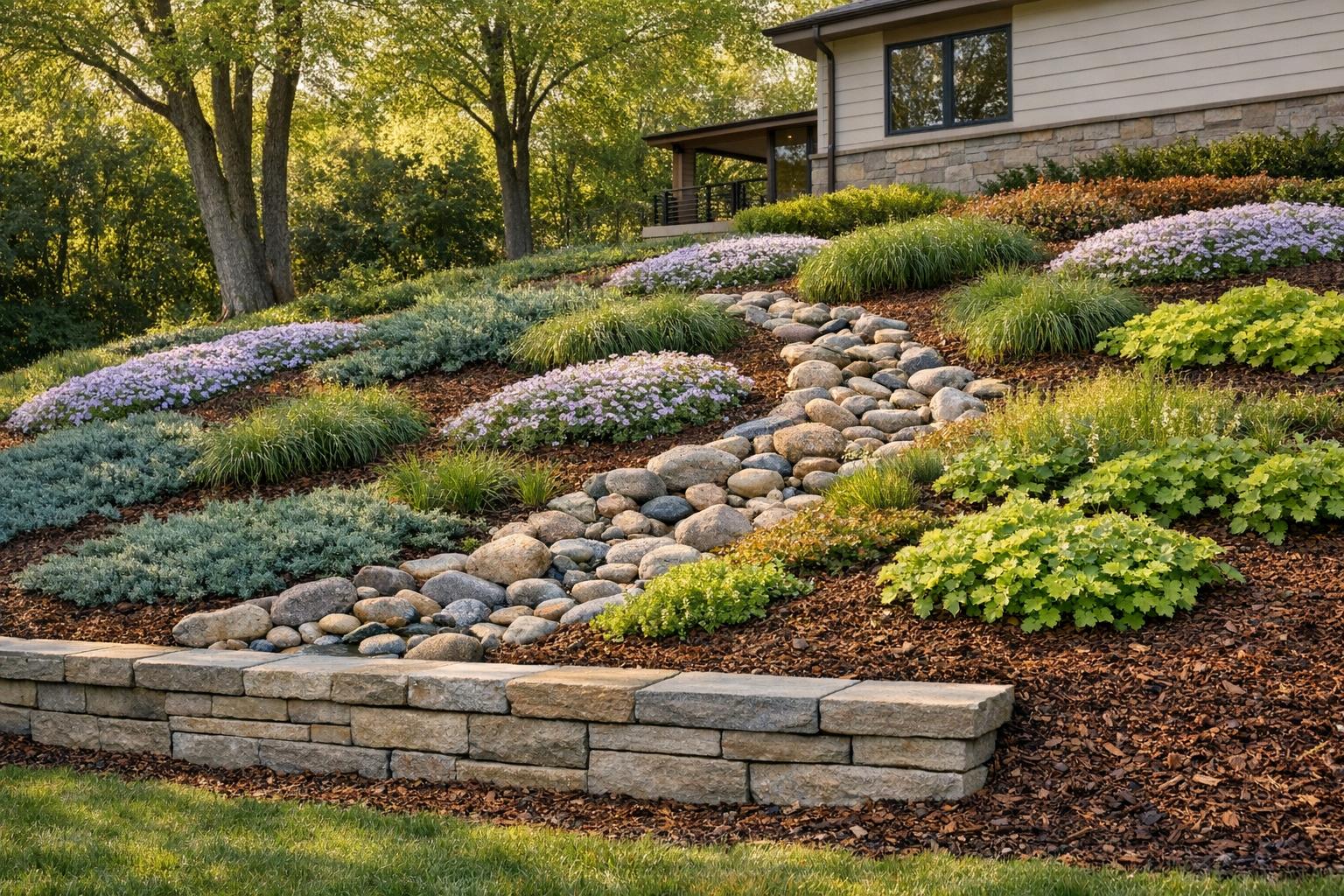
- bhavya gada
- No Comments
Erosion-resistant ground covers are essential for stabilizing soil, especially in areas prone to heavy rain, slopes, or compacted ground. These plants protect against soil erosion by reducing raindrop impact, binding soil with their roots, and slowing water runoff. In Maryland, where clay-heavy soils and unpredictable weather amplify erosion risks, choosing the right ground cover can prevent damage and improve soil health.
Key Takeaways:
- Why Ground Covers Matter: They prevent soil erosion by shielding the surface and strengthening soil with dense roots.
- Maryland-Specific Challenges: Heavy rain, clay soil, and disturbed landscapes make erosion control critical.
- What to Look For: Plants with fibrous roots, dense growth, and quick establishment work best.
- Top Picks: Native options like Golden Ragwort, Creeping Phlox, and Wild Ginger thrive in Maryland conditions.
- When to Use Structural Solutions: Severe issues like gullies or pooling water may require drainage systems or retaining walls alongside plants.
Ground covers are a practical, low-maintenance solution for erosion control, but for severe problems, combining them with professional drainage or hardscaping solutions ensures long-term effectiveness.
Top 5 Groundcovers for Erosion Control
sbb-itb-843f8be
How Ground Covers Prevent Erosion
When rain hits bare soil, it kicks off a chain reaction. The initial splash dislodges soil particles, setting the stage for runoff, small channels (rills), and eventually larger gullies. Ground covers act as a frontline defense, stopping this process before it even starts. Studies reveal that plant foliage can cut raindrop impact energy at the soil surface by over 80%. Why? Because instead of rain hitting the ground directly, it’s slowed down as it drips gently from leaves.
Beneath the soil, the roots of ground covers make a big difference too. Dense, fibrous root systems hold soil particles together, boosting the soil’s shear strength by up to 50%. This added strength helps prevent shallow slope failures. Above ground, stems, stolons, and leaf litter create a rough surface that slows water runoff and encourages it to soak into the soil. Depending on the type and density of the plants, vegetative cover can reduce soil loss by 50–90% compared to bare ground.
These protective benefits are especially important in Maryland, where soil and weather conditions often amplify erosion risks.
Common Erosion Problems in Maryland Landscapes
Maryland’s landscapes face unique challenges. The state’s clay-heavy soils and unpredictable weather make erosion a frequent problem. On slopes, heavy rains carve out bare channels. Mulch beds near downspouts or driveways often wash away. Under large trees like oaks and maples, grass struggles to survive, leaving exposed soil that’s prone to erosion. Surprisingly, bare soil under tree canopies can erode even more quickly because tree roots compete for water and nutrients, making it tough for other plants to establish.
Clay soil adds to the problem. It drains slowly, compacts easily, and forms a hard, crusty surface when dry. This crust resists water absorption, causing stormwater runoff to spike. When soaked, clay soil loses its structure and washes away easily. In new developments across Maryland’s Piedmont and Coastal Plain, construction often removes or buries topsoil, leaving behind compacted subsoil that performs poorly under rainfall.
Key Traits of Erosion-Resistant Ground Covers
To combat erosion, choose ground covers with specific traits. A fibrous, spreading root system is critical because most erosion occurs in the top 6–18 inches of soil. Above ground, dense, mat-forming growth – either through tight clumps or spreading rhizomes – minimizes exposed soil and slows water flow. Quick establishment is also essential, especially for vulnerable slopes that need immediate coverage.
In Maryland, plants must handle clay soils, occasional wet conditions, and late-summer droughts – challenges that often occur within the same year. Shade tolerance is equally important for areas under mature trees where grass fails. Evergreen or semi-evergreen foliage is a bonus, offering year-round soil protection, which is crucial during winter rain-on-snow events when the ground is most fragile.
Ground Covers vs. Structural Erosion Solutions
Ground covers work best for shallow surface erosion, minor rills, or small bare patches on gentle to moderate slopes. If water can be slowed and absorbed on-site, plants alone can often resolve the issue within one or two growing seasons.
However, some problems require structural solutions first. Signs like deep gullies forming after storms, disappearing topsoil, repeated mulch washouts near foundations, or water pooling against hardscaping indicate concentrated water flow that plants alone can’t handle. In these cases, tools like regrading, French drains, retaining walls, or dry riverbeds should be installed first. Ground covers can then stabilize and protect the repaired area.
The best results often come from combining both approaches. Structural methods control water volume and flow, while ground covers protect the soil and filter runoff. Companies like Pro Landscapes MD specialize in blending these strategies, using drainage systems, grading, and planting to tackle erosion at its core.
Choosing the Right Ground Covers for Maryland
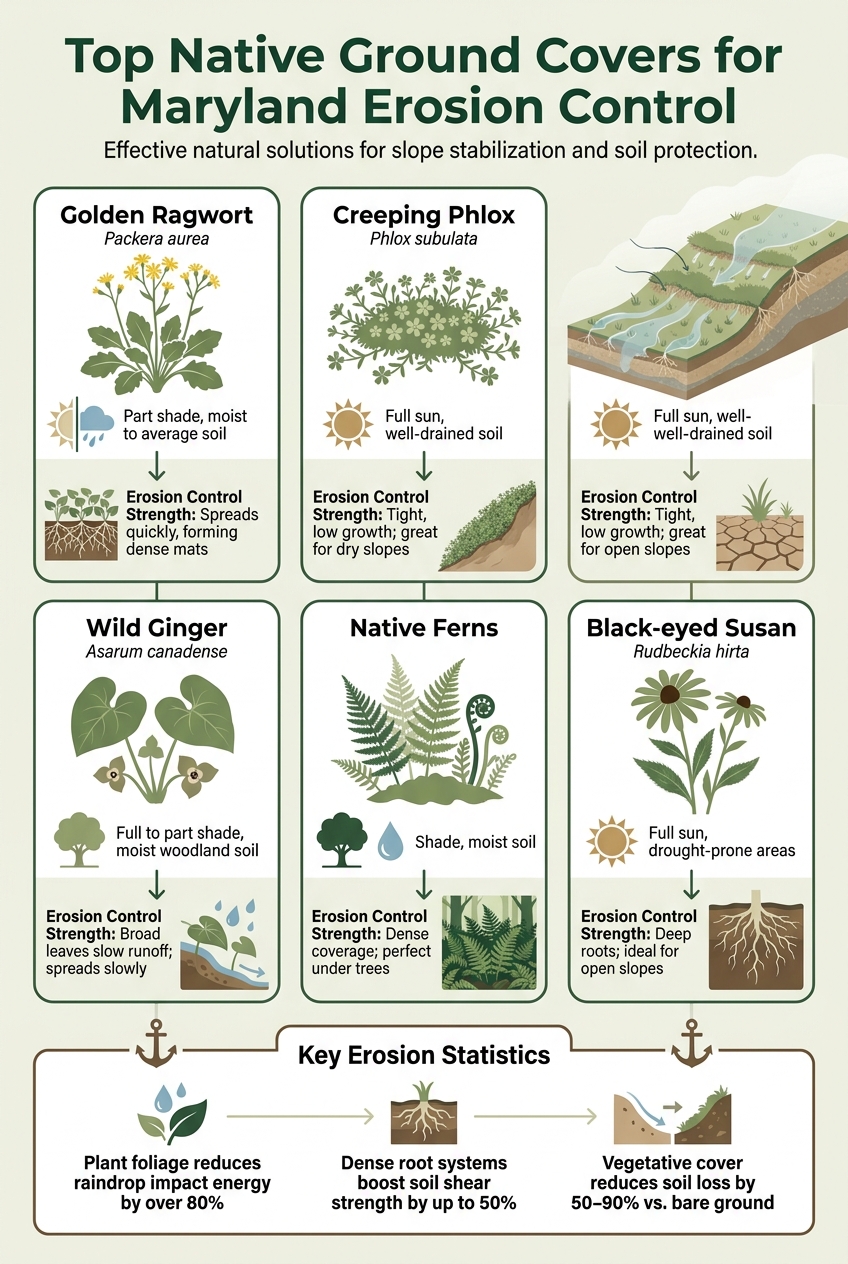
Top Native Ground Covers for Maryland Erosion Control
Building on the erosion challenges already discussed, taking the time to assess your site thoroughly is key to selecting the best ground cover for your yard.
How to Assess Your Site Conditions
Start by observing the basics: sunlight, moisture, drainage, and slope. Does the area get full sun all day, or is it shaded by trees? Does water linger after heavy rain, or does it drain away quickly? These details can help you narrow down your plant options.
For sloped areas, watch how water flows during storms. If the runoff moves as one continuous sheet, you’ll need a ground cover that establishes quickly and develops roots along its stems. On flatter areas, especially those with compacted clay (common in Maryland’s Piedmont), go for plants that can thrive in dense soil and spread easily. Dividing your yard into moisture zones – dry, average, moist, or wet – can make the process even smoother. This approach ensures you pick the right plants for each section of your yard.
Top Native Ground Covers for Maryland
Native plants are a great choice for Maryland because they’re naturally suited to the local environment. Once established, they usually need less water, fertilizer, and maintenance.
| Plant | Best Conditions | Erosion Control Strength |
|---|---|---|
| Golden Ragwort (Packera aurea) | Part shade, moist to average soil | Spreads quickly, forming dense mats |
| Creeping Phlox (Phlox subulata) | Full sun, well-drained soil | Tight, low growth; great for dry slopes |
| Wild Ginger (Asarum canadense) | Full to part shade, moist woodland soil | Broad leaves slow runoff; spreads slowly |
| Black-eyed Susan (Rudbeckia hirta) | Full sun, drought-prone areas | Deep roots; ideal for open slopes |
| Native Ferns | Shade, moist soil | Dense coverage; perfect under trees |
Golden ragwort is especially effective for shaded, moist areas, forming a thick mat as it spreads by runners. Creeping phlox thrives in sunny, well-drained spots, while wild ginger stabilizes soil in shaded woodland edges.
If native plants don’t meet your needs, non-native options can provide additional solutions, though they come with some risks.
Non-Native Ground Covers: Benefits and Risks
Non-native ground covers can be helpful when native plants aren’t enough, but they require careful consideration. For example, sedum works well on sunny, dry slopes, hostas create dense shade coverage, and daylilies (Hemerocallis) offer colorful, resilient stabilization in various conditions.
However, some non-native plants can spread aggressively. Always check Maryland’s invasive species list before planting. If a non-native plant is appropriate for a specific challenge and its spread can be controlled, it might be a practical option – but should never replace a native plant when one fits the need.
"Landscaping with local flora not only reduces the need for excessive watering but also supports the local ecosystem." – Pro Landscapes MD
For areas with tough drainage issues, unstable slopes, or recurring runoff, pairing ground covers with professional site preparation can make all the difference. Pro Landscapes MD offers services like grading, drainage solutions, and planting to help your ground cover establish successfully and manage erosion effectively.
How to Plant and Establish Erosion-Resistant Ground Covers
Once you’ve assessed your site and chosen the right plants, the next step is ensuring they establish properly. A well-prepared site and thoughtful planting methods are key to creating a Maryland landscape that can handle heavy rains and resist erosion.
Site Preparation and Temporary Erosion Control
Start by clearing the area of any existing grass, weeds, or invasive plants. For flat or gently sloped areas, loosen the soil to a depth of 6–8 inches and mix in 2–3 inches of compost. This improves soil structure and water management: it enhances drainage in clay-heavy soils and helps sandy soils retain moisture, which is especially useful near rivers or coastal areas.
Bare soil is particularly vulnerable to erosion. According to NRCS data, bare soil can lose over 5 tons per acre annually, while vegetated surfaces lose less than 0.5 ton per acre – a dramatic difference. To protect exposed soil, apply a 2–3 inch layer of shredded hardwood mulch on moderate slopes, which can reduce erosion by up to 90% during the establishment phase. For steeper slopes (greater than a 3:1 ratio), use biodegradable coir or jute netting. These materials naturally decompose over time and avoid the microplastic issues linked to synthetic mesh. Once the site is secure, tailor your planting methods to specific zones.
Planting Methods for Slopes, Tree Zones, and Wet Areas
Each area of your landscape may require a slightly different planting approach:
- Slopes: Begin planting at the bottom of the slope. Dig angled holes to help capture water, and backfill firmly to remove air pockets. Water gently using drip irrigation to avoid washing soil away. Stagger plants in a triangular pattern to disrupt water flow and further reduce erosion.
- Tree zones: Minimize soil disturbance when planting near trees. Avoid adding more than 1–2 inches of soil over existing roots and never cover the trunk flare. Plant in small pockets between surface roots, keeping a mulch-free buffer of 3–4 inches around the trunk. Since tree canopies block much of the rainfall, ground covers in these areas may need extra watering during their first one to two growing seasons.
- Wet or low-lying areas: Address drainage problems first. Simply planting moisture-tolerant ground covers in saturated spots won’t work without fixing drainage issues. Solutions like grading, French drains, or dry creek beds can help. After resolving drainage, position plants on small mounds or along swale edges so their roots can access oxygen between storms. Pro Landscapes MD often integrates these drainage solutions with planting plans to ensure all elements work in harmony.
These strategies help plants establish quickly, which is critical for controlling erosion effectively. The next step is to fine-tune plant spacing and layout.
Spacing, Plant Mix, and Layout Tips
Spacing matters when it comes to achieving full ground cover. For fast-spreading ground covers, space plants 12–18 inches apart for cost efficiency, or 8–12 inches apart if you need quicker coverage on erosion-prone slopes. Slower-growing, clumping species should be spaced 18–24 inches apart to allow them to reach their full size without overcrowding.
A mix of species can stabilize both the topsoil and subsoil. Pair shallow-rooted, fast-spreading plants with deeper-rooted species to anchor the soil layers. For instance, in Maryland, you might combine native sedges with low-growing flowering perennials on a slope or pair shade-tolerant ferns with evergreen ground covers under trees. Use 3–5 complementary species, placing hardy, fast-growing plants in erosion-prone spots (like mid-slope or near water entry points) and slower-growing, ornamental species in areas with less water flow.
Dense plantings are especially effective in high-risk areas such as below downspouts, along swales, or at the base of retaining walls. To make maintenance easier, include stepping stones or access paths near hardscaping features to avoid compacting or disturbing the ground covers once they are established.
Maintaining Ground Covers for Long-Term Erosion Control
Once planted, ground covers need consistent care to thrive and protect the soil effectively. A dense, healthy canopy is essential for stabilizing slopes, as sparse or struggling vegetation leaves the ground vulnerable.
Watering and Mulching During the First Year
The first year is critical for ground covers. Their roots are still shallow and need consistent watering to grow deep enough for stability. To encourage this, water deeply – about 1 inch per week – using soaker hoses or drip irrigation. These methods are especially effective on slopes, as they allow water to soak in gradually without running off. Watering in the morning also helps minimize evaporation and reduces the chance of fungal issues.
Mulching is another key step. Apply a 2–3 inch layer of shredded hardwood or bark mulch around the plants, making sure to leave a small gap around each stem to prevent rot. On steep slopes, opt for shredded or fibrous mulches, as smooth bark nuggets tend to slide downhill. Once the vegetation forms a full canopy, you can reduce the mulch layer, as the plants themselves will act as a natural erosion barrier. Research shows that organic mulches can cut surface runoff by 50–80% and reduce soil loss by up to 90% when used properly.
Managing Weeds and Pests
After establishing proper watering and mulching routines, weed and pest control become the next focus. Weeds compete with young ground covers for water and sunlight, delaying the formation of a protective canopy. During the first two growing seasons, hand-weed regularly – about every few weeks. Once the ground covers mature and fill in, weed growth will naturally decrease, but you’ll still need to monitor edges and any thin areas.
For pests and diseases, consider an integrated pest management (IPM) approach. Walk through the area every few weeks during the growing season, keeping an eye out for signs like discolored patches, chewed leaves, or unusual dieback. Most minor issues won’t impact erosion control and don’t require intervention. If action is needed, start small: prune damaged stems, improve airflow in dense areas, or adjust watering practices. Avoid over-fertilizing, as excessive nitrogen encourages weak, lush growth that’s more susceptible to disease and doesn’t necessarily improve soil stability.
Maintaining Ground Covers Near Hardscaping and Drainage Features
Ground covers near hardscaping and drainage systems need extra care to prevent long-term damage. Without proper edging, these plants can creep into paver joints, form tripping hazards, or even exert pressure on wall caps. To avoid this, edge the plants annually using a manual tool or low-profile edging material.
For areas around drainage features – like French drains, dry creek beds, or downspout outlets – maintain a 3–6 inch buffer on either side of the stone or drain line. Keep these areas trimmed and clear to ensure water flows freely. Inspect these spots at least twice a year and after heavy storms to check for silt buildup, displaced rocks, or plant encroachment that could obstruct water movement.
"Once established, berms and swales require minimal maintenance. Regular checks for plant health and occasional trimming or replanting may be needed to keep the vegetation thriving and ensure water continues to flow properly." – Pro Landscapes MD [2]
For homeowners in central Maryland, where drainage systems and hardscapes often intersect, hiring a professional landscaper like Pro Landscapes MD can simplify long-term upkeep. Their expertise ensures tasks like clearing weep holes, regrading after storms, and integrating drainage repairs with replanting are handled effectively, keeping both plants and structures in top condition over time.
Conclusion
Focusing on site fundamentals – like sun exposure, slope, soil quality, and moisture – is key to creating a lasting erosion control plan. Using native plants suited to Maryland’s climate provides an effective, natural solution. Start by preparing the soil, using temporary erosion controls, planting carefully, and maintaining consistent watering and mulching during the first growing season. Once plants are established, routine tasks like weed management, drainage inspections, and edging will help maintain their protective benefits. For more severe erosion issues, professional assistance may be necessary.
For smaller issues, such as a bare patch or a gentle slope, a weekend project can yield noticeable results in just one season. However, steep or unstable slopes, water pooling near your home, or erosion linked to damaged hardscapes or drainage systems often require more than just planting.
"Drainage problems are complex and require a custom approach for each project. These issues can cause long-term damage to your property if not handled correctly, which is why hiring an experienced team is critical." – Pro Landscapes MD [1]
When basic planting isn’t enough, Pro Landscapes MD offers a range of solutions, including grading, French drains, dry riverbeds, retaining walls, and yard leveling. A professional site assessment can help address the root cause of erosion, potentially saving you time, money, and stress in the long run.
FAQs
How can I tell if plants alone will stop my erosion?
Plants are great for stabilizing soil and slowing down water flow, but they often fall short when dealing with severe erosion – especially on steep slopes or areas prone to heavy runoff. If you notice persistent bare patches, flooding, or problems with your foundation, it might be time to consider other solutions. Options like retaining walls, swales, or drainage systems can make a big difference. Experts, such as Pro Landscapes MD, can assess your property and suggest the most effective ways to tackle erosion.
What ground cover works best in Maryland clay on a slope?
When dealing with Maryland’s clay-heavy soil, native plants are a top choice. They’re naturally adapted to the local environment, making them better equipped to thrive and protect against erosion.
Erosion Control Techniques
To combat soil erosion effectively, Pro Landscapes MD often uses a combination of strategies:
- Retaining walls: These structures help stabilize the soil, keeping it in place on sloped areas.
- Swales: These are shallow channels lined with plants that slow down water runoff, reducing the risk of further erosion.
If you’re unsure which plants will work best for your specific soil type, it’s a good idea to connect with a professional horticulturist. They can provide expert guidance tailored to your landscape.
How fast do ground covers grow to protect bare soil?
The speed at which ground covers take root and shield bare soil varies based on factors such as the type of plants, soil quality, and local climate. To address erosion control and support landscape planning, Pro Landscapes MD offers expert evaluations and customized solutions. Their services include planting strategies, building retaining walls, and implementing natural water management techniques to stabilize soil and control runoff throughout central Maryland and Washington, DC.
Chat with Us