









- bhavya gada
- No Comments
Fall pruning is essential for preparing plants to thrive in spring. By trimming dead or damaged branches in late fall, you reduce the risk of winter storm damage and improve airflow for healthier growth. This process supports plant dormancy, a natural state where plants conserve energy during cold months. Maryland’s climate, ranging from USDA zones 6b to 7b, makes timing key – prune after leaves drop but before the ground freezes, typically late October to mid-November.
Key Tips for Fall Pruning:
- Timing: Late fall is ideal, ensuring plants are dormant.
- Focus Areas: Remove dead, diseased, or crossing branches.
- Tools: Use bypass pruners, loppers, or pruning saws for clean cuts.
- Safety: Wear gloves, safety glasses, and use stable ladders.
- Plant-Specific Guidance: Prune summer-blooming plants in late winter/early spring and spring-blooming plants after they flower.
Pair pruning with mulching and bed edging to protect roots and prepare for winter. For large or hazardous tasks, professional help ensures safety and effective results.
How to Prune Your Plants – Part 1 of 5 – Fall (Dormant) Shrubs
When to Prune in Fall for Best Results
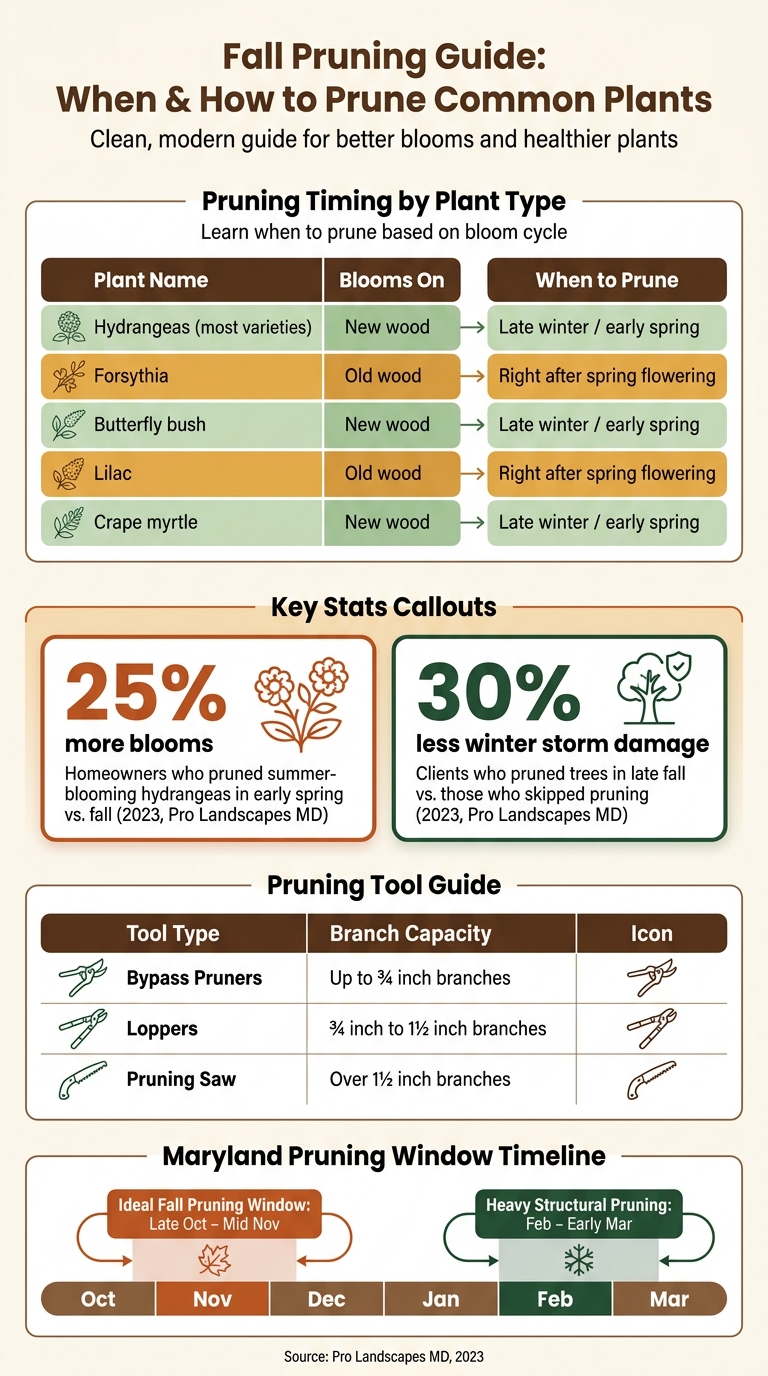
Fall Pruning Guide: When & How to Prune Common Plants
Understanding the Dormant-Season Pruning Window
Timing your pruning during the dormant season is essential to prevent triggering new growth that won’t survive the winter. In Maryland, the dormant season stretches from late fall to early spring, but not all pruning tasks should happen simultaneously. For most trees and shrubs, light cleanup works best after the leaves have fallen but before the ground freezes – this usually means late fall, when temperatures consistently stay below 50°F.
"Late fall is an excellent time to prune trees and shrubs. By removing dead or damaged branches, you reduce the risk of them breaking under the weight of snow or ice during the winter." – Pro Landscapes MD [1]
Pruning Summer-Blooming vs. Spring-Blooming Plants
The timing of pruning depends on whether a plant blooms on new or old wood. Here’s a quick breakdown to help you decide when to prune specific plants:
| Plant Type | Blooms On | When to Prune |
|---|---|---|
| Hydrangeas (most varieties) | New wood | Late winter / early spring |
| Forsythia | Old wood | Right after spring flowering |
| Butterfly bush | New wood | Late winter / early spring |
| Lilac | Old wood | Right after spring flowering |
| Crape myrtle | New wood | Late winter / early spring |
Summer-blooming plants, like hydrangeas, set buds on new growth, so pruning them in late winter or early spring helps produce more vibrant blooms. A 2023 study by Pro Landscapes MD found that homeowners who pruned their summer-blooming hydrangeas in early spring saw a 25% increase in flower production compared to those who pruned in the fall.
"Pruning at the right time is crucial for maximizing blooms and maintaining plant health." – David Nutter, Owner of Pro Landscapes MD
Spring-blooming plants, such as forsythia and lilac, develop their flower buds on current-season wood. To preserve these buds, prune them immediately after they finish flowering in spring, not during fall or winter.
Pruning Shade and Ornamental Trees in Fall
For shade and ornamental trees, fall pruning should focus on safety and damage prevention. The main goal is to remove hazardous branches that could snap under the weight of snow or ice. According to Pro Landscapes MD, clients who pruned their trees in late fall experienced 30% less winter storm damage in 2023 compared to those who skipped pruning [1].
Save heavier structural pruning for late winter (February to early March). During this time, the tree’s branch structure is easier to see, and its energy reserves are ready to support recovery in spring. For trees requiring significant cutting, climbing, or work near power lines, hiring a professional ensures both safety and effectiveness.
Up next, make sure you have the right tools and follow essential safety practices for successful pruning.
Tools and Safety Practices for Fall Pruning
Having the right tools and following safety guidelines are essential for effective fall pruning. These steps not only make the job easier but also prepare your garden for the dormant season ahead.
Pruning Tools Every Homeowner Should Have
Choosing the correct tool for the job ensures faster, cleaner cuts and reduces risks. Here’s a quick guide to match tools with branch sizes:
| Tool | Best For | Branch Diameter |
|---|---|---|
| Bypass pruners | Small stems and twigs | Up to ¾ inch |
| Loppers | Medium branches | ¾ inch to 1½ inches |
| Pruning saw | Thick branches | Over 1½ inches |
| Hedge shears | Shaping hedges and shrubs | Thin, uniform growth |
Bypass pruners are great for making clean cuts without damaging stems. Loppers provide extra reach and leverage for slightly larger branches. For anything too thick for loppers, a pruning saw is your go-to. Hedge shears are ideal for maintaining the neat appearance of shrubs and hedges.
Keeping Tools Sharp and Clean
Sharp tools make clean cuts, which help plants heal faster and reduce the chance of disease. Dull blades, on the other hand, can tear plant tissue, slowing recovery and increasing the risk of infection. Plus, sharp tools require less effort, reducing fatigue and the likelihood of slipping.
"Trimming helps prevent overgrowth and reduces the risk of diseases that can harm your plants." – Pro Landscapes MD [2]
Before pruning season begins, sharpen tools like bypass pruners and loppers using a whetstone or handheld blade sharpener. After pruning each plant – especially if it’s diseased – wipe the blades with a rag soaked in rubbing alcohol or a 10% bleach solution. This simple habit helps prevent the spread of fungal spores and bacteria.
Once your tools are prepped, it’s time to focus on staying safe while working.
Staying Safe While Pruning
Safety gear is a must. Always wear gloves to protect your hands and safety glasses to shield your eyes from snapping branches or falling debris. If you’re using a ladder, make sure it’s placed on level ground to avoid accidents. When working near hardscapes like stone patios or retaining walls, take extra care as uneven surfaces can destabilize ladders or cause damage.
"Professional landscapers can identify the areas that need attention and safely trim back any overgrowth." – Pro Landscapes MD [1]
For more complex tasks – like trimming large trees, working near power lines, or climbing – it’s wise to hire a professional. The risks involved in these situations are too high to handle alone.
sbb-itb-843f8be
How to Prune Common Plants for Dormancy
Start by assessing each plant in your yard. Different plants require different methods, so let’s break down the steps for some of the most common types.
How to Prune Shrubs for Dormancy
Examine your shrubs for branches that are dead, damaged, or crossing over one another. Removing these not only improves airflow but also helps prevent diseases during the winter months.
For shrubs like spirea or red-twig dogwood, focus on thinning out crowded stems at the base instead of heavy shearing. A good rule of thumb is to remove no more than a third of the total growth in one session. Pro Landscapes MD suggests trimming hedges and shrubs two to three times a year to maintain their health and shape.
Once your shrubs are taken care of, you can apply similar techniques to small trees to ensure a strong and balanced structure.
Pruning Small Trees and Removing Weak Branches
When pruning small trees, prioritize structural cleanup. Look for branches that are dead, rubbing against each other, or growing at narrow angles from the trunk. These weak or co-dominant stems are more likely to split under the weight of ice or snow. Make cuts just outside the branch collar – the swollen area where the branch meets the trunk – to encourage proper healing. Avoid leaving stubs, as they can lead to decay.
If a branch is too high to reach safely, it’s best to call in a professional. Some structural issues may not be obvious, and working at height can be dangerous without the right equipment.
Cutting Back Perennials and Ornamental Grasses
Once the woody plants are pruned, shift your focus to herbaceous perennials and ornamental grasses.
For perennials like hostas, coneflowers, and black-eyed Susans, cut back the foliage to about 3–4 inches above the soil in late fall. This helps eliminate dying leaves that could harbor pests or diseases while leaving enough stem to mark the plant’s location.
Ornamental grasses, on the other hand, can often be left standing through winter. They add visual interest to the landscape and provide shelter for beneficial insects. Plan to cut them back in late winter or very early spring instead. Cutting too early in the fall can expose the crown to freezing temperatures. When it’s time to prune, trim the grass down to about 4–6 inches for a neat appearance.
After pruning perennials or grasses, apply a 2- to 3-inch layer of organic mulch. This will protect the roots and help retain moisture throughout the colder months.
Combining Fall Pruning with Other Garden Maintenance
Taking care of your garden in the fall goes beyond just pruning. By incorporating tasks like mulching and bed edging into your routine, you can prepare your garden to handle the winter months and thrive when spring arrives. Fall pruning becomes even more effective when paired with these additional maintenance steps.
Pairing Pruning with Mulching and Bed Edging
Once you’ve finished pruning, it’s important to clear away fallen leaves so that mulch can make direct contact with the soil. Leaving leaves behind can trap moisture and encourage mold growth. Spread a 2- to 3-inch layer of organic mulch – options like wood chips, pine needles, or shredded leaves work well. As these materials decompose, they nourish the soil and promote healthier plants. Applying mulch right after pruning also helps regulate soil temperature and moisture, ensuring plants get the most benefit.
"Mulching garden beds in the fall helps protect plant roots, retain moisture, and suppress weeds during winter." – Pro Landscapes MD
Bed edging is another task to consider during this time. Creating clean, defined edges not only prevents grass from creeping into your garden beds but also gives your yard a neat, polished look for the colder months. If you have retaining walls or garden borders, fall is a good opportunity to inspect them for any signs of shifting or erosion. Winter’s rain and snowmelt can worsen these issues, so addressing them now can save you trouble later.
These combined efforts not only improve your garden’s appearance but also strengthen its ability to handle the challenges of winter.
Protecting Pruned Plants from Winter Cold
After pruning, it’s essential to protect your plants from harsh winter conditions. Central Maryland winters often bring freezing temperatures, ice storms, and cold winds, all of which can stress unprotected plants. For added protection, wrap sensitive plants in burlap to allow ventilation, and move container plants to a sheltered location, such as near a wall or under an overhang. Mulch plays a dual role here, insulating root systems during freezing weather. You can even mix in a slow-release fertilizer with the mulch to provide nutrients that will fuel growth in the spring.
When to Hire a Professional Landscaping Service
Sometimes, fall maintenance tasks go beyond what you can handle on your own. Large tree pruning, for instance, can be dangerous, especially when heavy branches are near homes or power lines. Additionally, structural issues in mature trees – like co-dominant leaders or hidden decay – often require an expert’s eye to identify and address.
"By hiring expert landscaping companies, you’ll not only save time but also ensure everything is done right the first time." – Pro Landscapes MD
For homeowners in central Maryland, Pro Landscapes MD offers a range of services to tackle these more complex jobs. From tree pruning and planting to drainage solutions and hardscaping, their team is equipped to handle all aspects of seasonal garden care. If your fall to-do list feels overwhelming, professional help can ensure your garden is ready for winter without adding unnecessary stress to your schedule.
Conclusion: Setting Your Landscape Up for a Healthy Spring
Fall pruning isn’t just another seasonal task – it’s a way to invest in the future health of your landscape. By waiting until late fall, when plants start entering dormancy, you can minimize the risk of winter storm damage while preparing your trees and shrubs for a strong start in spring.
The strategies outlined in this guide – like removing dead or damaged branches, thinning out dense areas to improve airflow, and trimming perennials to the right height – are designed to encourage healthier, more robust growth. Pair pruning with mulching to reduce winter stress and provide essential nutrients that will fuel spring renewal. These steps wrap up your fall maintenance and set the stage for a smooth transition into a thriving spring landscape.
For larger projects, such as addressing structural issues in trees or tackling extensive pruning, professional help might be the way to go. Pro Landscapes MD, a trusted name in central Maryland for over 15 years, offers services like pruning, leaf removal, and soil preparation. Their A+ rating with the Better Business Bureau reflects their commitment to quality care [3].
"Trimming helps prevent overgrowth and reduces the risk of diseases that can harm your plants." – Pro Landscapes MD [2]
Taking the time to care for your landscape this fall will pay off with a healthier, more vibrant outdoor space when spring arrives.
FAQs
Which plants should I avoid pruning in fall?
While there isn’t a definitive list of plants to avoid pruning in the fall, it’s important to remember that some plants may need special care during this season. Fall is an excellent time to plant trees, shrubs, and perennials, as it allows them to develop strong roots before winter sets in. For personalized guidance, reach out to the expert horticulturists at Pro Landscapes MD. They provide specialized garden and tree care services throughout central Maryland and surrounding areas.
How can I tell if a branch is dead or diseased?
To spot a dead or diseased branch, look for signs like no new growth or visible decay over time. Keep in mind that healthy dormant wood can sometimes resemble dead wood, making it harder to tell them apart. For an accurate assessment, consulting a professional horticulturist is a smart move. If you’re uncertain, Pro Landscapes MD provides expert trimming and monitoring services to help prevent the spread of disease and keep your landscape in great shape.
When should I hire a pro for fall pruning?
Hiring a professional for fall pruning is a smart way to keep your landscape in top shape as it transitions into winter dormancy. The team at Pro Landscapes MD specializes in precise pruning techniques that not only shape your plants but also encourage healthy growth and help ward off diseases. Whether you’re looking for regular maintenance or need help with larger landscaping projects, professional care ensures your outdoor space remains lively throughout the fall and is ready to thrive come spring.
Chat with Us