









- bhavya gada
- No Comments
Your driveway isn’t just a functional space – it’s a major part of your home’s curb appeal. Choosing the right paver pattern and material can transform it into a durable and visually appealing feature. Here’s what you need to know:
- Top Patterns:
- Herringbone: Best for high-traffic areas; strong interlocking design resists shifting.
- Running Bond: Clean, classic look; easy to install and works well with modern homes.
- Basketweave: Rustic charm; ideal for light traffic and historic styles.
- Modular/Random: Modern and dynamic; requires precise planning.
- Materials & Costs:
- Concrete: Affordable ($8–$15/sq ft), versatile, and weather-resistant.
- Clay Brick: Durable, timeless look; $10–$20/sq ft.
- Natural Stone: High-end option; $15–$30/sq ft.
- Permeable Pavers: Eco-friendly and great for drainage; $10–$18/sq ft.
- Maryland-Specific Tips:
- Use a strong base (12 inches) to handle freeze-thaw cycles and heavy rainfall.
- Herringbone patterns and durable materials like concrete or clay brick work well with the region’s weather.
- Professional vs. DIY:
- Hire professionals for complex designs, drainage solutions, and long-term durability.
- DIY is an option for simpler patterns but comes with risks of improper installation.
- Maintenance:
- Clean regularly and seal every 2–3 years to protect against stains and weather damage.
- Use polymeric sand to prevent weeds and improve stability.
For Maryland homeowners, professional installation ensures your driveway can withstand the local climate while enhancing your home’s aesthetics and value.
Top 5 Paver Patterns | The Strongest Pattern is…
Common Driveway Paver Patterns
When it comes to driveway design, selecting the right paver pattern can make a big difference in both looks and functionality. Here’s a breakdown of some of the most popular driveway paver patterns and what makes each one stand out.
Herringbone Pattern
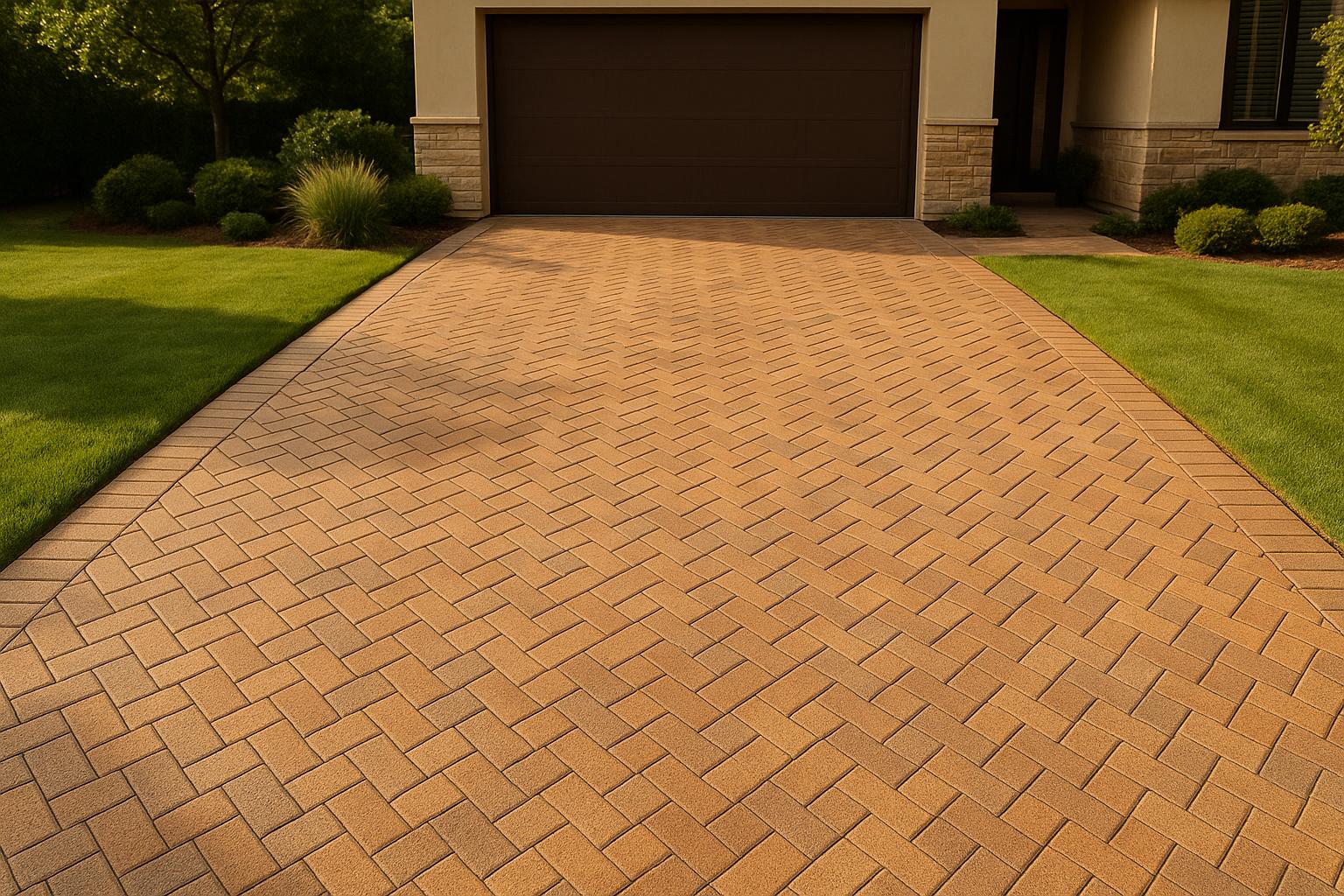
The herringbone pattern is a top choice for driveways, thanks to its zigzag layout that combines eye-catching design with exceptional durability. This pattern can be installed at a 45-degree or 90-degree angle, with the 45-degree option being the more traditional and widely used.
What makes herringbone so practical? Its interlocking design evenly distributes weight across the surface, preventing individual pavers from shifting or settling under heavy loads. This makes it ideal for driveways with high traffic or sloped surfaces.
In areas with harsh winters, the herringbone pattern holds up well against freeze-thaw cycles. Its tight interlocking structure minimizes water pooling and reduces the risk of frost damage. Typically, installers use 80mm (3-inch) pavers over a 6-inch base for durability. In regions with heavy rainfall, thinner 60mm (2-3/8 inch) pavers may be paired with a thicker base for better drainage.
Next up, let’s explore the sleek and simple Running Bond pattern.
Running Bond Pattern
The running bond pattern is all about clean, timeless lines. Its staggered row layout, much like subway tiles, creates a neat and organized look. This pattern can visually stretch your driveway, making it appear longer and more spacious.
To achieve its classic brick-like style, each row is offset by half a paver length. For added stability and a more dramatic effect, many opt to lay the pattern width-wise across the driveway.
This versatile pattern works beautifully with a variety of home styles. Colonial homes in Bethesda enjoy its traditional charm, while modern homes in Columbia appreciate its minimalist design. It’s also one of the more affordable options, thanks to its straightforward installation, though maintaining perfectly straight lines requires precision.
Basketweave and Cobble-Style Patterns
Basketweave patterns bring a cozy, rustic feel to driveways. By alternating pairs of rectangular pavers, this pattern creates a woven effect that adds depth and symmetry. It’s a popular choice for cottage-style homes and historic properties in Maryland’s older neighborhoods.
To get the proper woven look, rectangular pavers must have a length exactly twice their width. Installation is relatively simple, making it a budget-friendly option. For extra flair, many homeowners add accent borders to create contrast.
Cobble-style patterns, on the other hand, channel the charm of old-world Europe. These patterns use irregular or tumbled pavers to mimic the look of historic cobblestone streets. They’re a natural fit for restoration projects and homes in historic areas like Baltimore and Ellicott City, where preserving period details is key.
While both patterns offer moderate strength, they’re best suited for residential driveways with light to moderate traffic. For areas with heavy vehicle use, sturdier patterns like herringbone may be a better choice.
For a more modern aesthetic, let’s dive into modular and random patterns.
Modular and Random Patterns
If you’re after a contemporary look, modular and random patterns are worth considering. These designs mix pavers of various sizes and shapes in non-repeating arrangements, creating a dynamic and sophisticated appearance.
These patterns often require detailed planning and sometimes rely on manufacturer-provided guides to ensure everything fits together seamlessly. While the installation process is more complex and can be pricier, the end result is a truly unique driveway that pairs perfectly with modern homes.
| Pattern | Visual Appeal | Structural Strength | Best Use Cases | Installation Complexity |
|---|---|---|---|---|
| Herringbone | Bold and dynamic | Highest | High-traffic, heavy loads | Moderate |
| Running Bond | Clean and classic | Good | Residential, modern styles | Easy |
| Basketweave | Rustic and charming | Moderate | Historic, low-traffic | Easy |
| Modular/Random | Contemporary and unique | Good | Custom, modern looks | High |
Pro Landscapes MD has installed countless herringbone-patterned driveways in historic areas like Baltimore and Ellicott City. These installations not only boost curb appeal but also stand up to Maryland’s unpredictable weather.
Choosing the right pattern comes down to balancing style with practicality. For high-traffic areas, herringbone or modular patterns are excellent choices. If aesthetics take priority, basketweave or cobble-style designs offer plenty of charm for less demanding applications.
Selecting Paver Material and Color
Once you’ve settled on a paver pattern, the next step is choosing the material and color to complete your driveway design. These decisions go beyond aesthetics – they influence curb appeal, durability, and upkeep. By pairing the right material and color with your chosen pattern, you can create a driveway that balances style and function.
Paver Material Comparison
When it comes to materials, there are several options to consider, each with its own benefits and price range.
Concrete pavers are a top pick for driveways. They’re versatile, offering a variety of shapes, colors, and finishes, and they’re relatively affordable at $8–$15 per square foot installed. Concrete pavers are well-suited for Maryland’s freeze-thaw cycles but may require occasional sealing to prevent fading and staining.
Clay brick pavers bring a classic, timeless look. They resist fading better than concrete and are highly durable, making them a great fit for historic homes in areas like Baltimore or Ellicott City. However, they are pricier, ranging from $10–$20 per square foot, and come in fewer color choices.
For those seeking a high-end option, natural stone pavers like granite, limestone, or bluestone offer unmatched elegance and durability. These pavers cost between $15–$30 per square foot and may require regular sealing to maintain their appearance, but their aesthetic appeal is hard to beat.
Permeable pavers are an eco-friendly choice, designed to let water pass through and reduce runoff. They’re slightly more expensive than standard concrete pavers, costing $10–$18 per square foot, but they’re ideal for areas with drainage concerns and may help meet local environmental guidelines.
| Material Type | Cost Per Sq Ft | Maintenance Level | Best For |
|---|---|---|---|
| Concrete | $8–$15 | Low | Budget-friendly, flexible designs |
| Clay Brick | $10–$20 | Low | Traditional styles, historic homes |
| Natural Stone | $15–$30 | Moderate | High-end appeal, luxury projects |
| Permeable | $10–$18 | Moderate | Drainage solutions, eco-conscious designs |
Pro Landscapes MD often recommends materials from Techo-Bloc, Allen Block, and El Dorado Stone. These brands are known for their durability and ability to withstand Maryland’s unpredictable weather while maintaining their look over time.
Color Selection and Design Considerations
The color of your pavers plays a key role in defining your driveway’s look and practicality. The right color not only enhances your home’s exterior but also affects maintenance and usability.
Light-colored pavers are great for reflecting heat, which keeps surfaces cooler during Maryland’s humid summers. However, they’re more likely to show stains, oil spots, and tire marks, which means more frequent cleaning might be necessary.
Dark-colored pavers, on the other hand, are better at hiding oil stains and everyday wear. But they absorb more heat, which can make them uncomfortably warm in the summer. They also tend to highlight dust, salt residue from winter de-icing, and lighter debris.
A balanced choice? Mid-tone and multi-blend pavers in shades like gray, tan, and earth tones. These colors are practical, as they hide dirt and tire marks well, while also adding depth and character to your driveway. Blended colors with multiple shades are especially effective at masking wear and tear.
When selecting colors, think about how they’ll complement your home’s exterior. For example:
- Gray and slate pavers work beautifully with modern homes.
- Warm reds and browns enhance traditional or brick exteriors.
- Gray and charcoal tones pair perfectly with stone facades, like those commonly found in Bethesda.
Additionally, textured finishes can improve traction in wet conditions, adding a functional benefit to your design.
Pro Landscapes MD has successfully used strategic color choices in projects across the region. In Ellicott City, they’ve paired gray and charcoal pavers with stone facades for a polished look. In areas prone to heavy rainfall, they’ve used earth-toned permeable pavers that blend seamlessly with natural surroundings.
Maryland’s climate also plays a role in color selection. Earthy tones, grays, and blended shades are popular because they naturally hide stains from rain, snow, and de-icing salts – common challenges during the region’s winters.
sbb-itb-843f8be
Driveway Paver Installation Best Practices
Getting your driveway pavers installed correctly is key to ensuring they last. While picking the right materials and colors is important, the way those pavers are installed is what determines whether they’ll endure Maryland’s tough climate. A proper installation not only safeguards your investment but also ensures your paver pattern performs as intended.
Site Preparation and Drainage
The foundation of a durable paver driveway starts with meticulous site preparation. This is often where installations fail, especially in Maryland, where heavy rains and freeze-thaw cycles can wreak havoc on a poorly prepared base.
For Maryland’s clay-heavy soils, a 12-inch compacted aggregate base is recommended to prevent settling and shifting. This depth is much greater than the 4-6 inches common in drier areas, but it’s necessary to avoid the expensive problems caused by an insufficient base[1].
The process begins by excavating the site to the required depth, removing all existing materials. Installing a geotextile fabric between the soil and the aggregate base is critical. This fabric acts as a barrier, preventing the soil from mixing with the base over time[1]. Without it, the base can become contaminated, weakening the entire structure.
Edge restraints are another essential component. These restraints keep the pavers in place and prevent lateral movement[1]. Without them, even the most visually appealing patterns, like a herringbone design, can shift and lose their shape.
Effective water management is just as important. Features like French drains, dry riverbeds, and proper grading help prevent base erosion, which is especially crucial in Maryland’s freeze-thaw conditions and heavy rainfall[1].
A great example of these best practices in action is a recent project by Pro Landscapes MD in Ellicott City. They installed a herringbone-patterned paver driveway with a 12-inch compacted base and integrated French drains. The result? A driveway that not only looked great but also held up against Maryland’s challenging weather, leaving the homeowner thrilled with the results.
These preparation steps naturally lead to the question: should you hire a professional or go the DIY route?
Professional Installation vs. DIY
When it comes to driveway paver installation, deciding between hiring professionals and doing it yourself depends on the complexity of the job, your expertise, and your long-term goals. While a DIY approach might seem cheaper upfront, the technical demands of proper installation often exceed what most homeowners can handle.
Professional installation offers several advantages. Experts ensure the base is prepared correctly, drainage is effective, and all work complies with local codes. Companies like Pro Landscapes MD bring years of experience and specialized knowledge in landscape design, which is invaluable for Maryland’s unique climate challenges. They also work with trusted suppliers like Techo-Bloc, Allen Block, and El Dorado Stone, guaranteeing that the materials used are built to withstand local weather.
Another benefit of hiring professionals is the peace of mind that comes with warranties and customer satisfaction guarantees. As one Pro Landscapes MD client shared:
"They came through with everything promised. I love the stacked stones we placed around our trees and flowerbed."
On the other hand, DIY installation might be suitable for smaller driveways or for homeowners with significant construction experience. However, it comes with risks. Achieving the right base depth, ensuring proper drainage, aligning pavers correctly, and meeting local codes all require specialized skills and equipment. Mistakes in any of these areas can lead to costly repairs down the line[1][2].
| Installation Method | Pros | Cons |
|---|---|---|
| Professional | Proper base prep, drainage expertise, warranties, code compliance | Higher upfront cost |
| DIY | Lower initial cost, personal satisfaction | Risk of errors, potential code violations, shorter lifespan |
In Maryland, professional installation typically costs between $10-$20 per square foot[1]. While this may seem like a significant investment, it includes the expertise needed to handle local challenges and ensure compliance with regulations.
For those considering DIY, it’s crucial to be honest about your skills, time, and the complexity of the project. Simple patterns like running bond on well-draining sites might be doable, but intricate designs or areas with drainage issues are best left to professionals.
Pro Landscapes MD provides comprehensive solutions, including French drains, berms and swales, and box and pipe drain systems, which are often beyond the scope of DIY efforts. Their full-service approach – from design to installation and even maintenance – ensures your driveway is built to last and delivers long-term value.
Driveway Paver Maintenance and Care
Keeping your paver driveway in top shape ensures it remains both beautiful and functional, even through Maryland’s unpredictable weather.
Regular Cleaning and Sealing
To maintain your driveway, start with regular cleaning. Sweep away debris and use a garden hose or a pressure washer with a mild detergent for deeper cleaning. If oil stains appear, treat them with a paver-safe degreaser. Avoid household cleaners like bleach or acidic solutions – they can discolor and weaken the pavers and joint sand[1][3].
Sealing your pavers every 2-3 years adds a protective layer against stains, UV fading, and water damage. This is especially valuable in Maryland, where freeze-thaw cycles can wreak havoc on unsealed surfaces. A good sealant not only preserves color vibrancy but also makes cleaning easier in the future[3].
To seal your pavers, first clean and dry the surface thoroughly. Then, apply a high-quality penetrating sealer. If you prefer professional help, sealing services typically range from $1.50 to $3.00 per square foot, which includes surface prep and long-lasting commercial-grade products[1].
Weed growth can be minimized by using polymeric sand in the joints. This special sand hardens when activated with water, forming a barrier that prevents weeds from taking root. For existing weeds, remove them manually or use non-toxic weed killers that won’t harm nearby plants.
Fixing Common Problems
Even with regular care, occasional issues may pop up that require attention.
Paver shifting and settling are frequent concerns, often caused by poor base preparation, heavy traffic, or drainage issues. When pavers shift, water can seep into the joints, leading to further damage. To fix minor shifting, remove the joint sand around the affected pavers, lift them out, and inspect the base. Add or level the base material if needed, then reinstall the pavers and refill the joints with fresh polymeric sand[1][3].
If a paver is damaged, replacing it is a straightforward process. Remove the joint sand, lift out the damaged piece, and clean the area underneath. Place a new paver that matches the existing pattern, ensuring it aligns perfectly. This method allows you to fix individual issues without disturbing the rest of the driveway[3].
For more extensive settling or recurring issues, the root cause might be structural – like poor drainage or inadequate base depth. In such cases, professional evaluation is necessary. Companies like Pro Landscapes MD specialize in diagnosing and fixing underlying problems, ensuring repairs address the cause, not just the symptoms.
Preventive care can help you stay ahead of costly repairs. After heavy rains or freeze-thaw cycles, inspect your driveway for standing water, uneven surfaces, or loose pavers. Catching these early can save you significant time and money.
Seasonal Care for Maryland’s Climate
Maryland’s seasonal changes require an adaptable maintenance plan. Freeze-thaw cycles, in particular, can cause pavers to heave, pushing them out of alignment. Preparing for winter and inspecting your driveway in spring are key to long-term durability.
Winter maintenance starts with proper snow removal. Use a plastic shovel to avoid scratching the surface, and clear snow promptly to prevent ice buildup that can stress the pavers[3].
When it comes to de-icing, choose products carefully. Standard rock salt can harm both pavers and joint sand over time. Instead, opt for calcium magnesium acetate, which melts ice effectively without causing damage. Sand is another safe option for improving traction. Avoid ammonium-based de-icers entirely, as they can severely damage paver surfaces and structures[3].
Spring inspections are crucial for spotting winter damage. Look for heaved pavers, widened joints, or pooling water. Address any drainage issues immediately, as standing water accelerates deterioration and compromises the base structure.
With heavy rainfall becoming more common in Maryland, stormwater management is increasingly important. Proper grading ensures water flows away from your driveway rather than pooling on the surface. Pro Landscapes MD offers solutions like French drains and regrading to protect your investment and manage water effectively[1][3].
| Maintenance Task | DIY Approach | Professional Service |
|---|---|---|
| Regular Cleaning | Basic tools, low cost | Power washing, stain removal, $1.50-$3.00/sq ft |
| Sealing | Store-bought sealant | Commercial-grade sealant, expert application |
| Minor Repairs | Re-leveling, sand replacement | Full base assessment, structural evaluation |
| Drainage Issues | Surface fixes | Comprehensive water management systems |
Professional maintenance services provide expertise that goes beyond what most homeowners can manage. Companies like Pro Landscapes MD understand Maryland’s unique soil conditions, weather patterns, and building standards. Their approach handles not just surface-level fixes but also underlying structural issues, ensuring your driveway lasts longer.
Investing in professional assessments can extend your driveway’s lifespan by up to 30%, saving you money in the long run. Addressing potential problems early is far more cost-effective than waiting for major repairs, especially in Maryland’s challenging climate[1].
Conclusion: Creating the Perfect Driveway Design
Designing a driveway that’s both durable and visually appealing comes down to combining the right pattern, material, and professional installation. The pattern you choose isn’t just about looks – it plays a big role in how well your driveway holds up over time. For instance, the herringbone pattern stands out for its ability to interlock tightly, distribute weight evenly, and prevent pavers from shifting under heavy loads. Plus, it works beautifully with both traditional and modern home designs.
The materials you select are just as important. Concrete pavers offer strength and flexibility in design, while brick pavers bring a classic, timeless look with dependable performance. High-quality materials lay the foundation for a driveway that can handle Maryland’s unique challenges, from tough soils to unpredictable weather.
Speaking of Maryland, its climate and terrain make professional installation a must. Pro Landscapes MD brings the local expertise needed to ensure your driveway is built to last. Their process includes everything from proper site preparation to custom drainage solutions and pattern designs that suit the region’s conditions. They don’t just install driveways – they create cohesive designs that tie seamlessly into your overall landscape. By carefully selecting colors, patterns, and materials, they help your driveway become a standout feature that boosts curb appeal and property value.
Studies back up the benefits of professional installation. Driveways installed by experts tend to last longer and require fewer repairs than DIY efforts. For example, herringbone patterns can improve load distribution by up to 30% compared to simpler layouts, reducing the likelihood of shifting or cracking over time [1][4]. This means less maintenance, lower costs, and a driveway that stays in great shape for years.
Investing in a professionally designed and installed driveway is worth it. It pays off with reduced upkeep, long-lasting durability, and increased property value. With Pro Landscapes MD’s experience in eco-friendly paver options and their attention to drainage, Maryland homeowners can enjoy driveways that look great and stand up to decades of seasonal wear and tear.
"Our durable, stylish paver driveways enhance curb appeal and ensure lasting performance."
- Pro Landscapes MD
A well-designed driveway isn’t just an entrance – it’s a blend of beauty and engineering that welcomes you home and holds its own against Maryland’s tough climate for years to come.
FAQs
What should I consider when selecting a paver pattern for my driveway?
When choosing a paver pattern for your driveway, it’s important to match it with your home’s overall style, the driveway’s dimensions, and the strength of the materials. The right design not only boosts curb appeal but also blends seamlessly with your property’s look while ensuring durability.
Think about how the pattern fits with your home’s architecture, complements the surrounding landscaping, and withstands the daily wear and tear from vehicles. A professional installation can elevate the final look and provide a sturdy, long-lasting finish.
How do different paver materials impact the durability and upkeep of driveways in Maryland’s weather conditions?
The type of paver material you choose for your driveway plays a big part in how well it stands up to Maryland’s weather – think hot, sticky summers and icy, snowy winters. Concrete pavers are a go-to option because they’re tough and resist cracking. However, you might need to seal them to keep stains at bay. If you’re after a timeless look, brick pavers are a solid pick. They’re durable but may need occasional leveling since they can shift over time. For a more natural and striking appearance, natural stone pavers like flagstone are a great choice. They’re incredibly sturdy but tend to be pricier and might need extra care to handle weather-related wear.
Keeping your driveway in good shape means staying on top of maintenance. Regular cleaning, sealing, and fixing any drainage issues are key – especially in areas where freezing and thawing cycles are common.
Why should I hire a professional to install driveway pavers instead of doing it myself?
Hiring a professional to install driveway pavers is a smart choice if you want a job done right and built to last. Experts know how to properly handle critical aspects like leveling, drainage, and material selection – key factors in avoiding problems like uneven surfaces, water pooling, or early wear and tear.
In Maryland, where the weather can be unpredictable, professional installers bring local knowledge to the table. They understand the area’s soil types and climate, ensuring your driveway can withstand the elements while looking great. Plus, their attention to detail adds to your home’s curb appeal, boosting both its value and functionality.
Chat with Us