









- bhavya gada
- No Comments
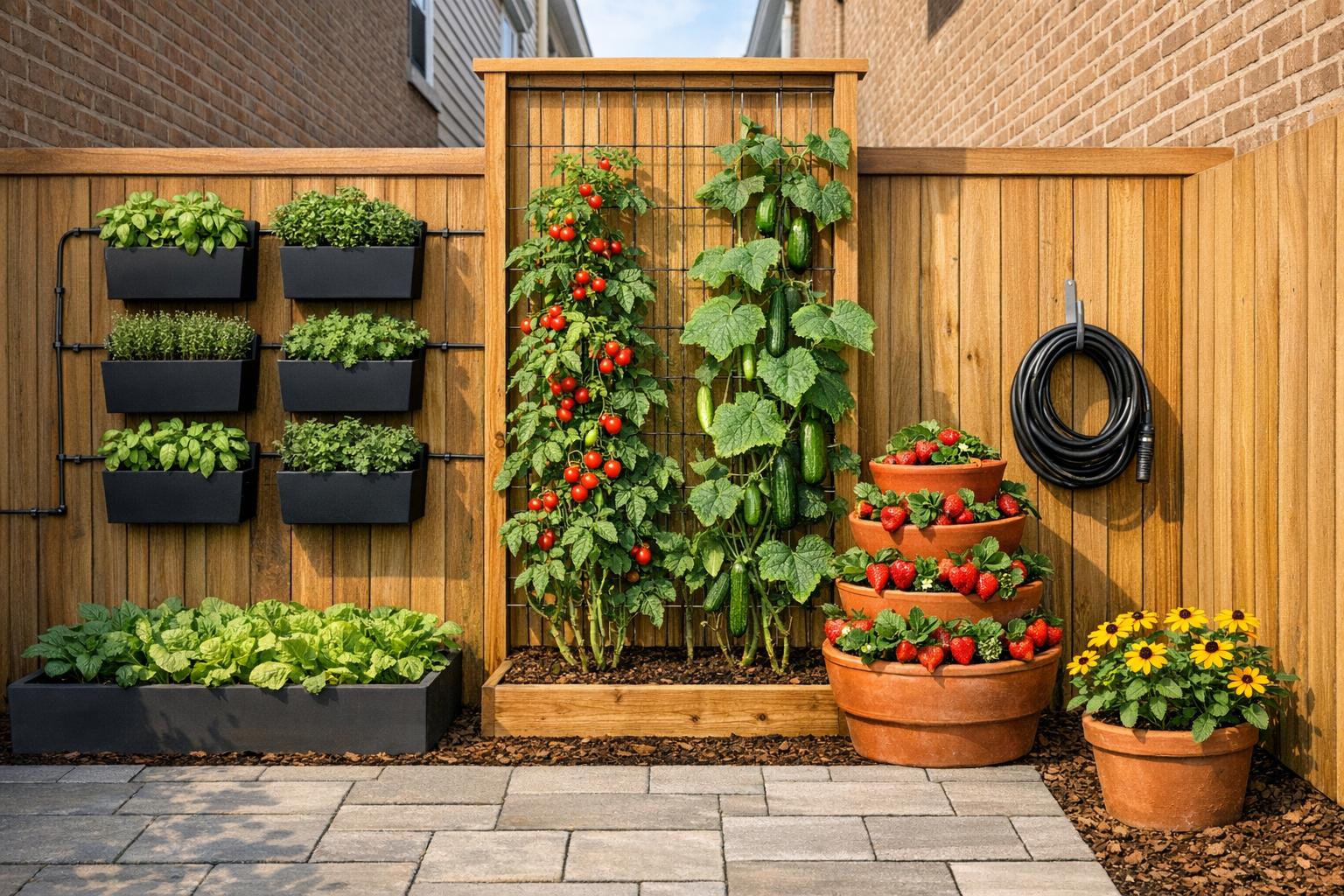
Vertical gardening is perfect for maximizing space in small yards by growing plants upward on structures like trellises, wall planters, or stacked containers. This method is especially effective in Maryland’s climate, where warm summers and moderate winters support a variety of climbing vegetables, fruits, and ornamental plants. Key benefits include increased planting capacity, easier maintenance, and improved yard aesthetics.
Quick Takeaways:
- Why it works: Plants grow vertically, optimizing limited space.
- Best plants for Maryland: Tomatoes, cucumbers, pole beans, strawberries, clematis, and climbing roses.
- Structures to use: Trellises, wall-mounted planters, A-frames, and towers.
- Climate tips: Choose mildew-resistant varieties for humid summers and hardy materials for freeze-thaw winters.
- Care essentials: Use lightweight soil, install drip irrigation, and inspect structures annually.
By incorporating vertical gardening, even small yards can become productive and visually appealing spaces.
⬆️ 7 BEST Vertical Gardening Plants for Small Yards & Narrow Spaces!
sbb-itb-843f8be
Planning Your Vertical Garden
Vertical Garden Structures: Best Plants & Key Considerations
Assessing Your Yard
Start by observing your yard’s sunlight patterns at 9 a.m., noon, and 3 p.m. This helps you find the best spots for your vertical garden. Most vegetables thrive with 6+ hours of direct sunlight, while herbs and shade-tolerant ornamentals can manage with 3–5 hours. After rainfall, check for areas where water pools for over 24 hours – these spots aren’t suitable for heavy vertical structures. Also, make sure a hose bib is within 25–50 feet of your garden, since vertical gardens tend to dry out faster than traditional beds. Lastly, measure the space you plan to use and leave 24–36 inches of clearance for easy access during maintenance.
Choosing Vertical Structures
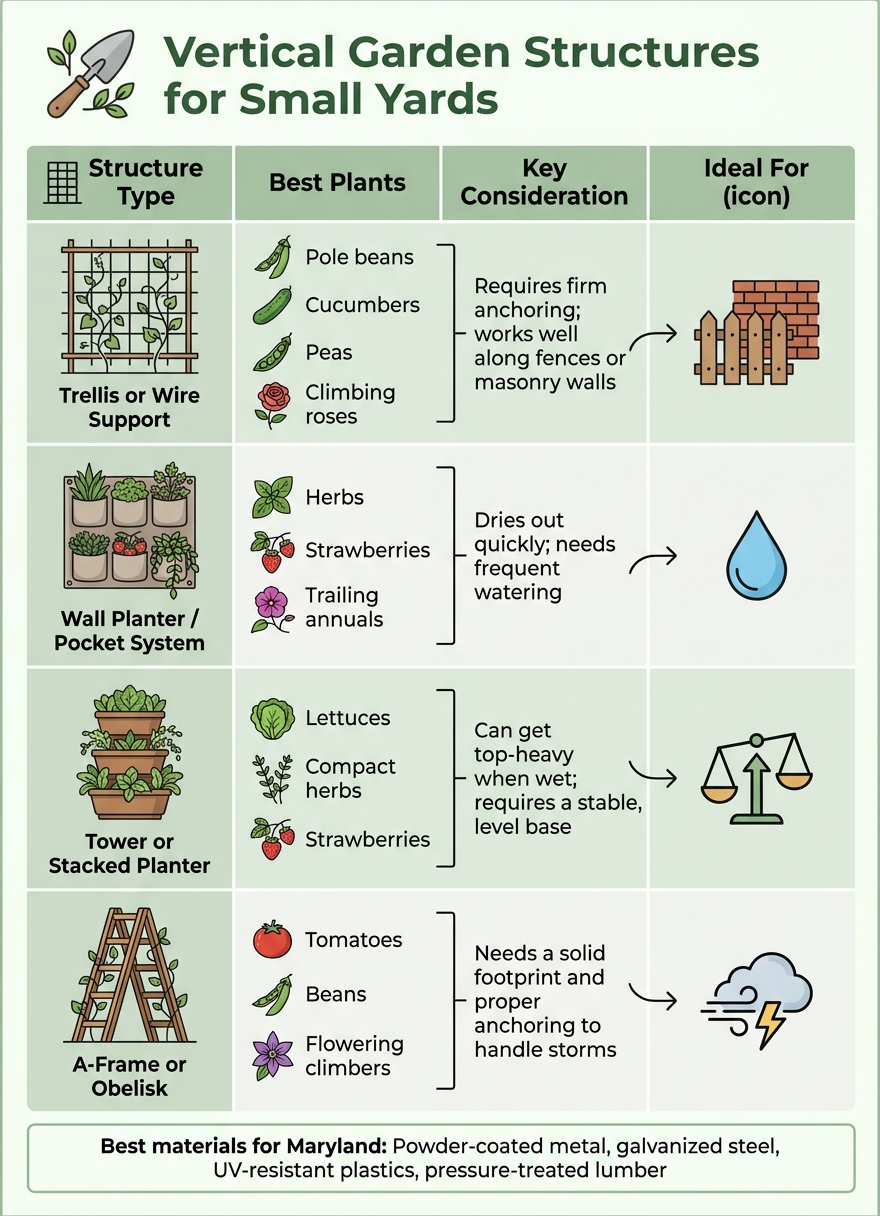
Pick vertical structures that fit your yard layout and the plants you want to grow. Here’s a quick comparison of popular options:
| Structure | Best Plants | Key Consideration |
|---|---|---|
| Trellis or wire support | Pole beans, cucumbers, peas, climbing roses | Requires firm anchoring; works well along fences or masonry walls |
| Wall planter / pocket system | Herbs, strawberries, trailing annuals | Dries out quickly; needs frequent watering |
| Tower or stacked planter | Lettuces, compact herbs, strawberries | Can get top-heavy when wet; requires a stable, level base |
| A-frame or obelisk | Tomatoes, beans, flowering climbers | Needs a solid footprint and proper anchoring to handle storms |
For Maryland’s humid summers and freeze-thaw winters, materials like powder-coated metal, galvanized steel, and UV-resistant plastics are your best bet for durability. If you prefer wood, go with pressure-treated lumber rated for outdoor use, and inspect it regularly for signs of rot or warping.
Once you’ve chosen your structure, think about how it fits into your yard’s overall design.
Pairing Vertical Gardening with Hardscaping
To create a cohesive outdoor space, integrate your vertical garden with existing hardscaping features. Vertical gardens look more intentional and functional when paired with elements like patios, retaining walls, or garden walkways. For example, a flagstone or paver patio provides a stable base for towers or freestanding frames, while a retaining wall or garden wall can serve as a natural backdrop for wall-mounted planters or climbing vines. A trellis placed along a walkway not only adds greenery but also keeps paths clear and inviting.
Best Plants for Vertical Gardening in Maryland
Edible Plants: Vegetables and Fruits
Maryland’s warm summers (zones 6b–7b) create the perfect environment for growing climbing edible plants. Indeterminate tomatoes like ‘Sungold‘ and ‘Sweet 100‘ thrive in these conditions. These varieties grow vigorously on cages or string supports and can be kept in check with regular pruning. Space them 18–24 inches apart, and ensure they receive 6–8 hours of sunlight daily. For cucumbers, vining types like ‘Marketmore‘ are a great choice since they offer better airflow and resist disease effectively.
Pole beans, such as ‘Kentucky Wonder,’ naturally climb netting or teepees with minimal effort and provide continuous yields along vertical supports. For an early-season crop, peas – including sugar snap and snow peas – are ideal. Plant them in March or early April, a few weeks before the last frost, and they’ll climb wire or netting on their own. For something sweet, everbearing strawberries like ‘Albion‘ or ‘Seascape’ work wonderfully in towers or wall pockets, producing about 0.5–1 pound of fruit per plant each season.
Now, let’s look at ornamental options that can bring color and privacy to your garden.
Ornamental Plants for Small Yards
If you’re looking to enhance your yard with ornamental plants, vertical gardens can be a fantastic solution. Clematis is a dependable option, thriving in zones 4–8. These plants bloom from late spring through summer and are stunning on trellises, fence posts, or even mailbox supports. Climbing roses, especially disease-resistant and repeat-blooming varieties suited for zones 6–8, can add both fragrance and vibrant color to your garden when trained along fences or arches.
For fast-growing coverage and added wildlife appeal, consider trumpet vine (Campsis radicans), a native plant that attracts hummingbirds and blooms prolifically in summer. Another option is Virginia creeper, which provides a striking red color in fall. Both are vigorous growers, so they’ll need sturdy structures and regular trimming to prevent them from encroaching on gutters or rooflines. However, steer clear of plants like wisteria and non-native English ivy in small spaces – their aggressive growth can overwhelm light structures and cause damage over time.
Herbs and Compact Plants
Herbs and compact plants are perfect for vertical gardening, offering versatility and low maintenance. Basil, thyme, oregano, chives, parsley, cilantro, and mint are excellent choices, as they have shallow roots and adapt well to vertical planters. Mediterranean herbs like thyme, oregano, and sage thrive in well-drained soil and handle the quick drying that can occur in upper pockets – an advantage during Maryland’s humid summers. Mint, which can be invasive in the ground, is easily contained in wall pockets or tower slots, making vertical gardening an ideal way to grow it.
For cooler months, you can fill empty pockets with leaf lettuces, spinach, or baby bok choy. These crops do well with 4–6 hours of sunlight, making them suitable for shadier spots, and they can be planted as early as late March for a spring harvest. You can also replant them in late August for a productive fall crop. These plant choices make the most of vertical space, keeping your small yard both productive and visually appealing.
Building and Maintaining Your Vertical Garden
Installing Vertical Structures
Getting your vertical garden’s structure right from the start can save you a lot of trouble later. For trellises mounted on fences or walls, start by locating studs or sturdy fence posts. Use exterior-rated lag bolts (2–3 inches long) and galvanized or stainless-steel brackets to secure the frame. These materials are built to withstand Maryland’s humid climate and the effects of road salt, especially in urban areas like Baltimore and Silver Spring.
If you’re working with heavy climbers like tomatoes, cucumbers, or climbing roses, you’ll need something more robust. Set 4×4 posts at least 18–24 inches deep in concrete footings that are 8–12 inches wide. This depth is crucial to prevent the freeze-thaw cycles common in Maryland from pushing the posts out of the ground over time. Adding 2–4 inches of gravel at the base of each post hole improves drainage and helps extend the life of the structure.
Wall planters require some extra planning. Leave a ¼–½ inch gap between the planter and the wall by using nylon washers or treated wood strips as spacers. This small gap lets air circulate, reducing the risk of moisture buildup that can lead to rot or insect damage. If you’re adding vertical structures to existing hardscapes like retaining walls or patios, consider consulting professionals like Pro Landscapes MD to integrate features like sleeves, anchors, or trellis panels for added stability.
Once your structures are secure, the next step is setting up a reliable watering system.
Watering and Soil Care
Proper watering and soil care are essential for keeping your vertical garden thriving, especially during Maryland’s hot summer months. Vertical gardens lose moisture faster than traditional garden beds, so drip irrigation on a timer is a smart choice. Use a system with a ½-inch main line and ¼-inch emitters. For vegetables, set emitters to deliver 0.5–1 gallon per hour, and for herbs, aim for 0.25–0.5 gallons per hour. Run the system daily during peak summer, adjusting based on soil moisture levels, as upper pockets exposed to wind tend to dry out more quickly than lower ones.
When it comes to soil, avoid using garden soil or topsoil in vertical planters – they’re too heavy, retain too much water, and can strain your mounting hardware. Instead, opt for a quality potting mix that includes pine bark, perlite, and coconut coir to keep roots healthy and prevent compaction. For taller tower planters, use a coarser mix with extra bark and perlite at the bottom for better drainage, and a slightly more moisture-retentive blend near the top. Add 10–20% compost to wall planters to improve nutrient retention without making the mix too dense.
For fertilizing, mix a slow-release granular fertilizer like 10-10-10 or 14-14-14 into the potting medium when planting. For edibles like tomatoes and cucumbers, supplement every 2–3 weeks with a water-soluble fertilizer during the growing season. Switch to a high-potassium formula once the plants start flowering to support fruit production.
Getting these basics right ensures your garden is set up for success, making seasonal maintenance much easier.
Seasonal Maintenance
Plan a thorough inspection of your garden once a year, ideally in late winter before plants start leafing out. Check all structural elements and irrigation components to catch and fix potential problems early. Look for loose screws, cracked boards, rusted brackets, and signs of movement at the base of posts. Tighten or replace hardware as needed – trellises loaded with summer growth can fail quickly during one of Maryland’s intense thunderstorms.
Prune your plants 2–3 times a year to remove weak, crossing, or inward-facing stems. This improves airflow and helps reduce the risk of mildew. Use soft ties or Velcro tape in a figure-eight pattern to support vines without constricting them. Remember to adjust the ties as the stems grow thicker to avoid girdling. In the fall, clear out spent annuals and add a thin layer of compost to replenish nutrients lost during the growing season.
If your vertical garden includes complex systems like stonework, decks, or retaining walls, consider scheduling professional inspections. Experts like Pro Landscapes MD can spot subtle shifts or settlement issues that might otherwise go unnoticed, helping to keep your garden stable and healthy year after year.
Conclusion and Final Tips
Key Benefits of Vertical Gardening
Vertical gardening solves a big issue for small Maryland yards: lack of space. By using vertical structures, you can grow more plants without needing extra ground area. For example, a 6–8 ft trellis can hold several edible plants, instantly increasing your growing capacity. Plus, layering greenery with climbing vines and mixed-height planters can transform a basic 10 ft × 10 ft patio into a thoughtfully designed outdoor space. Adding dense foliage along south or west-facing walls even provides shade, making those humid Maryland summer evenings much more enjoyable.
There’s also a practical advantage. When plants are raised to eye level, everyday tasks like harvesting herbs or checking for pests become much easier. This is particularly helpful for anyone with limited mobility, as it reduces the need for bending or crouching.
Vertical gardening not only boosts your planting potential but also works well with Maryland’s specific climate needs. If the idea sounds appealing but feels overwhelming to execute, seeking expert advice can simplify the process.
When to Hire a Professional for Your Vertical Garden
While simple vertical garden setups – like a wall planter for herbs or a cucumber trellis – are great DIY projects, some situations call for professional expertise. This is especially true if your yard has water pooling after rain, noticeable slopes, or drainage issues near your home’s foundation. These problems need attention before adding heavy planters or structures, as they could worsen water-related challenges.
For more complex projects, the stakes are higher, and mistakes can be costly. Companies like Pro Landscapes MD specialize in resolving these issues across central Maryland. From installing French drains and improving yard grading to creating custom hardscaping and landscape designs, they ensure your vertical garden is built on a solid foundation. With their help, your garden can thrive through all four of Maryland’s seasons.
FAQs
How do I keep a vertical garden from tipping over in storms?
To ensure your vertical garden stays secure during storms, make sure it’s anchored firmly to a solid structure such as a fence, wall, or a specially designed support frame. If you’re using raised beds or planters, they should be built or reinforced to withstand strong winds. For expert help, Pro Landscapes MD offers professional landscaping services, including designing and building sturdy garden beds and structures that can handle local weather conditions while adding stability and style to your outdoor space.
What’s the easiest drip-irrigation setup for wall planters and towers?
The easiest way to water vertical wall planters and towers is by using a smart drip-irrigation system. These systems provide steady moisture directly to the plant roots, making them perfect for compact vertical gardens. Automating the watering process not only cuts down on maintenance but also minimizes water waste while keeping your plants thriving. If you’re looking for a customized solution, the expert horticulturists at Pro Landscapes MD can design and install a system tailored to your space.
How can I prevent mildew on climbing vegetables in humid Maryland summers?
Maryland’s humid summers can be tough on climbing vegetables, but you can keep them healthy by focusing on airflow and moisture control. One effective method is vertical gardening, which keeps plant foliage off the ground. This improves air circulation and lowers humidity around the plants.
Another helpful tip? Use raised garden beds. They promote better soil drainage, which is crucial for preventing excess moisture that can lead to mildew.
For more personalized advice on garden planning, plant selection, and upkeep, the horticulturists at Pro Landscapes MD are a great resource. They can help ensure your climbing vegetables thrive all season long.
Chat with Us