









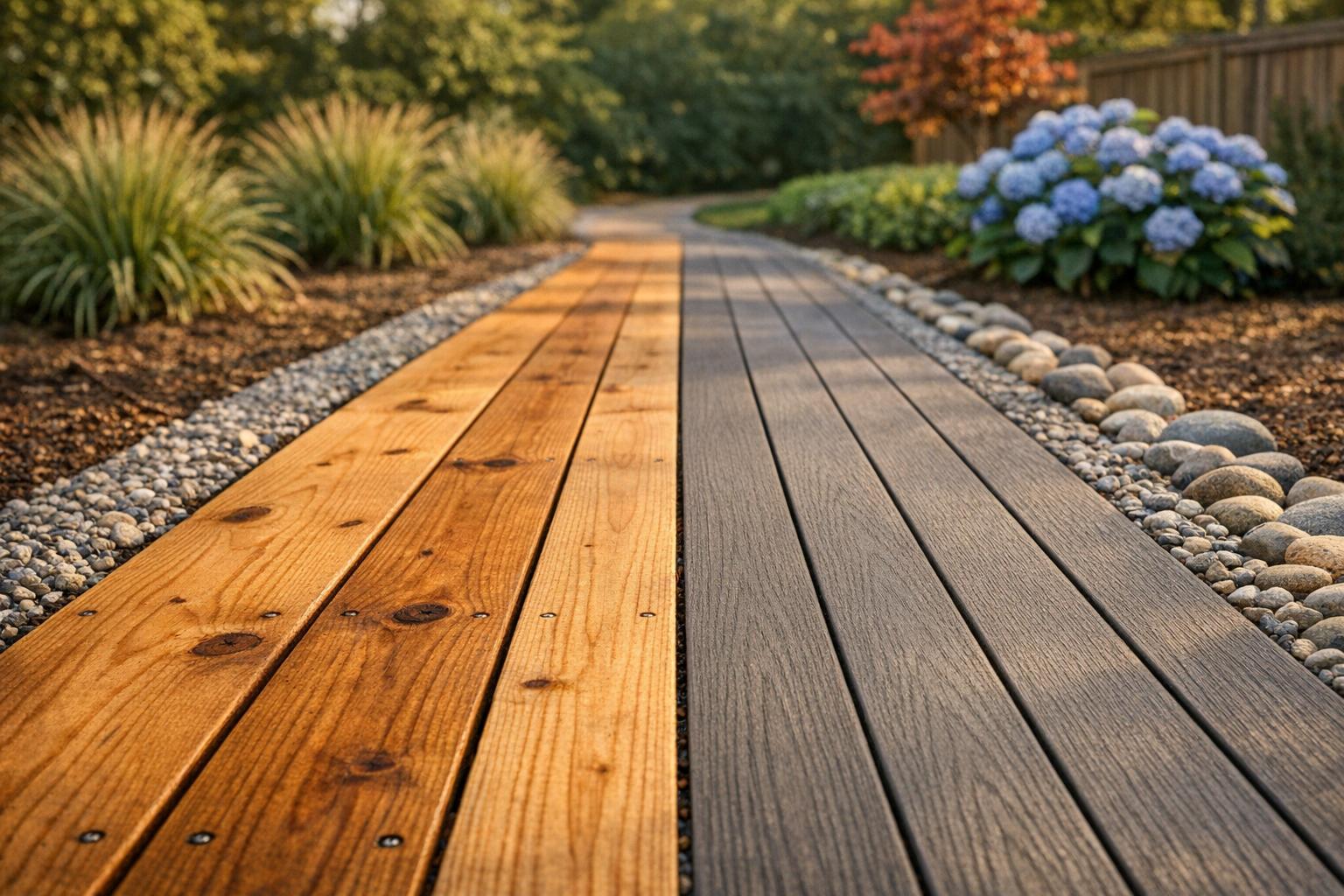
- bhavya gada
- No Comments
If you’re planning a pathway for your yard, two popular options stand out: wood and composite. Both materials have their pros and cons, and the right choice depends on your budget, maintenance preferences, and Maryland’s challenging climate. Here’s what you need to know:
- Wood: Lower upfront cost, natural look, but requires regular upkeep like sealing or staining. Lifespan ranges from 10–25 years depending on the wood type.
- Composite: Higher initial cost, durable, and low-maintenance. Designed to resist rot, insects, and warping, making it ideal for Maryland’s humid summers and freeze-thaw winters. Lifespan is 25–35 years.
Quick Comparison
| Feature | Wood | Composite |
|---|---|---|
| Upfront Cost | Lower ($15–$25/sq. ft.) | Higher ($25–$45/sq. ft.) |
| Maintenance | Regular sealing/staining | Occasional cleaning |
| Durability | Prone to rot and warping | Resistant to rot and insects |
| Lifespan | 10–25 years | 25–35 years |
| Aesthetic Options | Natural wood tones | Consistent colors, wood-like |
For Maryland’s wet and humid conditions, composite pathways are often the better long-term investment. However, wooden pathways can work well if you’re prepared for regular maintenance and prefer a natural aesthetic. Consider factors like soil drainage, pathway location, and how much upkeep you’re willing to handle before deciding.
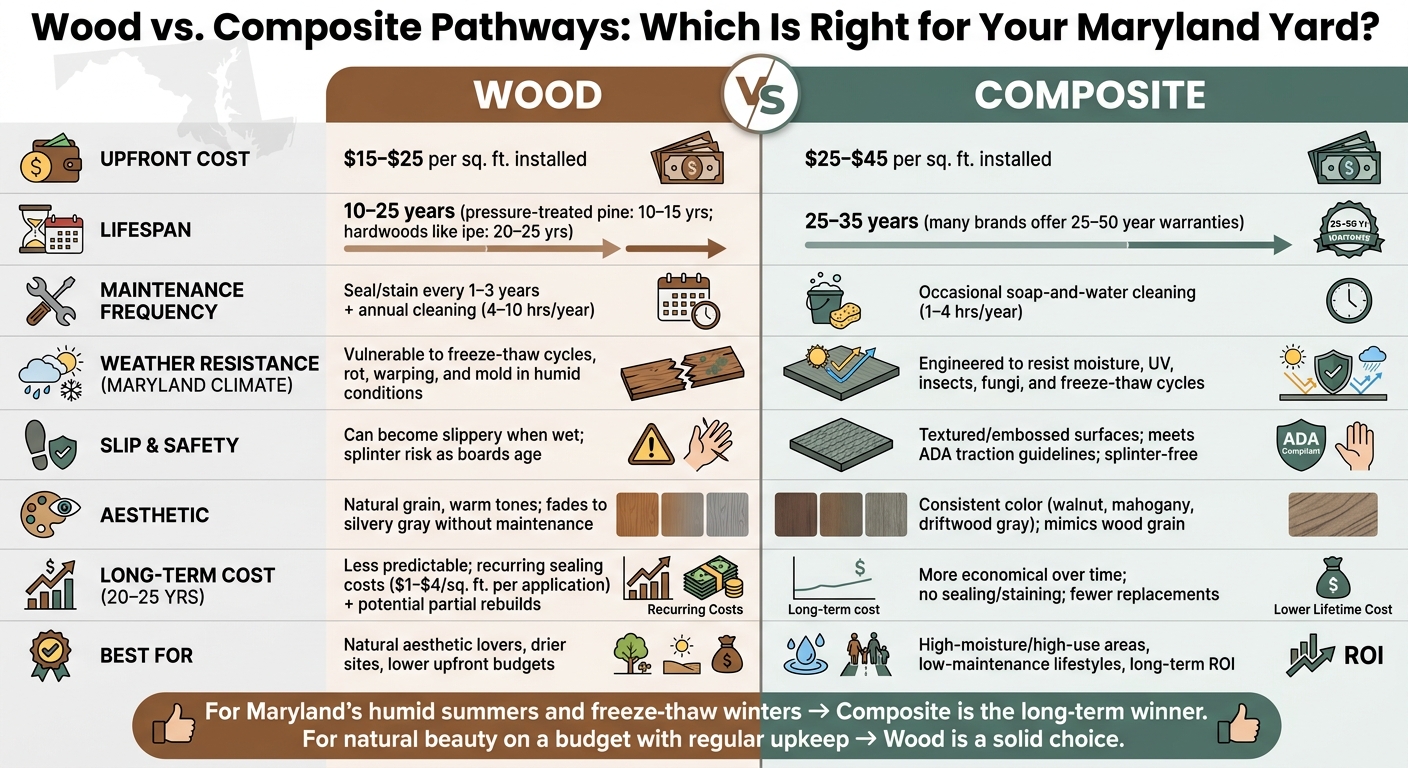
Wood vs. Composite Pathways: Cost, Lifespan & Maintenance Compared
Wood vs. Composite Decking: Which is Better for You?
sbb-itb-843f8be
What to Consider Before Choosing a Pathway Material
When selecting a material for your pathway, it’s crucial to think beyond aesthetics. Consider how durable it will be in your yard, how much upkeep it requires, and whether it aligns with your long-term budget. These factors will ensure your choice is both practical and cost-effective.
How Maryland’s Climate Affects Pathway Materials
Maryland’s climate isn’t exactly easy on pathway materials. The state’s winters bring freeze–thaw cycles that can cause wood to warp, while the hot and humid summers can dry out unprotected wood, leading to fading or even mold and mildew in shaded, damp areas.
"Go for materials that can handle the DC heat and Baltimore humidity. Composite decking and stone are solid choices." – Pro Landscapes MD [1]
Composite materials are better equipped to handle these challenges. Many include moisture-resistant cores and UV inhibitors, which help them withstand Maryland’s seasonal extremes. Wood, while an option, needs regular care to prevent damage – especially in shaded or low-lying spots where moisture lingers. To make the best decision, assess your yard’s specific environmental conditions.
Site Conditions and Usability Needs
Your yard’s soil and drainage patterns play a big role in determining the right pathway material. For example, clay-heavy soils, common in parts of central Maryland, expand and contract with changes in moisture, which can shift or damage pathway supports. A stable gravel base and compacted subgrade are necessary to counteract these effects.
Drainage is another key factor. Poorly drained areas or spots prone to runoff can lead to rotting in natural wood and weaken the foundation of your path. If your yard has slopes or low-lying areas, you may need to address these issues – like adding a French drain or regrading the land – before starting your project. Composite materials are a better fit for damp, shaded areas since they resist rot, though they may still develop surface algae, requiring occasional cleaning.
Traction also matters. Smooth wood can become dangerously slippery when wet, especially under tree cover. Many composite boards are designed with textured or embossed surfaces, providing better grip – an important feature if the path will see heavy foot traffic or needs to accommodate strollers or mobility aids.
Upfront Costs and Long-Term Budget Planning
Budgeting for a pathway requires balancing initial costs with long-term maintenance. Wood is less expensive upfront but demands regular upkeep, such as cleaning, sanding, and sealing every 1–3 years. Over time, these recurring tasks, along with occasional board replacements, can add up.
In contrast, composite materials come with a higher initial price but require far less maintenance – usually just a quick soap-and-water cleaning a couple of times a year. Over a 10–20 year period, the reduced upkeep and fewer repairs often make composites the more economical choice. Here’s a quick comparison:
| Factor | Wood | Composite |
|---|---|---|
| Upfront cost | Lower | Higher |
| Maintenance frequency | Every 1–3 years (seal/stain) | Occasional cleaning only |
| Moisture resistance | Vulnerable without treatment | Engineered for damp conditions |
| Long-term budget predictability | Less predictable | More consistent over time |
| Best suited for | Natural look, drier sites | High-moisture, high-use areas |
For a more accurate estimate tailored to Maryland’s soil and drainage conditions, consult Pro Landscapes MD. They can evaluate your property and explain how factors like material choice, substructure needs, and design complexity influence overall project costs.
Wooden Pathway Options
Wood adds a natural, inviting touch to your yard. But in Maryland, where summers are humid, winters are cold, and rain is frequent, not all wood holds up equally well. Below, we’ll dive into wood types, design ideas, and maintenance tips to help your wooden pathway stand the test of time in this climate.
Common Wood Types for Pathways
Pressure-treated pine is a popular choice. It’s affordable, easy to find, and treated to resist rot, decay, and insect damage. Material costs range from $2–$4 per square foot, with installation typically costing $15–$25 per square foot. If your boards will touch or sit close to the ground, make sure to use ground-contact-rated lumber (UC4A or UC4B). Left untreated, it weathers to a pale gray, but many homeowners prefer to apply a semi-transparent stain for a consistent, warm look.
Cedar is another great option, prized for its reddish-brown tones and natural resistance to rot, thanks to its oils. Material costs are about $4–$7 per square foot, and installation can run $25–$35+ per square foot. However, cedar is softer than hardwoods, making it a better pick for low-traffic garden paths rather than busy walkways. To maintain its color, apply a clear UV-protective sealer every 1–3 years.
Tropical hardwoods, like ipe, cumaru, and teak, are premium options. Materials cost between $7–$15+ per square foot, with installation often reaching $30–$60+ per square foot. These woods are incredibly dense, giving them unmatched resistance to rot, insects, and freeze-thaw cycles. With proper care, they can last over 25 years. Keep in mind, their density requires pre-drilling and high-quality stainless steel or galvanized fasteners.
These cost ranges and durability factors can help you pick the right wood for Maryland’s challenging weather.
Design Styles and Installation Basics
After choosing your wood type, the next step is to decide on a design that fits your yard and serves your needs. Wooden pathways generally fall into three main styles:
- Boardwalk-style: Continuous boards on joists, perfect for uneven terrain or damp areas.
- Stepping-timber: Individual sleepers, ideal for informal, low-traffic garden paths.
- Timber-and-gravel: Wood edging frames compacted gravel, offering excellent drainage and a rustic look that pairs well with stone or pavers.
For installation, ensure boards have 1/8–1/4 inch gaps to allow for expansion and drainage. Lay them on a 3–4 inch compacted crushed stone base with a slight slope (1–2% grade) to direct water away from structures and minimize frost heave. Use corrosion-resistant fasteners like stainless steel or hot-dipped galvanized screws, which are essential in Maryland’s damp conditions.
How to Maintain a Wooden Pathway
Even with proper installation, regular maintenance is crucial to keep your pathway looking great and performing well. Here’s how to stay on top of it:
- Spring Cleaning: Use a mild detergent and a soft brush to clean the wood. Avoid pressure washing softer woods like cedar, as it can erode the fibers.
- Sealing and Staining: Apply a penetrating exterior stain or water-repellent sealer with UV protection every 1–3 years, depending on sun exposure and the specific product.
- Annual Inspections: Check for soft spots, raised fasteners, or signs of rot, especially in shaded areas or spots near downspouts and irrigation systems. Replacing a single damaged board early can save you from having to replace an entire section later.
With these tips, you can enjoy the natural beauty of a wooden pathway while ensuring it stands up to Maryland’s weather for years to come.
Composite Pathway Options
If keeping up with wood’s maintenance feels overwhelming, composite pathways might be the answer. Made from a mix of recycled wood fibers and plastic, often with a durable polymer cap, composite boards are designed to resist common issues like rot, insect damage, warping, and fading from UV exposure.
Why Composite Materials Work Well in Maryland
Maryland’s humid summers, wet winters, and freeze-thaw cycles can wreak havoc on traditional wood pathways. Composite materials, however, are built to handle these challenges. The plastic content makes them immune to fungi and termites, while many capped composite boards include UV stabilizers to maintain their color under the intense summer sun. Unlike stained wood, which requires reapplication every one to three years, composite pathways keep their look with minimal effort.
The longevity of composite materials is a major advantage. While pressure-treated wood often needs significant repairs or replacement after 10–15 years in Maryland’s damp climate, composite boards are rated to last 25–30+ years. Many top brands even offer 25- to 50-year limited warranties for fade and stain resistance. Although the upfront cost for composite materials – around $5–$10 per square foot for mid-range options – is higher than wood’s $3–$7 per square foot, the long-term savings are clear. With no need for sealing, staining, or frequent replacements, composite pathways often prove to be the more economical choice over 20 to 25 years.
"Weather-resistant materials: Let’s be real – nobody wants to replace their deck every few years. Go for materials that can handle the DC heat and Baltimore humidity. Composite decking and stone are solid choices." – Pro Landscapes MD [1]
Design and Color Options for Composite Pathways
Composite pathways aren’t just practical – they’re also versatile when it comes to design. These boards can be cut with standard carpentry tools, allowing for straight lines, curves, or even winding, serpentine paths. The direction of the boards can also enhance the design: running them perpendicular to the path adds traction and visual interest, while changing the direction at a landing can signal a transition to another space, like a patio or outdoor kitchen.
Color options are extensive, ranging from earthy browns and warm reds to cool grays. Multi-tonal boards can even mimic the appearance of natural wood grain. For Maryland homes, medium-to-dark browns like walnut or mahogany pair beautifully with brick colonial exteriors, while weathered grays and driftwood tones complement stone-front homes and bluestone patios. For pathways exposed to direct sunlight, lighter or mid-tone colors are a smart choice, as darker boards can absorb heat and become uncomfortable underfoot on hot days.
Surface texture is another important consideration. Embossed wood-grain or brushed finishes provide better grip than smooth surfaces, which is especially useful on slopes or near water features where rain or frost might make things slippery. These thoughtful design choices not only enhance the look of your pathway but also make it safer and easier to maintain.
Caring for a Composite Pathway
One of the biggest perks of composite pathways is their low-maintenance nature. Forget about staining, sealing, or painting – keeping them clean is as simple as rinsing or washing the surface once or twice a year with mild soap and a soft-bristle brush. This routine takes care of most dirt, pollen, and buildup, saving both time and money compared to the annual or biennial upkeep wood requires.
That said, shaded or damp areas need a bit of extra attention. Leaf litter or standing moisture can lead to surface mildew or tannin stains if ignored. To tackle these, use a manufacturer-approved composite cleaner instead of generic bleach, which can harm the protective cap. When clearing snow or debris, stick to plastic or rubber-edged tools to avoid scratching the surface, as metal blades can damage the board’s protective layer over time.
Wooden vs. Composite Pathways: A Side-by-Side Comparison
Choosing between wood and composite for your pathway comes down to factors like longevity, upkeep, and design. Let’s break down how these materials compare in the areas that matter most.
Durability and Weather Performance
In Maryland, where moisture and fluctuating weather are common, wood has its challenges. Pressure-treated pine typically lasts 10–15 years with regular maintenance, while hardwoods like ipe can stretch to 20–25 years if properly sealed. Composite, on the other hand, offers a lifespan of 25–35 years, often backed by long warranties.
The climate in Maryland highlights these differences. Composite boards handle freeze-thaw cycles better, resist insects, and fend off fungi due to their plastic content. Wood, however, can warp, splinter, or decay without consistent care.
| Category | Pressure-Treated Wood | Composite |
|---|---|---|
| Expected Lifespan | 10–15 years | 25–35 years |
| Rot/Decay Resistance | Moderate (requires sealing) | High |
| Insect Resistance | Low to moderate | High |
| Warping/Splintering Risk | Higher, especially when wet | Minimal |
| Slip Resistance | Variable; can be slick when wet | Consistent; textured finishes standard |
| Splinter Risk | Yes, as boards age | Effectively none |
Safety is another key factor. Wood can develop splinters and raised grain over time, which can be rough on bare feet and pets. Composite boards are often designed with textured, slip-resistant surfaces that meet ADA guidelines for traction, even in wet conditions. However, darker composite boards may absorb more heat, becoming uncomfortably warm during Maryland’s hot summer afternoons. For sun-exposed pathways, lighter or mid-tone colors are a better choice. Next, let’s see how these durability factors impact your wallet and maintenance efforts.
Cost and Maintenance Requirements
At first glance, wood is the cheaper option, costing $15–$25 per sq. ft. installed, compared to $25–$45 per sq. ft. for composite. For a 150-sq.-ft. pathway, that’s $3,000–$5,000 for wood versus $5,000–$9,000 for composite when professionally installed.
But the story changes over time. Wood requires annual cleaning and staining or sealing every 1–3 years, costing $1–$4 per sq. ft. per application. Over 20–30 years, you’ll likely face at least one partial rebuild. Composite, by contrast, needs only occasional cleaning with soap and water – no sealing, staining, or stripping required. Maintenance hours also differ significantly: wood demands 4–10 hours annually, while composite averages just 1–4 hours, depending on the pathway’s size and usage.
Over a 25–30-year span, composite often becomes the more cost-effective choice when you factor in reduced maintenance and the lack of replacement costs. Now, let’s explore how these materials stack up in terms of aesthetics and design options.
Appearance and Design Flexibility
Wood’s charm lies in its natural appearance, making it a great fit for woodland gardens or traditional landscapes in Maryland. However, without regular staining, wood fades to a silvery gray and can weather unevenly as the boards age at different rates.
Composite offers a more uniform look. Modern boards are available in a variety of tones – like walnut, mahogany, driftwood gray, and weathered cedar – with embossed grain patterns that closely resemble real wood. These colors remain stable after an initial break-in period, so your pathway will look nearly the same in year 15 as it did in year two. For homes with brick colonial or stone-front exteriors, composite’s clean lines and consistent color often blend seamlessly with the surroundings.
If your pathway connects to an existing patio or hardscape, a contractor like Pro Landscapes MD can help match composite tones to your current materials, creating a cohesive and polished finish.
Adding Pathways to Your Maryland Landscape
A thoughtfully designed pathway can bring together your outdoor spaces seamlessly. Whether it’s connecting your back door to a patio, a patio to a fire pit, or a driveway to the front entry, pathways are most effective when planned as part of a broader hardscape system rather than being added as an afterthought.
Connecting Pathways to Patios, Walls, and Other Hardscapes
Imagine your yard as a collection of destinations – patio, garden, shed, fire pit – and let the pathways serve as the routes linking them. Main pathways should be 36–48 inches wide, ensuring two people can walk side by side comfortably. For secondary garden paths, a width of 24–30 inches works well, as long as the surface feels stable underfoot. These dimensions not only improve functionality but also enhance safety across your property.
Transitions are key where pathways meet patios or step landings. A smooth connection is essential, as even a slight lip over ¼ inch can become a tripping hazard. Similarly, when a pathway ties into a retaining wall, its base should fit snugly against the wall face to accommodate seasonal movement. Using materials that match or complement your existing patio or wall – such as similar stone tones or composite borders – creates a cohesive look. This sense of unity also supports better water management across your landscape.
Managing Drainage and Erosion Around Pathways
Once your pathways are visually cohesive, proper drainage is critical to their durability. With Maryland receiving an average of 44 inches of annual rainfall and frequent thunderstorms, poorly drained paths can quickly suffer from erosion. Grading is the first step: pathway surfaces should slope 1–2% (approximately ⅛–¼ inch per foot) away from your home to direct water runoff effectively.
Underneath the pathway, a 4–8 inch compacted crushed-stone sub-base provides stability during freeze-thaw cycles and prevents soft spots after heavy rain. For sloped paths, French drains installed on the uphill side can intercept groundwater before it compromises the base. Dry riverbeds – stone-lined channels with an underdrain – are another option that not only manage water but also add aesthetic appeal. These features guide water through your yard in a way that looks intentional rather than purely functional. Companies like Pro Landscapes MD specialize in combining drainage systems with pathways, ensuring they work as one integrated solution rather than separate elements.
Plants, Edging, and Lighting Along Pathways
The finishing touches can make a big difference in how your pathways look and function. Proper edging keeps pathways sharp and well-defined. For composite paths, trim boards or a soldier course of small pavers create a clean boundary. Where paths meet lawns or planting beds, steel or aluminum edging anchored into the subbase prevents soil or mulch from spilling onto the pathway, making maintenance like mowing much easier.
When it comes to plantings, compact, non-invasive species are ideal for bordering busy pathways. In sunny Maryland yards, options like lavender, coneflowers (Echinacea), and ornamental grasses provide color without encroaching on the path. For shaded areas, plants like pachysandra, hostas, and liriope help stabilize soil and reduce muddy edges. Along leisurely stroll paths, fragrant plants such as herbs or flowering perennials can enhance the experience.
Lighting is another key element. Low-voltage LED lights spaced every 6–10 feet on alternating sides provide consistent, warm illumination (2,700–3,000K) without being too harsh. Recessed step lights and wall-mounted fixtures can highlight transitions and improve nighttime safety. These thoughtful additions ensure your pathway is not only functional but also visually appealing, making it a standout feature in your Maryland landscape.
Conclusion
Deciding between wood and composite for your outdoor projects depends on factors like your budget, maintenance preferences, site conditions, and long-term goals. Wood provides a classic, natural aesthetic at a lower upfront cost but demands regular upkeep. Composite, while more expensive initially, offers durability and low maintenance – ideal for Maryland’s climate.
No matter the material, the foundation is just as critical as the surface. A properly prepared base with adequate excavation, compacted crushed stone, and correct grading ensures your walkway or patio can withstand Maryland’s weather conditions over time.
The design also plays a major role in enhancing your outdoor space. Thoughtfully planned pathways that complement patios, retaining walls, and drainage systems can make all the difference – especially on properties with slopes, shaded areas, or drainage concerns common in central Maryland.
For homeowners looking to bring these elements together, Pro Landscapes MD offers expert guidance. Serving Howard, Montgomery, Carroll, Frederick, Prince George’s, and Baltimore counties, they specialize in designing and installing walkways, patios, retaining walls, drainage solutions, and outdoor living spaces. By managing hardscaping and drainage as a single project, they ensure everything – from water flow to structural integrity – works seamlessly.
"At Pro Landscapes MD, we specialize in creating beautiful, durable hardscaping solutions that seamlessly blend with your landscape." – Pro Landscapes MD
Use this guide to map out your vision for a cohesive outdoor design. Start by identifying key routes and planning for the next 10–15 years. Then, collaborate with local experts to refine your plan and stick to your budget. For more information, visit Pro Landscapes MD.
FAQs
Is wood or composite better for shaded, damp spots?
Composite materials work well in shaded or damp areas due to their durability and resistance to moisture. While Pro Landscapes MD often uses wood for more traditional structures, composite options are a smart choice for these specific conditions. If you’re dealing with standing water or drainage problems, Pro Landscapes MD offers solutions like permeable pavers and professional drainage installations to help safeguard your outdoor space.
What base depth should my pathway have in Maryland?
Pathway base depth in Maryland varies based on soil conditions and the specific project. Generally, a strong foundation includes a subbase made of ASTM No. 2 stone (sized between 1.5 and 2.5 inches) and a base layer featuring No. 57 stone (3/4-inch gravel). Thorough excavation and proper grading are key to ensuring stability. Pro Landscapes MD specializes in professional groundwork to deliver durable, long-lasting pathways.
How do I stop my pathway from getting slippery?
To keep your pathway safe and avoid slippery conditions, managing water accumulation is key. When rainwater collects and pools, it can create hazardous, slick surfaces. One effective solution is using permeable paver systems, which allow water to seep into the ground, minimizing pooling. Additionally, proper grading and professional installation are essential. These steps ensure a stable, well-draining base, helping your pathway stay dry and secure.
Chat with Us