









- bhavya gada
- No Comments
A poolside drainage system is critical for maintaining safety, protecting your property, and ensuring your pool functions properly. Without proper drainage, water can pool around your pool deck, causing slippery surfaces, structural damage, soil erosion, and disruptions to your pool’s chemical balance. Here’s what you need to know:
- Common Issues: Standing water, soil erosion, and hydrostatic pressure can damage your pool and surrounding areas.
- Drainage Options: Surface drains, French drains, and channel drains are the most effective solutions, each serving specific needs.
- Installation Tips: Proper grading (¼ inch per foot slope) and soil testing are essential for effective drainage.
- Maryland-Specific Challenges: Heavy clay soils and frequent rain require tailored solutions like underground drainage tiles or improved soil aeration.
- Maintenance: Regular cleaning and inspections prevent clogs and system failures. Replace damaged components promptly.
- Eco-Friendly Upgrades: Permeable pavers and UV-C sanitation systems reduce runoff and environmental impact.
Investing in a well-planned drainage system protects your pool area from costly repairs and ensures a safe, functional outdoor space.
Common Drainage Problems Around Pools
Owning a pool comes with its fair share of challenges, and drainage issues are among the most common. These problems not only pose safety risks but can also damage your property over time. Spotting these issues early is key to avoiding expensive repairs and choosing the right drainage solution.
Standing Water and Flooding
Poor grading around pools often leads to standing water, which creates slippery surfaces and can damage nearby materials. For example, chlorinated water left sitting on concrete patios can cause erosion and cracking, while wooden decks exposed to constant moisture may develop rot and mold[2]. Stagnant water isn’t just a structural issue – it also invites mosquitoes and other pests. Worse, it can seep back into the pool, disrupting its chemical balance[2].
Erosion and Soil Loss
Runoff that isn’t properly managed can wash away soil, destabilizing the ground beneath pool decks and harming nearby landscaping[1]. This erosion not only detracts from the beauty of your outdoor space but also weakens the structural integrity of patios and walkways. On top of that, when chlorinated water drains into your yard, it can alter the soil’s pH, potentially harming or even killing plants and grass[2][3].
Hydrostatic Pressure on Pool Structures
When water builds up beneath the pool, it can saturate the soil and create hydrostatic pressure against the pool’s walls and foundation[1][3]. Over time, this pressure can lead to cracks in the pool structure and damage to its foundation, which often results in costly repairs.
sbb-itb-843f8be
Types of Poolside Drainage Systems
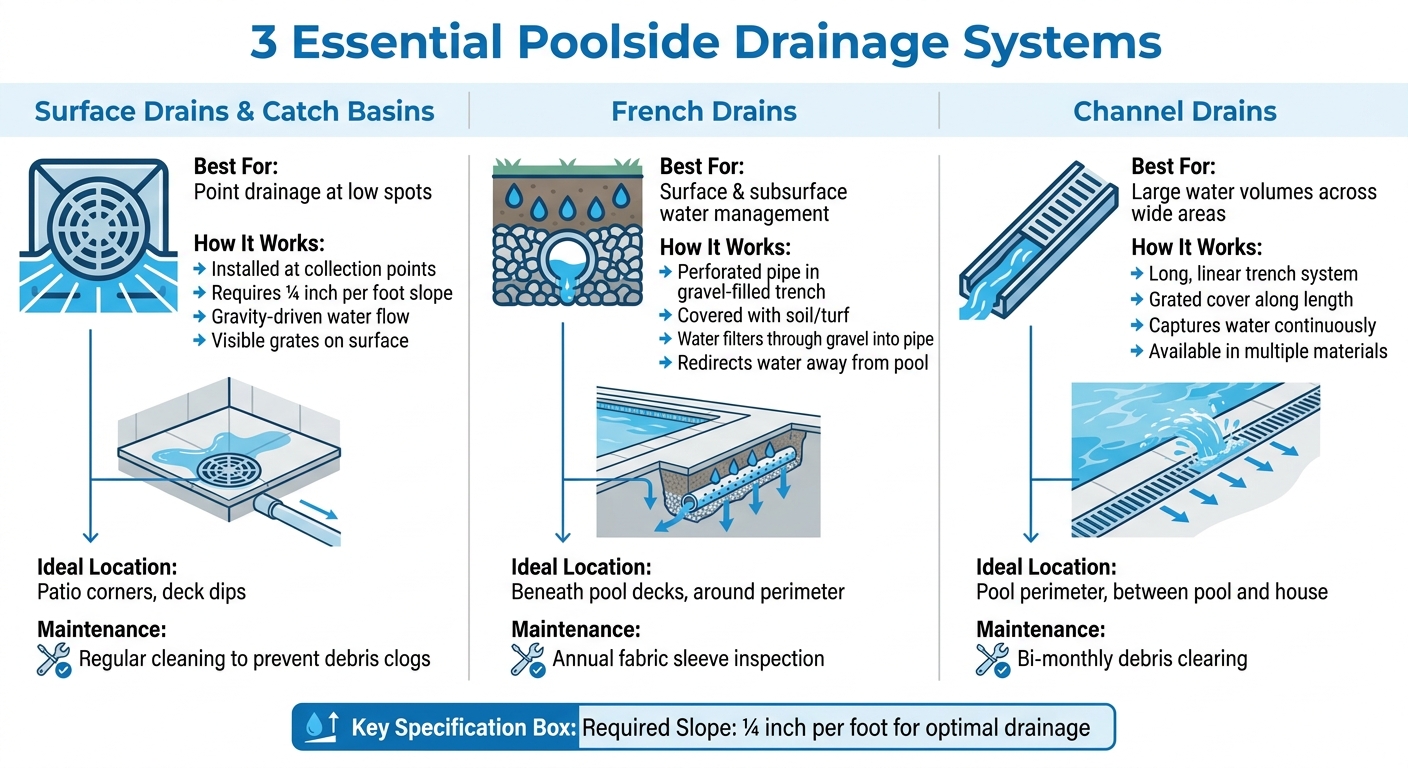
Types of Poolside Drainage Systems Comparison Chart
Choosing the right drainage system depends on your pool deck layout, the amount of water to manage, and where that water needs to go. Each type of drain has a specific function, so understanding how they operate will help you make the best choice for your property.
Surface Drains and Catch Basins
Surface drains, also called spot or point drains, are installed at low points where water tends to collect. These drains rely heavily on proper grading – your pool deck should slope about ¼ inch per foot toward the drain. This slight incline helps gravity do the work, guiding rainwater and splash water into the drain opening and preventing puddles. These drains are particularly useful in areas like patio corners or spots where the deck dips. They typically feature round or square grates that are visible on the surface and need regular cleaning to keep leaves and debris from clogging them.
French Drains
French drains are versatile systems designed to handle both surface water and subsurface water that could otherwise saturate the soil around your pool. They consist of a perforated pipe buried in a trench filled with gravel or rock, which is then covered with soil or turf to blend seamlessly into your landscaping. Water filters through the gravel and into the pipe, which redirects it away from your pool and nearby plants. This is especially crucial because water containing pool chemicals, like chlorine, can damage vegetation. French drains are excellent for preventing soil erosion beneath pool decks and reducing hydrostatic pressure, which can otherwise harm your pool’s structure.
Channel Drains
Channel drains are long, linear systems designed to manage large volumes of water across wide areas. Unlike spot drains that work at a single point, channel drains are ideal for capturing water along the pool’s perimeter or between the pool and the house. These drains feature a narrow trench with a grated cover that efficiently channels water away. Depending on your needs, they can be made from materials like polypropylene, concrete, or stainless steel. For a sleeker look, slot drains offer a minimalist alternative with narrow openings, blending into modern pool deck designs while remaining highly effective.
Next, we’ll explore the key design and installation tips to ensure these systems integrate seamlessly into your poolside area.
Design and Installation Guidelines
Getting your poolside drainage right from the beginning can save you from expensive repairs and water damage down the road. Planning drainage before pouring concrete or laying pavers is crucial. These steps are the backbone of a reliable and well-integrated poolside drainage system.
Grading and Slope Requirements
Your pool deck needs to slope away from the pool at about ¼ inch per foot. This subtle incline helps direct water toward drains without making the surface uneven. Before adding drainage components, conduct a percolation test. Dig a hole 12–18 inches deep, fill it with water, and measure how quickly it drains. If water drains at less than 1 inch per hour, you’re likely dealing with heavy clay soil. In this case, you may need to install underground drainage tiles or mix the soil with coarse materials to improve drainage. Also, think about how your drainage system will fit into your overall landscape and hardscape design.
Combining Drainage with Landscaping and Hardscaping
The best drainage systems are those that blend seamlessly into your outdoor design. Matt Lee, Owner of Innovative Building Materials, highlights this approach:
"One of the primary solutions lies in the design of the deck itself. In this approach, you can have your contractor design and build a deck with a slight slope that allows water to flow away from the pool."[4]
Incorporating drainage during construction is key. Options like permeable pavers, which naturally absorb water through their open cells, work well for this purpose. These pavers allow water to filter into the soil below, provided they remain unsealed to maintain their absorption ability. For heavy runoff, underground solutions like catch basins, French drains, or color-matched linear drains can handle water effectively without disrupting the design. These choices are particularly important in Maryland, where soil and climate conditions present unique challenges.
Maryland Climate and Soil Factors
Maryland’s heavy clay soils require extra attention. Clay retains moisture and typically drains at rates slower than 1 inch per hour – much less efficient than the 1–3 inches per hour seen in loamy soils[5]. Construction can further compact clay, making drainage even harder. To address this, add coarse materials like sand, perlite, or organic compost around your pool deck to improve aeration and break up compacted soil. For areas with extremely slow drainage, underground pipes or drainage tiles can direct water away from the foundation. In low-lying spots where runoff tends to collect, proper grading is essential. Guide excess water into dry riverbeds or natural drainage areas instead of letting it pool around the deck.
For Maryland homeowners, expert help is invaluable. At Pro Landscapes MD, we specialize in creating custom drainage solutions that not only perform well but also enhance the beauty of your poolside landscaping and hardscaping.
Maintenance and System Upgrades
Keeping your drainage system in good working order requires regular upkeep. For surface drains and catch basins, clear out debris at least twice a month during periods of heavy use. Underground pipes should be flushed yearly using cleanout ports to prevent sediment from building up.
Regular Maintenance Tasks
Every spring, check grates and channel covers for signs of damage, such as cracks or warping. Metal grates are prone to rust in chlorinated areas, while plastic covers can weaken and crack from UV exposure. Replace any broken components to keep soil and mulch from clogging the system. If you have a French drain, inspect the fabric sleeve around the gravel trench. Standing water at the drain’s exit often means the fabric is clogged and needs replacing. These small but essential tasks will help ensure your drainage system runs smoothly.
When to Upgrade Your Drainage System
If you notice water pooling near your pool, it could mean the surface has shifted or the leveling is off. Soil, mulch, or silt washing into the pool during rain might point to overflowing planters or poor grading around the deck. Another common issue is deck slabs tilting away from drains, often caused by frost heave or erosion, which can create low points where water collects instead of flowing toward the drainage system. In these cases, it’s a good idea to consult a drainage specialist. At Pro Landscapes MD, we evaluate structural misalignments and soil saturation to determine whether targeted repairs or a full system overhaul is needed. Additionally, you might want to consider sustainable upgrades for a more eco-conscious solution.
Eco-Friendly Drainage Options
For those looking to go green, replacing non-permeable materials with eco-friendly alternatives is a great option. Permeable pavers, for example, let rainwater seep through the surface into the soil below, cutting down on runoff. Another innovative solution is the Eco Pool Drain Waste Water Saver, which costs between $29.99 and $59.99. This device redirects backwash water to your lawn instead of sending it to storm drains. It’s a standout product, having won the NJ Governor’s Environmental Excellence Award[6] and earning glowing reviews at Leslie’s Pool Supplies. One reviewer highlighted that it "prevents grass from being ripped up during backwashing"[7].
For those concerned about chemical runoff, UV-C sanitation systems are worth considering. These systems can deactivate 99% of pathogens in a single pass and reduce chemical use by approximately 40%[8]. With fewer pollutants in your drainage water, your landscaping and nearby waterways will benefit as well.
Conclusion and Final Tips
A well-thought-out poolside drainage system is essential for protecting your property from structural damage, erosion, and water pooling. The key to achieving this is accurate grading, which ensures water is directed away from critical areas like foundations and pool decks. As SABdrain highlights, "Pool drainage is imperative and it’s important to ensure the system is installed properly" [3]. Proper grading not only prevents water accumulation but also safeguards your property from potential long-term issues.
Hiring professionals for installation is crucial to address challenges like depth restrictions and managing chemical runoff effectively. For example, chlorinated water must be carefully redirected to prevent harming your landscaping and contaminating the soil. Slot Drain Systems emphasizes this point: "A drainage system will help divert water runoff, preventing it from getting into the pool or the filtration system" [2]. Professional expertise, combined with regular system monitoring, ensures your drainage setup functions efficiently over time.
To maintain peak performance, periodic maintenance is non-negotiable. Keep an eye out for early warning signs like pooling water, broken grates, or declining plant health near the drainage area. These proactive steps, paired with regular professional inspections, can prevent minor issues from becoming major problems.
At Pro Landscapes MD, we specialize in creating tailored drainage solutions for central Maryland properties. Our team assesses your unique needs, from grading and soil conditions to structural factors, to design systems that blend seamlessly with your outdoor space. Whether you require French drains, catch basins, or a complete stormwater management plan, we ensure your poolside drainage system protects both your investment and your outdoor living area.
Regular inspections, timely repairs, and annual cleanings are the best ways to keep your system running smoothly. Upgrading components when needed will further enhance its efficiency and longevity [9].
FAQs
Which drain type is best for my pool deck?
When it comes to choosing the best drain for your pool deck, it all depends on what you need. Popular choices include area drains, grated trench drains, and linear slot drains. These systems are designed to keep water from pooling and ensure your deck stays dry. To pick the right one, think about your deck’s layout, how water flows in the area, and how much maintenance each option requires.
Where should pool deck water be discharged?
Properly managing pool deck water is essential to avoid issues like water buildup and erosion. The water should flow into a suitable drainage system, such as a pool deck drain, to handle runoff efficiently. If allowed and properly connected, dechlorinated water can also be directed into a sanitary sewer system. This approach helps control runoff and safeguards the surrounding environment.
Do I need a pro or can I DIY drainage?
When deciding whether to tackle a project yourself or bring in a professional, it really comes down to how complicated the job is. For example, simpler systems like French drains can often be handled on your own if you stick to the right steps. On the other hand, more involved tasks – like large-scale grading or managing stormwater – are better suited for professionals. They can ensure the design is done correctly, help you avoid expensive errors, and make sure the solution works well over time.
Chat with Us