









- bhavya gada
- No Comments
When designing a spa landscape in Maryland, the goal is to create a relaxing, low-maintenance space that looks great year-round. The key is choosing plants that thrive in Maryland’s climate, require minimal care, and avoid common issues like debris or aggressive roots. Native plants are especially useful as they support local ecosystems and reduce the need for extra watering or fertilizers.
Key Takeaways:
- Low-Maintenance Plants: Use drought-tolerant species like Red Switchgrass or Summersweet for easy care.
- Native Options: Black-eyed Susans, Butterfly Milkweed, and Winterberry Holly are great for Maryland’s conditions.
- Safety First: Avoid toxic plants like Oleander and trees with aggressive roots or heavy debris.
- Year-Round Appeal: Evergreens like Arborvitae or Boxwood provide privacy and consistent greenery.
- Seasonal Tips: Mulch in spring, water deeply in summer, and protect roots in winter.
By combining smart plant choices with practical hardscaping, you can create a serene, hassle-free spa environment that lasts through every season.
What to Consider When Choosing Spa Landscaping Plants
Picking plants for your spa area means finding the right mix of beauty and practicality. You want a landscape that looks great throughout the year, but it also needs to be safe and easy to maintain. Maryland’s climate, with its hot summers and cold winters, adds an extra layer of complexity. So, The plants you choose should handle these conditions without constant upkeep, making them ideal for landscape projects in Maryland.
Safety comes first. Avoid planting toxic species like Oleander near areas frequented by kids or pets [4]. Also, steer clear of deciduous trees like oaks and maples. These trees drop leaves, seeds, and pollen, which can mess with your spa’s water chemistry, stain surfaces, and clog filters [4]. Another no-go? Trees with aggressive roots, like willows or poplars, which can damage spa foundations, plumbing, and hardscaping like pavers [4].
To keep things low-maintenance, go for plants that can thrive in Maryland’s environment without needing constant care. For example, drought-resistant species like Red Switchgrass are a smart choice – they use less water once established, though they’ll need consistent watering during their first year [1]. For year-round appeal, Summersweet is a great pick, offering fragrant summer blooms, golden fall leaves, and winter seed pods [1]. Evergreens like Arborvitae, Boxwood, and Italian Cypress provide privacy and require minimal cleanup since they don’t shed leaves seasonally [4].
"Native plants are hardy and less susceptible to pests and diseases. Once they’re established, native plants typically need less water than non-natives." – Douglass Delano, Co-founder, Level Green Landscaping [1]
Sunlight matters, too. Some plants, like Hostas, thrive in shady spots, while others, like Black-eyed Susans, love full sun [2]. If allergies are a concern, choose insect-pollinated plants like marigolds or zinnias over wind-pollinated ones – about 20% of allergy sufferers react to pollen from ornamental plants [4]. And remember, large evergreens like Arborvitae should be planted at least 15 to 20 feet away from your spa to protect the roots from heat and chemicals [4].
Below, we’ll dive deeper into sunlight, water, and debris management to help you create a spa area that’s both visually appealing and easy to maintain.
Sunlight and Heat Tolerance
Maryland summers can be intense, with high heat and humidity. Your spa plants need to survive these conditions without constant care. Full-sun plants like Panicle Hydrangeas and Hardy Hibiscus are excellent for sunny, open areas around your spa [4]. These plants are built to conserve moisture and handle high temperatures throughout the growing season.
For shaded areas, plants like Hostas and Hellebores (Lenten Rose) are ideal. Hostas adapt well to different light levels, while Hellebores thrive in full shade and require minimal water during summer [1][2]. Ferns are another great choice for humid spots near your hot tub since they rely on moisture for reproduction [4].
Maryland’s temperature swings also play a role in plant selection. Hardy Hibiscus, for instance, might seem dormant in spring but will bloom once the weather warms up [2]. Always check a plant’s winter hardiness – dwarf varieties like "Pugster Blue" Dwarf Buddleia tend to survive Maryland winters better than older types [1].
For ground cover, heat-tolerant options like Creeping Thyme are a win. They suppress weeds, tolerate light foot traffic, and can handle occasional splashes of chlorinated or salty water from your spa [4]. Clumping grasses like Fountain Grass or Muhly Grass are also great – they stay contained and don’t spread aggressively [4].
Drought Tolerance and Water Requirements
Water conservation is especially important during Maryland’s hot, dry summers. Drought-resistant plants can help reduce your irrigation needs while keeping your spa area lush. Native species like Black-eyed Susans and Butterfly Milkweed are excellent choices – they develop deep roots that access moisture below the surface [1][2].
"This is a great native that’s drought tolerant once established. It gets a nice reddish-purple seed head." – James Kole, Branch Manager, Level Green Landscaping [1]
Some standout options include "Shenandoah" Red Switchgrass for its resilience and "Gem Box" Holly as a disease-resistant alternative to traditional boxwood [1]. Succulents like Snake Plants and ZZ Plants are also great for spa areas prone to heat. Their water-storing roots mean they don’t need frequent watering [5]. Mediterranean herbs like Creeping Thyme thrive in well-draining soil, which helps prevent root rot in humid conditions [4][5].
Even drought-tolerant plants need some TLC at first. Water them regularly during their first year to help establish strong roots. Once they’re settled, they’ll require less water and be more resilient during dry spells. Ornamental grasses, recommended by Dyck Arboretum, are another smart choice – they conserve water, resist pests, and prevent erosion with their deep roots, all while supporting pollinators and wildlife [4].
Non-Toxic and Low-Debris Plants
To keep your spa area safe and low-maintenance, choose plants that don’t shed a lot of debris. Low-shedding evergreens provide privacy and keep cleanup to a minimum, unlike deciduous trees that drop leaves and flowers into your spa water [4].
Debris management isn’t just about leaves. Avoid plants that produce sticky sap, heavy pollen, or seed pods, as these can create extra work. Liriope (Lilyturf), for example, only needs a quick trim in early spring, making it a low-maintenance option for borders [1]. Similarly, Yew and Hydrangea Paniculata require just one annual pruning to stay tidy [1].
Stick to clumping varieties to avoid invasive plants that could interfere with your spa’s plumbing or mechanical systems. Clumping bamboo, for instance, is a better choice than running bamboo, which can grow up to 35 inches in a single day and quickly take over your yard [4]. Grasses that form dense mounds also add texture and movement without becoming a hassle.
For a touch of fragrance, plant Lavender or Jasmine along pathways or near seating areas instead of directly above the spa. This way, you can enjoy their aromatherapy benefits without worrying about fallen flowers or leaves clogging your spa [4]. If you’re using Italian Cypress for privacy, space them about 3 feet apart for a dense screen or 5–6 feet apart for a more open, architectural look [4].
sbb-itb-843f8be
Best Low-Maintenance Plants for Spa Areas
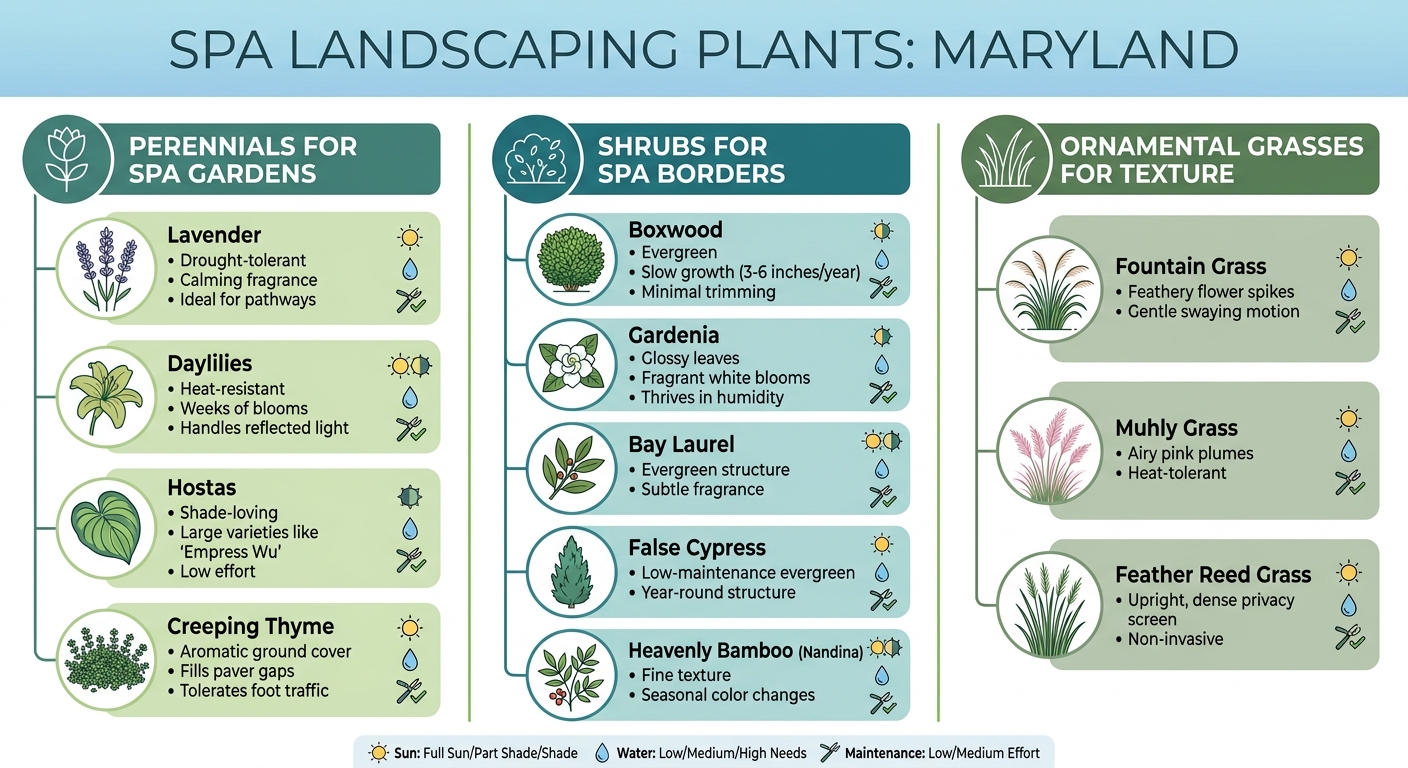
Best Low-Maintenance Plants for Maryland Spa Landscaping by Category
Looking for plants that can thrive in Maryland’s spa landscapes without constant upkeep? As part of our professional landscaping services, we’ve curated a selection of perennials, shrubs, and ornamental grasses that combine year-round charm with minimal maintenance.
Perennials for Spa Gardens
If you’re creating perennial beds, these plants are perfect for a spa setting:
- Lavender: This drought-tolerant plant not only thrives in dry conditions but also fills the air with its calming fragrance. It’s a great choice for pathways or seating areas, offering relaxation without the worry of petals ending up in the water [4].
- Daylilies: Built to handle intense heat and reflected light, daylilies bloom for weeks, making them ideal for areas where other plants might struggle [3].
- Hostas: For shaded spots, large varieties like ‘Empress Wu’ bring lush greenery with little effort [4].
- Creeping Thyme: This aromatic ground cover is perfect for filling gaps between pavers and can even handle light foot traffic [4].
Now, let’s outline some shrubs that work well for defined borders.
Shrubs for Spa Borders
Shrubs offer structure and privacy, and these selections are as easy to care for as they are attractive:
- Boxwood: Known for its evergreen foliage and slow growth (just 3 to 6 inches annually), boxwood creates neat hedges with minimal trimming [4].
- Gardenia: With its glossy leaves and fragrant white blooms, gardenia thrives in warm, humid environments and adds a touch of elegance [3][4].
- Bay Laurel: This evergreen shrub not only provides structure but also contributes a subtle fragrance [3].
- False Cypress: A low-maintenance evergreen that adds year-round structure without creating much debris [3].
- Heavenly Bamboo (Nandina): This shrub offers fine texture and seasonal color changes, shifting hues throughout the year while remaining easy to maintain [3].
"Aromatic and low-maintenance options like Jasmine, Gardenias, and Creeping Thyme enhance your hot tub experience." – Heavenly Heat Saunas [4]
Finally, ornamental grasses bring texture and movement to your spa landscape.
Ornamental Grasses for Texture
Ornamental grasses are a fantastic way to add visual interest without the hassle:
- Fountain Grass: Its feathery flower spikes and gentle swaying motion create a soothing vibe [4].
- Muhly Grass: Known for its airy pink plumes and heat tolerance, this grass is a standout for sunny areas [3][4].
- Feather Reed Grass: Perfect for privacy, this upright grass forms a dense, elegant screen. It stays put, avoiding invasive spread, and won’t interfere with plumbing or mechanical systems [4].
These grasses are also pest-resistant, water-efficient once established, and even support pollinators – all while demanding very little care [4].
With these plants, you can design a spa landscape that’s both beautiful and effortless to maintain.
Native Maryland Plants for Spa Landscaping
Choosing plants that thrive in Maryland’s natural environment makes spa landscaping easier and more sustainable. Native species are perfectly suited to the state’s unique soil, rainfall, and temperature patterns.
Native Plant Options
If you’re aiming for a low-maintenance and visually appealing spa area, native plants are a fantastic option. Maryland offers a range of species that shine in spa settings. For instance, Winterberry Holly and Inkberry Holly bring structure to your landscaping year-round. Winterberry even adds a pop of color during the colder months with its striking red berries. Meanwhile, Smooth Hydrangea and Virginia Sweetspire flourish in the humid, moist conditions often found around hot tubs. As for groundcovers, Christmas Fern and Wild Ginger are perfect for filling in shaded, humid spaces between hardscapes.
For sunny spots, consider wildflowers like Black-Eyed Susan and Butterfly Weed. These heat-tolerant plants deliver bold, vibrant colors and require little water once established. In wetter areas, such as splash zones, Cardinal Flower and Rosemallow thrive, producing eye-catching blooms. To add texture and movement, native grasses like Little Bluestem are a great choice, offering beauty with minimal upkeep.
Not only do these plants simplify maintenance, but they also contribute to the local ecosystem, making your spa area both functional and environmentally friendly.
Why Use Native Plants
Native plants go beyond aesthetics and ease – they play a vital role in supporting the environment. Many local pollinators, such as certain bees and butterflies, rely on native plants for survival. A great example is the Monarch butterfly, whose caterpillars feed exclusively on milkweed. Without native plants like this, Monarch populations would struggle to survive [7].
"The Maryland Native Plant Society’s mission is to promote awareness, appreciation, and conservation of Maryland’s native plants and their habitats." – Maryland Native Plant Society [6]
Additionally, native plants help reduce the environmental footprint of your landscaping. Since they’re adapted to Maryland’s conditions, they require fewer resources like water, fertilizers, and pesticides, cutting down on maintenance-related energy use. Plus, they provide essential food and shelter for native birds and insects [7]. By incorporating native plants, you’re creating a spa space that’s not only beautiful but also supports local wildlife and fosters a healthier environment around your retreat.
Seasonal Care for Spa Landscaping Plants
Once you’ve chosen the right plants, keeping them healthy throughout the year means providing seasonal care. Each season brings its own set of tasks to ensure your spa landscape stays lush and resilient with minimal effort.
Spring Planting and Preparation
Spring is the perfect time to introduce new plants to your spa landscape. With mild temperatures and increased natural moisture, plants can establish strong root systems before the summer heat kicks in [8]. Before planting, test your soil for nutrient levels and pH balance to give your plants the best start [9].
Position your plants thoughtfully: place sun-loving varieties in sunny spots, shade-tolerant ones in areas with less light, and group plants with similar water needs together [8][9]. Spread a 2- to 3-inch layer of mulch around your plants to retain moisture, suppress weeds, and protect roots from temperature fluctuations [8][9].
"Mulch acts like a blanket, insulating plants from extreme heat and cold",
explains Charlotte Weidner from Nature Hills [9].
If you’re setting up new planting beds, consider installing drip irrigation during spring. This system saves time and ensures consistent watering throughout the growing season [8][9]. As temperatures start to rise, adjust your watering schedule to prepare for the summer months.
Summer Maintenance
Summer can be tough on plants, especially when temperatures soar above 85°F [10]. During heat waves, plants may need twice as much water as usual [10]. Water deeply in the early morning or late afternoon to minimize evaporation [10][11]. A quick soil check can help – if the top 2 inches feel dry, it’s time to water [10][11].
"Deeper, less frequent watering is better than more frequent shallow watering",
notes garden writer Janet Loughrey [11].
Refreshing your mulch during summer helps keep soil cool [10][11]. If you notice plants wilting in the afternoon, you can provide temporary shade using umbrellas or shade cloth [10][11]. Avoid pruning, fertilizing, or transplanting during extreme heat, as these activities can add unnecessary stress to your plants [11].
Fall and Winter Protection
As summer fades, it’s time to prepare your plants for the cooler months. Before the first freeze, water your plants thoroughly to help them handle winter stress [13]. For broadleaf evergreens, continue watering monthly during dry winter periods [13]. Apply winter mulch after the first frost, but keep it about 6 inches away from plant stems to deter rodents [13].
In the fall, clear out dead or diseased plant material to prevent pests from overwintering in the debris [13]. For young trees or those with thin bark, wrap trunks with commercial paper or polyurethane spiral wraps to protect against sunscald – just remember to remove these wraps in spring before the trunks expand [13]. Most perennials and woody shrubs don’t need covering, as they rely on cold temperatures to enter dormancy properly [12].
"The first step in avoiding winter damage is to select plants that are winter-hardy to the area",
advises Oklahoma State University [13].
Combining Plants with Pro Landscapes MD Spa Hardscaping

Expanding on plant selection and care strategies, blending greenery with hardscaping takes your spa’s atmosphere to the next level. Stone patios, retaining walls, and walkways serve as the backbone of your spa area, while carefully chosen plants soften the edges and create a natural flow between man-made structures and the surrounding landscape. Pro Landscapes MD offers hardscaping options like flagstone patios, retaining walls, and dry riverbeds, all of which become even more stunning when paired with thoughtful plant choices.
Match plants to specific hardscape features. Along patios and walkways, fragrant plants like Lavender and Creeping Thyme not only add vibrant color but also naturally deter pests. Near retaining walls, evergreen shrubs such as Boxwood and Juniper provide a consistent, year-round look, while drought-resistant Sedum thrives in the heat reflected by stone surfaces. For a lush, seamless transition from stone to soil, Hostas and ferns are excellent choices to conceal the base of walls.
Use microclimates created by hardscaping to guide plant placement. Shaded spots behind water features are ideal for moisture-loving ferns that benefit from the extra humidity. Creeping Jenny works beautifully between flagstone steps, adding a striking color contrast. Lavender flourishes near dry creek beds, where good drainage and reflected warmth create perfect growing conditions. For patios where in-ground planting isn’t an option, ornamental grasses in large containers provide height and movement, adding a dynamic element to stationary hardscape areas. These strategic placements unite the natural and built environments seamlessly.
Layer plants to enhance privacy and depth. Taller shrubs like Spirea or Butterfly Bush create natural privacy screens around the spa area, offering a softer alternative to fencing. Mid-level plants such as Hostas fill in the middle layer, while ground-hugging options like Dianthus complete the look. This tiered arrangement turns functional hardscaping into a serene, multi-dimensional retreat. Adding fragrant plants like Summersweet near seating areas ensures a delightful sensory experience while you relax.
Ensure proper drainage to maintain plant health. Pro Landscapes MD incorporates both beauty and functionality into every installation. Patios, retaining walls, and French drains are expertly designed to prevent water from pooling, which could harm your plants. Dry riverbeds not only enhance the visual appeal but also serve as effective drainage solutions. This careful integration supports a low-maintenance, sustainable design, keeping your spa landscape vibrant and hassle-free for years to come.
Conclusion
Creating a peaceful, low-maintenance spa landscape comes down to smart choices in plants and hardscaping. Opting for low-maintenance evergreens, drought-resistant perennials, and native Maryland plants not only minimizes upkeep but also prevents debris from clogging spa filters. Plus, these plants can handle the unique environment around your spa, including high heat, humidity, and occasional splashes of treated water.
Thoughtful landscaping design also ensures your spa area is both functional and protected. Features like automated irrigation systems make plant care effortless, while proper drainage solutions safeguard both your plants and hardscaping elements from damage.
Pro Landscapes MD specializes in transforming central Maryland yards into spa-like retreats. Their expertise spans landscape design, planting, and lawn care, paired with hardscaping solutions such as flagstone patios, retaining walls, French drains, and dry riverbeds. This integrated approach ensures that plants and hardscaping complement each other, creating a cohesive and serene outdoor space.
As more homeowners seek durable and professional landscaping for aging properties, investing in expert design and installation pays off. The result? A spa area that’s not only visually stunning but also easy to maintain, giving you a relaxing retreat with minimal effort. Whether starting fresh or upgrading an existing space, combining well-chosen plants with professional hardscaping can turn your backyard into a true oasis.
FAQs
How far should plants be from a hot tub?
Plants need to be positioned at least 6 feet away from a hot tub to align with safety guidelines, like those specified by the National Electrical Code (NEC). Maintaining this distance minimizes risks tied to electrical components and ensures compliance with safety standards.
What plants are safest around kids and pets?
Non-toxic plants, like ornamental grasses – including miscanthus and fountain grass – are a safe choice for families with kids and pets. Beyond their safety, these grasses bring a touch of elegance to spa landscaping, blending beauty with peace of mind.
How do I keep spa landscaping low-debris?
To keep your spa landscaping low on debris, go for plants that are easy to maintain and don’t shed much. Succulents like jade, echeveria, or agave are excellent choices – they’re stylish, simple to care for, and won’t leave you with a mess. You can also look into drought-tolerant plants with small or no leaves, steering clear of those that drop flowers or large foliage. Regular trimming can further ensure the area stays neat and clean.
Chat with Us