









- bhavya gada
- No Comments
Looking to build eco-friendly pathways? Here’s what you need to know:
- Why It Matters: Permeable pathways reduce runoff by absorbing 70–90% of rainfall, crucial for Maryland’s Chesapeake Bay watershed where runoff pollutes waterways.
- Material Options:
- Permeable Pavers: Great for water absorption and durability.
- Recycled Rubber/Plastic: Lightweight and impact-resistant, ideal for retrofits.
- Natural Materials: Gravel or crushed stone for a rustic look and good drainage.
- Maryland-Specific Tips: Clay-heavy soils may need extra drainage solutions like thicker stone bases or underdrain pipes.
- Maintenance: Regular cleaning and joint refills help extend pathway life to 25–50 years.
Takeaway: Choosing the right materials and proper installation methods ensures pathways last longer, handle Maryland’s weather, and protect local ecosystems.
How to Create Stunning Rustic Pathways from Natural Materials
Core Principles of Eco-Friendly Pathway Design
Designing eco-friendly pathways involves keeping water on-site, using durable materials sourced locally, and ensuring safe, accessible passage for all.
Permeable vs. Impermeable Pathway Surfaces
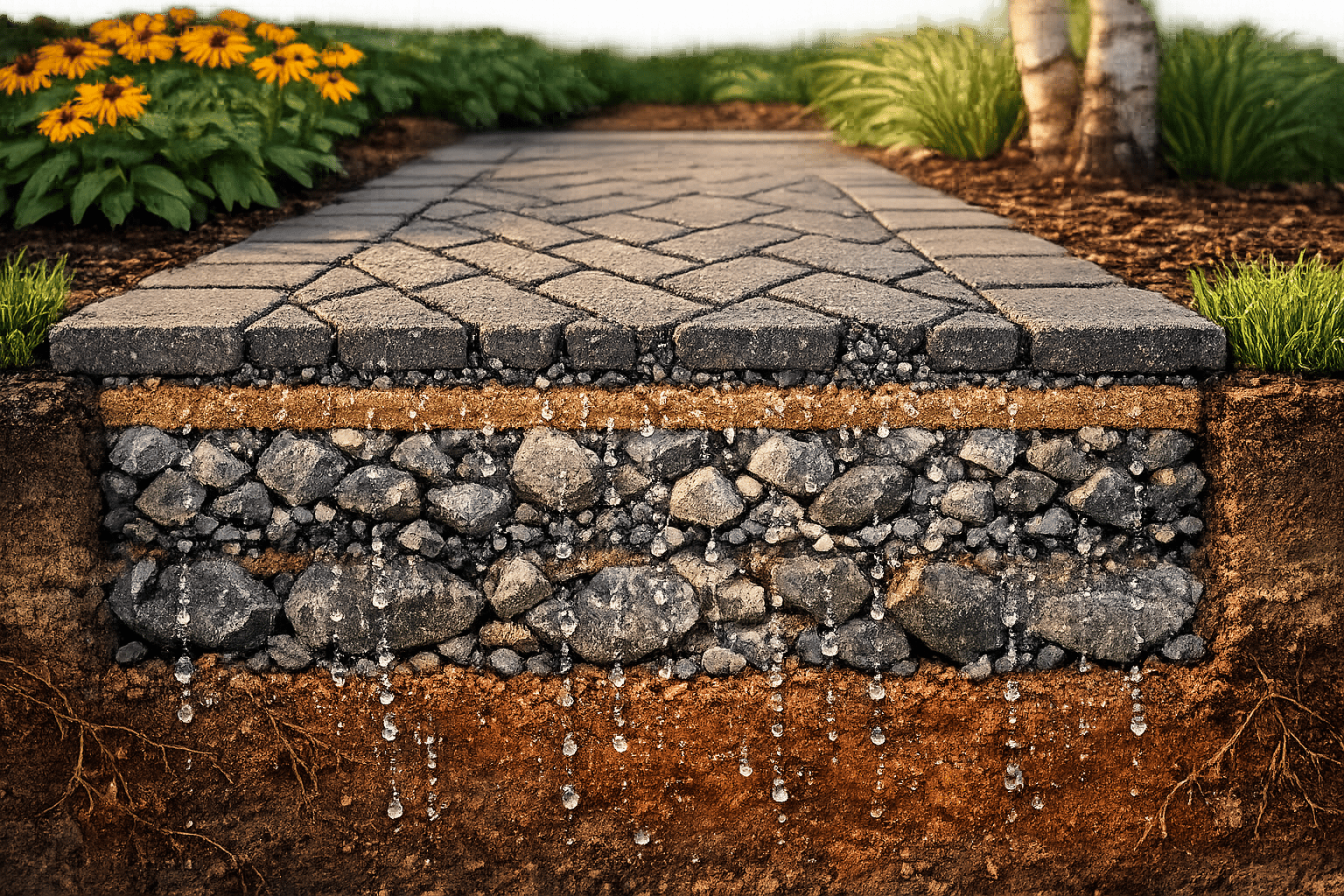
The main difference between these surfaces lies in how they handle rainwater. Permeable surfaces – like open-joint pavers, stabilized gravel, and permeable interlocking concrete – allow water to seep through into a stone base, where it either infiltrates the soil or drains in a controlled way. On the other hand, impermeable surfaces, such as poured concrete, block water infiltration, directing runoff along the surface.
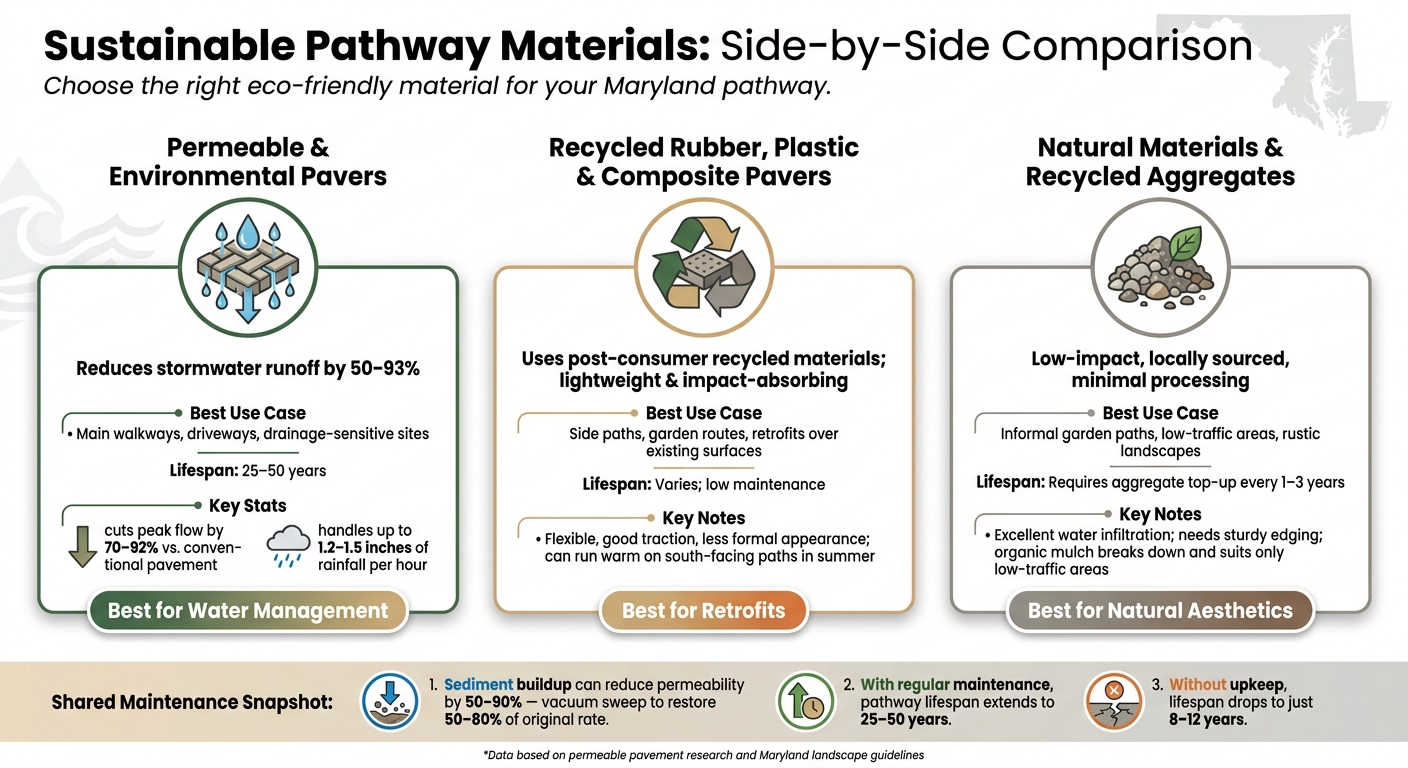
This distinction is especially important in Maryland, where intense summer storms can dump several inches of rain in just hours, overwhelming drainage systems. Studies show that permeable pavements can reduce runoff volumes by 50–93% and cut peak flow by 70–92% compared to conventional pavements. For properties near streams or clay-heavy soils, this can make a big difference.
Choosing the right surface depends on your site. Permeable systems work best on slopes under 5–7% and in soils with moderate drainage. For steeper grades or areas near foundations where water infiltration might cause issues, impermeable surfaces combined with features like French drains or dry riverbeds may be better. Here’s a quick comparison of the two:
| Aspect | Permeable Surfaces | Impermeable Surfaces |
|---|---|---|
| Stormwater runoff | Significantly reduced | Increased; requires separate drainage |
| Water quality | Filters sediment and pollutants | Conveys pollutants directly to drains |
| Heat island effect | Cooler when lighter-colored or vegetated | Dark asphalt can reach 120–150°F |
| Maintenance | Periodic joint cleaning to prevent clogging | Patching or resurfacing for cracks |
| Accessibility | Requires careful detailing for stability | Easier to achieve smooth, level surface |
In Maryland’s climate, managing heavy rainfall is a necessity. While permeability is crucial, material sustainability also plays a key role.
What Makes a Pathway Material Eco-Friendly?
The term "sustainable" is often thrown around, but truly eco-friendly materials meet specific criteria. Here’s what to look for:
- Recycled or reclaimed content: Options like recycled rubber pavers, crushed concrete, or reclaimed brick reduce the need for new raw materials.
- Local sourcing: Materials sourced from the Mid-Atlantic region or nearby manufacturers have a lower carbon footprint than those shipped long distances.
- Long service life: Durable materials lasting 25–50 years are often better for the environment than "green" products that fail after a decade. Studies show that reusing or recycling pavers at the end of their life can lower CO₂ emissions by 10–30% compared to cast-in-place concrete.
- Repairability: Modular systems, such as interlocking pavers, allow for easy repairs by replacing individual units instead of tearing out entire sections.
- Low chemical impact: Look for materials with minimal VOCs and avoid sealers that could leach harmful chemicals into nearby soil or groundwater.
Durable, repairable systems provide long-term environmental benefits that go beyond initial claims of being "green."
Safety and Accessibility in Pathway Design
A pathway isn’t effective if it isn’t safe or accessible. ADA guidelines recommend limiting running slopes to 5% (1:20) and cross-slopes to 2% (1:48) to ensure stability and comfort for wheelchair users.
Surface texture matters too. For example, thermal-finish flagstone – cut to a uniform thickness and treated for a flatter surface – is more suitable for accessible routes than irregular natural cleft stone, which can create tripping hazards [3]. For permeable systems, it’s important to ensure the stability of joint infill material, as loose or shifting aggregate may not meet ADA standards without stabilization grids or binders. In shaded or north-facing areas, choose textured surfaces to prevent algae growth and maintain slip resistance during wet winters.
Heat retention is another factor to consider for sunny, south-facing paths. Dark asphalt can reach scorching temperatures of 120–150°F during summer. Lighter-colored pavers or permeable surfaces with vegetation can stay 20–40°F cooler, offering a more comfortable experience in Maryland’s humid summers.
Types of Sustainable Pathway Materials
Permeable vs. Impermeable Pathway Surfaces: Key Differences
Choosing the right sustainable materials for pathways depends on factors like drainage needs, traffic levels, and overall aesthetic goals. Materials typically fall into three main categories: permeable and environmental pavers, recycled rubber, plastic, and composite pavers, and natural materials with recycled aggregates. Each option offers distinct advantages based on site conditions and intended use.
Permeable and Environmental Pavers
Permeable pavers are designed with open joints to allow water to pass through, making them an excellent option for areas where water management is a priority. In Maryland, where weather conditions can vary, these pavers are especially practical. Popular choices include permeable concrete and clay pavers, which use aggregate-filled joints, as well as open-cell or turf pavers – grids made from plastic or concrete that can be filled with gravel or grass. These systems provide solid traction year-round, making them ideal for residential walkways. Open-cell grids, however, are better suited for low-traffic areas like overflow parking zones.
Pro Landscapes MD highlights the value of these materials, stating, "Permeable pavers… are perfect for areas like Columbia, MD," emphasizing their reliability in central Maryland. Pro Landscapes MD often combines these pavers with drainage solutions, such as French drains or dry riverbeds, to further enhance water management.
For projects that prioritize aesthetics or retrofit applications, recycled rubber and composite pavers may be a better fit.
Recycled Rubber, Plastic, and Composite Pavers
Recycled pavers repurpose materials like scrap tires, HDPE plastic containers, and other post-consumer waste into durable paving units. Rubber pavers are flexible and absorb impact well, making them a smart choice for entryways or play areas. Meanwhile, recycled plastic and composite pavers are lighter than concrete and can mimic the look of stone or brick. When comparing products, it’s a good idea to ask manufacturers for certifications verifying the recycled content.
These materials do come with some tradeoffs. They often lack the polished appearance of natural stone or fired clay, making them less suitable for formal walkways. Additionally, rubber pavers can become quite warm on sunny, south-facing paths during Maryland’s hot summers. However, they excel in side yard paths, garden routes, and retrofitting over existing concrete slabs, where they improve traction without requiring full demolition.
For those seeking a more natural look with minimal processing, natural materials and recycled aggregates might be the way to go.
Natural Materials and Recycled Aggregates
Gravel, crushed stone fines, and organic mulch are eco-friendly options that are often locally sourced and require minimal processing. Crushed stone fines (also known as crusher run or stone dust) compact into a stable surface that works well on sloped paths, an important consideration in Maryland’s varied landscape. Pea gravel and river rock provide excellent water infiltration and a relaxed, natural aesthetic, though they need sturdy edging to keep the material in place.
Organic mulch is an affordable option but breaks down over time and can be displaced during heavy rains, making it better suited for low-traffic garden paths rather than main access routes. In the Mid-Atlantic region, contractors sometimes use locally available stone fines as a substitute for decomposed granite to achieve a stable surface. Regardless of the material, proper edge restraints and base compaction are critical to ensure durability through Maryland’s freeze-thaw cycles and heavy rainfall.
| Material Type | Main Benefit | Best Use Case |
|---|---|---|
| Permeable/environmental pavers | Reduces runoff; allows water infiltration | Main walkways, driveways, drainage-sensitive sites |
| Recycled rubber/plastic/composite pavers | Uses recycled materials; lightweight; impact-absorbing | Side paths, garden routes, retrofits over existing surfaces |
| Natural materials and recycled aggregates | Low-impact; locally sourced; natural appearance | Informal garden paths, low-traffic areas, rustic landscapes |
The choice of material not only influences the installation process but also affects long-term maintenance, which will be discussed in the upcoming sections.
sbb-itb-843f8be
How to Install Sustainable Pathways
A well-designed sustainable pathway isn’t just about looks – it’s about durability and efficiency. Proper installation, grounded in eco-friendly principles, ensures the pathway handles drainage effectively and remains stable for decades. The magic lies in building it layer by layer, with each layer playing a crucial role.
Pre-Installation Checklist
Before you start digging, take some time to observe your site during or after a rainstorm. Watching how water flows and where it pools can tell you a lot about the natural drainage patterns. Map out the slope direction, identify low spots, and take note of any water coming from roof downspouts or neighboring properties.
Here’s what you need to check off before breaking ground:
- Call 811: This step is mandatory to have underground utilities marked before any digging begins.
- Measure the cross-slope: Aim for a slope of 1–2% to direct surface water away without creating a tripping hazard. Test your soil’s drainage by digging a small hole, filling it with water, and timing how fast it drains. In Maryland, where clay-heavy soils dominate, drainage rates under 0.6 inches per hour can influence how deep and coarse your base needs to be.
- Traffic load: Determine how the path will be used. A simple garden path has lighter base requirements than a pathway that will handle wheelbarrows or lawn equipment. For primary walkways, a width of 3–4 feet allows two people to walk comfortably side by side.
- Plan for drainage: Decide if you’ll need additional drainage solutions like French drains, dry riverbeds, or swales before your materials arrive.
Once you’ve assessed the site and confirmed these details, you’re ready to start preparing the base.
Base Preparation and Material Placement
The first step is excavation. Remove sod, organic topsoil, and roots until you reach undisturbed mineral soil. Depending on your soil type, dig down 8–12 inches – or 12–18 inches if you’re dealing with clay or areas prone to freeze–thaw cycles. The base is built in three compacted layers:
- 4–8 inches of large crushed stone (No. 2 or No. 3 stone) for the foundation.
- 2–4 inches of medium crushed stone (No. 57 stone) for stability.
- 1.5–2 inches of fine crushed stone (No. 8 stone) for leveling – skip sand, as it can clog the system.
In areas with clay or silty soils, place a non-woven geotextile fabric between the native soil and the stone base. This prevents fine particles from migrating upward and clogging the base over time. Once the base is compacted, install edge restraints – whether concrete, steel, or heavy-duty recycled plastic. These restraints anchor the edges to prevent shifting, especially on slopes.
For paver pathways, place the pavers on the leveled stone base, maintaining the manufacturer’s recommended joint widths. Use a plate compactor with a protective rubber pad to firmly seat the pavers. Fill the joints with small aggregate (No. 8 or No. 9 stone) to keep the system permeable. If you’re building a gravel path, compact the surface material in 2–3 inch lifts, and consider adding a stabilizing grid or honeycomb system to reduce rutting.
"Permeable pavers… help the environment by letting water seep through." – Pro Landscapes MD [2]
Permeable interlocking concrete pavement can handle up to 1.2–1.5 inches of rainfall per hour and reduce peak surface runoff by about 80% compared to traditional pavement. This is especially impactful for properties in Maryland’s Chesapeake Bay watershed.
Installation Tips for Maryland Properties
Maryland’s soil and weather conditions present unique challenges. Clay-heavy soils and freeze–thaw cycles can wreak havoc on pathways if not properly addressed.
For clay soils, increase the base thickness and stick to open-graded, angular aggregates. Avoid fine stone dust or washed sand, as these materials trap moisture and expand when frozen. If water infiltration is too slow, install a perforated underdrain pipe within the stone base and route it to an appropriate outfall. This is especially important in low-lying areas of central Maryland, such as Howard and Montgomery counties, where clay and silt loams dominate.
To combat freeze–thaw damage, focus on keeping water moving through the base. A well-draining, open-graded base prevents water from pooling and freezing. Companies like Pro Landscapes MD often pair paver installations with drainage solutions like French drains, dry riverbeds, and proper grading to handle slow-draining soils and heavy storms. Ensure that the final grading directs water away from foundations with a slope of at least 2%.
Maintaining and Extending the Life of Sustainable Pathways
Getting a pathway installed correctly is just the beginning. To keep it functional and looking good for decades, regular maintenance is non-negotiable. Skipping upkeep could shorten the lifespan to just 8–12 years, while consistent care can stretch it to 20–30 years.
Maintenance Tips by Material Type
Different materials need different types of care. Here’s a quick guide to help you keep your pathway in top shape:
- Permeable and environmental pavers: Pay close attention to the joints. Sweep or blow away leaves, soil, and mulch frequently. If the joint gaps lose more than ¼ inch of aggregate, refill them with clean, washed stone. When pressure washing, use a fan tip with low-to-moderate pressure, and keep the wand moving to avoid dislodging the joint material. Re-sand the joints every 2–3 years to maintain stability and permeability [1].
- Recycled rubber, plastic, and composite pavers: These require less work. Regular sweeping and occasional washing with mild soap and water should do the trick. Check annually for any shifted or lifted pavers and reset them promptly to prevent accidents. For snow removal, use a shovel with a plastic or rubber edge to avoid damaging the surface.
- Gravel, crushed stone, and recycled aggregate paths: Rake these pathways occasionally to smooth out ruts and redistribute material. Depending on usage and weather, you may need to add fresh aggregate every 1–3 years. Keep the edges well-defined to prevent material from spreading into surrounding areas. Organic mulch paths, in contrast, need annual replenishment to counteract decomposition and compaction, especially in Maryland’s climate.
Keeping the joints clear of sediment is critical, as clogged joints reduce water infiltration and compromise the pathway’s performance.
How to Preserve Pathway Permeability Over Time
Permeability is the hallmark of sustainable pathways, but it’s also the first thing to degrade without proper care. Research on permeable interlocking concrete pavements (PICP) reveals that sediment buildup can reduce surface infiltration rates by 50–90%. The good news? Vacuum sweeping can restore infiltration to 50–80% of the original rate, depending on how severe the clogging is.
Here’s a simple test to check your pathway’s permeability: Pour 3–5 gallons of water onto a section of the path. If it soaks in within 1–2 minutes, your pathway is performing as it should. But if water lingers or pools for more than 10–15 minutes, it’s time for a cleanup or a professional evaluation of the base layer.
One common culprit behind clogged pathways is bare or erodible soil nearby. Studies show that pathways bordered by vegetation or mulched beds clog much slower than those next to bare soil. Avoid storing soil, mulch, or construction materials directly on permeable surfaces, even temporarily. If you use sand for winter traction, make sure to vacuum it up in the spring before it settles into the joints. Companies like Pro Landscapes MD specialize in inspections and cleaning for clogged permeable pavements in central Maryland.
Signs Your Pathway Needs Repair or Replacement
Keeping an eye out for early warning signs can save you from costly repairs later. Here’s what to watch for:
- Standing water: If water doesn’t drain within 10–15 minutes after rain, your joints may be clogged, or the base could be compromised.
- Rocking, sunken, or raised pavers: These are trip hazards and typically indicate base settlement or frost heave, especially after harsh winters.
- Widening joints or edge gaps: This suggests that the joint material or edge restraints have failed, causing the pathway to shift.
- Persistent weed growth: Weeds sprouting through joints or aggregate surfaces mean organic debris has built up enough to support roots.
- Erosion along edges: Soil washing onto the pathway or eroding edges points to issues with nearby landscaping or grading.
Often, individual pavers can be reset or replaced without disturbing the entire pathway [1]. However, widespread issues like rutting, structural cracking, or significant settlement usually signal a base failure that requires professional attention. To stay ahead of problems, schedule inspections in both spring and fall. Catching issues early can help avoid the expense of a complete overhaul.
Conclusion: Building a More Sustainable Landscape
Opting for sustainable pathway materials is one of the smartest steps a Maryland homeowner can take. These materials go beyond aesthetics – they help manage stormwater, reduce erosion, recharge groundwater, and handle Maryland’s freeze-thaw cycles and intense summer storms. With a lifespan of 25 to 50 years for paver-based pathways [1], they’re not just a purchase – they’re an investment that pays off over time.
The foundation of a long-lasting pathway lies in expert preparation. Proper grading, base construction, and drainage integration are especially critical in Maryland, where clay-heavy soils and sloped lots present unique challenges. This is where professional knowledge and experience make all the difference.
Pro Landscapes MD takes an integrated approach, combining paver installation, drainage solutions, and landscape design to create pathways that complement your drainage systems and surrounding plantings. This ensures that your landscape works together as a unified, sustainable system.
Sustainable landscapes thrive when pathways, drainage, planting beds, and hardscapes are designed to function in harmony. By choosing materials that can be repaired, replenished, or recycled, you’re planning not just for seasons, but for decades.
Maryland’s Chesapeake Bay watershed highlights the importance of permeable surfaces. Pathways that allow water to infiltrate instead of rushing into storm drains help reduce sediment and pollutants in local streams. A single well-constructed path can make a tangible environmental impact, starting right in your backyard.
FAQs
What is the best pathway material for my yard?
The best material for your yard will hinge on factors like drainage, style preferences, and upkeep requirements. Permeable pavers are an excellent choice if you need to control water pooling and minimize runoff. For a classic, refined appearance, natural stone pavers or flagstone work beautifully. Concrete pavers stand out for their strength and affordability, while gravel offers a simple, budget-friendly solution with minimal maintenance. Each option can be tailored to improve both the practicality and visual appeal of your outdoor space.
Do permeable paths work in Maryland clay soil?
Permeable paths work well with Maryland’s clay-heavy soils. They help control stormwater by letting rainwater soak into the ground, which minimizes pooling problems. While you might tackle simpler projects on your own, hiring professionals is a smart choice for clay soil. Experts can ensure the sub-base is engineered correctly for long-lasting durability and efficient water absorption.
How do I keep a permeable pathway from clogging?
To avoid clogging, add a layer of geotextile fabric during construction to separate the soil from the gravel. For upkeep, make it a habit to sweep away debris, check for any settling or damage, and refill the joints when necessary to keep drainage working properly. Pro Landscapes MD specializes in installing and maintaining eco-friendly pathways, ensuring they manage stormwater effectively and stay functional for years.
Chat with Us