









- bhavya gada
- No Comments
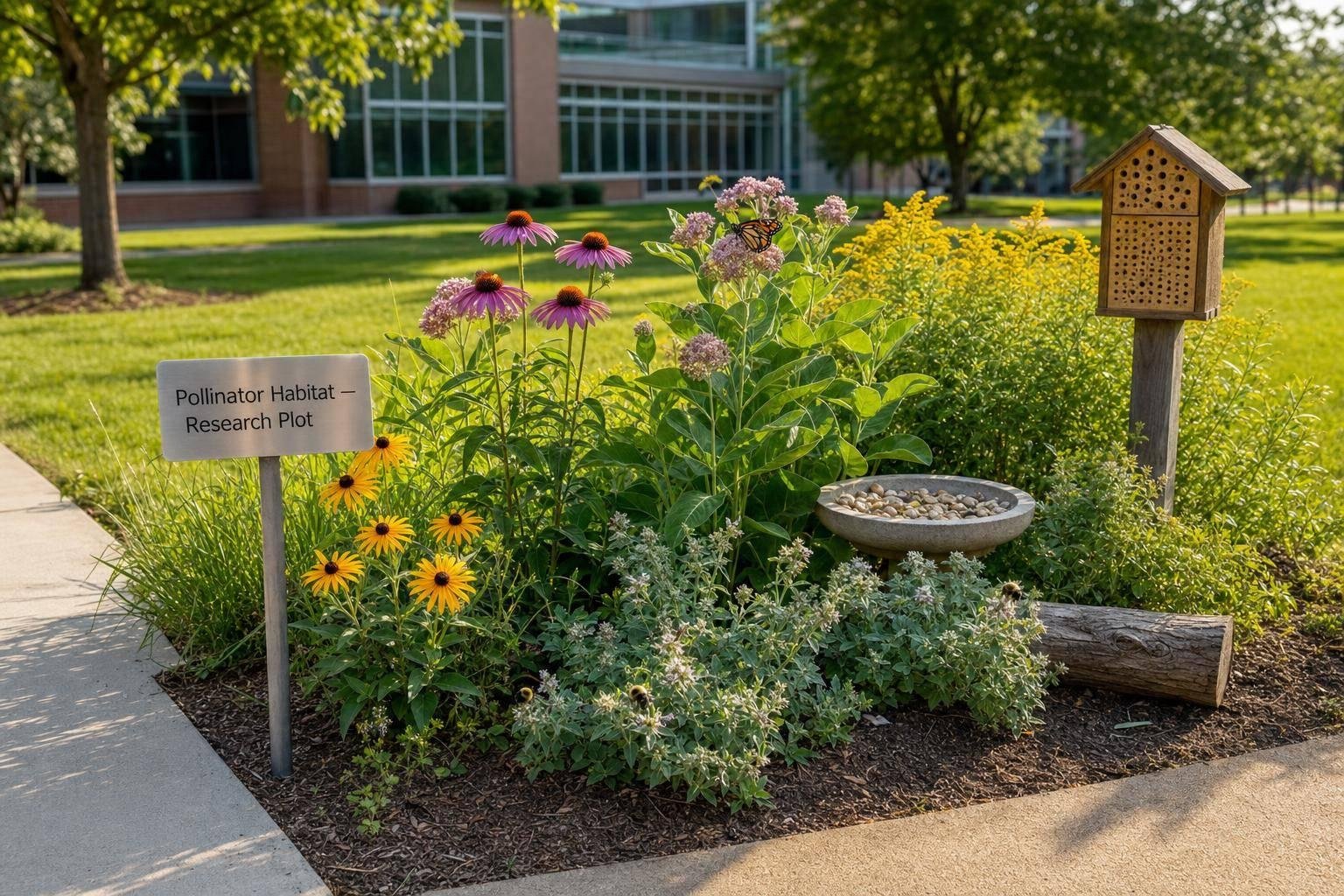
You do not need a big yard to help pollinators. In Maryland, even a 4×4-foot native planting can support bees, butterflies, and hummingbirds, and small patches work better when more neighbors plant them too.
If I had to boil the research down, it says four things:
- Pick more Maryland-native plants, not just turf or non-local ornamentals
- Plan flowers from spring through fall so insects can find food across the season
- Leave shelter in place, like leaf litter, hollow stems, and some bare soil
- Shrink lawn where grass struggles and turn that space into planting beds
A few numbers stand out. Black cherry can host 450+ caterpillar species. Meadow-style plantings usually need about 3 years to fill in. And if I’m removing turf with sheet mulching, I’d use 4 to 8 inches of shredded leaves plus 2 to 4 inches of compost.
This means a pollinator-friendly Maryland yard is not about doing everything at once. It’s about starting with one area, matching plants to sun and moisture, and letting the yard do more with less mowing, watering, and cleanup.
Plant Selection: Why Native Diversity Supports More Pollinators
University of Maryland Extension research shows that native plant diversity supports more pollinators and wildlife than turfgrass or beds filled only with ornamentals. That gap makes sense when you look at what each option gives back.
Turfgrass offers very little nectar, pollen, seed, or shelter. At the same time, it often asks for mowing, irrigation, and chemical inputs. Native plants flip that equation. They feed insects with nectar and pollen, support caterpillars as host plants, and provide berries and seeds when food is harder to find. For Maryland homeowners, that research points to a simple takeaway: choose plants that do more work for pollinators and ask for less work from you.
Native Perennials, Shrubs, and Host Plants to Prioritize
Maryland Extension materials regularly point homeowners to butterfly weed (Asclepias tuberosa), New England aster, wild geranium, cardinal flower, and mountain mint.
Each one brings something useful to the yard:
- Butterfly weed supports monarch caterpillars
- Mountain mint draws a broad mix of bees, wasps, and butterflies
- Cardinal flower attracts hummingbirds
Shrubs and trees deserve the same attention. Gray dogwood and inkberry holly offer nectar and berries for songbirds and other wildlife. Black cherry (Prunus serotina) is especially important because it hosts more than 450 caterpillar species [3].
If you’re planting hollies or viburnums for berries, plan for 1 male for every 3 to 5 female plants so you get fruit set [2].
Plant Choices That Reduce Habitat Value
Not every plant labeled native at a garden center is native to Maryland. Oakleaf hydrangea is a good example. It’s native to the southeastern U.S., but not to Maryland.
It’s also smart to skip generic wildflower mixes. Many contain short-lived, non-native annuals. They may look good at first, but once they fade, open gaps can fill with weeds fast.
Some common groundcovers create problems too. Vinca minor (periwinkle) and Japanese spurge (Pachysandra terminalis) can spread into natural areas and push out native plants. Swapping them for wild ginger (Asarum canadense) or green-and-gold (Chrysogonum virginianum) gives that space much more habitat value.
Maryland Pollinator Plants by Site Conditions
Use the table below to match native plants to the light and moisture conditions in your yard.
| Plant Type | Common Name | Pollinators Supported | Light | Soil Moisture |
|---|---|---|---|---|
| Perennial | Eastern Columbine | Hummingbirds, Bees | Sun to Shade | Moist to Dry |
| Perennial | Wild Geranium | Bees, Beneficial Insects | Part Shade | Moist |
| Perennial | Butterfly Weed | Monarchs (Host), Bees | Full Sun | Dry |
| Perennial | Mountain Mint | Bees, Wasps, Butterflies | Full Sun | Moist to Dry |
| Perennial | Cardinal Flower | Hummingbirds | Sun to Part Shade | Moist to Wet |
| Perennial | New England Aster | Bees, Butterflies | Full Sun | Moist |
| Shrub | Gray Dogwood | Bees, Songbirds | Sun to Part Shade | Average |
| Shrub | Inkberry Holly | Bees, Birds (Berries) | Sun to Part Shade | Moist |
| Tree | Black Cherry | Bees, Songbirds, 450+ Caterpillar Species [3] | Full Sun | Average |
| Grass | Little Bluestem | Butterflies (Host), Birds (Seed) | Full Sun | Dry |
| Grass | Pennsylvania Sedge | Shelter for beneficial insects | Shade | Dry to Average |
These plant choices create the base. The next piece is spacing bloom times so something is flowering from early spring through fall.
sbb-itb-843f8be
Bloom Timing and Garden Scale: Why Continuous Flowers Matter
Once you’ve picked your native plants, the next job is to line up bloom times so pollinators can find food from spring through fall. University of Maryland Extension research says pollinator gardens do best when bloom periods overlap from early spring into late fall, giving insects steady forage through the season [1]. Planting a mix of species also helps the garden handle pests, disease, and rough weather while supporting more wildlife [2].
How to Build an Early-to-Late Bloom Sequence
A simple way to plan it is to split the season into three parts. Spring bloomers like Eastern Columbine and Wild Geranium get things going early. Then summer picks up with Mountain Mint, Butterfly Weed, and Cardinal Flower. As the season winds down, New England Aster and Goldenrod keep nectar on hand for migrating butterflies and late-season bees.
When you can, buy locally sourced native plants. That helps bloom timing stay in step with local pollinators.
The calendar below shows how to layer Maryland natives across the season.
How Much Space Is Needed to Make a Difference
You don’t need a huge yard to help. Even a small bed or border can do a lot if it includes plants that flower at different points in the season.
Seasonal Bloom Calendar for Maryland Native Plants
Use this calendar to spot gaps between early, mid, and late bloomers.
| Bloom Period | Native Species | Primary Pollinator Value | Site Conditions |
|---|---|---|---|
| Early (Spring) | Eastern Columbine (Aquilegia canadensis) | Hummingbirds | Sun to part shade |
| Early (Spring) | Wild Geranium (Geranium maculatum) | Beneficial insects | Part shade to shade |
| Early (Spring) | Wild Ginger (Asarum canadense) | Groundcover; early forage | Shade; moist soil |
| Mid (Summer) | Mountain Mints (Pycnanthemum spp.) | Bees, wasps, butterflies | Sun to part shade |
| Mid (Summer) | Butterfly Weed (Asclepias tuberosa) | Monarch host; general pollinators | Full sun; dry soil |
| Mid (Summer) | Cardinal Flower (Lobelia cardinalis) | Hummingbirds | Sun to part shade; wet soil |
| Late (Fall) | New England Aster (Symphyotrichum novae-angliae) | Migrating butterflies; late-season bees | Full sun; moist soil |
| Late (Fall) | Goldenrod (Solidago spp.) | Critical pre-winter nectar | Full sun |
Habitat Features and Lawn Reduction: Lessons from Maryland Case Studies
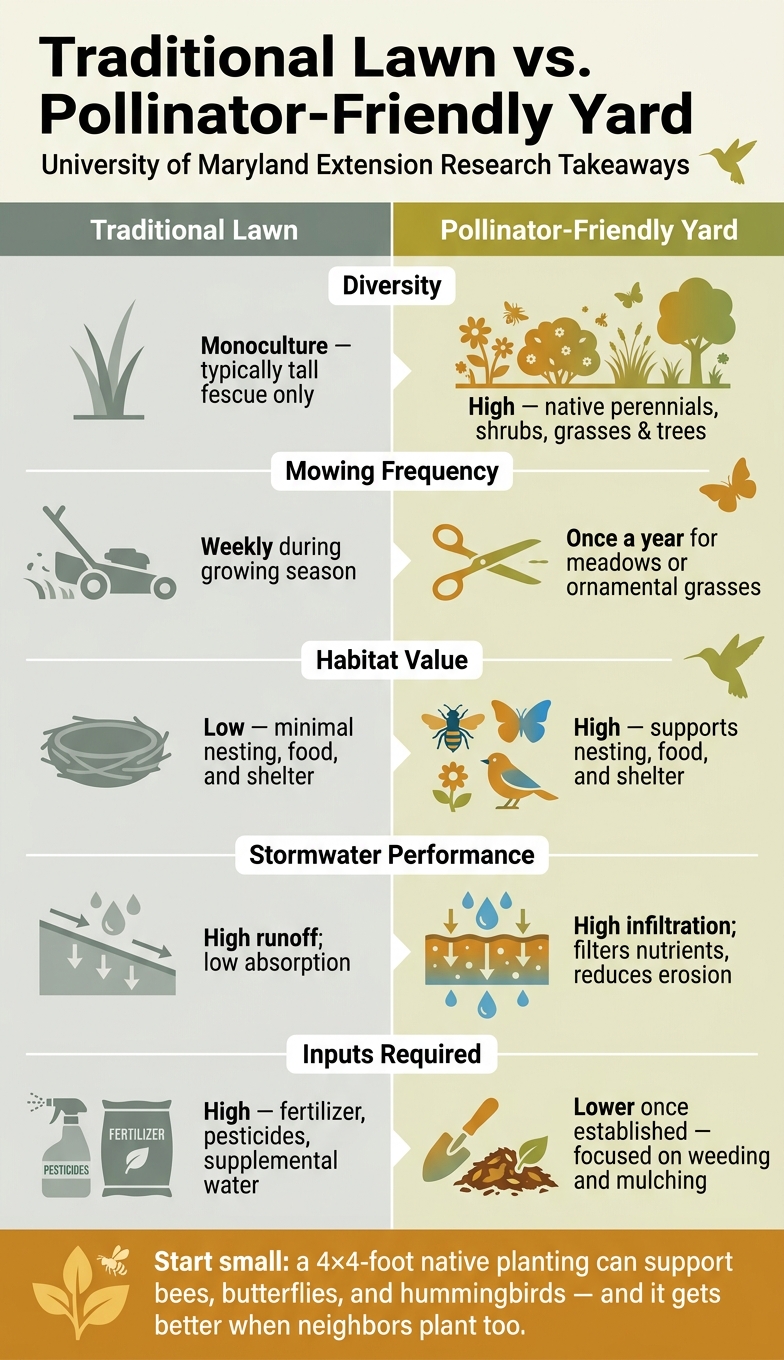
Traditional Lawn vs. Pollinator-Friendly Yard: Maryland Side-by-Side Comparison
Pollinator habitat needs more than blooms. It also needs places to nest, hide, find water, and get through the year with little or no pesticide pressure.
Nesting, Shelter, Water, and Pesticide Reduction
A lot of butterflies, moths, and native bees depend on leaf litter, soil, and the base of trees during part of their life cycles. That’s why it helps to leave some leaf litter, patches of bare soil, and hollow stems in place through winter. Many native bees, butterflies, and moths use those spots for shelter or nesting [1] [4]. University of Maryland Extension also notes that doing less fall cleanup supports more butterflies, moths, and other helpful insects [4].
Dense shrubs, clumping grasses, and evergreens give wildlife cover from bad weather and predators [2]. Rain gardens and conservation landscaping can also help with stormwater runoff while adding moisture-rich habitat for wildlife [1] [5]. The same idea applies to turf: when you shrink the lawn, you make room for habitat.
Reducing turf also cuts maintenance and pesticide use [1].
What Lawn Reduction Looks Like in a Maryland Yard
One simple way to start is with a 4′ x 4′ patch and build from there later by dividing plants or adding new planting areas [1]. Good first targets are steep slopes, narrow strips along driveways, and deep-shade spots where turfgrass already has a hard time.
Sheet mulching is a common no-till method. Lay down overlapping unwaxed cardboard or newspaper, then add 4 to 8 inches of shredded leaves and 2 to 4 inches of compost [1]. This smothers grass without chemicals. A clean edge around the bed helps it look planned, not accidental [1].
Maryland’s 2021 Low-Impact Landscaping Law also gives homeowners more room to make these changes. It prohibits HOAs from requiring turf-only landscapes and protects the right to maintain pollinator gardens, rain gardens, and xeriscaping [1] [5].
Traditional Lawn vs. Pollinator-Friendly Yard: A Side-by-Side Comparison
These differences stand out fast when you put a standard lawn next to a pollinator-friendly yard.
| Feature | Traditional Lawn | Pollinator-Friendly Yard |
|---|---|---|
| Diversity | Monoculture (typically tall fescue) | High – native perennials, shrubs, grasses, trees |
| Mowing Frequency | Weekly during the growing season | Once a year for meadows or ornamental grasses [1] |
| Habitat Value | Low; minimal nesting, food, and shelter | High; supports nesting, food, and shelter [1] [2] |
| Stormwater Performance | High runoff; low absorption | High infiltration; filters nutrients and reduces erosion [1] [5] |
| Inputs | High – fertilizer, pesticides, supplemental water | Lower once established; focused on weeding and mulching [1] |
Applying the Research at Home: Maryland Design Takeaways
Start With Site Conditions and One Area at a Time
Start with the yard you have, not the yard you wish you had. Check sun, drainage, and soil first. Meadow plantings need at least 6 hours of sun per day [1].
Look for the spots that already tell a story. Maybe water sits there after a storm. Maybe moss has taken over where grass won’t hold. Maybe the turf looks weak year after year. Those clues matter. They show you where a new planting bed has the best shot at working without much irrigation or constant upkeep.
It also helps to notice two practical things: where deer tend to browse and which parts of the lawn you use. Then begin with the worst-looking, least-used section of the yard. That makes the first step smaller, cheaper, and easier to manage. It’s the point where the research starts to feel like an actual home project instead of a pile of ideas.
Use Layered Planting and Delay Spring Cleanup
When the site makes sense, build the bed like habitat instead of treating it like a flower display. Start with trees and shrubs, then add perennials and groundcovers. That layered setup gives pollinators food, shelter, and nesting space in the same area.
Native groundcovers such as wild ginger, alumroot, and green-and-gold help cover bare soil and hold back weeds once they’re established [1].
A few simple habits make a big difference:
- Leave stems and leaf litter in place through winter, then cut plants back in early spring [1].
- Use 2 to 3 inches of wood mulch in new beds to hold moisture and cut down on weeding while plants get settled [1].
- Expect native meadows to take about three years to mature, with regular weeding needed in the first few seasons [1].
That waiting period can test your patience a bit. Still, it’s normal. Early on, the garden may look a little rough around the edges before it starts to knit together.
Conclusion: Key Maryland Pollinator Garden Lessons
Put it all together, and the pattern is pretty simple: more native plant variety, bloom across more of the year, layered planting, and less lawn create much better pollinator habitat than turf alone. Matching plants to the site also helps keep the planting healthy and easier to care for [2].
FAQs
Which native plants are best for my yard conditions?
Start by checking sunlight, moisture, and drainage. That gives you a clear place to begin.
For sunny spots with well-drained soil, try:
- purple coneflower
- butterfly weed
- black-eyed Susan
If an area stays moist or wet, swamp milkweed and New York ironweed tend to do well there.
For shade, go with wild columbine or Virginia bluebells. If you need groundcover, wild ginger or creeping phlox are good picks.
One simple rule helps a lot: group plants with similar sun and water needs. That makes planting easier and helps each area do better without constant fussing.
How do I keep blooms going from spring through fall?
Select a mix of native plants that bloom at different points in the season. Early spring flowers like wild columbine and Virginia bluebells help pollinators in March and April. Later in the year, New England aster, goldenrod, and New York ironweed keep nectar available into October.
It also helps to plant both perennials and shrubs. That mix keeps food available for a longer stretch of the season.
What’s the easiest way to replace part of my lawn?
Start small. Remove a 4-foot by 4-foot patch of grass for a garden island or border.
That size is easy to handle, and it gives you room to grow later. You can expand the bed over time by dividing plants you already have or dropping in new ones as you go.
To get the area ready, use sheet mulching. Cover the grass with overlapping cardboard or several layers of newspaper. Then add 2 to 4 inches of mulch on top.
It’s a simple, chemical-free way to smother the grass and other plants already growing there.
Chat with Us