









- bhavya gada
- No Comments
Stormwater can damage your foundation in multiple ways, but proper ventilation offers a practical solution.
Here’s what happens: Heavy rain increases soil pressure against your foundation, causes erosion, and traps moisture in crawl spaces. This leads to cracks, shifting, mold growth, and even structural failure. Ventilation systems help by balancing water pressure, improving airflow to reduce moisture, and preventing long-term damage.
Key Takeaways:
- Hydrostatic Pressure: Water pushes against foundation walls, causing cracks or collapse.
- Soil Erosion: Stormwater washes away supporting soil, destabilizing the foundation.
- Moisture Issues: Trapped dampness encourages mold and weakens structures.
How Ventilation Helps:
- Pressure Relief: Flood vents balance water pressure during storms.
- Moisture Control: Proper airflow keeps humidity between 30–50%, preventing mold.
- Durability: Reduces risks of rot, pests, and insulation damage.
Ventilation options include crawl space vents, flood vents, and continuous systems. Pair these with drainage solutions for the best protection. Regular maintenance – like inspecting vents and regrading soil – ensures long-term effectiveness.
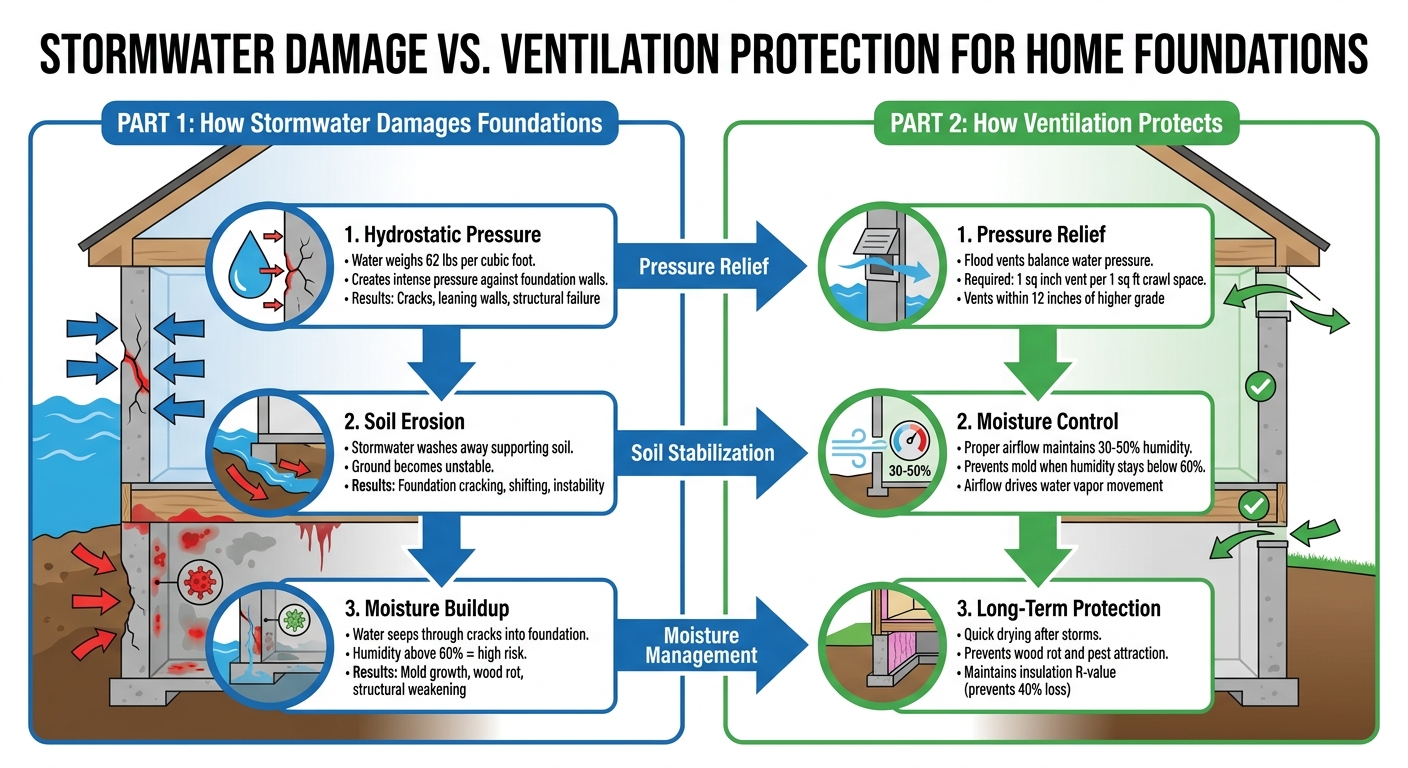
How Stormwater Damages Foundations and How Ventilation Protects Them
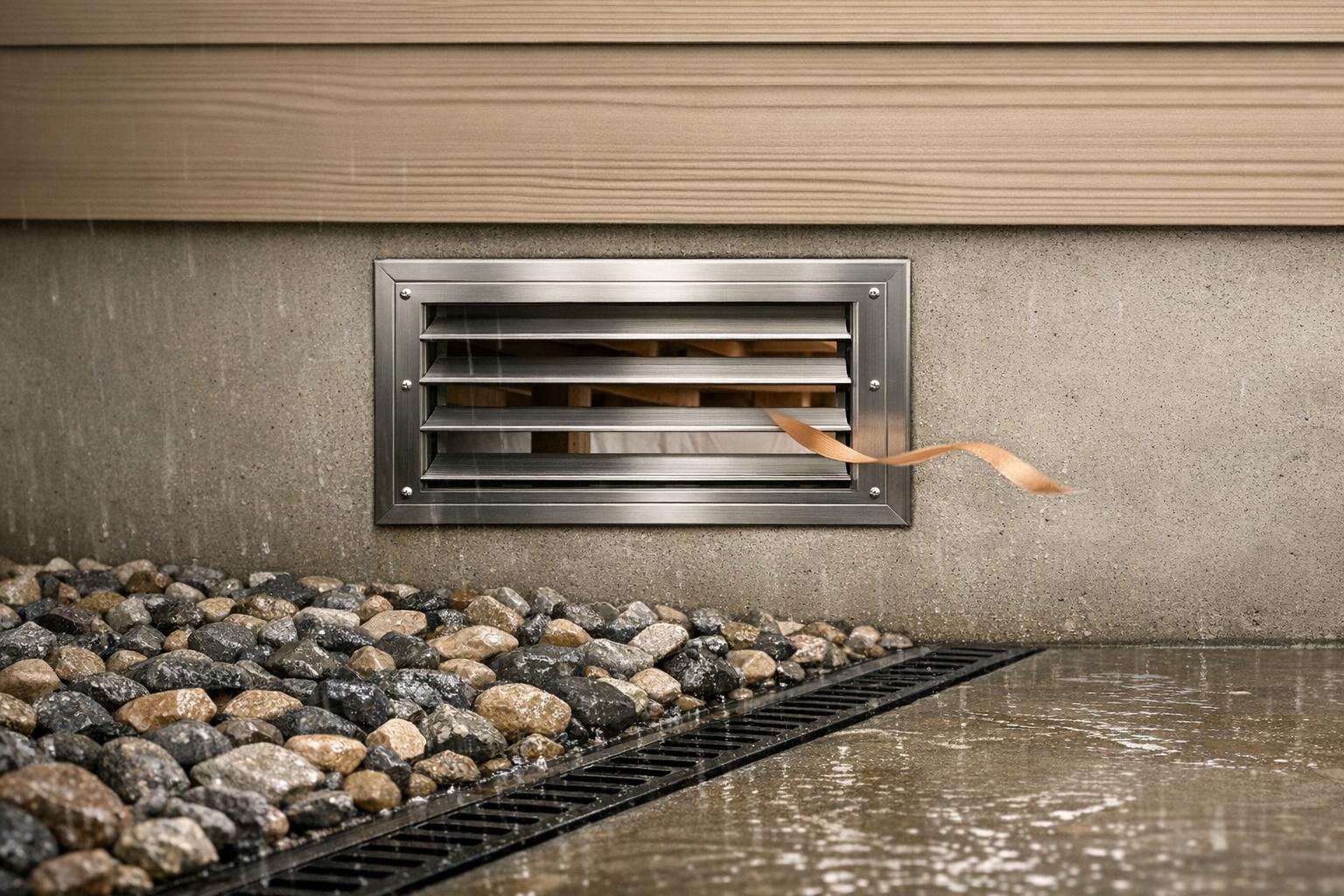
🐊🌊 SmartVent Flood Vents Demonstration

sbb-itb-843f8be
How Stormwater Damages Foundations
Stormwater can wreak havoc on your foundation in multiple ways. Spotting the signs early can save you from expensive repairs down the line. Let’s break down how hydrostatic pressure, soil erosion, and moisture buildup each play a role in undermining your foundation’s stability.
Hydrostatic Pressure and Foundation Damage
When stormwater saturates the soil around your home, it generates intense pressure against your foundation walls. To put it in perspective, water weighs about 62 pounds per cubic foot. In colder climates, this issue is compounded by freeze-thaw cycles, where water-soaked soil expands as it freezes, creating even more stress on your foundation. Heavy clay soils, which don’t drain well, are particularly problematic. Without proper yard grading, water collects near the foundation, amplifying the pressure. Over time, this pressure forces water through small cracks or window wells, leading to leaning walls, larger cracks, or even structural failure. You might also notice sediment deposits – called sediment fans – forming from concentrated runoff, which are a telltale sign of soil loss and instability [1].
Soil Erosion Around Foundations
While hydrostatic pressure directly impacts your walls, stormwater also erodes the soil that supports your foundation. This loss of stabilizing soil can cause the foundation to crack or shift as the ground becomes less stable. Stormwater doesn’t just stop at the foundation – it can also strip material from driveways, berms, and culverts. This redirected flow can worsen the problem, potentially leading to foundation failure or even toppling nearby utility poles. Intense runoff can carve out drainage ditches and worsen local flooding, further threatening your foundation’s integrity [3].
Moisture Buildup and Mold Growth
Cracks caused by pressure and erosion allow moisture to seep into your foundation, creating the perfect environment for mold to thrive. Persistent dampness often accumulates in crawl spaces, under decks, or beneath patio covers, weakening the foundation and rotting structural posts. In clay-heavy soils, water can form perched water tables above the clay layers, keeping the soil perpetually saturated – even during dry spells. As Wave Outdoors Landscape + Design explains:
In clay soils, a wall without drainage slowly leans
This ongoing moisture doesn’t just encourage mold growth; it keeps the foundation under constant stress from pressure and freeze-thaw cycles [1].
How Ventilation Protects Foundations
Now that you’re aware of how stormwater can impact your home, let’s dive into how ventilation works to safeguard your foundation. Proper ventilation manages pressure, controls moisture, and helps maintain the structural soundness of your home.
Balancing Water Pressure During Storms
Foundation vents are essential during floods because they help balance hydrostatic pressure on both sides of your foundation walls. When floodwaters rise, vents placed within 12 inches of the higher grade allow water to flow in and out at a rate that matches the exterior water level. This prevents pressure imbalances that could cause your foundation walls to buckle or collapse. According to IRC 2021 Section 322, you need at least 1 square inch of ventilation opening for every 1 square foot of enclosed crawl space area to effectively relieve pressure.
However, standard air vents with fixed pest screens can lose nearly half of their pressure-relieving effectiveness when clogged with debris during floods. To address this, it’s crucial to use vents equipped with louvers that fully open during water events [2].
But ventilation isn’t just about pressure – it also plays a big role in managing airflow to control moisture.
Improving Airflow to Prevent Moisture
Airflow is the primary driver of water vapor movement, making ventilation a key player in moisture control [5]. In dry climates, passive foundation vents let outside air naturally carry away evaporated ground moisture. On the other hand, in humid regions, traditional passive ventilation can sometimes introduce more moisture into your foundation space. To counter this, use controlled airflow solutions like dehumidifiers and fans to maintain humidity levels between 30–50%. When humidity rises above 60%, the risk of mold and structural damage increases significantly.
For better control, monitor your foundation’s humidity with a digital hygrometer and adjust your ventilation strategy as needed. This proactive approach helps keep moisture in check and prevents long-term damage.
Preventing Long-Term Structural Damage
Effective ventilation ensures your foundation dries quickly after storms, reducing the risk of long-term issues like rot and decay in structural elements [2]. Persistent moisture can lead to wood rot and attract pests such as termites and carpenter ants [6]. Additionally, wet insulation can lose up to 40% of its R-value, which negatively impacts your home’s energy efficiency.
Ventilation also reduces the "stack effect", where damp, contaminated air from the foundation rises into your living spaces. To maintain proper airflow, keep foundation vents free from debris, vegetation, and stored items [4][5].
Types of Foundation Ventilation Systems
Selecting the right foundation ventilation system depends on factors like your foundation type, local flood risks, and whether you need consistent airflow or emergency pressure relief. These systems are designed to address hydrostatic pressure and moisture control, offering specific solutions tailored to different foundation conditions. Let’s explore the three main options homeowners can consider.
Crawl Space Vents
Crawl space vents are a common choice in areas with low flood risk. They provide passive airflow, helping to reduce moisture buildup by allowing outside air to circulate through the crawl space. This natural ventilation carries away water vapor from the ground, keeping humidity levels in check.
However, in regions with high humidity, these vents might not be enough on their own. In such cases, pairing them with dehumidifiers can help prevent excess moisture from seeping into your foundation.
For homes in areas prone to flooding, a more specialized solution may be necessary to manage hydrostatic pressure effectively.
Flood Vents
If your property is in a floodplain, certified flood vents are a critical safeguard for your foundation. These vents are designed to handle rising floodwaters by automatically opening when needed. Hemlock Hardware explains how they work:
The vent door is latched closed until it comes in contact with flood water. Entering flood water lifts the patented internal floats which unlatch and allow the door to rotate open.
Certified flood vents feature a 3-inch clearance to prevent debris from clogging them [7][8]. One 8-inch by 16-inch flood vent can cover about 200 square feet and typically costs around $249.99 [7]. For sealed crawl spaces, insulated flood vents are available. These models include a 2-inch styrofoam core, offering an R-value of 8.34, which adds flood protection while maintaining your home’s thermal efficiency [7][8].
Continuous Ventilation Systems
Continuous ventilation systems use perforated pipes or drainage mats installed around your foundation to provide consistent water management and airflow. These systems integrate with your foundation’s drainage setup. The perforated pipes are positioned downward to capture groundwater while resisting soil clogging [9].
When installed correctly, these systems can last up to 50 years and are especially effective in clay soils with low permeability [9]. To function properly, the system must extend 12 inches beyond the footing edge and maintain a slope of 1/8 inch per foot to direct water away from the foundation [9].
How to Install Foundation Ventilation Systems
Installing a foundation ventilation system starts with understanding your property’s needs and ends with a setup that works in harmony with proper drainage.
Site Assessment and Grading
Begin by measuring your crawl space to figure out how many vents are required. Then, locate the Lowest Adjacent Grade (LAG) – the lowest point of ground next to your foundation. This step is essential because vent placement must account for this level to help manage hydrostatic pressure during potential flooding.
Check that the soil slopes at least 5% away from your foundation. If the slope isn’t sufficient, regrading is necessary. Without this adjustment, even the most well-designed ventilation system may struggle with water pooling around your foundation.
Once grading is corrected, plan vent placement to ensure steady, consistent airflow throughout the crawl space.
Vent Placement and Spacing
Place vents within 3 feet of every corner of your foundation to prevent areas of stagnant air [10][11]. For optimal air exchange, position vents on opposite walls to encourage cross-ventilation [11].
The bottom of each vent should be at least 4 inches above the finished exterior grade to keep water from entering [10]. If a vent must be installed lower than this, use vent dams to block surface water. On sloped properties, avoid placing vents on uphill walls where water might collect [10]. For mechanical ventilators, install them inside the crawl space directly behind foundation vent openings. Be sure to close any nearby natural vents to prevent airflow short-circuiting [11].
Combining Ventilation with Drainage Systems
For the best results, pair your ventilation system with an effective drainage setup. Extend French and footing drains 12 inches beyond the footing with a slope of 1/8 inch per foot to channel water safely away from the foundation [9].
Sump pump discharge pipes should be placed 6–10 feet from the foundation to avoid water cycling back into the system [12]. As the Milwaukee Metropolitan Sewerage District (MMSD) explains:
If the ground is sloped towards the foundation, the water is seeping back into the ground and recirculating through the foundation drain.
Wrap drainage pipes in geotextile fabric to keep sediment out and maintain the efficiency of both the drainage and ventilation systems [9].
Maintaining Foundation Ventilation Systems
Keeping your foundation ventilation system in good shape is essential for effective stormwater protection. Routine checks and maintenance go a long way in ensuring the system functions properly.
Regular Inspections and Cleaning
Plan to inspect your vents every 3 to 12 months. Look for dust buildup, blocked airflow, musty smells, or signs of mold [13][14]. During these inspections, remove the vent covers and clean them thoroughly with soapy water and a damp cloth. A vacuum with a crevice tool can help clear out dust and debris, especially after renovation projects when vents often get clogged [13].
It’s worth noting that household dust can carry harmful substances, including heavy metals and carcinogens, which pose a higher risk to children, according to Health Canada [13]. Be sure to check all vent components, like screens, louvers, and filters, for obstructions that might restrict airflow or disrupt pressure equalization [2][13]. Also, keep an eye out for insect or rodent infestations that could block the vents [13].
Annual Soil Regrading
After cleaning, evaluate the soil around your vents to ensure it supports proper ventilation. Over time, soil naturally settles or shifts, which can affect drainage. Once a year, confirm that your vents are still positioned within 12 inches of the exterior grade [2]. Check that landscaping changes or soil movement haven’t buried the vents. Additionally, make sure the grade inside your crawlspace is either level with or higher than the exterior grade to maintain effective flood resistance and pressure balance [2].
Working with Drainage Professionals
Routine maintenance is essential, but professional assessments provide an extra layer of security. While you can handle basic filter and screen inspections every 3 to 12 months, it’s a good idea to schedule a thorough professional inspection every two years [14]. During these visits, professionals can replace filters, clean components, and verify that the system is properly positioned [14]. As Vent-Axia explains:
Regular servicing will also help to avoid costly repairs at potentially inconvenient times of the year.
If you’re working with experts like Pro Landscapes MD, ask them to perform an installation audit. They can ensure that soil movement or landscaping changes haven’t compromised your vents. They’ll also check that your system maintains the necessary airflow and extraction rates to prevent moisture buildup, which could lead to condensation and damage your foundation. For newly installed systems, schedule the first professional inspection three months after installation to clear out any construction dust [14].
By staying consistent with maintenance, you’ll not only preserve airflow but also keep the system performing its critical role of balancing water pressure during storms.
| Maintenance Task | Frequency | Purpose |
|---|---|---|
| Filter/screen inspection | Every 3–12 months | Prevent blockages and maintain airflow [14] |
| Full professional service | Every 2 years | Ensure optimal system efficiency [14] |
| Soil grading check | Annually | Maintain proper drainage slope [2] |
| Vent clearance inspection | Annually | Keep openings within 12 inches of grade [2] |
Conclusion
Keeping your foundation safe from stormwater damage means pairing proper ventilation with effective drainage solutions. Ventilation systems help by relieving pressure, reducing moisture, and stabilizing the soil around your home – saving you from potentially expensive repairs down the line [1]. Whether you opt for crawl space vents, flood vents, or continuous ventilation systems, the most important factor is making sure they’re installed correctly and well-maintained.
A strong stormwater management plan is also critical for protecting your foundation. Even moderate rainfall can cause problems if drainage systems aren’t up to par. Combining good ventilation with proper surface grading and subsurface drainage gives your home a solid line of defense.
To keep everything running smoothly, regular maintenance is a must. Inspect vents every 3 to 12 months, check soil grading annually, and bring in a professional for inspections every two years [14]. These small efforts go a long way in preventing moisture buildup and structural damage, giving your foundation lasting protection.
FAQs
Do I need flood vents or just crawl space vents?
Proper ventilation plays a key role in safeguarding your foundation from stormwater damage. While the article doesn’t pinpoint a specific type of vent, the decision between flood vents and crawl space vents should be based on the unique needs and conditions of your foundation.
Can ventilation make crawl space moisture worse in humid weather?
Yes, ventilation in crawl spaces can make moisture problems worse during humid weather. When warm, moist air from outside enters the crawl space, it can increase indoor humidity levels. This is particularly true for vented crawl spaces in regions with high humidity. To avoid these issues and protect your foundation from potential stormwater damage, it’s crucial to focus on proper ventilation design and effective moisture control.
What are the warning signs that foundation vents aren’t working?
Signs that your foundation vents might not be working properly include visible moisture or water beneath your home, standing water around the foundation after it rains, and doors or windows that stick or are difficult to open. These problems often point to poor ventilation and drainage. Over time, this can cause soil to shift, potentially leading to foundation issues.
Chat with Us